Every Oracle database administrator knows that a backup is only as good as its last successful run. But how do you confirm your RMAN backups are working as planned? If you need to check RMAN backup history in Oracle, you are not alone. This guide will show you why it matters and how to do it step by step.
What is RMAN Backup History?
RMAN backup history is a record of all backup jobs performed by Oracle Recovery Manager (RMAN). This history includes details such as backup type, status, start and end times, duration, and size. Oracle stores this information in internal views like V$RMAN_BACKUP_JOB_DETAILS and—if configured—in the recovery catalog. By reviewing this history, you can track which backups succeeded or failed.
Why Check RMAN Backup History?
Checking RMAN backup history is essential for database safety, compliance, and business continuity. If a backup fails without notice due to disk space issues or network errors—and no one checks—the next disaster could mean unrecoverable data loss. For example, if storage corruption occurs after an unnoticed failed backup job, critical data may be lost forever.
Regularly checking your RMAN backup history helps spot problems early so you can fix them before they become disasters. It also ensures that all required files are protected according to company policies or legal requirements. Auditors often require proof of recent backups; missing records can lead to compliance violations.
Backup monitoring also supports your organization’s Recovery Time Objective (RTO) and Recovery Point Objective (RPO). By confirming that backups complete successfully within set intervals, you help guarantee fast recovery when needed.
Method 1: Using RMAN Commands
The RMAN command-line interface offers direct access to your Oracle backup records. Many administrators prefer this method because it is fast and reliable for routine checks or audits.
First open a terminal window on your server or workstation where Oracle client tools are installed. Connect to RMAN as a privileged user by running:
rman target /
Once connected, use these commands:
To list all available backups:
LIST BACKUP;
This displays each backup set—including image copies—with their status (AVAILABLE, EXPIRED, or OBSOLETE).
For a concise overview showing key details like type and completion time:
LIST BACKUP SUMMARY;
If you want only full database backups that completed successfully:
LIST BACKUP OF DATABASE COMPLETED;
To check for expired backups (those not found during crosscheck):
LIST EXPIRED BACKUP;
You can verify current statuses with:
CROSSCHECK BACKUP;
CROSSCHECK ARCHIVELOG ALL;
These commands update the repository so missing files are marked EXPIRED.
To see which backups no longer meet your retention policy:
REPORT OBSOLETE;
Here’s how these statuses differ:
EXPIRED means the physical file cannot be found at its recorded location—it might have been deleted outside of RMAN control or moved accidentally.
OBSOLETE means the file exists but exceeds your configured retention policy; it’s eligible for deletion but still usable until removed.
For regular health checks or automation scripts during maintenance windows consider running:
RUN {
    CROSSCHECK BACKUP;
    CROSSCHECK ARCHIVELOG ALL;
    REPORT OBSOLETE;
    LIST BACKUP SUMMARY;
}
This block gives operators an up-to-date snapshot of overall backup health—helpful for daily reports or troubleshooting sessions.
Remember that large environments may produce extensive output from LIST BACKUP. Use summary options when possible for clarity during audits.
Method 2: Querying Oracle Catalog Views
Oracle provides several internal views storing detailed historical data about every completed—or failed—backup job managed by RMAN. You can access these views through SQL*Plus or any SQL client tool connected with proper privileges.
The most important view is V$RMAN_BACKUP_JOB_DETAILS, which tracks each job’s session key (unique identifier), input type (such as full DB or archivelog), status code (COMPLETED, FAILED, etc.), start/end times, elapsed seconds (duration), plus other useful fields.
To review recent jobs run this query:
SELECT
  SESSION_KEY,
  INPUT_TYPE,
  STATUS,
  TO_CHAR(START_TIME,'MM/DD/YY HH24:MI') AS START_TIME,
  TO_CHAR(END_TIME,'MM/DD/YY HH24:MI') AS END_TIME,
  ELAPSED_SECONDS / 3600 AS HOURS
FROM
  V$RMAN_BACKUP_JOB_DETAILS
ORDER BY
  SESSION_KEY;
-- Shows each job's unique ID/session key plus timing/status info
For more detail—including performance metrics—try:
SELECT
  COMMAND_ID AS TAG,
  OUTPUT_BYTES_DISPLAY AS TOTAL_GB_BACKEDUP,
  STATUS,
  INPUT_TYPE,
  TIME_TAKEN_DISPLAY AS TIME_TAKEN_HOURS,
  INPUT_BYTES_PER_SEC_DISPLAY AS READ_MB_PER_SEC,
  OUTPUT_BYTES_PER_SEC_DISPLAY AS WRITE_MB_PER_SEC
FROM
  V$RMAN_BACKUP_JOB_DETAILS
WHERE
   INPUT_TYPE = 'DB FULL'
   AND STATUS LIKE '%COMPLETED%'
ORDER BY TAG;
-- Useful for analyzing speed/bandwidth per job/tag
-- Source: Official [Oracle Docs](https://docs.oracle.com/en/database/oracle/oracle-database/tutorial-manage-back/index.html?opt-release-19c)
-- See [BeingPiyush Blog](https://beingpiyush.blogspot.com/2021/05/query-to-check-rman-backup-history.html) for additional examples
If using an external recovery catalog—which preserves long-term records beyond what stays in control files—you can query RC_RMAN_STATUS:
SELECT
   DB_NAME,
   START_TIME,
   END_TIME,
   OPERATION,
   STATUS,
   MBYTES_PROCESSED
FROM
   RC_RMAN_STATUS
WHERE
   START_TIME > SYSDATE -7 AND STATUS != 'COMPLETED'
ORDER BY END_TIME DESC;
-- Focuses on failures/warnings from past week across registered databases
Catalog queries help during audits when you need evidence of older jobs beyond standard retention periods.
Interpreting Key Metrics and Status Flags
Understanding what these queries reveal is just as important as running them. Let’s break down some common fields so you know what they mean—and what actions might be needed if something looks wrong.
Performance columns like INPUT_BYTES_PER_SEC_DISPLAY show read speed from source disks; low numbers may indicate I/O bottlenecks slowing down jobs. Similarly OUTPUT_BYTES_PER_SEC_DISPLAY reflects write speed—slow values could point to network congestion if writing over NFS/CIFS shares or tape devices.
Status flags deserve close attention:
COMPLETED: Job finished successfully; no action needed.
FAILED: Job did not finish; immediate investigation required.
RUNNING WITH WARNINGS: Job finished but encountered non-critical issues—often skipped offline read-only tablespaces.
COMPLETED WITH WARNINGS: Similar outcome; check logs for skipped files or minor errors needing review before next scheduled run.
When investigating failures always look up detailed error messages in the view V$RMAN_OUTPUT using the relevant session key identified earlier:
SELECT * FROM V$RMAN_OUTPUT WHERE SESSION_KEY = <your_session_key> ORDER BY RECID;
-- Reveals step-by-step log output including specific error text
Common causes include lack of disk space at destination paths specified in channel allocation statements; permission errors on directories used by Oracle OS user accounts; missing archive logs due to manual deletions outside of managed processes; network interruptions mid-transfer; unsupported NOLOGGING operations on certain tablespaces causing incomplete recoverability warnings.
By learning how to interpret both summary results (“all green”) versus warning/failure states (“yellow/red”), administrators gain confidence that their environment meets business needs—and can react quickly when something goes wrong.
Simplify Oracle Backup Management with Vinchin Backup & Recovery
Beyond native tools, organizations seeking streamlined management should consider enterprise solutions designed specifically for modern databases like Oracle. Vinchin Backup & Recovery stands out as a professional platform supporting today’s leading systems—including Oracle 10g, 11g/11g R2, 12c, 18c, 19c, 21c, Oracle RAC, MySQL, SQL Server, MariaDB, PostgreSQL, PostgresPro, and TiDB—for comprehensive protection across diverse environments.
Key features include advanced source-side compression and incremental backup tailored for Oracle workloads, batch database processing capabilities for efficient scheduling at scale, flexible data retention policies including GFS support to meet compliance needs, robust integrity checks ensuring recoverability of every copy made, and WORM protection against ransomware threats. Together these functions deliver optimized storage usage while automating reliability verification—all within one unified solution.
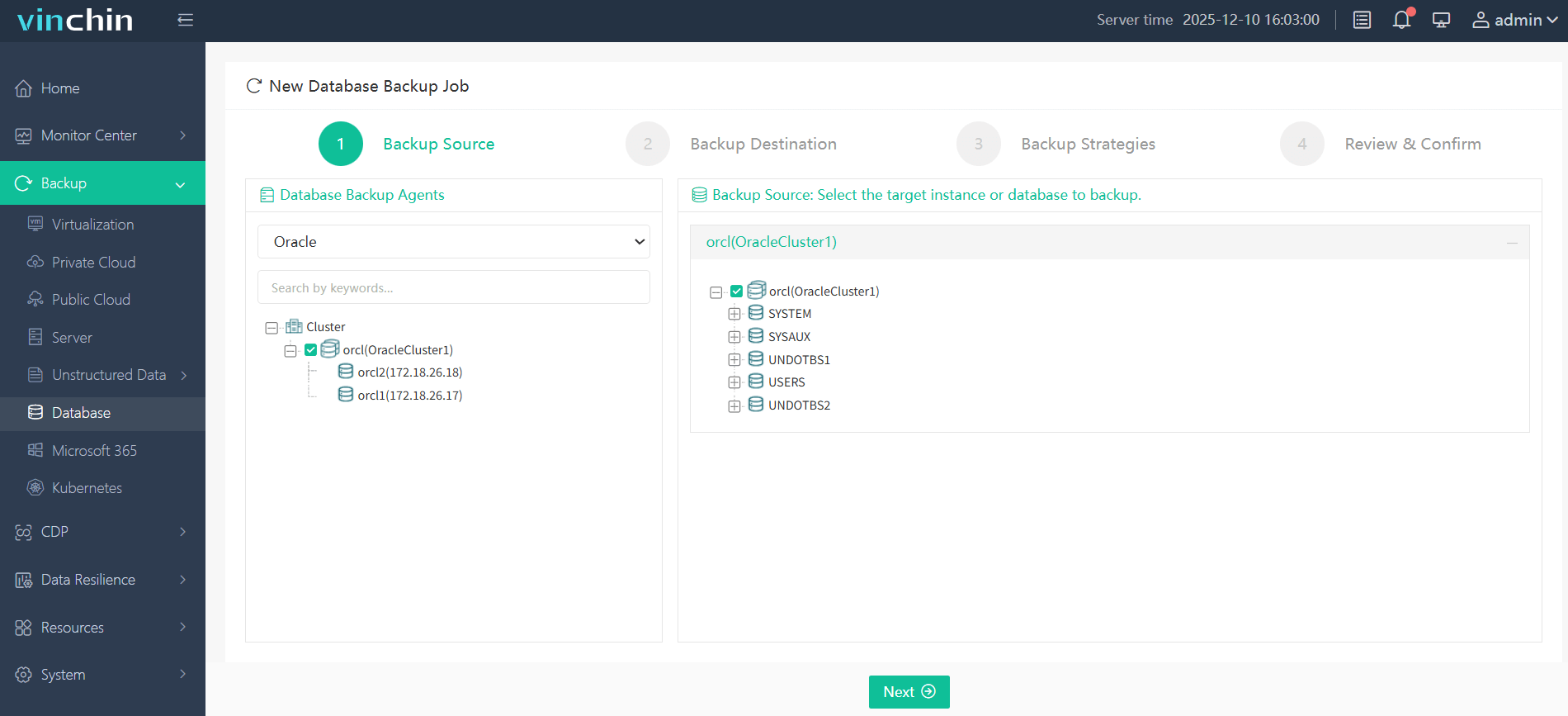
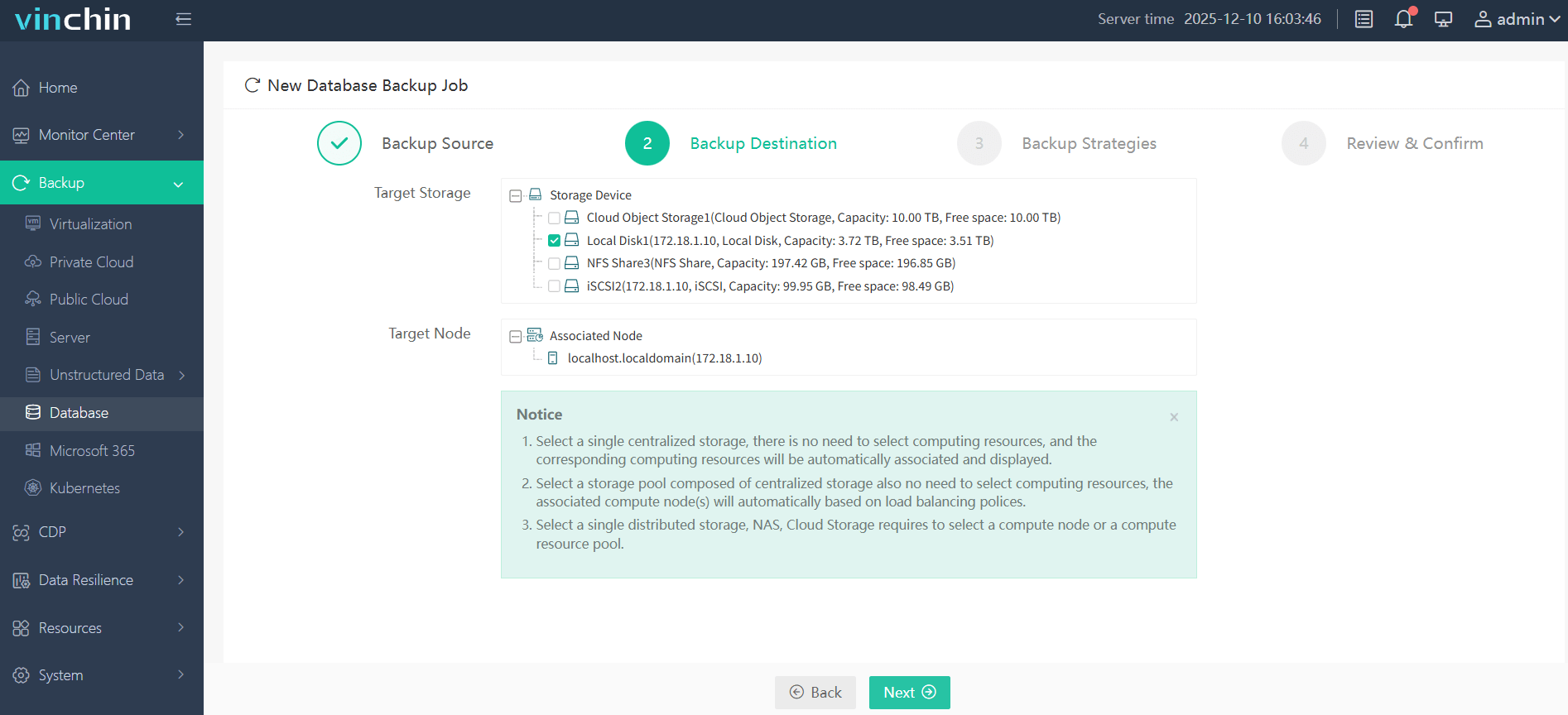
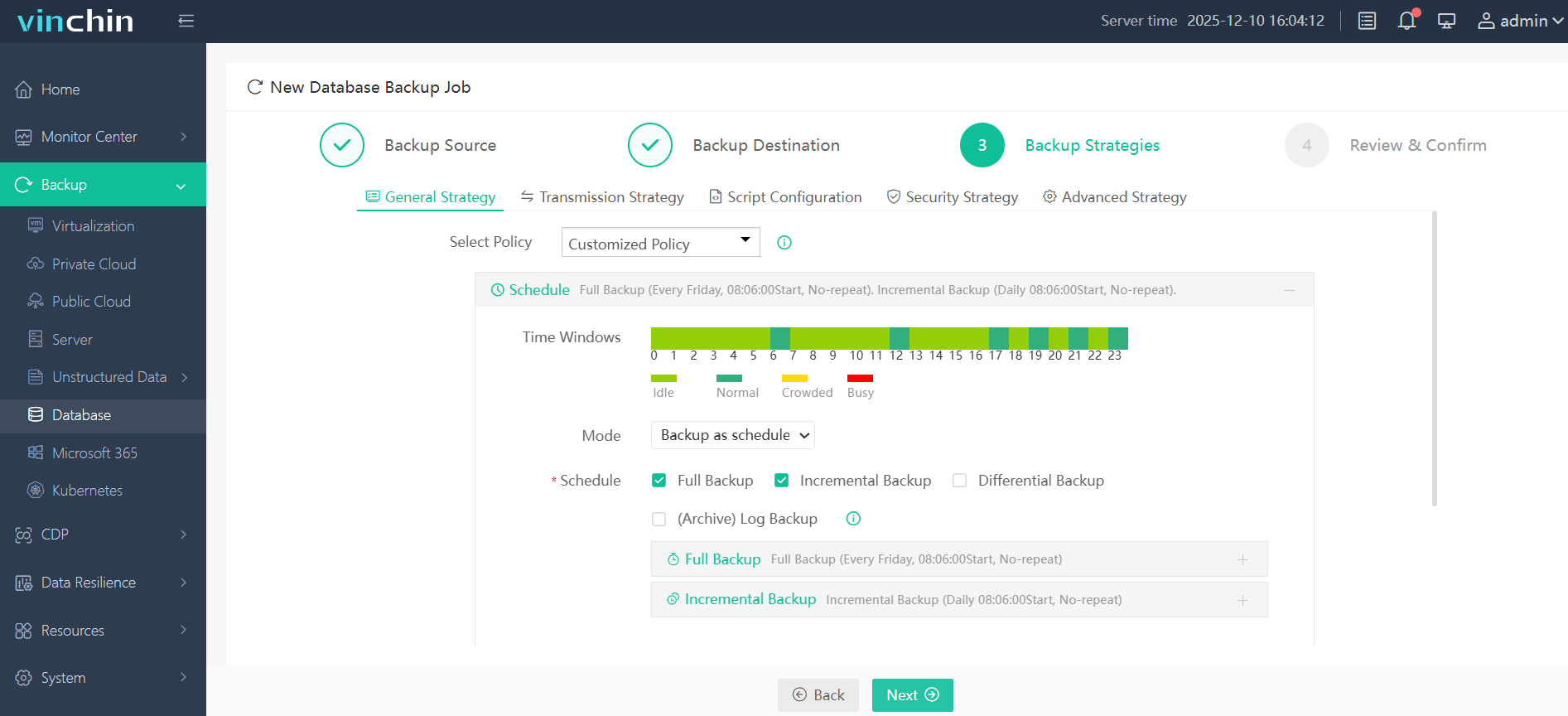
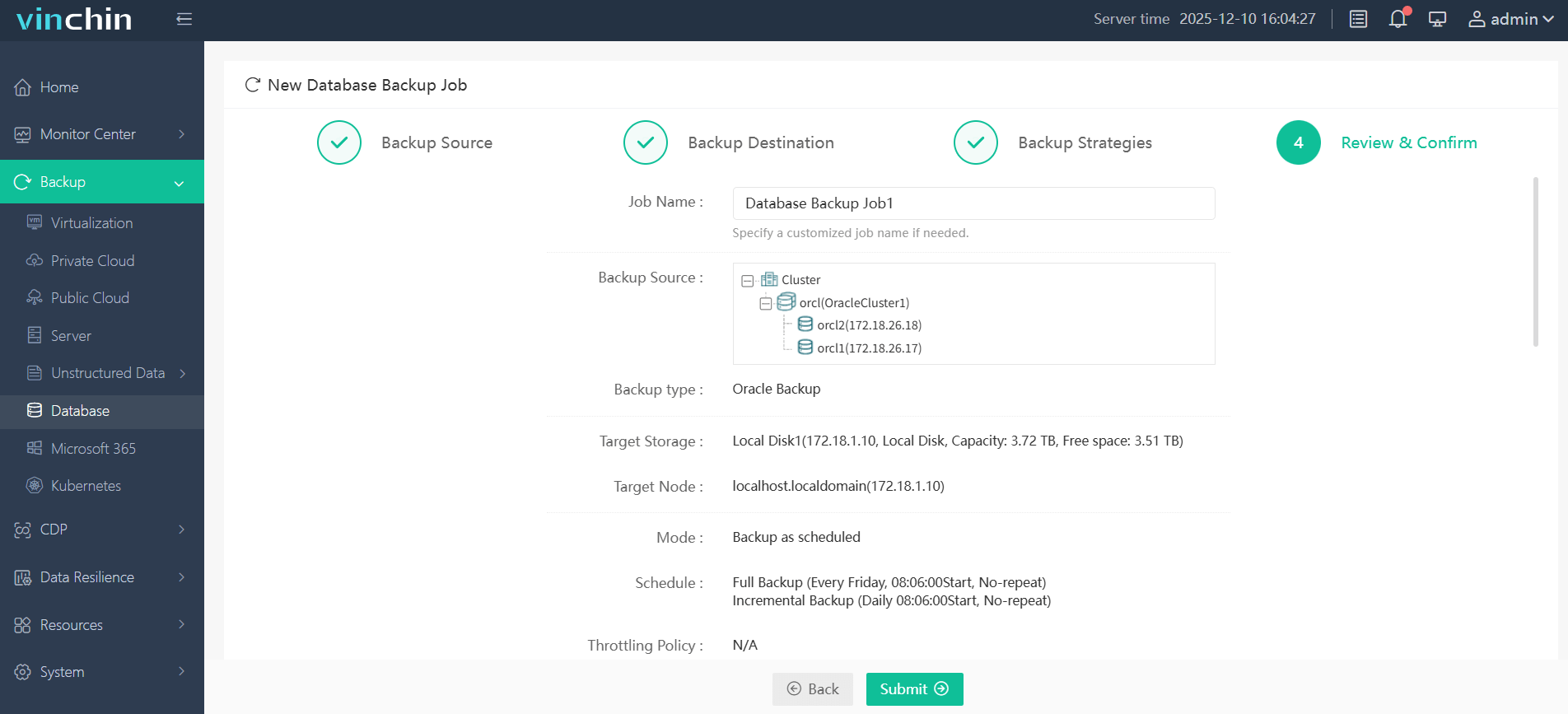
With its intuitive web console interface backing up an Oracle database takes just four steps:
Step 1. Select the Oracle database to backup
Step 2. Choose the backup storage
Step 3. Define the backup strategy
Step 4. Submit the job
Recognized globally with thousands of satisfied customers and top industry ratings,Vinchin Backup & Recovery offers a fully featured free trial valid for 60 days. Click below to experience trusted enterprise-grade data protection firsthand.
Oracle Check RMAN Backup History FAQs
Q1: How can I check if my last Oracle RMAN backup was successful without logging into RMAN?
A1: Query V$RMAN_BACKUP_JOB_DETAILS in SQL*Plus then check if latest entry's STATUS column shows "COMPLETED".
Q2: What should I do if I see "FAILED" status in my RMAN backup history?
A2: Check error details in V$RMAN_OUTPUT, verify destination storage space/permissions/network connectivity then rerun affected job after resolving issues.
Q3: Can I automate daily reports of RMAN backup history?
A3: Yes—schedule a script querying V$RMAN_BACKUP_JOB_DETAILS, format results clearly then email report automatically via cron task or Windows Task Scheduler.
Conclusion
Checking Oracle RMAN backup history protects against silent failures while supporting audit readiness—a must-have practice for every DBA team today! Use built-in commands or catalog queries regularly so nothing slips through unnoticed—and remember Vinchin makes managing complex environments even easier with its unified platform approach.