Are you preparing for a job interview as an Oracle database administrator? If so, you can expect questions about RMAN backup and recovery. RMAN (Recovery Manager) is Oracle’s main tool for database backup, restore, and recovery. Interviewers want to know if you understand how to protect data, recover from failures, and use RMAN efficiently. Beyond conceptual understanding, interviewers often probe for hands-on experience with commands and troubleshooting in realistic failure scenarios. In this article, we’ll cover the most common interview questions on RMAN backup and recovery, explain key concepts step by step—from beginner to advanced—and share practical tips to help you succeed.
What Is RMAN Backup and Recovery?
RMAN is a command-line tool built into Oracle Database that automates backup, restore, and recovery tasks. It can back up datafiles, control files, archived redo logs, and the server parameter file (SPFILE). Both full backups (all blocks) and incremental backups (changed blocks only) are supported by RMAN. You can recover databases to a specific point in time using these backups.
RMAN checks for block corruption during operations and manages metadata about all backups it creates. Using RMAN is considered best practice because it offers more reliability than manual methods—also known as user-managed backups—and integrates with Oracle’s media management layer for tape storage if needed.
You can run RMAN with or without a recovery catalog; while not required for basic operation (the control file stores metadata by default), a catalog provides longer history retention plus extra scripting options.
Interview Questions on RMAN Backup and Recovery
Let’s look at the most common questions you might face in an interview as well as clear answers with explanations suitable for all skill levels.
1. What is the difference between a full backup and an incremental backup in RMAN?
A full backup copies every block in your datafiles whether or not they have changed since the last backup. An incremental backup copies only those blocks that have changed since a previous backup—saving time and storage space over time.
Incremental backups come in two types: level 0 (which acts like a full backup) or level 1 (which includes changes since the last level 0 or level 1). For example:
RMAN> BACKUP INCREMENTAL LEVEL 1 DATABASE;
This approach helps reduce both network load during backups as well as disk usage.
2. What is the difference between differential and cumulative incremental backups?
A differential incremental backup captures all blocks changed since your last lower-level incremental or full backup—usually faster but may require applying several sets during restore.
A cumulative incremental backup collects all changes since your last level 0 full backup—resulting in larger files but speeding up restores because fewer sets need application.
For instance:
RMAN> BACKUP INCREMENTAL LEVEL 1 CUMULATIVE DATABASE;
3. What is the difference between expired and obsolete backups?
An expired backup means that RMAN cannot find it at its recorded location—it may have been deleted outside of RMAN.
An obsolete backup refers to one no longer needed according to your retention policy.
Use CROSSCHECK to update status:
RMAN> CROSSCHECK BACKUP;
And DELETE OBSOLETE removes unneeded files based on policy:
RMAN> DELETE OBSOLETE;
4. What is a recovery catalog, and is it required?
A recovery catalog is an external Oracle schema storing detailed metadata about your backups beyond what fits in control files alone.
It isn’t strictly required; many DBAs rely solely on control files unless regulatory needs dictate otherwise.
However—a catalog allows longer history tracking plus easier scripting across multiple databases or environments.
5. Can you take an RMAN backup when the database is down?
No—you cannot perform online or mounted-mode backups if your database instance has been shut down completely.
The database must be started at least in MOUNT state so that control files/datafiles are accessible:
For cold/offline consistent backups: shut down cleanly (SHUTDOWN IMMEDIATE) then start up MOUNT before running BACKUP DATABASE.
Backups are impossible if started only with NOMOUNT, or after abrupt shutdowns (SHUTDOWN ABORT) without proper mounting.
6. What is a snapshot control file, and why does RMAN use it?
A snapshot control file gives RMAN a read-consistent copy of current database structure information during long-running operations such as large-scale backups or resynchronization tasks.
This ensures stable metadata even while changes occur elsewhere within your environment.
7. What is the difference between a backup set and a backup piece?
A backup set groups together one or more physical files called backup pieces created during each job.
Backup pieces are actual output files written by Oracle containing backed-up data; sets organize them logically within catalogs/repositories.
8. How do you recover a lost datafile using RMAN?
First ensure your environment variables point correctly; then follow these steps at the RMAN> prompt:
1) Restore missing datafile:
RESTORE DATAFILE <number>;
2) Recover restored file:
RECOVER DATAFILE <number>;
3) Bring file online via SQL*Plus:
ALTER DATABASE DATAFILE <number> ONLINE;
Replace <number> with actual file ID from V$DATAFILE.
If multiple datafiles are lost repeat steps per file—or specify ranges/lists accordingly.
9. What is block change tracking, and how does it help RMAN?
Block change tracking records which blocks have changed since last incremental—storing this info separately so future incrementals scan less data.
Enable it like this:
ALTER DATABASE ENABLE BLOCK CHANGE TRACKING USING FILE '/path/bct.f';
With tracking enabled—incremental jobs finish much faster because only modified areas get scanned/backed up each cycle.
10. What is the difference between hot backup and RMAN backup?
Hot/user-managed backups require putting tablespaces into BEGIN BACKUP mode before copying raw datafiles manually—a process prone to error that generates extra redo logs.
By contrast—RMAN handles everything automatically without special modes; less redo gets generated; integrity checks run inline; metadata stays organized centrally within repository/catalog structures.
11. How do you perform a point-in-time recovery with RMAN?
Point-in-time recovery lets you roll back part/all of your database to any moment covered by available logs/backups:
At RMAN> prompt—
1) Set target time/SYSTEM CHANGE NUMBER/log sequence:
   SET UNTIL TIME 'YYYY-MM-DD HH24:MI:SS';
   --or--
   SET UNTIL SCN <scn_number>;
   --or--
   SET UNTIL SEQUENCE <log_sequence>;
2) Restore relevant objects:
3) Apply changes until specified point:
4) Open resetlogs after finishing:
ALTER DATABASE OPEN RESETLOGS;
Always verify log/archive availability before starting PITR!
12. What is the purpose of CROSSCHECK & VALIDATE commands?
Example validation command:
RMAN> VALIDATE BACKUPSET <id>;
-- Or test restore path non-destructively
RMAN> RESTORE DATABASE VALIDATE;
Regular validation/testing ensures disaster readiness—not just theoretical protection!
13. How do you configure an RMAN retention policy?
Set policies based either on days (“recovery window”) or number of redundant copies kept (“redundancy”):
CONFIGURE RETENTION POLICY TO RECOVERY WINDOW OF N DAYS;
By redundancy count:
CONFIGURE RETENTION POLICY TO REDUNDANCY N;
Note—the configuration itself does not delete old files! Run
DELETE OBSOLETE;
to enforce cleanup per policy settings.
14. What files cannot be backed up by RMAN?
While powerful—RMAN does not back up password (orapwd) files directly nor plain-text parameter (PFILE) nor network config (tnsnames, etc.) nor online redo logs themselves.
However—it can back up binary server parameter (SPFILE) plus all critical structural elements like datafiles/controlfiles/archived redo logs/SPFILEs directly through its own syntax.
15. How do you back up control file & SPFILE with RMAN? Why enable autobackup?
Back them up explicitly using these commands at any time:
BACKUP CURRENT CONTROLFILE;
BACKUP SPFILE;
Or configure automatic protection after every structural change/job completion via
CONFIGURE CONTROLFILE AUTOBACKUP ON;
Enabling autobackup isn’t just convenient—it’s essential! This setting ensures critical repository metadata always gets saved alongside regular jobs so disaster restores remain possible even if primary catalogs/controlfiles go missing unexpectedly.
Scenario-Based Questions for Interviews
Interviewers often ask about real-world situations where quick thinking matters most under pressure:
If running ARCHIVELOG mode—with all archived logs present—you can recreate missing file using SQL*Plus then apply archived logs through standard restore/recover flow above (ALTER DATABASE CREATE DATAFILE ..., followed by RECOVER DATAFILE ...). Note—the process requires every log generated since original creation date/time! Expect lengthy runtime depending on volume of changes involved.
First restore latest autobackup using
RESTORE CONTROLFILE FROM AUTOBACKUP;
Then mount DB,
ALTER DATABASE MOUNT;
Restore rest of DB,
RESTORE DATABASE;
Recover,
RECOVER DATABASE;
Finally open resetlogs when prompted.
If recent enough—you may choose Tablespace Point-In-Time Recovery (TSPITR), isolating affected tablespace rather than rolling back entire system state:
1) Identify affected tablespace(s)
2) Use TSPITR workflow via
RECOVER TABLESPACE users UNTIL TIME 'YYYY-MM-DD HH24:MI:SS';
Alternatively—for single-table restores export/import method works post-PITR.
Database will hang once unable to write further archives—potentially stalling production workloads until space freed/moved elsewhere!
Monitor archive destinations closely & automate alerts wherever possible.
Run these queries regularly:
At prompt—
LIST BACKUP SUMMARY;
REPORT OBSOLETE;
SHOW ALL;
Or query views directly inside SQL*Plus:
SELECT * FROM V$BACKUP_SET WHERE COMPLETION_TIME > SYSDATE -7 ORDER BY COMPLETION_TIME DESC;
Enhance Your Oracle Database Protection With Vinchin Backup & Recovery
For organizations seeking advanced features beyond native tools like RMAN, Vinchin Backup & Recovery delivers professional-grade enterprise protection tailored for today’s mainstream databases—including Oracle, MySQL, SQL Server, MariaDB, PostgreSQL, PostgresPro, and TiDB—with comprehensive support for complex environments requiring robust security measures.
Key capabilities include batch database backup operations across multiple instances simultaneously, granular scheduling options paired with flexible retention policies such as GFS retention strategy, cloud/tape archiving integration for offsite safety requirements, storage protection against ransomware alteration attempts through WORM technology, plus automated integrity checks ensuring reliable restorability at any time—all designed to streamline compliance efforts while minimizing administrative overhead through automation.
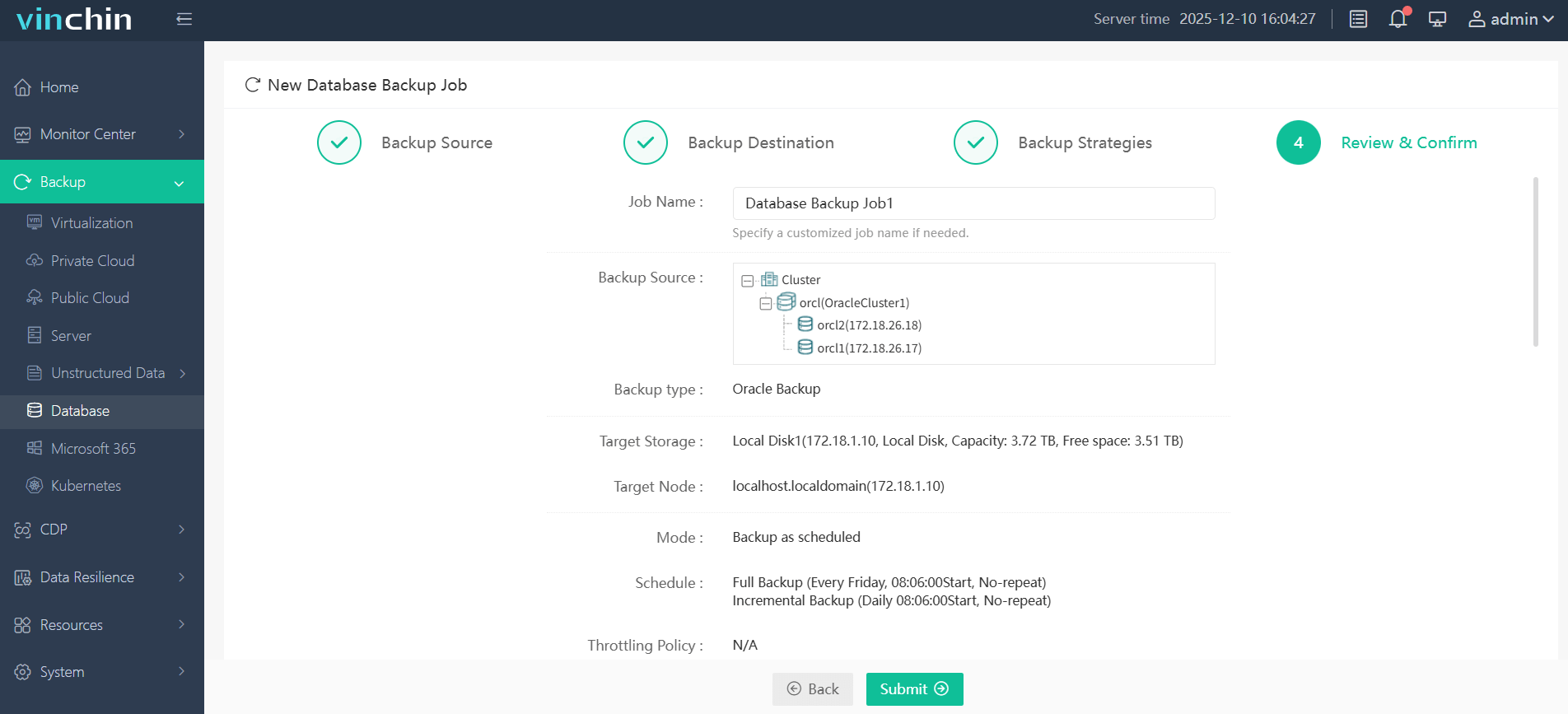
The intuitive web console makes managing Oracle database protection straightforward in four steps:
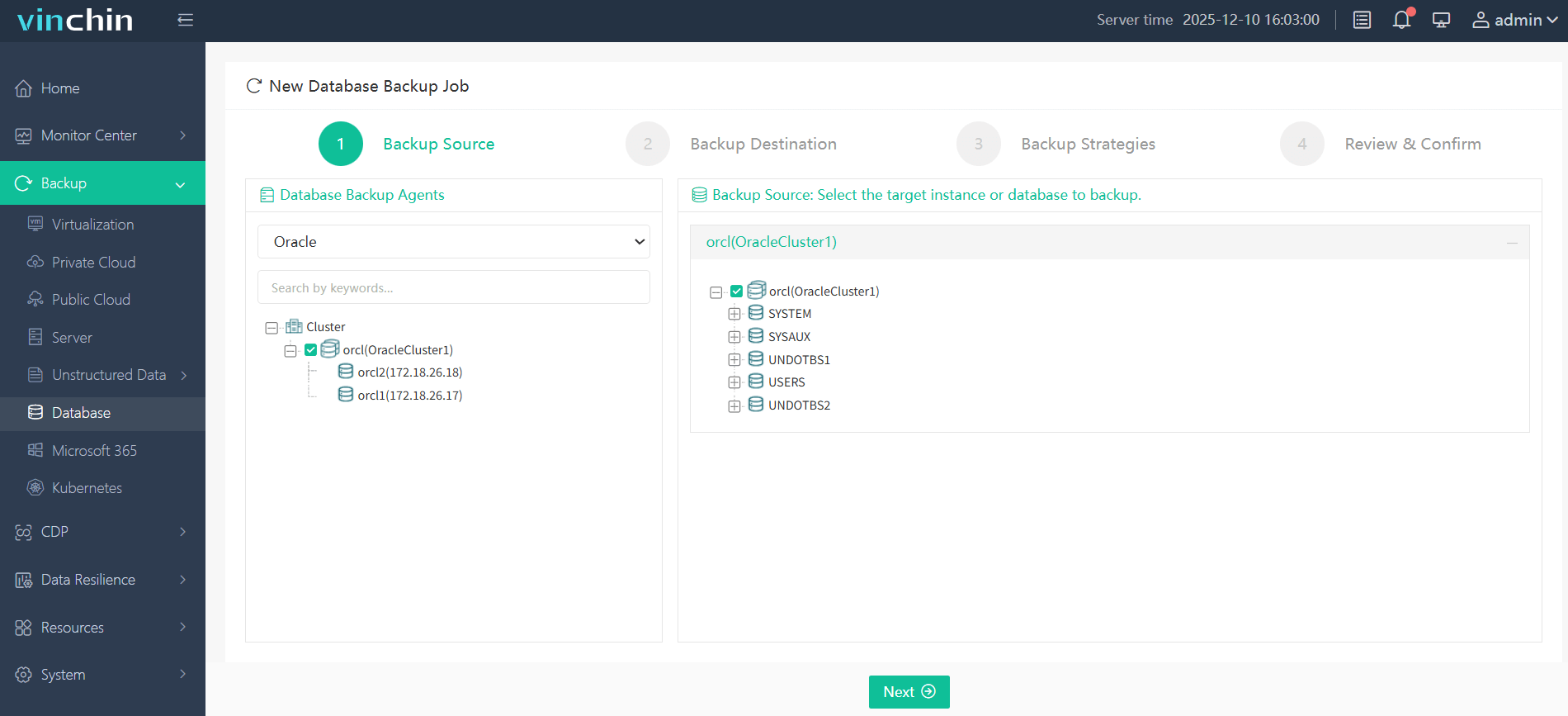
Step 1 — Select the Oracle database to back up;
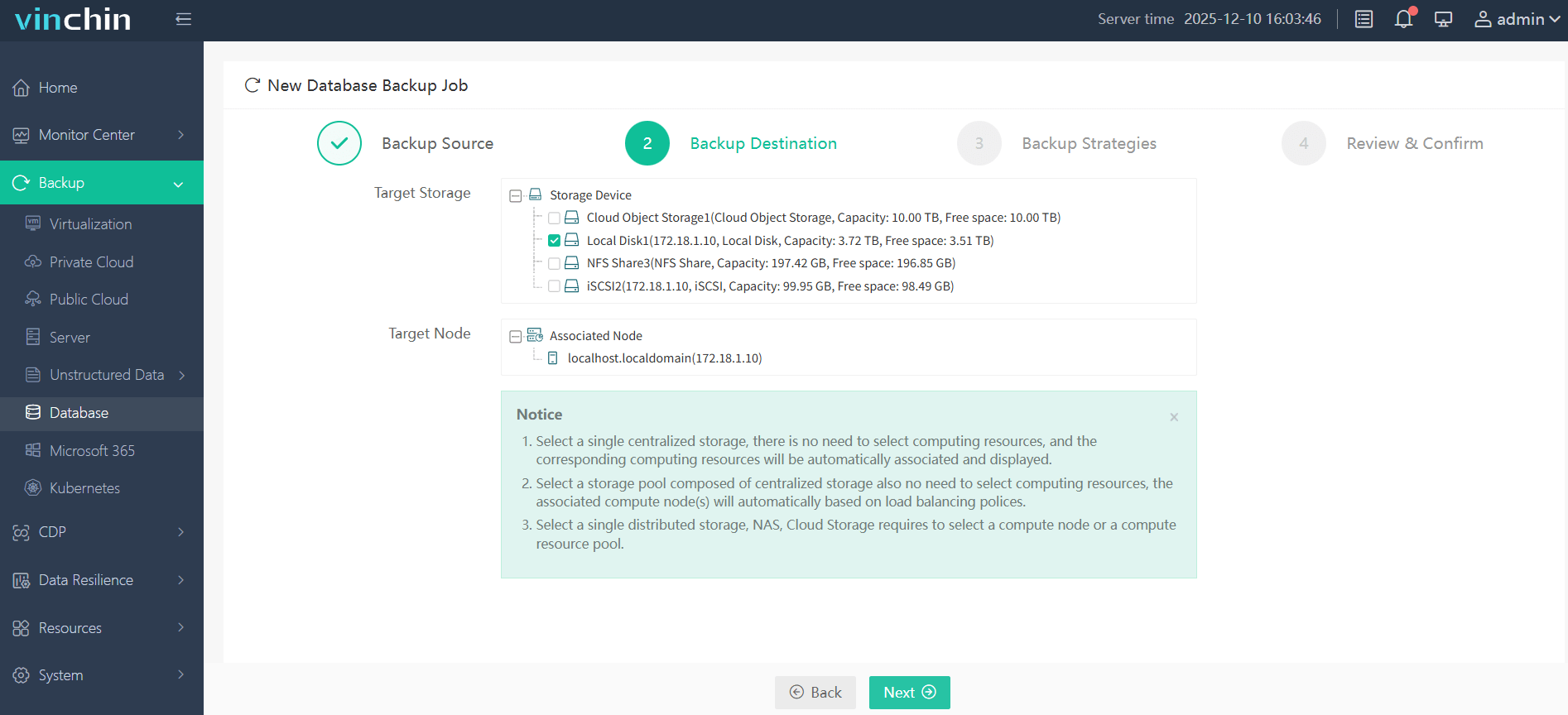
Step 2 — Choose appropriate storage destination;
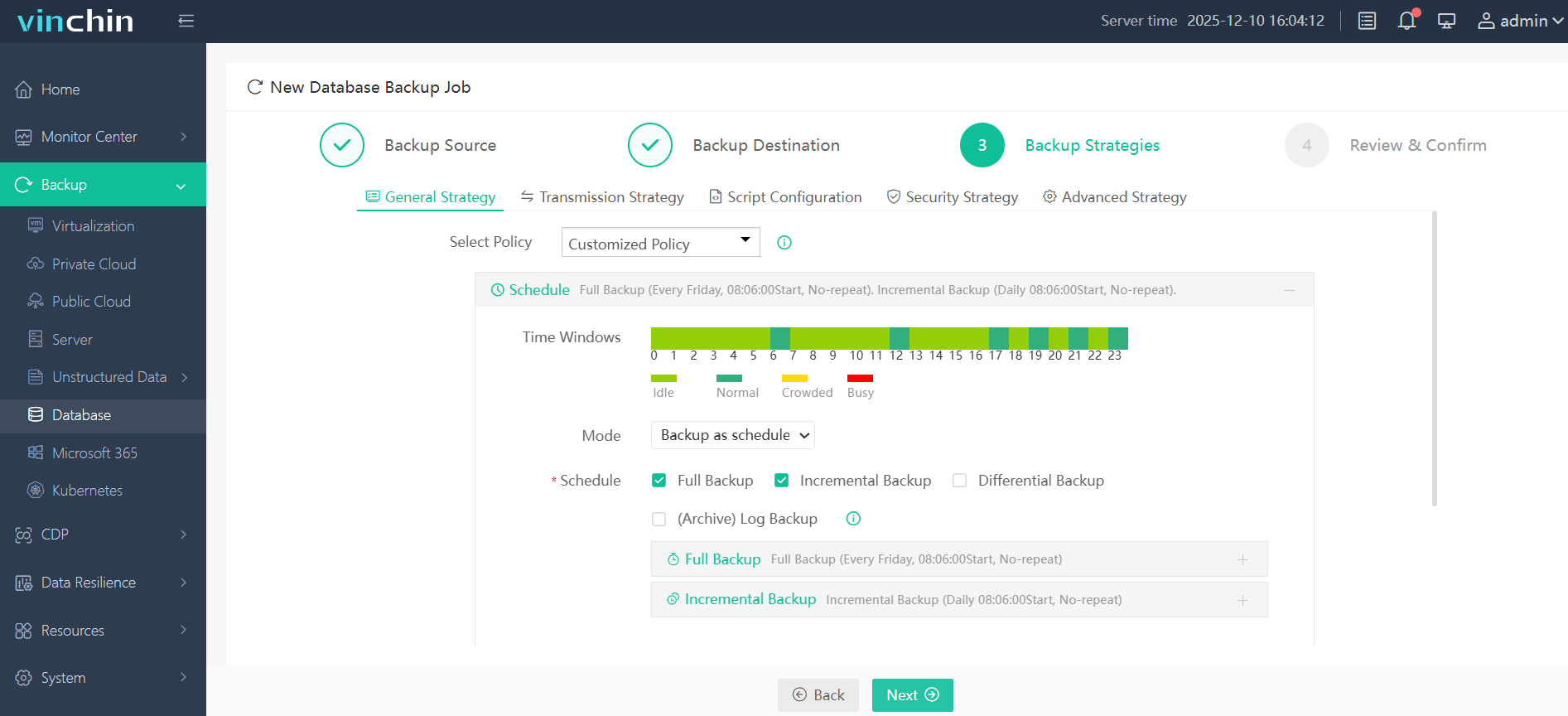
Step 3 — Define custom strategy parameters including schedules/policies/compression levels as needed;
Step 4 — Submit job execution instantly from anywhere via browser interface.
Recognized globally among enterprise customers for reliability and ease-of-use—with top industry ratings—you can try Vinchin Backup & Recovery risk-free today thanks to their fully featured sixty-day trial offer.
Interview Questions on RMAN Backup And Recovery FAQs
Q1: Can I schedule daily automated verification tests for my existing Oracle/RMAN backups?
A1: Yes—with scripts calling VALIDATE commands scheduled via cron/task scheduler alongside regular jobs.
Q2: If my archive log destination fills overnight will my next morning's scheduled hot-backup fail?
A2: Yes—the job will hang/fail until enough space becomes available again.
Q3: Can I move old completed archive logs offsite/tape without breaking future restores?
A3: Yes—as long as their locations remain registered/cataloged within repository/controlfile ahead of any needed future PITR/recovery operation.
Conclusion
Mastering both theory and practice around Oracle/RMAN makes any DBA stand out at interviews—and keeps production systems safer day-to-day! Vinchin offers modern centralized solutions making robust protection even simpler across complex environments—all backed by proven reliability trusted worldwide today.