Restoring an Oracle 19c database using RMAN is a vital skill for every operations administrator. Whether you face hardware failure, data corruption, or need to refresh a test system, knowing how to perform an RMAN restore can save hours of downtime. In this guide, we’ll explore key scenarios for restoring your Oracle 19c database with RMAN—covering full restores, point-in-time recovery (PITR), and tablespace-level restores. We’ll also discuss best practices before starting a restore and offer troubleshooting advice for common issues.
What Is Oracle 19c RMAN Restore?
Oracle Recovery Manager (RMAN) is Oracle’s built-in tool for backup and recovery tasks. When you run an RMAN restore operation in Oracle 19c, you copy backed-up files—such as datafiles or control files—from storage back into their original or new locations on disk. After restoring these files, you usually run a recovery step that applies archived redo logs to bring your database to a consistent state.
The restore phase physically copies files from backup media to disk. The recover phase uses archived redo logs to replay changes made since the last backup so your data is up-to-date. With RMAN in Oracle 19c, you can perform full database restores, point-in-time recoveries (using time or SCN), or targeted tablespace restores—giving you flexibility in many disaster scenarios.
Pre-Restore Preparation and Considerations
Before starting any restore process with RMAN in Oracle 19c, preparation is crucial. Skipping these steps can lead to failed recoveries or lost data.
First, confirm that valid backups exist for all needed components: datafiles, control file(s), server parameter file (spfile), and archived redo logs. Use commands like LIST BACKUP in RMAN to check what’s available.
Next, verify enough free disk space exists on your target server for both restored files and temporary working space during recovery operations.
If restoring onto new hardware or after catastrophic failure where no control file exists on disk:
Know your DBID; it’s essential when restoring from autobackup.
Ensure access to password files if authentication is required.
Confirm that environment variables such as ORACLE_SID are set correctly.
Finally, always validate your backups regularly using RESTORE ... VALIDATE commands so you’re not caught off guard during emergencies.
Method 1. Full Database Restore with RMAN
A full database restore brings back the entire database from backup—a common requirement after major failures or when cloning databases onto new servers.
Prerequisites and Considerations
Make sure all necessary backup pieces are accessible: this includes recent full backups of datafiles plus archived redo logs covering changes since that backup was taken. If restoring without access to current control files or spfile on disk (for example after total loss), be ready to use autobackup features within RMAN.
Step-by-Step Process
1. Set up the environment:
Log in as the correct OS user; set ORACLE_SID. Start an RMAN session connected as sysdba.
2. Restore SPFILE if missing:
If there’s no spfile present locally:
   STARTUP FORCE NOMOUNT;
   RESTORE SPFILE FROM AUTOBACKUP;
Or specify path if known:
RESTORE SPFILE FROM '/path/to/spfile_backup';
3. Start instance in NOMOUNT mode:
STARTUP FORCE NOMOUNT;
4. Restore Control File:
If no control file exists:
RESTORE CONTROLFILE FROM AUTOBACKUP;
Or specify location directly:
RESTORE CONTROLFILE FROM '/path/to/controlfile_backup';
5. Mount Database:
Bring instance into mount state so datafiles can be restored:
ALTER DATABASE MOUNT;
6. Catalog Backup Files if Needed:
If moving backups between servers/directories:
CATALOG START WITH '/path/to/backup/';
7. Restore Database Datafiles:
Copy all backed-up datafiles into place:
RESTORE DATABASE;
8. Recover Database:
Apply archived redo logs so all transactions since last backup are included:
RECOVER DATABASE;
9. Open Database with RESETLOGS:
Complete recovery process by resetting online logs:
ALTER DATABASE OPEN RESETLOGS;
10. Validate Restoration Success:
Run quick queries against key tables/views such as SELECT COUNT(*) FROM v$database; or check application connectivity before returning system to production use.
This sequence ensures all critical components return safely—even after severe outages—by leveraging both physical restoration of files and logical replay of transaction history via redo logs.
Method 2: Point-in-Time Recovery Steps
Sometimes mistakes happen—a dropped table at noon needs undoing! That’s where Point-in-Time Recovery (PITR) comes in handy: it allows rolling back only partway through transaction history rather than applying every change up until now.
Critical Considerations Before PITR
Point-in-time recovery is destructive beyond its target time—all changes made afterward are lost forever unless separately backed up first! Always double-check your intended target time or SCN before proceeding; consider taking a fresh full backup beforehand just in case plans change mid-recovery.
Performing PITR Using Time or SCN
1. Start Instance & Mount Database:
STARTUP MOUNT;
2a. Restore Using Target Time:
RUN {
 SET UNTIL TIME "TO_DATE('2024-06-01 10:00:00','YYYY-MM-DD HH24:MI:SS')";
 RESTORE DATABASE;
 RECOVER DATABASE;
}
2b. Or Restore Using Target SCN:
RUN {
 SET UNTIL SCN 467530;
 RESTORE DATABASE;
 RECOVER DATABASE;
}
3. Open With RESETLOGS After Recovery Completes:
ALTER DATABASE OPEN RESETLOGS;
Always confirm which transactions should remain versus those needing rollback—and communicate clearly with stakeholders about what will be lost!
Method 3: Tablespace-Level Restore Using RMAN
Not every disaster requires bringing down an entire system! Sometimes only one tablespace suffers corruption due to hardware faults or accidental deletion of its underlying datafile(s).
When To Use This Method
Tablespace-level restores work best when non-system tablespaces are affected—for example user-created areas holding business application data but not core dictionary objects found within SYSTEM/SYSAUX spaces (which require broader action). While offline during repair work users lose access only to impacted objects—not everything else!
Steps To Restore A Tablespace
1. Take damaged tablespace offline immediately using SQL*Plus:
ALTER TABLESPACE users OFFLINE IMMEDIATE;
2a.Restore & Recover via RMAN:
RESTORE TABLESPACE users;
RECOVER TABLESPACE users;
(You may list multiple tablespaces separated by commas.)
2b.Bring repaired tablespace(s) back online once complete:
ALTER TABLESPACE users ONLINE;
Remember—while offline applications depending on those segments cannot function fully until repairs finish!
Introducing Vinchin Backup & Recovery for Oracle Backup & Restore
For organizations seeking streamlined enterprise-grade protection beyond manual methods, Vinchin Backup & Recovery stands out as a professional solution supporting today’s mainstream databases—including Oracle, MySQL, SQL Server, MariaDB, PostgreSQL, PostgresPro, and TiDB—with robust capabilities tailored especially for environments running Oracle databases like yours.
Key features include incremental backup support for efficient storage usage on Oracle systems; batch database backup; flexible GFS retention policies management; cloud backup and tape archiving integration; and comprehensive integrity checks ensuring reliable recoverability across platforms—all designed for operational simplicity and compliance.
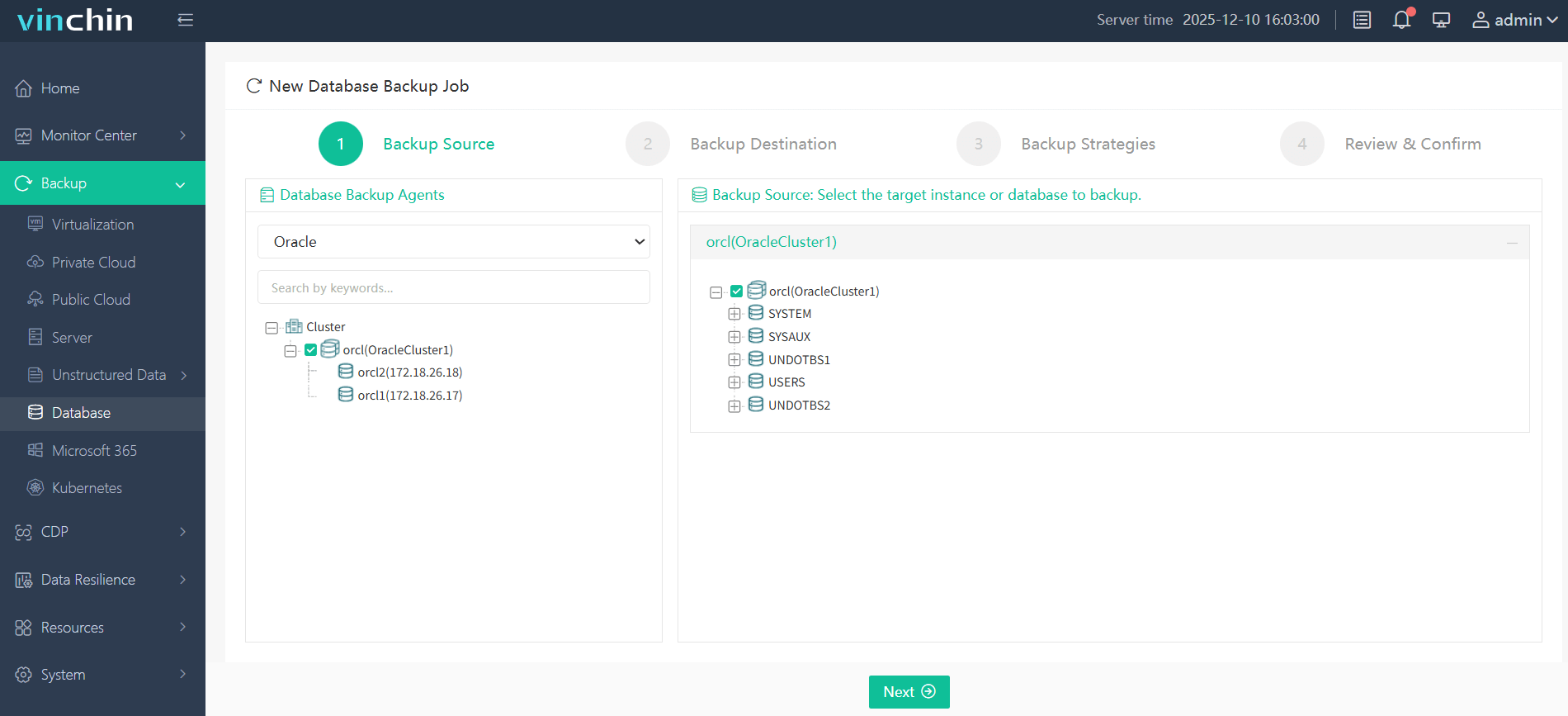
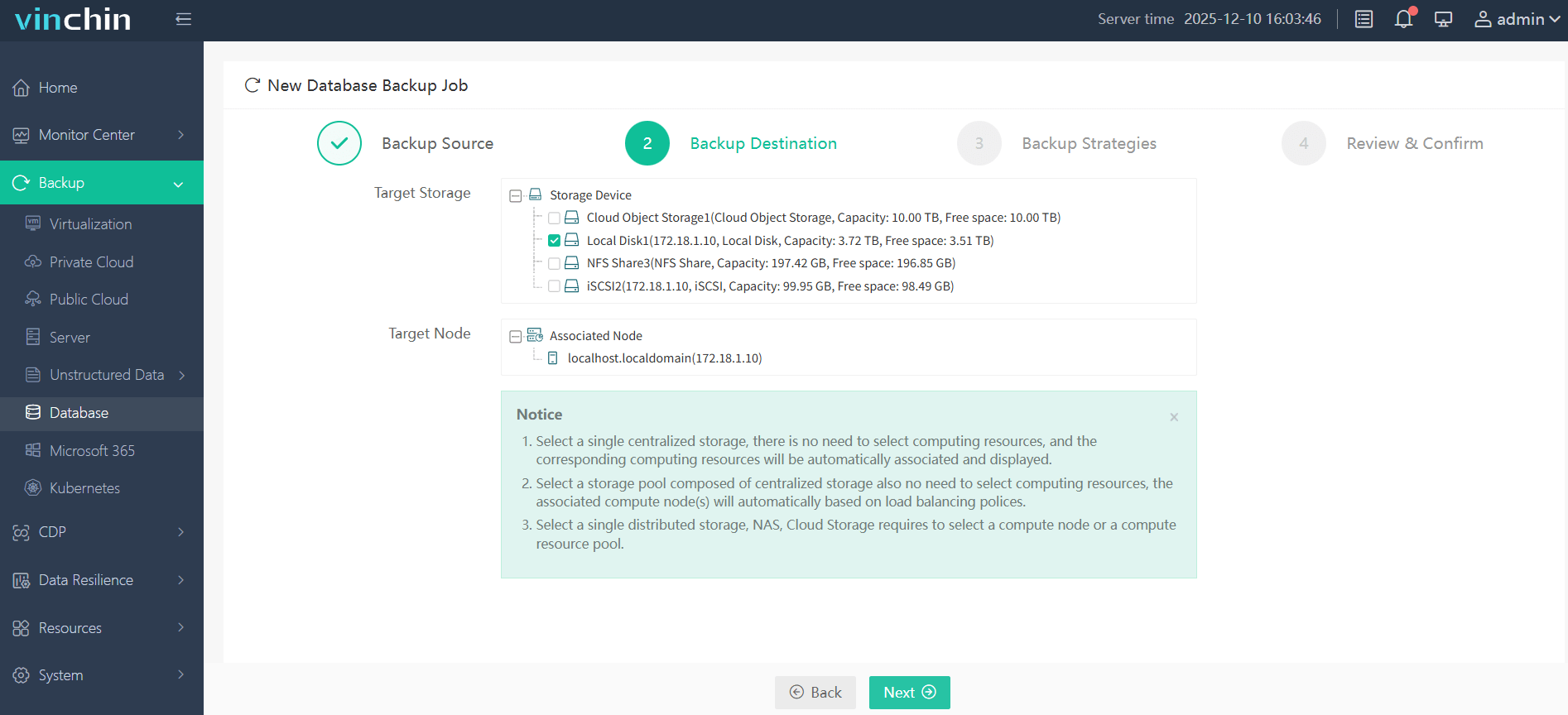
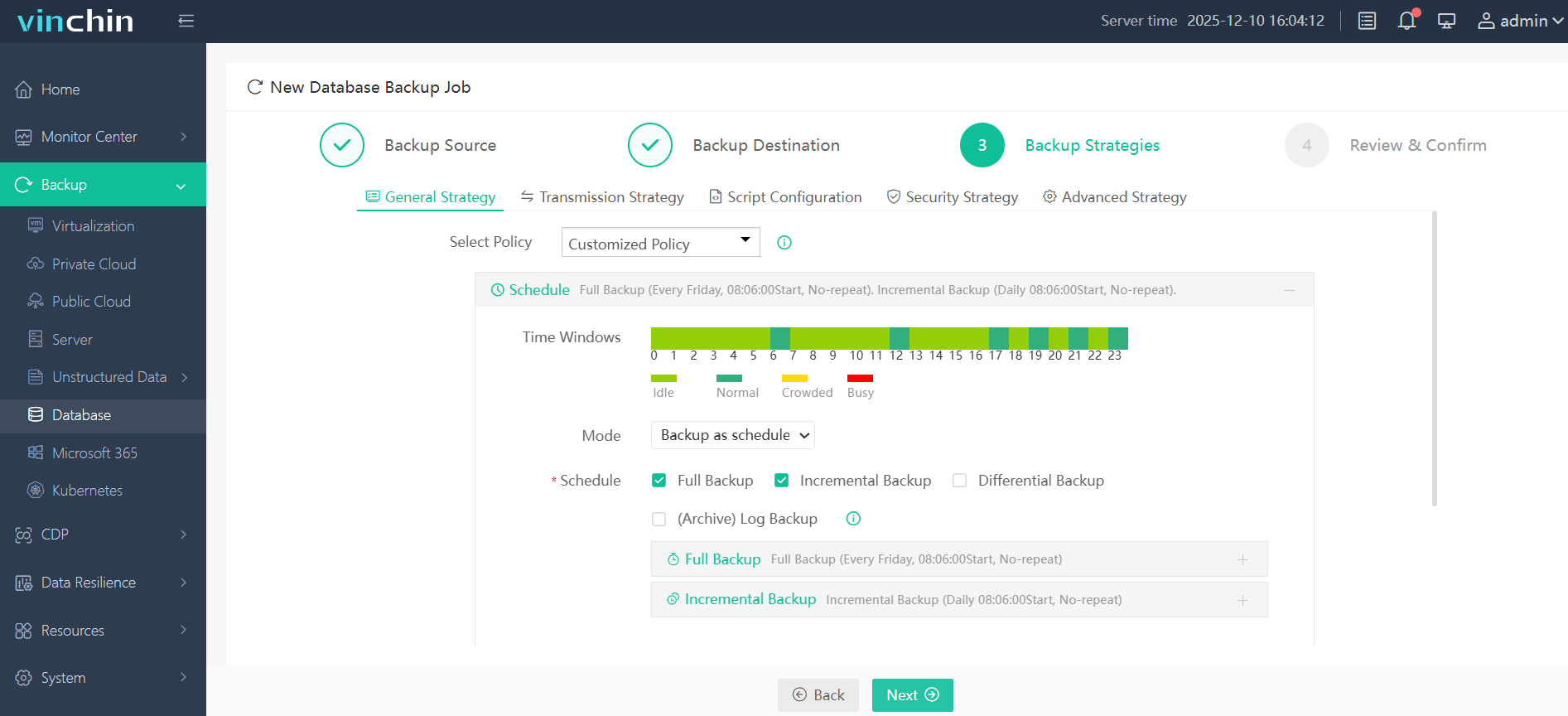
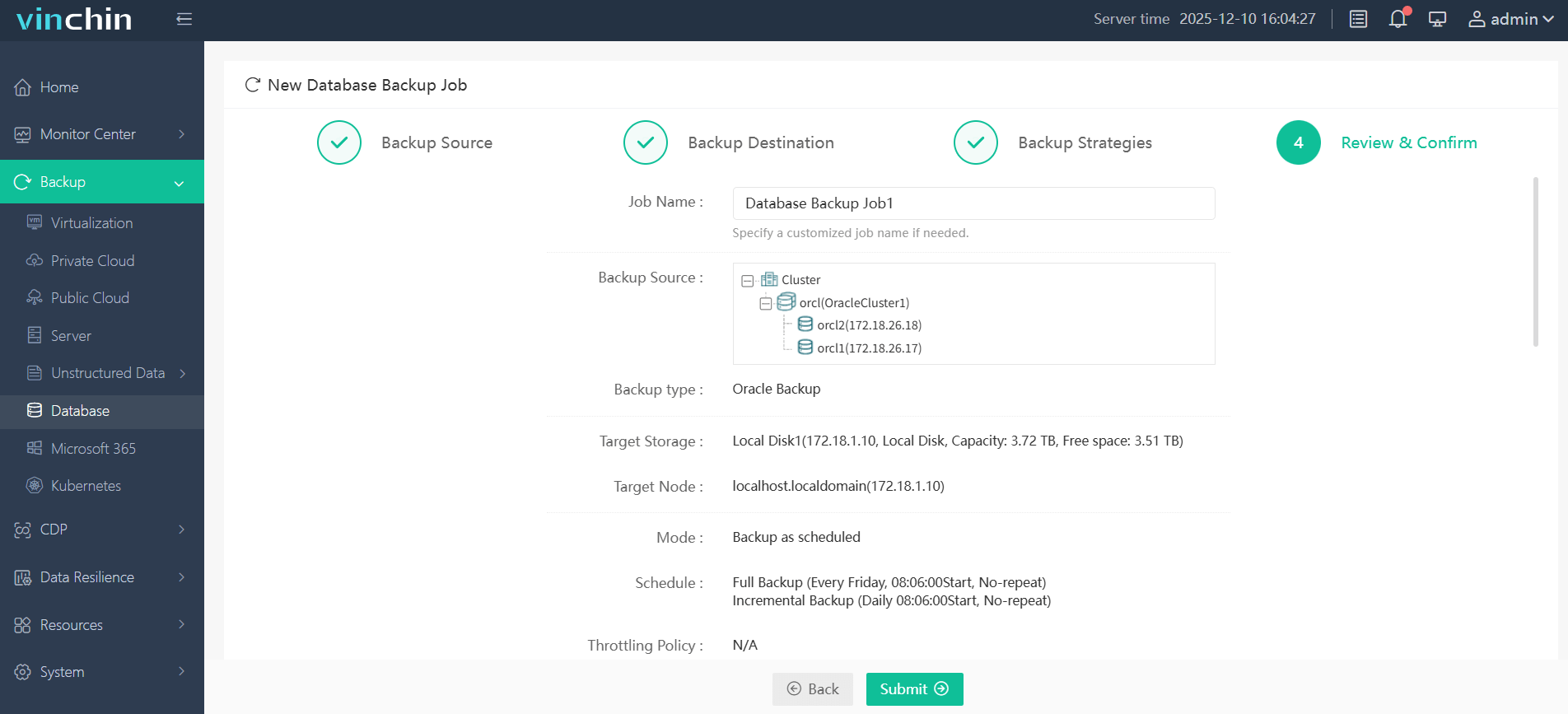
With Vinchin Backup & Recovery's intuitive web console interface backing up an Oracle database typically involves just four steps:
Step 1. Select the Oracle database to back up
Step 2. Choose the backup storage
Step 3. Define the backup strategy
Step 4. Submit the job
Recognized globally among enterprise customers with top ratings, Vinchin Backup & Recovery offers a risk-free sixty-day trial—click download now and experience leading-edge protection firsthand!
Oracle 19c RMAN Restore Database FAQs
Q1: Can I perform an Oracle 19c point-in-time recovery without losing current changes?
A1: No; PITR discards all changes made after the chosen time unless they were separately exported beforehand.
Q2: How do I quickly check which backups exist before attempting a restore?
A2: Connect with RMAN then run LIST BACKUP command—it shows available sets instantly.
Q3: What should I do if my restored database fails to open due to inconsistent archives?
A3: Re-run RECOVER DATABASE command ensuring all needed archive logs are present then try ALTER DATABASE OPEN RESETLOGS again.
Conclusion
Mastering manual restores using Oracle 19c's built-in tools prepares administrators for nearly any outage scenario.Full restores,PITR,and targeted repairs each have their place.For organizations seeking even greater reliability,Vinchin delivers automated protection trusted worldwide.Try it today risk-free!