Running Oracle RMAN backups without visibility can lead to missed backup windows or even failed recoveries. For operations administrators, knowing exactly how far along a backup job is means you can meet service-level agreements (SLAs), avoid recovery point objective (RPO) violations, and keep your data safe at all times. Monitoring RMAN backup progress is not just a convenience—it’s essential for planning maintenance tasks and responding quickly if something goes wrong. So what are the best ways to check on your backup jobs? Let’s walk through each method step by step.
What Is RMAN Backup Progress Monitoring?
RMAN (Recovery Manager) is Oracle's built-in tool for database backup and recovery tasks. Monitoring RMAN backup progress involves tracking how much of a running job has completed, how much remains, and whether everything is proceeding smoothly. This information comes from Oracle's dynamic performance views and management tools that provide both real-time updates and historical records of past jobs.
With proper monitoring in place, you can see percentage complete values, estimated time remaining, start/end times for each job session—and spot issues before they become disasters. These insights help you plan resources efficiently and prove compliance with internal or external audit requirements.
How to Monitor RMAN Backup Progress Using SQL Queries?
SQL queries offer direct access to detailed information about ongoing or past RMAN jobs—making them ideal for administrators who want granular control.
To monitor an active RMAN backup job:
1. Open SQL*Plus or another SQL client.
2. Connect as a user with SELECT privilege on V_$SESSION_LONGOPS (usually granted via SELECT_CATALOG_ROLE).
3. Run this query:
   SELECT SID,
          SERIAL#,
          CONTEXT,
          SOFAR,
          TOTALWORK,
          ROUND(SOFAR/TOTALWORK*100,2) AS "%_COMPLETE",
          CLIENT_INFO
     FROM V$SESSION_LONGOPS
    WHERE OPNAME LIKE 'RMAN%'
      AND OPNAME NOT LIKE '%aggregate%'
      AND TOTALWORK != 0
      AND SOFAR <> TOTALWORK;
This output shows each session’s ID (SID), work done so far (SOFAR), total expected work (TOTALWORK), completion percentage (%_COMPLETE), plus CLIENT_INFO, which often includes channel details set by RMAN itself.
You can rerun this query during your backup window; if you notice %_COMPLETE stuck at one value for too long—or no rows returned when you expect activity—it may indicate a problem such as resource contention or process hang-ups.
For completed jobs or historical review:
   SELECT SESSION_KEY,
          INPUT_TYPE,
          STATUS,
          TO_CHAR(START_TIME,'mm/dd/yy hh24:mi') AS START_TIME,
          TO_CHAR(END_TIME,'mm/dd/yy hh24:mi') AS END_TIME,
          ELAPSED_SECONDS/3600 AS HOURS
     FROM V$RMAN_BACKUP_JOB_DETAILS
 ORDER BY SESSION_KEY;
This summary lists every recent backup session by type (full/Incremental/archive log), status (RUNNING, COMPLETED, FAILED), start/end timestamps, and elapsed hours—useful for trend analysis or compliance reporting.
How to Monitor RMAN Backup Progress with Oracle Enterprise Manager?
Not everyone wants command-line tools all day! If you prefer graphical dashboards—or need quick overviews across many databases—Oracle Enterprise Manager (OEM) offers powerful visual monitoring features built right into its web interface.
OEM uses the same underlying dynamic performance views (V$SESSION_LONGOPS, etc.) but presents them in easy-to-read charts and tables instead of raw SQL output—which saves time when managing multiple systems at once.
To monitor an active backup job in OEM:
1. Log in as a privileged user.
2. Navigate to your target database instance.
3. Click on Availability, then select Backup & Recovery.
4. Choose either Jobs or Backup Reports from the menu.
5. Find any running job; click its name for full details including percent complete, estimated finish time, warnings/errors encountered so far—and even drill down into specific channels if needed.
The dashboard auto-refreshes so there’s no need to rerun commands manually; plus you can configure email/SNMP alerts if jobs fail SLA targets or encounter errors mid-stream—a big win for busy teams juggling many responsibilities!
Menu names may vary slightly between OEM versions (12c vs 13c vs Cloud Control), but the general workflow remains consistent across releases according to official Oracle documentation.
Why Monitor RMAN Backup Progress Matters?
Why invest effort into monitoring? Because visibility equals control—and control means fewer surprises during audits or emergencies!
When you watch your backups closely:
You catch slowdowns early enough to intervene before missing SLAs.
You estimate end times accurately so maintenance windows stay predictable.
You collect evidence proving regular successful backups—a must-have during compliance reviews.
You reduce risk during disaster recovery scenarios where every minute counts against RTO/RPO objectives set by business stakeholders.
You spot trends over time that help forecast future capacity needs—enabling proactive upgrades rather than reactive firefighting later on!
Would anyone drive cross-country without checking their fuel gauge? Of course not! Treating database protection with similar care ensures smooth operations day after day—even under pressure from growth demands or regulatory scrutiny confirms this best practice industry-wide.
Introducing Vinchin: Streamlined Enterprise Database Backup & Recovery
Beyond native tools, organizations seeking robust enterprise-level protection should consider Vinchin Backup & Recovery—a professional solution supporting today’s mainstream databases including Oracle, MySQL, SQL Server, MariaDB, PostgreSQL, PostgresPro, and TiDB (with special focus here on Oracle). Vinchin Backup & Recovery delivers advanced capabilities such as batch database backup, Incremental backups support where available, cloud/tape archiving options, integrity check routines, and restore-to-new-server flexibility—all designed to maximize reliability while simplifying complex workflows. These features together ensure efficient scheduling policies and secure retention policies tailored for demanding production environments.
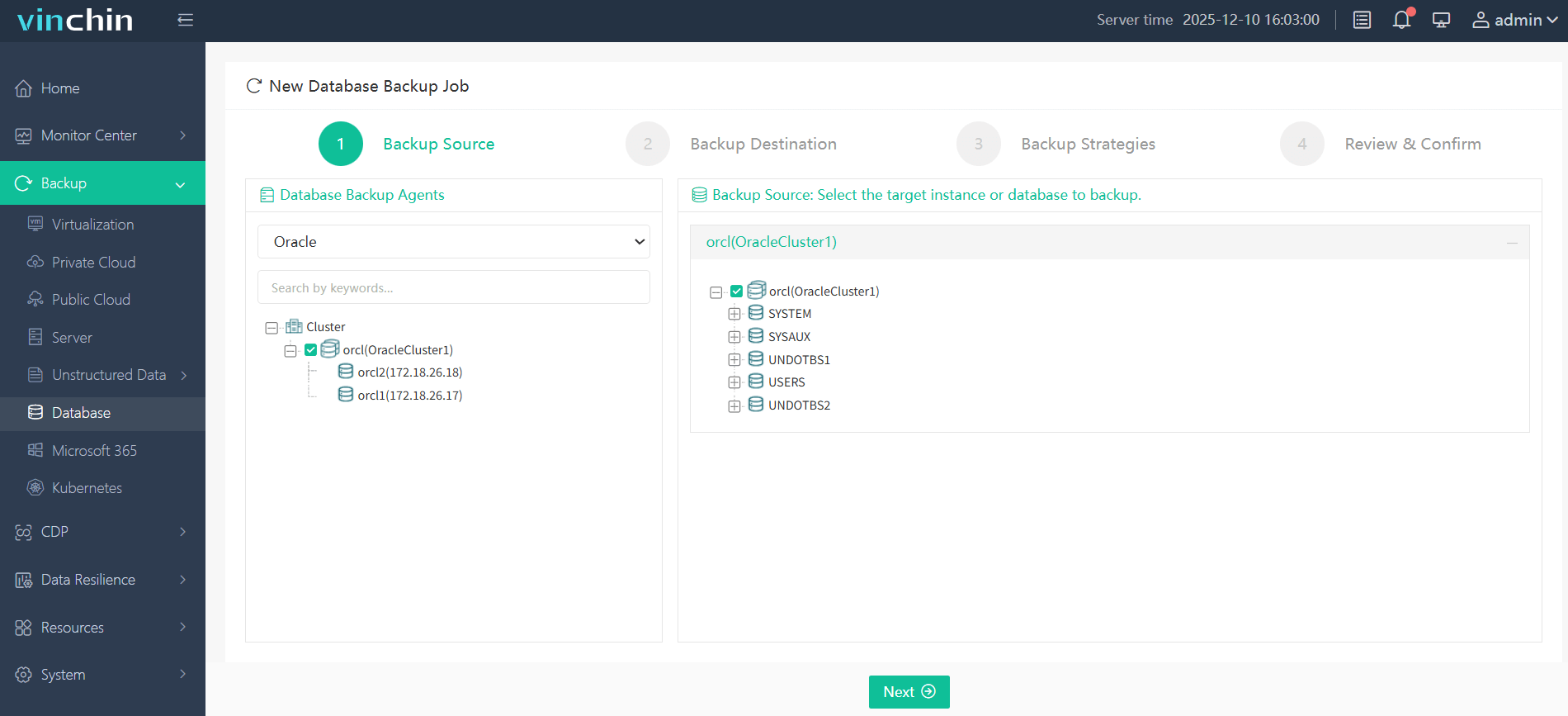
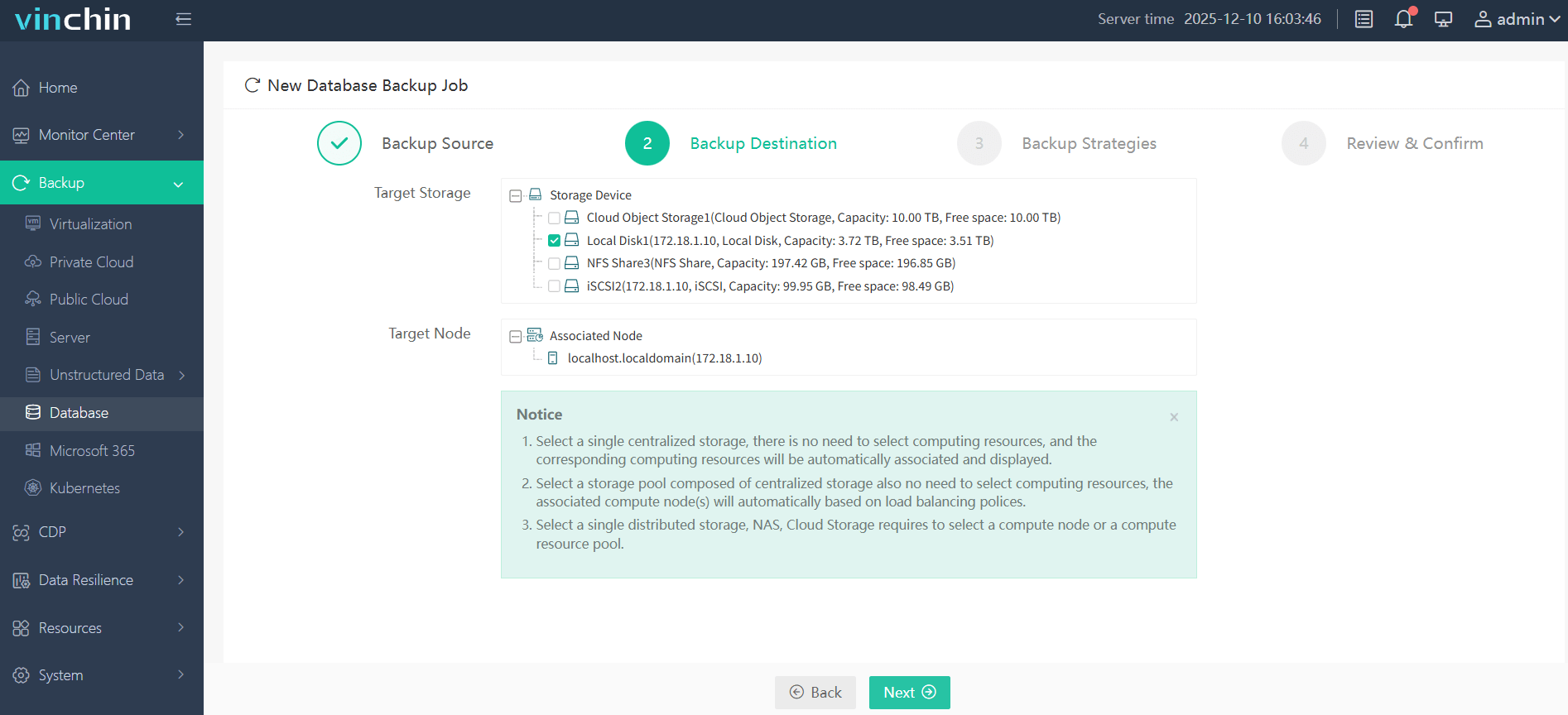
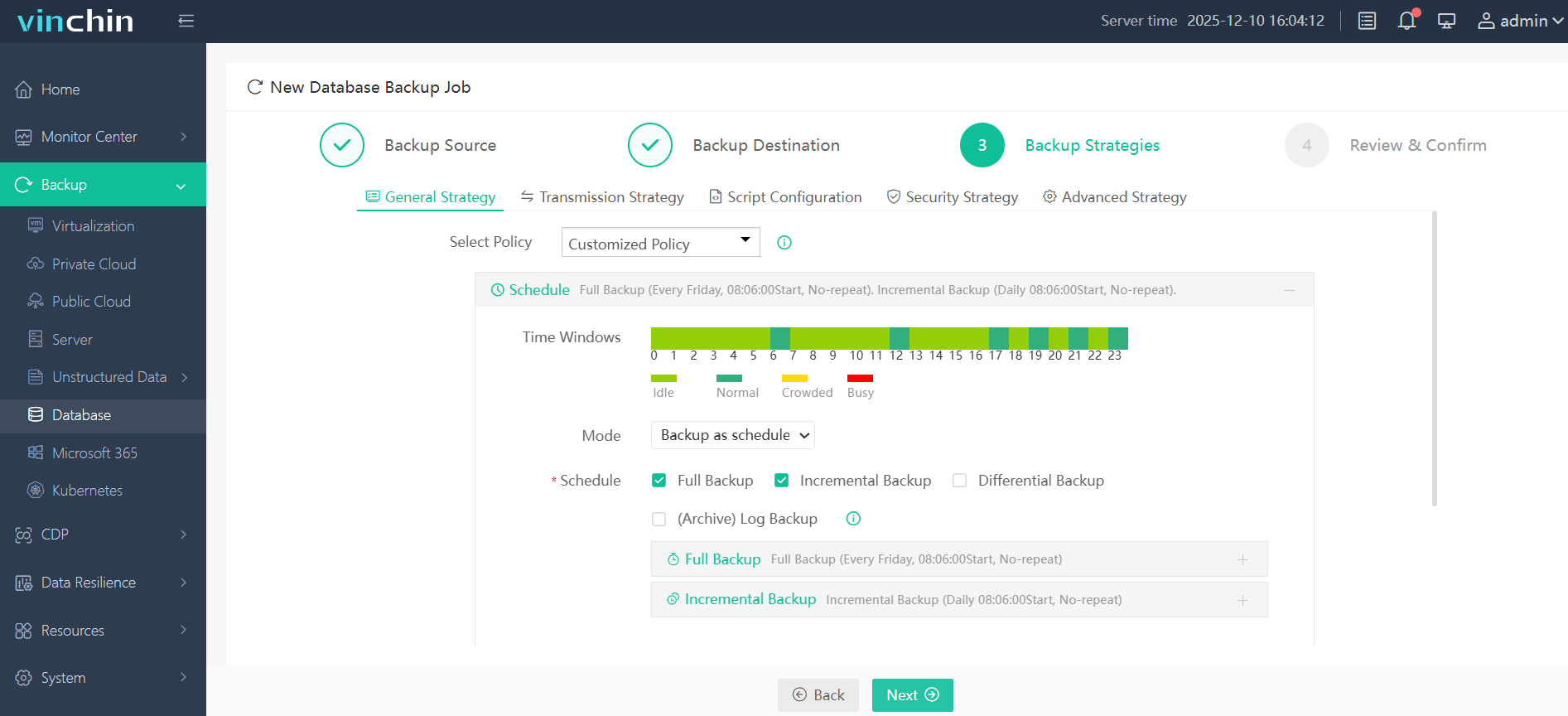
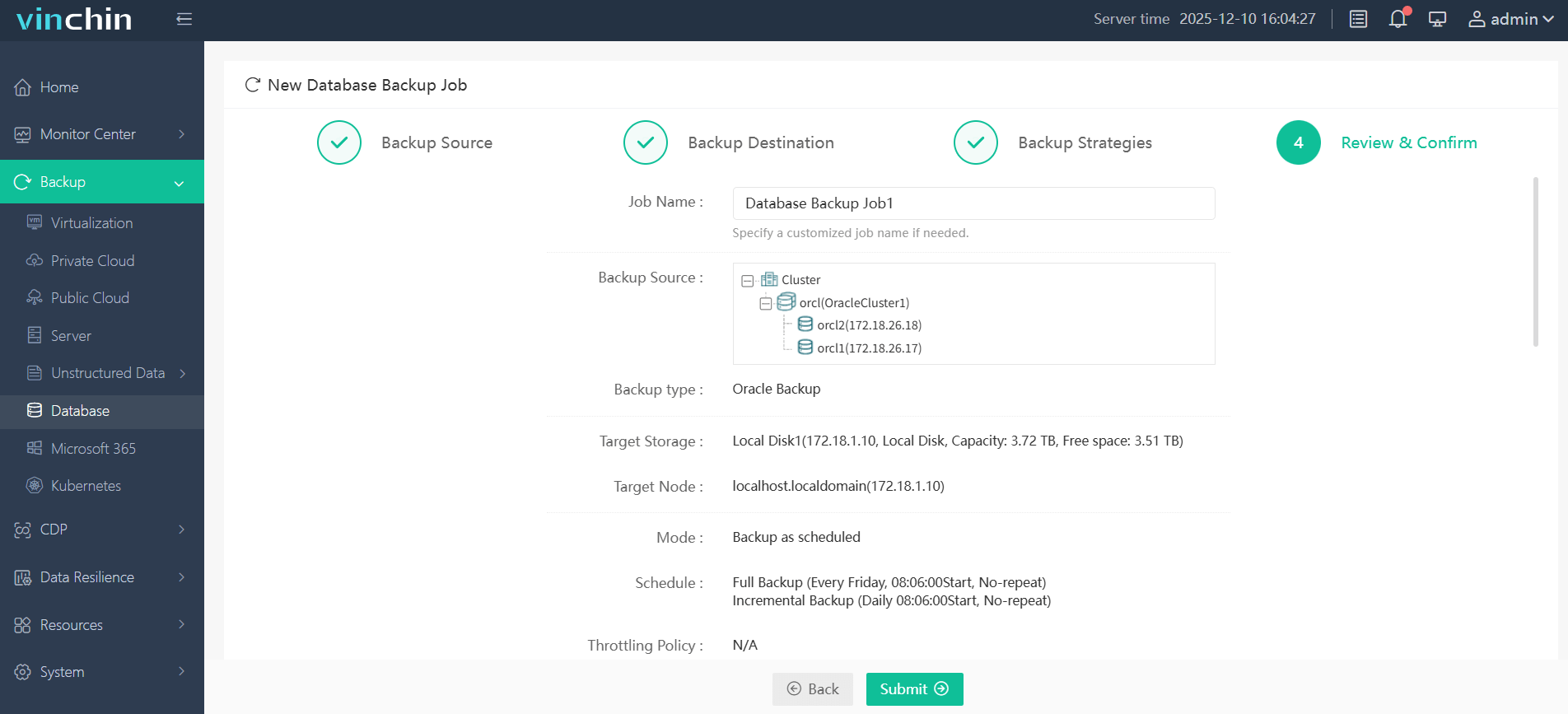
The intuitive web console makes safeguarding your Oracle database straightforward:
Step 1. Select the Oracle database to back up
Step 2. Choose the backup storage
Step 3. Define the backup strategy
Step 4. Submit the job
Recognized globally with top ratings among enterprise users worldwide—plus a strong customer base—Vinchin Backup & Recovery offers a fully featured free trial for 60 days; click download now to experience next-generation data protection firsthand!
Monitor RMAN Backup Progress FAQs
Q1: How do I estimate remaining time for my current RMAN backup?
A1: Query V$SESSION_LONGOPS; check columns like TIME_REMAINING alongside %_COMPLETE values shown per session/channel.
Q2: What should I do if my RMAN progress stalls unexpectedly?
A2: Check waits using V$SESSION_WAIT for relevant SIDs; verify system resources such as disk space/I/O throughput; confirm destination file system isn’t full; investigate OS-level logs if needed.
Q3: Can I monitor multiple concurrent channels within one job?
A3: Yes—each channel appears separately in V$SESSION_LONGOPS; filter results by SID/client_info/opname fields as required for clarity across sessions/jobs/channels involved simultaneously.
Conclusion
Monitoring RMAN backup progress gives operations teams real-time insight into both routine health checks and urgent troubleshooting situations alike—whether through direct SQL queries’ detail-rich outputs or OEM dashboards’ broad overviews tailored per environment size/expertise level desired! For streamlined management across platforms—including robust policy-driven workflows—consider trying Vinchin today!