Managing archived redo logs is a critical task for any Oracle database administrator. These logs are vital for recovering your database after data loss or corruption. If you do not control how these logs are deleted, you risk filling up disk space or losing recovery options. One important setting that controls this behavior is the archivelog deletion policy. Setting this policy to "none" gives you full authority over log retention—but what does that mean in practice? Let’s explore how this works step by step.
What Is Oracle Archive Log Deletion Policy?
The archive log deletion policy in Oracle defines when it is safe to remove archived redo logs from storage. Archived redo logs capture every change made to your database since the last backup or checkpoint. They are essential for point-in-time recovery because they allow you to replay changes if something goes wrong.
By default, Oracle does not delete these logs automatically; instead, it waits for an explicit command or a configured policy before removing them. The deletion policy can be tailored based on your needs:
You might require that each log be backed up a certain number of times before deletion.
You may want all standby databases to apply each log before it gets removed from primary storage.
Or you could combine both requirements.
This flexibility helps organizations balance between minimizing risk—by keeping enough logs—and saving storage space. The right configuration depends on your business’s tolerance for risk versus cost.
Why Set Deletion Policy to None?
Choosing "none" as your archivelog deletion policy means Oracle will never delete archived redo logs automatically through Recovery Manager (RMAN). This is actually the default state unless changed by an administrator.
Why would anyone want such a hands-off approach? There are several reasons:
First, some organizations must keep all archived logs due to compliance rules or audit trails. In other cases, administrators prefer manual control so nothing gets deleted until they decide it is safe—especially during migrations or troubleshooting periods.
Setting the policy to "none" ensures no automated process removes these files without your knowledge. However, with great power comes responsibility: you must monitor disk usage closely because old archive logs will accumulate indefinitely unless manually managed.
How to Configure Archivelog Deletion Policy to None in Oracle?
Changing the archivelog deletion policy uses RMAN (Recovery Manager), which is Oracle’s tool for backup and recovery tasks. Before making changes, always ensure you have recent backups of both datafiles and archived redo logs.
Prerequisites:
Make sure you connect as a user with SYSDBA or SYSBACKUP privileges. Also confirm there are no ongoing recovery operations dependent on existing archive logs.
Here’s how you set the archivelog deletion policy to "none":
1. Open a terminal window on your server where Oracle runs.
2. Start RMAN by entering rman target / if connecting locally as SYSDBA; use rman target sys/password@service if connecting remotely.
3. At the RMAN prompt, enter:
CONFIGURE ARCHIVELOG DELETION POLICY TO NONE;
4. To check your current setting at any time:
SHOW ARCHIVELOG DELETION POLICY;
Once set to "none," RMAN will not delete any archived redo logs unless you issue manual commands later. This configuration applies only to the connected database instance—if managing multiple databases or Data Guard environments, repeat these steps as needed per instance.
Vinchin Backup & Recovery: Enterprise-Level Protection for Your Oracle Database
After configuring an archivelog deletion policy of “none,” ensuring robust backup coverage becomes even more crucial for maintaining recoverability and compliance in complex environments like Oracle databases. Vinchin Backup & Recovery stands out as a professional enterprise-level solution supporting mainstream platforms including Oracle, MySQL, SQL Server, MariaDB, PostgreSQL, PostgresPro, and TiDB—with deep integration tailored especially for mission-critical systems such as Oracle Database.
Key features include incremental backup support (for efficient protection), batch database backup capabilities (for streamlined operations), advanced source-side compression (to optimize storage), flexible data retention policies including GFS retention strategies (to meet regulatory demands), and multi-level data compression options—all designed collectively to maximize efficiency while safeguarding business continuity across diverse workloads.
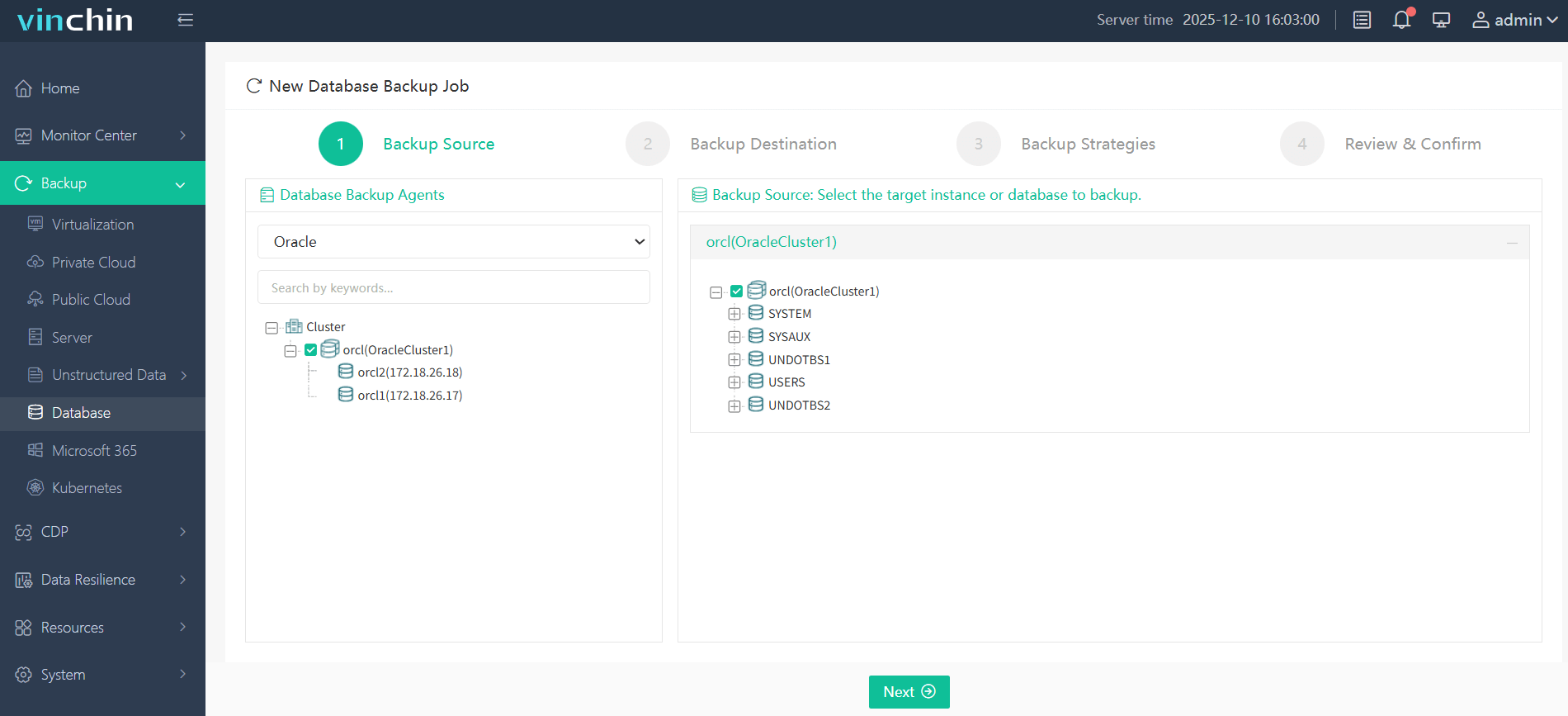
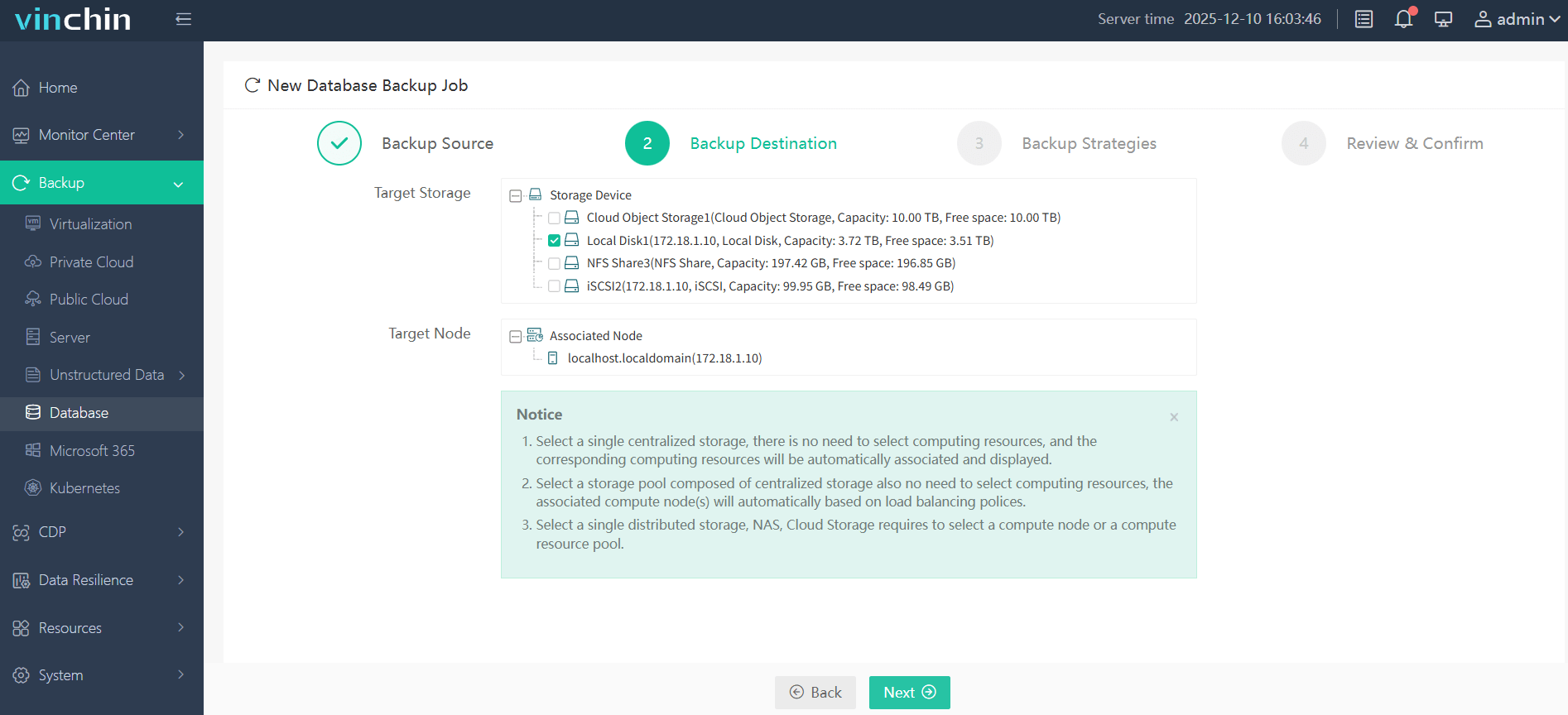
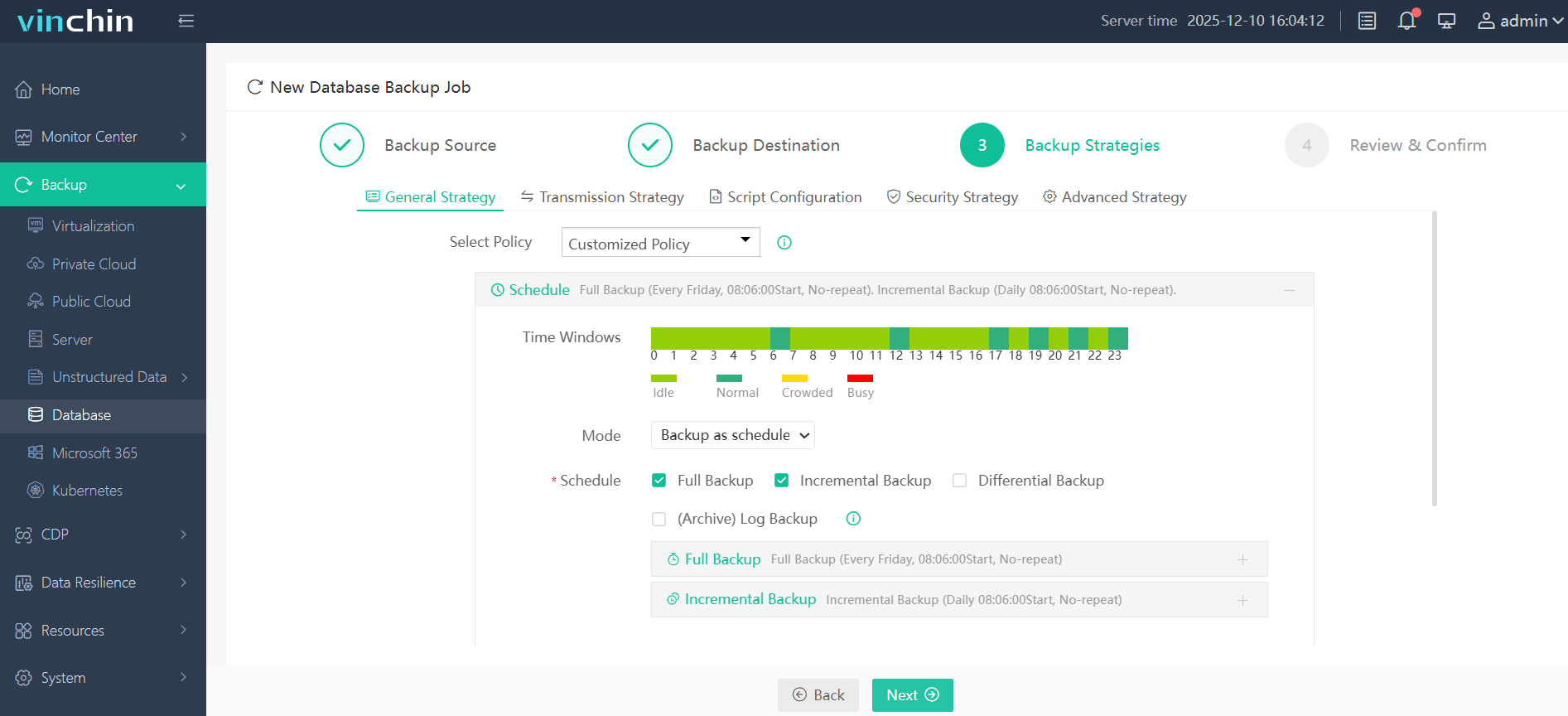
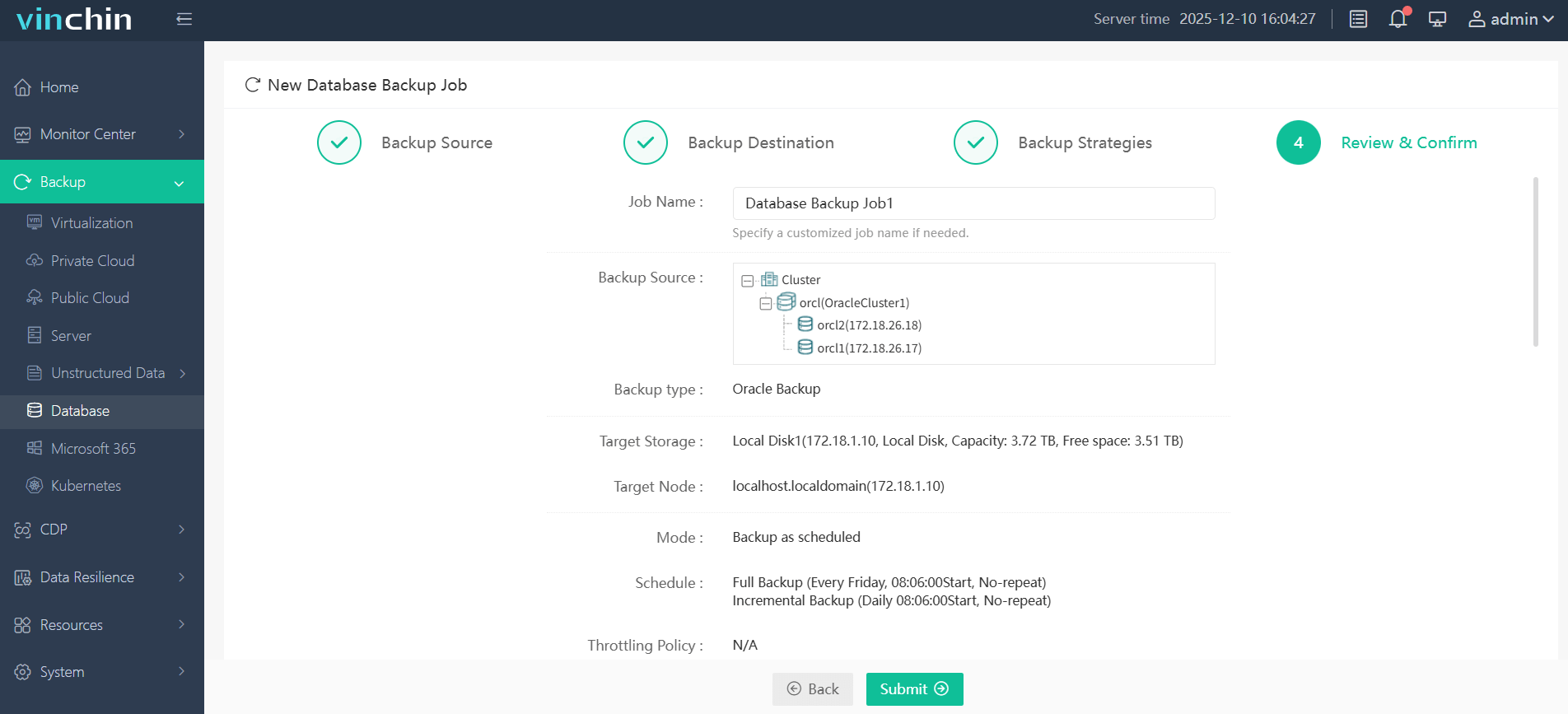
Vinchin Backup & Recovery offers an intuitive web console that simplifies complex processes into four clear steps:
Step 1. Select the Oracle database to back up
Step 2. Choose the backup storage
Step 3. Define the backup strategy
Step 4. Submit the job
Recognized globally with top ratings and trusted by thousands of enterprises,Vinchin Backup & Recovery delivers comprehensive protection—try its full-featured edition free for 60 days by clicking below!
FAQs About Configuring Archivelog Deletion Policy To None
Q1: What happens if my disk fills up while archivelog deletion policy is set to none?
You cannot create new archives; transactions may fail until space becomes available through manual cleanup using RMAN commands like DELETE ARCHIVELOG.
Q2: Can I change from “none” back to another archivelog deletion policy without restarting my database?
Yes; simply run CONFIGURE ARCHIVELOG DELETION POLICY TO <desired_policy> in RMAN—the change takes effect immediately without requiring downtime.
Q3: Will setting archivelog deletion policy to none affect my ability to perform point-in-time recovery?
No; having more retained archives improves recovery options—as long as old archives aren’t deleted prematurely outside of controlled processes.
Conclusion
Configuring archivelog deletion policy in Oracle Database gives administrators precise control over log retention but demands careful oversight when set to “none.” For robust protection alongside flexible policies like this one,Vinchin delivers automated backups plus easy management—all through its intuitive web console.Try Vinchin free today!