Managing backups in Oracle databases can feel overwhelming—especially when your environment grows large or complex. The catalog database in Oracle offers a powerful way to centralize backup metadata and protect your recovery information over time. In this guide, you’ll learn what a catalog database is, why it matters for robust backup management, and how to set one up using Oracle’s Recovery Manager (RMAN). Whether you’re just starting out or have years of experience with Oracle administration, you’ll find clear explanations alongside practical steps that build from basics to advanced techniques.
What Is Catalog Database in Oracle?
The catalog database in Oracle is more than just another schema—it’s called the recovery catalog, and it plays a vital role in backup management. Instead of storing all backup metadata locally within each control file (which has size limits), RMAN uses the recovery catalog as a centralized repository for metadata about backups, archived logs, scripts, and even database structures across multiple databases.
This separation means your backup history isn’t lost if you lose a control file or need to rebuild your environment after disaster strikes. The recovery catalog keeps persistent records that help you manage reporting tasks or coordinate restores across many systems at once—a must-have feature for any enterprise-scale operation.
Why Use Catalog Database in Oracle?
Why should every serious administrator consider using a catalog database in Oracle?
First off: redundancy. If both your control file and local backups disappear due to hardware failure or human error, having an external recovery catalog could mean the difference between quick restoration and total data loss.
Second: centralization simplifies life when managing several databases at once—you get unified views of all backup activities without logging into each system separately. Third: long-term retention becomes possible because control files only hold limited history before overwriting old records; catalogs can store years’ worth of data if needed for compliance or audits.
Finally: some advanced RMAN features—including stored scripts for automation or Data Guard integration—require access to a recovery catalog by design. In short? If uptime matters (and when doesn’t it?), building out your own catalog database is essential groundwork.
Method 1: Setting Up RMAN Recovery Catalog
Setting up an RMAN recovery catalog involves several key phases—from preparing your host system through ongoing maintenance after deployment. Let’s break down each stage so you know exactly what to expect along the way.
Prepare the Recovery Catalog Host Database
Start by choosing which database will host your recovery catalog schema—it should never be one of your target production databases! Using a separate instance reduces risk during outages or upgrades elsewhere on your network.
For best results:
Run this host database in ARCHIVELOG mode so point-in-time recoveries are possible.
Back up this host regularly; losing it could mean losing access to all historical backup metadata.
Make sure connectivity between this host and all target databases is reliable—network hiccups can disrupt registration or synchronization later on.
Create and Configure the Recovery Catalog Schema
With your host ready:
1. Connect as a user with SYSDBA privileges using SQL*Plus.
2. Create a dedicated user account (for example rman) with its own tablespace allocation:
CREATE USER rman IDENTIFIED BY strong_password
  DEFAULT TABLESPACE tools
  TEMPORARY TABLESPACE temp
  QUOTA UNLIMITED ON tools;
GRANT RECOVERY_CATALOG_OWNER TO rman;
Replace strong_password with something secure—and adjust tablespace names if needed based on local policy.
3. Grant additional privileges by running dbmsrmansys.sql. While most modern versions grant necessary rights automatically when assigning RECOVERY_CATALOG_OWNER, running this script ensures compatibility across environments:
SQL> @$ORACLE_HOME/rdbms/admin/dbmsrmansys.sql
On Windows systems use %ORACLE_HOME% instead of $ORACLE_HOME.
4. Now initialize the actual recovery catalog itself by connecting via RMAN:
rman CATALOG rman/strong_password@catdb
At the prompt type:
CREATE CATALOG;
If you want everything stored within a specific tablespace:
CREATE CATALOG TABLESPACE tools;
Register and Manage Target Databases
Once setup is complete:
1. Connect both to your target production database and to the new recovery catalog from within RMAN:
rman TARGET sys/target_password@targetdb CATALOG rman/strong_password@catdb
2. Register that target so its current control file contents are copied into your centralized repository:
REGISTER DATABASE;
This step brings over structural details plus whatever backup history remains inside that control file at registration time—not older purged records!
3. Confirm successful registration by running:
REPORT SCHEMA;
You should see output describing datafiles recognized by RMAN through both sources now linked together.
4. If there are existing backups not yet known by either source (perhaps moved manually), bring them under management using:
CATALOG START WITH '/path/to/backups/';
RMAN scans directories recursively; confirm prompts before finalizing additions.
How to Protect Oracle Databases With Vinchin Backup & Recovery
After establishing robust protection strategies for Oracle environments, leveraging an enterprise-grade solution becomes crucial for comprehensive coverage and operational efficiency. Vinchin Backup & Recovery stands out as a professional platform supporting today's mainstream databases—including Oracle, MySQL, SQL Server, MariaDB, PostgreSQL, PostgresPro, and TiDB—with particular strength in safeguarding critical workloads like those found on Oracle systems.
Key features such as batch database backup, data retention policy management, cloud backup and tape archiving options, restore-to-new-server capabilities, and integrity check collectively ensure secure storage, flexible retention compliance, rapid disaster recovery readiness, seamless migration support, and ongoing reliability validation—all tailored for demanding enterprise needs.
The web console provided by Vinchin Backup & Recovery is designed for simplicity:
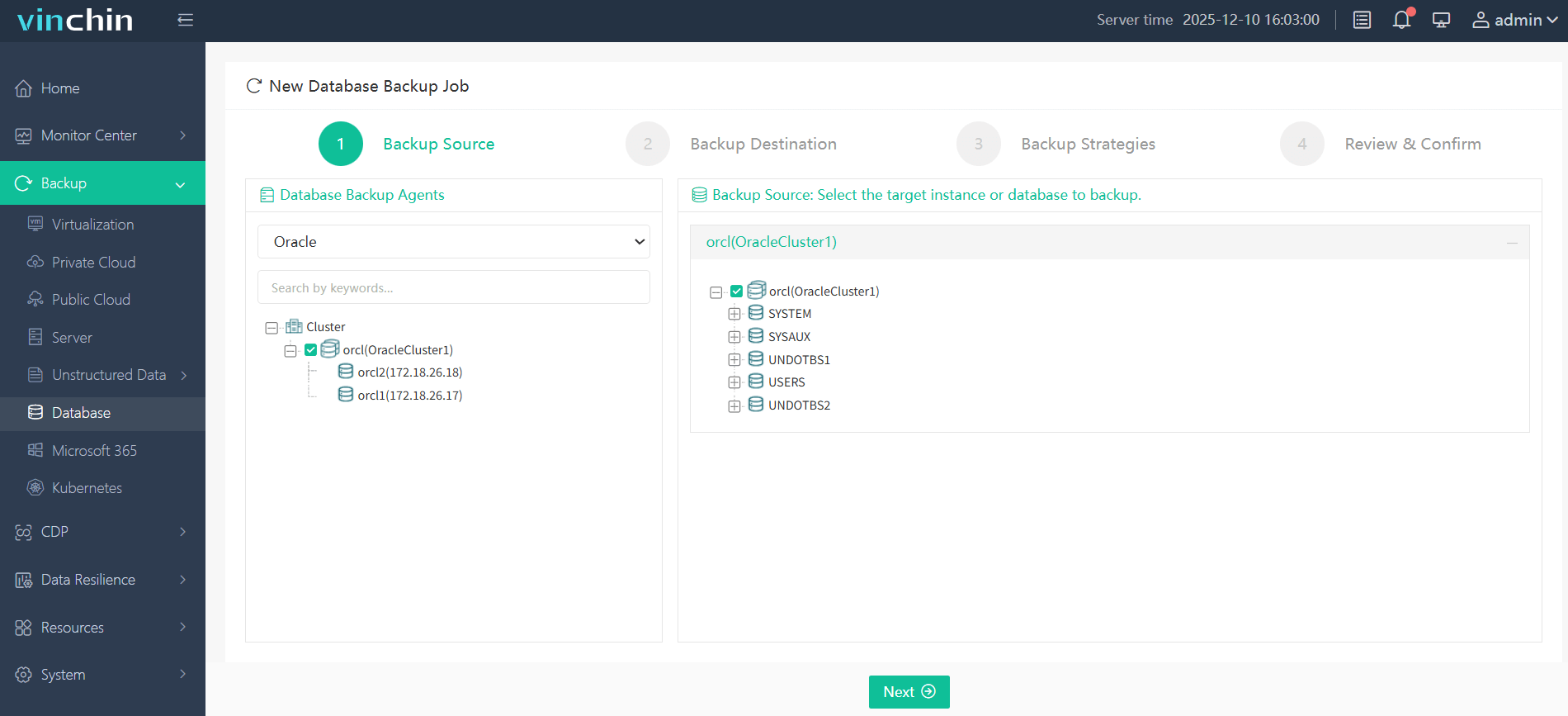
Step 1. Select the Oracle database to back up
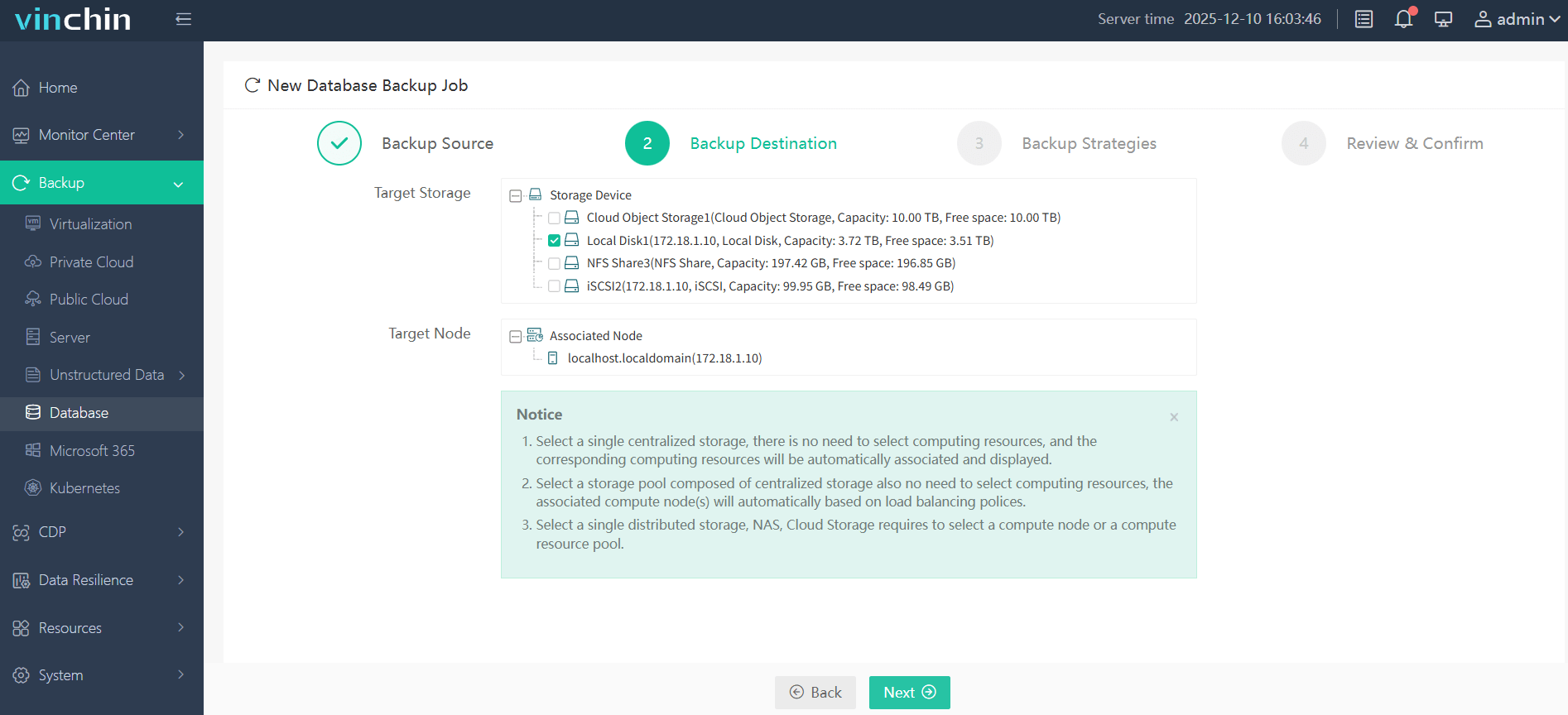
Step 2. Choose backup storage
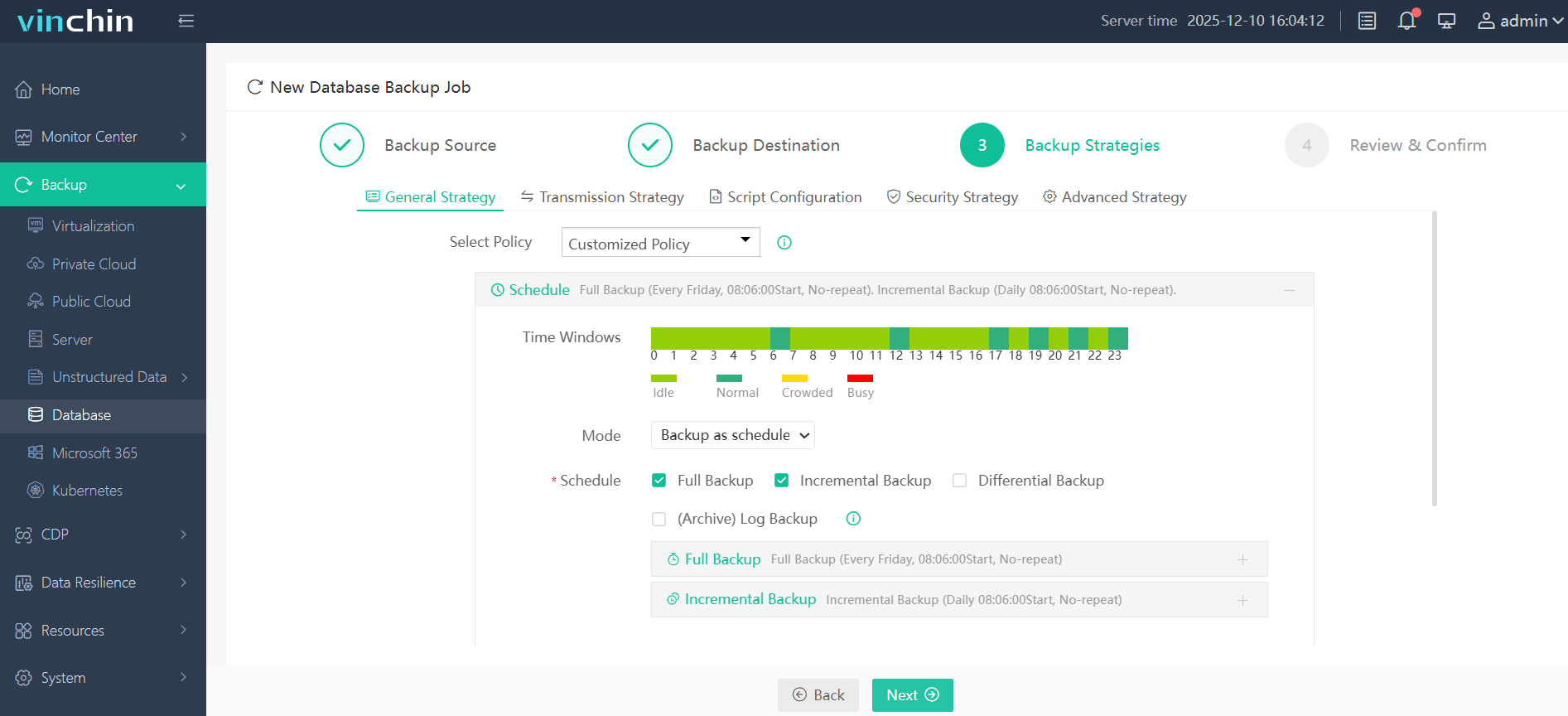
Step 3. Define your backup strategy
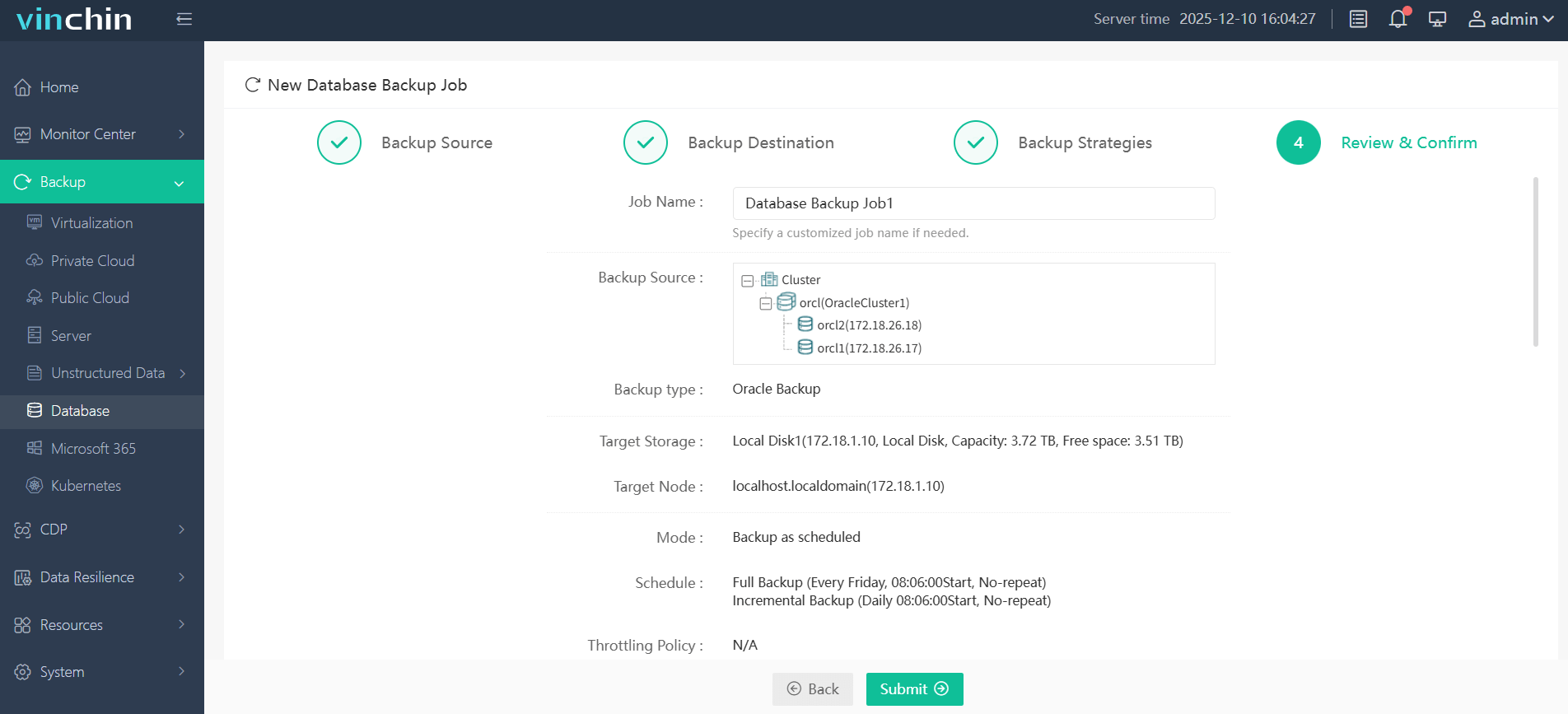
Step 4. Submit the job
Recognized globally with top ratings among enterprise customers worldwide, Vinchin Backup & Recovery offers a fully featured free trial valid for 60 days—click below to experience industry-leading protection firsthand.
Catalog Database in Oracle FAQs
Q1: Can I migrate my existing recovery catalog schema from one server to another?
Yes—you can export/import schema objects using Data Pump utilities then update TNS references accordingly on all clients accessing it afterward.
Q2: What does "resyncing" actually do when working with an RMAN recovery catalog?
Resyncing updates metadata inside your central repository based on recent activity recorded locally inside each registered target's control file since last sync event occurred.
Q3: How do I troubleshoot "RMAN-20001" errors during registration?
Check network connectivity > verify DB_UNIQUE_NAME matches > confirm user privileges > re-run REGISTER DATABASE command if needed.
Conclusion
A well-maintained catalog database in Oracle forms an essential backbone for scalable enterprise-grade backups—with centralized reporting plus advanced automation options built-in from day one! For even greater peace of mind protecting critical workloads try Vinchin’s robust platform today—it makes safeguarding every aspect of your environment easier than ever before.