Setting the right backup location in Oracle RMAN is a critical task for database administrators. Running out of disk space during a backup or scrambling to find files during recovery are stressful situations that proper configuration can prevent. In this article, we’ll walk through what Oracle RMAN is, why you might want to set a custom backup location, and several methods—ranging from basic to advanced—for doing so.
What is Oracle RMAN?
Oracle Recovery Manager (RMAN) is Oracle’s built-in tool for backing up, restoring, and recovering databases. It automates many backup tasks, tracks detailed metadata about backups, and supports both disk- and tape-based storage targets. RMAN has become the standard for protecting Oracle databases because it integrates tightly with core database features. You interact with RMAN using its command-line interface or by running scripts.
Why set a custom backup location?
By default, RMAN writes backups to locations defined by your Oracle environment or the Fast Recovery Area (FRA). However, these defaults may not fit your needs as your environment grows or requirements change. For example: maybe your disk is running out of space; perhaps you need to store backups on a network share; or you want long-term retention on cloud-mounted storage. Setting a custom backup location gives you control over where your backups go—helping with storage planning, improving recovery speed when needed most, and supporting compliance requirements such as offsite retention.
Method 1: Set Oracle RMAN backup location using RMAN commands
The most direct way to set the backup location is by using specific commands within RMAN itself. This method offers flexibility for both one-time jobs and recurring automated tasks.
Let’s clarify how RMAN decides where to put backup files if no explicit path is given: If neither a FORMAT clause nor an FRA is configured, RMAN will write backups to an operating system-specific default directory—often $ORACLE_HOME/dbs on Unix/Linux systems—but this can vary depending on platform settings. Relying on these defaults can lead to confusion or failed jobs if space runs out unexpectedly.
To specify a custom directory for just one backup operation:
BACKUP DATABASE FORMAT '/u01/backups/%U';
Here %U generates a unique filename for each piece of the backup set—a best practice that avoids accidental overwrites.
If you want all future disk-based backups in your session or script to use a particular directory by default:
CONFIGURE CHANNEL DEVICE TYPE DISK FORMAT '/u01/backups/%U';
After this command runs successfully in your environment, every new disk-based backup will be written under /u01/backups, unless overridden by another FORMAT clause later.
For environments needing higher performance or redundancy across multiple disks:
CONFIGURE CHANNEL 1 DEVICE TYPE DISK FORMAT '/disk1/rman/%U';
CONFIGURE CHANNEL 2 DEVICE TYPE DISK FORMAT '/disk2/rman/%U';
When parallelism is enabled (for example: SET PARALLELISM 2), each channel writes independently—speeding up large jobs while spreading load across different physical devices.
It’s important that all target directories exist before starting any job—and that they’re writable by the user running Oracle processes (usually oracle). Otherwise you’ll get permission errors at runtime.
To check current channel configurations:
SHOW ALL;
And if you need to see exactly where previous backups were stored:
LIST BACKUP;
For control file autobackups—which are vital during disaster recovery—you can also specify their destination:
CONFIGURE CONTROLFILE AUTOBACKUP FORMAT FOR DEVICE TYPE DISK TO '/u01/backups/CONTROL_%F';
Here %F embeds details like DBID and timestamp into filenames—a useful feature when tracking down specific versions after an incident.
Advanced Channel Configuration
In larger environments—or those using Automatic Storage Management (ASM)—you may need even more precise control over channels:
CONFIGURE CHANNEL DEVICE TYPE DISK FORMAT '+RECOVERY_DG/%U';
Here +RECOVERY_DG refers to an ASM disk group rather than an OS path.
In Real Application Clusters (RAC), ensure any specified path (like /u01/backups/) exists identically across all nodes—typically via shared NFS mounts or cluster filesystems.
When tuning performance further: assign each channel its own physical device—not just separate folders—to avoid bottlenecks caused by multiple streams writing onto one drive.
Validating Backup Location Configuration
Before relying on any new configuration in production—or after making changes—it’s smart practice to validate everything works as expected.
First test permissions directly as the oracle user:
su - oracle -c 'touch /u01/backups/test_file.rmn && rm /u01/backups/test_file.rmn'
This checks both write access and cleanup ability without risking actual data loss.
Next run a small test inside RMAN:
BACKUP CURRENT CONTROLFILE FORMAT '/u01/backups/TEST_CTRL_%U';
LIST BACKUP OF CONTROLFILE;
This confirms that not only does Oracle have access but also that catalog entries are being updated correctly with new paths.
If moving existing backups between locations using BACKUP BACKUPSET, always follow up with:
CROSSCHECK BACKUP;
DELETE EXPIRED BACKUP;
This ensures catalog consistency so restores work smoothly later—even after hardware upgrades or migrations.
Method 2: Set Oracle RMAN backup location using parameter files
Another way to manage where backups go is through persistent parameters in your database initialization files—a good choice when standardizing settings across teams or clusters.
The Fast Recovery Area (FRA) acts as an automated staging ground managed entirely by Oracle itself. By setting DB_RECOVERY_FILE_DEST along with DB_RECOVERY_FILE_DEST_SIZE, you instruct both the database engine and RMAN where all future disk-based artifacts should live—including archived logs and control file autobackups unless otherwise specified at runtime.
Set these values from SQL*Plus like this:
ALTER SYSTEM SET DB_RECOVERY_FILE_DEST='/u02/oracle/fra' SCOPE=BOTH;
ALTER SYSTEM SET DB_RECOVERY_FILE_DEST_SIZE=100G SCOPE=BOTH;
Once applied successfully—and after confirming enough free space exists—RMAN will start writing everything into /u02/oracle/fra.
If business needs change later (for example: migrating FRA onto faster SSDs), simply update DB_RECOVERY_FILE_DEST. New objects land in the new spot; old ones remain until deleted according to policy rules—or manually moved if required during maintenance windows.
You can also edit these parameters directly within init.ora or server parameter (spfile) files:
DB_RECOVERY_FILE_DEST='/u02/oracle/fra'
DB_RECOVERY_FILE_DEST_SIZE=100G
Remember: restart your instance after editing static parameter files so changes take effect everywhere consistently!
A key advantage of FRA management? Automatic cleanup based on retention policies—so obsolete data gets purged without manual intervention once thresholds are reached.
But beware: if FRA fills up completely due either to misconfiguration or unexpected growth rates then all new backups will fail until space becomes available again!
Monitor usage regularly via:
SELECT * FROM V$RECOVERY_FILE_DEST;
And clean up old items safely through:
REPORT OBSOLETE;
DELETE OBSOLETE;
These steps remove anything no longer needed per current policy definitions.
Advanced Considerations for Enterprise Deployments
As organizations scale up their infrastructure—with clustered databases or hybrid cloud setups—the complexity of managing reliable backups increases too.
Here are some expert-level points worth considering:
CONFIGURE CHANNEL DEVICE TYPE DISK FORMAT '+DATA_DG/%U';
Permissions here are handled internally by ASM rather than at OS level.
RAC Environments: In clustered deployments every node must see identical paths; local-only directories cause failures when jobs run from secondary servers.
Proactive Monitoring: Don’t wait until drives fill up! Use tools such as OS-level alerts (df -h) alongside database views (V$RECOVERY_FILE_DEST) so issues get flagged early—not mid-backup.
Performance Tuning: Assign channels carefully so heavy workloads don’t compete unnecessarily; spread traffic across independent spindles/LUNs whenever possible.
How to Protect Oracle Database with Vinchin?
Beyond manual checks and scripts, organizations seeking robust enterprise-level protection should consider Vinchin Backup & Recovery—a professional solution supporting today’s leading databases including Oracle, MySQL, SQL Server, MariaDB, PostgreSQL, PostgresPro, and TiDB—with advanced features tailored especially well for Oracle environments. Among its capabilities are advanced source-side compression and incremental backup options designed specifically for Oracle workloads alongside batch database backup management, flexible GFS-based retention policies, and comprehensive integrity checks—all working together seamlessly so administrators maximize efficiency while ensuring reliable recoverability across complex infrastructures.
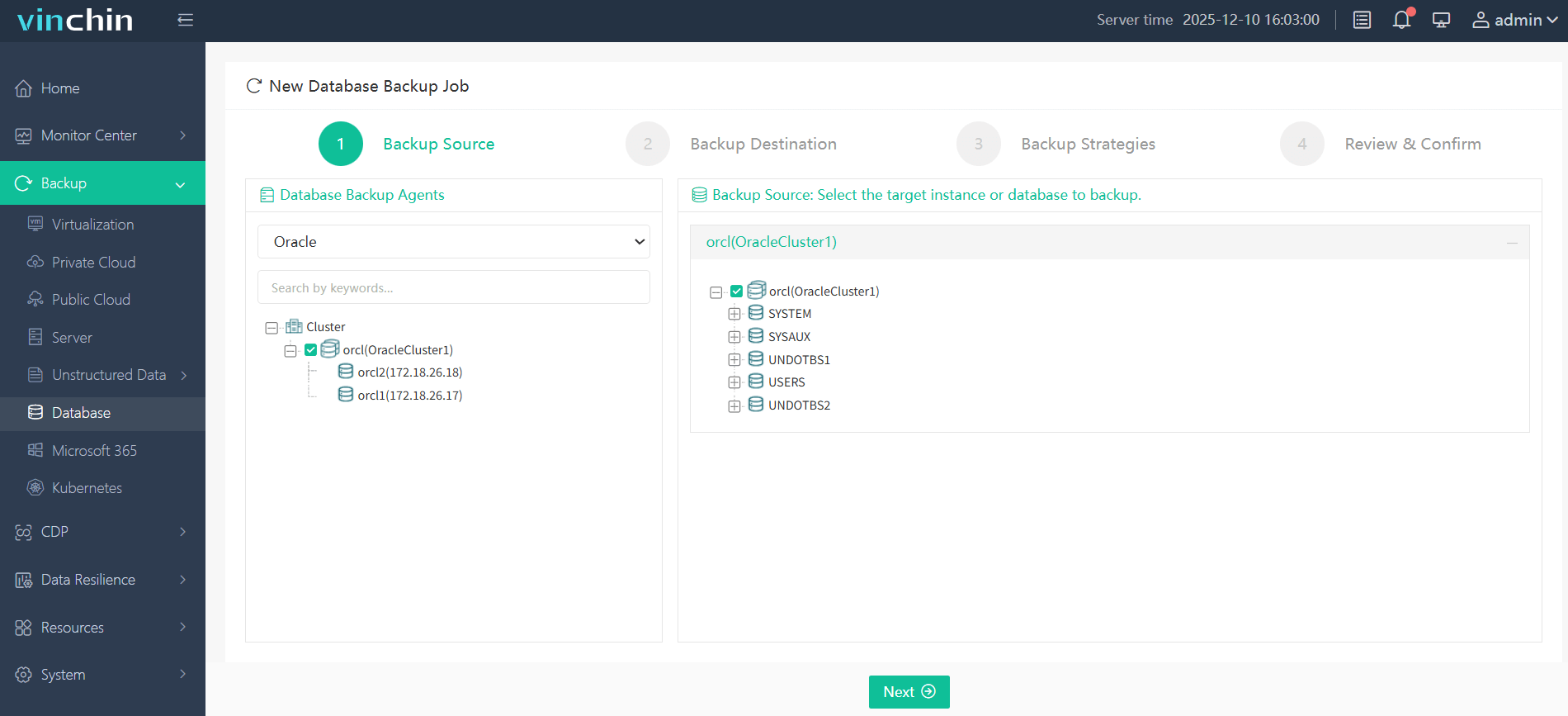
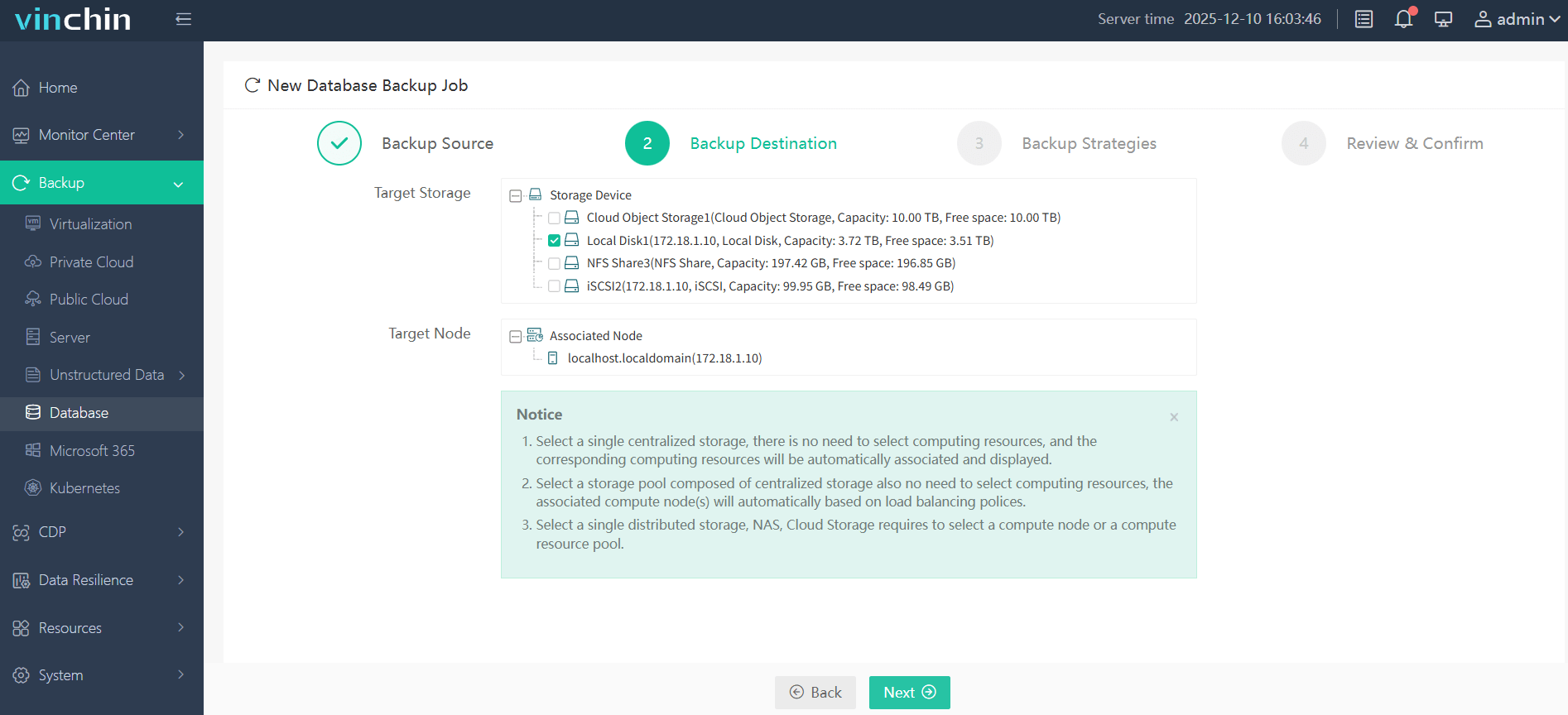
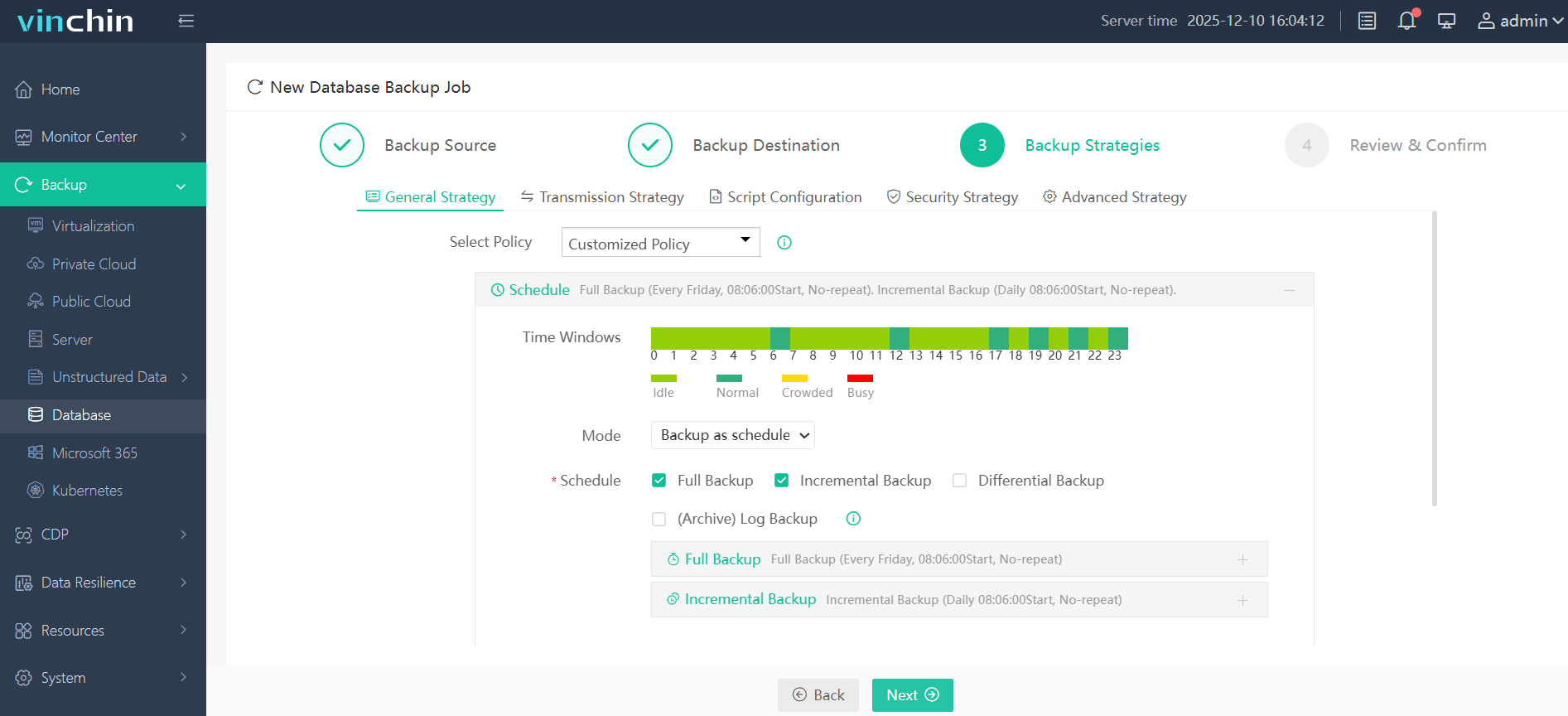
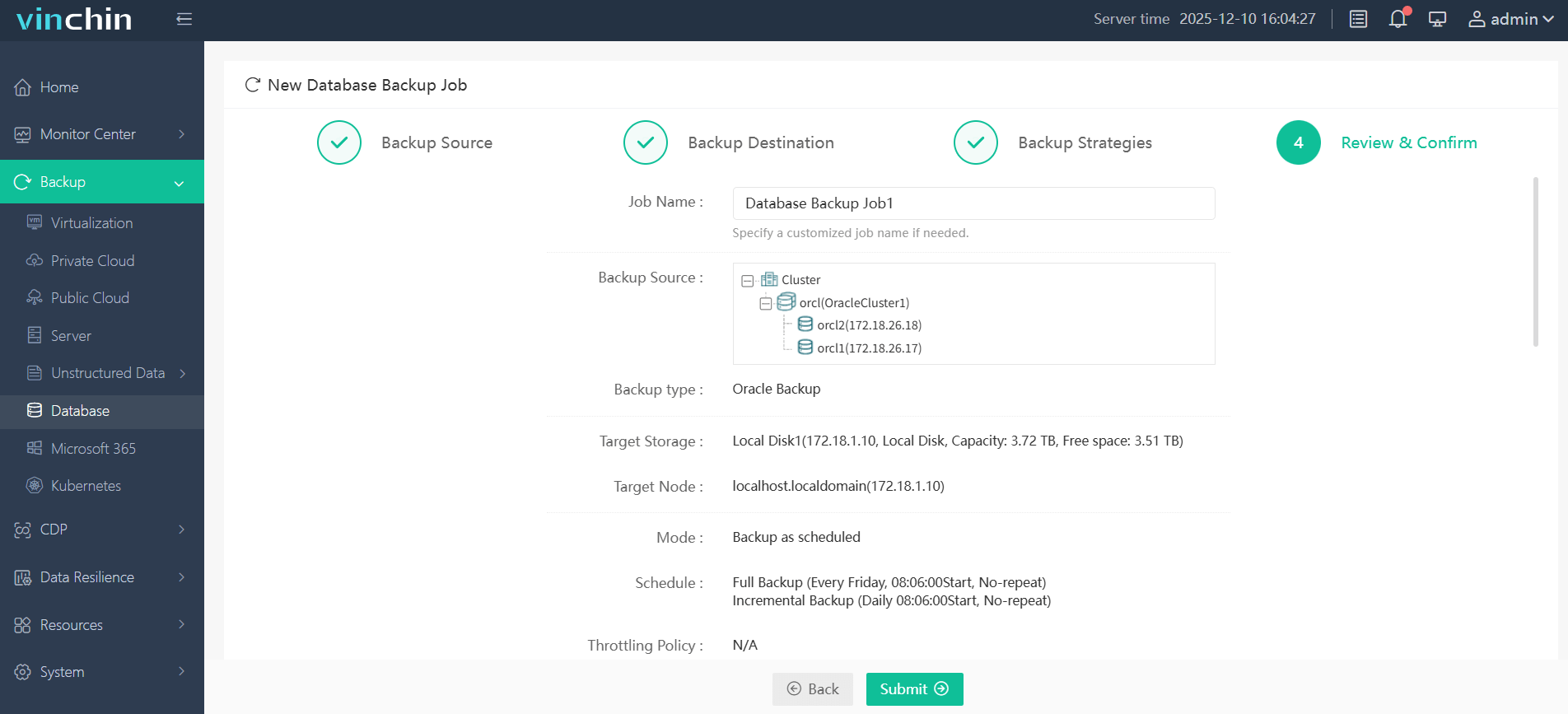
With Vinchin Backup & Recovery's intuitive web console interface protecting an Oracle database typically involves four straightforward steps:
Step 1 – Select the Oracle database to back up;
Step 2 – Choose the desired storage location;
Step 3 – Define custom strategies such as schedules or retention rules;
Step 4 – Submit the job.
Recognized globally among enterprise IT professionals—with thousands of satisfied customers worldwide—Vinchin Backup & Recovery consistently earns top industry ratings. Experience complete peace of mind risk-free with their 60-day full-featured free trial—just click download below!
Oracle RMAN set backup location FAQs
Q1: How do I check my current RMAN configuration?
A1: Run SHOW ALL in RMAN for settings details; use LIST BACKUP for actual file paths used recently.
Q2: Can I move existing backups safely between disks?
A2: Use BACKUP BACKUPSET ALL FORMAT '/new_location/%U', then verify success before deleting old copies; never move files manually outside of RMAN commands since it breaks catalog tracking.
Q3: Does my choice of destination affect performance?
A3: Yes—using multiple channels mapped onto separate physical devices improves throughput while avoiding contention with active datafiles.
Conclusion
Choosing—and regularly validating—the right Oracle RMAN backup location ensures reliable protection against outages while streamlining recoveries under pressure. Whether configuring paths directly via commands or leveraging managed areas like FRA gives full control over outcomes.
For teams seeking centralized automation across diverse platforms Vinchin delivers robust solutions ready-to-deploy today—try it free now!