Oracle Recovery Manager (RMAN) is the backbone of backup and recovery for Oracle databases. In Oracle 19c, RMAN offers a flexible set of configuration parameters that help you automate, optimize, and secure your backup strategy. Understanding these parameters is key to reliable database protection. Let’s explore what they are, why they matter, and how to set them up step by step.
What Are RMAN Configuration Parameters?
RMAN configuration parameters are persistent settings that control how RMAN performs backups and restores. These parameters define things like where backups are stored, how many copies are kept, whether backups are compressed or encrypted, and more. Once set, these parameters remain in effect until you change them—so you don’t have to specify them every time you run a backup job.
These configurations apply to the currently connected target database only. If you manage multiple databases with different requirements, remember each one maintains its own parameter set.
Key RMAN Configuration Parameters in Oracle 19c
Oracle 19c provides a wide range of RMAN configuration parameters that shape your backup environment:
Retention Policy: Controls how long backups stay before being marked obsolete.
Default Device Type: Sets where backups go by default—disk or tape.
Controlfile Autobackup: Enables automatic backup of the control file and server parameter file (SPFILE).
Backup Optimization: Skips files unchanged since their last backup.
Compression Algorithm: Determines if—and how—backups get compressed.
Encryption Algorithm: Secures backups using encryption methods.
Channel Configuration: Defines how many streams write data out (parallelism), plus file naming rules.
Archivelog Deletion Policy: Decides when archived redo logs can be deleted safely.
Snapshot Controlfile Name: Sets where the temporary snapshot control file is created during operations.
You can view all current settings by connecting to RMAN and running:
RMAN> SHOW ALL;
This command displays every parameter for your current target database—including both user-defined values and system defaults.
Why Configure RMAN Parameters in Oracle 19c?
Why bother with all these settings? The answer is simple: control and reliability! By configuring RMAN parameters properly you—
Automate routine tasks reducing manual mistakes,
Ensure all critical data lands exactly where intended,
Optimize network/storage usage through compression & parallelism,
Protect vital metadata (controlfiles/SPFILE),
Meet regulatory/compliance demands easily,
Speed disaster recovery thanks to organized consistent sets,
A well-configured environment means fewer surprises during emergencies—isn’t that what every DBA wants?
How to Set RMAN Configuration Parameters?
Configuring RMAN parameters is straightforward but has lasting effects on your backup process. Here’s how to set up the most important options in Oracle 19c.
1. Set the Retention Policy
The retention policy tells RMAN which backups it must keep available for restore operations—and which ones it can mark as obsolete.
To keep only the last two full backups:
RMAN> CONFIGURE RETENTION POLICY TO REDUNDANCY 2;
To retain all necessary files so you can recover to any point within seven days:
RMAN> CONFIGURE RETENTION POLICY TO RECOVERY WINDOW OF 7 DAYS;
Remember—a recovery window means older files may still be needed if they support point-in-time recovery within those seven days.
2. Set the Default Device Type
By default, Oracle writes backups to disk storage—but you can change this behavior if needed.
To confirm or explicitly set disk as default:
RMAN> CONFIGURE DEFAULT DEVICE TYPE TO DISK;
If you want to use tape devices:
RMAN> CONFIGURE DEFAULT DEVICE TYPE TO SBT;
Note that using tape requires an external media management layer already configured; otherwise this setting won’t work as expected.
3. Enable Controlfile Autobackup
The control file holds critical metadata about your database structure—losing it makes recovery much harder. Enabling autobackup ensures it’s always protected after structural changes or every backup operation:
RMAN> CONFIGURE CONTROLFILE AUTOBACKUP ON;
To specify a custom location for these autobackups:
RMAN> CONFIGURE CONTROLFILE AUTOBACKUP FORMAT FOR DEVICE TYPE DISK TO '/backups/ORCL/cf_%F';
Here %F generates unique filenames automatically so each autobackup stands alone.
4. Configure Backup Compression
Backup compression saves storage space at some cost in CPU usage during backup jobs—a tradeoff many organizations accept gladly.
Enable compressed backupsets on disk:
RMAN> CONFIGURE DEVICE TYPE DISK BACKUP TYPE TO COMPRESSED BACKUPSET;
Set a specific compression algorithm (BASIC is always available):
RMAN> CONFIGURE COMPRESSION ALGORITHM 'BASIC' AS OF RELEASE 'DEFAULT' OPTIMIZE FOR LOAD TRUE;
Compression helps especially when backing up large databases over slow networks or limited storage pools.
5. Configure Backup Encryption
Protecting sensitive data at rest is now standard practice—even for internal systems. With Oracle 19c’s built-in encryption features, securing your backups takes just one extra step:
First enable transparent encryption mode:
RMAN> CONFIGURE ENCRYPTION FOR DATABASE ON;
RMAN> CONFIGURE ENCRYPTION ALGORITHM 'AES256';
When enabled globally like this—all future backups will use AES256 encryption unless overridden at runtime with other options such as password-based encryption (which requires specifying passwords per job).
Encryption ensures that even if someone gains access to raw backup files—they cannot read their contents without proper keys or credentials.
6. Set Channel and Parallelism Options
Channels define streams through which data flows from source database into destination storage; parallelism controls how many channels operate together—speeding up large jobs significantly when hardware allows it:
Set two parallel channels writing to disk:
RMAN> CONFIGURE DEVICE TYPE DISK PARALLELISM 2;
Customize output filenames for all new disk channels:
RMAN> CONFIGURE CHANNEL DEVICE TYPE DISK FORMAT '/backups/ORCL/db_%U.bkp';
Here %U guarantees unique names per piece so nothing gets overwritten accidentally during concurrent runs.
7. Enable Backup Optimization
Backup optimization prevents unnecessary work by skipping files already backed up elsewhere under current policies:
Turn optimization on globally:
RMAN> CONFIGURE BACKUP OPTIMIZATION ON;
This setting works best alongside well-tuned retention policies—it avoids duplicate effort while ensuring compliance.
8. Set Archivelog Deletion Policy
Archived redo logs record every transaction between full database backups—they’re vital for point-in-time recovery but quickly consume space if not managed well:
Keep all archivelogs until manually deleted:
RMAN> CONFIGURE ARCHIVELOG DELETION POLICY TO NONE;
Or delete logs after they’ve been backed up twice onto disk:
RMAN> CONFIGURE ARCHIVELOG DELETION POLICY TO BACKED UP 2 TIMES TO DEVICE TYPE DISK;
Careful deletion policies prevent accidental loss while keeping storage growth under control.
9. Set Snapshot Controlfile Location
During lengthy operations like full database backups—or when backing up very active systems—Oracle uses a snapshot control file as a temporary read-consistent copy of metadata. This prevents “snapshot too old” errors caused by ongoing changes during long-running jobs:
Set its location explicitly here:
RMAN> CONFIGURE SNAPSHOT CONTROLFILE NAME TO '/u01/app/oracle/product/19.0.0/dbhome_1/dbs/snapcf_ORCL.f';
10. Clear Parameter Settings When Needed
Sometimes operational needs change—or mistakes happen—and clearing previous configurations becomes necessary:
Reset retention policy back to system default:
RMAN> CONFIGURE RETENTION POLICY CLEAR;
Remove custom channel definitions entirely:
RMAN> CONFIGURE CHANNEL DEVICE TYPE DISK CLEAR;
Clearing unused settings keeps future jobs predictable.
Enterprise-Level Database Protection with Vinchin Backup & Recovery
Beyond native tools like RMAN, organizations often require advanced automation and centralized management across diverse environments. Vinchin Backup & Recovery delivers enterprise-grade protection for today’s mainstream databases—including Oracle, MySQL, SQL Server, MariaDB, PostgreSQL, PostgresPro, and TiDB—with particular strength supporting complex Oracle deployments found in mission-critical systems.
Key features such as batch database backup, incremental backup capabilities tailored for Oracle workloads, GFS retention policy management, integrity checks via SQL scripts, and robust storage protection against ransomware collectively streamline administration while enhancing security posture across hybrid infrastructures—all from a single platform designed for scalability and ease-of-use.
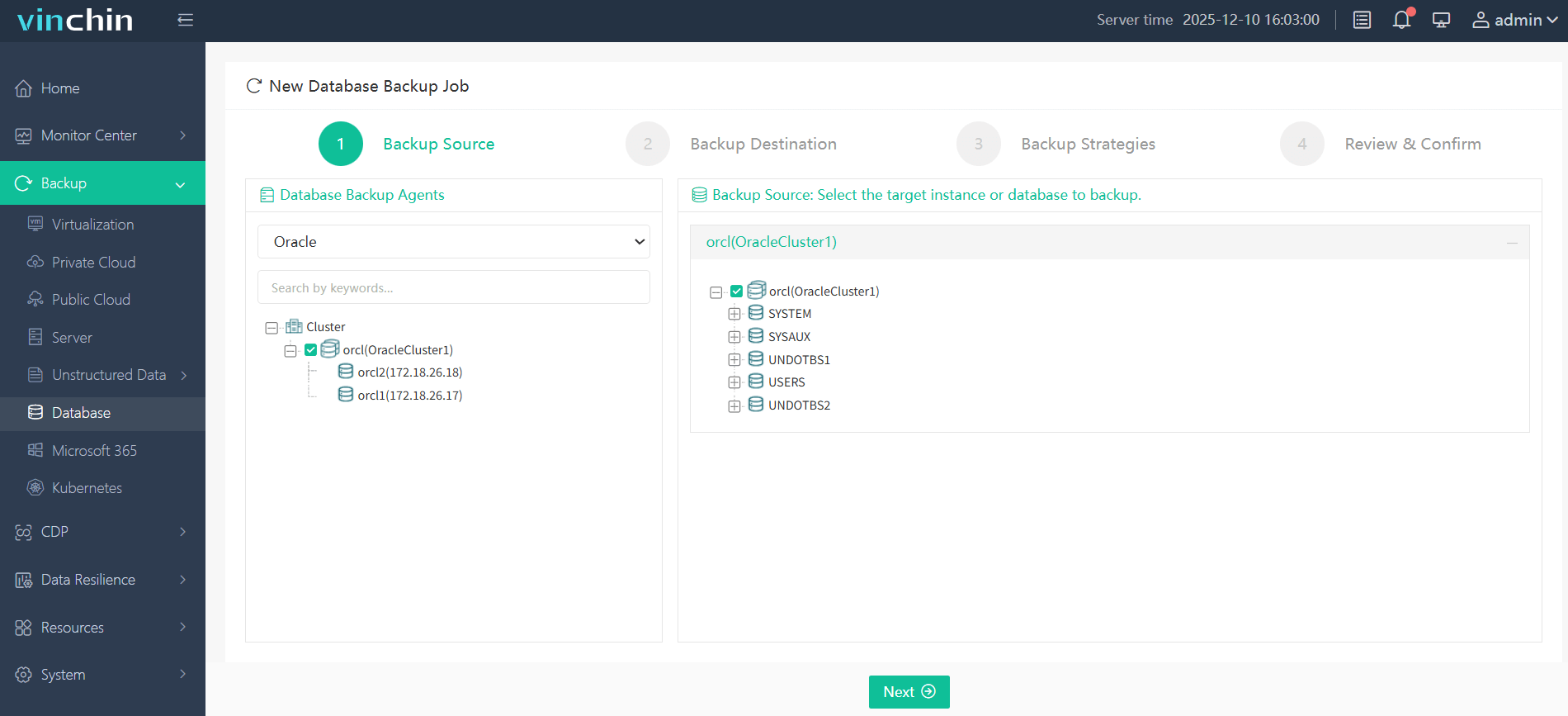
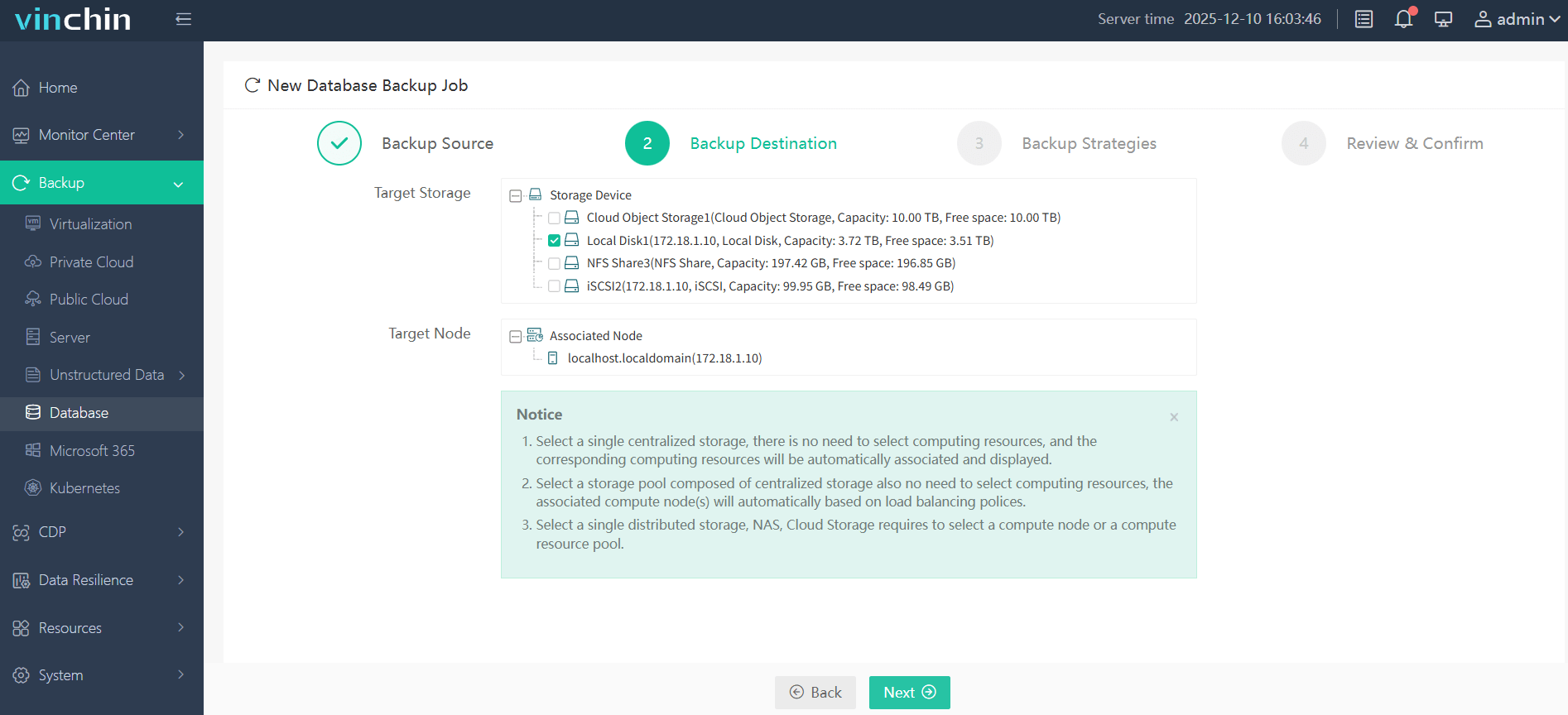
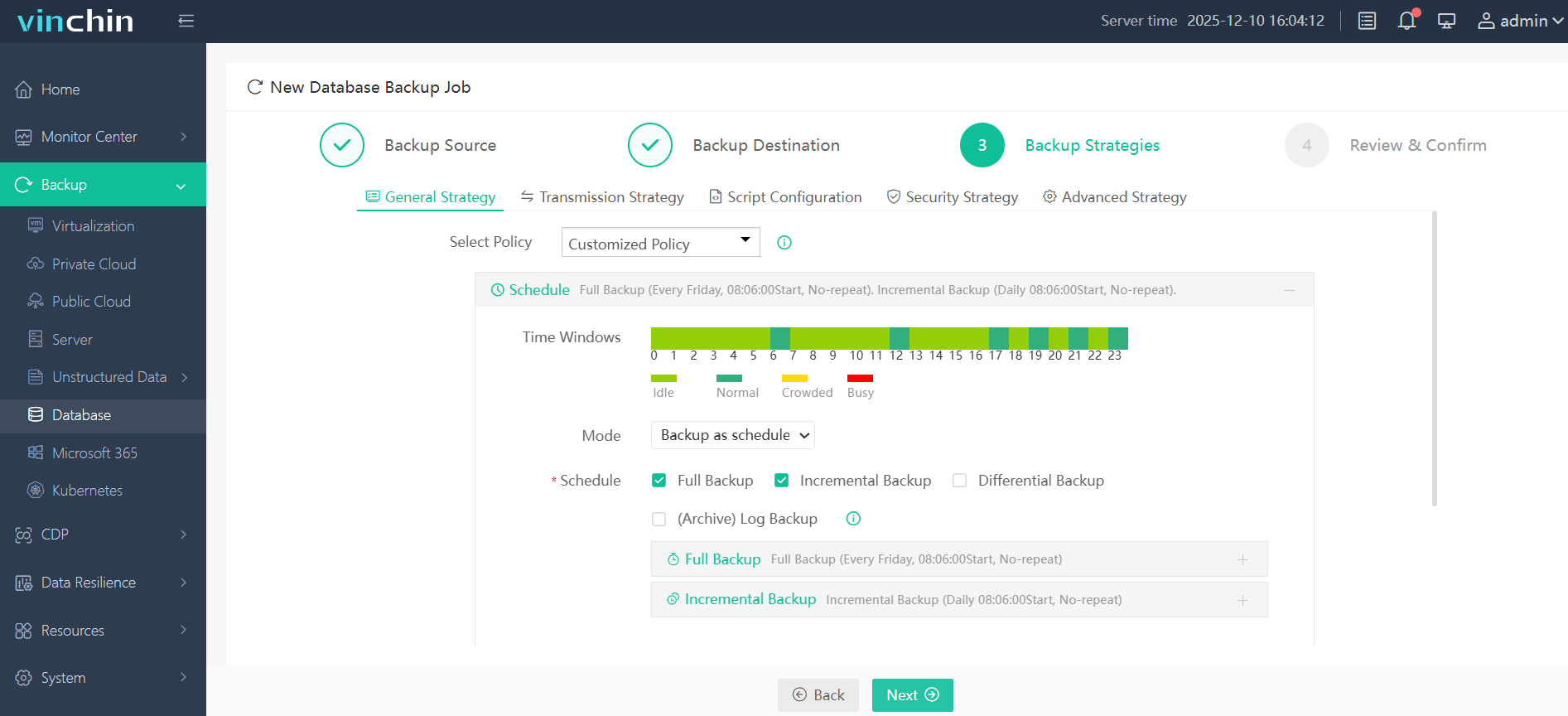
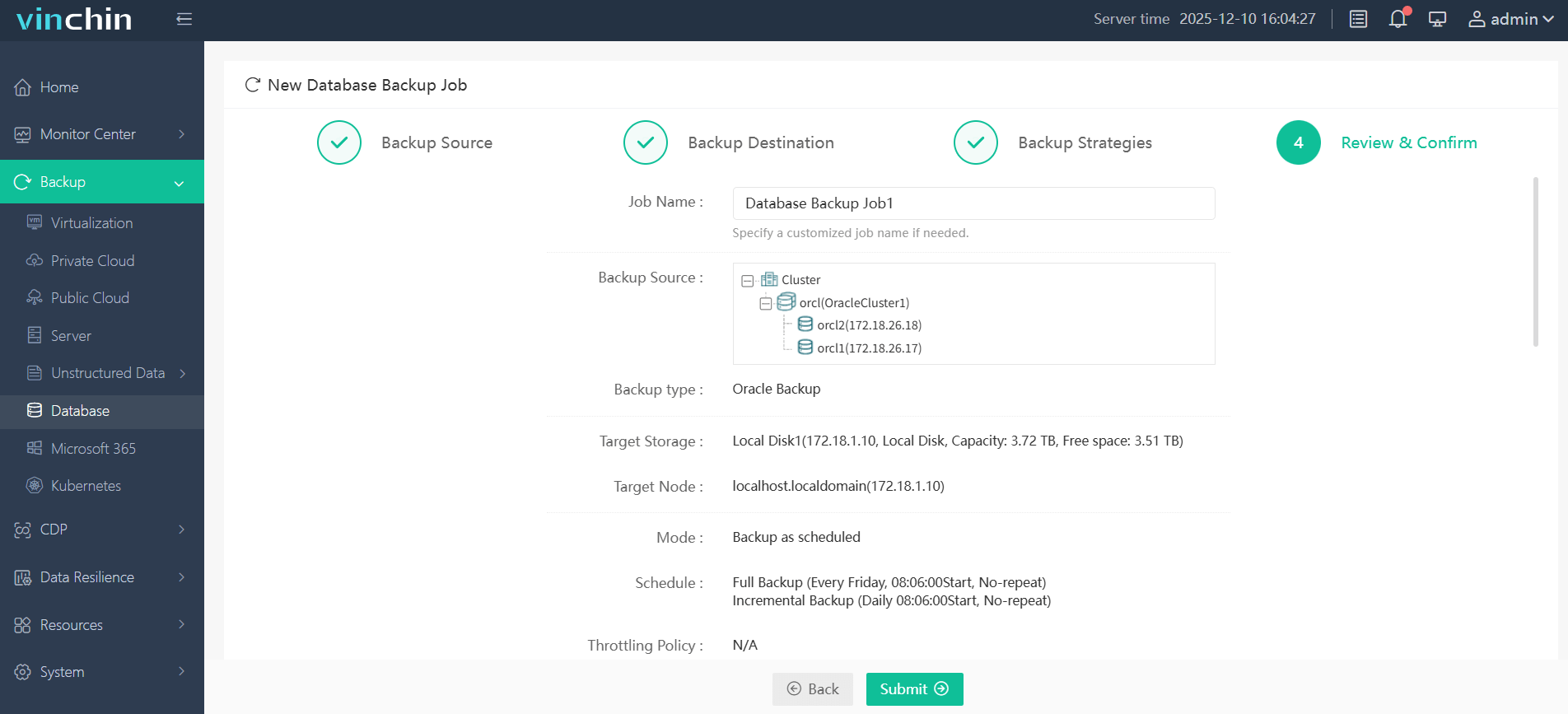
Vinchin Backup & Recovery offers an intuitive web console that simplifies safeguarding your Oracle environment into four clear steps:
Step 1. Select the Oracle database to back up
Step 2. Choose the backup storage
Step 3. Define the backup strategy
Step 4. Submit the job
Recognized worldwide by enterprises seeking reliable data protection software—with top ratings from industry users—you can experience Vinchin Backup & Recovery risk-free through its comprehensive 60-day free trial; click below to download now!
RMAN Configuration Parameters in Oracle 19c FAQs
Q1: How do I automate scheduled daily full backups using my configured settings?
A1: Create an OS-level cron job (Linux) or Task Scheduler task (Windows) calling an RMAN script referencing your established configurations; no need to re-specify each parameter inside every script run.
Q2: What should I do if my compressed encrypted backups fail due to lack of space?
A2: Check free space at all configured destinations shown under SHOW ALL; clear obsolete sets promptly using DELETE OBSOLETE NOPROMPT after verifying recent successful runs.
Q3: Can I configure different retention policies per tablespace?
A3: No; retention policy applies at whole-database level only—not per tablespace—but individual tablespaces can be excluded from specific manual jobs via INCLUDE/EXCLUDE clauses.
Conclusion
Setting correct rman configuration parameters in oracle 19c lets administrators automate reliable protection while optimizing performance and security across complex environments—with less hands-on effort day-to-day! For even greater ease try Vinchin’s enterprise-grade solution today with a free trial download.