For any database administrator, a backup’s true worth is proven only during recovery. Silent corruption from hardware failures or software bugs can lurk undetected until disaster strikes—and then it’s too late. If you want confidence that your Oracle backups are ready when you need them most, regular validation is essential. In this guide, we’ll break down RMAN backup validate, explain why it matters at every skill level, and show you how to use it effectively—from basic checks to advanced automation.
What is RMAN Backup Validate?
RMAN backup validate is a built-in feature of Oracle Recovery Manager (RMAN) designed to check if your database files and backups are healthy. When you run a validation command, RMAN reads through specified files or backup sets without actually creating new backups or restoring data. Its job? To confirm that everything needed for recovery is present and free from corruption.
You can use RMAN backup validate on datafiles, tablespaces, archived redo logs—even specific backup sets if you suspect trouble in one area. By default, validation looks for physical corruption—problems with file structure or unreadable blocks—but you can also ask RMAN to check for logical corruption within your data using extra options.
The results appear in both the RMAN output log and in Oracle’s V$DATABASE_BLOCK_CORRUPTION view if issues are found. This proactive approach helps prevent nasty surprises during an actual restore event.
Why Use RMAN Backup Validate?
Validating backups isn’t just good practice—it’s critical for business continuity. Here’s why every operations admin should care:
First, silent errors happen more often than many realize. Hardware faults or storage glitches can corrupt files quietly over time. If these go unnoticed until a restore attempt during an outage or migration, well, that’s every DBA’s nightmare.
Second, validation ensures all pieces needed for recovery—datafiles, control files, archived logs—are available and readable right now. This matters even more in environments where databases change rapidly or have complex schedules.
Third—and often overlooked—RMAN backup validate lets you check not just physical integrity but also logical consistency inside your data blocks by using the CHECK LOGICAL option. Logical corruption means something inside your tables doesn’t add up; catching this early prevents subtle but serious problems later.
In summary: Regular validation gives peace of mind that your backups aren’t just present—they’re usable when it counts most.
How to Run RMAN Backup Validate?
Let’s walk through how to use RMAN backup validate step by step—from basic commands up through advanced scenarios suitable for large enterprise systems.
Validating the Whole Database
If you’re new to Oracle administration or want a quick health check across everything:
Connect to RMAN with appropriate privileges (usually as SYSDBA). Then run:
-- Checks all datafiles and archived logs for physical corruption
RMAN> BACKUP VALIDATE DATABASE ARCHIVELOG ALL;
This command reads each file as if backing it up but does not create any actual backup sets—it simply verifies their integrity and reports any problems found.
Checking for Logical Corruption
Physical checks catch broken blocks—but what about deeper issues? To include logical consistency checks:
-- Adds logical block checking on top of physical verification
RMAN> BACKUP VALIDATE CHECK LOGICAL DATABASE ARCHIVELOG ALL;
With CHECK LOGICAL, RMAN inspects both file structure and internal data relationships within tables/indexes. Any logical errors get logged in both the alert log and V$DATABASE_BLOCK_CORRUPTION.
Validating Specific Files or Backup Sets
Sometimes you need targeted checks—for example after storage maintenance or before retiring old media:
To validate just one tablespace:
-- Checks only 'users' tablespace
RMAN> BACKUP VALIDATE TABLESPACE users;
To verify a single datafile:
-- Checks Datafile 4 only
RMAN> BACKUP VALIDATE DATAFILE 4;
To test a particular backup set (useful before offloading tapes):
-- Replace 123 with actual key from LIST BACKUP output
RMAN> VALIDATE BACKUPSET 123;
Validating Restore Operations
Want proof that restoration will work before an emergency? Use RESTORE ... VALIDATE commands:
To simulate restoring the whole database:
-- Tests ability to restore from current backups without moving any data
RMAN> RESTORE DATABASE VALIDATE;
For archived logs:
-- Verifies all archived redo logs can be restored if needed
RMAN> RESTORE ARCHIVELOG ALL VALIDATE;
If there are no errors reported after these commands finish (“Finished restore at ...”), your recovery path is clear; otherwise investigate immediately!
Understanding the Output
After running any validation command above, review both immediate console output and log files carefully. Look at lines showing Status OK versus FAILED—the latter signals trouble needing attention right away.
Corruptions detected during validation appear in two places:
1. The session output/log file (look for “CORRUPT” messages)
2. The V$DATABASE_BLOCK_CORRUPTION view (query this view directly)
Within V$DATABASE_BLOCK_CORRUPTION, note columns like FILE#, BLOCK#, BLOCKS (number affected), CORRUPTION_TYPE (“PHYSICAL” vs “LOGICAL”), CHECK_TIMESTAMP (when last checked). This helps pinpoint exactly which part of which file needs repair—or replacement from another clean backup set.
Remember: No news is good news! If nothing appears here after thorough validation runs—you’re safe...for now.
How to Structure Your Validation Routine?
Knowing how to run individual commands is important—but building an effective routine makes all the difference long-term.
Start by deciding how often each type of check should occur based on business needs:
For most organizations: Run full database validations with CHECK LOGICAL weekly.
For critical tablespaces holding sensitive workloads: Consider daily validations.
Always validate newly created backups before archiving them offsite or deleting older copies.
Focus especially on validating the oldest retained backup set required by policy—since losing this could break compliance rules around point-in-time recovery windows!
Be aware that running extensive validations consumes significant disk I/O bandwidth; schedule jobs during low activity periods such as maintenance windows whenever possible. For very large databases/datafiles consider using parameters like SECTION SIZE so multiple channels process different parts simultaneously—reducing total runtime without overloading storage arrays.
Protecting Oracle Databases with Vinchin Backup & Recovery
Beyond manual validation routines, modern enterprises benefit from comprehensive solutions tailored for robust protection across diverse environments—including Oracle databases central to mission-critical operations discussed above. Vinchin Backup & Recovery stands out as a professional enterprise-level database backup solution supporting today’s mainstream platforms such as Oracle, MySQL, SQL Server, MariaDB, PostgreSQL, PostgresPro, and TiDB—with seamless integration regardless of scale.
Key features relevant to Oracle users include incremental backup support, batch database management capabilities, flexible retention policies including GFS strategies, cloud/tape archiving options for offsite safety, and reliable any-point-in-time recovery functionality—all working together to streamline operations while minimizing risk exposure across production landscapes.
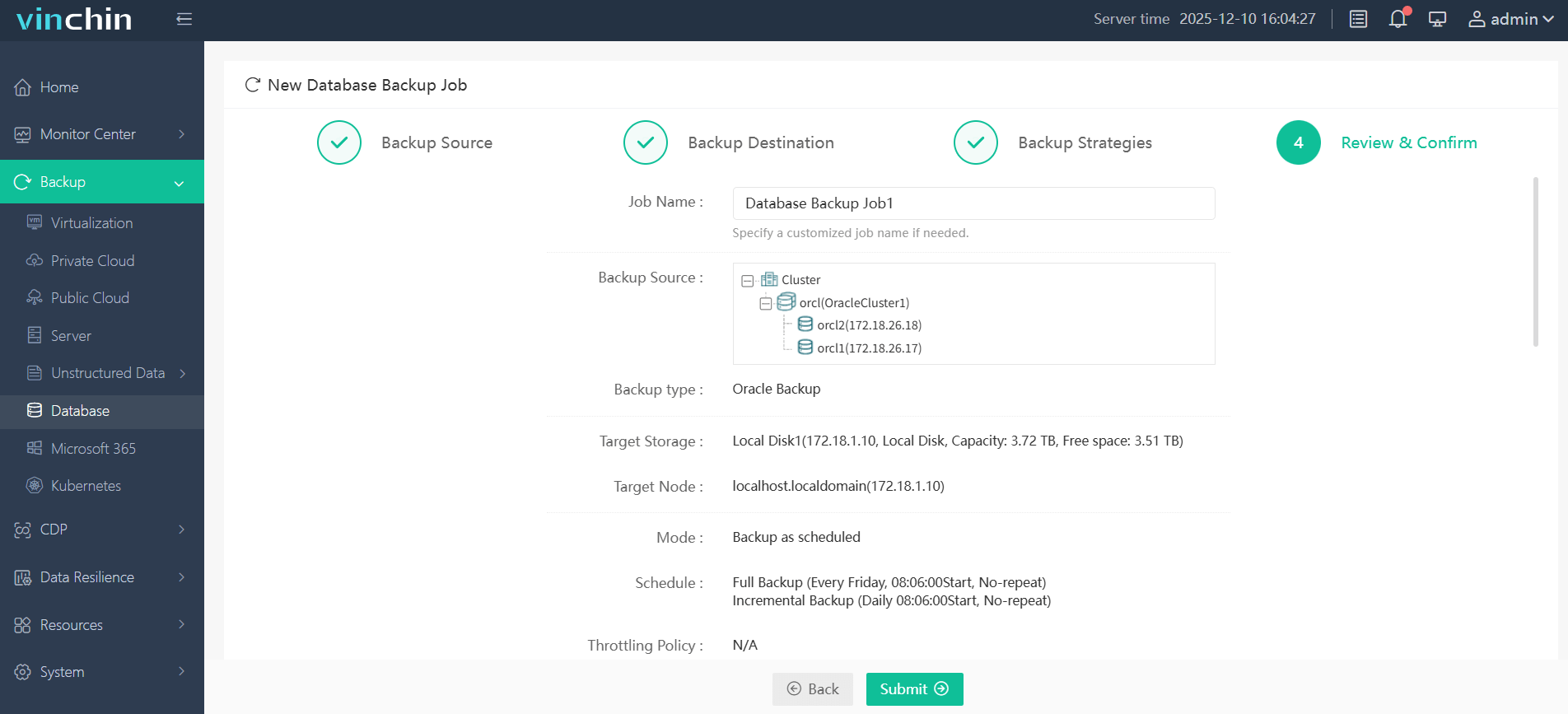
The intuitive web console makes safeguarding your Oracle environment straightforward:
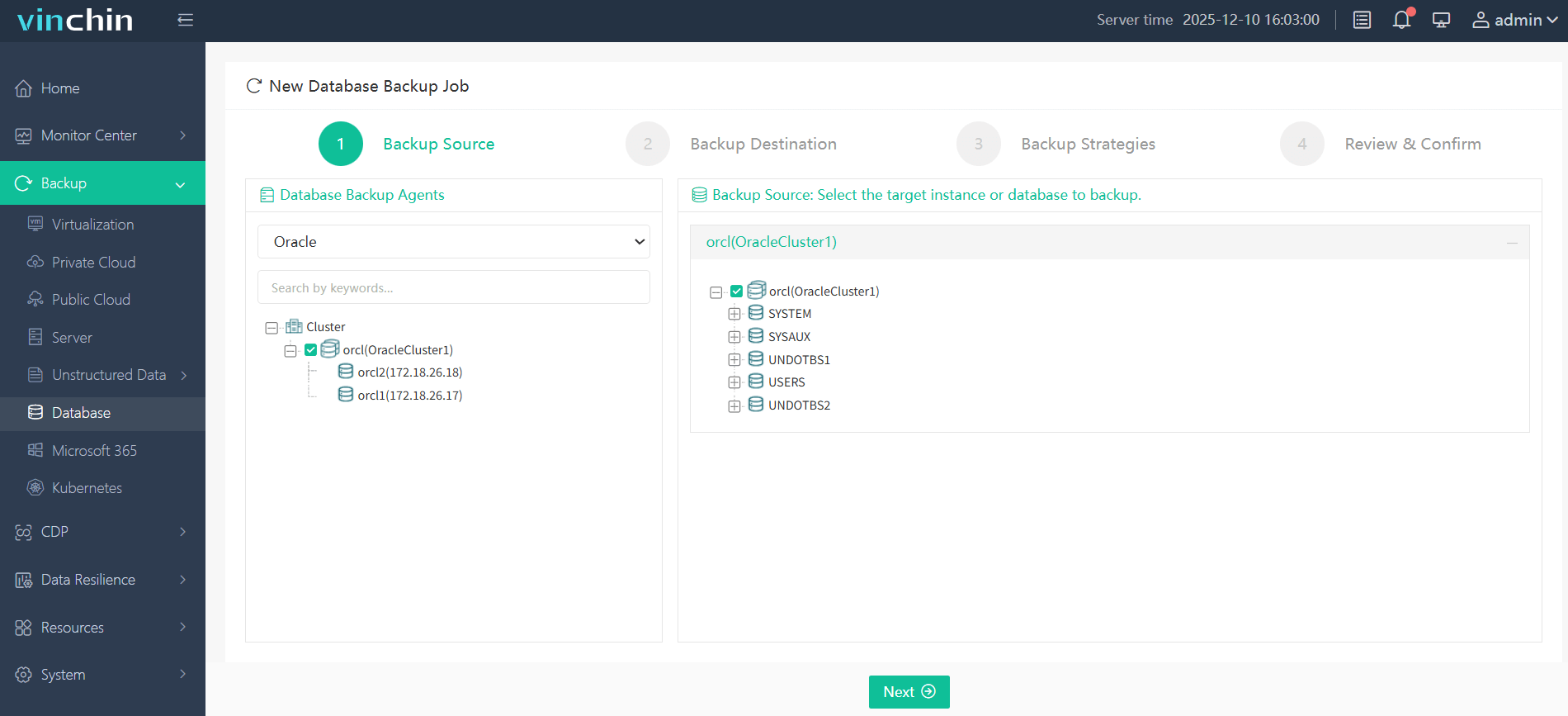
Step 1. Select the Oracle database to back up
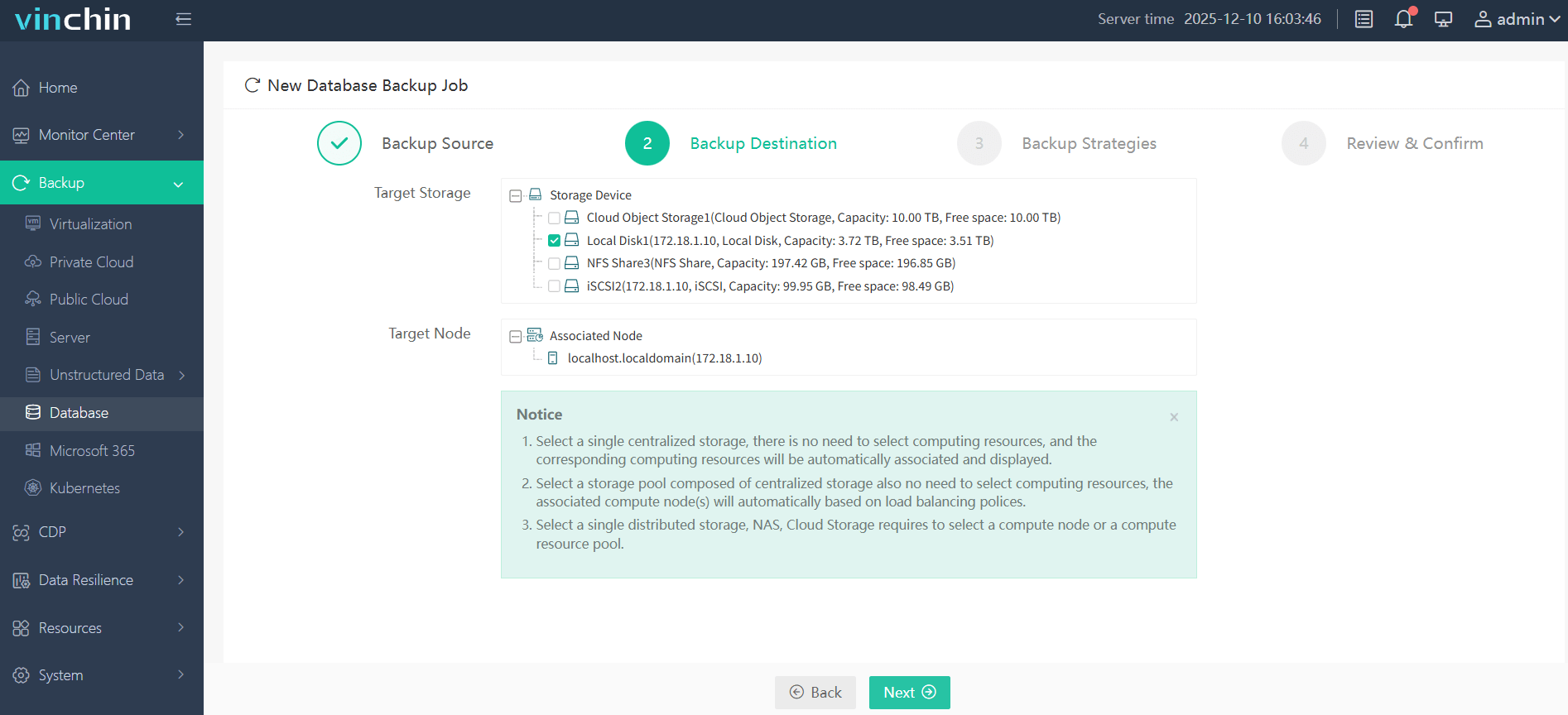
Step 2. Choose the backup storage
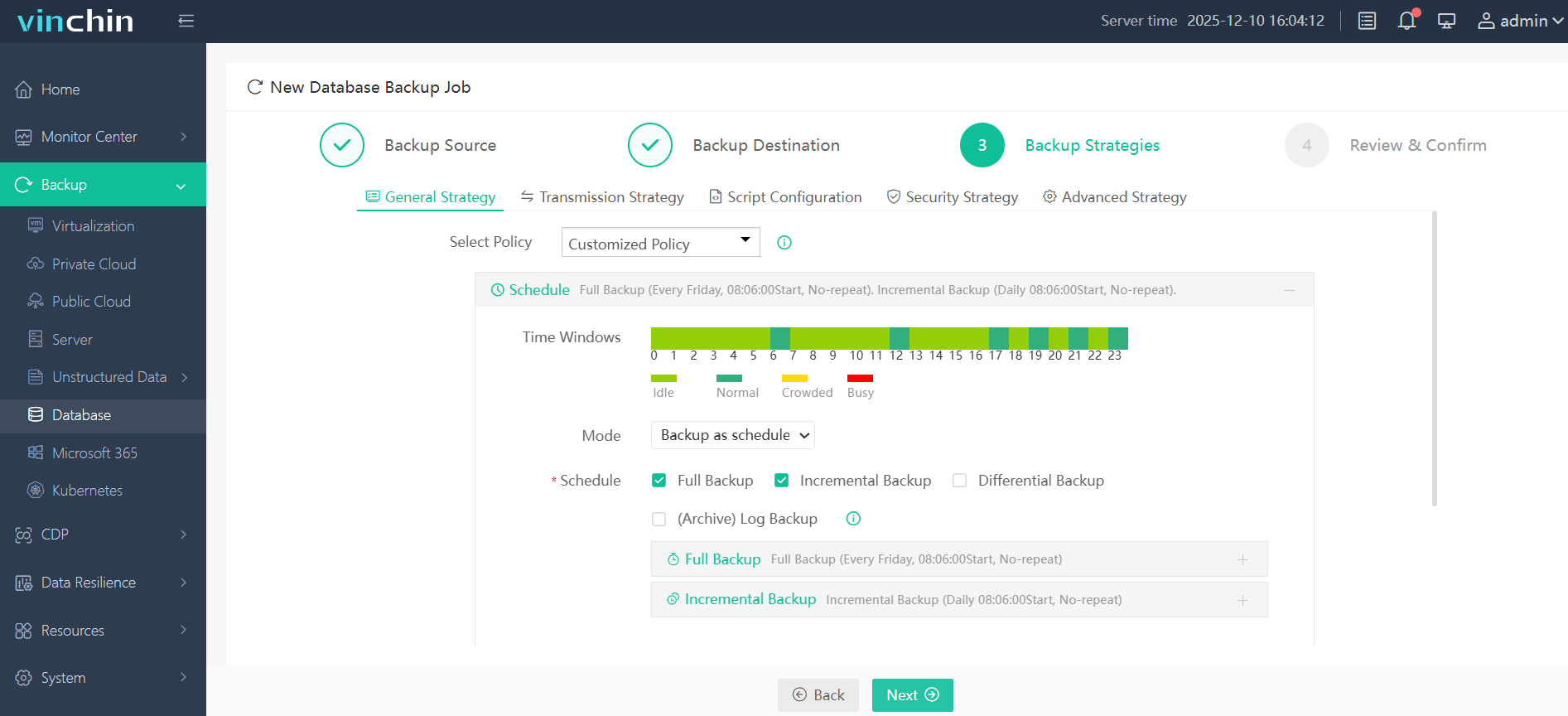
Step 3. Define the backup strategy
Step 4. Submit the job
Trusted globally by thousands of organizations and rated highly by industry experts,Vinchin Backup & Recovery offers a fully featured 60-day free trial—click below to experience leading-edge enterprise data protection firsthand.
RMAN Backup Validate FAQs
Q1: Can I schedule automated notifications when corrupt blocks are found?
A1: Yes; integrate scripted log parsing after each run with email alerts so teams respond quickly if issues arise.
Q2: Does running BACKUP VALIDATE impact production performance?
A2: Yes; since it reads entire files like real backups do—it uses significant disk I/O so plan runs outside peak hours when possible.
Q3: What’s different between BACKUP VALIDATE versus VALIDATE DATAFILE/BACKUPSET?
A3: BACKUP VALIDATE simulates making new backups while checking source files; VALIDATE DATAFILE/BACKUPSET tests existing objects’ integrity directly.
Conclusion
Regularly validating Oracle backups using RMAN backup validate protects against silent corruption risks lurking beneath everyday operations—a must-have habit for reliable restores under pressure. For enterprises seeking streamlined automation, Vinchin delivers robust Oracle protection plus easy management—all backed by industry-leading support. Try it free today!