Oracle RMAN is the built-in tool for backup and recovery in Oracle databases. It helps you restore lost or damaged data quickly and reliably. This guide details practical steps for performing RMAN restores at different levels—from basic to advanced—so you can protect your business-critical data with confidence.
What Is Oracle RMAN Restore?
Oracle RMAN restore refers to copying backup files back into their original or new locations to replace lost or corrupted database files. This process can involve restoring the entire database, specific tablespaces, or individual datafiles. After restoring these files from backup sets or image copies, you usually need to recover the database using archived redo logs to apply changes made since your last backup.
RMAN does more than just copy files; it ensures restored files are consistent with each other so that your database can start cleanly. It also supports complex scenarios such as restoring onto different servers (disaster recovery), renaming files during restore operations (using SET NEWNAME), or rolling back only part of your environment using point-in-time recovery features.
How to Perform a Full Database Restore with RMAN?
A full database restore is often necessary after major failures like disk loss or server crashes. Before starting this process, ensure you have access to valid backups created by RMAN along with your control file and parameter files.
Here’s how you perform a full database restore:
First, connect to RMAN as a user with SYSDBA privileges. If restoring on a new server or after losing key configuration files:
1. Set DBID if needed:
If you’re restoring without an available control file—for example on a new host—you must set the correct DBID:
SET DBID 123456789;
2. Start instance in NOMOUNT mode:
If your spfile is missing too, create a temporary pfile:
STARTUP FORCE NOMOUNT PFILE='/tmp/init_temp.ora';
3. Restore control file:
Specify the path where your control file backup resides:
RESTORE CONTROLFILE FROM '/backup/rman/ctl_c-123456789-20240601-01';
4. Mount the database:
Once control file is restored:
ALTER DATABASE MOUNT;
5. Restore all datafiles:
This command reads from available backups:
RESTORE DATABASE;
6. Recover all changes since last backup:
Apply archived redo logs automatically:
RECOVER DATABASE;
7. Open database with RESETLOGS:
Finalize recovery; this starts a new incarnation of your database:
ALTER DATABASE OPEN RESETLOGS;
This sequence brings your system back up-to-date based on available backups and logs. Always check that destination directories exist before running these commands; missing folders will cause errors during restoration.
If you encounter issues such as “backup piece not found,” see our troubleshooting section below for tips on cataloging existing backups.
How to Restore a Tablespace or Datafile with RMAN?
Sometimes only part of your environment fails—a single tablespace becomes corrupt due to storage issues or someone accidentally deletes one datafile instead of another! In these cases there’s no need for full system downtime; targeted restores save time and reduce risk.
To restore just one tablespace:
1. Take affected tablespace offline so no further writes occur:
ALTER TABLESPACE users OFFLINE IMMEDIATE;
2. Restore its contents from backup:
RESTORE TABLESPACE users;
3. Recover recent changes using redo logs:
RECOVER TABLESPACE users;
4. Bring tablespace online again:
ALTER TABLESPACE users ONLINE;
For individual datafiles—the process mirrors above but targets specific file numbers (or paths):
1. Take affected datafile offline:
ALTER DATABASE DATAFILE 5 OFFLINE;
2. Restore that file:
RESTORE DATAFILE 5;
3. Recover changes:
RECOVER DATAFILE 5;
4. Bring it online again:
ALTER DATABASE DATAFILE 5 ONLINE;
You may specify filenames directly if needed (for example when relocating storage). Use SET NEWNAME FOR DATAFILE before running RESTORE if placing files in new locations due to disk layout changes during disaster recovery.
How to Perform Point-in-Time Recovery with RMAN?
What if someone drops important records by mistake? Or maybe an application upgrade goes wrong? Sometimes you want everything “as it was” at some earlier moment—not just yesterday’s state but perhaps even down-to-the-minute precision!
Point-in-time recovery (PITR) lets you roll back either whole databases—or selected parts—to any chosen moment covered by available backups plus archived logs.
Here’s how PITR works at whole-database level:
1. Start instance in MOUNT mode (not OPEN):
STARTUP MOUNT;
2. Restore all relevant files from latest suitable backup set:
RESTORE DATABASE;
3a.Recover up until desired timestamp:
RECOVER DATABASE UNTIL TIME '2024-06-01 10:00:00';
3b.Or recover up until specific SCN number:
RECOVER DATABASE UNTIL SCN 1234567890;
4.Open newly recovered system—with RESETLOGS—to begin fresh log sequence:
ALTER DATABASE OPEN RESETLOGS;
Note that PITR requires all datafiles be rolled back together—you cannot bring only one forward while others remain current! For partial PITR involving only certain objects/tablespaces consult advanced documentation about TSPITR (“Tablespace Point-In-Time Recovery”).
Always verify exact time/SCN values carefully using queries against V$BACKUP_SET/V$ARCHIVED_LOG views—or via LIST BACKUP command within RMAN itself—to avoid unwanted loss of recent transactions!
Using Vinchin Backup & Recovery for Enterprise Database Protection
Beyond native tools like RMAN, organizations increasingly seek comprehensive solutions for efficient enterprise-level protection across multiple platforms—including Oracle databases at scale.
Vinchin Backup & Recovery stands out as a professional solution supporting today’s mainstream databases such as Oracle, MySQL, SQL Server, MariaDB, PostgreSQL, PostgresPro, and TiDB.
For those managing mission-critical workloads on Oracle specifically, Vinchin Backup & Recovery delivers essential capabilities including batch database backup, incremental backup, data retention policy, cloud backup & tape archiving, and integrity check. These features streamline large-scale scheduling, enable granular retention compliance, simplify offsite protection, and provide robust verification—all through unified automation.
The intuitive web console makes safeguarding your Oracle environment straightforward:
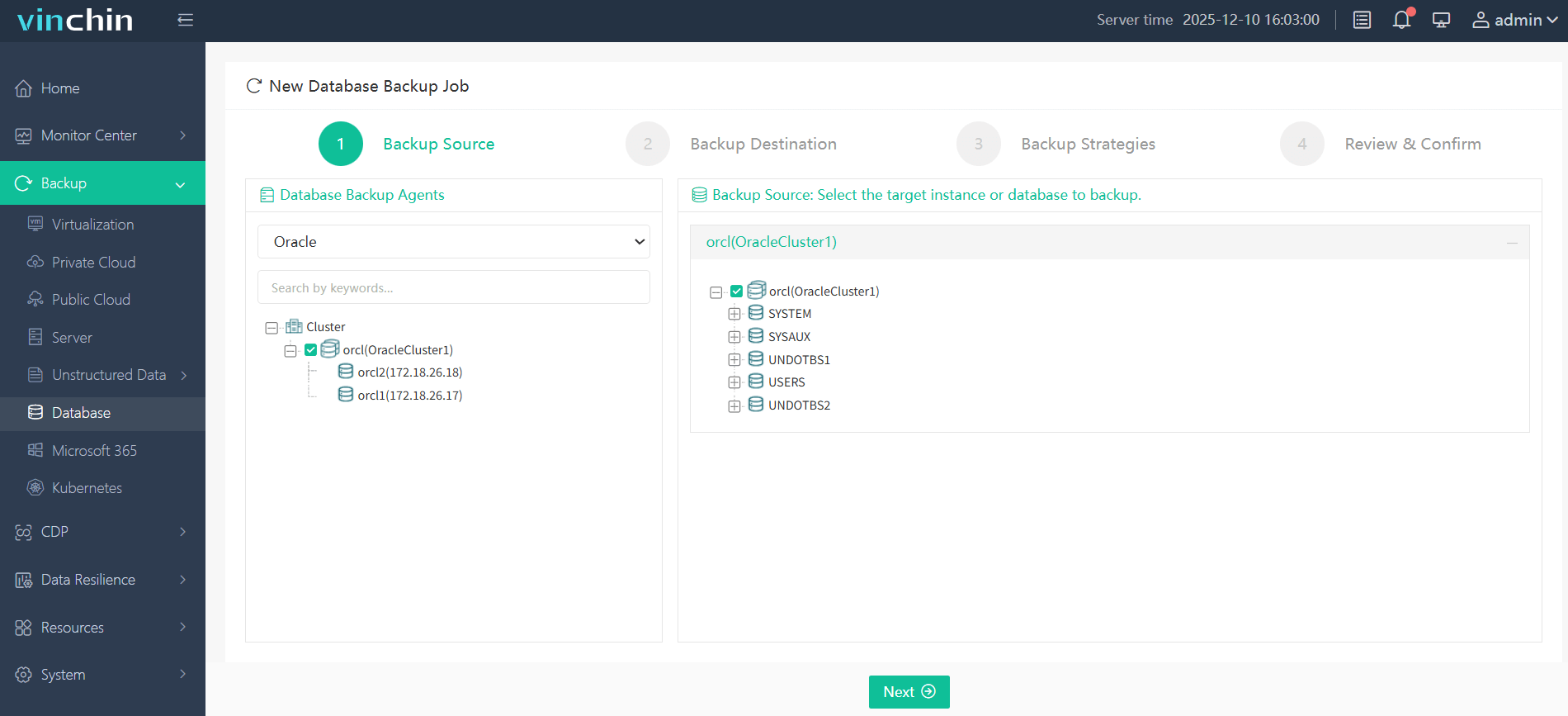
Step 1. Select the Oracle database to back up.
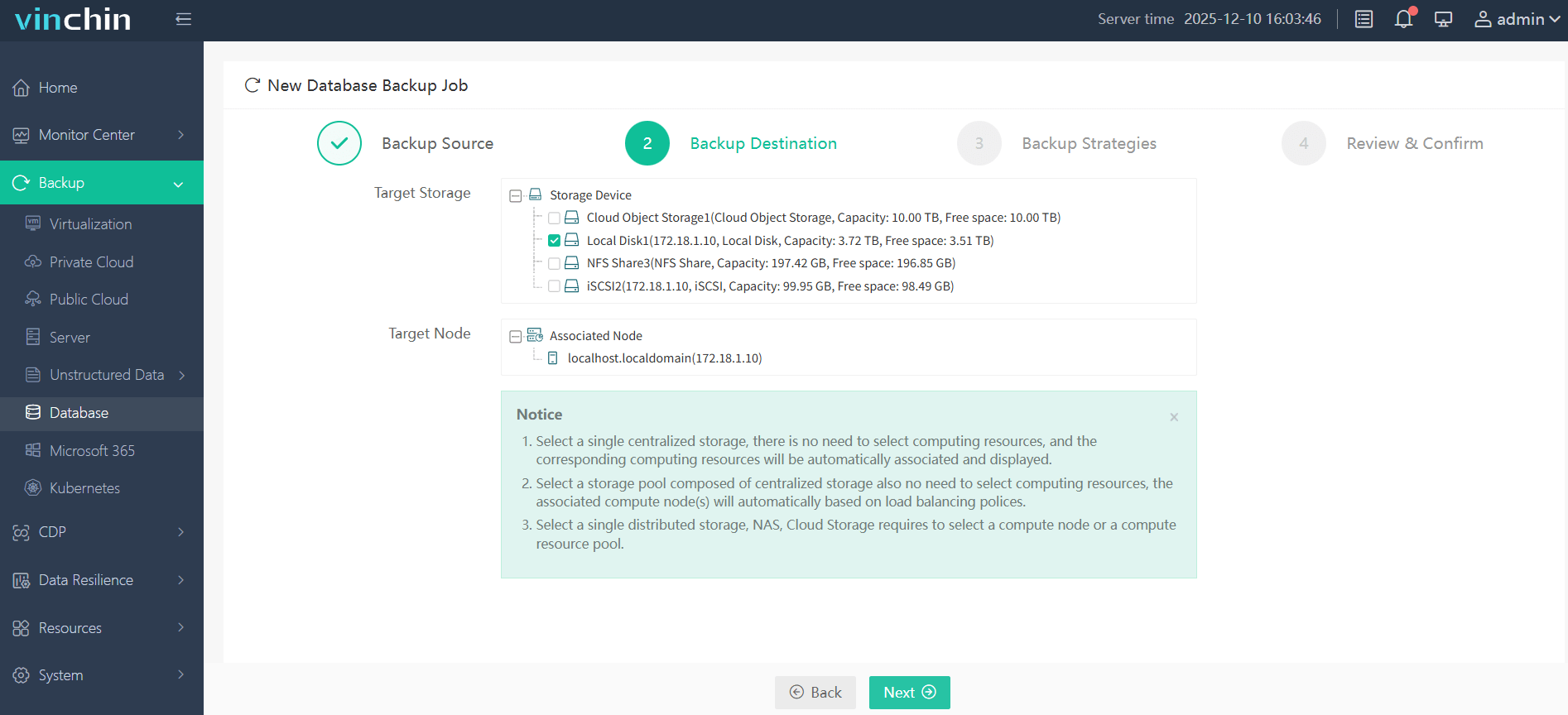
Step 2. Choose the backup storage.
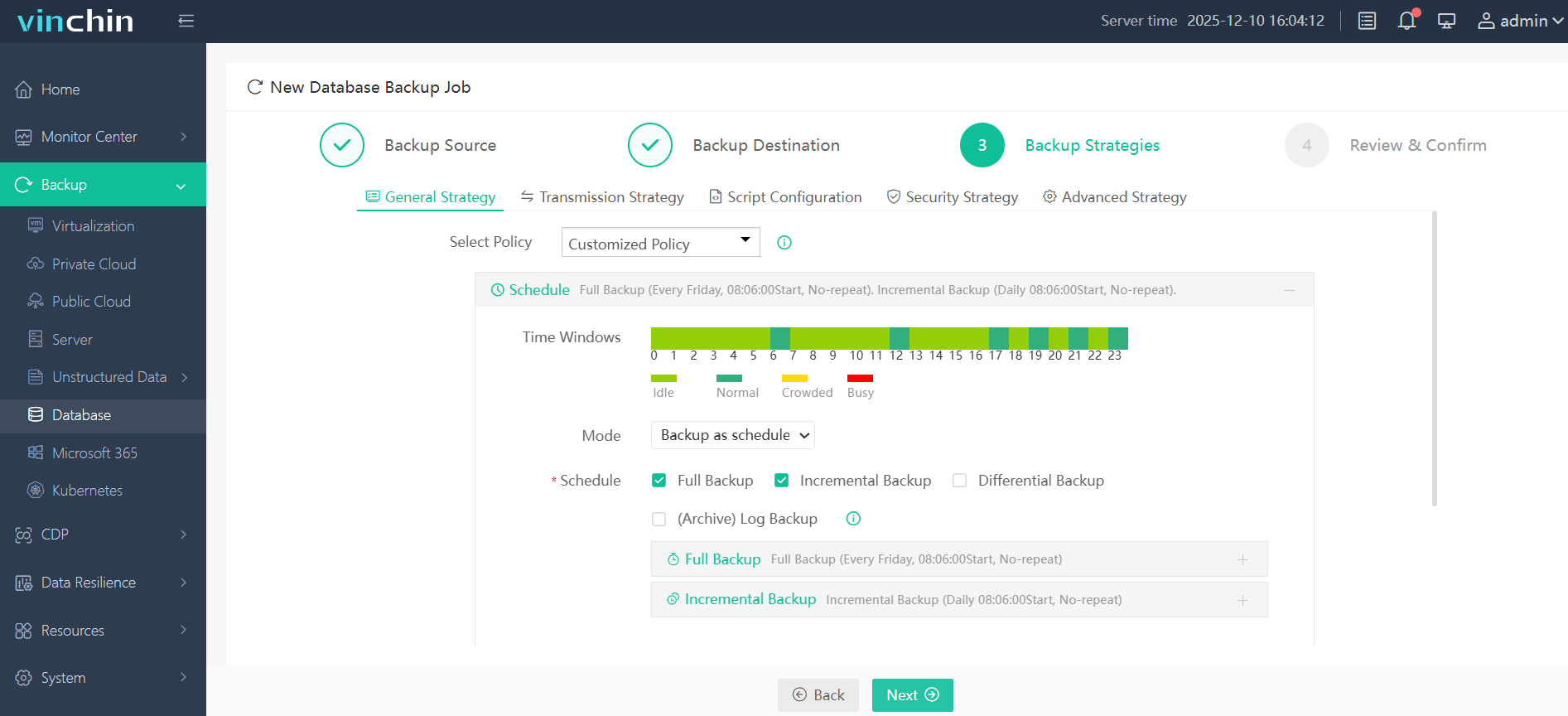
Step 3. Define the backup strategy.
Step 4. Submit the job.
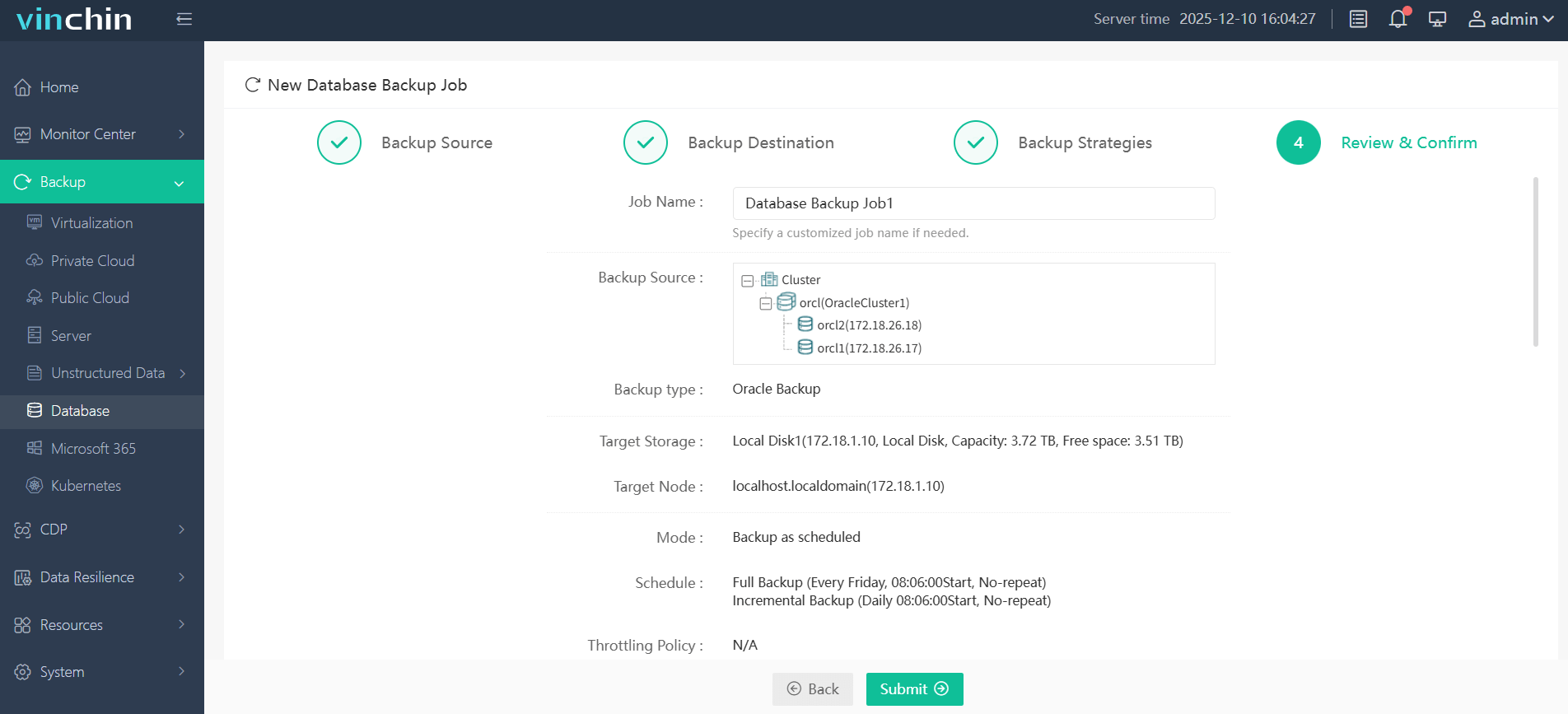
Recognized globally for reliability and ease-of-use—with thousands of satisfied customers—Vinchin Backup & Recovery offers a fully featured free trial for sixty days. Click download now and experience enterprise-grade protection firsthand!
Oracle RMAN Restore FAQs
Q1: Can I use RMAN restore if my original server hardware has changed?
Yes—as long as OS compatibility exists, you may restore onto different hardware provided necessary backups/control & parameter files are present.
Q2: Is it possible to recover only certain schemas without affecting others?
No, RMAN operates at tablespace/datafile level; schema-level selective recovery requires export/import utilities rather than direct physical restoration.
Q3: What should I do immediately after opening my restored database with RESETLOGS?
Take a fresh full backup right away, since previous archived logs become invalidated once RESETLOGS completes.
Conclusion
Mastering oracle rman restore gives peace of mind when disasters strike. By learning both standard procedures & advanced troubleshooting, you ensure business continuity. Vinchin streamlines oracle protection further—try their platform risk-free today !