Backing up your Oracle database is not just good practice—it’s essential for business continuity. Imagine losing your control file during an outage or hardware failure; you would not be able to mount or open your database at all until it’s restored. This could mean hours—or even days—of downtime while you scramble to recover data or rebuild from scratch.
In this guide, we’ll explain what an Oracle control file does, why backing it up matters so much, and how to use RMAN (Recovery Manager) for both manual and automatic protection methods. We’ll also cover validation steps, storage tips, troubleshooting advice, and how Vinchin can make Oracle backup even easier.
What Is an Oracle Control File?
The Oracle control file is a small but vital binary file that holds key information about your database’s physical structure and state. It stores metadata such as the database name, locations of datafiles and redo logs, checkpoint details, archive log history, and records of recent backups.
Without at least one valid control file available on disk, Oracle cannot start up in MOUNT or OPEN mode—leaving your entire environment offline until you restore it. For safety reasons, every production system should multiplex its control files by storing copies in different directories or disks.
It’s important to know that if you do not use an external recovery catalog with RMAN, then most of RMAN’s own metadata—such as backup sets—is stored inside the current control file itself. This makes regular backups even more critical because losing both your only copy of the control file and its latest backup could leave you without any record of previous backups.
Why Backup Controlfile with RMAN Matters?
Losing your only copy of a control file can halt operations instantly—and recovering without a recent backup is difficult or impossible in many cases.
RMAN (Recovery Manager) is Oracle’s built-in tool designed specifically for reliable database protection—including automated handling of critical files like the control file itself. With RMAN you can back up the control file manually whenever needed or configure automatic backups after every structural change or scheduled job.
If you rely solely on the default configuration without enabling autobackups or using a recovery catalog (an optional external repository), then all RMAN metadata lives inside that single point—the current control file—which increases risk if it becomes corrupted or lost.
Oracle recommends always keeping recent backups after any major change such as adding tablespaces/datafiles or changing log configurations. Think of these backups as insurance: they let you restore quickly after disaster strikes instead of starting over from scratch.
Method 1: Manual Backup of Control File Using RMAN Command
Manual backup gives you direct oversight—you decide exactly when to capture a snapshot before risky changes like upgrades or migrations.
To perform a manual backup using RMAN:
1. Start Recovery Manager
Open your terminal window and connect directly:
$ rman target /
2. Back Up Current Control File
At the prompt type:
RMAN> BACKUP CURRENT CONTROLFILE;
This creates a new backup set in your default destination directory configured within Oracle.
3. (Optional) Specify Custom Location/Format
If you want full path visibility—for example before patching—use:
RMAN> BACKUP CURRENT CONTROLFILE FORMAT '/path/to/backup/controlfile_%U.bkp';
Replace /path/to/backup/ with any secure directory outside main datafile locations for extra safety.
4. (Optional) Create Image Copy Instead
Some admins prefer image copies over logical sets:
RMAN> BACKUP AS COPY CURRENT CONTROLFILE FORMAT '/tmp/controlfile_copy01.bkp';
Manual snapshots are useful but remember—they only reflect what was known at that moment in time; if other changes happen later those won’t be included unless another manual run occurs soon after.
After running any manual command above it’s smart to check success right away rather than waiting until disaster hits:
Use LIST BACKUP OF CONTROLFILE; at the RMAN prompt to see all available copies—including timestamps—to confirm yours appears.
If you specified a custom path earlier (FORMAT), check at OS level using ls -l /path/to/backup/ to verify presence.
For deeper assurance try:
RMAN> VALIDATE BACKUPSET <backup_piece_number>;
Replace <backup_piece_number> with what appears from LIST BACKUP.
If validation fails due to missing files or permissions errors (“ORA-19505” is common), double-check directory access rights on both source/destination paths.
Method 2: Automatic Backup of Control File Using RMAN Configuration
Automatic autobackup ensures every time there’s significant activity—a scheduled job runs or someone adds/removes tablespaces—a fresh copy gets saved automatically without human intervention.
Here’s how to enable this feature step-by-step:
1. Connect via Recovery Manager
$ rman target /
2. Enable Autobackup
At prompt enter:
RMAN> CONFIGURE CONTROLFILE AUTOBACKUP ON;
By default this setting is OFF; turning it ON means every subsequent operation triggers an immediate save—not just full database jobs but also structural changes like adding datafiles/logs.
3. (Optional) Set Custom Format & Location
You might want autobackups written somewhere separate from main DB files:
RMAN> CONFIGURE CONTROLFILE AUTOBACKUP FORMAT FOR DEVICE TYPE DISK TO '/backup/autobackup_ctrl_%F.bkp';
%F inserts unique info into filenames so old ones aren’t overwritten accidentally.
4. Run Regular Backups
Any standard command now triggers autobackup automatically:
RMAN> BACKUP DATABASE;
5. Verify Autobackup Creation
To confirm everything works as expected:
RMAN> LIST BACKUP OF CONTROLFILE;
Restoring Your Control File Using an Autobackup
When disaster strikes—a server crash wipes out all local copies—you need fast action:
First launch Recovery Manager:
$ rman target /
Then start instance without mounting any DB yet:
RMAN> STARTUP NOMOUNT;
If prompted because no DBID found (common when restoring onto new hardware):
RMAN> SET DBID <your_dbid>;
Now restore directly from last known good autobackup:
RMAN> RESTORE CONTROLFILE FROM AUTOBACKUP;
Once complete mount normally:
RMAN> ALTER DATABASE MOUNT;
From here proceed through normal media/file recovery procedures depending on what else was lost alongside original control files.
How to Back Up Oracle Database Workloads with Vinchin?
Beyond native tools like RMAN, organizations seeking streamlined management may consider dedicated solutions for comprehensive protection across multiple platforms. Vinchin Backup & Recovery is a professional enterprise-level solution supporting today’s mainstream databases—including Oracle, MySQL, SQL Server, MariaDB, PostgreSQL, PostgresPro, and TiDB—with robust features tailored for each environment.
Among its many features are incremental backup support for reduced workload impact on large databases; advanced source-side compression that minimizes network traffic and speeds up transfers; batch database backup management for operational efficiency; retention policies including GFS models for long-term archiving needs; plus built-in integrity checks that validate recoverability proactively—all contributing toward resilient enterprise-grade data protection strategies.
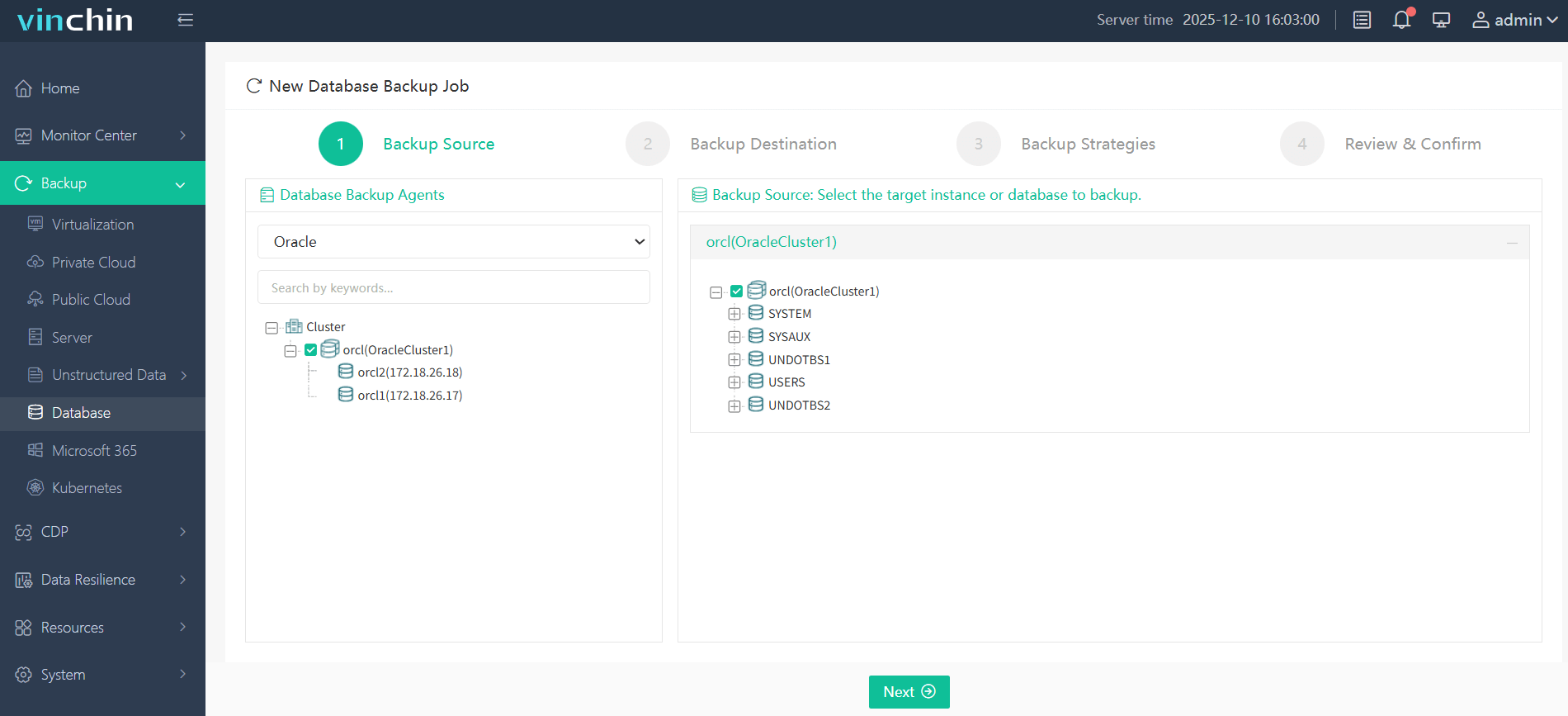
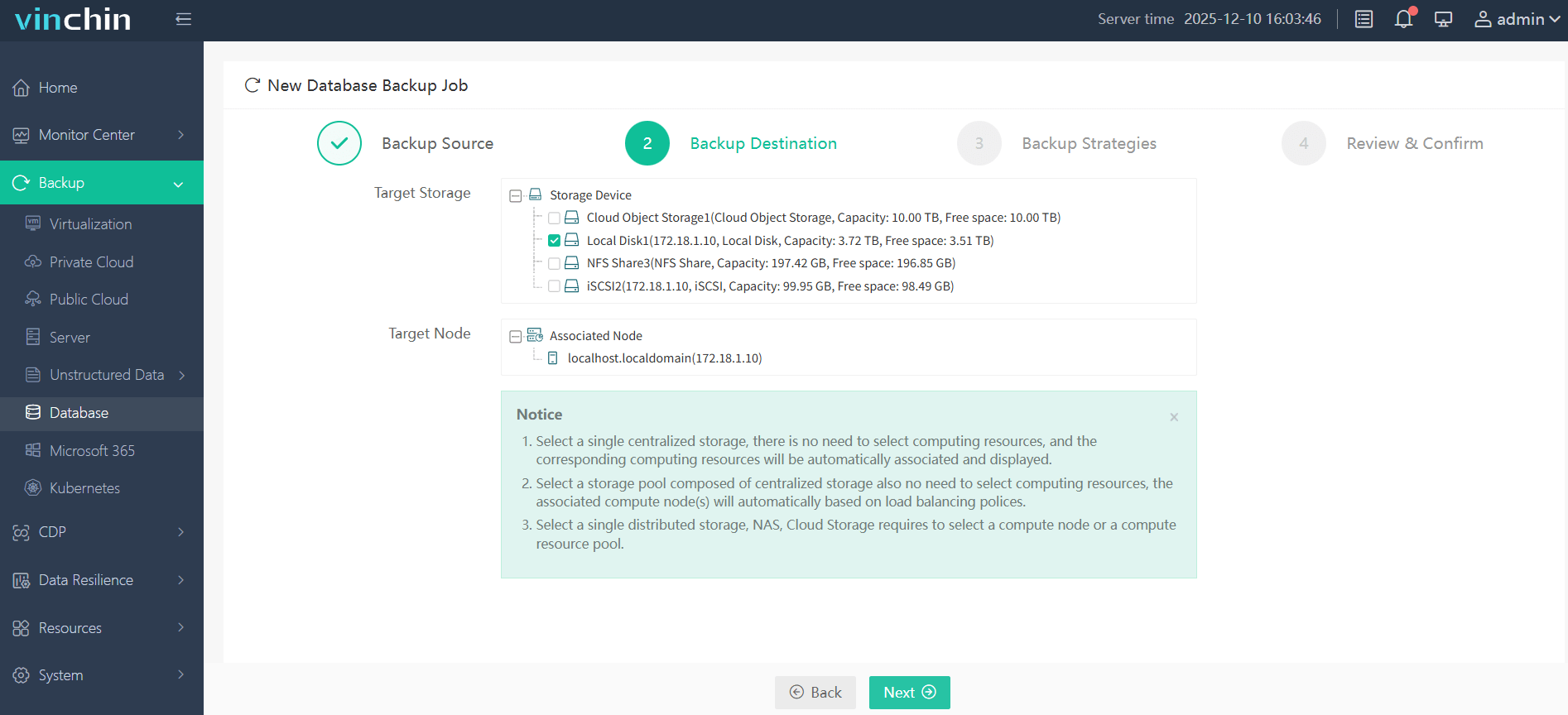
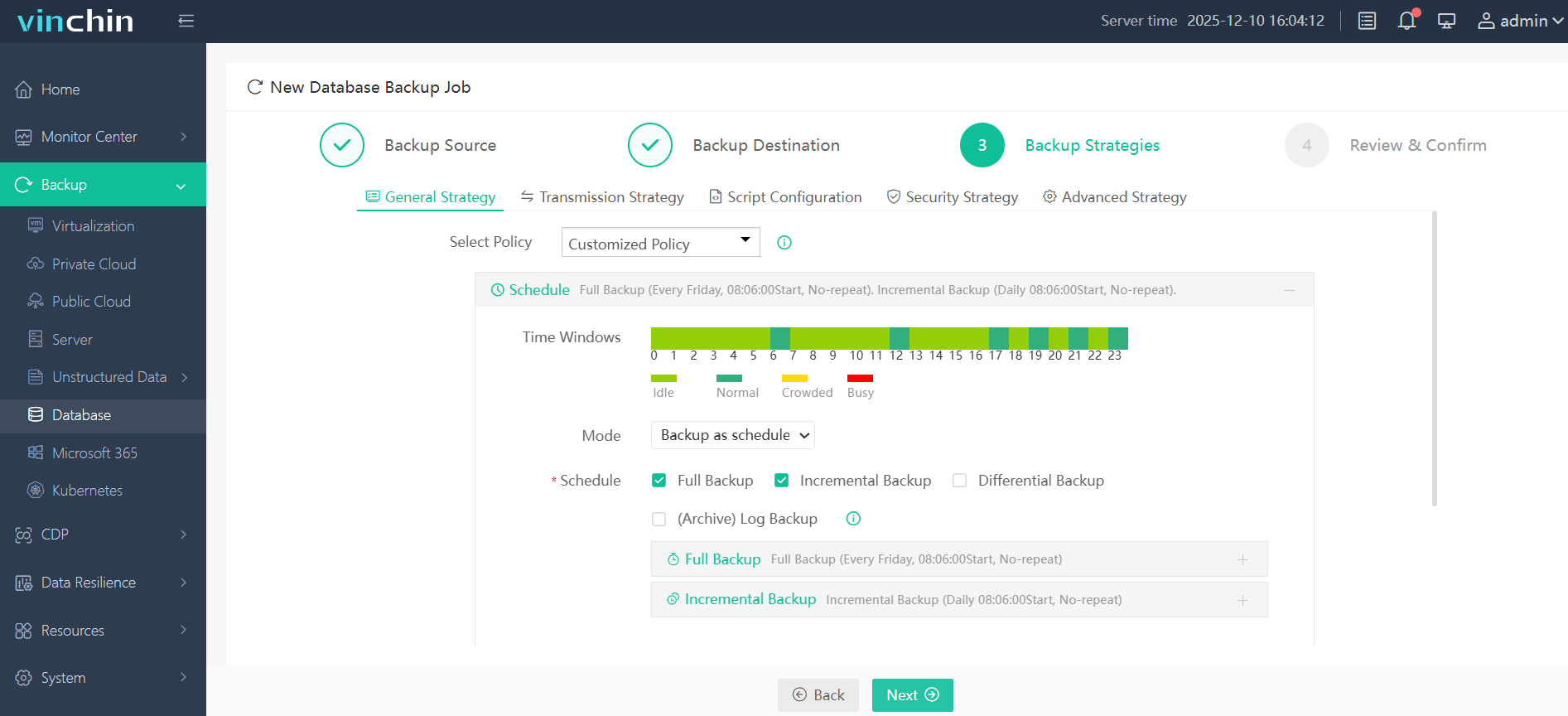
Vinchin Backup & Recovery offers an intuitive web console making complex tasks straightforward—in four simple steps:
Step 1. Select the Oracle database to back up
Step 2. Choose the backup storage
Step 3. Define the backup strategy
Step 4. Submit the job.
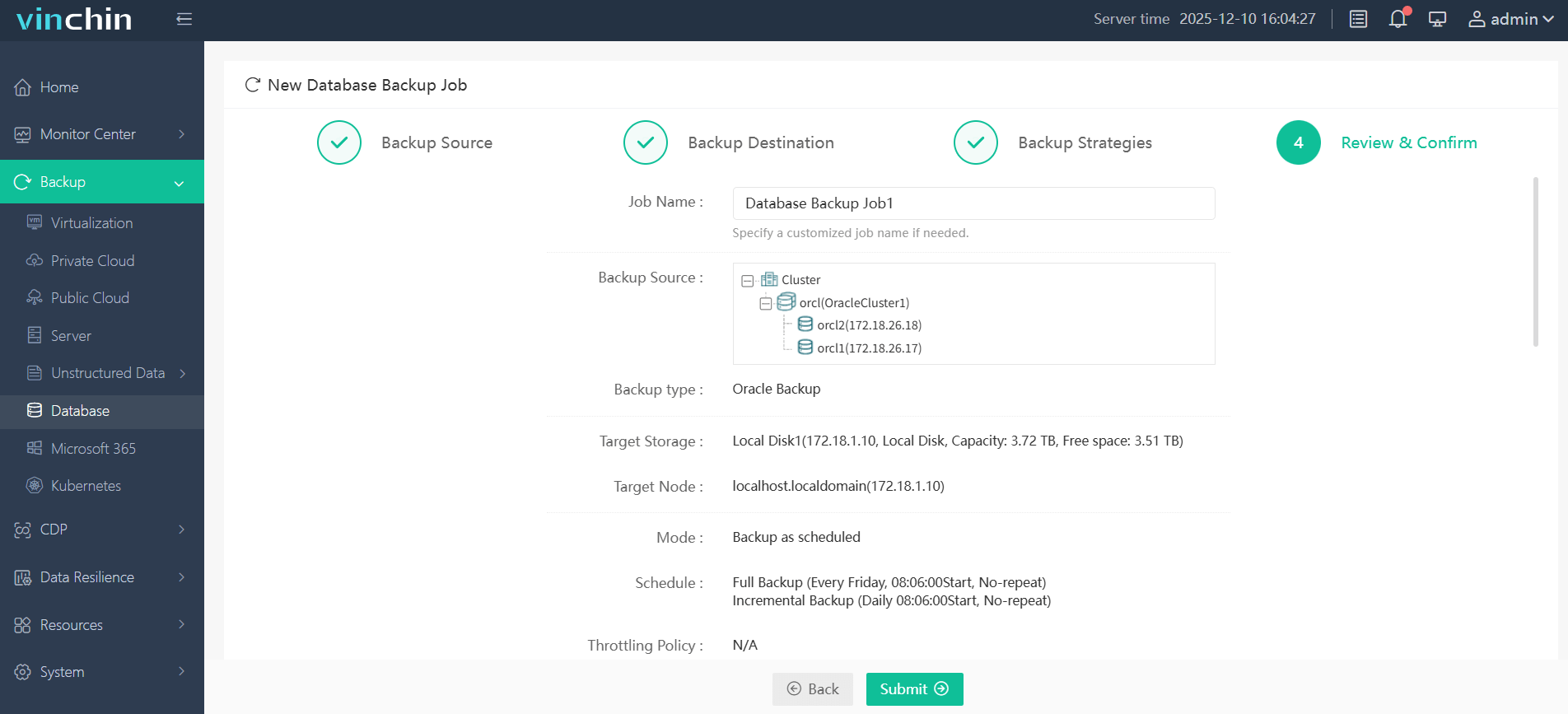
Recognized globally by thousands of enterprises with top industry ratings for reliability and service excellence—Vinchin Backup & Recovery offers a fully featured 60-day free trial so you can experience effortless enterprise-grade protection firsthand—click below to download now!
Backup Controlfile RMAN FAQs
Q1: How do I restore my lost control file using only an autobackup?
A1: Start Recovery Manager > STARTUP NOMOUNT > SET DBID <if required> > RESTORE CONTROLFILE FROM AUTOBACKUP > ALTER DATABASE MOUNT > continue recovery steps as needed.
Q2: What happens if my disk-based autobackups are deleted by mistake?
A2: Unless another copy exists elsewhere (tape/cloud/external drive), restoration may fail; always store redundant copies offsite where possible per company policy!
Q3: Can I validate my latest automatic/autobacked-up copy without restoring?
A3: Yes—in Recovery Manager run LIST BACKUP OF CONTROLFILE then VALIDATE BACKUPSET <piece#>; this checks integrity before actual restore attempts.
Conclusion
Backing up your Oracle control file with RMAN protects against downtime disasters large and small—manual methods work well but enabling automatic autobackups should be standard practice everywhere possible! Vinchin makes managing these tasks even easier thanks to its user-friendly interface built specifically for busy IT teams seeking peace-of-mind protection today.