Backing up Oracle databases is vital for any operations administrator. Oracle Recovery Manager (RMAN) is the standard tool for this job, offering flexible options to manage backup streams. One key feature is allocating channels—especially to tape devices using the sbt_tape interface. Allocating a channel to sbt_tape lets you stream backups directly to enterprise tape libraries through your media manager software. This approach supports long-term retention, offsite storage, and regulatory compliance—all critical in enterprise environments.
What Is RMAN Allocate Channel SBT_TAPE?
In RMAN terminology, a channel is a link between RMAN and your storage device. When you allocate a channel, you tell RMAN where—and how—to send backup data. The sbt_tape device type refers to System Backup to Tape (SBT), Oracle’s standard interface for sending backups straight to tape libraries or compatible media managers.
Allocating a channel to sbt_tape means backup pieces are written directly from your database server onto tape media instead of disk storage. This method is essential if your organization relies on tape for archiving or meeting strict data retention rules.
You can allocate channels manually within scripts or configure them automatically so every backup uses your preferred settings by default. Either way, understanding how RMAN interacts with your tape infrastructure helps ensure reliable backups—and smooth restores when needed.
Why Use SBT_TAPE Channels for Backup
Why invest effort in configuring channels for sbt_tape? For many enterprises, tapes remain essential due to cost efficiency over long periods—and because they meet strict compliance needs that disk-based solutions alone cannot match.
Key benefits include:
Streaming backups straight from database servers onto tapes eliminates extra disk staging areas—saving space and reducing costs.
Allocating multiple channels enables true parallelism; ideally match one channel per physical drive for best throughput without causing resource contention or excessive multiplexing (which can slow restores).
Integration with enterprise-grade media managers brings advanced features like encryption at rest/on transit, automated vaulting routines for offsite safety, barcode tracking of tapes across locations—even air-gapped protection against ransomware threats.
Meeting legal mandates becomes easier since tapes offer predictable retention lifecycles—and are less prone to accidental deletion compared with spinning disks or cloud buckets alone.
Not least: freeing up expensive disk arrays by moving infrequently accessed data out of primary storage keeps operational budgets under control while still ensuring recoverability years into the future.
Prerequisites and Common Configuration Steps
Before allocating an sbt_tape channel in RMAN, make sure all components are set up correctly. Missing one step can cause frustrating errors later.
First, install your chosen media management software on the Oracle server according to vendor documentation. This software provides the shared library file—often named something like libobk.so, though actual names vary by vendor—which acts as a bridge between Oracle and your tape system.
Next, confirm that this SBT library file is accessible from Oracle’s environment. Typically, it should reside in $ORACLE_HOME/lib. If it’s elsewhere, update environment variables such as LD_LIBRARY_PATH (on Linux/UNIX) so Oracle can find it at runtime.
Registering your database instance with the media manager may also be required; check vendor instructions for details here too.
Finally, test connectivity between Oracle and your media manager before running production backups by allocating an SBT_TAPE channel interactively in RMAN—a quick way to catch misconfigurations early.
How to Allocate Channel SBT_TAPE in RMAN?
Allocating an sbt_tape channel in RMAN follows clear steps but requires attention to detail so backups go where you intend—and are managed by the right software agent behind the scenes.
The most direct method is manual allocation inside a RUN block:
RUN {
  ALLOCATE CHANNEL ch1 DEVICE TYPE 'sbt_tape'
    PARMS 'SBT_LIBRARY=/path/to/libobk.so,
           ENV=(BACKUP_HOST=10.10.123.10,BACKUP_SHARE=rman1,BACKUP_USERNAME=sampleuser,BACKUP_PASSWORD=123)';
  BACKUP AS BACKUPSET DATABASE FORMAT '%U_%p'; -- %U: unique name; %p: piece number
  RELEASE CHANNEL ch1;
}
Let’s break down these steps:
1. Start with RUN—all manual allocations must be inside this block.
2. Use ALLOCATE CHANNEL, naming each channel (like ch1), setting DEVICE TYPE as 'sbt_tape', then specifying connection details via PARMS:
3. Run BACKUP AS BACKUPSET DATABASE FORMAT '%U_%p', which creates uniquely named backup pieces (%U) plus their sequence number (%p) within each set.
4. Always finish with RELEASE CHANNEL ch1 so resources are freed promptly after use.
If you want better security than plain-text credentials—or need advanced integration features—some vendors support credential management commands like:
RUN {
  ALLOCATE CHANNEL ch1 DEVICE TYPE 'sbt_tape'
    PARMS 'SBT_LIBRARY=/path/to/libobk.so';
  SEND 'creds --set --cred sampleuser --host 10.10.123.10 --user sampleuser --password 123';
  RELEASE CHANNEL ch1;
}
Note: Credential management syntax varies by media manager; consult its documentation.
After registering credentials once per session or system-wide policy, future allocations reference them using an ID rather than repeating sensitive information:
RUN {
  ALLOCATE CHANNEL ch1 DEVICE TYPE 'sbt_tape'
    PARMS 'SBT_LIBRARY=/path/to/libobk.so,
           ENV=(BACKUP_HOST=10.10.123.10,BACKUP_SHARE=rman1,BACKUP_CREDID=sampleuser)';
  BACKUP AS BACKUPSET DATABASE FORMAT '%U_%p';
  RELEASE CHANNEL ch1;
}
For routine jobs—or large environments—you may prefer automatic configuration so every backup uses consistent settings without scripting each time:
CONFIGURE DEFAULT DEVICE TYPE TO 'sbt_tape';
CONFIGURE DEVICE TYPE 'sbt_tape' PARALLELISM 2 BACKUP TYPE TO BACKUPSET;
CONFIGURE CHANNEL DEVICE TYPE 'sbt_tape'
          PARMS 'SBT_LIBRARY=/path/to/libobk.so,
                 ENV=(BACKUP_HOST=10.10.123.10,BACKUP_SHARE=rman1,BACKUP_CREDID=sampleuser)';
Here’s what happens:
All future jobs default to writing directly to tape via SBT_TAPE unless overridden.
Setting parallelism matches allocated channels (and thus concurrent streams) with available drives—improving speed but avoiding contention if tuned properly.
Remember: Actual values for paths or environment variables depend on both operating system conventions and specific requirements from your chosen media management solution.
Restore Operations Using SBT_TAPE Channels
Restoring from tape works much like backing up—you must allocate one or more channels pointing at 'sbt_tape'. During recovery tasks such as full database restores or point-in-time recovery scenarios:
RUN {
  ALLOCATE CHANNEL t1 DEVICE TYPE 'sbt_tape'
    PARMS 'SBT_LIBRARY=/path/to/libobk.so,
           ENV=(BACKUP_HOST=10.10.123.10,BACKUP_SHARE=rman1,BACKUP_CREDID=sampleuser)';
  RESTORE DATABASE;
  RECOVER DATABASE;
  RELEASE CHANNEL t1;
}
Always ensure enough channels are allocated during restore jobs—matching those used during backup speeds up retrieval since multiple tapes may be read simultaneously if needed.
How to Protect Oracle Database Backups with Vinchin?
For organizations seeking robust protection beyond native tools like RMAN alone, Vinchin Backup & Recovery offers an enterprise-level solution tailored specifically for mainstream databases—including comprehensive support for Oracle environments alongside MySQL, SQL Server, MariaDB, PostgreSQL, PostgresPro, and TiDB systems alike (with special emphasis here on Oracle). Key capabilities include batch database backup scheduling across instances; granular data retention policies including GFS retention models; cloud backup integration paired seamlessly with secure tape archiving; integrity checks; plus any-point-in-time recovery options—all designed together to automate processes while maximizing reliability throughout every stage of data lifecycle management.
Vinchin Backup & Recovery makes safeguarding critical databases simple through its intuitive web console:
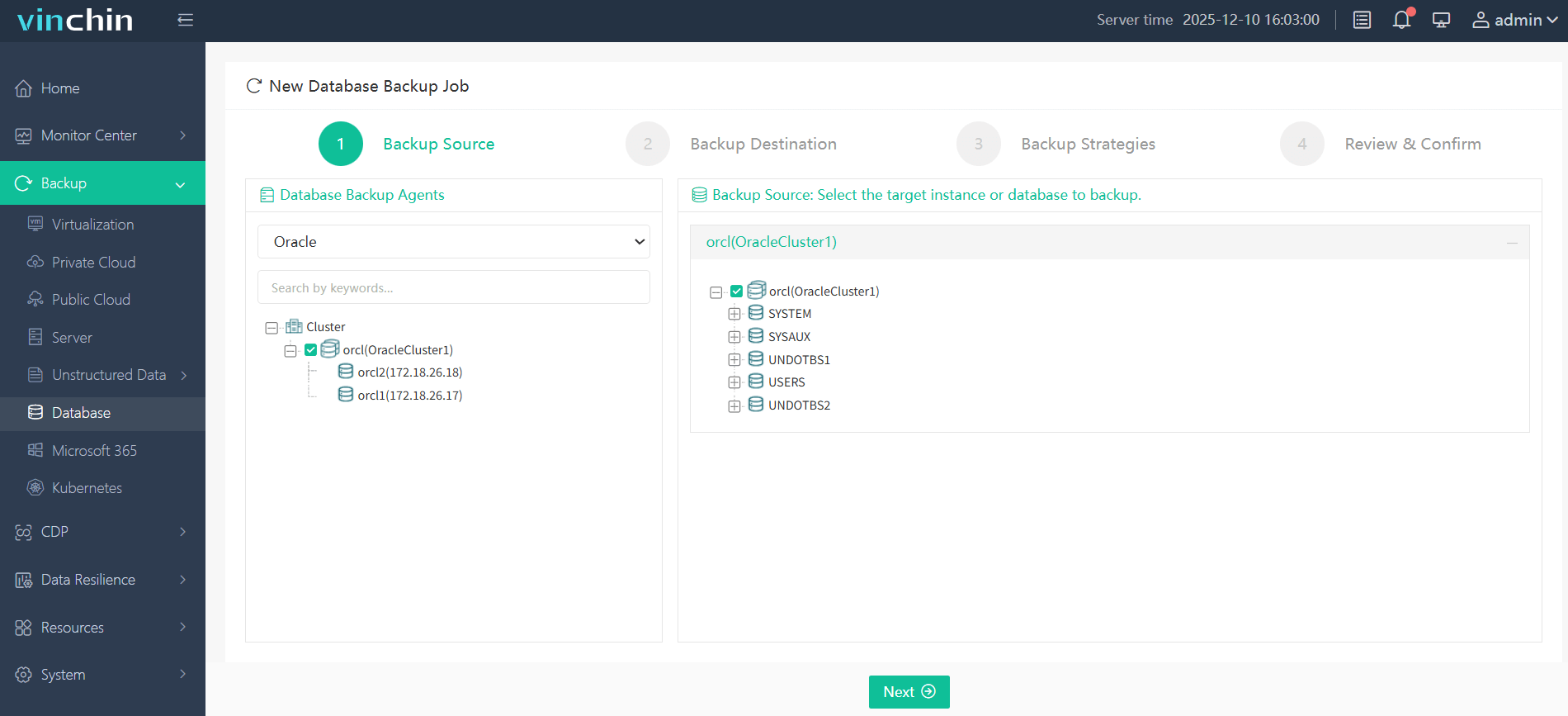
Step 1—Select the Oracle database you wish to back up;
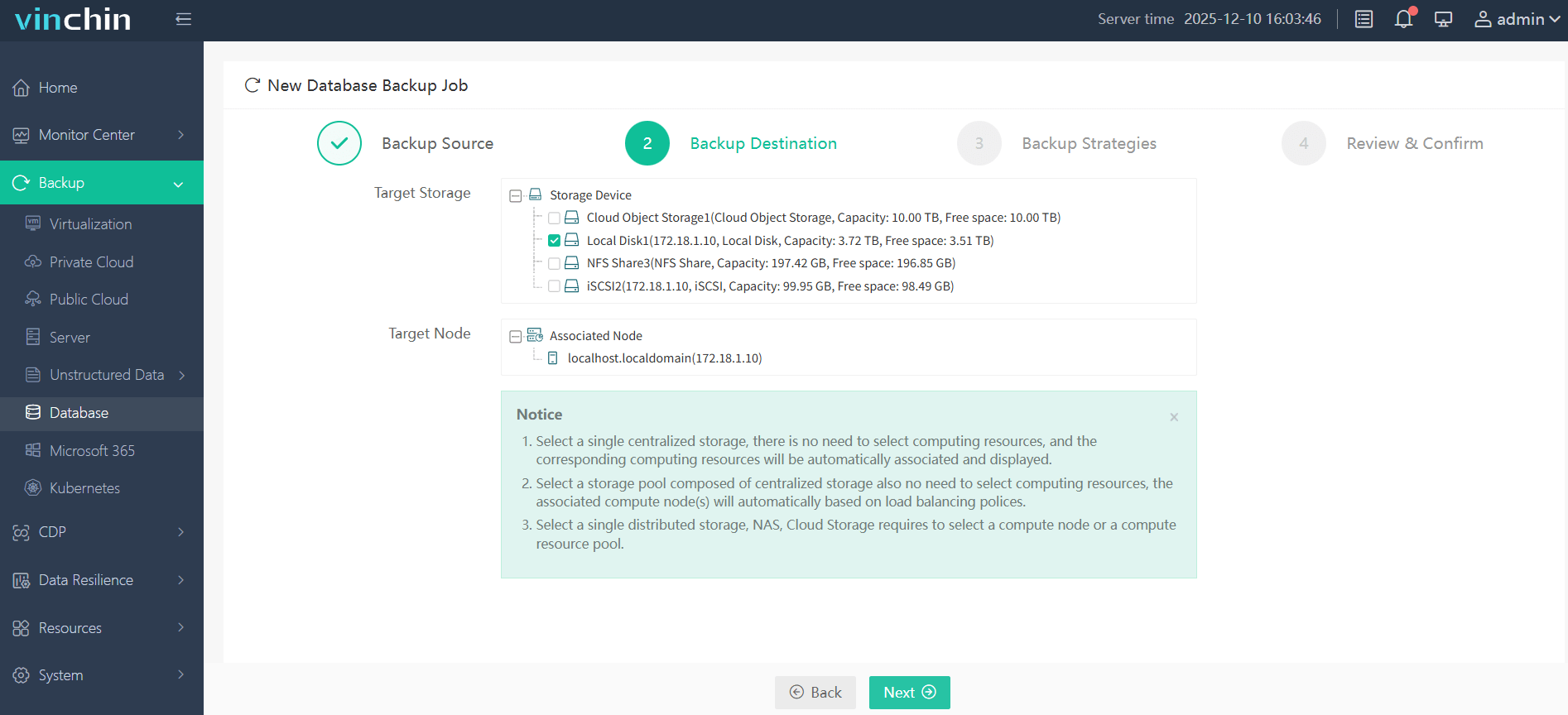
Step 2—Choose target backup storage;
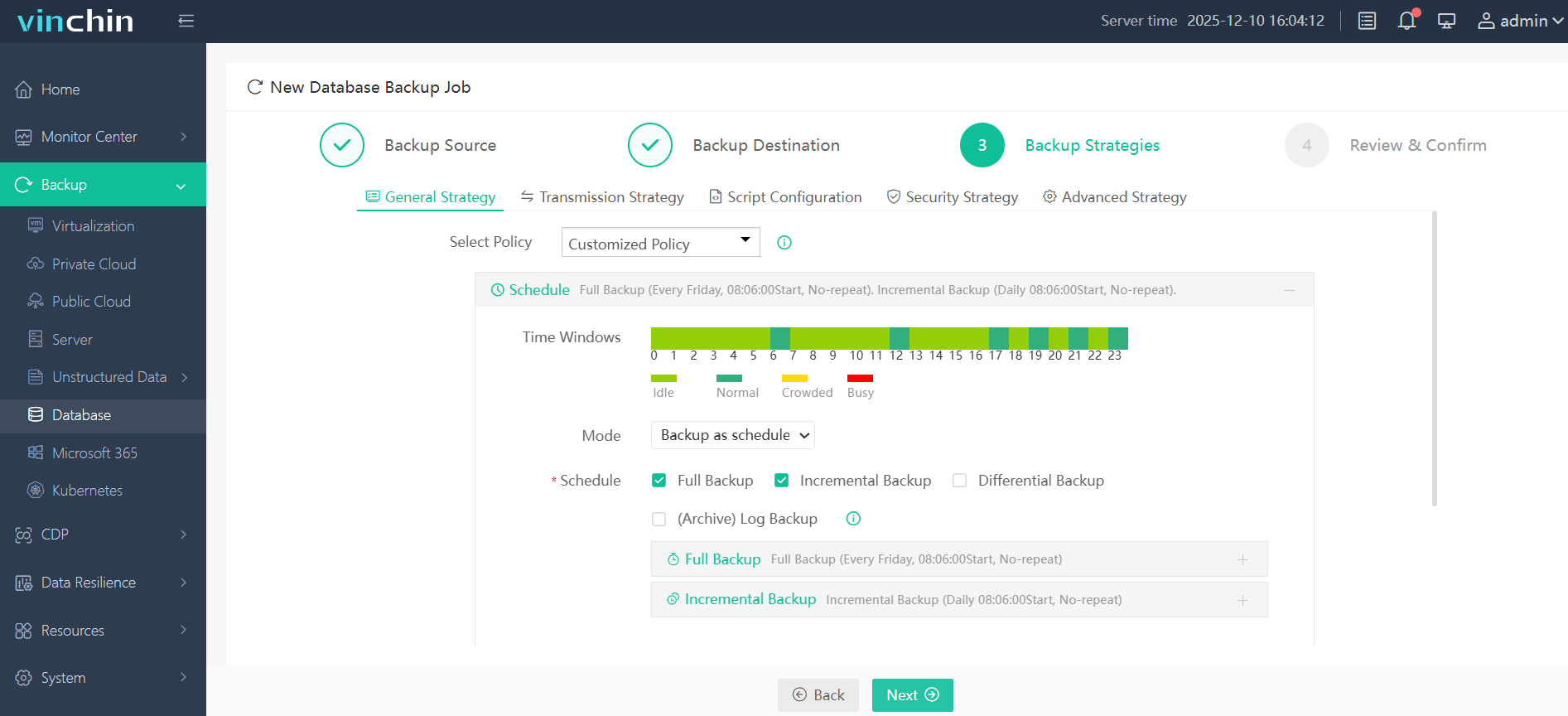
Step 3—Define strategy parameters such as schedule/frequency/policy;
Step 4—Submit job execution instantly via streamlined workflow navigation.
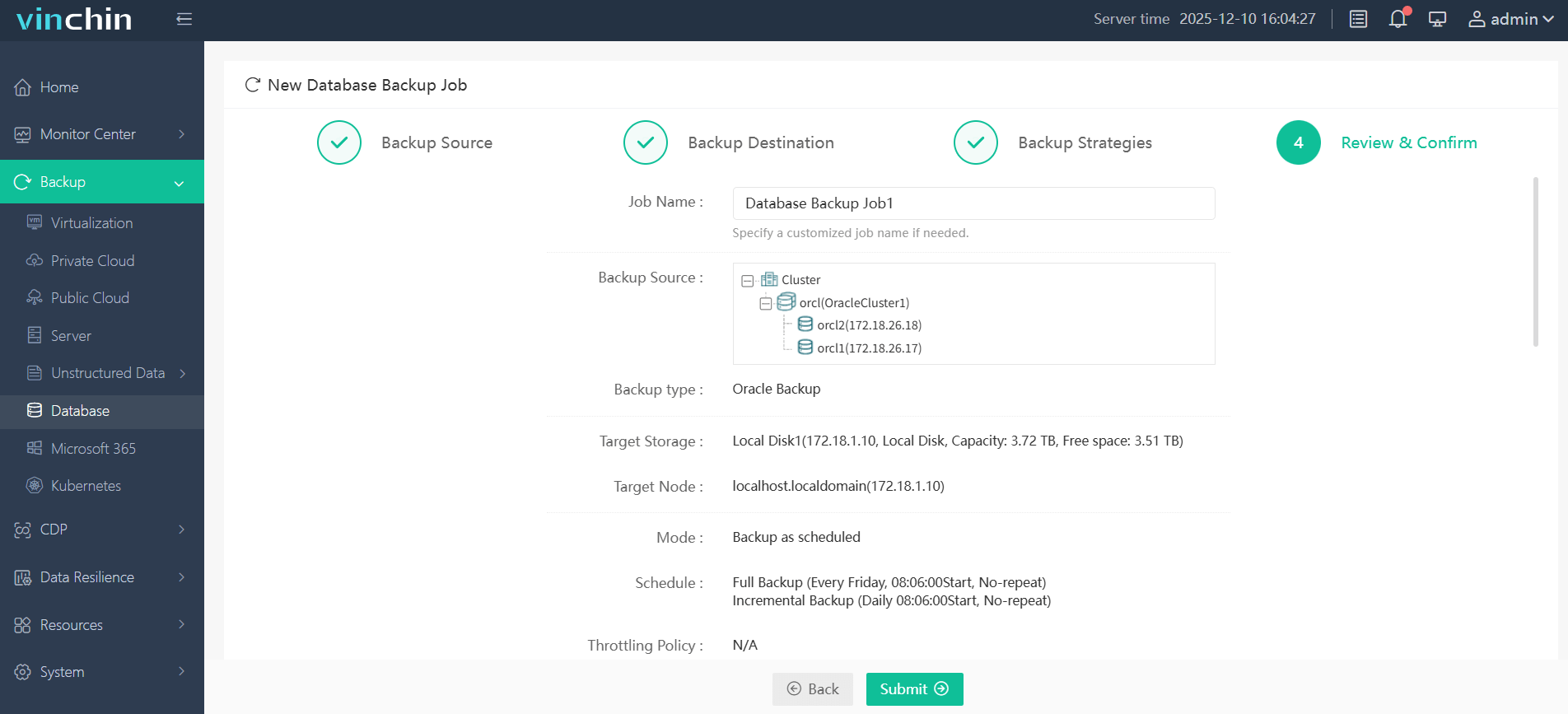
Recognized globally among enterprise users—with top ratings earned thanks to proven reliability—you can experience every feature risk-free during their full-featured free trial period (60 days). Click below now to get started protecting mission-critical workloads today!
RMAN Allocate Channel SBT_TAPE FAQs
Q1: Can I run simultaneous full backups using several sbt_tape channels?
Yes; allocate one sbt_tape channel per available drive within RUN blocks—for example: ALLOCATE CHANNEL cX DEVICE TYPE sbt_tape—for faster parallel processing during large jobs.
Q2: How do I verify my sbt library path is correct before starting production?
Check presence of libobk.so under $ORACLE_HOME/lib using OS commands; confirm LD_LIBRARY_PATH includes its directory; test allocation interactively via rman prompt before scheduling automated runs.
Q3: What should I do if my restore job hangs waiting on sbt_tape?
Ensure all required drives are online/unmounted elsewhere; restart related services if stuck; review both rman output/log files plus native logs from installed media manager agent software.
Conclusion
Allocating channels to sbt_tape in RMAN ensures efficient enterprise-grade backups direct-to-tape—with flexibility for compliance needs too.Vinchin makes protecting critical databases even simpler thanks totheir intuitive platform.Try their free trial today!