Restoring an Oracle database is a critical skill for any database administrator. When disaster strikes—be it hardware failure, data corruption, or accidental deletion—knowing how to use Oracle Recovery Manager (RMAN) to bring your database back online is essential. In this guide, we’ll walk through what RMAN restore means, why it’s the preferred tool, and how to perform both full and point-in-time restores step by step.
Before you begin any restore operation with RMAN, make sure you have working backups available—either on disk or tape—and know whether your environment uses a recovery catalog or just control file autobackup. These details affect some steps during restoration.
What Is Oracle RMAN Restore?
Oracle RMAN restore is the process of copying data files, control files, or archived redo logs from backup storage back to their original or new locations. RMAN automates this process so that the correct files are selected and placed where the database expects them. After restoring these files, you usually run a recovery step that applies changes recorded in archived redo logs to bring the database into a consistent state.
Why Use RMAN for Database Restore?
RMAN is Oracle’s built-in tool for backup and recovery tasks. It understands how Oracle databases work internally and tracks all backups automatically. With RMAN you can restore entire databases or just specific tablespaces or data files as needed. Advanced features like encrypted backups support compliance needs; compression saves space; restore failover improves reliability if some backup pieces are missing or damaged.
If your environment uses a recovery catalog—a separate schema that stores metadata about backups—you connect using both target and catalog credentials in RMAN (rman target / catalog rcat_user@catdb). This setup provides extra protection because even if your control file is lost or corrupted, you can still access backup information from the catalog.
How to Perform a Full Database Restore with RMAN?
A full database restore becomes necessary when most or all data files are lost due to hardware failure or other disasters. Before starting restoration:
1. Confirm that required backups exist—check both data file and control file copies.
2. Know whether you need to recover from disk-based storage or tape media.
3. If using SPFILE/autobackup but no recovery catalog: have your DBID ready; it's required when restoring SPFILE/control file without access to original metadata.
Preparation
First set up your environment variables such as ORACLE_SID so they match your target instance name. If you're working on a new server—or if all configuration files were lost—create a minimal parameter file (PFILE) containing at least DB_NAME and DB_UNIQUE_NAME parameters.
If connecting via recovery catalog: launch RMAN with
rman target / catalog username@catalog_db
Otherwise:
rman target /
Before running any actual restore commands in production environments—or during high-pressure incidents—it’s wise to check which backup sets will be used and verify their integrity.
Use RESTORE DATABASE PREVIEW in RMAN to list which backup pieces will be accessed:
RMAN> RESTORE DATABASE PREVIEW;
This command shows exactly which files will be restored so you can confirm nothing important is missing.
To check if those backups are healthy—not corrupted—run:
RMAN> RESTORE DATABASE VALIDATE;
This does not move any data but scans each piece for errors so you avoid surprises during real restores.
Step-by-Step Full Restore
Once validation checks out:
1. Start Instance in NOMOUNT Mode
Use SQL*Plus:
SQL> STARTUP NOMOUNT PFILE='/path/to/init.ora';
2. Restore Server Parameter File (if needed)
If you've lost SPFILE (server parameter file), use DBID only if not connected via recovery catalog:
   RMAN> SET DBID <your_dbid>;
   RMAN> RESTORE SPFILE FROM AUTOBACKUP;
Restart instance using restored SPFILE:
   SQL> SHUTDOWN IMMEDIATE;
   SQL> STARTUP NOMOUNT;
3. Restore Control File
If missing/corrupted:
RMAN> RESTORE CONTROLFILE FROM AUTOBACKUP;
Then mount database:
RMAN> ALTER DATABASE MOUNT;
4. Restore Data Files
To put everything back where it belongs:
RMAN> RESTORE DATABASE;
If restoring files onto new paths—for example after moving servers—use SET NEWNAME before running RESTORE:
    RUN {
      SET NEWNAME FOR DATAFILE 1 TO '/newpath/system01.dbf';
      RESTORE DATABASE;
      SWITCH DATAFILE ALL;
    }
5. Recover Database
Apply archived redo logs so changes made since last backup are included:
RMAN> RECOVER DATABASE;
6. Open Database
If you've restored control file or performed incomplete recovery (not up-to-the-minute), open with RESETLOGS:
RMAN> ALTER DATABASE OPEN RESETLOGS;
Otherwise,
RMAN> ALTER DATABASE OPEN;
Note: Always double-check that enough disk space exists before starting large restores; lack of space causes failures mid-process.
How to Perform Point-in-Time Recovery Using RMAN?
Sometimes mistakes happen—a table gets dropped by accident or bad data loads occur—and you need to roll back only partway rather than fully restoring everything from scratch.
Point-in-time recovery lets you return your whole database (or selected tablespaces) back as they existed at an earlier moment based on time stamp (date/time), SCN number (system change number), or named restore point created earlier.
Preparation
Identify exactly when things went wrong—the timestamp/scn/restore point you'll use as target for rollback—and confirm relevant archive logs exist covering that period.
Be aware: once you open the database with RESETLOGS after PITR completes, previous redo history cannot be reused unless another backup was taken beforehand. Make sure this irreversible step fits your business needs!
Step-by-Step Point-in-Time Recovery
1. Start Instance & Mount Database
Bring up instance in mount mode:
SQL> STARTUP MOUNT;
2. Set Recovery Target
Instructs Oracle how far back you'd like restoration applied—for example by date/time:
RMAN> SET UNTIL TIME "TO_DATE('2024-06-01 10:00:00', 'YYYY-MM-DD HH24:MI:SS')";Or substitute SCN number / named restore point as appropriate.
3. Restore & Recover Database
Now run standard commands—they'll stop at specified time instead of current moment:
     RMAN> RESTORE DATABASE;
     RMAN> RECOVER DATABASE;
4. Open With RESETLOGS
Required after PITR since redo log sequence resets here permanently:
RMAN> ALTER DATABASE OPEN RESETLOGS;
Always preview required files first using RESTORE ... PREVIEW, then validate them before launching actual PITR commands whenever possible!
Enterprise-Level Backup & Migration Solution: Vinchin Backup & Recovery
For organizations seeking streamlined protection and migration of their Oracle databases, Vinchin Backup & Recovery delivers robust enterprise-grade capabilities supporting today’s mainstream platforms—including Oracle, MySQL, SQL Server, MariaDB, PostgreSQL, PostgresPro, and TiDB—with particular emphasis on comprehensive support for Oracle environments featured throughout this article’s focus areas.
Vinchin Backup & Recovery offers advanced features such as incremental backup, batch database backup management across multiple instances, flexible retention policies including GFS retention strategy for compliance needs, cloud/tape archiving for offsite safety, and instant integrity verification of every protected dataset—all designed to maximize efficiency while minimizing risk during routine operations or disaster scenarios alike.
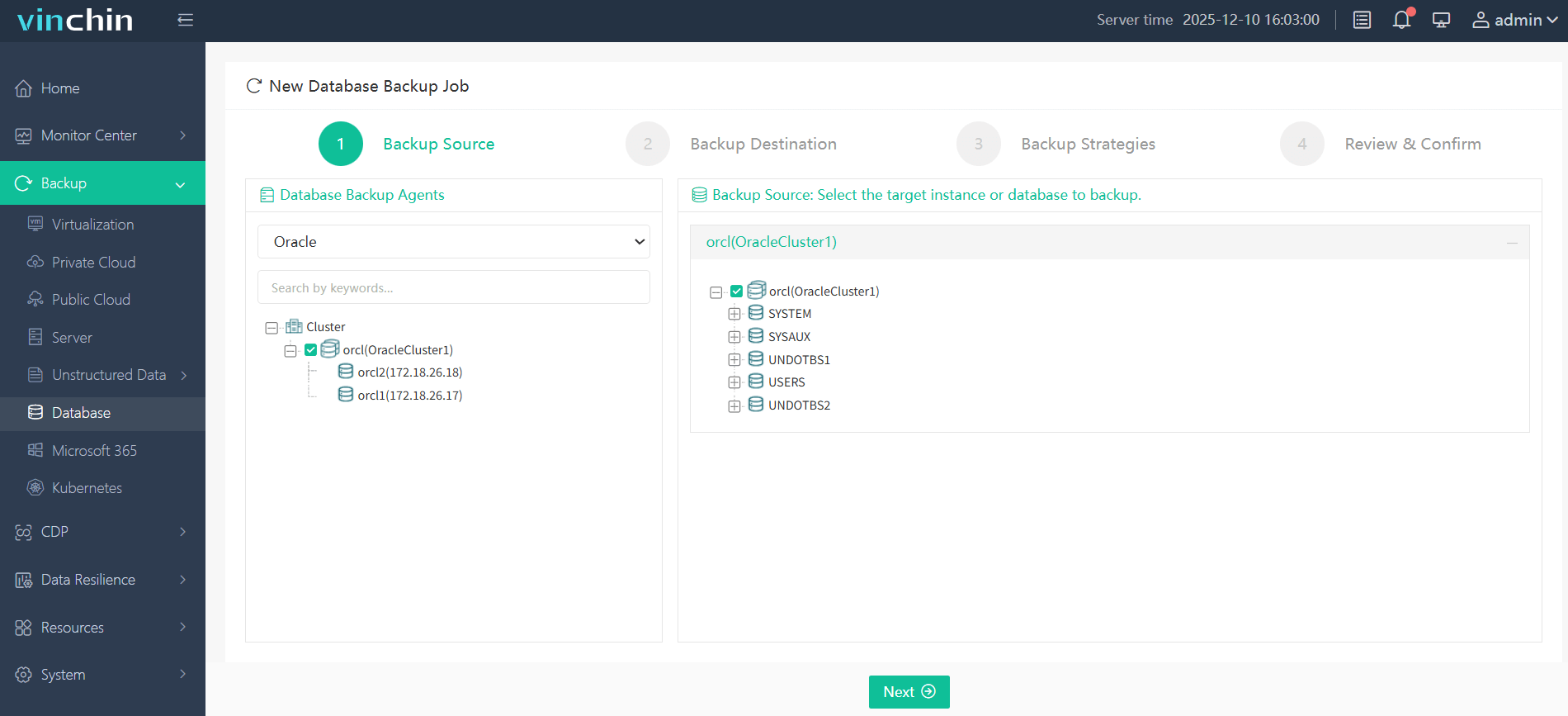
The intuitive web console makes safeguarding your Oracle workloads simple:
Step 1: Select the Oracle database to back up
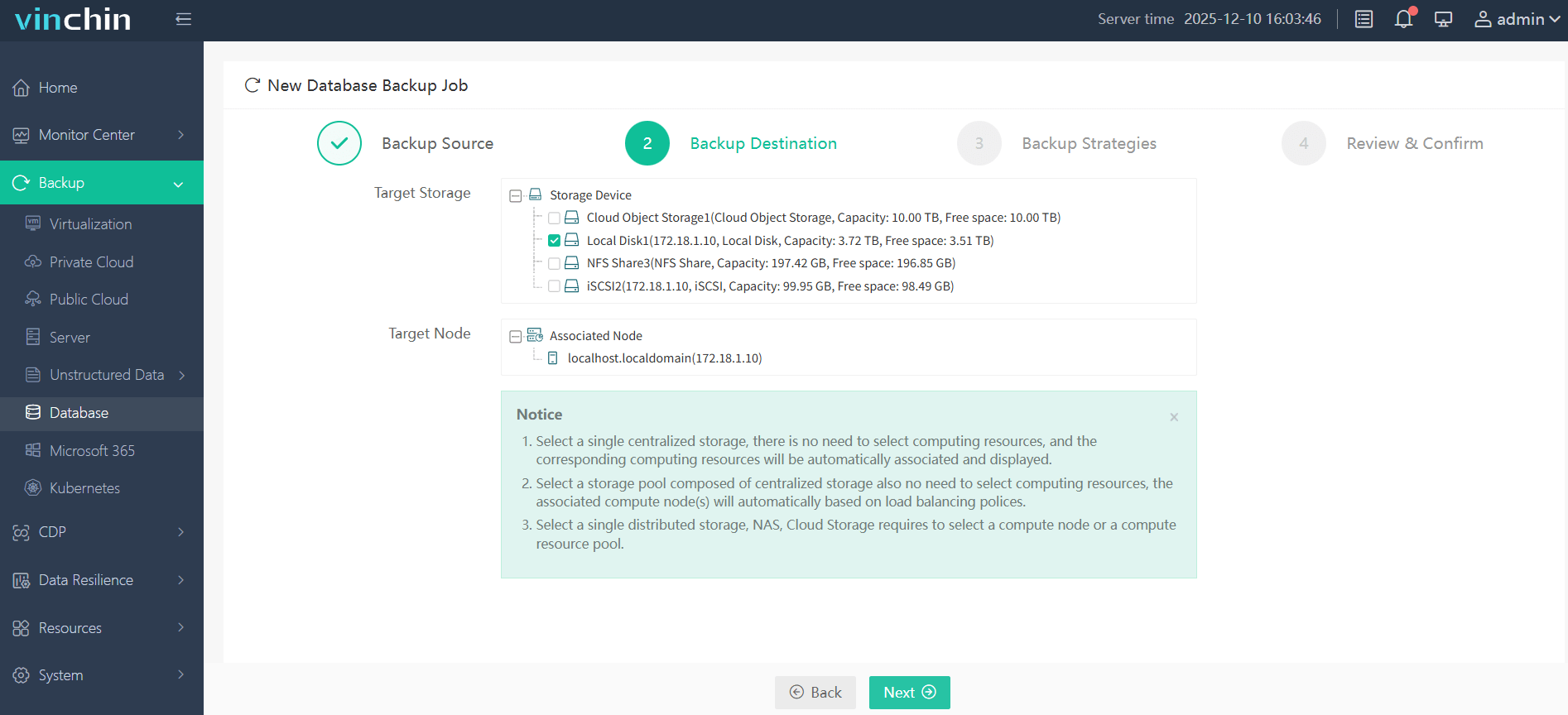
Step 2: Choose the desired storage destination
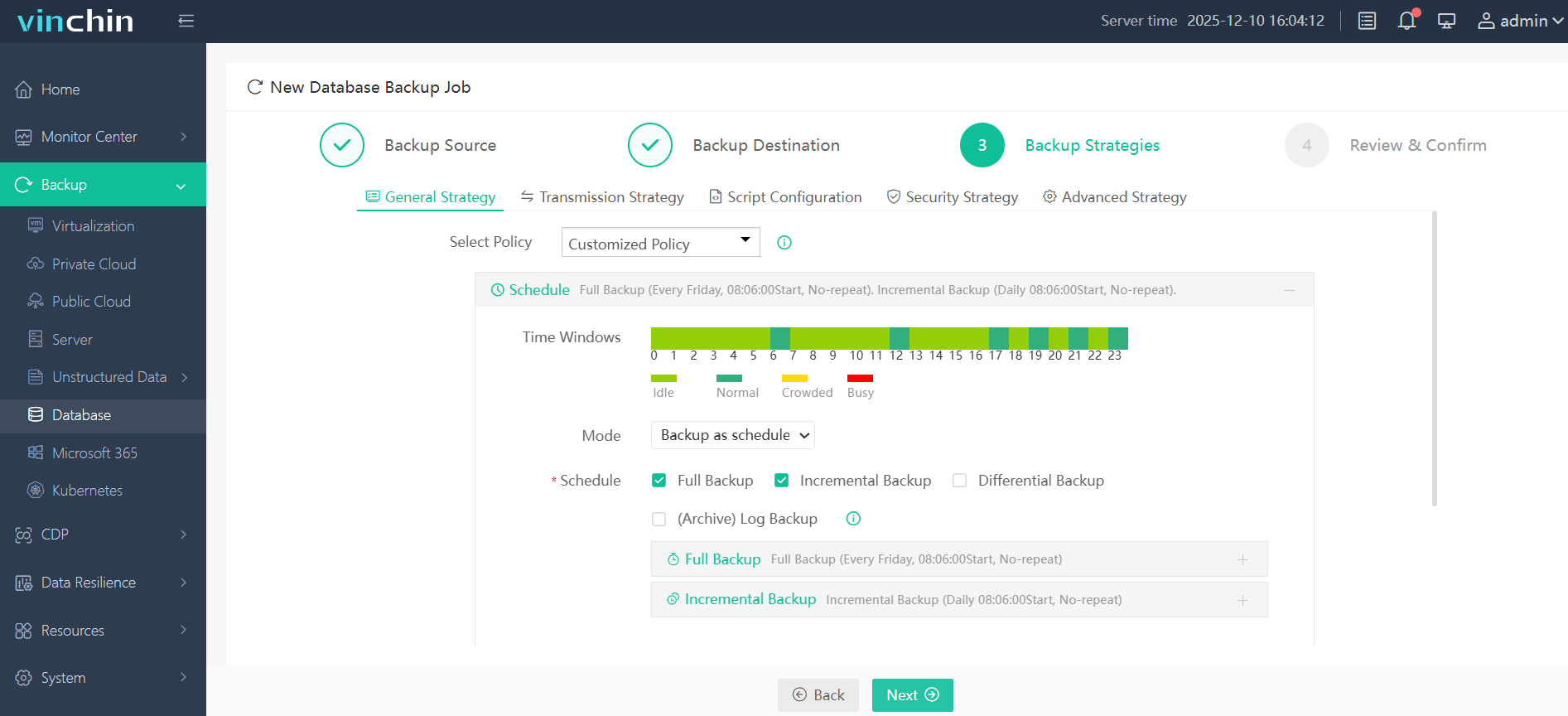
Step 3: Define scheduling and policy settings
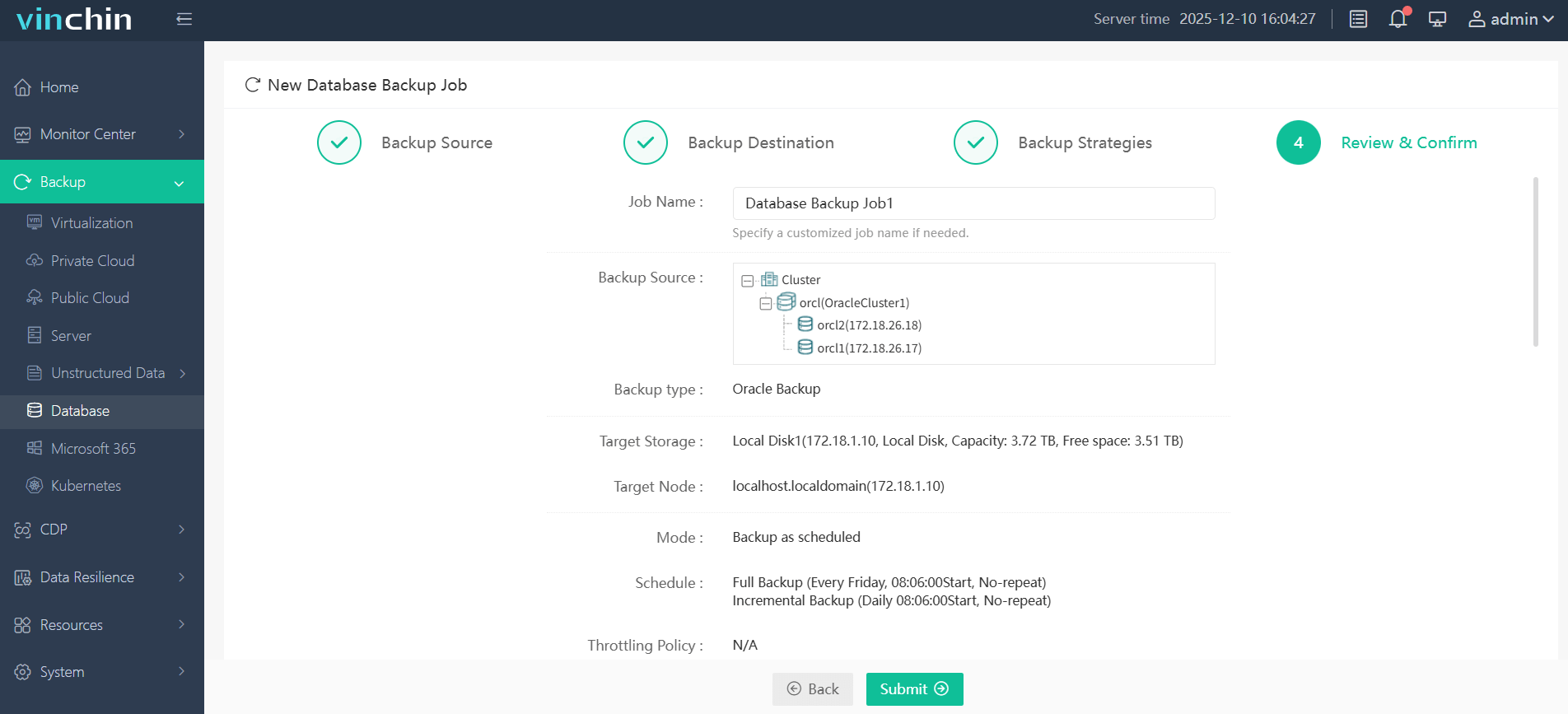
Step 4: Submit the job
Recognized globally by enterprises for reliability and ease-of-use—with top customer ratings—Vinchin Backup & Recovery offers a free 60-day trial granting access to every feature; click below now to start protecting your critical systems risk-free!
Oracle RMAN Restore Database FAQs
Q1: Can I restore an Oracle database onto another server using only my existing backups?
A1: Yes—copy all relevant backup sets over set same DB_NAME & DBID then follow standard control/datafile restoration steps described above.
Q2: What should I do if some archived redo logs go missing during my recovery attempt?
A2: Run RECOVER DATABASE UNTIL CANCEL type CANCEL when prompted then open using RESETLOGS command afterward.
Q3: How do I preview which specific backups will be used by my next planned restore?
A3: Issue RESTORE DATABASE PREVIEW command inside active session—it lists every set/file involved before anything changes on disk itself!
Q4: What should I do if my backups are encrypted?
A4: Use SET DECRYPTION IDENTIFIED BY 'your_password' before running RESTORE commands so decryption occurs automatically during read-back phase.
Conclusion
Restoring an Oracle database with RMAN gives administrators flexibility whether performing full recoveries or rolling systems backward safely after mistakes occur unexpectedly! Vinchin makes protecting/migrating critical workloads even easier thanks robust automation tools designed specifically around enterprise needs—try our free trial today!