Have you ever needed to stop an Oracle RMAN backup job that’s running longer than expected or causing issues? As an operations administrator, you may face situations where halting a backup is necessary to protect system performance or resolve conflicts. But did you know that stopping a backup job incorrectly can leave your database in an inconsistent state or even lock important resources? In this guide, we’ll walk through what an RMAN backup job is, why you might need to stop one, and the safest, most effective ways to do it using Oracle’s own tools.
What Is an Oracle RMAN Backup Job?
Oracle Recovery Manager (RMAN) is the built-in tool for backing up, restoring, and recovering Oracle databases. An RMAN backup job is a process that copies database files, archived logs, or control files to a secure location. These jobs can be scheduled or run manually and are essential for disaster recovery and data protection.
From an operational perspective, each RMAN job creates one or more server processes—often seen as ora_* processes on Unix/Linux—and corresponding sessions within the database itself. These jobs often run in the background using multiple channels for parallel processing to speed up large backups.
Understanding how these jobs appear both inside Oracle and at the operating system level helps administrators identify which processes need attention when something goes wrong.
Why Stop an Ongoing RMAN Backup Job
Sometimes you need to stop a running RMAN backup job—but why? Maybe the backup is taking too long and affecting database performance. Perhaps you started the job by mistake or need to make urgent changes to the database schema before continuing with backups. In rare cases, a backup might hang due to hardware problems or network interruptions.
Stopping a job safely ensures normal operations resume without risking data integrity. If done improperly—such as killing random processes—you could leave orphaned locks or incomplete files behind.
Common Operational Scenarios Requiring Job Termination
There are several real-world reasons admins must halt ongoing backups:
Performance Contention: Backups sometimes saturate disk I/O or network bandwidth during business hours.
Backup Window Exceeded: Jobs running past their maintenance window can interfere with production workloads.
Job Hangs/Stalls: Sometimes backups freeze at certain percentages due to storage hiccups or lost connectivity.
Configuration Error: A misconfigured script could target incorrect tablespaces or retention policies.
Unexpected Maintenance Needs: Urgent patching may require all non-critical activities—including backups—to pause immediately.
Recognizing these scenarios helps prioritize safe intervention methods over risky shortcuts.
Method 1. Using SQL*Plus to Stop Backup Job
The most direct way to stop an RMAN backup job is through SQL*Plus by targeting its active session(s). This method gives precise control but requires careful identification of related sessions so you don’t disrupt unrelated work.
Step-by-Step Procedure for SQL*Plus Termination
Before starting, ensure your account has DBA privileges or SELECT_CATALOG_ROLE access; otherwise queries may fail.
First, identify which sessions belong to your active RMAN channels:
SELECT sid,
       serial#,
       spid AS "OS PID",
       program,
       action,
       client_info
FROM v$session s
JOIN v$process p ON s.paddr = p.addr
WHERE s.program LIKE '%rman%' OR client_info LIKE '%rman%';
This query lists each session’s SID (Session ID), SERIAL#, OS process ID (SPID), program name (often 'rman@hostname'), current action (like 'BACKUP'), and any client info tags set by scripts. If multiple channels are used in parallel mode—which is common—you’ll see several rows returned.
Once identified, use this command in SQL*Plus:
ALTER SYSTEM KILL SESSION 'SID,SERIAL#' IMMEDIATE;
Replace SID and SERIAL# with values from your query results—for example:
ALTER SYSTEM KILL SESSION '128,13' IMMEDIATE;
Adding IMMEDIATE tells Oracle not just to mark the session as killed but also roll back uncommitted work quickly so locks are released faster.
After executing this command:
Handling OS-Level Processes After a Kill
Sometimes killing sessions in SQL*Plus does not fully remove associated operating system processes—especially if they become defunct (“zombie”) due to stuck I/O calls outside Oracle’s control.
If this happens:
1. Note down SPID(s) from earlier query results.
2. On Unix/Linux systems: Run ps -ef | grep <SPID>
On Windows: Use Task Manager or command-line tools like tasklist.
3. If process persists after several minutes—or blocks other activity—use OS-level kill commands carefully:
kill -9 <SPID>
On Windows:
Use orakill <ORACLE_SID> <SPID>
4. Only target specific leftover SPIDs tied directly to failed sessions; never kill parent DB processes indiscriminately as this could crash your instance!
Verifying Successful Termination
After attempting both SQL*Plus kills and possible OS-level cleanup:
Rerun your session-identification query above; no matching rows should remain.
Confirm via application logs that no new writes occur under those SPIDs.
Check free space at your backup destination; partial files may remain if interrupted mid-stream.
Optionally run:
SELECT * FROM v$rman_status WHERE operation='BACKUP' AND status='RUNNING';
No rows should appear if all jobs have stopped cleanly.
By following these steps methodically—from identifying correct sessions through confirming cleanup—you minimize risk while regaining control over runaway backups.
Method 2. Using Enterprise Manager to Stop RMAN Backup Job
Oracle Enterprise Manager (OEM) provides a graphical interface for managing many aspects of database operations—including monitoring and controlling active backup jobs without needing command-line skills.
Start by logging into OEM Cloud Control (or Database Control) then navigate as follows:
1. Select your target database from main dashboard.
2. Click Availability, then choose Backup & Recovery from menu options.
3. Find current/scheduled jobs listed under Backup Jobs section.
4. Click on any running job’s name for details view.
5. Press either Stop or Cancel button—the exact label depends on OEM version—and confirm when prompted.
OEM sends cancellation requests directly via internal APIs so there’s less chance of accidentally terminating unrelated work compared with manual session kills in SQL*Plus.
However—a key limitation exists: OEM interfaces sometimes lag behind real-time activity because they poll status periodically rather than instantly reflecting backend changes! For time-sensitive emergencies where every minute counts—or when OEM fails due to its own service issues—SQL*Plus remains more reliable for immediate intervention.
Vinchin Backup & Recovery: Professional Protection for Your Oracle Backups
Beyond manual intervention methods described above, organizations seeking robust automation should consider Vinchin Backup & Recovery—a professional enterprise-level solution supporting today’s mainstream databases including Oracle (as well as MySQL, SQL Server, MariaDB, PostgreSQL, PostgresPro, TiDB). For Oracle environments specifically, Vinchin Backup & Recovery delivers features such as batch database backup management, multiple level data compression, data retention policy, GFS retention policy, and cloud/tape archiving—all designed for efficient scheduling, reliable compliance, and streamlined recovery workflows across complex infrastructures. With just these capabilities, you gain automated protection against data loss, minimized administrative effort, and enhanced resilience against threats like ransomware thanks to integrated storage safeguards, WORM protection, and regular integrity checks via recovery verification scripts. The intuitive web console makes safeguarding your Oracle environment straightforward:
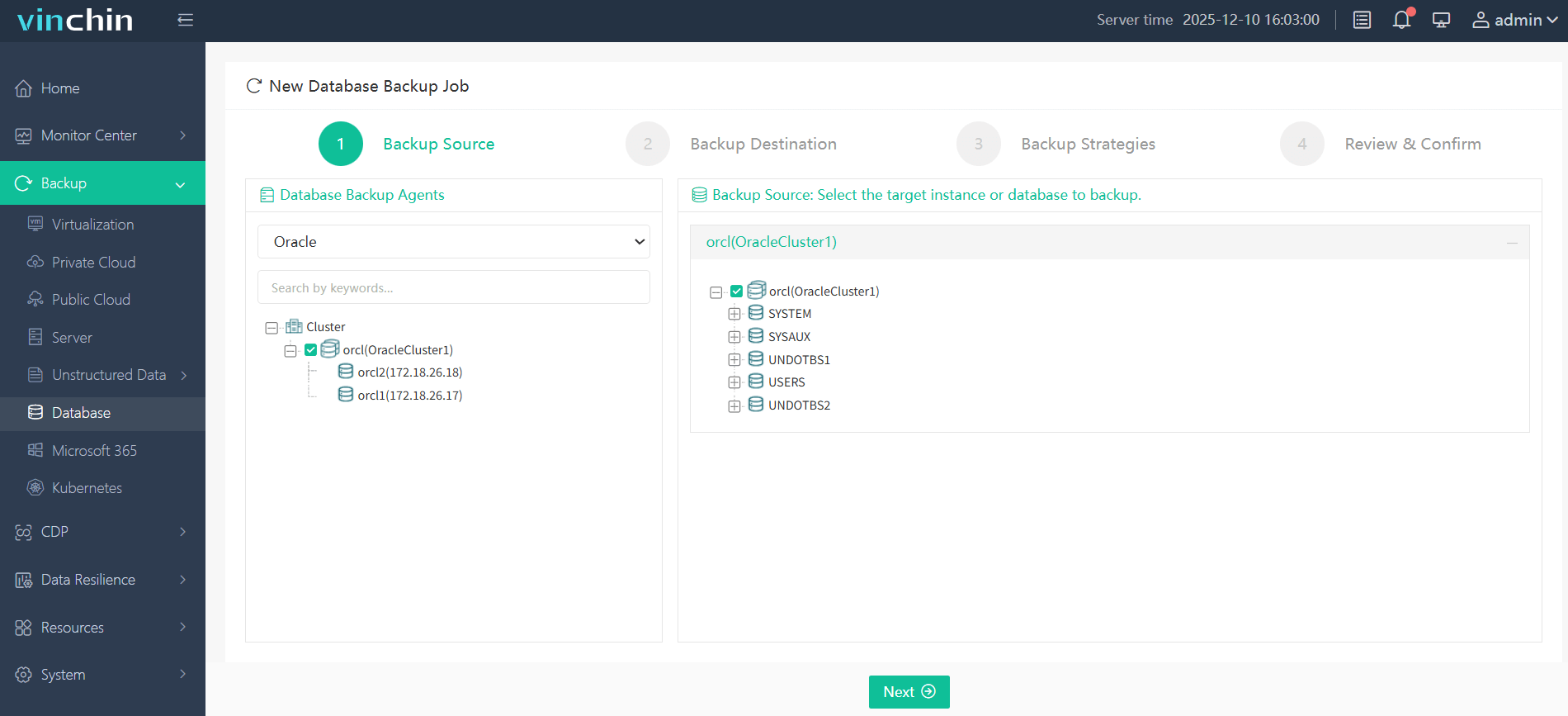
Step 1: Select the Oracle database to back up
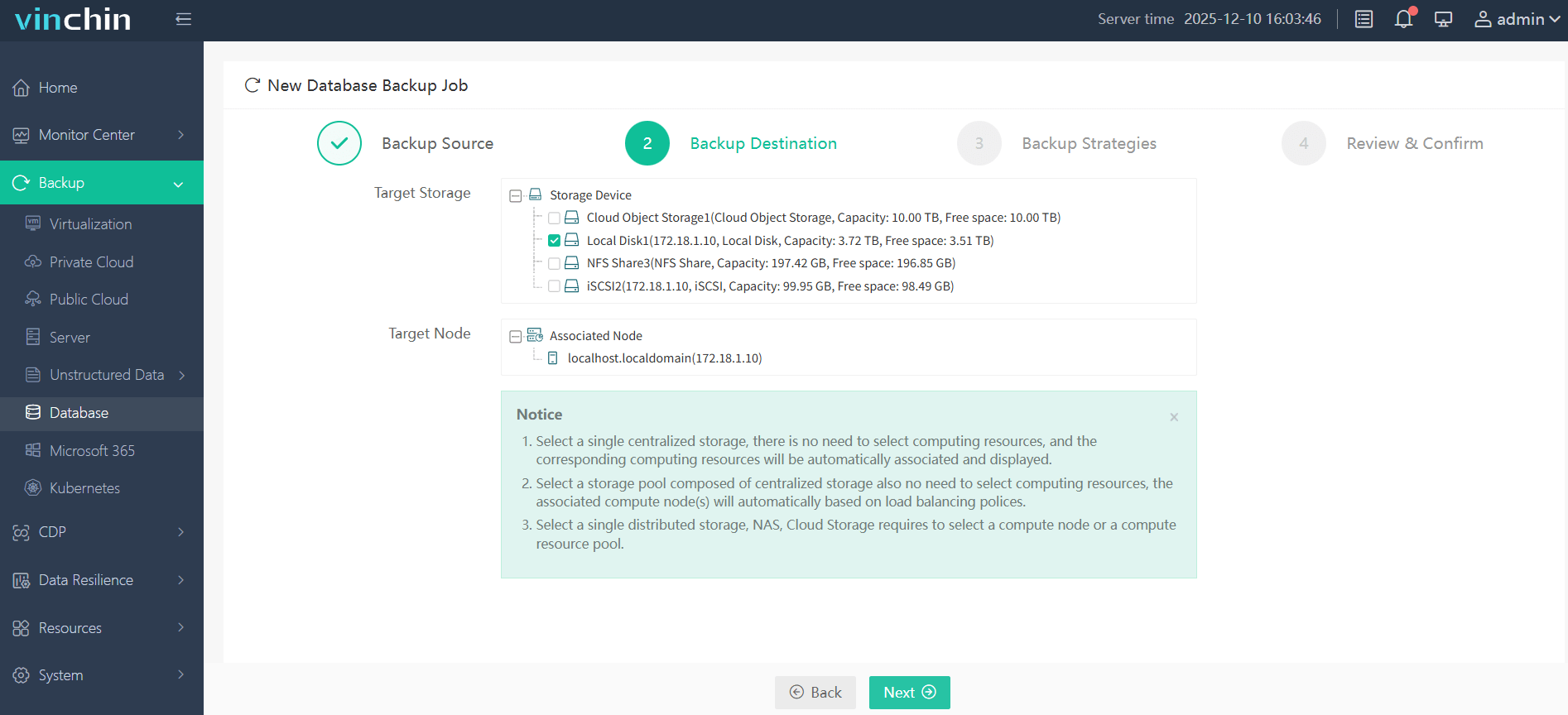
Step 2: Choose the desired backup storage
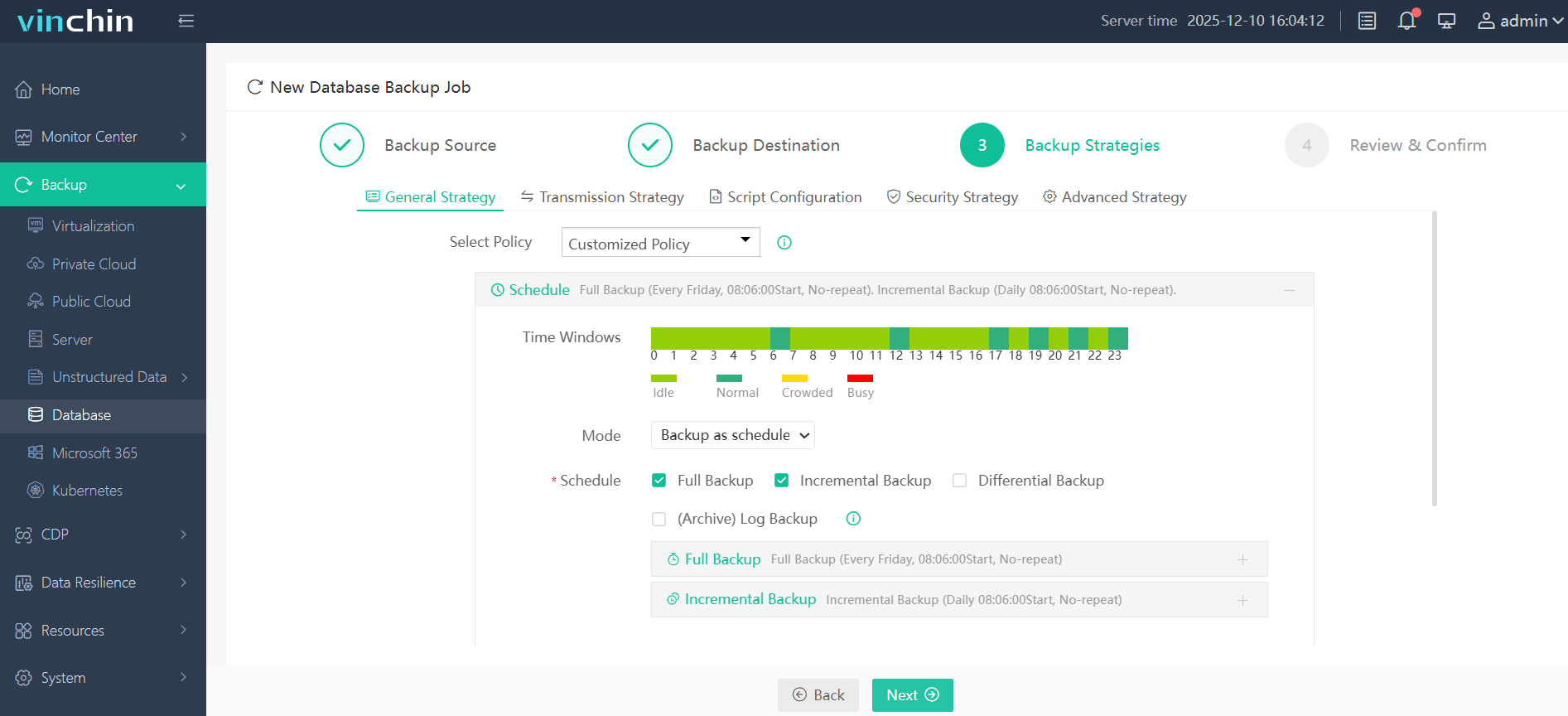
Step 3: Define your preferred strategy—including schedule and retention policies
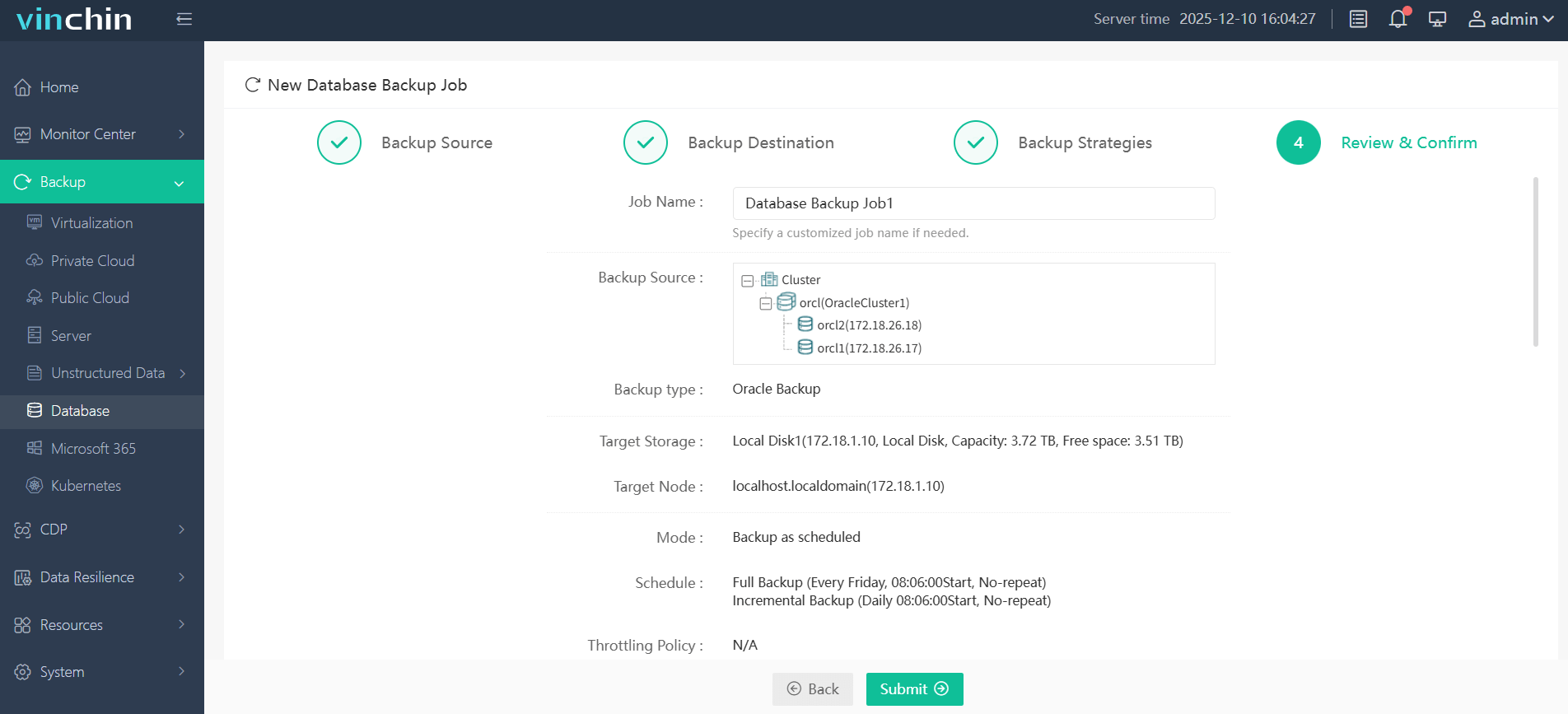
Step 4: Submit the job
Vinchin Backup & Recovery enjoys global recognition among enterprises—with top ratings from thousands of customers worldwide. Try our full-featured 60-day free trial now by clicking Download!
Oracle Stop RMAN Backup Job FAQs
Q1: Will stopping an RMAN backup job affect my existing backups?
No; stopping a running RMAN job interrupts only that specific task—previously completed backups remain intact unless manually deleted later.
Q2: What should I do if my attempt using ALTER SYSTEM KILL SESSION does not end the hung job?
First check V$SESSION status; if still present find its SPID then use kill -9 <SPID> on Unix/Linux or ORAKILL <SID> <SPID> on Windows as last resort after confirming it's safe.
Q3: Does halting a failed/hung backup leave unusable files behind?
Yes; partial pieces often remain at destination path so always crosscheck/delete expired entries afterward using CROSSCHECK BACKUP followed by DELETE EXPIRED within RMAN prompt.
Conclusion
Stopping an Oracle RMAN backup safely protects both performance stability and data consistency during unexpected events—from routine overruns through rare hangs alike! Use SQL*Plus for immediate precision control while relying on Enterprise Manager where convenience matters most instead of urgency alone—and remember Vinchin offers automated solutions making future interventions far less frequent!