Restoring an Oracle database is one of the most important skills for any operations administrator or DBA. When disaster strikes—whether from hardware failure, data corruption, or accidental deletion—you need a reliable way to bring your systems back online fast. Oracle Recovery Manager (RMAN) is built for this job. But how do you use RMAN to restore your database safely and efficiently? This guide will walk you through every step using best practices from Oracle’s official documentation and lessons learned in real-world environments.
What Is Oracle RMAN?
Oracle Recovery Manager (RMAN) is Oracle’s native tool for backup and recovery tasks across all supported platforms. It automates backups, restores, and recoveries so you can protect both single-instance and clustered databases without manual scripting or guesswork. RMAN supports full backups, incremental backups that only capture changes since the last backup, and point-in-time recovery when you need to roll back unwanted changes.
Unlike manual methods that require tracking file locations yourself, RMAN manages backup metadata automatically in its catalog or control file records. It validates backups before use so you know your data is safe before starting a restore operation.
Why Use RMAN for Database Restore?
RMAN is recommended by Oracle because it integrates tightly with the database engine itself—it understands internal structures better than any external tool could. With RMAN you can restore entire databases after catastrophic loss or just specific tablespaces or files if only part of your system needs repair.
It also handles archived redo logs and control files automatically during restores—these are essential pieces needed to make sure no committed transactions are lost during recovery. Features like backup validation let you check integrity ahead of time; restore preview shows which files will be used; support for encrypted backups keeps sensitive data secure even offsite.
By following best practices with RMAN instead of manual scripts or ad-hoc tools, you reduce risk of human error while speeding up recovery times—a win-win when uptime matters most.
Method 1: Full Oracle RMAN Restore
A full RMAN restore brings back your entire database environment after major failures such as disk crashes or server loss. This process covers all critical components: data files, control files, server parameter file (SPFILE), and archived logs if needed.
Before starting any restore operation:
Make sure you have access to valid RMAN backups
Know where your control file autobackups are stored
If restoring on new hardware or a fresh OS install, ensure the same version of Oracle Database software is present
Let’s break down each stage:
Step 1: Prepare the Environment
First set up your environment variables so that commands target the correct instance:
Set ORACLE_SID to match your intended database
On a new server without existing configuration files, create a basic parameter file (PFILE) containing at least DB_NAME. For some environments you'll also need memory parameters like SGA_TARGET to avoid startup errors
Start SQL*Plus as SYSDBA then start up in NOMOUNT mode using this PFILE:
sqlplus / as sysdba
SQL> startup nomount pfile='/path/to/init.ora';
This state allows restoration of SPFILE or control files but does not yet mount datafiles.
Step 2: Restore the Server Parameter File (if needed)
If your SPFILE was lost along with other system files:
rman target /
RMAN> set dbid=<your_dbid>;
RMAN> restore spfile from autobackup;
After restoring SPFILE:
RMAN> shutdown immediate;
RMAN> startup nomount;
This ensures all parameters are loaded correctly before moving forward.
Step 3: Restore the Control File
With instance still in NOMOUNT, instruct RMAN to retrieve control file from autobackup storage:
RMAN> restore controlfile from autobackup;
Once complete:
RMAN> shutdown immediate;
RMAN> startup mount;
Mounting makes datafiles visible but does not open them yet—this is required for next steps.
Step 4: Adjust Data File Paths if Needed
If restoring onto hardware with different directory structures—for example if disk names changed—you must tell RMAN where new copies should go before actual restoration begins:
Use SET NEWNAME command inside an RMAN run block for each affected datafile:
RUN {
  SET NEWNAME FOR DATAFILE 1 TO '/new/path/datafile01.dbf';
  RESTORE DATABASE;
}
Afterwards run SWITCH DATAFILE ALL so that restored paths become active references within control file metadata.
Step 5: Restore All Data Files
Now perform main restoration step—this copies backed-up datafiles into place according to current mappings:
RMAN> restore database;
This operation may take significant time depending on size of dataset being recovered.
Step 6: Recover Database Changes
Next apply archived redo logs captured since last backup—this brings database forward through committed transactions until latest available point-in-time covered by logs:
RMAN> recover database;
If some archive logs are missing due to incomplete backup sets—or if restoring intentionally short of latest change—you may use RECOVER DATABASE UNTIL CANCEL instead; see troubleshooting below for details.
Step 7: Open Database After Recovery
Once recovery completes successfully:
If you restored either control file or performed incomplete recovery,
open database using RESETLOGS option which resets transaction log sequence numbers:
RMAN> alter database open resetlogs;
Opening with RESETLOGS creates a new incarnation record; older incremental backups taken prior may no longer be usable unless cataloged under previous incarnation.
Your system should now be fully operational again! Always verify application connectivity and check alert logs for unexpected errors after major restores.
Method 2: Point-in-Time Database Recovery
Sometimes disaster isn’t physical—it’s logical! Maybe someone dropped critical tables by mistake or deployed bad code that corrupted business logic hours ago. In these cases rolling back everything would lose too much recent work—but rolling back just far enough saves both time and valuable transactions made before trouble started.
Point-in-time recovery (PITR) lets you rewind only as far as necessary using SCNs (System Change Numbers), timestamps, or named restore points captured earlier during normal operations.
Here’s how PITR works step-by-step:
First ensure instance is started but not open—mount mode gives access without activating user connections yet:
sqlplus / as sysdba
SQL> startup mount;
Connect via rman then begin standard restoration process—the difference comes during recovery phase where we specify exact moment desired:
Restore all relevant datafiles first:
rman target /
RMAN> restore database;
Now recover up until chosen point—instead of defaulting to latest possible transaction:
For example by date/time:
RMAN> recover database until time "to_date('2024-06-01 10:00:00','yyyy-mm-dd hh24:mi:ss')";Or by SCN number:
RMAN> recover database until scn <desired_scn>;
Or by previously defined named RESTORE POINT:
RMAN> recover database until restore point 'before_upgrade';
Each method tells Oracle exactly when to stop applying redo changes so unwanted modifications never reach production state again!
Finally open newly rewound system using RESETLOGS—as above this resets log sequence numbers creating fresh incarnation history going forward:
RMAN> alter database open resetlogs;
Be aware that opening with RESETLOGS invalidates older incremental backups—they cannot be applied unless recataloged under previous incarnation chain.
How to Back Up Oracle Databases with Vinchin Backup & Recovery?
For organizations seeking streamlined protection beyond native tools, Vinchin Backup & Recovery offers an enterprise-level solution supporting today’s mainstream databases—including comprehensive support for Oracle alongside MySQL, SQL Server, MariaDB, PostgreSQL, PostgresPro, and TiDB. As an advanced platform designed specifically for professional environments, Vinchin Backup & Recovery delivers features such as advanced source-side compression, incremental backup capabilities tailored for Oracle workloads, batch processing across multiple databases simultaneously, robust GFS retention policy management, and thorough integrity checks—all helping ensure efficient storage usage while maximizing reliability throughout every stage of the backup lifecycle.
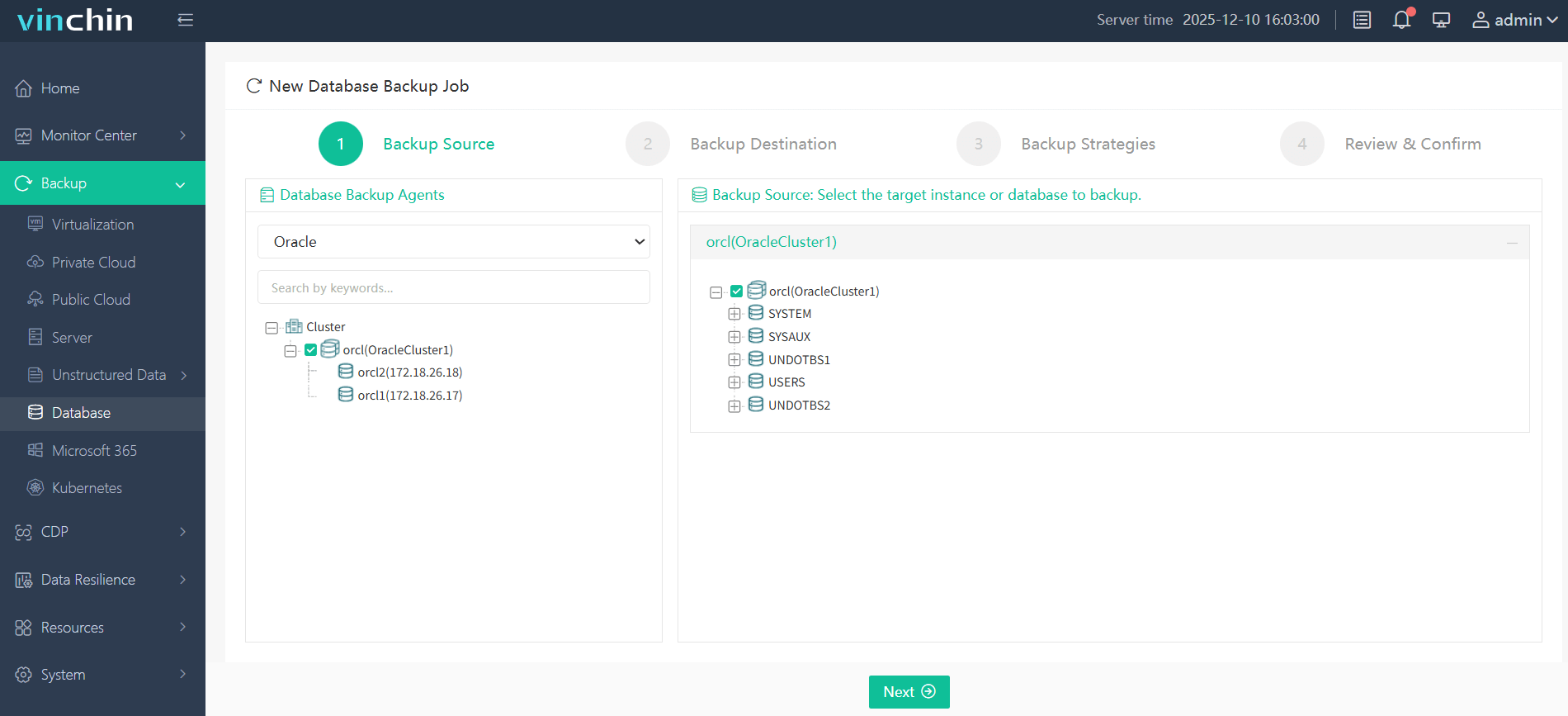
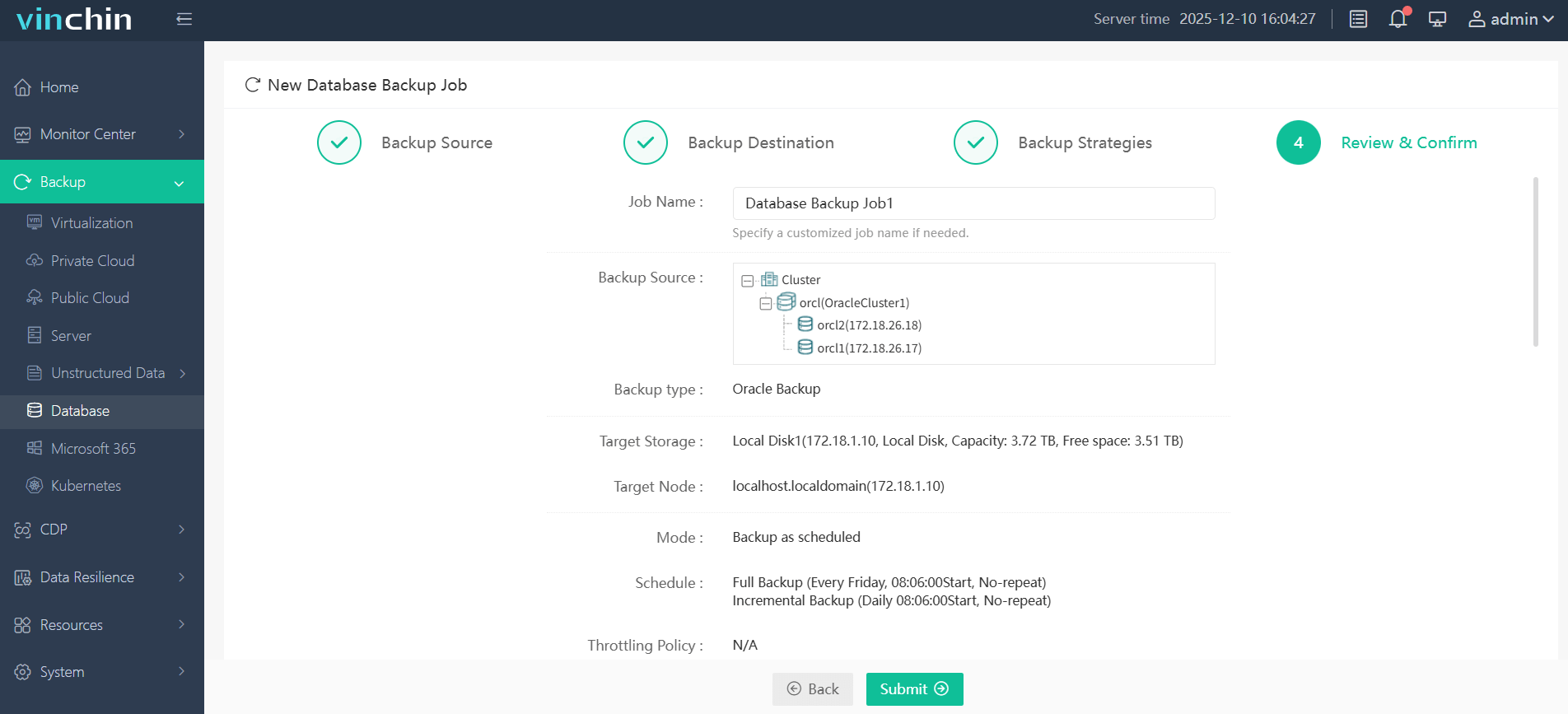
The intuitive web console makes safeguarding your Oracle environment straightforward:
Step 1. Select the Oracle database to back up;
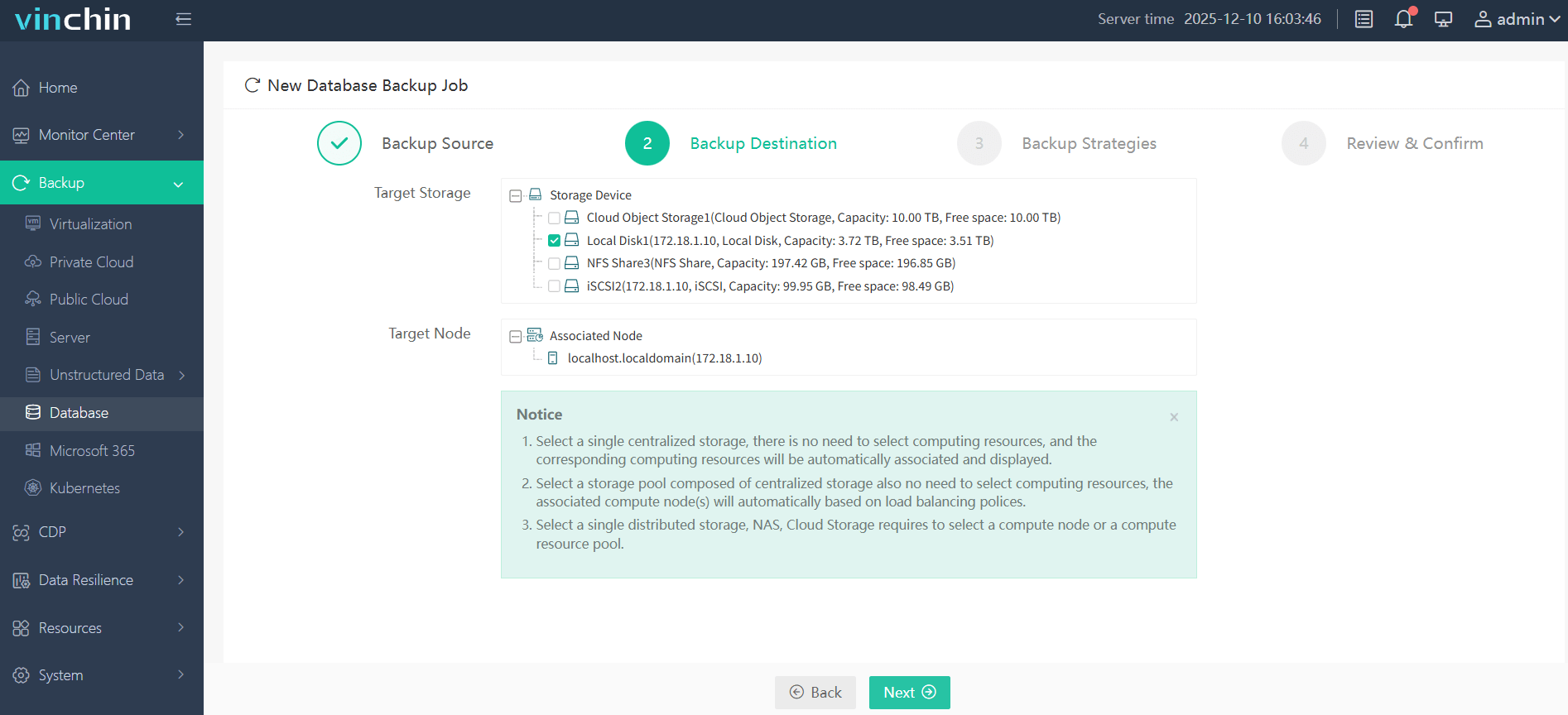
Step 2. Choose the backup storage;
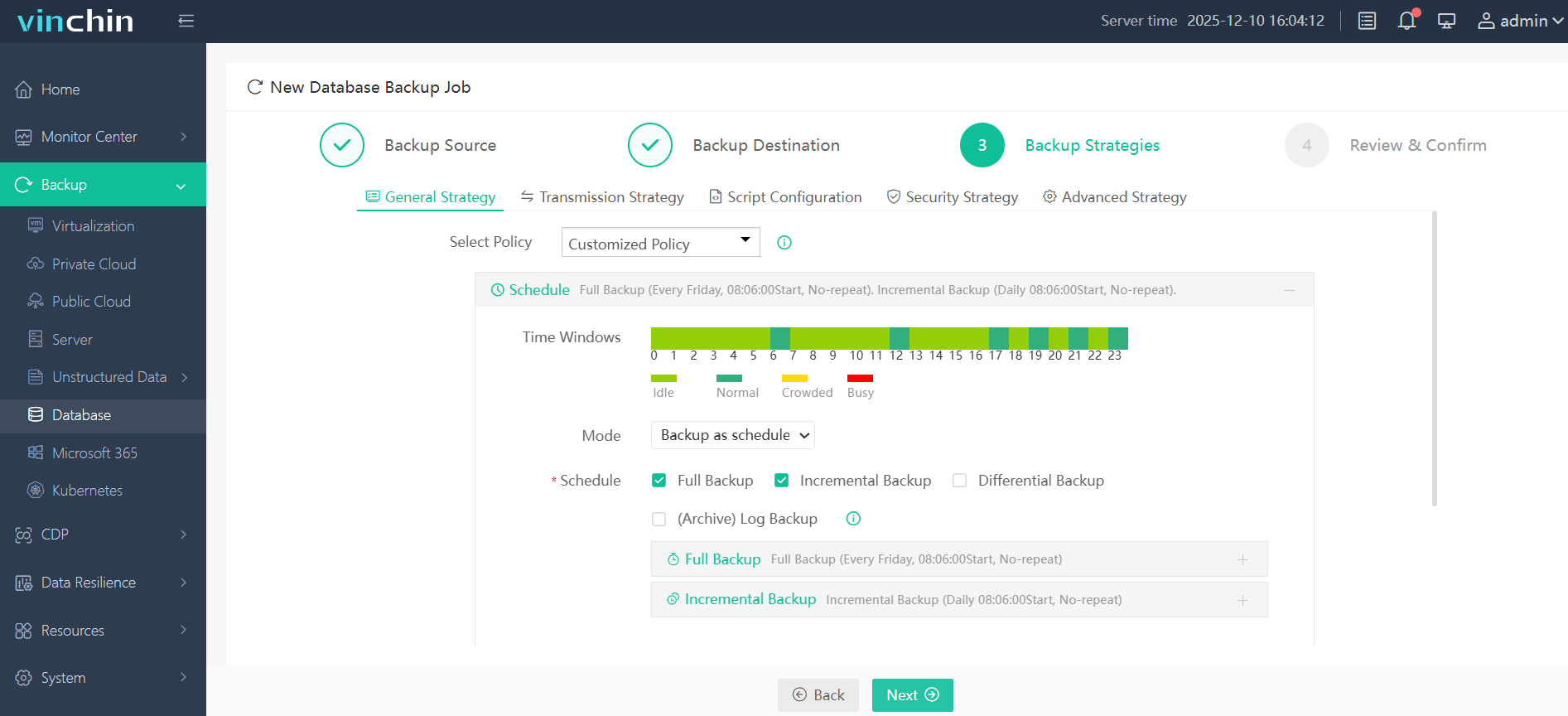
Step 3. Define the backup strategy;
Step 4. Submit the job.
Vinchin Backup & Recovery enjoys global recognition among enterprises thanks to its proven reliability and top customer ratings worldwide. Experience every feature free for 60 days—click download now and get started protecting your critical databases.
Oracle RMAN Restore Database FAQs
Q1: Can I perform an oracle rman restore database without shutting down my running instance?
A1: No; full restores require exclusive access so shut down applications first then start instance in NOMOUNT/MOUNT modes as directed above.
Q2: What should I do if my original disk layout has changed after hardware replacement?
A2: Use SET NEWNAME commands within an RMAN RUN block before issuing RESTORE DATABASE then SWITCH DATAFILE ALL afterward prior to RECOVER DATABASE step.
Q3: How do I confirm my restored system matches expected state after completion?
A3: Query DBA_TABLESPACES/DATA_FILES views plus review alert.log entries; also test application connectivity thoroughly before returning service live.
Conclusion
Restoring an Oracle Database using RMAN protects business continuity while minimizing downtime—even under pressure situations! For advanced automation across hybrid environments consider Vinchin’s robust platform trusted worldwide by IT professionals everywhere.