Backing up your Oracle database is only half the job. Knowing exactly what you have backed up—and where those backups are stored—is just as important. That’s where the Oracle RMAN LIST BACKUP PIECE command comes in. In this article, we’ll walk through what a backup piece is, why you need to list them, how to do it using both RMAN commands and catalog views, how to interpret results for daily operations or disaster recovery preparedness, and how to troubleshoot common issues. Whether you’re new to Oracle or a seasoned admin, you’ll find clear steps to master this essential task.
What Is an Oracle RMAN Backup Piece?
A backup piece is a physical file created by Oracle Recovery Manager (RMAN) during a backup operation. When you run a backup in RMAN, data from your database gets grouped into logical units called backup sets. Each backup set can contain one or more backup pieces—the actual files written to disk or tape.
Think of a backup set as a folder that holds several files; each file inside is a backup piece containing part of your database’s data. Together these pieces make up the complete backup set needed for restore operations.
Each backup piece has its own unique identifier (BP Key), status (such as AVAILABLE or EXPIRED), tag (a label assigned during creation), and handle (the full path name). Understanding these terms helps when managing large environments with many backups across different storage locations.
Why List Backup Pieces in Oracle RMAN?
Listing backup pieces is central to effective Oracle database management. It allows administrators to:
Verify which backups exist in your environment and pinpoint their storage locations.
Check each backup piece’s status—whether it’s available for restore operations or marked expired because it’s missing from storage.
Identify exactly which files are required if you need to perform restore or recovery tasks after an incident.
Audit your entire history of backups for compliance checks or troubleshooting failed jobs.
If disaster strikes—or even if you’re just cleaning up old files—knowing precisely which pieces exist saves time and reduces risk of data loss. Regularly listing backups also ensures that retention policies are enforced correctly so expired pieces don’t consume valuable space.
How to Use the LIST Command in RMAN?
The most direct way to list backup pieces is by using the LIST command within the RMAN command-line interface. This command pulls information from either the control file repository or an external recovery catalog if configured.
To get started:
1. Open your terminal window
2. Connect to your target database with:
rman TARGET /
Once connected, try these variations of LIST commands:
LIST BACKUP;
This displays every recorded backup set along with its associated pieces plus details like completion time, device type used (disk/tape), size in bytes/MB/GB/TB depending on configuration settings, tags applied at creation time (if any), start/end times for each operation performed during that session/job run period(s).
LIST BACKUPPIECE;
Here you'll see columns such as BP Key (unique identifier), Status (AVAILABLE/EXPIRED/UNAVAILABLE), Tag (user-defined label), Handle/Piece Name (file path).
For example:
List of Backup Pieces
=====================
BP Key: 1234
Status: AVAILABLE
Tag: TAG20240601T010000
Piece Name: /u01/app/oracle/backup/db1_1234_abc.bkp
Completion Time: 2024-06-01T01:00:00
This tells you that there is an available piece named db1_1234_abc.bkp created on June 1st at one minute past midnight under tag TAG20240601T010000.
Other useful variations include:
LIST BACKUP SUMMARY;
This provides a table showing key details about each set—number of contained pieces included per set plus overall status/completion info.
LIST BACKUPSET <key>;
Replace <key> with an actual number found via previous summary output; this lists every piece within that particular set only.
LIST BACKUP BY FILE;
This organizes output by datafile/controlfile/archived log association so you can easily match protection coverage against current needs.
LIST EXPIRED BACKUPPIECE;
Each command offers different perspectives depending on whether you're auditing history broadly or searching for specific recoverable objects after failure events.
Interpreting LIST Output for Operational Decisions
Understanding what appears after running LIST commands helps guide next actions during routine maintenance or emergencies alike.
Suppose you're planning cleanup scripts—you might first run LIST EXPIRED BACKUPPIECE, then follow up with deletion commands targeting those keys shown as expired but still occupying metadata slots unnecessarily due either accidental manual removal from storage media outside normal processes OR scheduled lifecycle expiration based upon policy rules established earlier via configuration settings elsewhere within environment setup procedures themselves!
If preparing for recovery after hardware failure/data corruption event(s)—filtering recent entries returned via LIST BACKUP OF DATABASE lets admins quickly spot latest full/incremental sets required before launching RESTORE operations ensuring minimal downtime/loss exposure possible given circumstances encountered thus far throughout incident response workflow stages already underway prior arrival here today...
Auditing age/distribution patterns among retained copies? Use LIST BACKUP SUMMARY regularly; look out especially where oldest entries exceed defined retention periods since such oversights could violate compliance mandates imposed internally/external regulatory bodies overseeing IT governance frameworks applicable locally/globally depending upon jurisdictional reach involved per case basis accordingly!
How to Query RMAN Catalog Views?
For advanced users who want deeper automation/reporting capabilities beyond interactive CLI checks alone querying internal views directly proves invaluable! These SQL statements work against either external recovery catalogs OR local control files depending upon architecture chosen during initial deployment phases previously completed successfully earlier...
When working with an external recovery catalog connect using appropriate credentials then execute queries like:
SELECT BP_KEY,
       STATUS,
       TAG,
       HANDLE AS PIECE_NAME,
       COMPLETION_TIME
FROM RC_BACKUP_PIECE
WHERE STATUS = 'AVAILABLE';
This returns all currently available pieces along with identifying tags/file paths/completion timestamps useful correlating against other monitoring systems deployed organization-wide concurrently alongside core Oracle toolsets themselves...
If relying instead upon local control file repository connect as SYSDBA privilege user then run similar query adapted slightly differing view structure employed natively here instead:
SELECT RECID AS BP_KEY,
       STATUS,
       TAG,
       HANDLE AS PIECE_NAME,
       COMPLETION_TIME
FROM V$BACKUP_PIECE
WHERE STATUS = 'A';
Here 'A' means available; 'X' indicates expired; 'U' denotes unavailable/missing entirely now...
To filter by specific sets substitute desired key value discovered earlier via summary/listing steps above e.g.,
SELECT BP_KEY,
       HANDLE AS PIECE_NAME
FROM RC_BACKUP_PIECE
WHERE BS_KEY = <backup_set_key>;
Replace <backup_set_key> accordingly based upon context provided upstream within workflow sequence being followed presently right now!
These queries enable custom reporting pipelines integration into broader alerting frameworks already operational elsewhere throughout enterprise IT stack deployments globally/localized regionally alike regardless scale/scope involved ultimately determined case-by-case basis moving forward strategically together collaboratively ongoing fashion indefinitely henceforth evermore.
Protecting Your Oracle Database with Vinchin Backup & Recovery
Beyond native tools like RMAN, organizations often seek streamlined solutions for comprehensive protection and simplified management of their Oracle databases. Vinchin Backup & Recovery stands out as an enterprise-level solution supporting today’s mainstream platforms—including robust support for Oracle databases alongside MySQL, SQL Server, MariaDB, PostgreSQL, PostgresPro, and TiDB. For Oracle environments specifically, Vinchin Backup & Recovery delivers incremental backups, batch database processing, flexible retention policies including GFS strategies, ransomware-resistant storage protection measures, and automated recovery verification—all designed to maximize reliability while minimizing administrative overhead through automation and policy-driven controls.
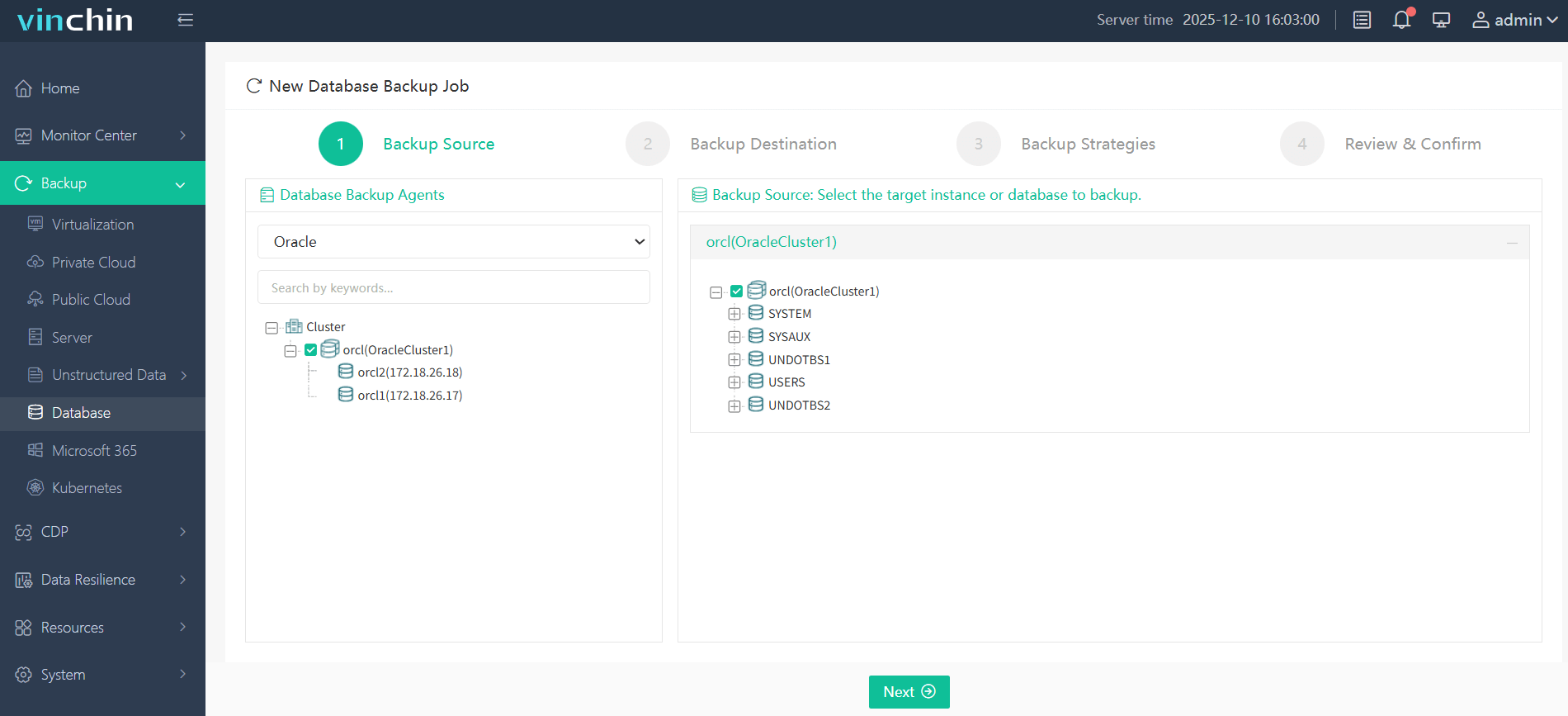
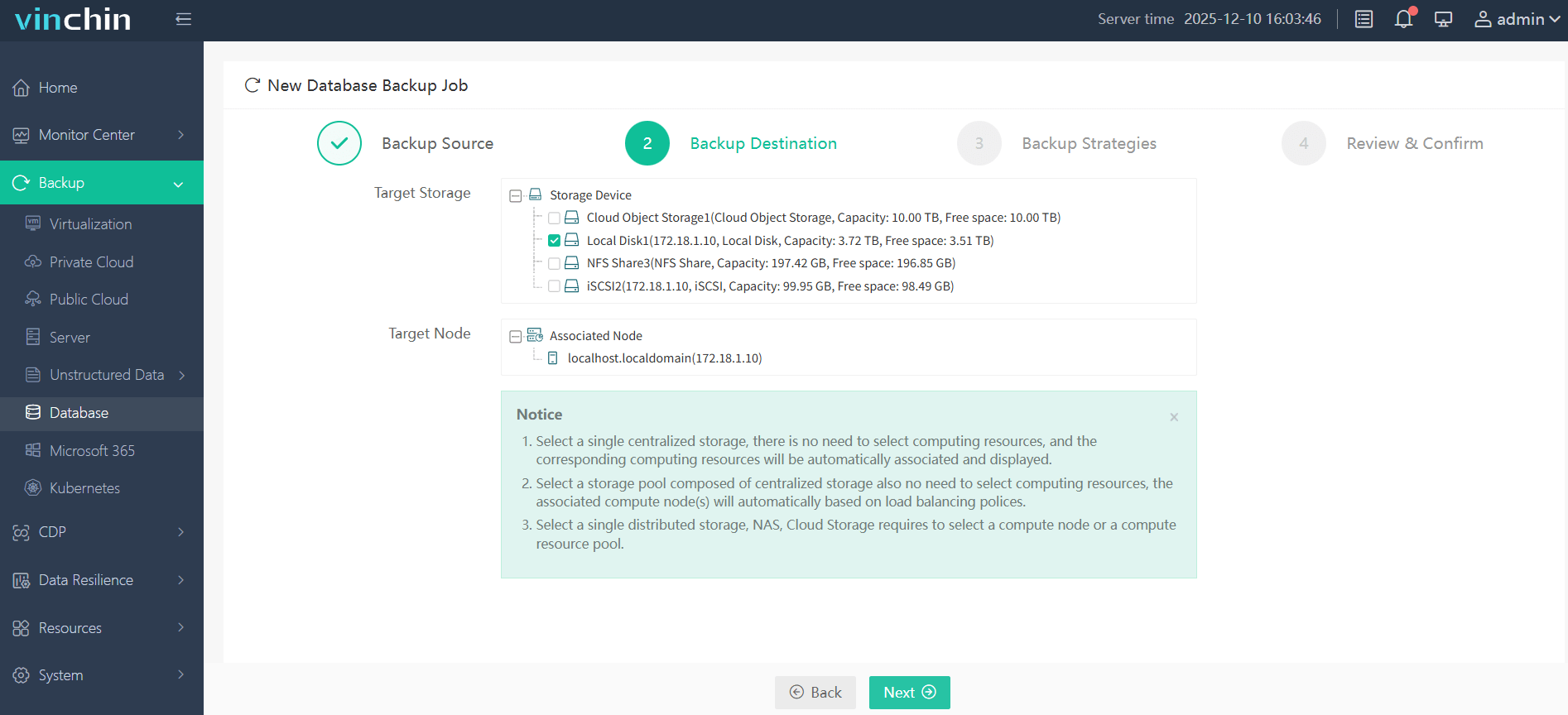
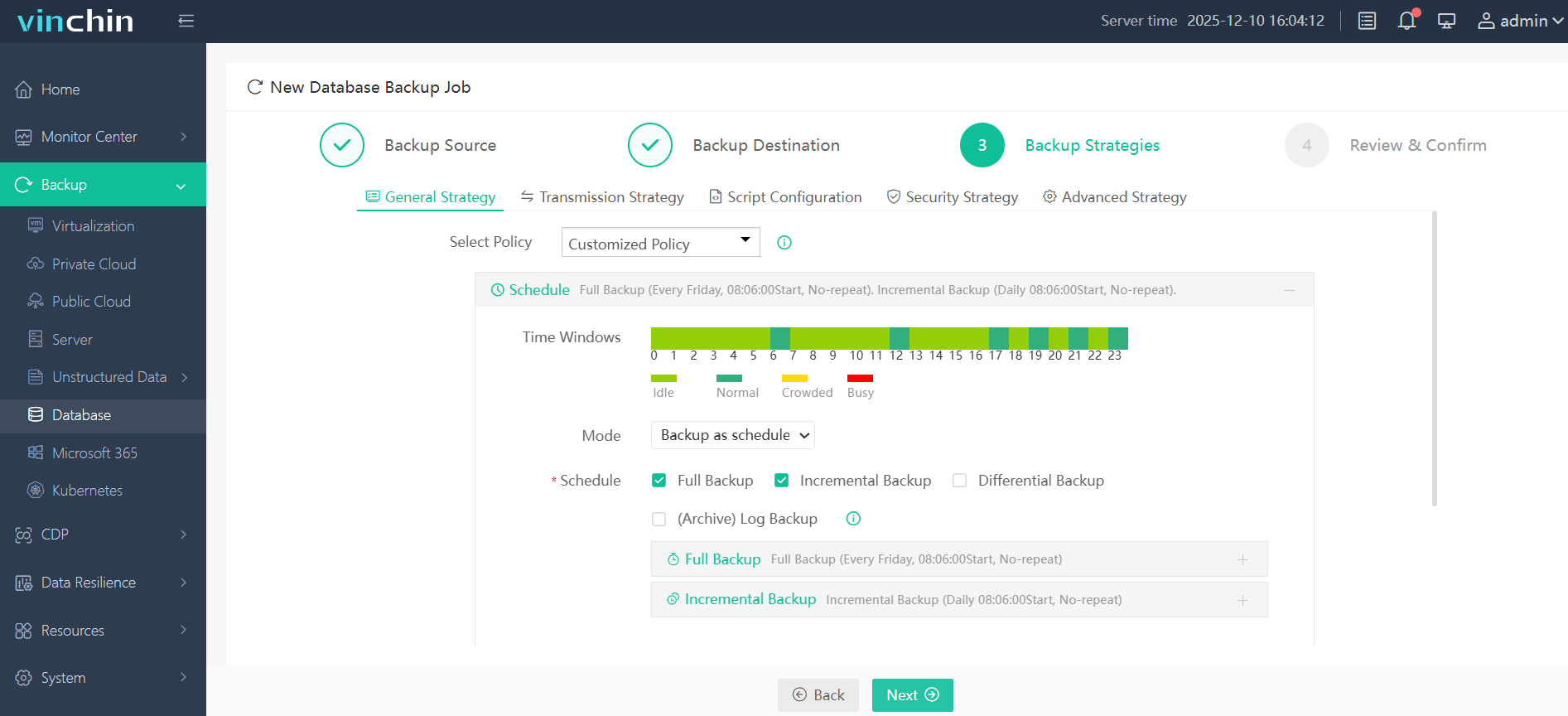
Managing backups through Vinchin Backup & Recovery's intuitive web console takes just four straightforward steps:
Step 1. Select the Oracle database to back up
Step 2. Choose the backup storage
Step 3. Define the backup strategy
Step 4. Submit the job
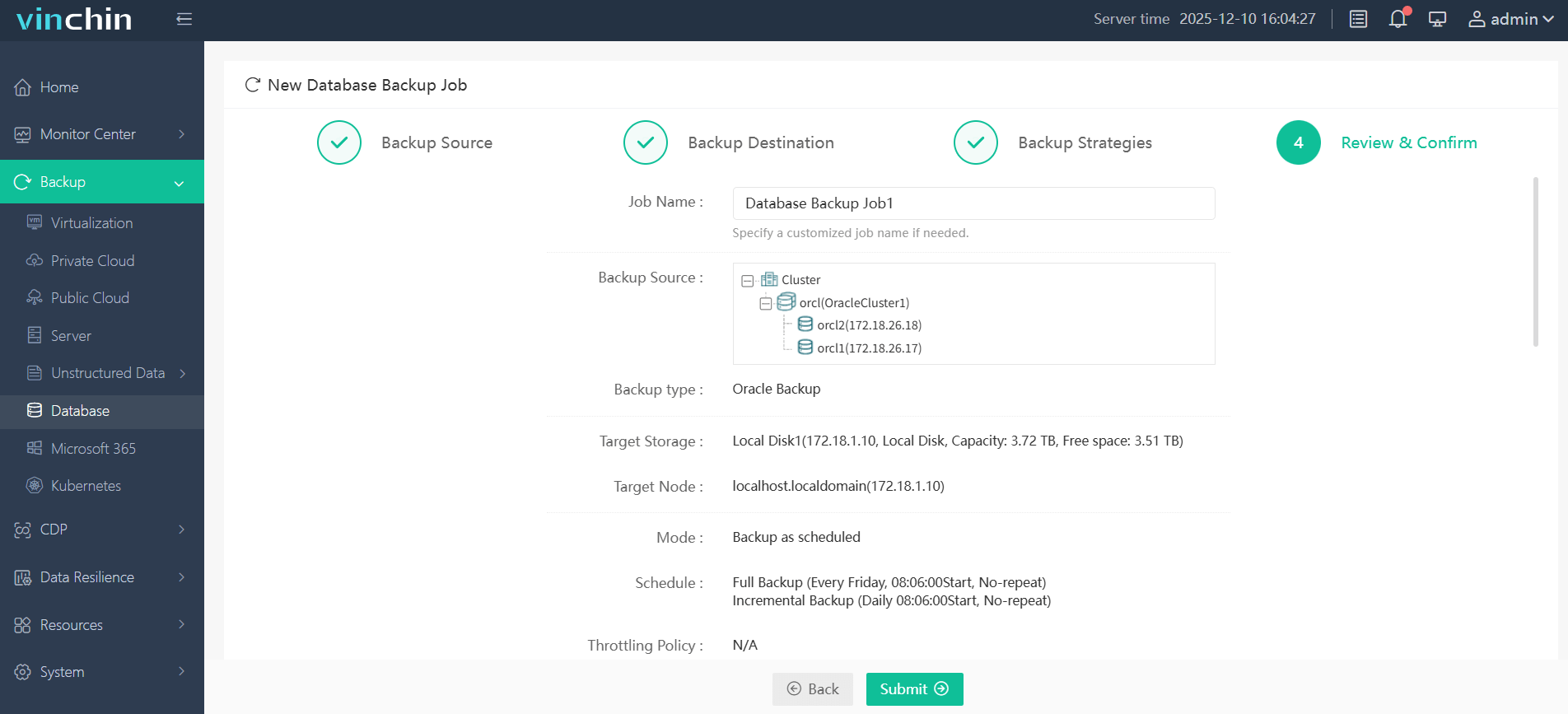
Recognized globally by thousands of enterprises for reliability and ease-of-use—with top industry ratings—Vinchin Backup & Recovery offers a fully featured free trial valid for sixty days. Click below to experience leading-edge enterprise data protection firsthand.
Oracle RMAN List Backup Piece FAQs
Q1: How do I update statuses if some listed pieces no longer exist on disk?
A1: Run CROSSCHECK BACKUPPIECE; followed by DELETE EXPIRED BACKUPPIECE; at the RMAN prompt if needed.
Q2: Can I filter listed pieces created within certain dates?
A2: Yes—use LIST BACKUP COMPLETED AFTER 'SYSDATE-n'; replacing n with days desired; advanced filtering requires querying catalog/control file views directly using date columns like COMPLETION_TIME.
Q3: Why does my list appear empty even though I know there were recent backups?
A3: Check connection parameters—ensure you're connected both TARGET / CATALOG databases if using external catalog—and verify retention policy hasn't purged old metadata from control file.
Conclusion
Listing Oracle RMAN list backup piece information keeps your environment audit-ready and helps prevent costly mistakes during restores or cleanups. With both native tools and modern solutions like Vinchin available, now is an excellent time to take proactive, confident control of your backup and recovery processes.