Cloning an Oracle database is a routine task for many operations administrators. Whether you need to create a test environment, refresh development data, or perform disaster recovery drills, Oracle Recovery Manager (RMAN) provides powerful tools. In this article, we’ll explain what an Oracle RMAN clone database is, why it matters, how to prepare your environment, walk through two main cloning methods in detail, cover common pitfalls and solutions, outline post-clone validation steps—and answer frequently asked questions.
What Is Oracle RMAN Clone Database?
An Oracle RMAN clone database is an independent copy of an existing Oracle database created using RMAN’s DUPLICATE command. This clone—also called a duplicate or auxiliary database—has its own unique identifier (DBID) but contains all the data from the source at the time of cloning. You can place the clone on the same server or another one entirely. File structures may match or differ between source and target. RMAN supports both active duplication (direct network copy) and backup-based duplication (restoring from backup files), offering flexibility for many operational needs.
Why Clone an Oracle Database?
Cloning serves several important purposes in enterprise environments. It allows you to test upgrades or patches without risking production systems. You can refresh development or QA environments with current data quickly. Cloning also enables safe practice of recovery procedures—a must for disaster readiness—or lets you troubleshoot issues without affecting live users. Have you ever needed to debug production problems without touching critical workloads? That’s when having a reliable clone becomes essential.
Pre-Cloning Checklist: Environment Preparation
Before starting any cloning operation with RMAN, careful preparation saves time later on. Let’s review what you should check:
First, confirm that your source database runs in ARCHIVELOG mode; this ensures all changes are captured for recovery during cloning. Next, make sure both source and target servers have enough disk space to hold all datafiles—including growth during the process if your databases are large.
For both active duplication and backup-based methods:
Ensure password files exist on both servers with matching SYS/SYSBACKUP credentials.
Set up Oracle Net connectivity between servers so they can communicate; update tnsnames.ora entries as needed.
If directory structures differ between source and target machines—for example /oradata/prod/ versus /oradata/clone/—plan out your file mapping using DB_FILE_NAME_CONVERT and LOG_FILE_NAME_CONVERT.
Confirm that software versions are compatible; ideally both databases should run on the same major release and patch level.
Finally, create required directories on the target server ahead of time so initialization does not fail due to missing paths.
Method 1: Cloning With Duplicate Command (Active Database Duplication)
Active duplication is often fastest when both source and target databases are accessible over the network with good bandwidth available. This method copies data directly from source to auxiliary instance—no pre-existing backups required.
Before beginning:
Make sure your source database is open or mounted in ARCHIVELOG mode; password files match; network connectivity works; auxiliary instance starts in NOMOUNT mode; disk space is sufficient; listener configuration includes static registration for new SID.
Here’s how it works:
1. Prepare the auxiliary instance:
On your target server create a minimal initialization parameter file (PFILE). At minimum set DB_NAME, CONTROL_FILES, plus DB_FILE_NAME_CONVERT/LOG_FILE_NAME_CONVERT if directory paths differ between hosts—for example:
   DB_FILE_NAME_CONVERT='/oradata/prod/', '/oradata/clone/'
   LOG_FILE_NAME_CONVERT='/oradata/prod/', '/oradata/clone/'
2. Create password file:
Use orapwd utility so SYS passwords match between instances:
orapwd file=$ORACLE_HOME/dbs/orapwclone password=YourSysPassword entries=10
3. Configure Oracle Net:
Update tnsnames.ora on both servers with TNS entries for each database instance by name—not just IP address—and add static listener entry (SID_LIST_LISTENER) in listener.ora. Reload listeners after changes using:
lsnrctl reload
4. Start auxiliary instance:
   export ORACLE_SID=clone
   sqlplus / as sysdba
   STARTUP NOMOUNT PFILE='/path/to/initclone.ora'
5. Run RMAN duplicate command:
Connect from auxiliary server using:
rman TARGET sys@source_db AUXILIARY sys@clone_db
Then execute:
DUPLICATE TARGET DATABASE TO clone FROM ACTIVE DATABASE NOFILENAMECHECK;
The option NOFILENAMECHECK tells RMAN not to validate file names if clones run on different hosts but share structure.
Add clauses like SPFILE, or use SET commands within DUPLICATE block if you want custom parameters applied during creation.
For large databases over slow networks consider adding USING COMPRESSED BACKUPSET.
6. Monitor progress:
Watch session output closely—RMAN will copy datafiles over network directly from live system (“active” mode), then recover logs automatically before opening new DB.
7. Verify completion:
Once finished open SQL*Plus again:
    sqlplus / as sysdba
    SELECT name, open_mode FROM v$database;
If everything went well you now have an independent working copy!
Method 2: Cloning With Backup-Based Approach
Backup-based duplication works best when direct connection isn’t possible—for example across firewalls—or when reusing existing backups makes sense operationally.
Preparation here means ensuring full recent backups exist—including control files plus archived logs—and that these files are transferred securely to your target host before starting.
Here’s how this method unfolds:
1. Take full backup of source:
On original server run:
     rman target /
     BACKUP DATABASE PLUS ARCHIVELOG;
     BACKUP CURRENT CONTROLFILE;
2. Copy backup pieces & PFILE:
Transfer all generated backup sets plus parameter file (init*.ora) via secure means such as SCP or SFTP onto appropriate directories on destination machine.
3. Edit PFILE for auxiliary instance:
Adjust values like DB name (DB_NAME=clone) plus convert parameters if directory layouts differ—as shown earlier—to ensure correct mapping during restore phase.
4. Create necessary directories:
Make sure every path referenced exists already on disk before startup attempt—missing folders cause errors early!
5. Create password file again:
As above use ORAPWD tool so authentication matches expectations across environments.
6. Start auxiliary instance in NOMOUNT mode:
Same commands as before apply here too:
     export ORACLE_SID=clone
     sqlplus / as sysdba
     STARTUP NOMOUNT PFILE='/path/to/initclone.ora'
7. Run duplicate command referencing backups location:
Connect locally via RMAN then execute:
      rman auxiliary /
      DUPLICATE DATABASE TO clone BACKUP LOCATION '/path/to/backup' NOFILENAMECHECK;
Here /path/to/backup points at parent folder holding all relevant pieces—not individual files!
Use additional SET commands inside DUPLICATE block if further customization needed (e.g., change log sizes).
8. Monitor & verify restore process:
Watch output carefully: first stage restores physical files from backup sets then applies redo logs until consistent state reached before opening new DB automatically at end.
Protecting Your Oracle Database With Vinchin Backup & Recovery
After completing your Oracle database cloning tasks, safeguarding both original and cloned environments becomes crucial for business continuity and compliance requirements alike. To meet these needs, Vinchin Backup & Recovery delivers professional-grade protection tailored specifically for enterprise databases—including robust support for Oracle alongside MySQL, SQL Server, MariaDB, PostgreSQL, PostgresPro, and TiDB. For organizations running Oracle, Vinchin Backup & Recovery offers incremental backup, batch database backup, data retention policy, multiple level data compression, and integrity check. These features work together to optimize storage usage, simplify management, and guarantee reliable recoverability even at scale.
The intuitive web console streamlines operations into four simple steps:
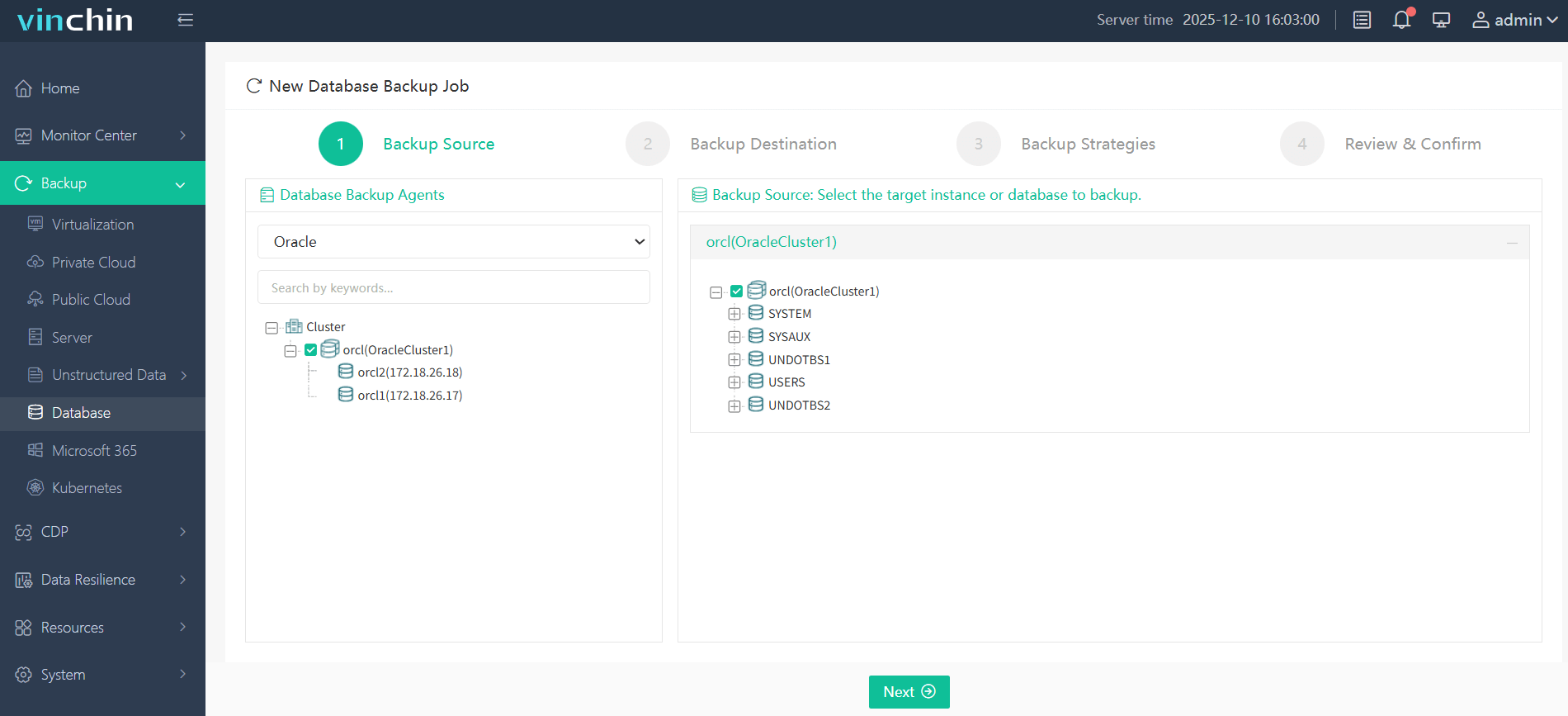
Step 1. Select the Oracle database to back up.
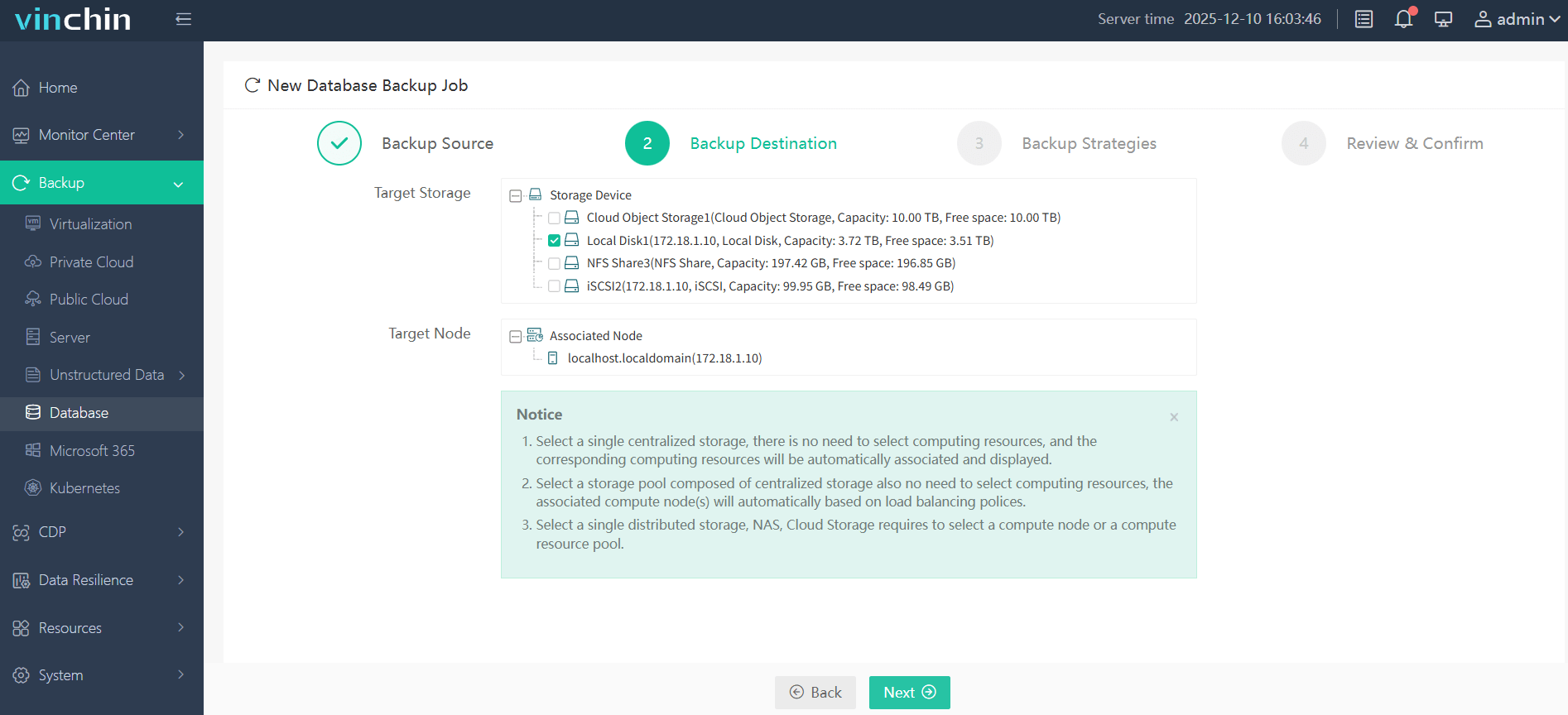
Step 2. Select backup storage.
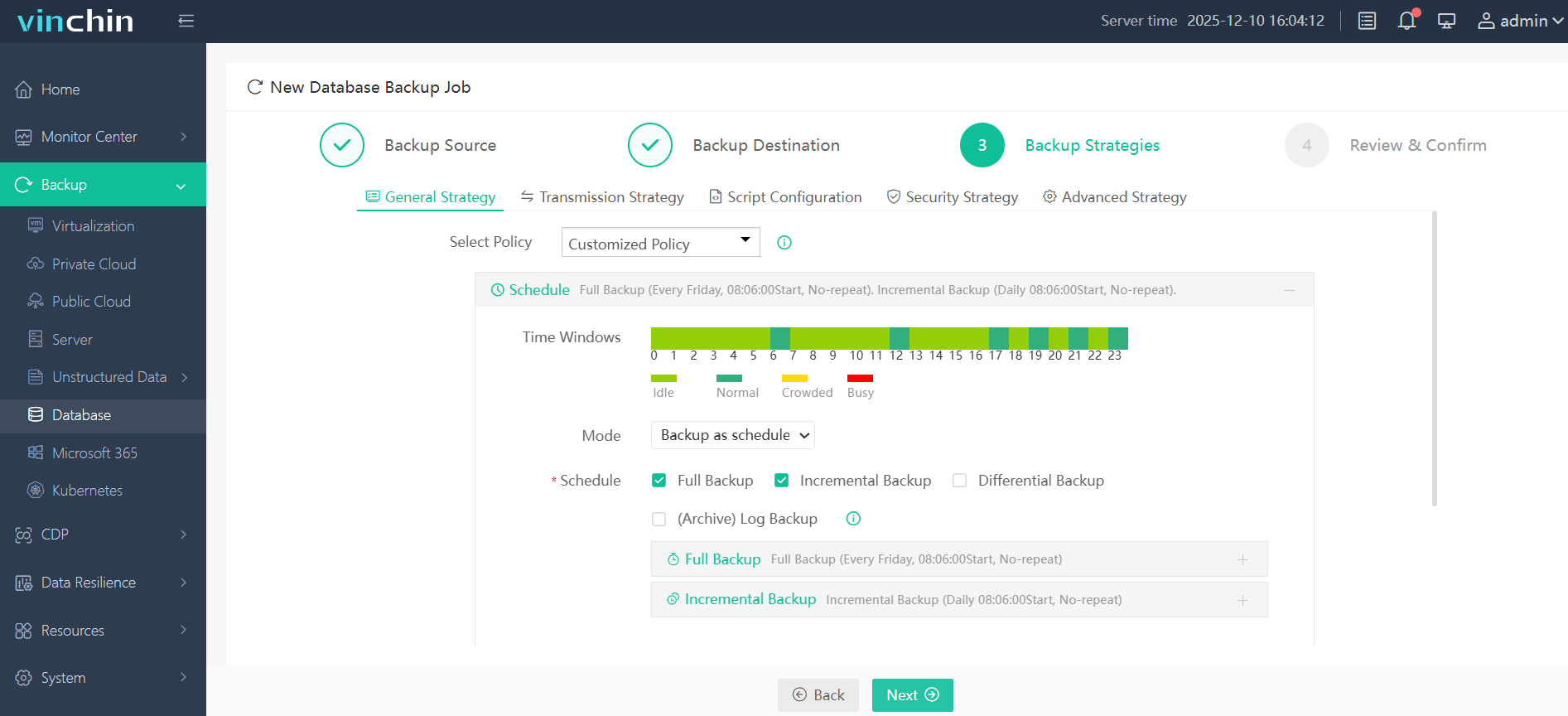
Step 3. Define your preferred strategy.
Step 4. Submit the job.
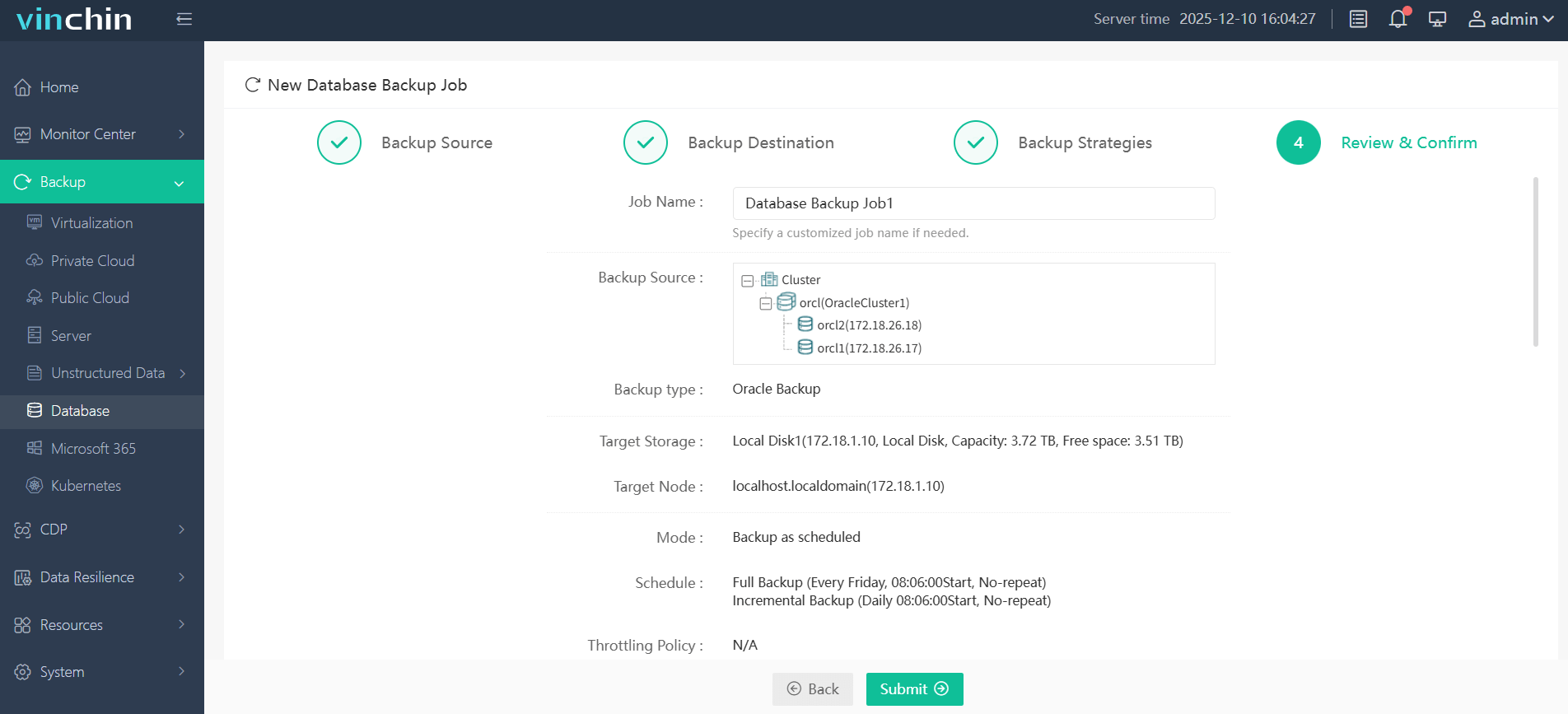
Vinchin Backup & Recovery enjoys global recognition among enterprises seeking trusted data protection. Try it risk-free today with a 60-day full-featured free trial—click download below to get started.
Oracle RMAN Clone Database FAQs
Q1: Can I safely clone very large databases without downtime?
Yes—with proper resources allocated active duplication handles even multi-terabyte systems online though transfer times depend heavily upon available bandwidth/diskspeed.
Q2: What happens if my network drops during active duplication?
The process fails gracefully—you must resolve connectivity then restart DUPLICATE command which resumes work based upon last completed step.
Q3: How do I monitor long-running duplicate jobs?
Open second session query V$SESSION/V$PROCESS views watch phases like “datafile copy” “recovery”—also tail current alert.log/RMAN output live.
Conclusion
Cloning an Oracle database with RMAN gives operations teams flexible ways to build test labs refresh dev environments or practice DR plans. By following these detailed steps—from preparation through validation—you’ll master both active-networked & offline-backup approaches. For ongoing protection, Vinchin delivers robust easy-to-use enterprise-grade backups tailored specifically for mission-critical databases worldwide.