Backing up Oracle archivelogs is a core task for any database administrator. Without proper archivelog backups, you risk losing recent transactions and face longer recovery times or even data loss that violates your Recovery Point Objective (RPO). This article walks you through what archivelogs are, why their backup is vital, and how to use Oracle RMAN to back them up—both manually and with automation. Ready to make your Oracle backups bulletproof?
What Are Oracle Archivelogs?
Oracle archivelogs are copies of redo log files that record all changes made to the database. When your database runs in ARCHIVELOG mode, Oracle writes filled redo logs to disk as archivelogs before reusing them for new transactions. These files are essential for point-in-time recovery because they capture every change since your last backup.
Archivelogs allow you to restore the database to any moment after your last full or incremental backup—even up to the minute before a failure occurs. Without these logs, restoring only datafiles means losing all changes made since the last backup was taken.
For example: if a user accidentally deletes important records at noon but your last full backup was at midnight, having all archivelogs generated between midnight and noon lets you recover right up until just before the mistake happened.
Why Archivelog Backup Matters
Backing up archivelogs is not just a best practice—it is a necessity for reliable disaster recovery planning. If you only back up datafiles but skip archivelogs, you cannot recover recent changes after an outage or corruption event.
Archivelogs capture every transaction since your last backup session. Missing them means lost data—and possibly hours of business activity gone forever.
Regularly backing up these logs also prevents disk space issues on archive destinations because old logs can be deleted safely after successful backup operations complete.
In summary: consistent oracle rman archivelog backup routines protect both your data integrity and storage resources.
Using RMAN for Archivelog Backup
RMAN (Recovery Manager) is Oracle’s built-in tool for robust database protection tasks like backups and restores. It offers flexible options for oracle rman archivelog backup—including full sets, incremental strategies, compression features, custom locations, and automated cleanup.
Before running any command:
To back up all available archivelogs:
BACKUP ARCHIVELOG ALL;
This command creates a copy of every existing archived log file in your configured destination (usually disk).
If you want to avoid duplicating effort by skipping logs already backed up at least once:
BACKUP ARCHIVELOG ALL NOT BACKED UP 1 TIMES;
This ensures only new or changed logs are included in each run—saving time and storage space.
You can also specify a time window:
BACKUP ARCHIVELOG FROM TIME 'SYSDATE-1' UNTIL TIME 'SYSDATE';
This backs up only those logs generated within the past day—a useful approach when managing large volumes or tight windows.
To direct backups into a specific directory:
BACKUP ARCHIVELOG ALL FORMAT '/u01/app/oracle/backups/arc_%U.bak';
Here %U generates unique filenames so multiple jobs do not overwrite each other.
If you want RMAN to delete source files after confirming successful backup (thus freeing archive storage):
BACKUP ARCHIVELOG ALL DELETE INPUT;
With this command RMAN removes only those copies it has just backed up from their original location—helping manage limited disk space safely.
For compressed backups that reduce storage usage:
BACKUP AS COMPRESSED BACKUPSET ARCHIVELOG ALL;
Compression helps especially with large databases where hundreds or thousands of logs accumulate daily.
To check which archived logs have not yet been backed up:
LIST ARCHIVELOG ALL BACKED UP 0 TIMES TO DISK;
This helps monitor status so no critical log slips through unnoticed during routine maintenance checks.
Automating Oracle RMAN Archivelog Backup with OS Scheduling
Manual backups work well during testing phases—but production environments demand automation for reliability and consistency over time.
You can schedule regular oracle rman archivelog backup jobs using operating system tools like cron on Linux/Unix systems or Task Scheduler on Windows servers.
First create a shell script called archivelog_backup.sh (for Linux):
#!/bin/bash
export ORACLE_SID=yourdb
LOGFILE=/path/to/rman_archlog_$(date +%Y%m%d_%H%M%S).log
{
echo "=== RMAN Archival Log Backup started at $(date) ==="
rman target / <<EOF
BACKUP ARCHIVELOG ALL NOT BACKED UP 1 TIMES DELETE INPUT;
EXIT
EOF
} > $LOGFILE 2>&1

if [ $? -eq 0 ]; then
    echo "Backup successful: $LOGFILE"
else
    echo "Backup FAILED! Check log: $LOGFILE"
    # Optional: send alert email here
fi
Make it executable using:
chmod +x archivelog_backup.sh
Then schedule it via cron so it runs automatically every hour:
0 * * * * /path/to/archivelog_backup.sh
Each hour this job backs up all new archived logs since its previous run—and deletes originals upon success—keeping archive destinations tidy without manual intervention required.
Want tighter control? Adjust script logic by specifying different time windows using FROM TIME/UNTIL TIME, but beware of overlapping schedules that might miss some files if jobs do not align perfectly with log generation rates. Most administrators rely on NOT BACKED UP 1 TIMES DELETE INPUT because it reliably sweeps everything created since last run regardless of timing quirks or delays in scheduling service execution.
On Windows platforms use similar batch scripting techniques combined with Task Scheduler’s graphical interface for easy setup—even supporting email notifications when failures occur if desired.
Managing Backup Retention and Space
As databases grow larger over months or years, managing both active archives on disk and older backups becomes crucial—not just from a compliance perspective but also due to finite storage limits common in enterprise IT environments.
Oracle provides several tools within RMAN itself:
Set retention policy like this:
CONFIGURE RETENTION POLICY TO RECOVERY WINDOW OF 7 DAYS;
This tells RMAN that any backups older than seven days may be marked obsolete once newer ones exist covering same period—a rolling window approach most organizations find effective.
Afterward periodically execute:
DELETE OBSOLETE;
This removes expired sets—including associated archived log pieces—from both catalog metadata AND physical media/disk locations according to above rule.
Another helpful command:
CROSSCHECK ARCHIVELOG ALL;
It synchronizes catalog entries against actual filesystem contents—flagging missing/corrupted items quickly so corrective action can follow before problems escalate during real disaster events.
By combining regular oracle rman archivelog backup routines with sound retention strategy plus crosschecking/catalog maintenance—you ensure long-term sustainability while minimizing manual oversight.
Enterprise-Level Oracle Database Protection with Vinchin Backup & Recovery
For organizations seeking streamlined management beyond native tools, Vinchin Backup & Recovery delivers an enterprise-level solution tailored for modern databases—including comprehensive support for Oracle environments. As an advanced platform supporting major systems like MySQL, SQL Server, MariaDB, PostgreSQL, PostgresPro, TiDB—and especially Oracle—it brings together features such as incremental backup, advanced source-side compression, batch database backup scheduling, granular retention policies including GFS retention policy, and robust integrity check mechanisms. These capabilities combine to maximize efficiency while ensuring secure long-term protection across complex infrastructures—all managed through one unified interface.
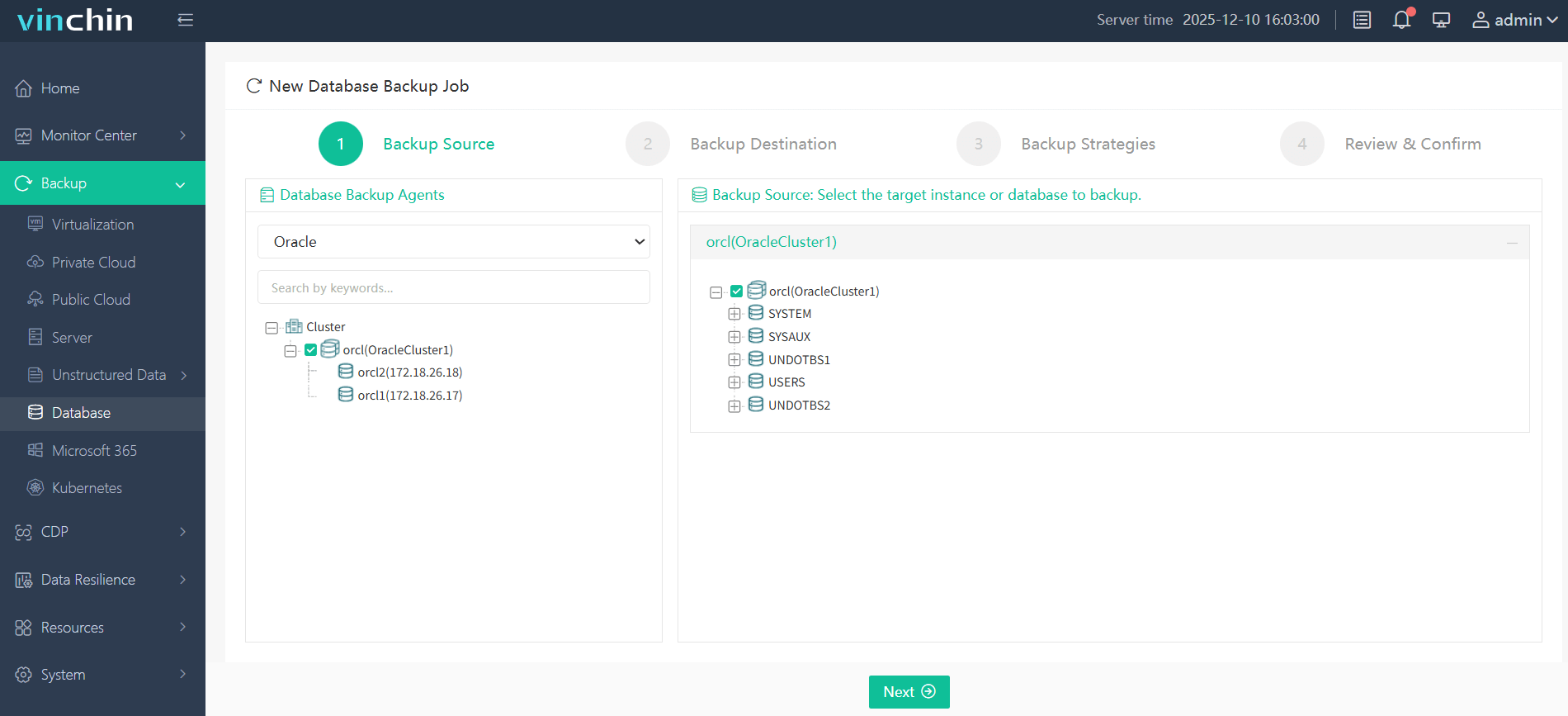
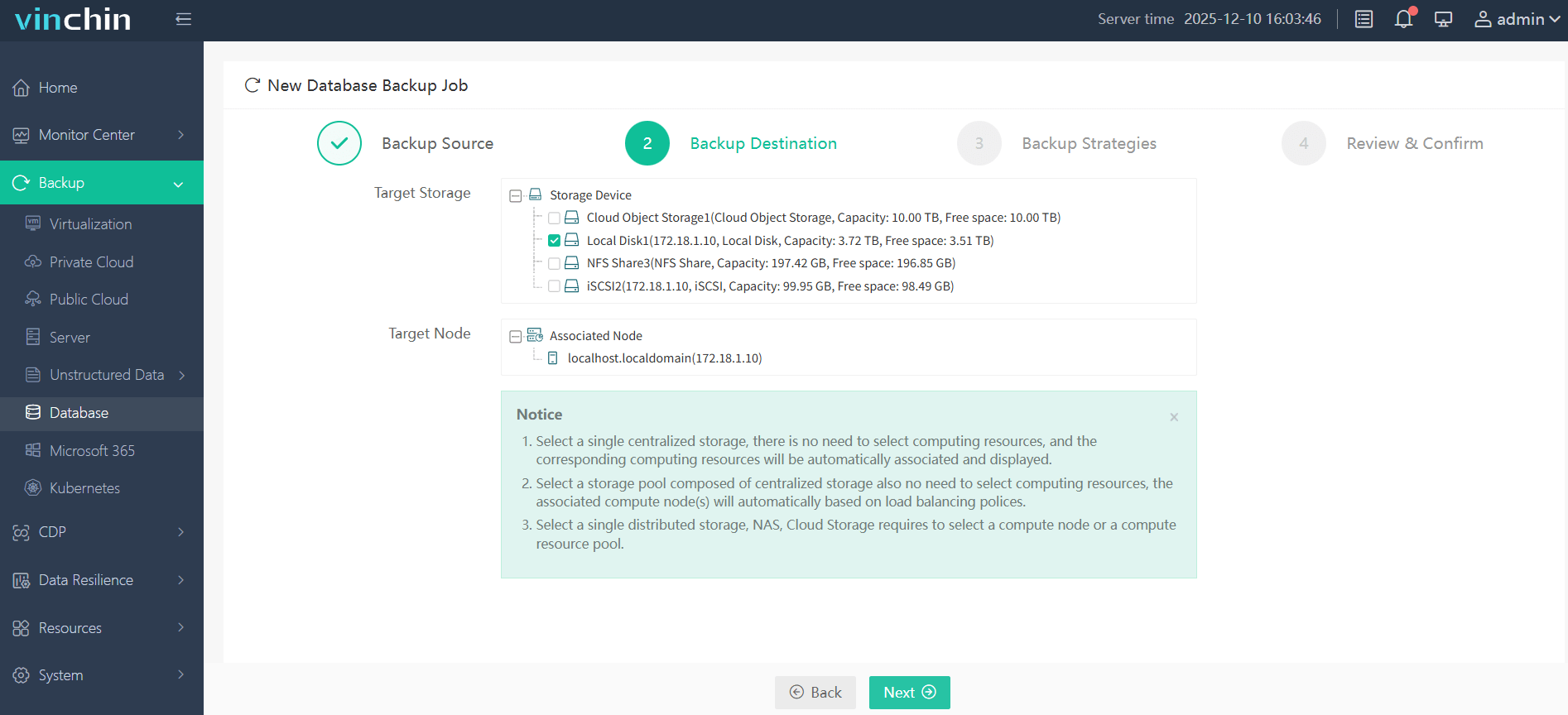
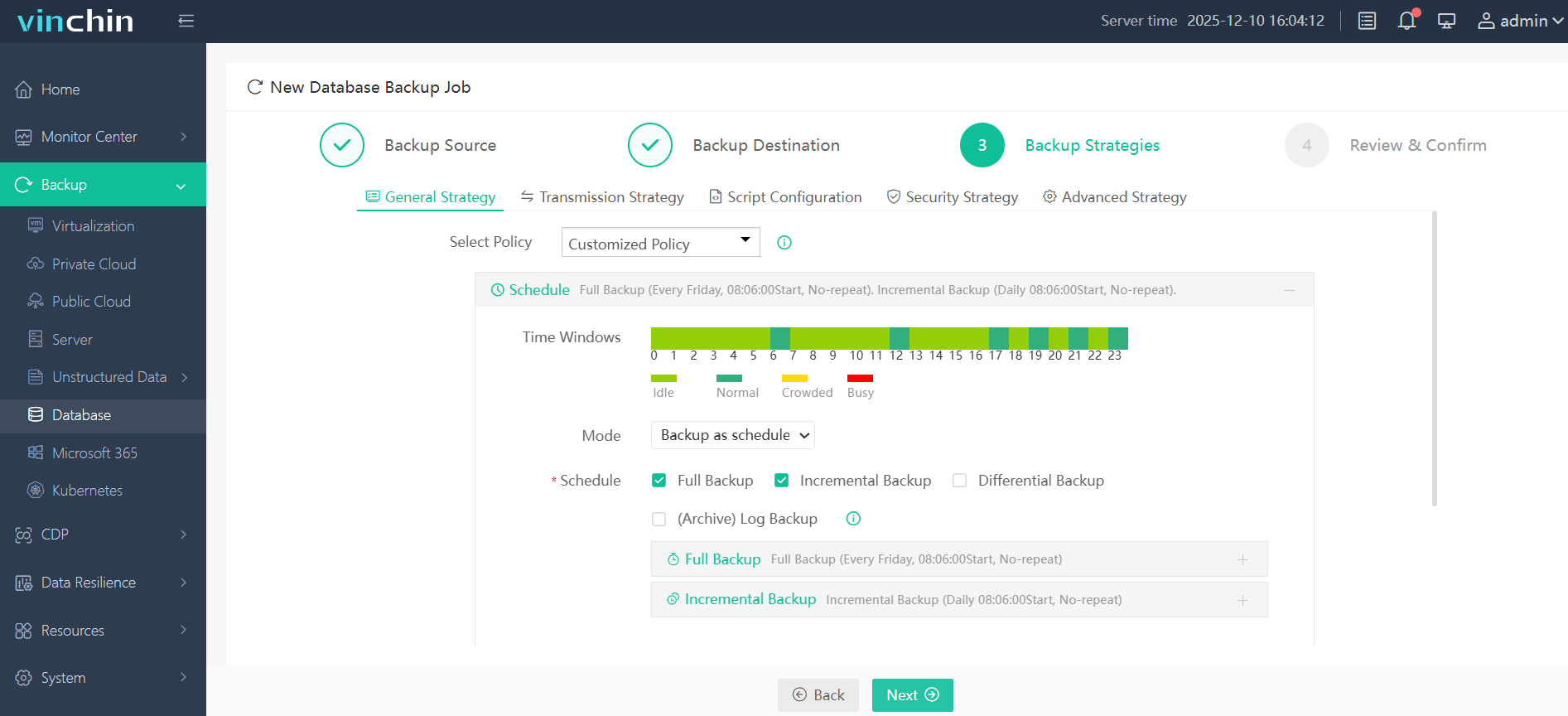
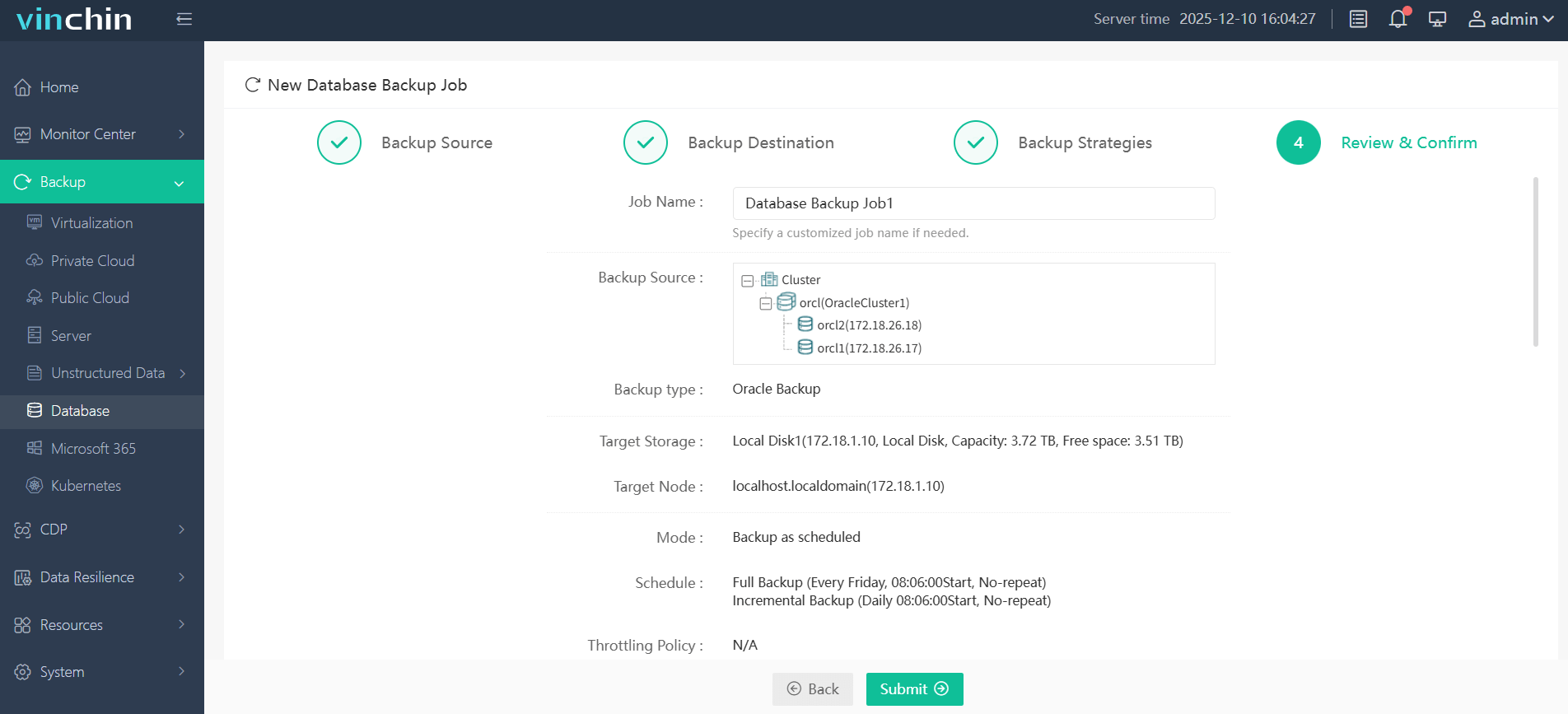
The web console of Vinchin Backup & Recovery is designed for simplicity:
Step 1. Select the Oracle database to back up;
Step 2. Choose the appropriate storage destination;
Step 3. Define detailed strategies including schedules and retention rules;
Step 4. Submit the job—all within minutes even at scale.
Recognized globally by enterprises for reliability and ease-of-use—with top customer ratings—you can experience every feature free for 60 days by clicking the download button below!
Oracle RMAN Archivelog Backup FAQs
Q1: How do I handle failed oracle rman archivelog backups?
A1: Investigate errors in the job’s log file first; rerun missed jobs promptly using NOT BACKED UP clauses so no logs go unprotected.
Q2: What should I do if my archive destination fills up?
A2: Run BACKUP ARCHIVELOG ALL DELETE INPUT immediately then increase destination size or frequency of scheduled jobs as needed until normal operation resumes.
Q3: How can I monitor my automated oracle rman archivelog backups?
A3: Review output logs regularly; set alerts based on script exit codes or integrate monitoring tools that watch job completion status.
Conclusion
Backing up Oracle archivelogs with RMAN protects against data loss across every scenario—from accidental deletions to major outages—and keeps businesses compliant with strict RPO standards worldwide. Whether automating scripts yourself or choosing an enterprise-grade solution like Vinchin’s platform makes daily operations safer while saving valuable admin time overall!