Losing an important table in Oracle can disrupt business operations fast. Whether it’s due to accidental deletion, corruption, or a failed update, you need a way to recover just that table—without rolling back your entire database. Oracle Recovery Manager (RMAN) provides this targeted solution through its table restore feature. In this guide, you’ll learn what Oracle RMAN restore table does, why it matters for DBAs, and how to use it at every level—from basic recovery to advanced scenarios.
What Is Oracle RM AN Restore Table?
Oracle RMAN restore table lets you recover one or more tables or partitions from an existing backup to a specific point in time—without affecting other data in your database. This feature automates much of the process by creating a temporary auxiliary database instance behind the scenes. It restores only what’s needed and then imports the recovered tables back into your main environment using Data Pump technology.
This capability is available starting from Oracle Database 12c. It helps DBAs avoid full database restores when only one or two tables are lost or damaged.
Why Restore Tables with RMAN?
Restoring tables with RMAN is often the best choice when you want precision without disruption. Here’s why many DBAs prefer this method:
You can recover dropped or corrupted tables quickly.
If Flashback Table cannot help—maybe because undo data is gone or structures changed—RMAN still works.
Full database or tablespace restores take much longer; RMAN targets just what you need.
You can roll back changes made by bad updates or deletes at a specific point in time.
In short, RMAN minimizes downtime while keeping other data safe.
Comparing RMAN Table Restore vs Flashback Table
Choosing between RECOVER TABLE and FLASHBACK TABLE depends on your situation:
| Feature | RECOVER TABLE (RMAN) | FLASHBACK TABLE |
|---|
| Requires Backup | Yes | No (uses undo data) |
| Point-in-Time Support | Yes | Limited by undo retention |
| Handles Dropped Tables | Yes | No |
| Needs Auxiliary Space | Yes | No |
| Impact on Other Data | None | None |
If you have recent backups but no sufficient undo data—or if the table was dropped—use RECOVER TABLE with RMAN.
Pre-Recovery Validation and Checks
It pays to double-check everything before launching into recovery mode. Here’s how experienced DBAs prepare:
First, confirm exactly which table(s) you want to restore—including schema name—and decide whether you want them as they were at a certain timestamp or SCN (System Change Number). Next, check that all required backups exist by running LIST BACKUP inside RMAN; look specifically for SYSTEM/SYSAUX/UNDO/tablespace files covering your chosen point in time.
Estimate available disk space where you'll create the auxiliary instance—it needs room not just for datafiles but also temp files and logs during processing. Make sure this directory is empty before starting; never use production directories as auxiliary destinations!
Finally, verify that your parameter file (spfile or pfile) is accessible since it's needed by both primary and auxiliary instances during recovery.
How to Restore a Table Using Oracle RMAN?
Restoring a single table using Oracle RMAN involves several clear steps—from preparation through verification:
1. Prepare Your Environment
Identify:
Check disk space at your planned AUXILIARY DESTINATION path—a dedicated folder like /u01/rman_aux works well if it has plenty of free space.
2. Start Up RMAN Console
Open terminal access on your server and connect as SYSDBA:
rman target /
3. Run RECOVER TABLE Command
Use RECOVER TABLE with details about what you want restored—for example:
RECOVER TABLE SCOTT.SALGRADE
  UNTIL TIME "to_date('2024-07-10 10:00:00','yyyy-mm-dd hh24:mi:ss')"
  AUXILIARY DESTINATION '/u01/rman_aux';
-- Restores SCOTT.SALGRADE as it existed at specified date/time
You may substitute UNTIL SCN or UNTIL SEQUENCE if those fit better than timestamps in your case.
4. Let RMAN Automate Recovery Steps
Once started:
1. An auxiliary instance spins up under /u01/rman_aux.
2. Required tablespaces get restored from backup.
3. Archived logs apply until reaching your chosen moment.
4. Data Pump exports recovered rows into dump files.
5. Data Pump imports those rows back into production automatically unless told otherwise.
You don’t need manual intervention during these phases unless errors appear—which we’ll cover later!
5a: Optional – Rename During Import With REMAP TABLE
To avoid overwriting current versions of restored objects—or simply test results first—you can remap names like so:
RECOVER TABLE SCOTT.SALGRADE
  UNTIL TIME "to_date('2024-07-10 10:00:00','yyyy-mm-dd hh24:mi:ss')"
  AUXILIARY DESTINATION '/u01/rman_aux'
  REMAP TABLE 'SCOTT'.'SALGRADE':'SALGRADE_BKP';
-- Restores as SALGRADE_BKP instead of replacing original
You may also remap schemas if needed by adjusting both sides of 'schema'.'table':'new_schema'.'new_table'.
Vinchin Backup & Recovery for Enterprise-Level Oracle Protection
For organizations seeking enhanced efficiency beyond native tools like RMAN, Vinchin Backup & Recovery offers a professional enterprise-level solution tailored for mainstream databases such as Oracle, MySQL, SQL Server, MariaDB, PostgreSQL, PostgresPro, and TiDB—with robust support for complex environments including large-scale Oracle deployments commonly found in enterprises today. Among its most relevant features are incremental backup capabilities for rapid protection cycles on critical systems like Oracle; batch database backup management; flexible GFS retention policy; comprehensive log backup with any-point-in-time recovery options; and built-in storage protection mechanisms against ransomware threats—all designed to maximize reliability while minimizing administrative overhead across diverse infrastructures.
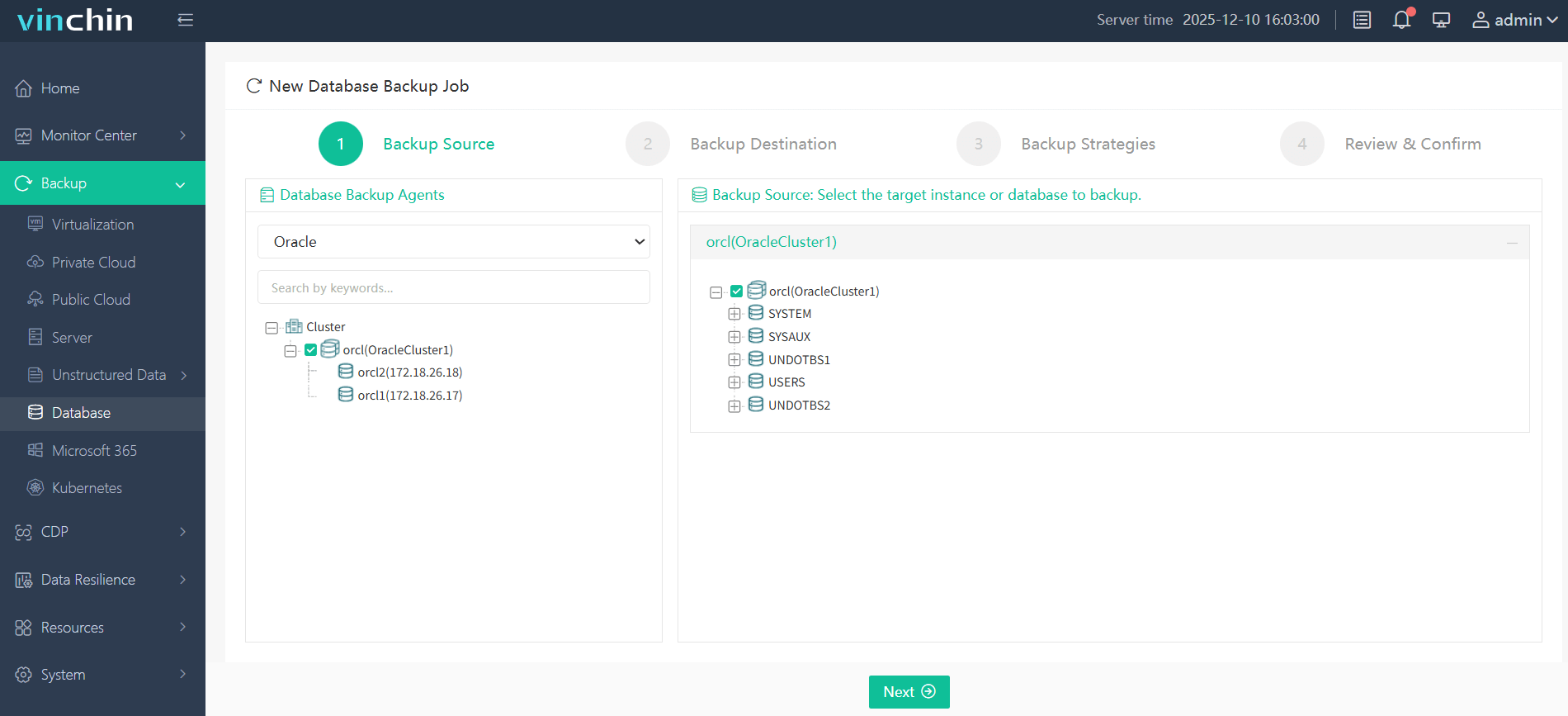
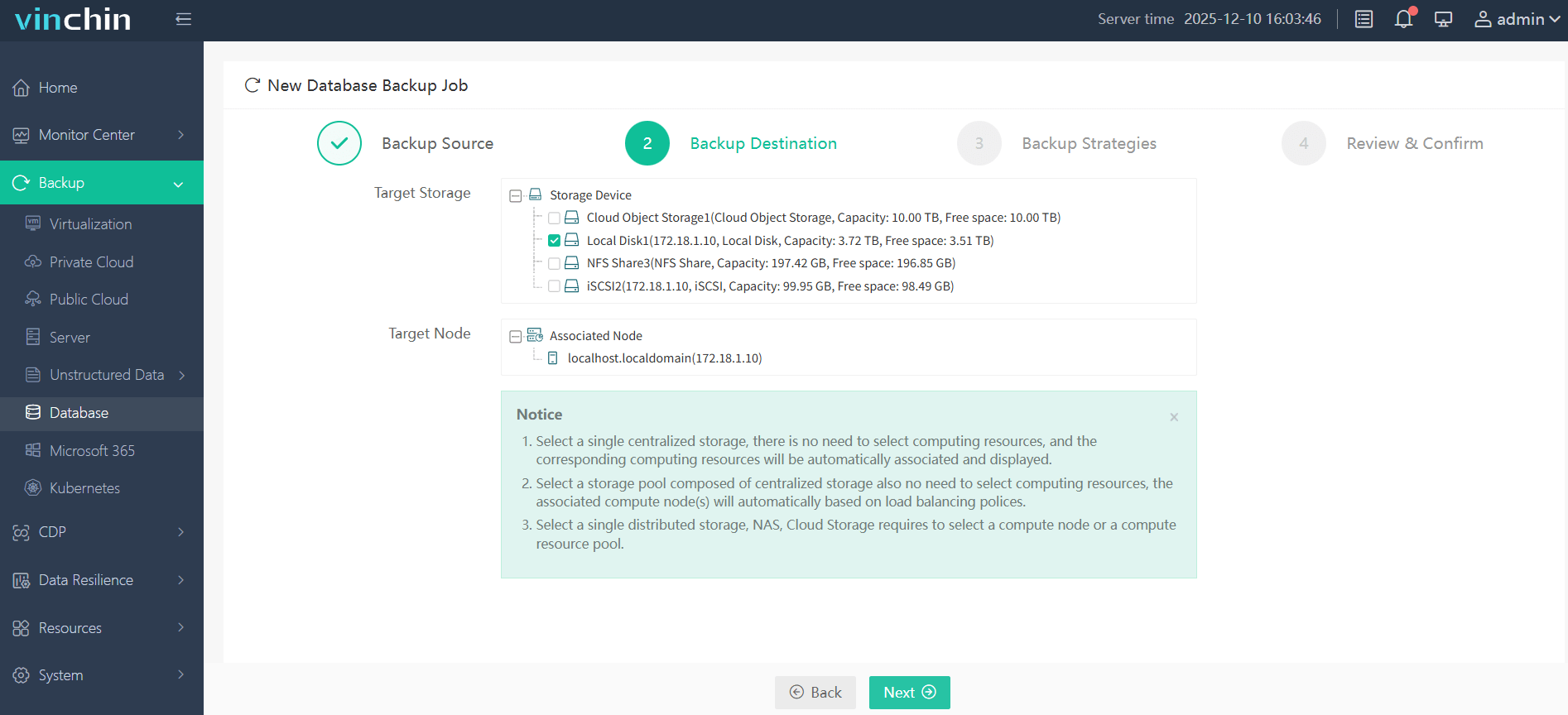
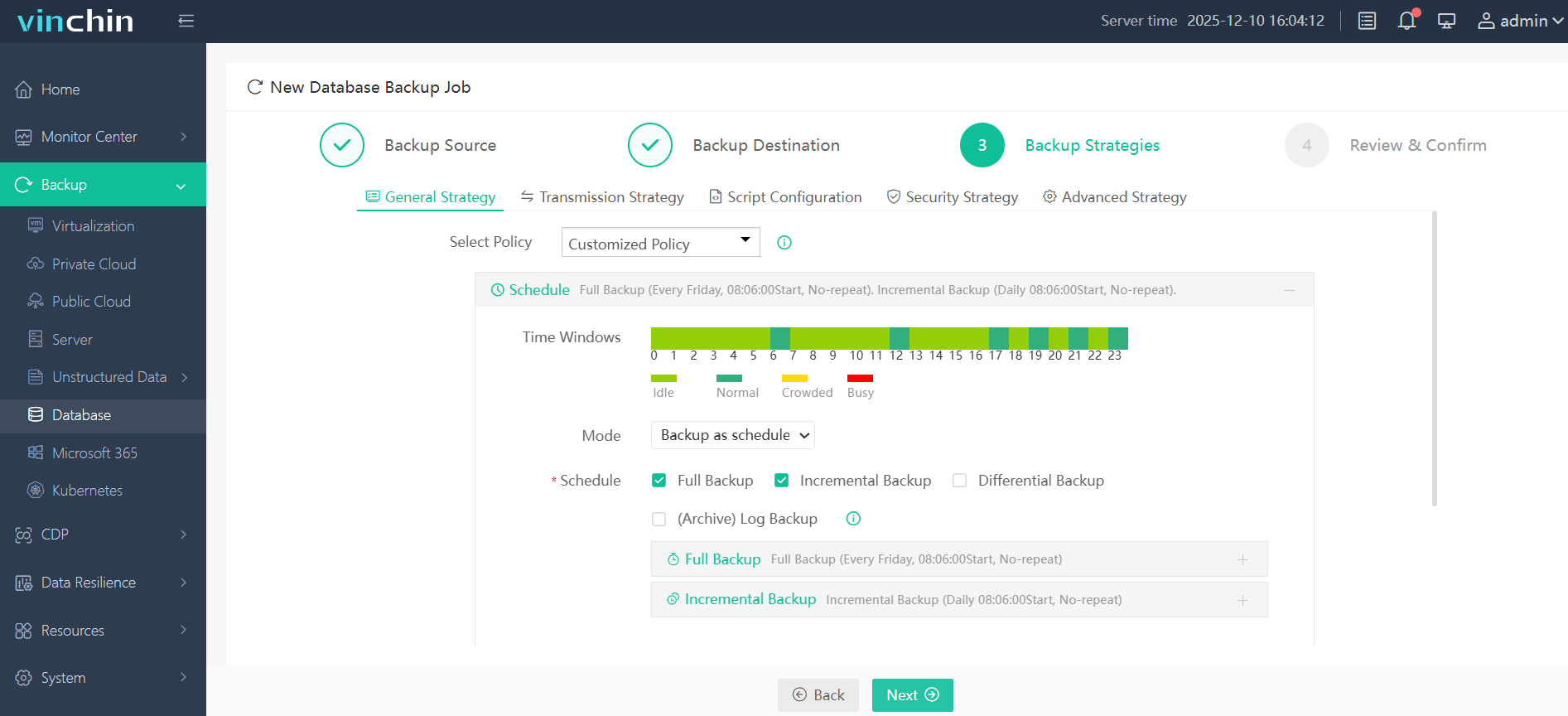
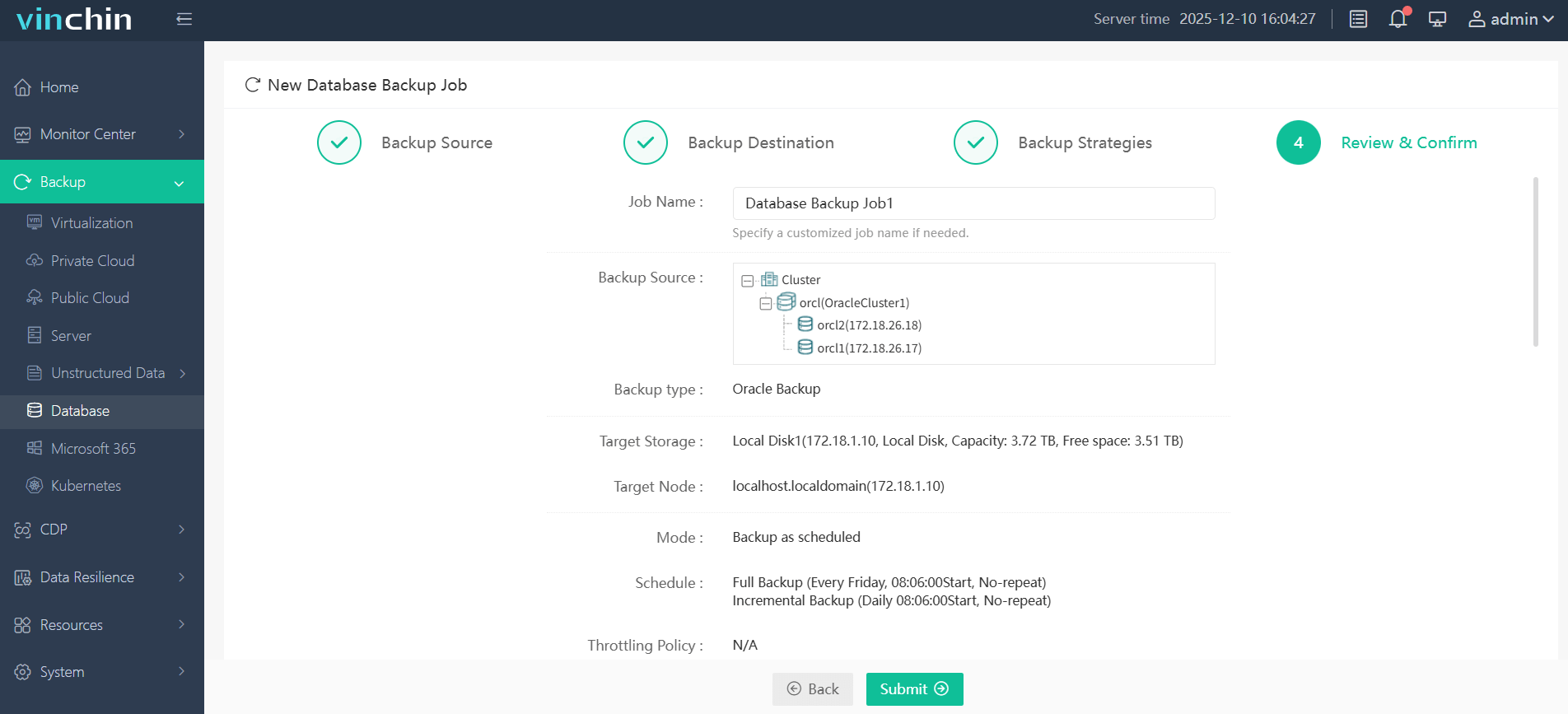
The intuitive web console streamlines every step of the process so even new users can confidently protect their databases in minutes:
Step 1. Select the Oracle database to back up
Step 2. Choose backup storage
Step 3. Define your backup strategy
Step 4. Submit the job
Vinchin Backup & Recovery is trusted worldwide by thousands of businesses and consistently earns top ratings from IT professionals—try its full-featured capabilities free for 60 days by clicking below!
Oracle RMAN Restore Table FAQs
Q1: Can I perform an online transaction workload while running RECOVER TABLE?
Yes—but expect higher I/O usage during recovery which might slow down active sessions slightly depending on hardware speed.
Q2: What should I do if my auxiliary destination fills up mid-process?
Stop recovery immediately; increase available disk space under that directory then restart from scratch after cleaning up partial files left behind.
Q3: Can I use RECOVER TABLE across different character sets?
No—the source backup's character set must match current database settings for seamless import/export without conversion errors.
Conclusion
Oracle's RECOVER TABLE feature gives DBAs precise control over restoring lost tables without disrupting other business-critical data flows throughout their environment—for even greater protection try Vinchin's enterprise-grade backup platform today!