Oracle databases often grow faster than expected. Storage space is always limited, so efficient backups matter. RMAN (Recovery Manager) offers built-in backup compression to help save storage and reduce network traffic. There are two types of RMAN backup compression: BASIC (included in all editions) and advanced algorithms (LOW, MEDIUM, HIGH), which require an extra license called Advanced Compression Option. In this guide, you’ll learn how to enable RMAN backup compression from basic setup to advanced tuning—and how to check if it works well in your environment.
What Is RMAN Backup Compression?
RMAN backup compression reduces the size of Oracle database backups by compressing data before writing it to disk or tape. This process is transparent—meaning you do not need to decompress files before restoring them. Oracle provides several algorithms for this task. The default algorithm is called BASIC; it comes with every Oracle edition at no extra cost. For more control over speed versus space savings, Oracle offers LOW, MEDIUM, and HIGH algorithms—but these require an Advanced Compression Option license.
Compression only applies to backup sets—not image copies or other formats. When you restore from a compressed backup set using RMAN, decompression happens automatically behind the scenes.
Why Use RMAN Backup Compression?
Why should you care about compressing your backups? The answer is simple: saving storage space and reducing bandwidth usage during transfers. Compressed backups take up less room on disk or tape—a big advantage if your resources are tight or expensive. They also move faster across networks because there’s less data to send.
However, nothing comes free—compression uses more CPU power during both backup and restore operations. If your server already runs near its CPU limit during business hours, running compressed backups could slow things down even more. That’s why many administrators schedule compressed backups during off-hours when database activity is low.
In summary: use RMAN backup compression when storage savings or network efficiency outweigh the extra CPU load required for compressing data.
Method 1. Enable Basic Compression in RMAN
Let’s start with what everyone can use—BASIC compression in RMAN requires no special license or setup beyond a single command.
First, you can tell RMAN to always create compressed backups by default:
CONFIGURE DEVICE TYPE DISK BACKUP TYPE TO COMPRESSED BACKUPSET;
This command ensures that every new disk-based backup uses BASIC compression unless you specify otherwise.
If you want to compress just one specific backup job instead of all future jobs:
BACKUP AS COMPRESSED BACKUPSET DATABASE;
You can include archived logs too:
BACKUP AS COMPRESSED BACKUPSET DATABASE PLUS ARCHIVELOG;
Restoring from a compressed backup set does not require any extra steps—RMAN handles decompression automatically during recovery.
BASIC compression strikes a good balance between saving space and keeping CPU usage reasonable. In practice, many users see their full database backups shrink by 70–90%. Your results may vary depending on how much of your data is already compressed (like images or PDFs) or contains empty blocks that compress well.
Method 2. Use Advanced Compression Options in RMAN
For those who need even greater space savings—or want fine-tuned control over performance—Oracle provides three advanced algorithms: LOW, MEDIUM, and HIGH. These options require both Enterprise Edition and an Advanced Compression Option license.
Each algorithm has its own trade-offs:
LOW uses the least CPU but saves less space.
MEDIUM balances speed with better compression.
HIGH gives maximum space savings but uses much more CPU time.
To set an advanced algorithm as your default in RMAN:
CONFIGURE COMPRESSION ALGORITHM 'MEDIUM';
Check which algorithm is currently active with:
SHOW COMPRESSION ALGORITHM;
When running a compressed backup after setting this configuration:
BACKUP AS COMPRESSED BACKUPSET DATABASE;
If you want to override the configured algorithm for just one job—for example using HIGH—you can do so like this (supported in Oracle Database 11g Release 2 onwards):
BACKUP AS COMPRESSED BACKUPSET DATABASE COMPRESSION ALGORITHM 'HIGH';
You can also combine incremental backups with advanced algorithms:
BACKUP AS COMPRESSED BACKUPSET INCREMENTAL LEVEL 1 DATABASE;
Remember that higher levels of compression save more storage but increase CPU load significantly—and may lengthen your overall backup window as well as impact other workloads on the server while running.
Before switching production systems over fully to LOW/MEDIUM/HIGH settings, conduct test runs during maintenance windows so you can measure actual effects on duration, resource usage (especially CPU), and resulting file sizes for each algorithm type.
How to Protect Oracle Database with Vinchin Backup & Recovery?
Beyond native tools like RMAN, organizations seeking streamlined enterprise-grade protection for their Oracle databases should consider Vinchin Backup & Recovery—a professional solution supporting today’s leading platforms including Oracle, MySQL, SQL Server, MariaDB, PostgreSQL, PostgresPro, and TiDB (with particular focus here on Oracle). Vinchin Backup & Recovery delivers key features such as advanced source-side compression, incremental backup capabilities tailored for Oracle environments, batch database processing for operational efficiency, multi-level data compression strategies adaptable to different needs, and robust data retention policies ensuring compliance requirements are met—all designed to optimize storage use while safeguarding critical assets efficiently.
The intuitive web console makes managing protection simple:
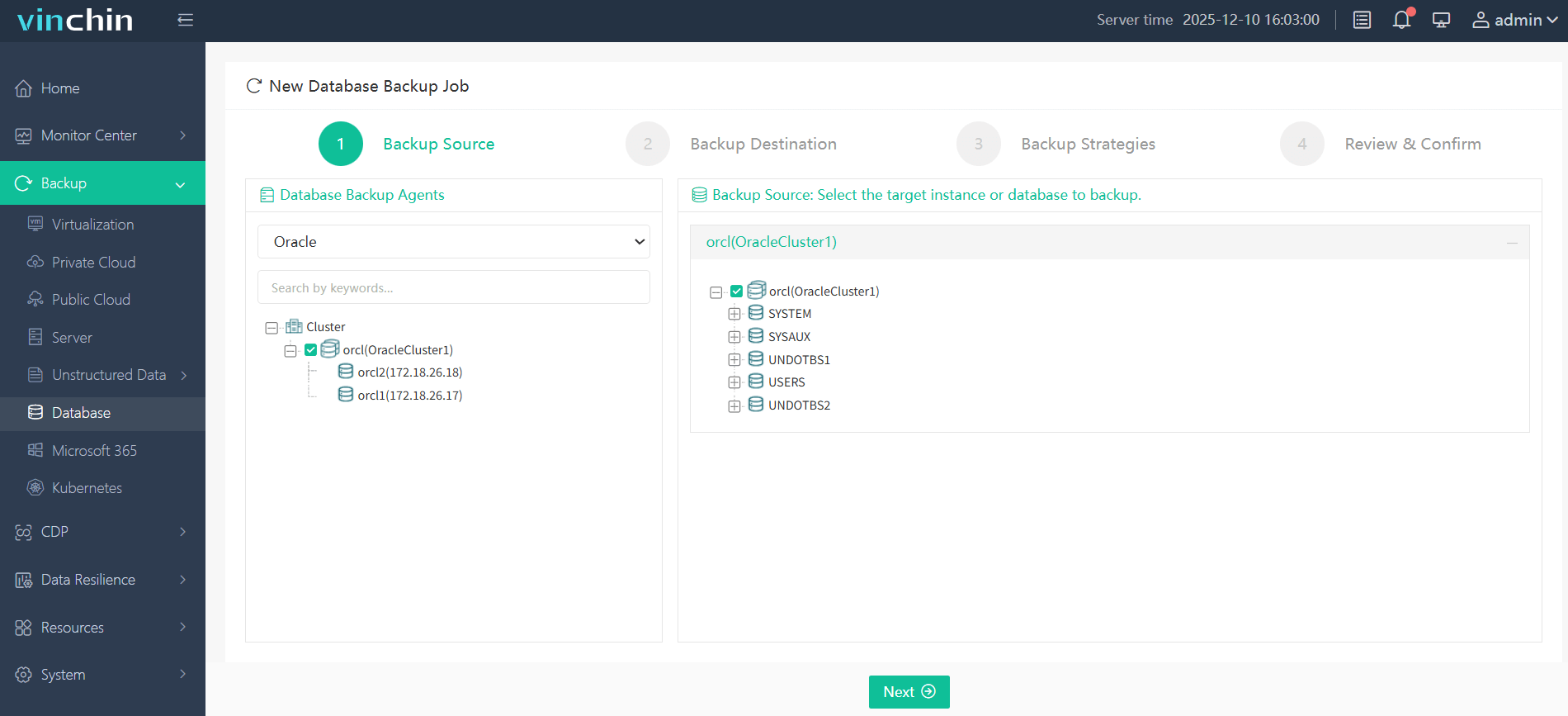
Step 1. Select the Oracle database to back up
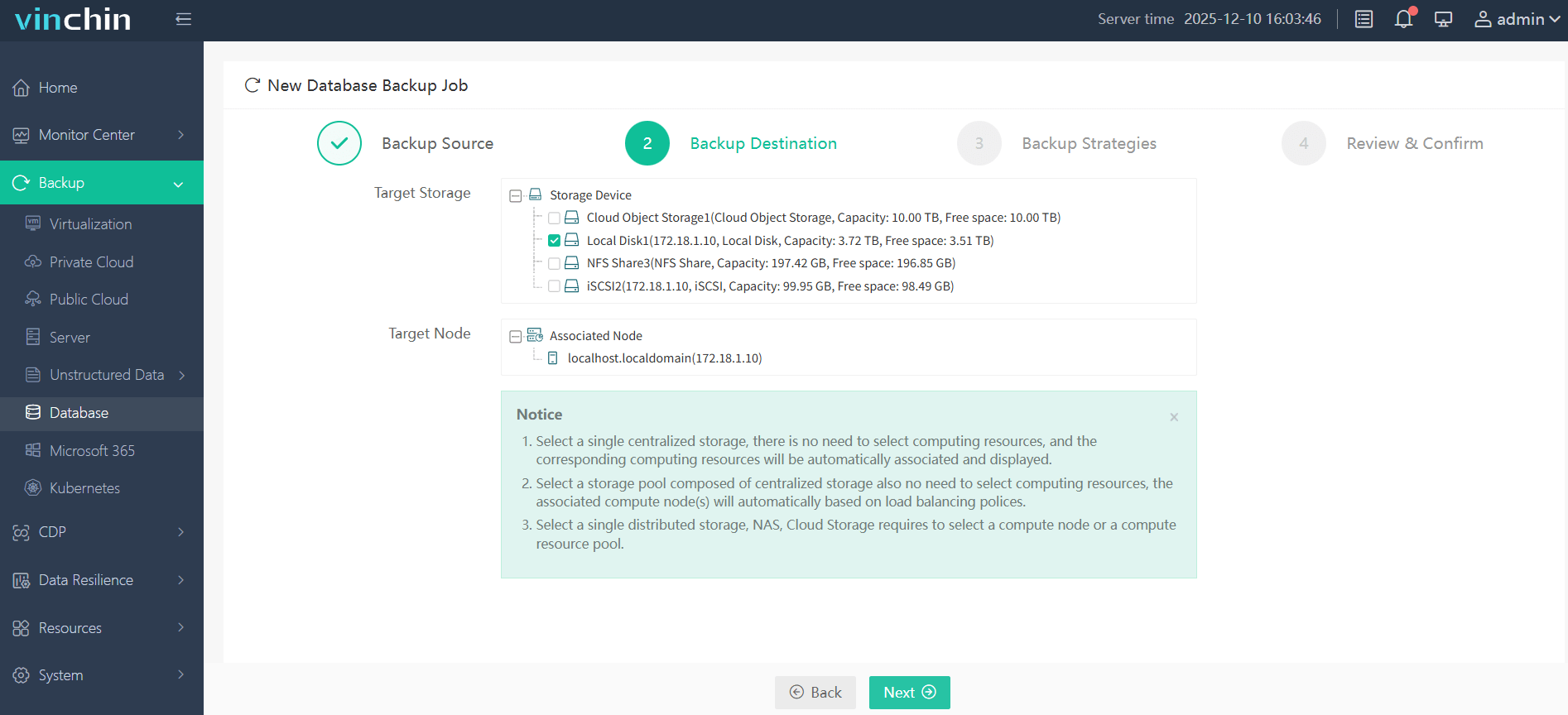
Step 2. Choose the backup storage
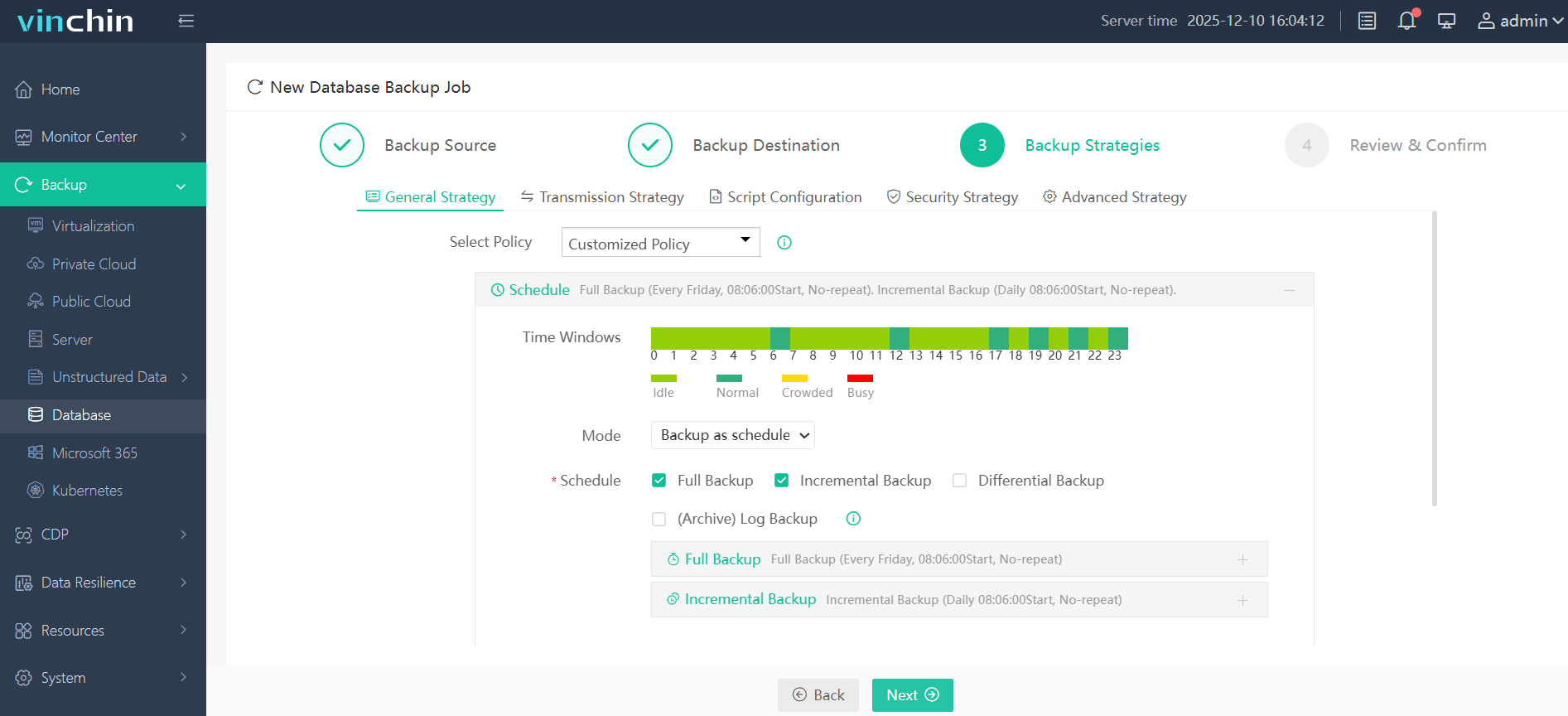
Step 3. Define the backup strategy
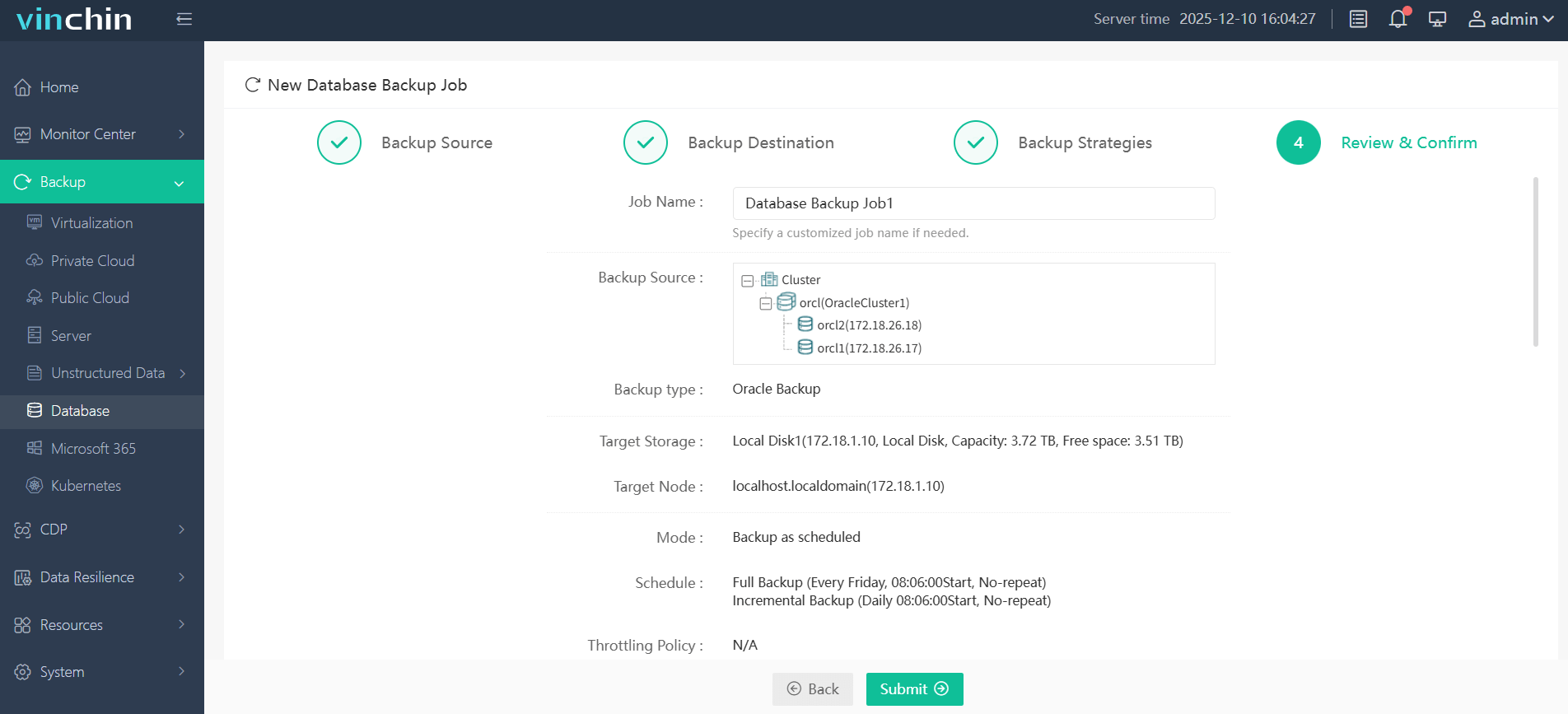
Step 4. Submit the job
Recognized globally for reliability and ease-of-use—with thousands of satisfied customers—Vinchin Backup & Recovery offers a risk-free 60-day full-featured trial; click below to experience enterprise-class data protection firsthand.
RMAN Backup Compression FAQs
Q1: Can I estimate how much my data will compress before enabling it?
No exact prediction exists; run test backups using BASIC then compare file sizes shown under LIST BACKUP OF DATABASE SUMMARY for real-world results.
Q2: When should I avoid enabling RMAN backup compression?
Avoid it if your server's CPUs are heavily loaded during normal hours or if backing up mostly pre-compressed files where gains would be minimal compared with added overheads.
Q3: What happens if I try restoring a compressed set on another server?
As long as compatible versions exist between source/target databases—with matching licenses where needed—RMAN decompresses transparently; no manual intervention required.
Conclusion
RMAN backup compression helps reduce storage costs while making network transfers faster—but always balance these gains against increased CPU demand through careful testing first.
Vinchin makes protecting critical databases even easier thanks to its streamlined interface plus robust automation features—all available risk-free via their trial offer today!