Knowing your Oracle RMAN backup sizes is essential for storage planning, compliance, and troubleshooting unexpected issues. But how do you actually check the size of your RMAN backups? There are several ways to get this information—each with unique strengths for different situations. In this article, we’ll walk through reliable methods for performing an RMAN backup size query using both SQL queries and native RMAN commands. Whether you’re just starting out or have years of experience as a DBA, you’ll find step-by-step guidance to help you get accurate backup size details.
What Is RMAN Backup?
RMAN (Recovery Manager) is Oracle’s built-in tool for backing up, restoring, and recovering databases efficiently. It automates many backup tasks while offering features like compression, encryption, incremental backups, and validation checks.
When you run an RMAN backup job, it creates either backup sets or image copies of your datafiles, control files, and archived redo logs. These files are stored on disk or tape devices based on your configuration.
The actual size of an RMAN backup depends on several factors:
Only used blocks in datafiles are backed up—not empty space—so backups can be much smaller than total database allocation.
Compression options can reduce file sizes further by eliminating redundant data patterns.
The type of backup matters: full backups copy everything; incremental backups only capture changes since the last level 0 or level 1 backup.
Understanding these basics helps set expectations when reviewing reported sizes from any rman backup size query.
Method 1: RMAN Backup Size Query via SQL
Using SQL queries against Oracle’s internal views gives you flexible access to detailed historical information about your backups—ideal for automated reporting or integrating with monitoring dashboards.
Start by connecting to your Oracle database using SQL*Plus or another SQL client application. Make sure your user has SELECT_CATALOG_ROLE privileges or direct grants on these V$ views.
The main view for this purpose is V$RMAN_BACKUP_JOB_DETAILS, which records each completed backup job along with its input/output sizes:
SELECT
  INPUT_TYPE,
  STATUS,
  TO_CHAR(START_TIME,'YYYY-MM-DD HH24:MI:SS') AS START_TIME,
  TO_CHAR(END_TIME,'YYYY-MM-DD HH24:MI:SS') AS END_TIME,
  ROUND(INPUT_BYTES/1024/1024,2) AS INPUT_MB,
  ROUND(OUTPUT_BYTES/1024/1024,2) AS OUTPUT_MB,
  OUTPUT_DEVICE_TYPE
FROM
  V$RMAN_BACKUP_JOB_DETAILS
ORDER BY
  START_TIME DESC;
This rman backup size query shows:
The type of each job (DB INCR means incremental; ARCHIVELOG means archived log).
Status (COMPLETED/SUCCESSFUL).
Start/end times so you can track duration.
Input/output sizes in megabytes—the OUTPUT_MB column tells you what was written to disk/tape after compression if enabled.
To focus on recent activity only—for example the past seven days—you can filter results:
WHERE START_TIME > SYSDATE - 7
If you want granular detail down to individual files created by each job (called “backup pieces”), use:
SELECT
  HANDLE,
  ROUND(BYTES/1024/1024,2) AS SIZE_MB,
  STATUS
FROM
  V$BACKUP_PIECE
ORDER BY COMPLETION_TIME DESC;
This helps when tracking down large files that may fill up storage unexpectedly.
For even deeper analysis—such as joining job details with specific sets or pieces—you can combine multiple views like V$RMAN_BACKUP_JOB_DETAILS, V$BACKUP_SET, and V$BACKUP_PIECE using JOIN statements in SQL.
Keep in mind that these dynamic performance views retain history based on your control file retention policy settings; if you need longer-term reporting across many months or years consider setting up a Recovery Catalog database which stores historical metadata in RC_* tables instead.
Method 2: Check RMAN Backup Size Using RMAN Commands
Sometimes it’s faster to check things directly inside the RMAN command-line interface—especially during active maintenance windows when time matters most.
First connect to your target database from a shell prompt:
$ rman target /
To see a summary table listing all recent database backups—including their compressed output sizes—run:
RMAN> LIST BACKUP OF DATABASE SUMMARY;
You’ll see columns such as Key (unique identifier), Type (full/incremental), LV (level), Size (actual bytes written), Device Type (DISK/TAPE), Completion Time (when finished).
If you want details about jobs tagged during creation—for example nightly fulls labeled “WEEKLY_FULL”—use:
RMAN> LIST BACKUP TAG WEEKLY_FULL;
Replace WEEKLY_FULL with whatever tag matches your environment’s naming convention; this displays every piece associated with that tag including location pathnames and exact byte counts.
Need help cleaning up old files? Use:
RMAN> REPORT OBSOLETE;
This lists obsolete backups eligible for deletion under current retention policies—with their respective sizes shown so you know how much space could be reclaimed safely after running DELETE OBSOLETE later if desired.
To monitor archived redo log usage specifically—which often grows rapidly in busy environments—try:
RMAN> LIST BACKUP OF ARCHIVELOG ALL SUMMARY;
While it’s tempting to simply check file system directories using OS commands like ls -lh on Linux/Unix or dir on Windows Server remember that only Oracle’s internal metadata reflects logical structure accurately—including skipped blocks due to optimization features like block change tracking.
Why Monitor RMAN Backup Size?
Monitoring rman backup size isn’t just about housekeeping—it plays a critical role in daily operations management:
You avoid failed jobs due to insufficient disk/tape capacity by planning ahead based on real consumption rates rather than guesswork.
Tracking growth over weeks/months reveals hidden trends such as organic business expansion—or sudden surges tied directly back to application changes upstream.
By analyzing compression ratios regularly DBAs can fine-tune strategies—for instance switching from basic ZIP-style algorithms toward more advanced ZLIB/BASIC modes if hardware supports it—to maximize savings without sacrificing restore speed when needed most.
Staying compliant with regulatory retention rules becomes easier since audit teams expect proof not just of existence but also integrity/sufficiency of protected data assets at all times.
When restores slow down unexpectedly checking whether unusually large sets were produced recently helps isolate root causes fast before users notice service impacts downstream!
Have you ever been caught off guard by a sudden spike in storage usage? Regularly checking rman backup size keeps surprises at bay—and ensures smooth operation even during peak demand periods.
How Can Vinchin Help Back Up and Monitor Oracle Databases?
For organizations seeking streamlined management and monitoring of Oracle backups—including efficient tracking of rman backup size queries—a dedicated enterprise solution offers significant advantages. Vinchin Backup & Recovery is a professional-grade platform supporting today's mainstream databases such as Oracle, MySQL, SQL Server, MariaDB, PostgreSQL, PostgresPro, and TiDB. With robust compatibility for Oracle environments specifically highlighted here, Vinchin Backup & Recovery delivers key features like incremental backup support for optimized storage use; batch database backup for simplified administration across multiple instances; comprehensive data retention policies including GFS retention strategy; cloud/tape archiving integration; and integrity checks ensuring recoverability. Together these capabilities automate protection workflows while reducing risks related to manual errors or incomplete coverage—all within a single solution designed for reliability at scale.
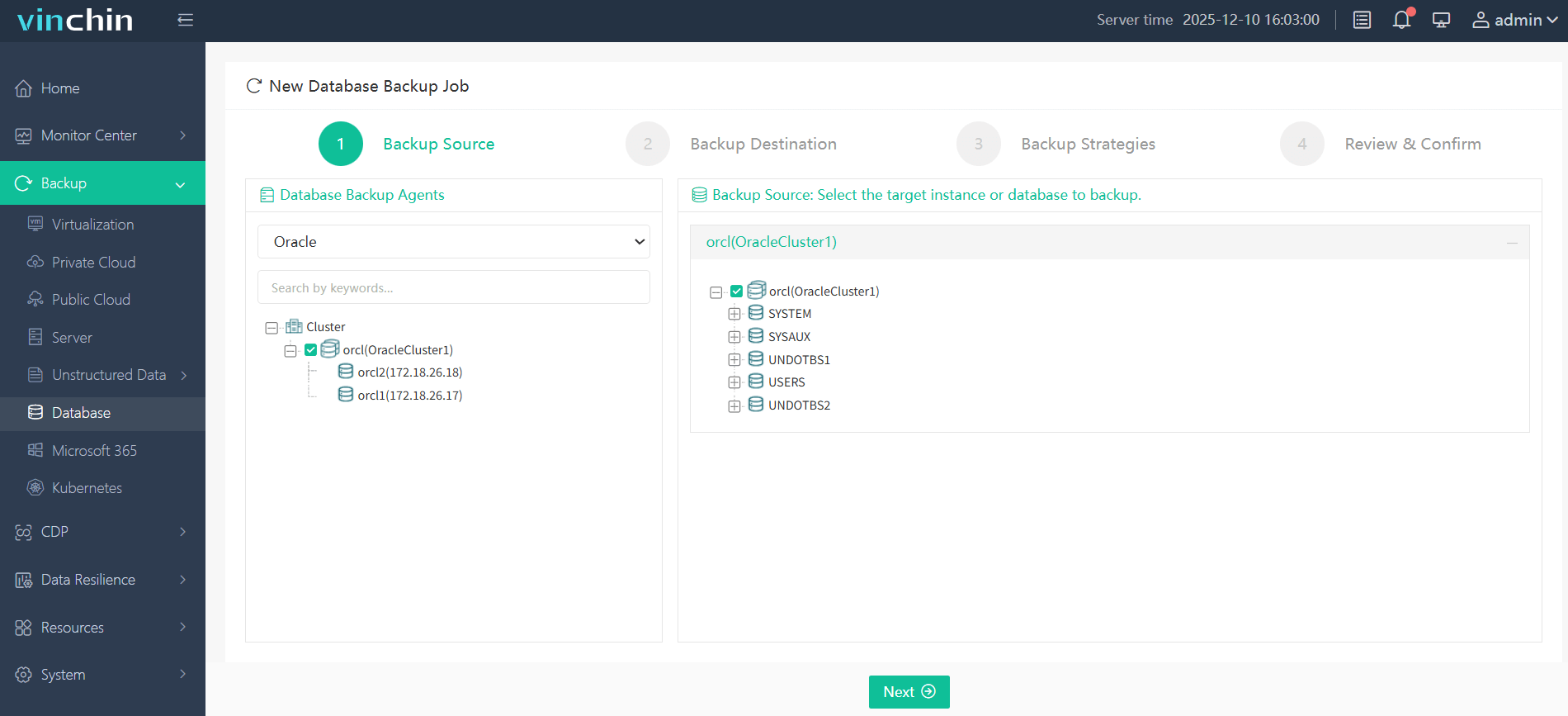
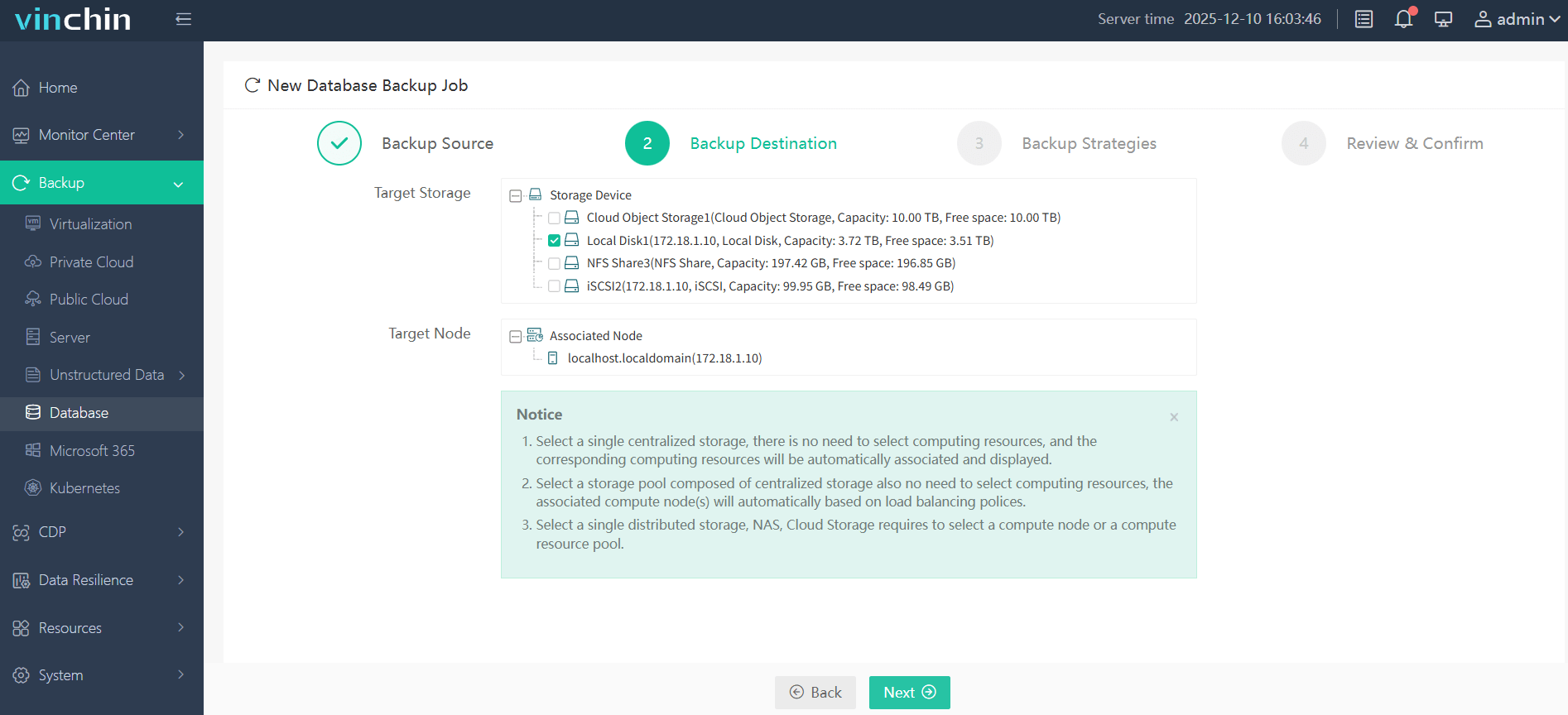
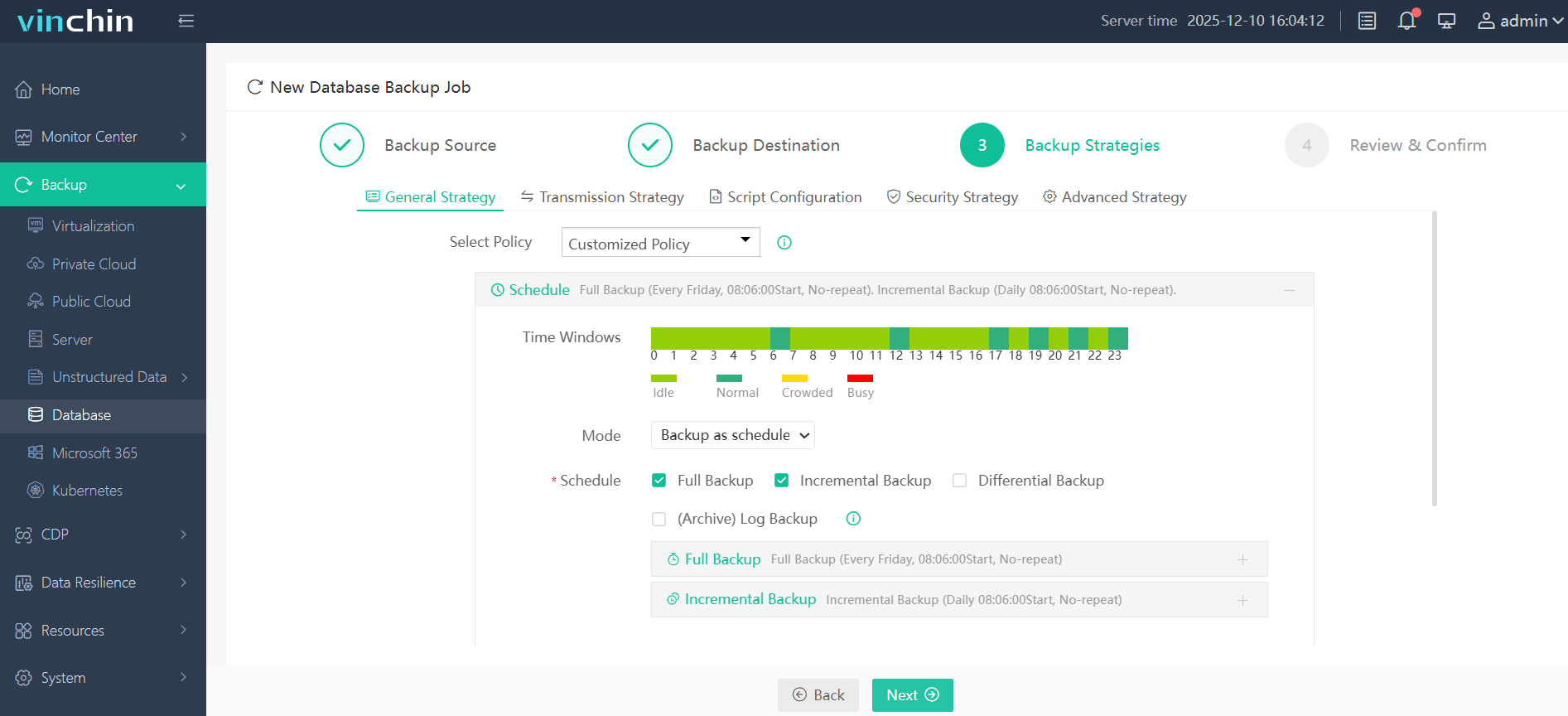
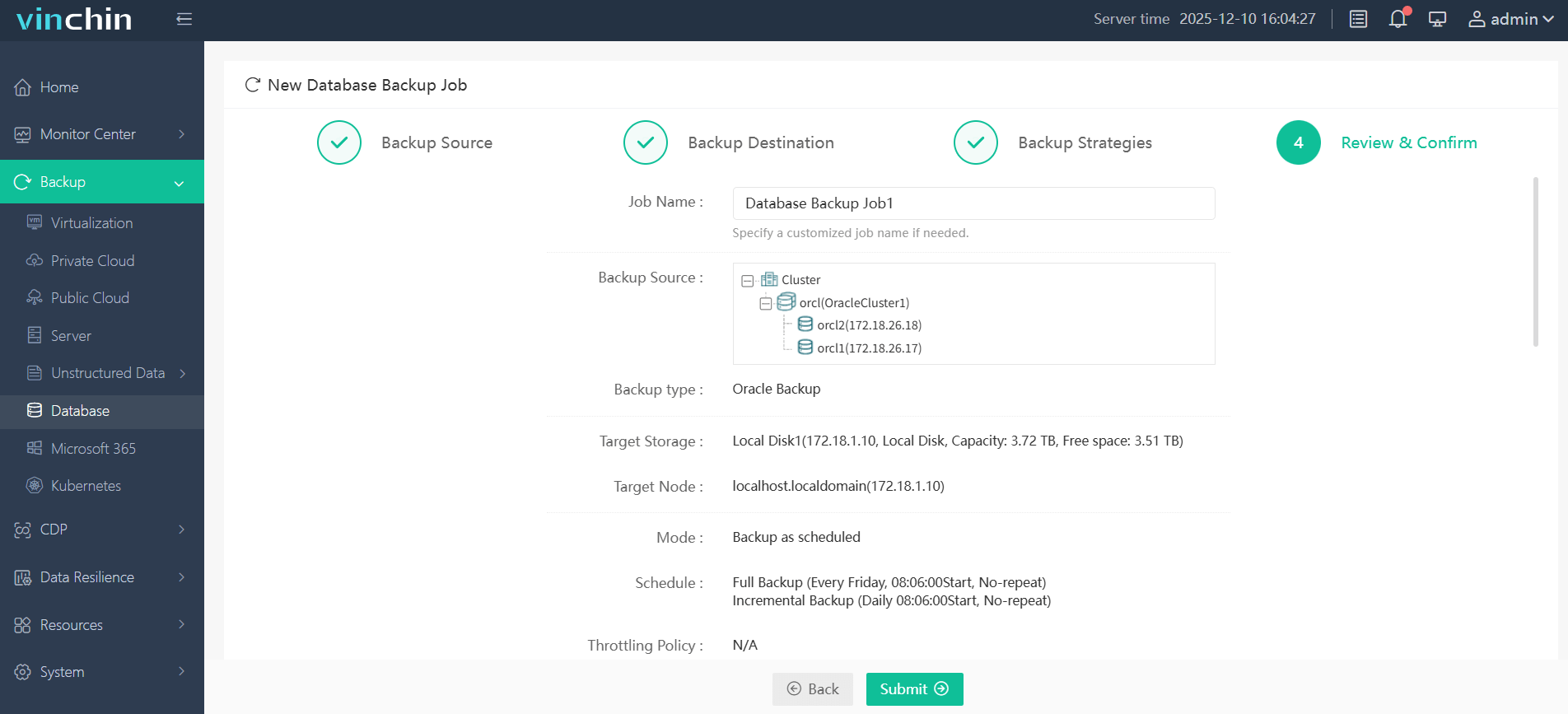
The intuitive web console makes managing Oracle database protection straightforward:
Step 1. Select the Oracle database to back up
Step 2. Choose the backup storage
Step 3. Define the backup strategy
Step 4. Submit the job
Recognized globally among enterprise customers for its reliability and ease-of-use—and consistently rated highly by users—Vinchin Backup & Recovery offers a fully featured free trial valid for sixty days. Click download now to experience trusted enterprise data protection firsthand!
RMAN Backup Size Query FAQs
Q1: How do I schedule automatic daily reports showing my latest rman backup size?
A1: Create a shell script running an SQL*Plus query against V$RMAN_BACKUP_JOB_DETAILS then email results via cron job or Task Scheduler each morning.
Q2: Why does my rman backup size differ from total allocated space?
A2: Backups include only used blocks not empty ones plus optional compression so they’re usually smaller than raw allocation shown in DBA_DATA_FILES view.
Q3: How do I quickly find out which day had my largest single rman output?
A3: Run SELECT MAX(OUTPUT_BYTES), TO_CHAR(START_TIME,'YYYY-MM-DD') FROM V$RMAN_BACKUP_JOB_DETAILS GROUP BY TO_CHAR(START_TIME,'YYYY-MM-DD') ORDER BY MAX(OUTPUT_BYTES) DESC FETCH FIRST ROW ONLY;
Conclusion
Checking rman backup size is vital for effective Oracle administration—from capacity planning through compliance audits right down troubleshooting slow restores when seconds count most! Use both SQL queries plus native commands described above—or let Vinchin streamline everything automatically so nothing gets missed along the way!