Imagine your Oracle database suffers sudden storage corruption or accidental deletion—yet you must recover every last transaction. In these moments, archivelogs become your lifeline. They are essential for point-in-time recovery and disaster recovery in Oracle environments. If you ever need to restore archivelog files using Oracle RMAN, knowing the right steps can save you from extended downtime or data loss. This article explains what archivelogs are, why restoring them matters, and how to restore them step-by-step using both Oracle RMAN and SQL*Plus. We also cover troubleshooting tips and best practices so you can handle even complex situations with confidence.
What Is Oracle RMAN Archivelog?
An Oracle RMAN archivelog is a backup copy of redo log files that record every change made to your database. When a redo log fills up, Oracle archives it as an archivelog file instead of overwriting it. These archived logs are crucial because they allow you to recover transactions that happened after your last full backup. Without them, you could only restore your database up to the time of your most recent complete backup—losing all subsequent changes.
Archivelogs support advanced recovery options like point-in-time recovery (PITR) or rolling forward standby databases in Data Guard setups. They also help protect against hardware failures or logical errors by ensuring no committed transaction is lost between backups.
Why Restore Archivelog with RMAN?
Restoring archivelogs with RMAN is one of the most common tasks for database administrators during disaster recovery or planned maintenance. You may need this after hardware failure, accidental deletion, corruption of log files, or when rolling forward a standby database for high availability.
RMAN automates much of this process by tracking which backups exist and where they are stored. It ensures that only required archivelogs are restored and applied in sequence—reducing human error while speeding up recovery operations. By using RMAN’s built-in intelligence, DBAs can avoid manual mistakes that might otherwise lead to incomplete restores or longer downtimes.
How to Restore Archivelog Using Oracle RMAN?
Restoring archivelogs with RMAN follows a clear process but requires attention at each step to avoid issues such as missing logs or catalog inconsistencies. Before starting any restore operation, always identify which sequences are needed for your specific recovery goal; this helps prevent unnecessary restores or gaps in coverage.
Here’s how you do it:
1. Start RMAN and Connect to the Target Database
Open a terminal window on your server and run:
rman target /
For remote connections using password authentication:
rman target sys/<password>@<net_service_name>
Replace <net_service_name> with an entry from your tnsnames.ora file.
2. Check Available Archivelog Backups
To see which archived logs have been backed up:
LIST BACKUP OF ARCHIVELOG ALL;
3. Crosscheck Archivelog Backups
Make sure all backups listed in the catalog still exist at their expected locations:
CROSSCHECK ARCHIVELOG ALL;
After crosschecking, update the catalog by removing references to missing files:
DELETE EXPIRED ARCHIVELOG ALL;
4. Preview the Restore Operation
See which backups will be used before running an actual restore:
RESTORE ARCHIVELOG FROM SEQUENCE <start_seq> UNTIL SEQUENCE <end_seq> PREVIEW;
Replace <start_seq> and <end_seq> with required sequence numbers based on your recovery needs.
5. Restore Archivelogs
To restore all available archived logs:
RESTORE ARCHIVELOG ALL;
For a specific range:
RESTORE ARCHIVELOG FROM SEQUENCE <start_seq> UNTIL SEQUENCE <end_seq>;
To restore based on time:
RESTORE ARCHIVELOG FROM TIME "to_date('2024-06-01 00:00:00','YYYY-MM-DD HH24:MI:SS')" UNTIL TIME "to_date('2024-06-01 23:59:59','YYYY-MM-DD HH24:MI:SS')";6. Restore to a Different Location (Optional)
Sometimes you want restored logs placed somewhere other than their original destination:
     RUN {
       SET ARCHIVELOG DESTINATION TO '/your/restore/path';
       RESTORE ARCHIVELOG FROM SEQUENCE <start_seq> UNTIL SEQUENCE <end_seq>;
     }
7. Check the Output
After restoring completes successfully, verify that all expected archive log files appear in the chosen directory.
8. Apply Restored Archivelogs
Once restored, apply them during database recovery:
RECOVER DATABASE;
How to Restore Archivelog Manually Using SQL*Plus?
Manual restoration is sometimes necessary if you have direct access to backup copies but cannot use RMAN—for example during emergencies when only file-level access is possible or if control file metadata has been lost.
Here’s how manual restoration works:
1. Locate Required Archivelog Files
Identify backup copies (.arc files) stored on disk or tape that match needed sequences for recovery.
2. Copy Files into Archive Destination Directory
Use operating system commands such as cp (Linux/Unix) or copy (Windows) to move these files into the directory specified by your LOG_ARCHIVE_DEST_1 parameter.
3. Set Correct Permissions
Ensure ownership belongs to the correct OS user (oracle) so that instance processes can read/write these files without permission errors.
4. Register Files With Control File
If not already known by Oracle’s control file metadata—register manually via SQL*Plus:
ALTER DATABASE REGISTER PHYSICAL LOGFILE '/path/to/archived_log.arc';
5. Catalog Files in RMAN (Alternative Method)
Alternatively—or additionally—open an RMAN session then run:
CATALOG ARCHIVELOG '/path/to/archived_log.arc';
Repeat this command for each restored file not yet recognized by RMAN’s repository.
6. Recover Database
Apply archived logs using either SQL*Plus (RECOVER DATABASE;) or within an active RMAN session (RECOVER DATABASE;).
Manual methods offer flexibility but require careful tracking of filenames/sequences—and extra caution about permissions—to ensure successful application during recovery phases.
Vinchin Backup & Recovery: Enterprise Solution for Reliable Oracle Archivelog Protection
Beyond native tools alone, organizations seeking robust protection often turn to enterprise-grade solutions tailored specifically for modern databases like Oracle—including comprehensive support for MySQL, SQL Server, MariaDB, PostgreSQL, PostgresPro, and TiDB as well.
Vinchin Backup & Recovery stands out as a professional solution designed for seamless management of critical data across these platforms—with particular strength supporting advanced features vital for safeguarding Oracle environments.
Key capabilities include advanced source-side compression and incremental backup (for space efficiency), batch database backup operations (for streamlined scheduling), flexible retention policy controls including GFS options (for compliance), plus powerful storage protection mechanisms against ransomware threats.
Together these features enable faster recoveries while minimizing risk—all managed through Vinchin Backup & Recovery's intuitive web console.
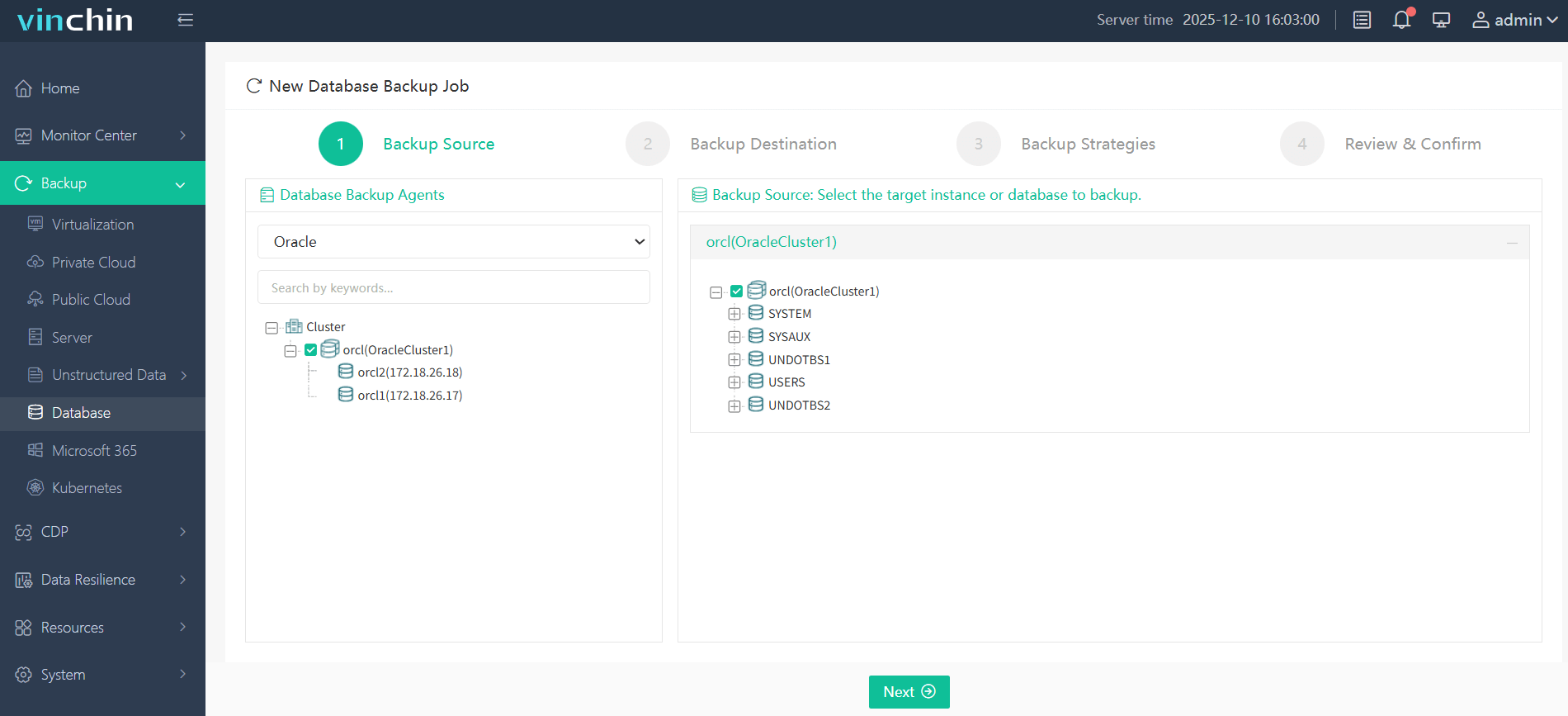
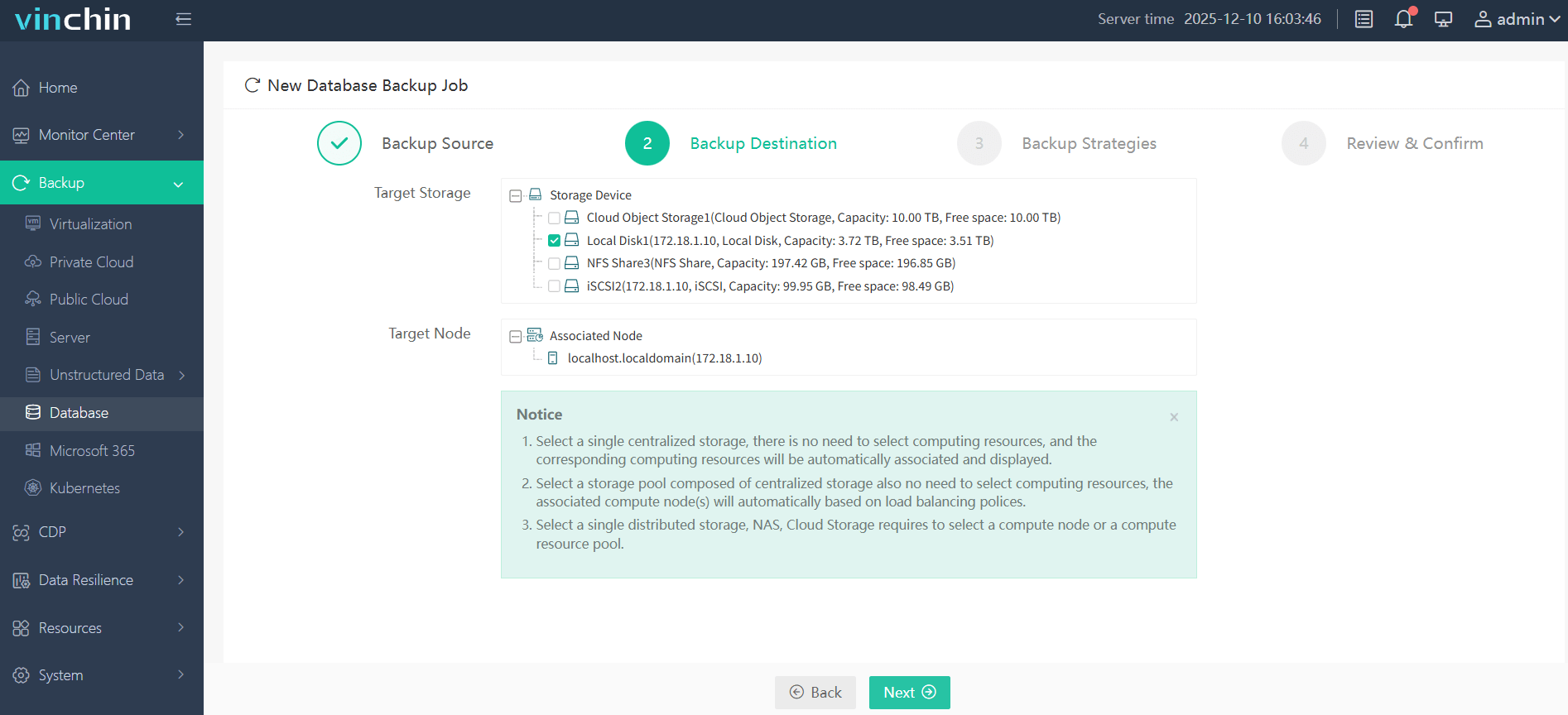
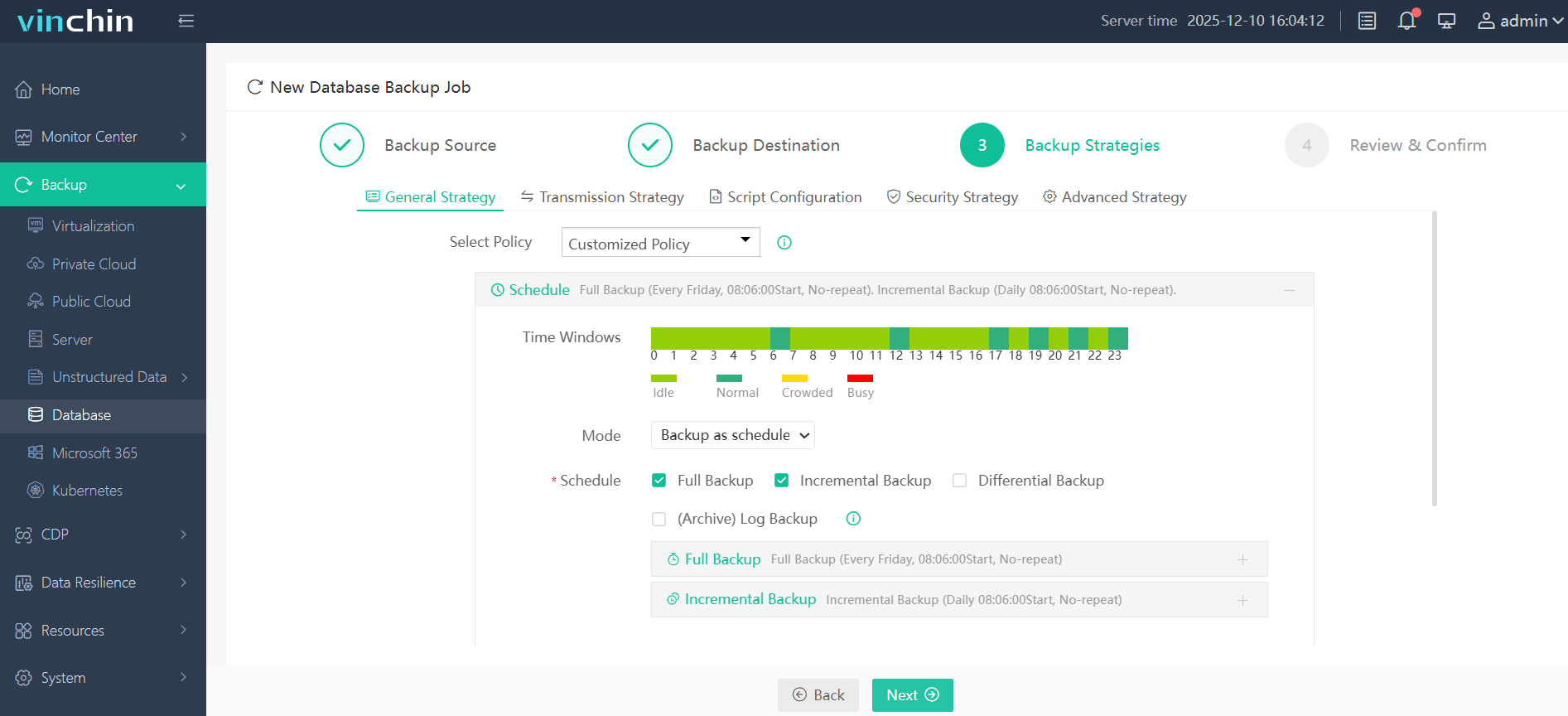
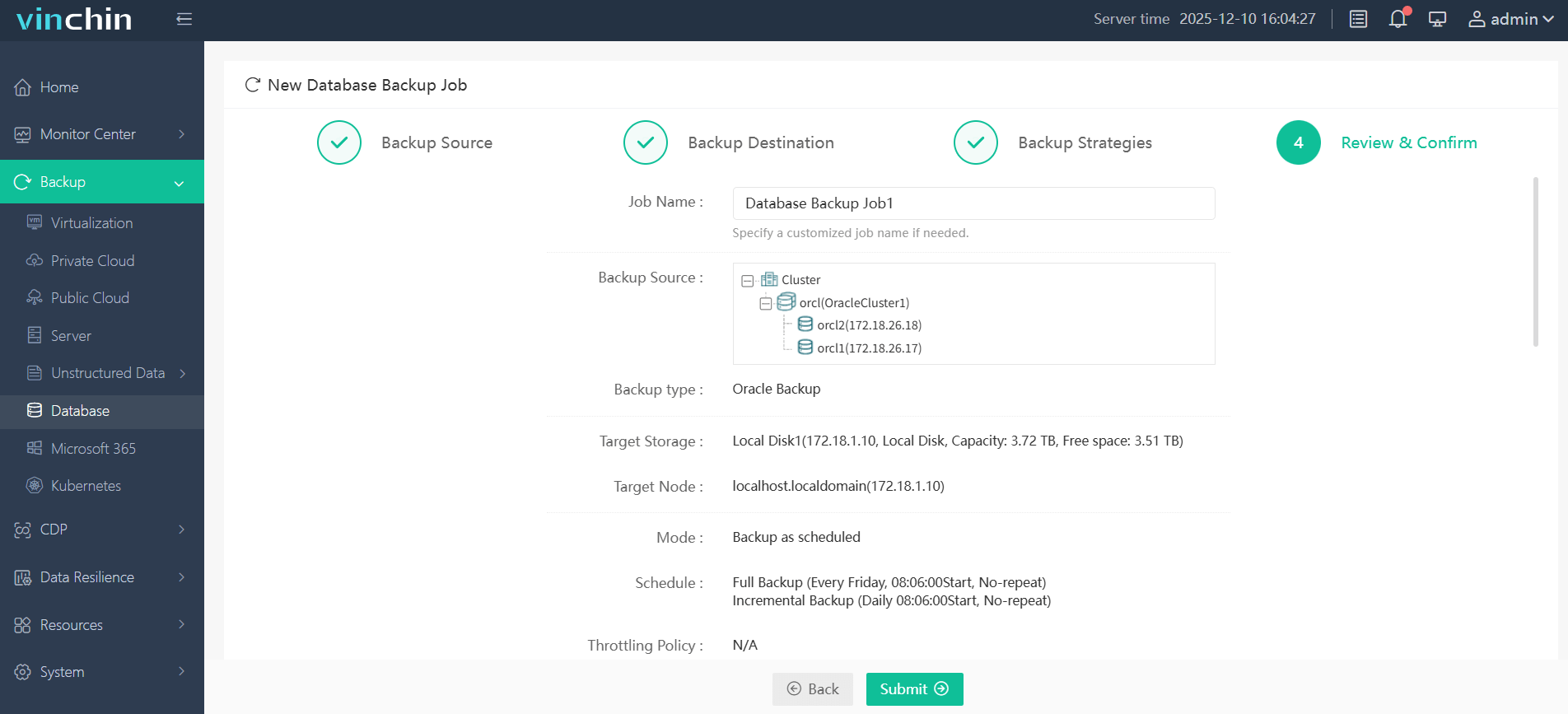
Backing up an Oracle database typically involves four straightforward steps:
Step 1. Select the Oracle database to back up
Step 2. Choose the backup storage
Step 3. Define the backup strategy
Step 4. Submit the job
Recognized globally with top ratings among enterprise users,Vinchin Backup & Recovery offers a fully featured free trial lasting 60 days.Download now and experience trusted data protection firsthand!
Oracle RMAN Restore Archivelog FAQs
Q1: Can I restore archivelogs if my primary server is down?
Yes—as long as valid backups exist—you can restore them on another server then register those logs with RMAN before applying them during recovery.
Q2: What if some archivelogs were deleted before being backed up?
You may not be able to recover fully unless another copy exists elsewhere; always check retention policies carefully.
Q3: How do I restore archivelogs to a different directory?
Use this command in an active session:RUN { SET ARCHIVELOG DESTINATION TO '/new/path' RESTORE ARCHIVELOG FROM SEQUENCE x UNTIL SEQUENCE y }
Conclusion
Mastering oracle rman restore archivelog procedures means more than following basic steps—it involves troubleshooting issues quickly while adopting proactive management habits.Vinchin streamlines these tasks further through its powerful yet easy-to-use platform.Try it free today—and keep downtime at bay!