Restoring or duplicating an Oracle database often means moving datafiles to new locations. The SET NEWNAME command in Oracle Recovery Manager (RMAN) is essential for redirecting datafiles during restore and duplication operations. If you need to migrate, clone, or recover a database to a different server or directory, understanding how to use SET NEWNAME is crucial. Let’s break down what it does, why it matters, and how you can use it safely and efficiently.
What Is Oracle RMAN Set Newname?
The SET NEWNAME command tells Oracle where to place restored datafiles or tempfiles during recovery tasks. By default, RMAN restores files to their original locations as recorded in the control file. But what if your new server has a different directory structure? Or you want to avoid overwriting existing files? That’s where SET NEWNAME comes in.
You can specify new paths for individual datafiles, entire tablespaces, or even the whole database at once. This command always appears inside a RUN block in your RMAN script. After restoring files using these new names, you must run the SWITCH DATAFILE ALL command so that Oracle updates its control file with the new locations . Without this switch step, Oracle still points to old file paths.
Why Use Set Newname in RMAN?
Changing datafile locations is common when restoring databases after hardware failures or migrating systems between servers with different storage layouts. Without SET NEWNAME, RMAN tries to restore files back into their original directories—which may not exist anymore or could cause conflicts by overwriting live production files.
Using SET NEWNAME gives you flexibility and safety:
You can restore onto servers with different directory structures.
You avoid overwriting important production files during testing.
You can direct output into ASM disk groups or Oracle Managed Files (OMF).
You prevent name collisions by using substitution variables like %b, %f, or %U.
This approach makes complex migrations safer and easier to manage.
How to Use Set Newname for Datafile Restore?
Restoring datafiles into new locations is something every DBA faces sooner or later—especially after storage changes or disaster recovery events.
Before running any commands below:
1. Make sure you have full backups available.
2. Confirm that your target directories exist on disk.
3. Check that you have enough free space at the destination.
If your database is not open (for example after media failure), follow these steps:
First shut down any running instance cleanly:
SHUTDOWN IMMEDIATE;
Then start up in mount mode:
STARTUP MOUNT;
Now connect with RMAN and run:
RUN {
  SET NEWNAME FOR DATAFILE 1 TO '/u02/oradata/system01.dbf';
  SET NEWNAME FOR DATAFILE 2 TO '/u02/oradata/sysaux01.dbf';
  RESTORE DATAFILE 1, 2;
  SWITCH DATAFILE ALL;
  RECOVER DATAFILE 1, 2;
  SQL 'ALTER DATABASE OPEN';
}
This process moves both SYSTEM and SYSAUX datafiles into /u02/oradata/. Notice how each step builds on the last: set new names first; restore; switch; recover; then open.
If your database is open but only one tablespace needs restoring (maybe due to corruption), take just that tablespace offline before proceeding:
RUN {
  SQL "ALTER TABLESPACE users OFFLINE IMMEDIATE";
  SET NEWNAME FOR DATAFILE '/u01/app/oracle/oradata/ORCL/users01.dbf' TO '/u02/users01.dbf';
  RESTORE TABLESPACE users;
  SWITCH DATAFILE ALL;
  RECOVER TABLESPACE users;
  SQL "ALTER TABLESPACE users ONLINE";
}
How to Use Set Newname for Database Duplication?
Duplicating an entire database onto another host—or even just another directory—is common when setting up test environments or performing migrations.
When duplicating databases using RMAN's DUPLICATE feature:
You can set unique names for each datafile,
For all files in a tablespace,
Or even globally across the whole database using substitution variables.
Here’s an example of duplicating while moving each major file group:
RUN {
  SET NEWNAME FOR DATAFILE 1 TO '/oradata1/system01.dbf';
  SET NEWNAME FOR DATAFILE 2 TO '/oradata2/sysaux01.dbf';
  SET NEWNAME FOR DATAFILE 3 TO '/oradata3/undotbs01.dbf';
  SET NEWNAME FOR DATAFILE 4 TO '/oradata4/users01.dbf';
  SET NEWNAME FOR DATAFILE 5 TO '/oradata5/users02.dbf';
  SET NEWNAME FOR TEMPFILE 1 TO '/oradatat/temp01.dbf';

   DUPLICATE TARGET DATABASE TO dupdb
    SKIP TABLESPACE tools
    LOGFILE
      GROUP 1 ('/duplogs/redo01a.log','/duplogs/redo01b.log') SIZE 4M REUSE,
      GROUP 2 ('/duplogs/redo02a.log','/duplogs/redo02b.log') SIZE 4M REUSE;
}
For larger environments—or when many files need renaming—you can use substitution variables like %b (base filename), %U (unique name), %N (tablespace name), etc., which automate naming:
RUN {
   SET NEWNAME FOR TABLESPACE users TO '/oradata%f/%b';
   SET NEWNAME FOR DATABASE TO '/oradata/%U';
   DUPLICATE TARGET DATABASE TO dupdb NOFILENAMECHECK;
}
Always ensure that your auxiliary instance—the destination—has its own password file created ahead of time (ORAPWD) and static listener entry configured so connections succeed.
If you're working with ASM disk groups or OMF storage management features enabled (DB_CREATE_FILE_DEST parameter set), let Oracle generate filenames automatically:
RUN {
   SET NEWNAME FOR TABLESPACE users TO NEW;
   DUPLICATE TARGET DATABASE TO dupdb;
}
Enterprise-Level Backup for Oracle Databases: Vinchin Backup & Recovery
After completing restoration or migration tasks for your Oracle environment, robust backup protection becomes essential for ongoing reliability and compliance needs. Vinchin Backup & Recovery is a professional enterprise-grade solution supporting today’s leading databases—including Oracle, MySQL, SQL Server, MariaDB, PostgreSQL, PostgresPro, and TiDB—with comprehensive coverage tailored especially for critical platforms like Oracle databases discussed here first due to relevance.
Key features such as incremental backup support for efficient change capture, batch database backup automation across multiple instances, multi-level data compression options for optimized storage usage, flexible retention policy including GFS strategies for regulatory compliance needs, and built-in recovery verification via SQL scripts combine seamlessly within Vinchin Backup & Recovery’s platform—delivering streamlined protection while minimizing operational risk and manual effort.
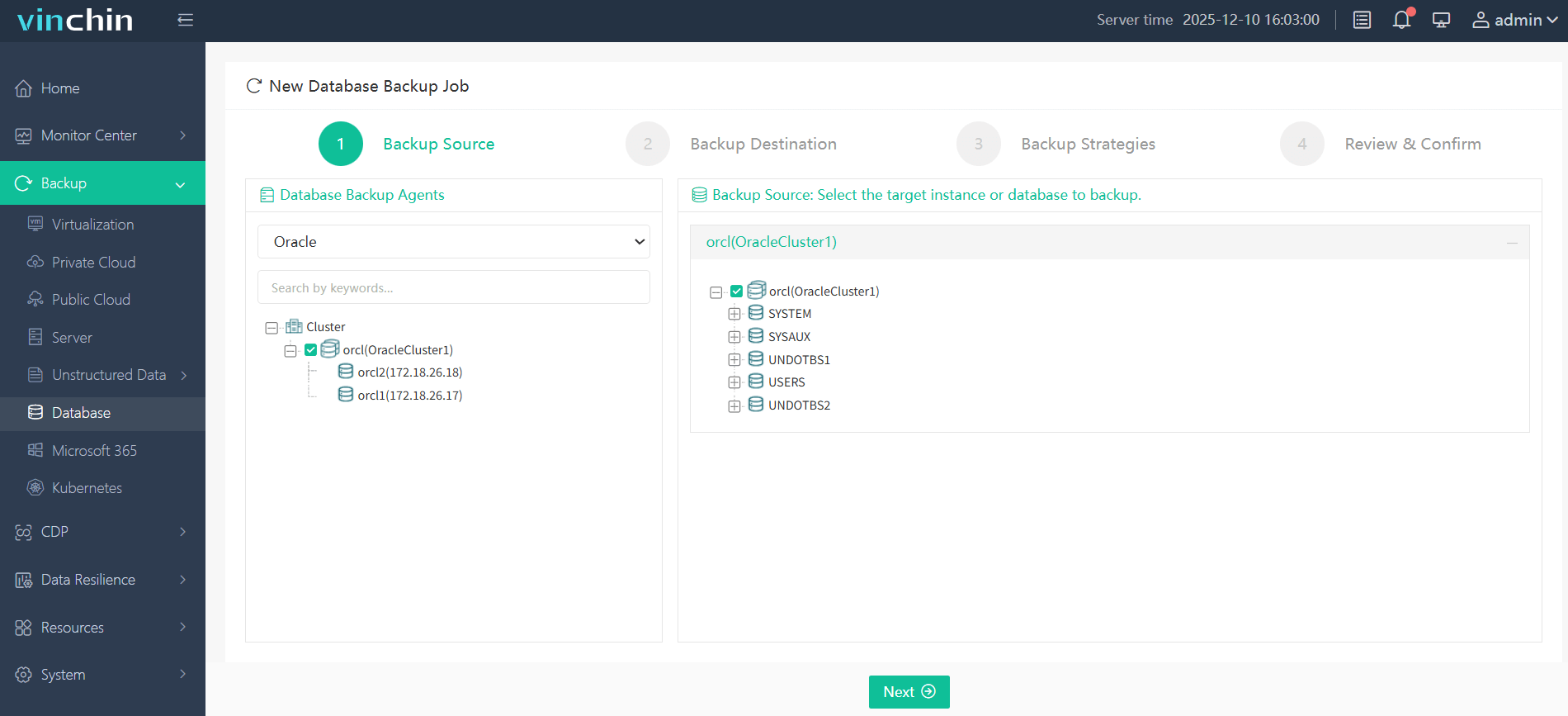
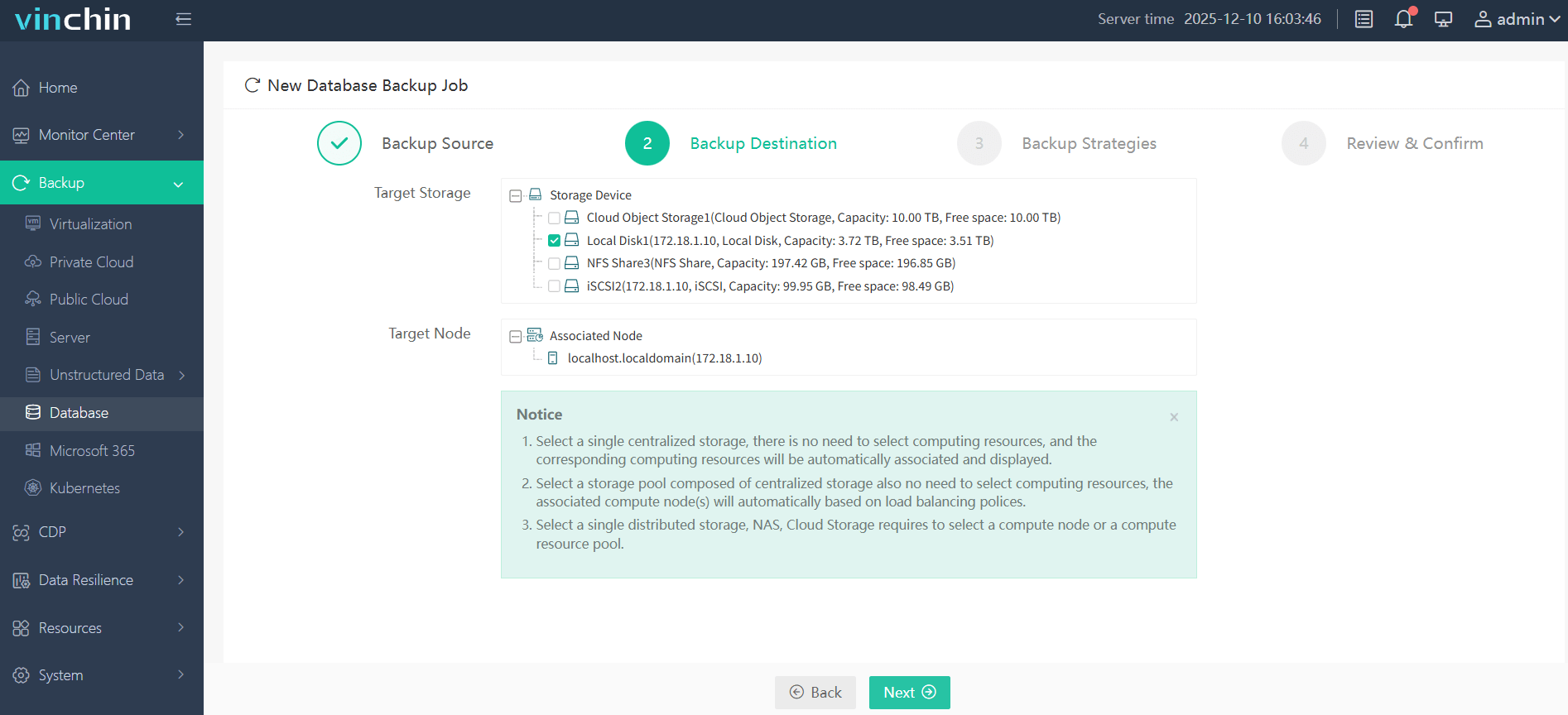
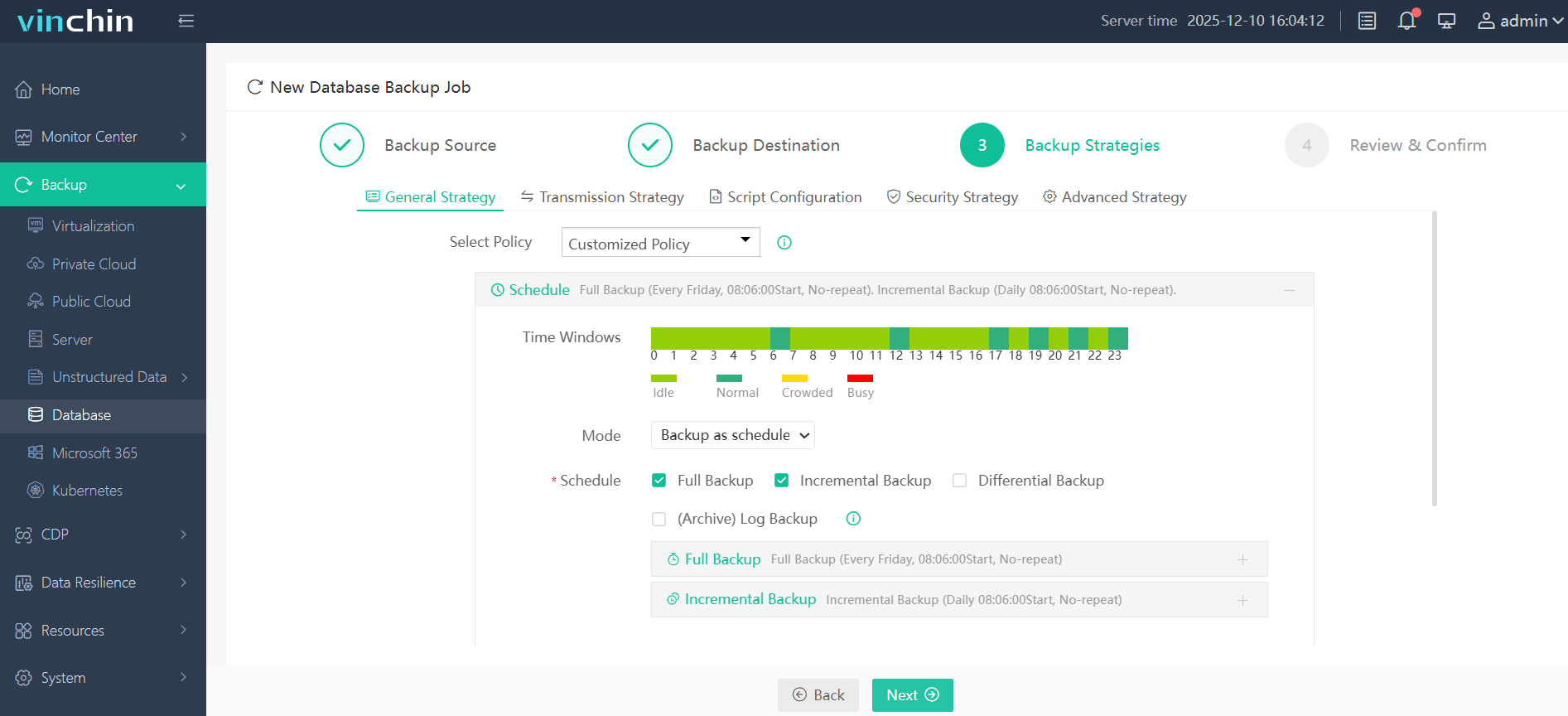
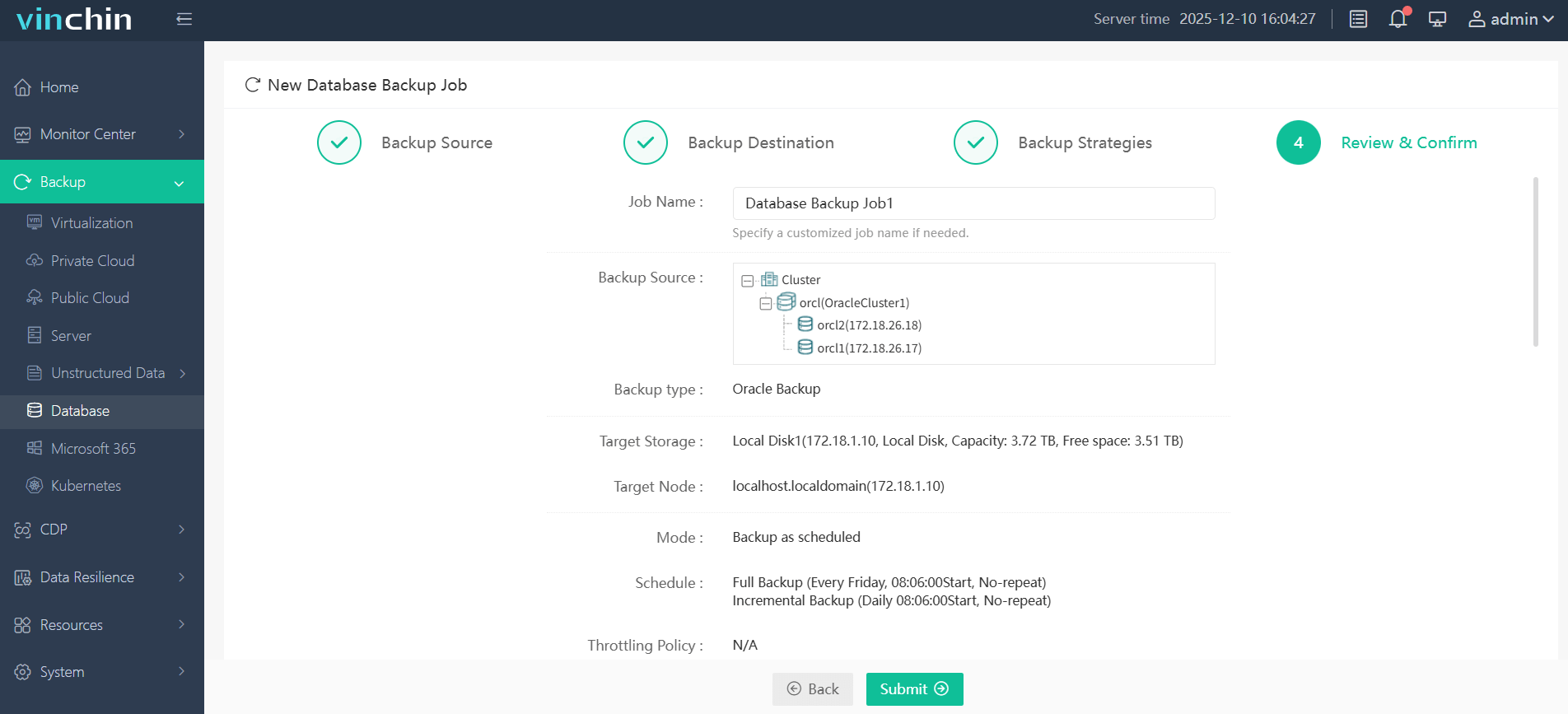
The intuitive web console makes safeguarding your Oracle environment straightforward:
Step 1. Select the Oracle database to back up
Step 2. Choose backup storage
Step 3. Define your backup strategy
Step 4. Submit the job
Vinchin Backup & Recovery enjoys global recognition among enterprise customers thanks to strong reliability ratings and proven results worldwide—start protecting your business-critical databases now with a risk-free 60-day full-featured trial by clicking download below.
Oracle RMAN Set Newname FAQs
Q1: Can I use SET NEWNAME together with a recovery catalog?
Yes—you should do this especially in complex setups since catalogs track historical changes across multiple restores/migrations easily.
Q2: What happens if my target directory doesn’t exist when running RESTORE?
RMAN throws an ORA‑27040 error (“File create error”); fix this by creating missing folders beforehand at OS level then rerun RESTORE/SWITCH commands again.
Q3: What's different between CONFIGURE AUXNAME versus SET NEWNAME?
CONFIGURE AUXNAME sets persistent alternate paths used mainly during duplication jobs while SET NEWNAME applies only within one RUN block session per operation.
Conclusion
The SET NEWNAME command gives DBAs precise control over where restored copies land during critical migration/recovery work—making complex projects safer every step along the way! Vinchin further streamlines protection/migration tasks through its intuitive interface plus advanced automation options—try it today risk-free!