Are you planning to back up your Oracle database directly to tape using RMAN? Many organizations still trust tape storage for long-term data retention and compliance needs. Oracle RMAN’s SBT_TAPE interface is the standard bridge between your database and tape libraries through a media management layer. This guide assumes you already have compatible tape hardware and media management software installed. Let’s explore what SBT_TAPE does, how it works under the hood, how to configure it step by step—and what to do when things go wrong.
What Is Oracle RMAN SBT_TAPE?
Oracle Recovery Manager (RMAN) uses channels to move backup data from your database to storage devices. When you allocate a channel of type SBT_TAPE, you direct RMAN to send backup data straight to a tape device using Oracle's System Backup to Tape (SBT) API. But what does that mean in practice?
The SBT API is an open specification created by Oracle. It defines how third-party vendors should build their own Media Management Library (MML)—a shared library file like libobk.so on Linux/UNIX or orasbt.dll on Windows—that plugs into Oracle’s backup system. This abstraction lets RMAN work with many different tape hardware vendors without changing its core logic.
When you use SBT_TAPE, backups stream directly from your Oracle server onto physical tapes—no need for disk staging unless required by policy or performance needs. This approach helps organizations meet strict regulatory requirements for offsite or air-gapped backups.
In logs or output, RMAN always displays this device type as SBT_TAPE, even though some documentation may refer simply to "SBT." The key point: when you see DEVICE TYPE 'sbt_tape', you're telling Oracle to hand off control of backup storage operations to whatever MML library has been installed.
Why does this matter? Because every vendor's MML implementation can be slightly different—even though they all conform to the same basic API specification set by Oracle. That means understanding both sides—the generic process and any vendor-specific details—is crucial for smooth operation.
How to Configure SBT_TAPE for Backups?
Setting up SBT_TAPE with Oracle RMAN involves several steps that must be done carefully. If any part fails—library path issues, permission problems, missing parameters—backups will not run correctly.
First, install your media management software on the same server as your Oracle database instance. This software provides a shared library file such as libobk.so (Linux/UNIX) or orasbt.dll (Windows). Place this file in the correct directory—usually $ORACLE_HOME/lib—or update your environment variable (LD_LIBRARY_PATH) so that this location is included in the search path.
Next comes channel allocation in RMAN scripts. You can manually allocate a channel inside a RUN block:
RUN {
  ALLOCATE CHANNEL ch1 DEVICE TYPE 'sbt_tape'
    PARMS 'SBT_LIBRARY=libobk.so, ENV=(BACKUP_HOST=10.10.123.10,BACKUP_SHARE=rman1,BACKUP_USERNAME=sampleuser,BACKUP_PASSWORD=123)';
  BACKUP AS BACKUPSET DATABASE FORMAT '%U_%p';
  RELEASE CHANNEL ch1;
}
Here’s what happens:
The command ALLOCATE CHANNEL tells RMAN which device type ('sbt_tape') and which shared library (libobk.so) it should use.
The ENV string passes extra settings such as hostnames or credentials needed by your specific media manager; these parameters are highly vendor-specific! Always check your vendor's documentation before copying example values.
BACKUP AS BACKUPSET creates one or more backup pieces directly on tape using those settings.
RELEASE CHANNEL frees resources after completion.
For better security practices, some media managers allow credential IDs instead of plain-text passwords:
RUN {
  ALLOCATE CHANNEL ch1 DEVICE TYPE 'sbt_tape'
    PARMS 'SBT_LIBRARY=libobk.so, ENV=(BACKUP_HOST=10.10.123.10,BACKUP_SHARE=rman1,BACKUP_CREDID=sampleuser)';
  BACKUP AS BACKUPSET DATABASE FORMAT '%U_%p';
  RELEASE CHANNEL ch1;
}
If you want every backup job—even ad hoc ones—to use tape automatically without specifying channel details each time:
CONFIGURE CHANNEL DEVICE TYPE 'sbt_tape'
  PARMS 'SBT_LIBRARY=libobk.so, ENV=(BACKUP_HOST=10.10.123.10,BACKUP_SHARE=rman1,BACKUP_CREDID=sampleuser)';
CONFIGURE DEFAULT DEVICE TYPE TO 'sbt_tape';
This sets up automatic channels so future jobs pick up these defaults unless overridden.
Before running production jobs—or even test backups—it’s vital to verify communication between Oracle and your MML using the utility called sbttest. Run it as the same OS user who owns your database processes (often oracle). For example:
export BACKUP_HOST=10.10.123.10
export BACKUP_SHARE=rman1
export BACKUP_USERNAME=sampleuser
export BACKUP_PASSWORD=123
sbttest test -libname libobk.so
A successful result means everything is wired up correctly; failures often indicate misconfigured paths or permissions.
How to Restore from SBT_TAPE Devices?
Restoring from tape with RMAN follows similar logic but requires careful attention during disaster recovery scenarios.
Begin by allocating one or more channels of type SBT_TAPE, matching (if possible) the number used during backup creation; parallelism speeds up restores when multiple drives are available:
RUN {
  ALLOCATE CHANNEL ch1 DEVICE TYPE 'sbt_tape'
    PARMS 'SBT_LIBRARY=libobk.so, ENV=(BACKUP_HOST=10.10.123.10,BACKUP_SHARE=rman1,BACKUP_CREDID=sampleuser)';
  RESTORE DATABASE;
  RECOVER DATABASE;
  RELEASE CHANNEL ch1;
}
Need just a control file? Use:
RUN {
  ALLOCATE CHANNEL ch1 DEVICE TYPE 'sbt_tape';
  RESTORE CONTROLFILE FROM 'backup_piece_name';
  RELEASE CHANNEL ch1;
}
You can restore archived logs or individual datafiles similarly—just adjust commands within the RUN block while keeping channel allocation consistent with previous backups.
Sometimes disaster strikes: suppose you've lost access not only to disk but also lost track of which tapes hold which backups because catalogs were wiped out? In such cases:
Allocate an appropriate maintenance channel pointing at your MML,
Use CATALOG DEVICE TYPE sbt_tape BACKUPPIECE '<piece_name>' command,
to re-register known pieces stored only on physical tapes.
Always confirm that both:
Your media manager service/daemon is running,
All required tape drives are online before starting restores!
If restores hang unexpectedly:
Check drive status first; then review both RMAN logs (alert.log) AND media manager logs—they often provide clues about missing tapes or communication errors between layers.
Why Use Tape Backups with Oracle RMAN?
Tape remains popular among enterprises needing cost-effective long-term archiving solutions—not just because it's cheap per terabyte but also because it's reliable over decades if handled properly! With SBT_TAPE integration you gain several advantages:
You meet compliance mandates requiring immutable copies stored offsite—for example financial regulations demanding seven-year retention windows—or GDPR-like rules mandating secure destruction after expiry dates pass;
You free expensive disk space quickly since infrequently accessed archives move offline;
Air-gapped storage protects against ransomware attacks targeting live infrastructure;
Retention lifecycles become predictable thanks to physical separation from production assets—which reduces accidental deletion risk compared with spinning disks alone;
Allocating multiple channels enables parallel streaming across available drives—but don’t overdo it! Optimal performance usually matches number-of-channels-to-number-of-drives ratio closely; too many channels can cause resource contention rather than speed gains.
Simplify Your Oracle Database Backups with Vinchin Backup & Recovery
For those seeking an easier way to protect critical databases beyond manual configuration, Vinchin Backup & Recovery delivers enterprise-grade protection supporting today’s mainstream platforms—including robust support for Oracle databases alongside MySQL, SQL Server, MariaDB, PostgreSQL, PostgresPro, and TiDB environments alike.
With Vinchin Backup & Recovery, users benefit from features such as batch database backup operations, flexible data retention policies including GFS retention strategies, cloud backup combined with seamless tape archiving capabilities, integrity checks ensuring recoverability of every backup set, and any-point-in-time recovery options tailored specifically for mission-critical workloads—all designed to automate schedules while maintaining compliance and operational resilience across diverse infrastructures.
The intuitive web console makes safeguarding an Oracle database straightforward:
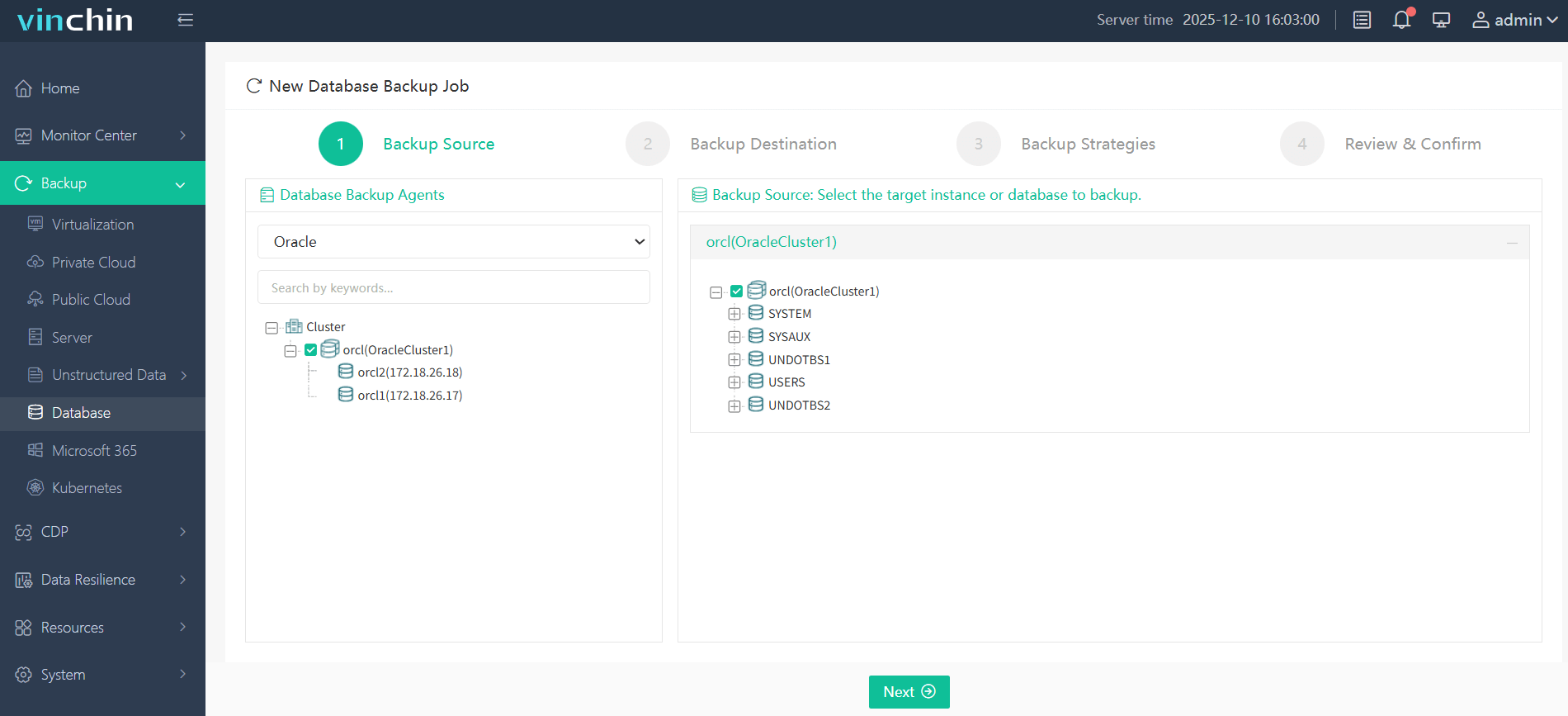
Step 1. Select the Oracle database to back up
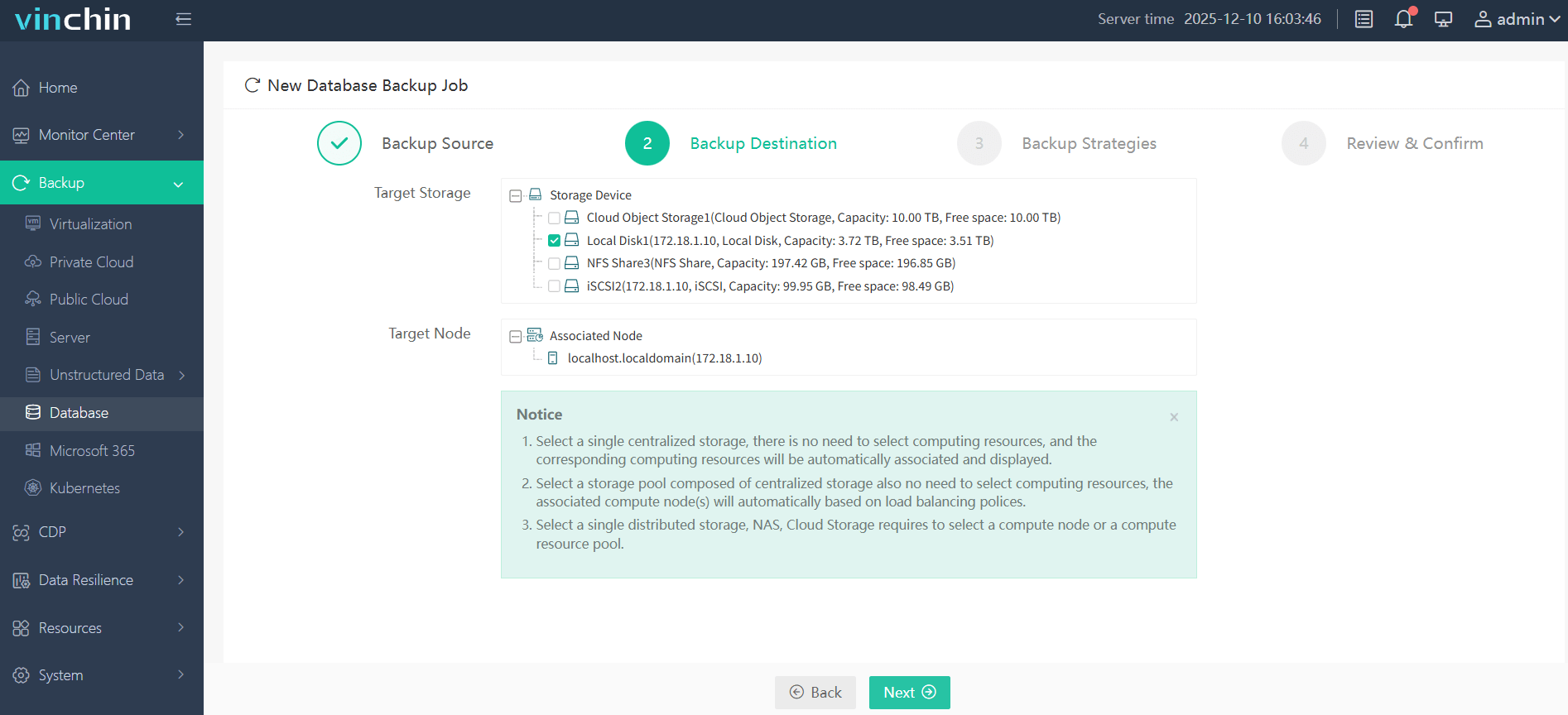
Step 2. Choose the backup storage
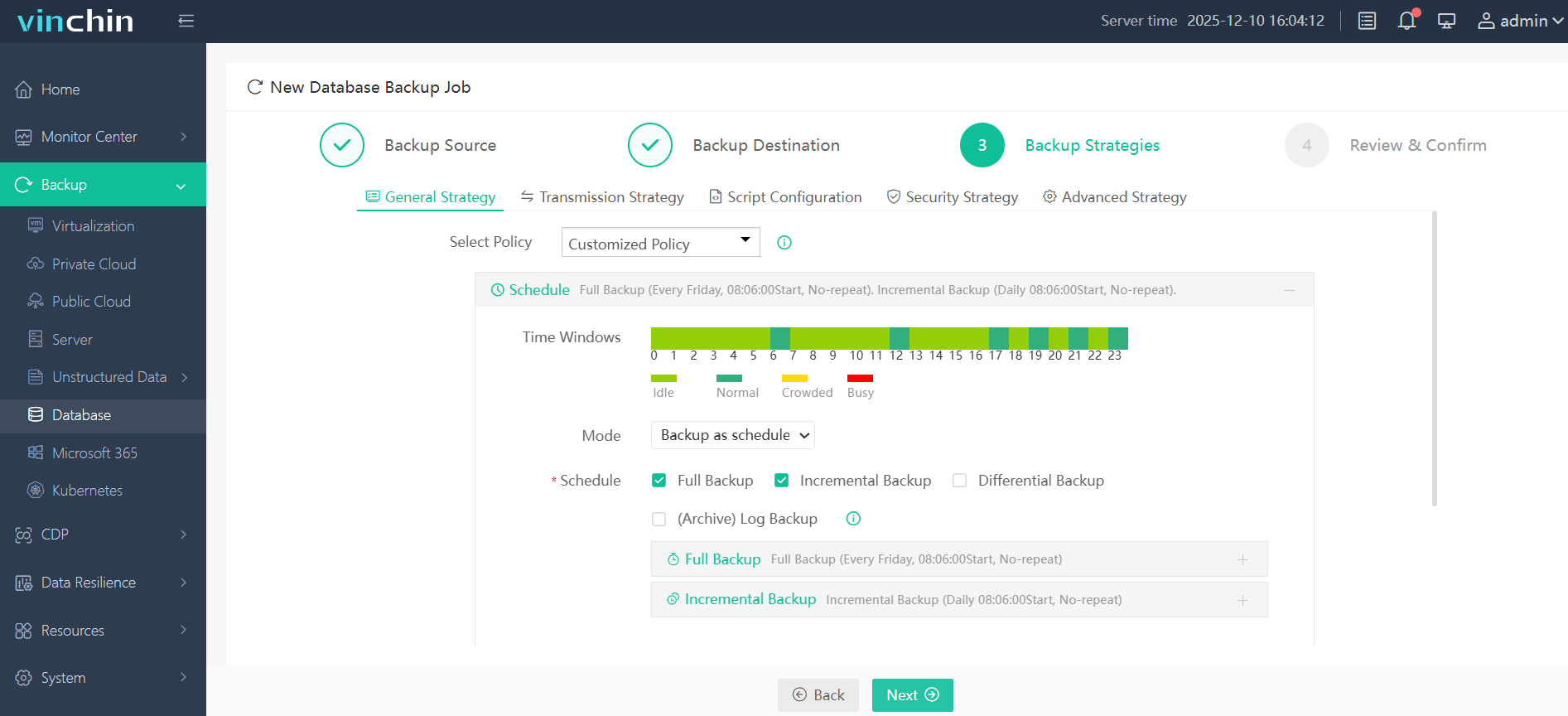
Step 3. Define the backup strategy
Step 4. Submit the job
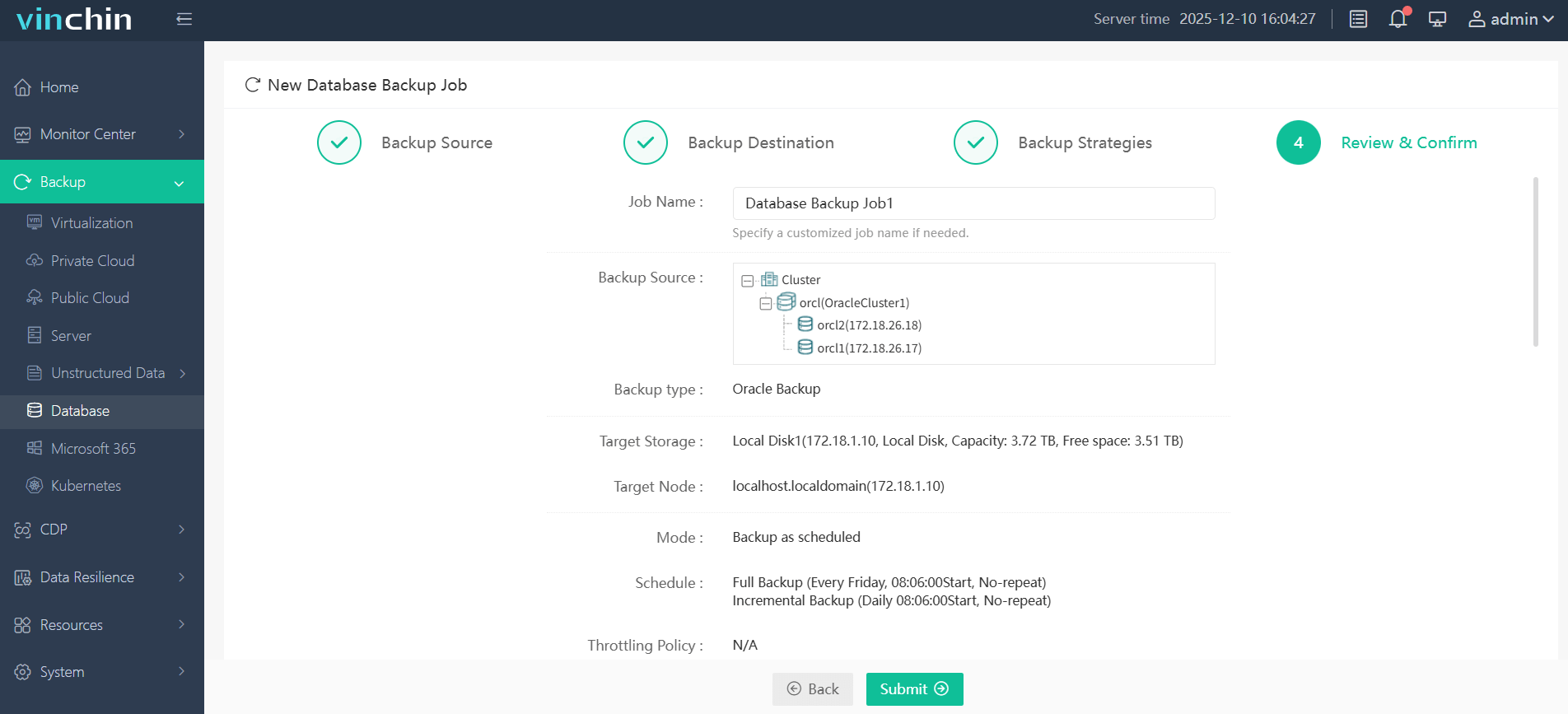
Recognized globally for reliability and trusted by thousands of organizations worldwide—with top industry ratings—Vinchin Backup & Recovery offers a fully featured free trial valid for 60 days; click download now and experience streamlined enterprise data protection firsthand.
Oracle RMAN SBT_TAPE FAQs
Q1: Can I combine disk-based channels with SBT_TAPE channels in one job?
No; run separate jobs because simultaneous disk-and-tape output isn't supported in one execution block.
Q2: How do I remove obsolete records from my catalog if my tapes/library no longer exist?
Allocate an SBT_TAPE maintenance channel using any valid library path then run DELETE FORCE OBSOLETE command in RMAN session.
Q3: What should I check first if my SBT_TAPE operation hangs unexpectedly?
Ensure all required drives are online then review both alert.log entries plus native logs generated by installed media management software.
Conclusion
Oracle RMAN SBT_TAPE gives enterprises robust options for backing up databases directly onto physical tapes—a proven method supporting compliance goals over long periods.Vinchin makes protecting critical databases easier than ever thanks to automation-ready workflows.Try Vinchin today with their free trial offer!