Restoring an Oracle database to a different location is a vital skill for any operations administrator or DBA. Whether you are migrating data centers, setting up test environments that mirror production systems without risk of data loss, or recovering from hardware failure or disaster events, Oracle Recovery Manager (RMAN) provides robust tools for these tasks. Understanding how to restore your Oracle database using RMAN ensures your organization’s data remains available and secure—even in challenging situations.
What Is Oracle RMAN Restore Database to Different Location?
When we talk about an "Oracle RMAN restore database to different location," we mean taking an existing backup—often from another server or directory—and restoring it on new hardware or into a fresh directory structure on the same server. This process is not just about copying files; it involves careful mapping of datafiles, control files, redo logs, and sometimes changing the database name itself so there are no conflicts with other instances.
RMAN simplifies this process by allowing administrators either to duplicate the entire database (creating an exact copy) or relocate individual files during restoration using its flexible commands. These features help ensure that even if your target environment has a completely different storage layout—or if you want extra safety by not overwriting your original system—you can still perform reliable restores.
This approach also helps maintain unique identifiers for each restored instance through DBID management and supports advanced scenarios like cross-platform migration when combined with other Oracle utilities.
Why Restore Database to Different Location?
There are many reasons organizations need to restore databases in new locations:
First is hardware migration—when upgrading servers or moving workloads between physical sites or cloud platforms. Second is creating development or testing environments that closely match production but do not interfere with live operations; this allows teams to validate upgrades or troubleshoot issues safely.
Another key reason is disaster recovery: If primary infrastructure fails due to hardware faults or cyberattacks such as ransomware incidents (as highlighted by NIST SP 800-184), restoring backups elsewhere ensures business continuity without risking further damage.
Additionally, restoring backups in alternate locations lets you verify your backup strategy works as intended—a critical part of regular compliance audits (see ISO/IEC 27031). It also enables safe sandboxing for patch testing before rolling out changes across all systems.
Having these options means you can respond quickly when things go wrong while minimizing downtime and risk—a core responsibility for every IT administrator.
How to Restore Database Using RMAN Duplicate Command?
The RMAN DUPLICATE command offers one of the most efficient ways to clone an Oracle database onto another server or into a separate directory structure on the same host. This method automates much of the complexity involved in recreating control files and resetting internal identifiers—making it ideal for migrations and rapid environment setup.
Prerequisites for RMAN Duplication
Before starting duplication:
Ensure both source and target servers run compatible versions of Oracle software—the target must be equal or newer than the source release.
Prepare access between servers: If duplicating from an active source database over network (using FROM ACTIVE DATABASE), configure TNS connectivity so both hosts can communicate securely via Oracle Net Services.
On the target server:
Create necessary directories where datafiles will reside
Place password file (orapw<SID>) in $ORACLE_HOME/dbs
Prepare an initialization parameter file (pfile), setting at least DB_NAME appropriately
Confirm sufficient disk space exists at destination paths
Transfer required backup pieces if duplicating from backup sets rather than live source
Allocate auxiliary channels if automatic channel allocation isn’t configured
Method 1: Active Duplication from Source Database
Active duplication copies directly from a running source instance:
1. Set environment variable ORACLE_SID on target server
2. Start instance in NOMOUNT mode:
SQL> STARTUP NOMOUNT PFILE='/path/to/init_targetdb.ora';
3. Connect via TNS alias:
rman TARGET sys@source_db AUXILIARY sys@target_db
4. Run DUPLICATE command:
   RUN {
     DUPLICATE TARGET DATABASE TO <new_dbname>
     FROM ACTIVE DATABASE
     NOFILENAMECHECK;
   }
This process automatically creates control files/datafiles/logs based on source configuration unless overridden by additional clauses like SET NEWNAME.
Method 2: Duplication Using Backup Sets
If working from previously created backups:
1–5: As above—prepare pfile/password file/directories/startup NOMOUNT/catalog backups if needed
6. Catalog backup pieces:
RMAN> CATALOG START WITH '/path/to/backup_directory';
7. Connect as follows:
rman AUXILIARY sys@target_db
8. Run DUPLICATE command pointing at backup location:
   RUN {
     DUPLICATE DATABASE TO <new_dbname>
     BACKUP LOCATION '/path/to/backup_directory'
     NOFILENAMECHECK;
   }
In both cases:
Use NOFILENAMECHECK only if you’re certain there’s no overlap between old/new file paths; otherwise omit it for safety.
To change logical names after duplication completes (for example if rebranding cloned environments), use Oracle’s NID utility:
$ nid TARGET=sys/password DBNAME=<unique_new_name>
After successful duplication:
1. Open new instance with RESETLOGS:
SQL> ALTER DATABASE OPEN RESETLOGS;
2. If patch levels differ between source/target binaries—even within same major release—run upgrade scripts such as catupgrd.sql, then recompile invalid objects using utlrp.sql.
Troubleshooting tip: If errors occur during cataloging backups (“backup piece not found”), double-check path syntax/case sensitivity on Unix-like systems.
How to Restore Database with File Relocation Options?
Sometimes your destination environment uses entirely different directory structures than your original system—for example when consolidating storage arrays during migration projects or splitting databases across multiple disks for performance tuning purposes.
In these cases you need granular control over where each datafile lands after restoration—which is where RMAN’s SET NEWNAME feature shines.
Begin by preparing directories/pfile/password file as described earlier; start instance in NOMOUNT mode:
SQL> STARTUP NOMOUNT PFILE='/path/to/edited_init_targetdb.ora';
Restore control file using correct DBID if necessary:
RMAN> RESTORE CONTROLFILE FROM '/path/to/controlfile_backup';
Mount database:
RMAN> ALTER DATABASE MOUNT;
Catalog all relevant backup pieces so they’re visible:
RMAN> CATALOG START WITH '/new_backup_location/';
Now determine which files require relocation by running REPORT SCHEMA:
RMAN> REPORT SCHEMA;
-- Output might show:
/old_path/SYSTEM01.DBF
/old_path/SYSAUX01.DBF
/old_path/UNDOTBS01.DBF
...
Use those results inside a RUN block specifying new destinations:
RUN {
  SET NEWNAME FOR DATAFILE 1 TO '/new_mount/SYSTEM01.DBF';
  SET NEWNAME FOR DATAFILE 2 TO '/new_mount/SYSAUX01.DBF';
  SET NEWNAME FOR DATAFILE 3 TO '/new_mount/UNDOTBS01.DBF';
  -- Repeat per output above
  RESTORE DATABASE;
  SWITCH DATAFILE ALL;
  RECOVER DATABASE;
}
After recovery completes but before opening RESETLOGS mode,
rename redo log members whose paths have changed since original configuration:
SQL> ALTER DATABASE RENAME FILE '/old_path/REDO01A.LOG' TO '/new_mount/REDO01A.LOG';
-- Repeat per V$LOGFILE contents
Open resetlogs mode once all mappings are confirmed correct:
RMAN> ALTER DATABASE OPEN RESETLOGS;
Finally update pfile/spfile entries reflecting any permanent path changes,
and consider running NID utility if renaming cloned instance is required,
then restart services accordingly.
This method gives full flexibility over storage layouts—a must-have tool during complex migrations involving SAN/NAS transitions,
or when optimizing disk usage across multiple devices.
Validating the Restore and Common Issues
After completing any restore operation—whether via DUPLICATE command or manual relocation—it’s essential to validate success before handing off systems back into production use.
Start by checking log file locations using dynamic view V$LOGFILE; confirm all members exist at their expected destinations,
and adjust mappings as needed using ALTER DATABASE RENAME FILE statements described earlier.
Next verify temporary tablespaces have valid tempfile assignments—they may not be included in some older-style backups/restores,
so recreate them manually if missing (ALTER TABLESPACE temp ADD TEMPFILE ...).
Check overall health by querying basic metadata:
SQL> SELECT NAME, DBID FROM V$DATABASE;
SQL> SELECT * FROM V$DATAFILE_HEADER WHERE ERROR IS NOT NULL;
SQL> SELECT COUNT(*) FROM DBA_OBJECTS WHERE STATUS='INVALID';
If invalid objects remain after upgrade/migration steps,
run $ORACLE_HOME/rdbms/admin/utlrp.sql script under SYSDBA privileges until count returns zero.
Compatibility reminder: Always ensure target binary version matches—or exceeds—the original system's patch level prior performing restores. Restoring onto older binaries risks corruption/incompatibility.
Common pitfalls include insufficient disk space at destination directories,
incorrect permissions preventing writes during recovery phase,
and mismatched character sets/national language settings between environments.
By following these validation steps systematically after every restore scenario,
you reduce risk of silent failures—and gain confidence that restored databases will function reliably under load.
Introducing Vinchin Backup & Recovery: Enterprise-Level Protection for Your Oracle Backups
For organizations seeking greater reliability and efficiency when protecting their Oracle databases throughout restore scenarios, Vinchin Backup & Recovery stands out as a professional enterprise-level solution supporting today’s mainstream platforms—including Oracle, MySQL, SQL Server, MariaDB, PostgreSQL, PostgresPro, and TiDB. With features such as batch database backup, cloud backup and tape archiving, storage protection against ransomware threats, integrity check capabilities, and robust data retention policies including GFS retention strategies, Vinchin Backup & Recovery streamlines compliance enforcement while ensuring operational resilience even during complex migrations or recoveries.
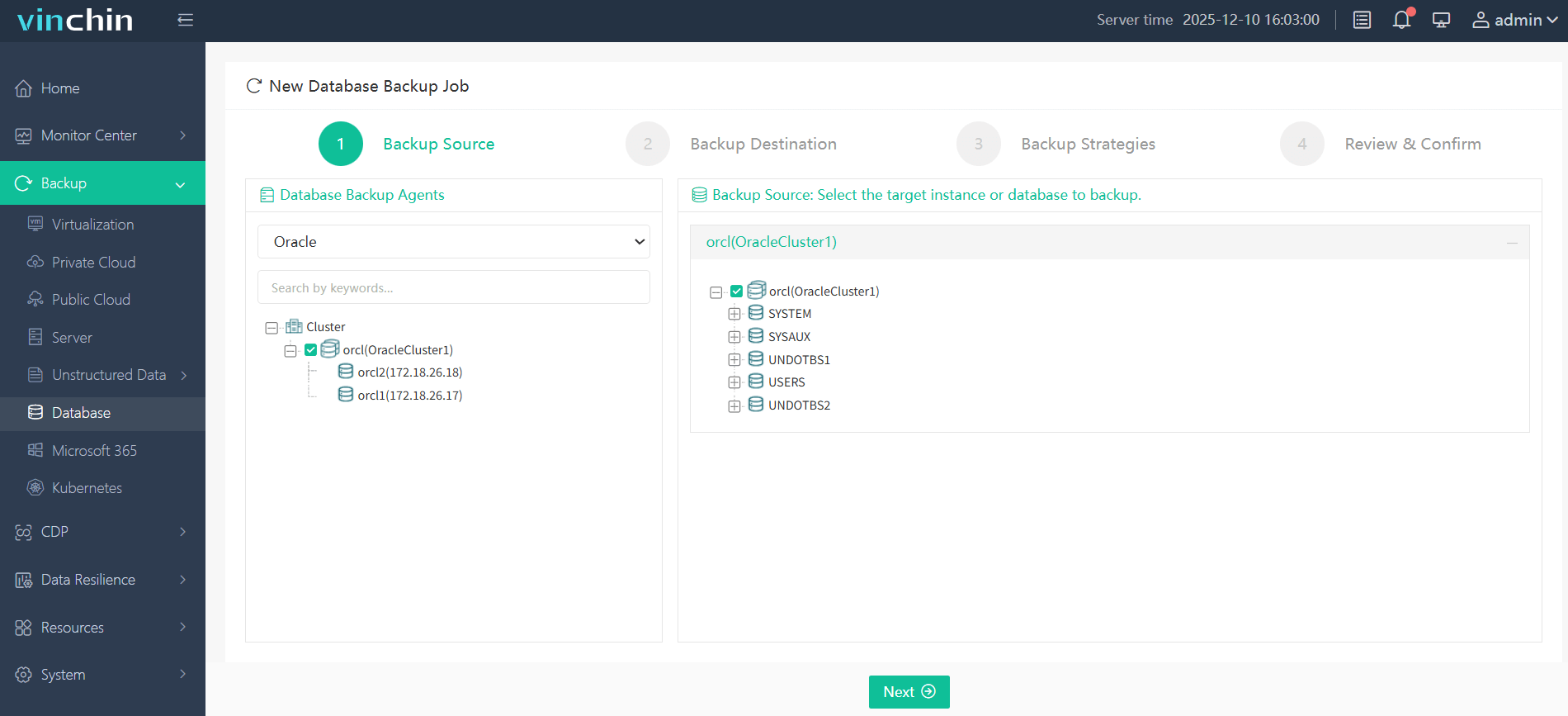
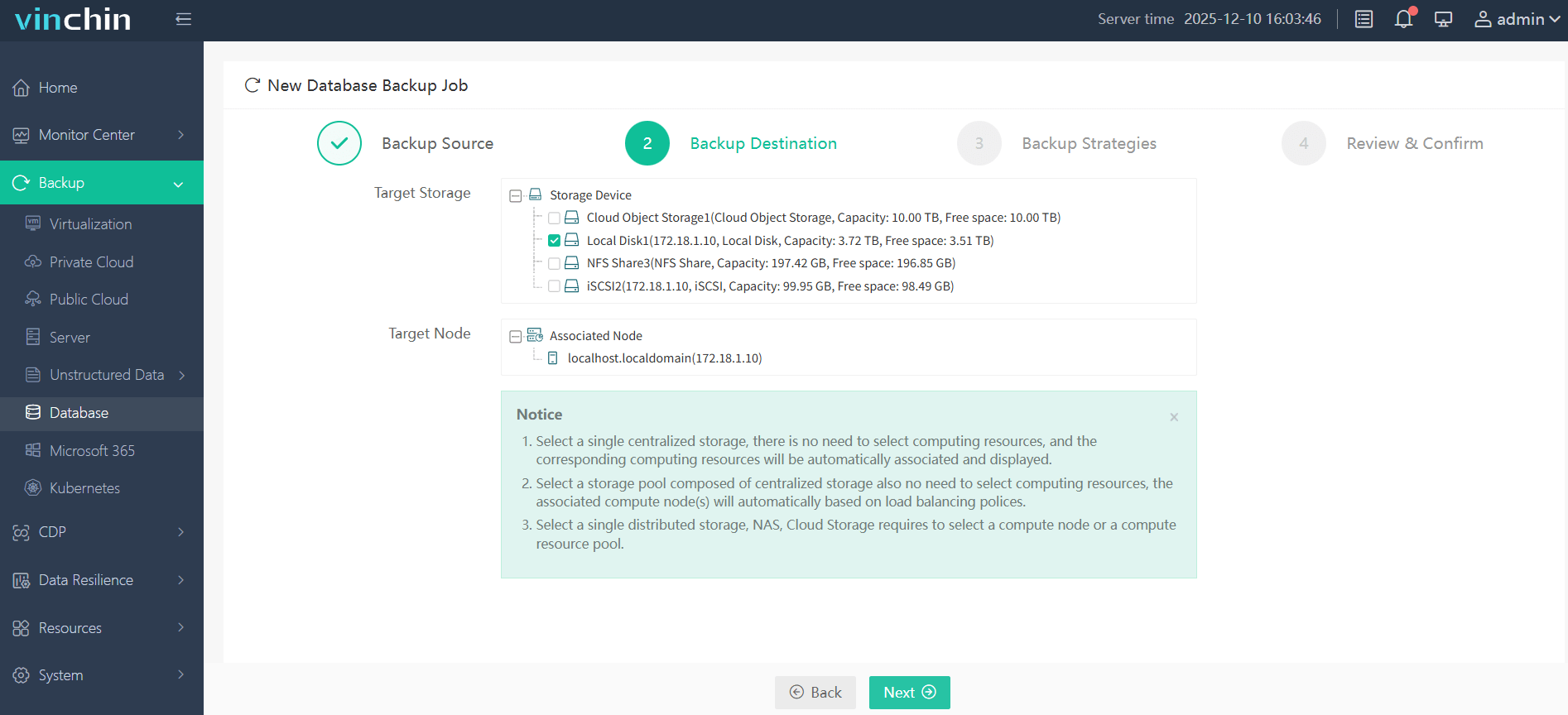
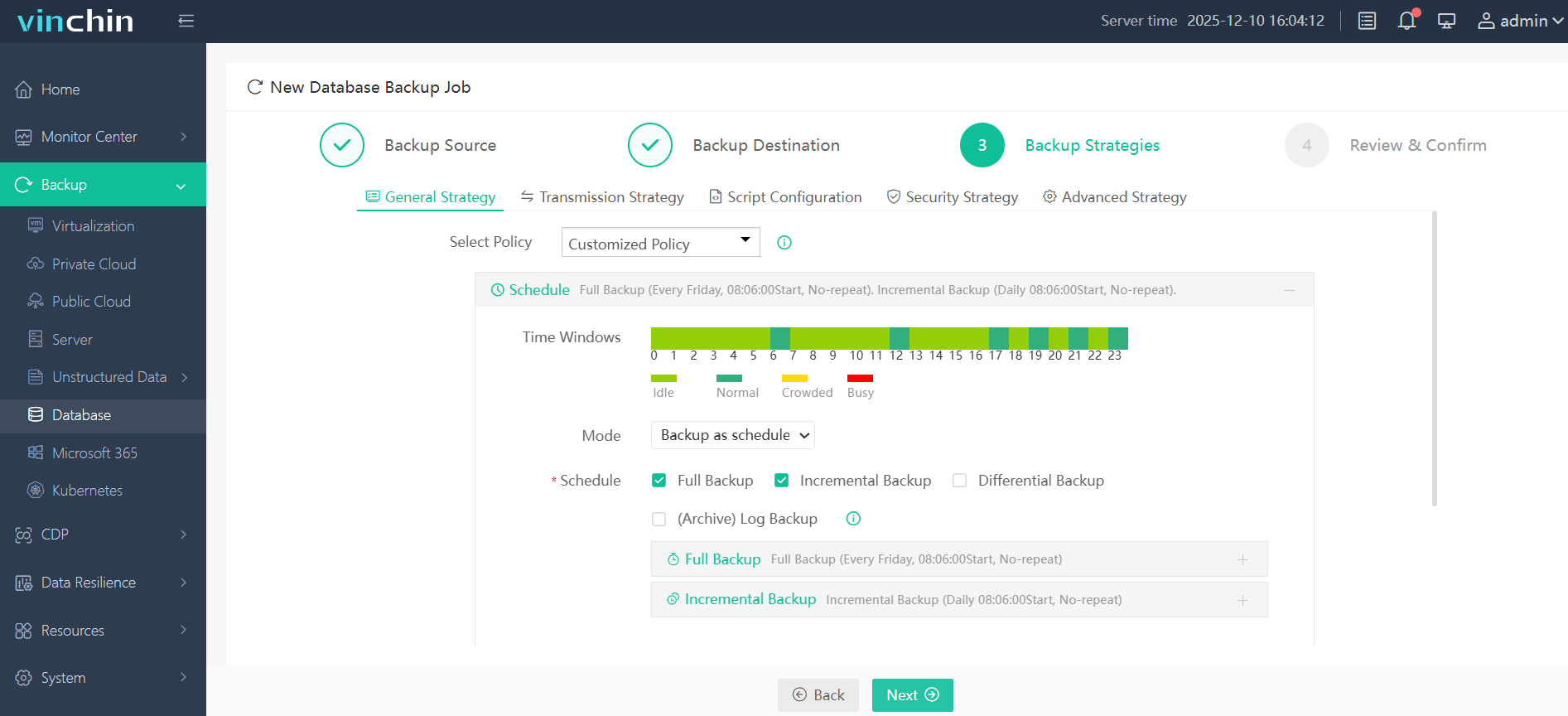
The intuitive web console makes safeguarding your Oracle environment straightforward:
The intuitive web console simplifies every step of protecting your Oracle workloads
Step 1. Select the Oracle database to back up
Step 2. Choose the backup storage
Step 3. Define the backup strategy
Step 4. Submit the job
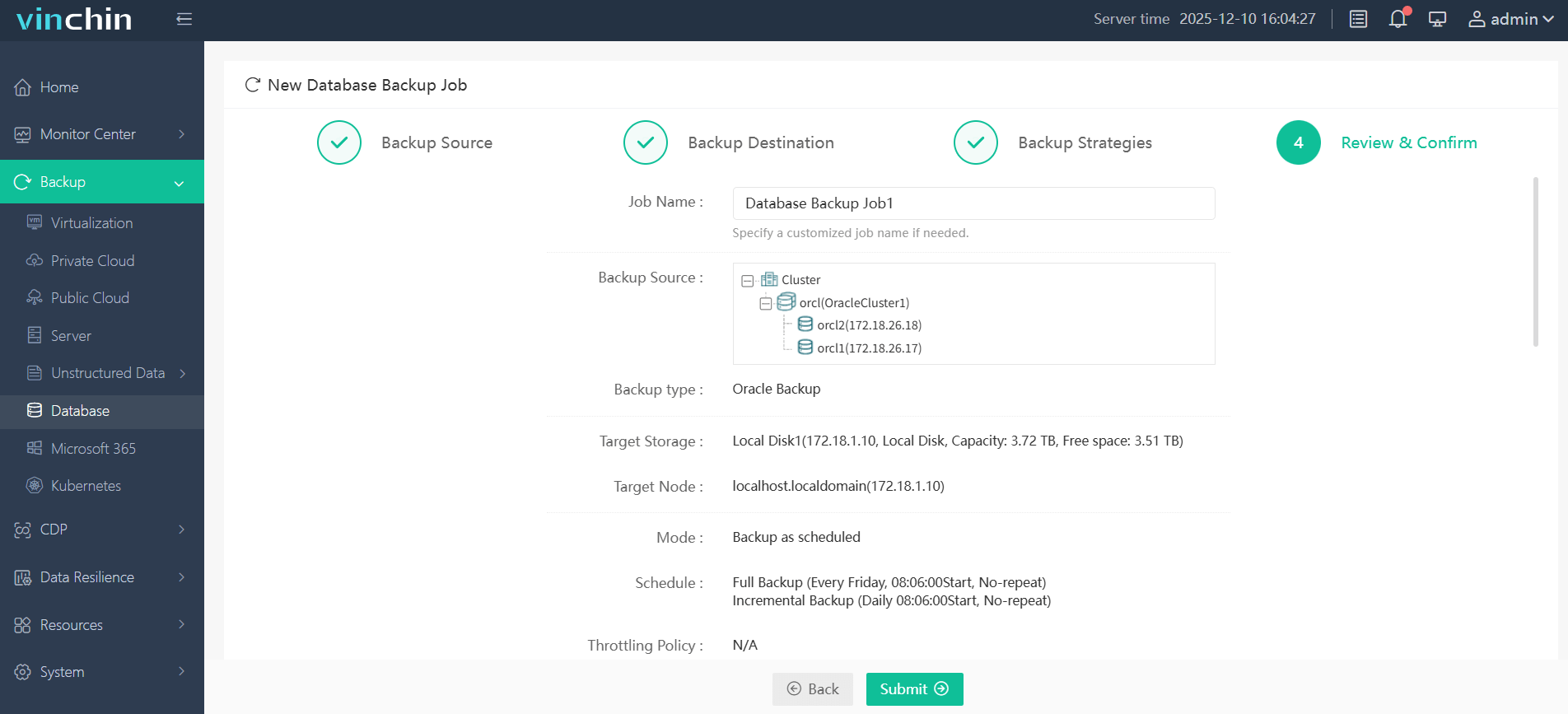
Vinchin Backup & Recovery enjoys global recognition among enterprises for its reliability and customer satisfaction ratings. Experience comprehensive protection yourself with a free full-featured trial lasting up to sixty days—just click download to get started!
Oracle RMAN Restore Database to Different Location FAQs
Q1: Can I restore my Oracle database onto hardware with very different directory structures?
A1: Yes; use SET NEWNAME commands within an RMAN RUN block during restoration so each datafile maps correctly onto its new path regardless of layout differences.
Q2: How does RMAN recognize relocated backups?
A2: Use CATALOG START WITH 'directory_path' in RMAN so it registers all available pieces stored outside default locations before beginning recovery operations.
Q3: What’s better—using DUPLICATE command versus manual RESTORE/RECOVER plus SET NEWNAME?
A3: The DUPLICATE command automates cloning entire databases efficiently while manual RESTORE plus SET NEWNAME gives granular control over individual file placement during complex migrations.
Conclusion
Restoring an Oracle database using RMAN—from simple clones via DUPLICATE command through advanced relocations—is essential knowledge for modern IT teams handling migrations or disaster recovery plans confidently every day worldwide.Vinchin makes protecting those critical assets even easier thanks its streamlined enterprise-grade solutions trusted globally today!