When disaster strikes and your Oracle database loses its control file, you need a clear, reliable way to restore it. The control file is essential for database operation, and Oracle's Recovery Manager (RMAN) provides robust tools to recover from such incidents. In this guide, we’ll walk through what a control file is, why you might need to restore it, and step-by-step instructions for restoring it from backup using RMAN. We’ll also show how Vinchin can help you protect your Oracle databases with ease.
What Is an Oracle Control File?
The Oracle control file is a small but critical binary file that tracks the physical structure of your database. It contains information such as the database name, tablespace names, datafile locations, redo log history, and checkpoint data. Without at least one valid control file available on disk, Oracle cannot mount or open the database.
Best practices recommend keeping multiple copies of the control file on different disks—a process called multiplexing—to reduce risk. However, even with redundancy in place, all copies can be lost due to hardware failure or accidental deletion. Corruption caused by storage issues or software bugs can also render every copy unusable at once. When this happens—and it does—you must restore from backup.
Why Restore Controlfile from Backup?
Losing all control files brings your Oracle database to an immediate halt because these files contain structural metadata required for startup. You may need to restore the control file if:
Every copy becomes corrupted or deleted after disk failure or human error.
You are migrating or cloning a database onto another server environment.
Disaster recovery leaves only backup files intact after primary storage loss.
Restoring from backup is often just the first step toward full recovery. Once restored successfully using RMAN commands—whether via autobackup or specific backup pieces—you must perform complete media recovery using RECOVER DATABASE before opening with RESETLOGS. This ensures that all changes since the last good control file are applied so that datafiles match up with redo logs.
Pre-Restore Checklist and Critical Information
Before starting any restoration process for an Oracle RMAN restore controlfile from backup scenario, preparation saves time—and headaches—later on.
First confirm that missing or corrupt control files are truly causing startup errors by running:
SQL> STARTUP MOUNT;
If you see messages like ORA-00205: error in identifying control file, then restoration is necessary.
Next verify access to recent backups containing valid copies of your control file. If you use an RMAN catalog repository:
RMAN> LIST BACKUP OF CONTROLFILE;
This command helps identify available backups quickly; otherwise check filesystem directories where backups reside.
Record your DBID, which uniquely identifies each database instance in RMAN operations—especially important if no recovery catalog exists. The DBID appears in alert logs or within default-named autobackup files (e.g., c-1234567890-timestamp). If both SPFILE (server parameter file) and all control files are lost—which sometimes happens—the SPFILE can usually be restored first:
RMAN> RESTORE SPFILE FROM AUTOBACKUP;
Having these details ready makes later steps smoother when every minute counts during downtime.
How to Restore Controlfile Using RMAN Autobackup?
Restoring via autobackup is often fastest because it works even without a recovery catalog—as long as autobackups were enabled beforehand using CONFIGURE CONTROLFILE AUTOBACKUP ON.
Start by ensuring you have:
At least one recent autobackup containing your lost control file
Your DBID handy if not using a catalog
Access rights to wherever those backups live
Here’s how experts approach this task:
1. Set environment variables and start RMAN
Set ORACLE_SID so commands target correct instance; then launch Recovery Manager:
   export ORACLE_SID=yourdb
   rman target /
2. Start instance in NOMOUNT mode
Since mounting requires reading a valid control file—which you don’t have yet—start only up through NOMOUNT:
SQL> STARTUP NOMOUNT;
3. Set DBID if required
If not connected through a recovery catalog—or if prompted by errors about unknown DBID—set it explicitly:
RMAN> SET DBID=your_dbid;
Often RMAN detects DBID automatically based on default-named autobackups; set manually only when necessary.
4. Restore the control file from autobackup
Use this command:
RMAN> RESTORE CONTROLFILE FROM AUTOBACKUP; -- Searches default format for latest backup
By default RMAN looks in standard locations based on configuration settings like CONTROL_FILE_RECORD_KEEP_TIME and naming patterns including %F.
5. Troubleshooting non-default locations
If backups aren’t found automatically—for example if stored outside usual paths—specify location directly:
    RMAN> SET CONTROLFILE AUTOBACKUP FORMAT FOR DEVICE TYPE DISK TO '/mnt/backups/%F';
    RMAN> RESTORE CONTROLFILE FROM AUTOBACKUP;
This tells Recovery Manager exactly where to search.
6. Mount database then recover
With new control files restored into place,
    RMAN> ALTER DATABASE MOUNT;
    RMAN> RECOVER DATABASE;
7. Open with RESETLOGS
Complete recovery by resetting log sequence numbers,
RMAN> ALTER DATABASE OPEN RESETLOGS;
If errors occur during any step—for example “cannot find autobackup”—double-check path settings above or confirm that correct DBID was used when setting up environment variables earlier.
How to Restore Controlfile from a Specific RMAN Backup?
Sometimes you know exactly which backup piece holds your desired copy—or perhaps autobackups weren’t enabled at all but manual ones exist instead.
Here’s how experienced admins handle this case:
1a. If unsure which piece contains needed data, register everything under known directories so they appear in listings:
RMAN> CATALOG START WITH '/backup_directory/';
RMAN> LIST BACKUP OF CONTROLFILE;
Identify correct filename/path before proceeding further.
1b. Once identified, start instance as before,
SQL> STARTUP NOMOUNT;
2. Restore directly using full path,
RMAN> RESTORE CONTROLFILE FROM '/path/to/controlfile_backup.bkp';
Replace /path/to/controlfile_backup.bkp with actual location found above.
3–4.Mount then recover,
RMAN> ALTER DATABASE MOUNT;
RMAN> RECOVER DATABASE;
5.Open after successful media application,
RMAN> ALTER DATABASE OPEN RESETLOGS;
This method gives maximum flexibility when dealing with custom retention policies or offsite archives—but always double-check integrity of chosen piece before proceeding!
Enterprise-Level Database Protection: Introducing Vinchin Backup & Recovery
Beyond native tools like RMAN, organizations require streamlined solutions for comprehensive protection across complex environments—including Oracle databases central to many enterprises’ operations today. Vinchin Backup & Recovery stands out as an enterprise-grade platform supporting most mainstream databases such as Oracle, MySQL, SQL Server, MariaDB, PostgreSQL, PostgresPro, and TiDB—with particular emphasis here on seamless integration for Oracle workloads.
Key features include incremental backup tailored for efficient storage usage (for supported platforms), batch scheduling capabilities across multiple instances simultaneously, robust GFS retention policies management ensuring compliance needs are met over timeframes both short-term and archival alike, cloud/tape archiving options for offsite safety assurance, and advanced ransomware-resistant storage protection mechanisms safeguarding critical assets against modern threats—all working together to maximize reliability while minimizing administrative overheads throughout daily operations cycles.
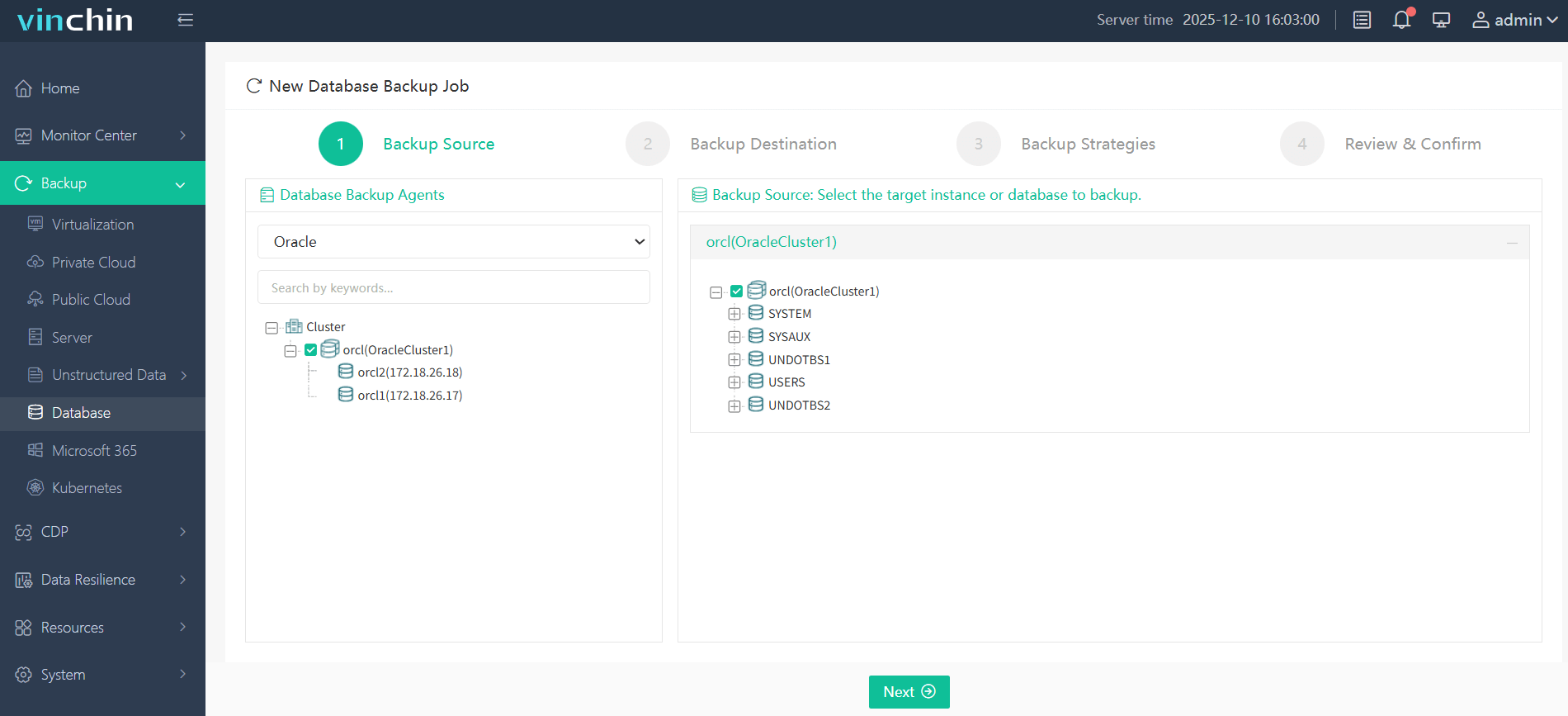
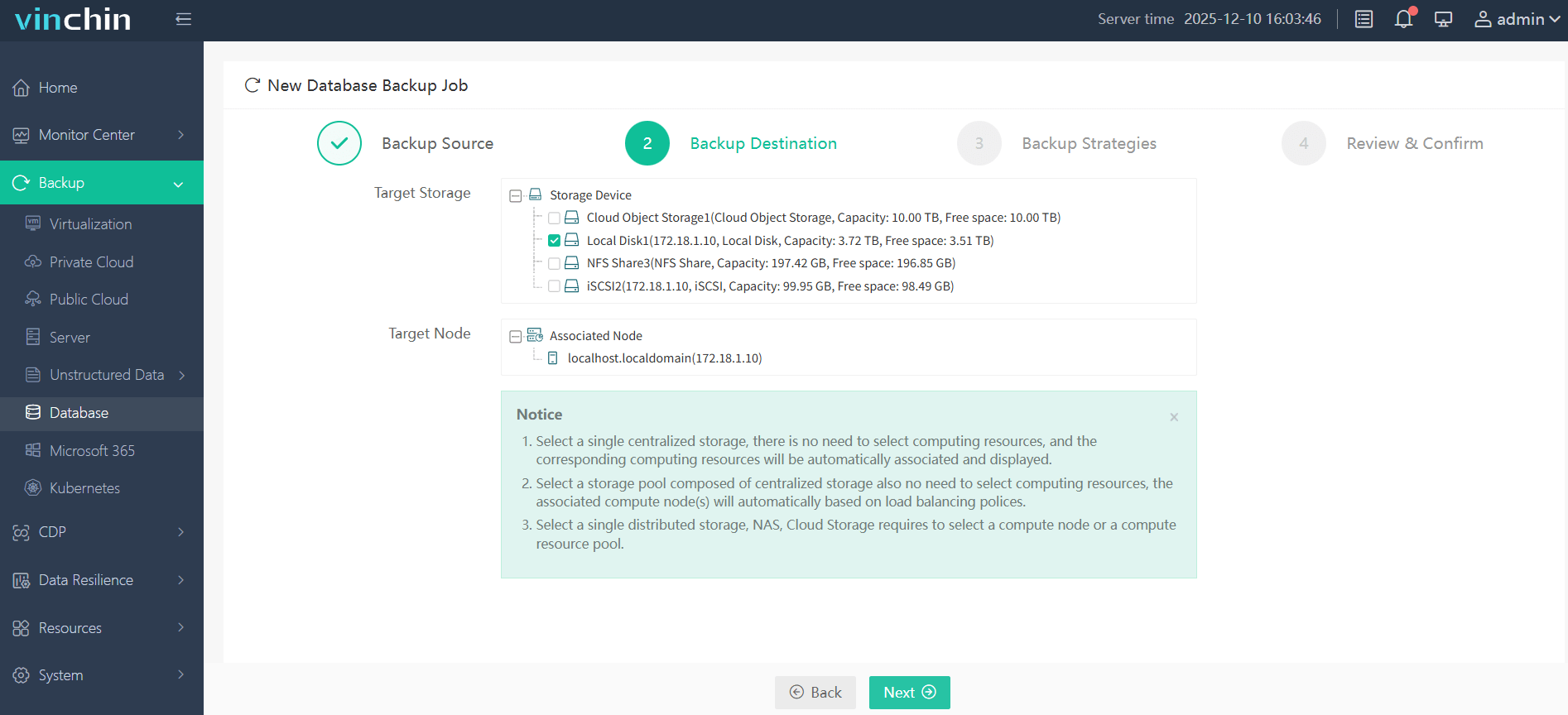
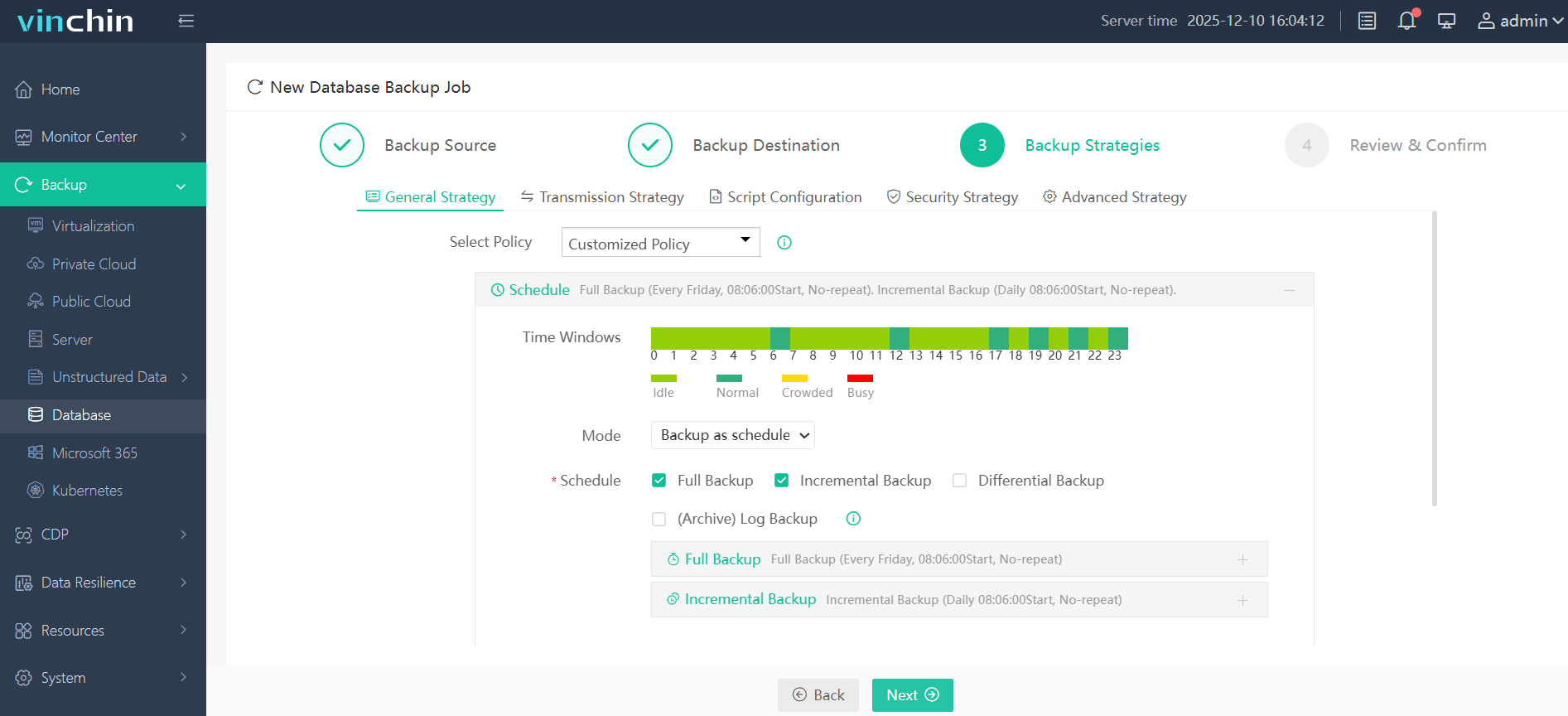
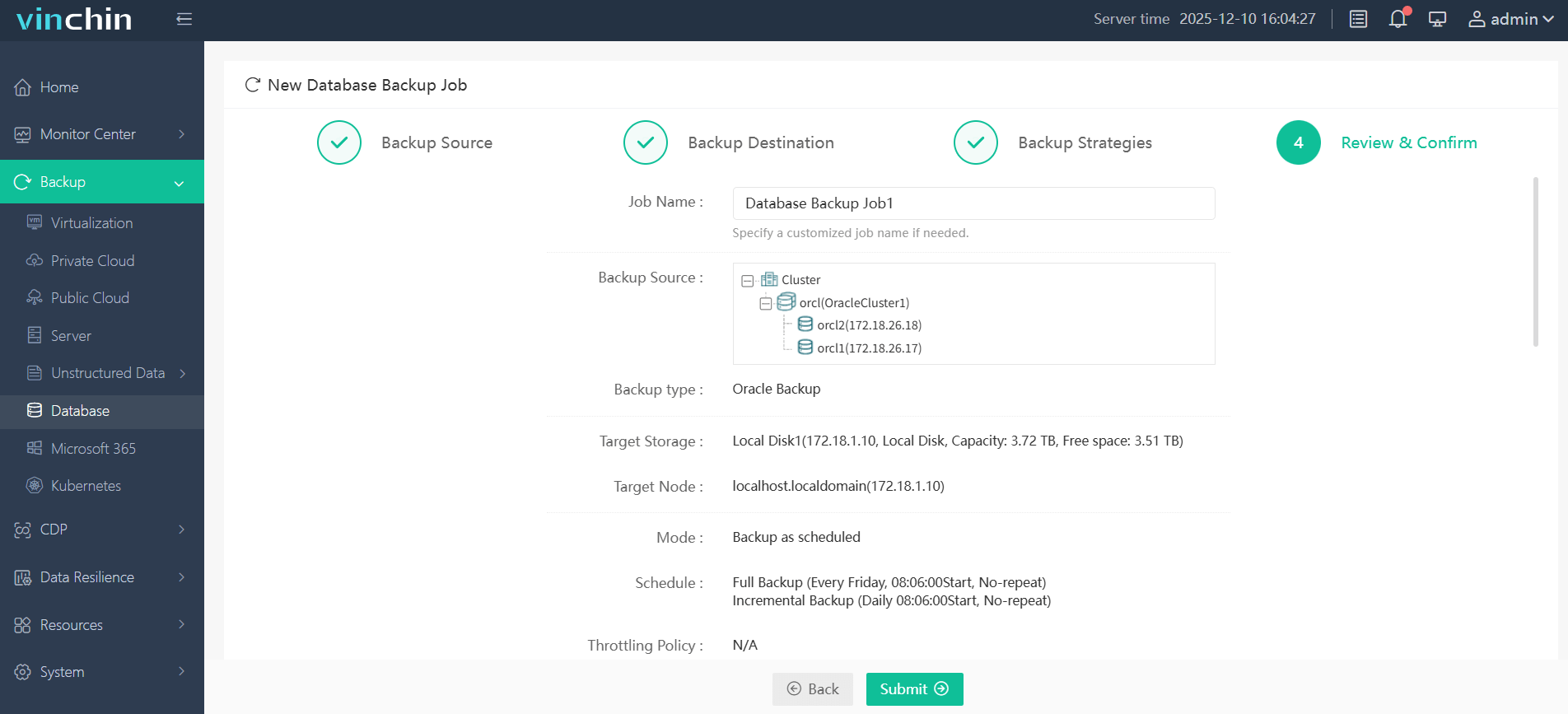
The intuitive web console makes safeguarding Oracle databases straightforward:
Step 1. Select the Oracle database to back up
Step 2. Choose the backup storage
Step 3. Define the backup strategy
Step 4. Submit the job
Recognized globally by thousands of customers and industry reviewers alike—with top ratings—Vinchin Backup & Recovery delivers trusted enterprise data protection software solutions worldwide! Experience every feature free for 60 days—click below to download now!
Oracle RMAN Restore Controlfile from Backup FAQs
Q1: What should I do if my DBID isn’t known during restore?
A1: Check alert logs or look inside default-named autobackup filenames; otherwise try listing registered pieces until found via CATALOG commands above.
Q2: Can I send restored control files somewhere other than their original directory?
A2: Yes—use RESTORE CONTROLFILE TO '/new/path/control01.ctl' FROM '/backup/file' within Recovery Manager prompt as needed for alternate destinations!
Q3: Is running RECOVER DATABASE always mandatory after restoring my lost controls?
A3: Yes—it synchronizes metadata between newly-restored controls/datafiles ensuring safe subsequent opening/resetting log sequences correctly every time!
Q4: What happens if I use an old copy of my backed-up controls?
A4: Only transactions up until that snapshot’s SCN can be recovered unless matching archived logs exist; incomplete restores risk permanent loss past oldest available archive point!
Conclusion
Restoring an Oracle control file from backup demands careful preparation but pays off by minimizing downtime risks dramatically over time! With both basic steps outlined here plus advanced troubleshooting tips included above anyone—from beginner through seasoned expert alike—is equipped succeed confidently next outage event arises unexpectedly… For even greater peace-of-mind consider automating entire process end-to-end leveraging Vinchin’s robust platform today!