Have you ever needed to restore your Oracle database to just before a critical error or accidental data loss? Oracle Recovery Manager (RMAN) offers point-in-time recovery. This feature lets you roll back your database to a specific moment. In this guide, we’ll explain what point-in-time recovery is, why it matters, how to use it with both RMAN command line and Oracle Enterprise Manager, and what steps you should take before and after recovery. We’ll also show how Vinchin can make Oracle database recovery even easier.
What Is RMAN Point-in-Time Recovery?
Point-in-time recovery (PITR) in Oracle allows you to restore your database as it existed at a specific time, SCN (System Change Number), or log sequence. This process is called “incomplete recovery” because you stop before applying all available changes. RMAN uses backups and archived redo logs to reconstruct the database up to—but not beyond—the target time you set. According to Oracle Docs, you can use the SET UNTIL TIME clause in RMAN for this purpose.
This capability is vital when an unwanted change occurs—like accidental data deletion or corruption—and you need your system restored just before that event.
Why Recover Database Until Time?
Why would someone recover their database until a specific time instead of restoring from the latest backup? The answer often involves logical errors: accidental table drops, bad updates, or user mistakes that happen after your last backup but before discovery. For example, if someone deletes important records at 10:00 a.m., but you notice only at noon, PITR lets you recover up to 9:59 a.m., minimizing data loss.
Point-in-time recovery also helps after failed upgrades or application bugs that corrupt data past a known good state. By recovering until just before trouble started, you avoid restoring everything from scratch. This approach saves time and preserves most recent valid work.
Pre-Recovery Checklist: Validating Your Position for Recovery
Before starting any point-in-time recovery operation with RMAN or OEM, preparation is essential. Skipping these checks can lead to incomplete restores or even further data loss.
First, confirm your database runs in ARCHIVELOG mode by running SELECT log_mode FROM v$database;. Only databases in ARCHIVELOG mode support PITR because they generate archived redo logs needed for precise restoration.
Next, identify your exact target time or SCN using views like V$LOG_HISTORY or V$FLASHBACK_TRANSACTION_QUERY. Check transaction timestamps carefully—guessing can result in missing key changes.
Then verify that all required backups are present by running LIST BACKUP OF DATABASE; within RMAN. Also check archived log availability with LIST ARCHIVELOG ALL;. An unbroken chain of logs from your backup up through the desired point is mandatory; missing logs mean incomplete recovery.
Finally, always take a fresh backup of your current (even damaged) state before starting PITR. This gives you an emergency fallback if something goes wrong during restoration—a step too many administrators skip under pressure.
Method 1: Using RMAN Command Line
The RMAN command line provides direct control over point-in-time recovery operations. It’s favored by experienced administrators who want precision and transparency during critical tasks.
Begin by connecting to RMAN on your server:
rman target /
Make sure no users are connected except yourself as DBA. Shut down the instance cleanly:
SHUTDOWN IMMEDIATE;
Start up in mount mode so that files are accessible but not open for general use:
STARTUP MOUNT;
Now set your target recovery point using SET UNTIL TIME. The date format must match your environment’s settings—using TO_DATE ensures accuracy:
RUN {
  SET UNTIL TIME "TO_DATE('2024-06-23 10:30:00', 'YYYY-MM-DD HH24:MI:SS')";
  RESTORE DATABASE;
  RECOVER DATABASE;
  ALTER DATABASE OPEN RESETLOGS;
}
Let’s break down each step clearly:
1. Connect as DBA:
2. Shutdown and mount:
3. Set target time:
4. Restore & recover:
5. Open with RESETLOGS:
RMAN selects correct backups plus archived redo logs needed up until—but not including—the specified time stamp or SCN number.
If unsure about which timestamp matches business needs best—or if multiple events happened close together—query V$LOG_HISTORY for recent activity times or use alert logs for reference points.
A word of caution here: If any required archived redo logs are missing between backup start and chosen end time, PITR cannot complete fully! Always double-check log presence beforehand using commands like:
LIST ARCHIVELOG ALL;
Missing logs mean partial restores at best—never risk guessing during production emergencies!
Method 2: Using Oracle Enterprise Manager
Prefer working through graphical interfaces? Oracle Enterprise Manager (OEM) offers guided wizards for performing point-in-time recoveries without memorizing command syntax.
After logging into OEM Console as administrator:
1. Navigate via Availability > Backup & Recovery > Perform Recovery on your chosen database home page.
2. Select Database Point-in-Time Recovery when prompted for type of restore operation.
3. Enter either exact timestamp (YYYY-MM-DD HH24:MI) or SCN value matching when things were still correct.
4. OEM checks available backups automatically—if anything’s missing (like required archive logs), it warns immediately so issues can be fixed upfront.
5. Review summary screen showing which files will be restored/recovered based on inputs provided.
6. Confirm plan then let OEM execute all necessary steps—including mounting/shutting down/opening/resetting logs—as needed behind scenes.
7. Once finished successfully OEM prompts final action—to open recovered instance using RESETLOGS, completing process safely under supervision rather than manual scripting alone.
One big advantage here? OEM generates equivalent underlying RMAN scripts itself—which means learning both methods pays off long-term! If GUI fails due network hiccups or browser crashes mid-process knowing CLI basics lets admins finish job confidently anyway.
Remember interface layouts may differ slightly between versions (12c vs 13c etc.), but core workflow remains consistent across releases according official documentation.
Post-Recovery Actions and Verification
Completing PITR does not end with opening the database—you must validate results thoroughly afterward!
First priority after issuing ALTER DATABASE OPEN RESETLOGS is taking an immediate full backup of new incarnation created post-recovery since older backups become invalidated once resetlogs completes per Oracle Best Practices.
Check application functionality closely—is all expected data present? Are business processes running normally again? Compare against pre-error reports if possible so nothing gets overlooked amid relief of successful restore!
If using Data Guard standby systems note those require full re-instantiation following any resetlogs event—they cannot simply catch up automatically anymore due changed incarnation numbers now tracked internally by controlfiles/logs themselves.
Document everything done—including times chosen/logs applied/errors encountered—for future audits/troubleshooting sessions later on.
Introducing Vinchin Backup & Recovery for Oracle Database Protection
For organizations seeking greater efficiency and reliability beyond native tools like RMAN and OEM, Vinchin Backup & Recovery delivers robust enterprise-level protection tailored for today’s mainstream databases—including Oracle first and foremost alongside MySQL, SQL Server, MariaDB, PostgreSQL, PostgresPro, and TiDB environments.
Key features such as batch database backup management, incremental backup capabilities (for supported platforms), advanced source-side compression (on select databases), integrity check routines, and any-point-in-time recovery empower IT teams to automate complex tasks while ensuring rapid disaster response with minimal downtime—all within unified policies across diverse systems.
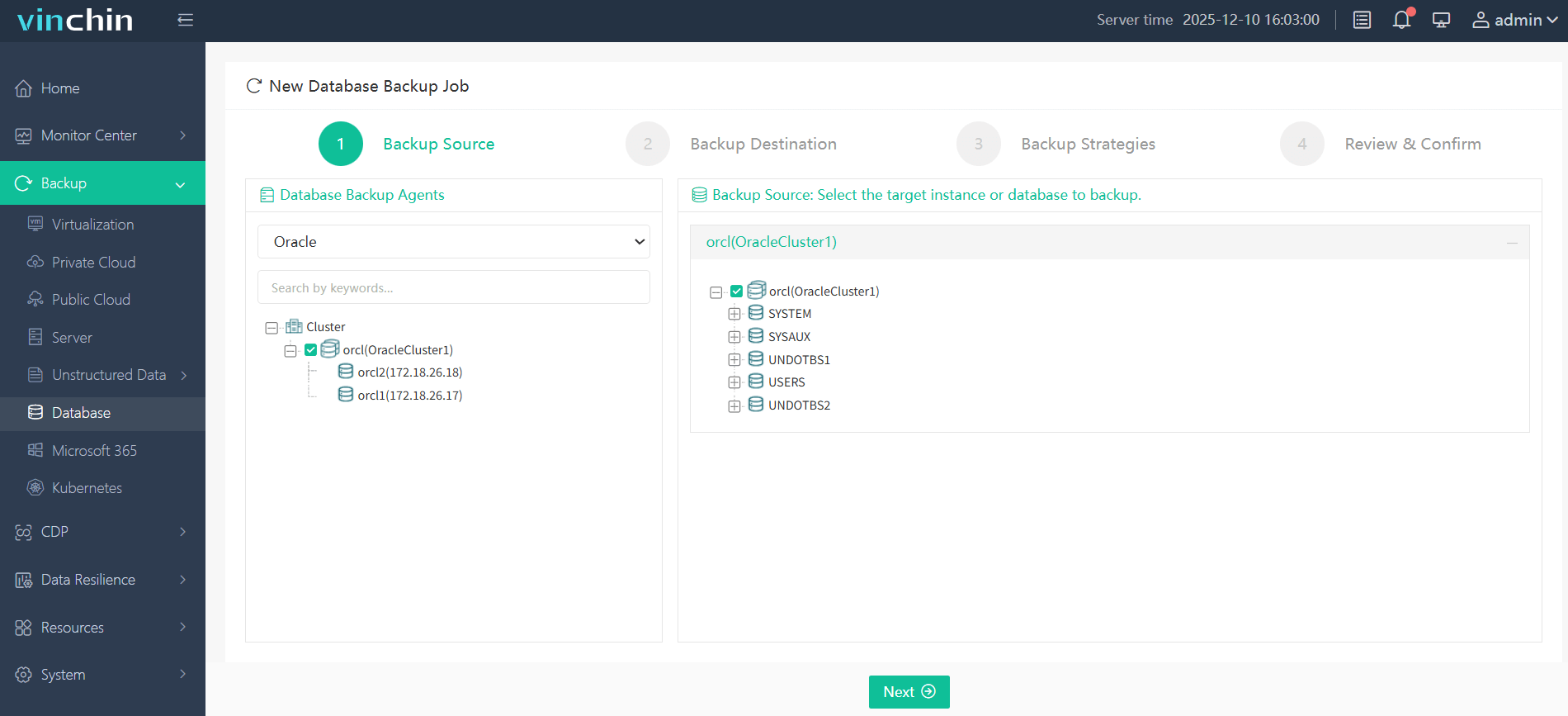
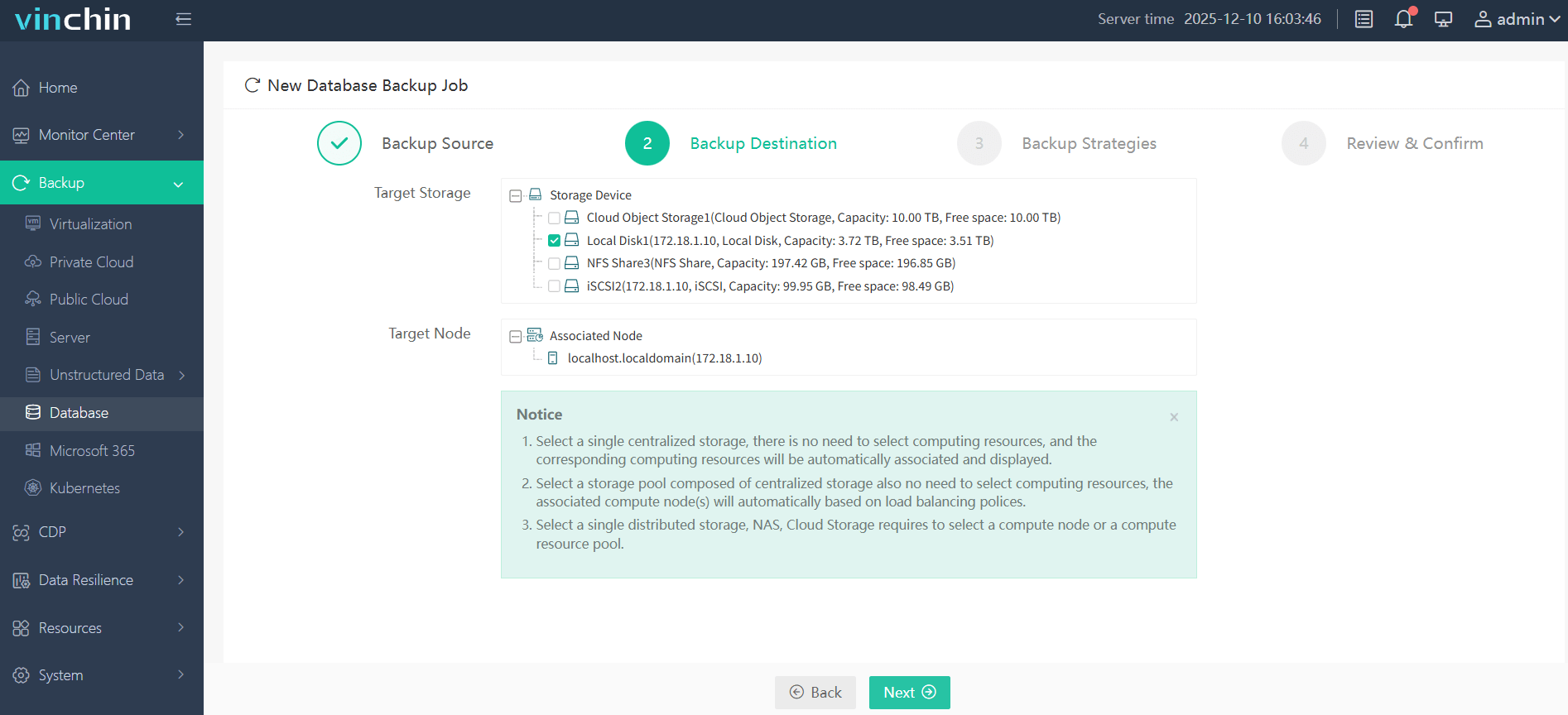
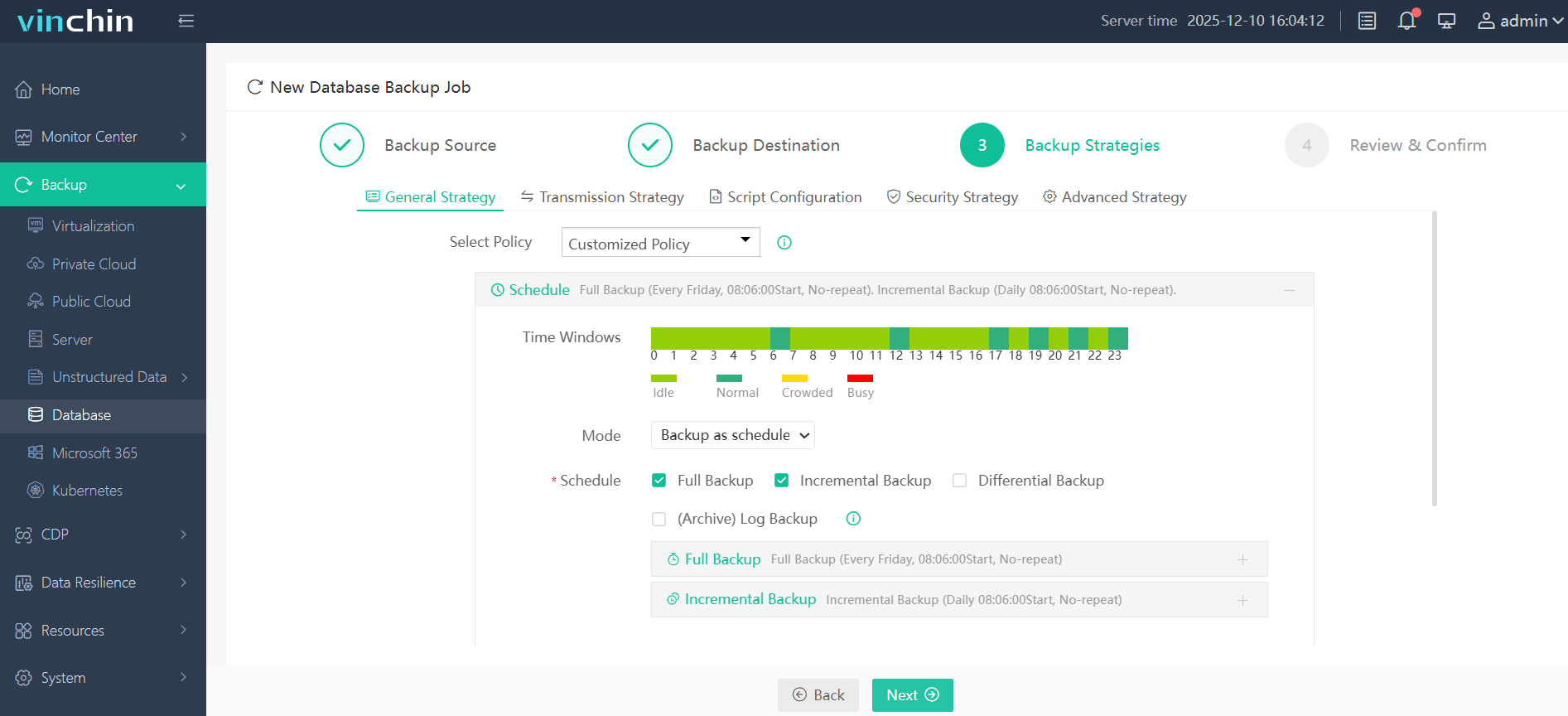
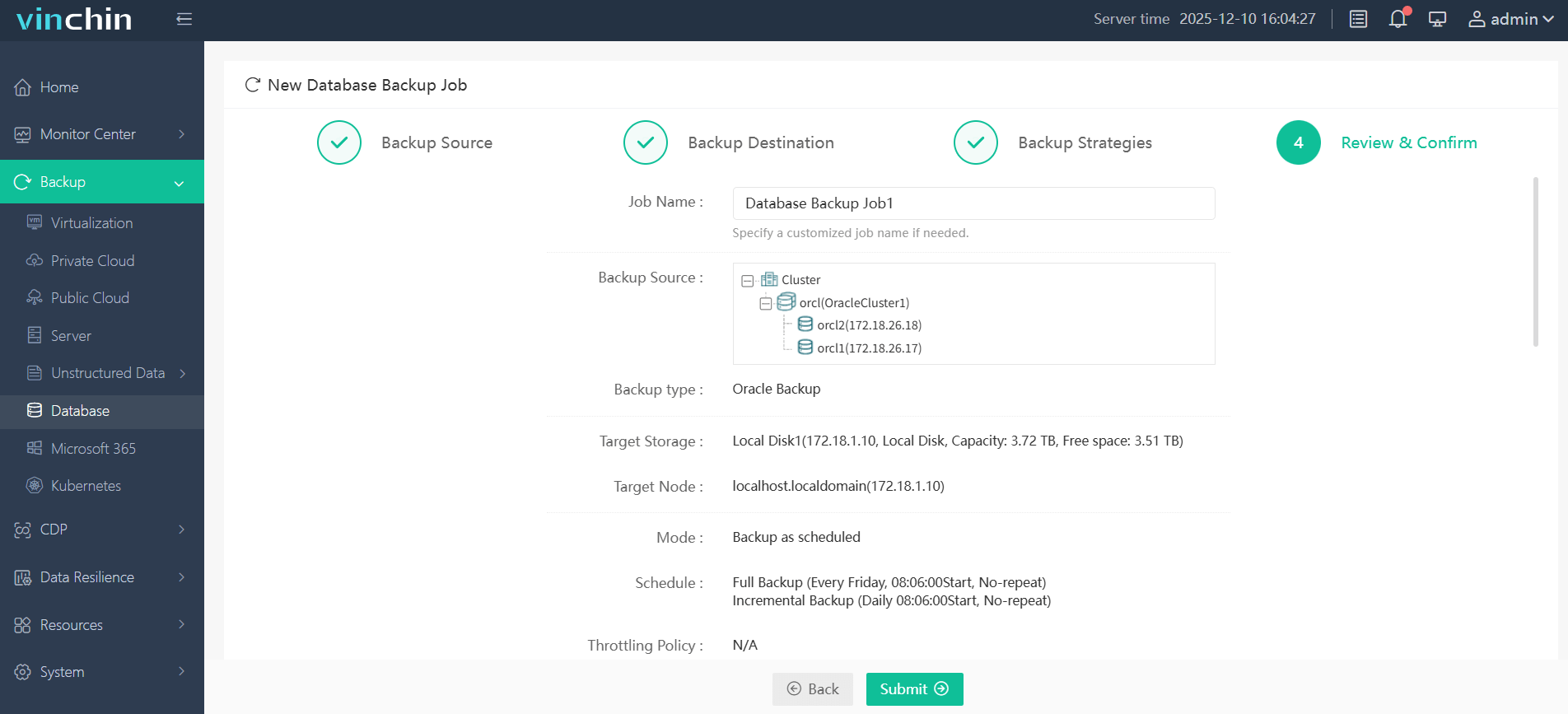
The intuitive web console simplifies every step of protecting your Oracle workloads
Step 1. Select the Oracle database to back up
Step 2. Choose the backup storage
Step 3. Define the backup strategy
Step 4. Submit the job
Recognized globally among enterprise customers for its ease-of-use and comprehensive feature set—with top ratings worldwide—Vinchin Backup & Recovery offers a free 60-day trial so you can experience its full power firsthand; click download below to get started.
Oracle RMAN Recover Database Until Time FAQs
Q1: Can I perform tablespace-level point-in-time recovery?
Yes; use SET UNTIL TIME along with RESTORE TABLESPACE and RECOVER TABLESPACE commands within an active RMAN session targeting only affected tablespaces.
Q2: What happens if some archived redo logs are missing during PITR?
Recovery stops at last available log—you may not reach intended end time unless all required archives exist between base backup date/time and desired cutoff moment.
Q3: What does opening with RESETLOGS do after incomplete recovery?
RESETLOGS creates new incarnation resets sequence numbers invalidates prior archive sets requiring immediate fresh full backup post-recovery.
Conclusion
Mastering point-in-time recovery using Oracle RMAN protects against costly mistakes while keeping downtime minimal when disaster strikes Precision matters every step—from planning through verification afterward Vinchin makes safeguarding enterprise databases simpler thanks advanced automation Try its free trial today see difference firsthand