Managing archive logs is a core task for every Oracle database administrator. If you let archive logs grow unchecked, your storage can fill up quickly—sometimes causing the database to hang or even crash. Standard deletion commands usually work well, but sometimes RMAN refuses to delete certain logs because it thinks they are still needed elsewhere in your environment. In these cases, you may need to force delete archive logs using Oracle RMAN. But how do you do this safely? Let’s explore the process from basic steps to advanced troubleshooting.
What Are Oracle RMAN Archive Logs?
Archive logs are copies of redo log files created when your Oracle database runs in archive log mode. These files record every change made within the database, making them essential for point-in-time recovery and disaster recovery scenarios. Oracle Recovery Manager (RMAN) manages these logs by tracking their presence on disk and in its internal repository—the control file or recovery catalog.
You can back up, restore, or delete archive logs as needed using RMAN commands. Proper management ensures you have enough space for ongoing operations while retaining enough history for safe recovery.
Why Force Delete Archive Logs?
Normally, you use RMAN to delete archive logs after backing them up or when they’re no longer required by your retention policy. However, there are times when RMAN refuses to remove certain logs—even if you believe they should be eligible for deletion.
Why does this happen? Often it’s because:
The log’s STATUS in V$ARCHIVED_LOG remains A (Available), meaning it might still be needed by a standby database or replication process.
The log hasn’t been applied yet on a downstream system such as Data Guard or another capture process.
The physical file is missing from disk but still tracked in the repository.
Your retention policy requires keeping those logs longer than expected.
When standard deletion fails due to these reasons, a force delete becomes necessary—not just to free up space but also to clean up metadata so future backups run smoothly.
Method 1: Delete Archive Logs with RMAN
The safest way to manage archive log growth is through regular maintenance using standard RMAN commands. Always make sure you have valid backups before deleting any archive logs; losing unbacked-up logs can make full recovery impossible.
Here’s how you perform routine deletions:
1. Connect to RMAN:
Open your terminal and enter rman target / to connect directly with your Oracle instance.
2. Crosscheck Archive Logs:
Run CROSSCHECK ARCHIVELOG ALL;. This command reconciles what exists on disk with what’s recorded in the repository—marking missing files as EXPIRED and adding any new ones found on disk but not previously tracked.
3. Delete Expired Archive Logs:
After crosschecking, remove records of missing files by running DELETE EXPIRED ARCHIVELOG ALL;. This cleans up only those entries marked expired without touching actual files that exist on disk.
4. Delete Old Archive Logs:
To remove all archive logs older than seven days (after confirming backup status), use:
DELETE ARCHIVELOG ALL COMPLETED BEFORE 'SYSDATE-7';
This deletes both physical files and their records if they meet your criteria.
5. Skip Confirmation Prompts:
For automated scripts or batch jobs where prompts aren’t desired, add NOPROMPT:
DELETE NOPROMPT ARCHIVELOG ALL COMPLETED BEFORE 'SYSDATE-7';
6. Delete Based on Backup Status:
To remove only those archive logs already backed up at least once (according to backup metadata):
DELETE ARCHIVELOG ALL BACKED UP 1 TIMES TO DISK;
These steps cover most routine needs—but sometimes stubborn logs remain even after following them carefully.
Method 2: Force Delete Archive Logs with RMAN
Force deleting is an advanced operation meant only for situations where normal cleanup fails—and should never be used lightly! When you use the FORCE option in an RMAN command:
Both physical files (if present) AND their repository records are removed
Dependencies such as Data Guard requirements are ignored
Even missing-from-disk entries get purged from control file metadata
Here’s how experienced admins perform this operation:
1. Connect Using RMAN:
Enter rman target / at your prompt as usual.
2. Force Delete Old Archives:
To forcibly remove all archives older than seven days regardless of dependencies or status:
DELETE FORCE NOPROMPT ARCHIVELOG ALL COMPLETED BEFORE 'SYSDATE-7';
3. Force Delete All Archives:
For total cleanup—useful during migrations or major reconfigurations:
DELETE FORCE NOPROMPT ARCHIVELOG ALL;
4. Target Specific Sequences/Times:
You can specify exact sequences or time windows:
    DELETE FORCE NOPROMPT ARCHIVELOG UNTIL SEQUENCE 12345;
    DELETE FORCE NOPROMPT ARCHIVELOG UNTIL TIME 'SYSDATE-1';
Vinchin Backup & Recovery: Enterprise Solution for Oracle Database Protection
For organizations seeking robust management of Oracle backup and archive log strategies beyond native tools alone, Vinchin Backup & Recovery delivers comprehensive enterprise-grade protection across leading platforms including Oracle, MySQL, SQL Server, MariaDB, PostgreSQL, PostgresPro, and TiDB—with special emphasis here on seamless integration with Oracle environments.
Key features such as incremental backup support for efficient data capture over time, advanced source-side compression reducing storage usage at origin points, scheduled backup automation ensuring consistent protection cycles without manual intervention, integrity check routines verifying recoverability of stored data sets via SQL script execution tests, and secure cloud/tape archiving options collectively help streamline operations while minimizing risk exposure across diverse workloads—all managed centrally through one solution designed for scalability and reliability at scale.
The intuitive web console makes safeguarding an Oracle database straightforward:
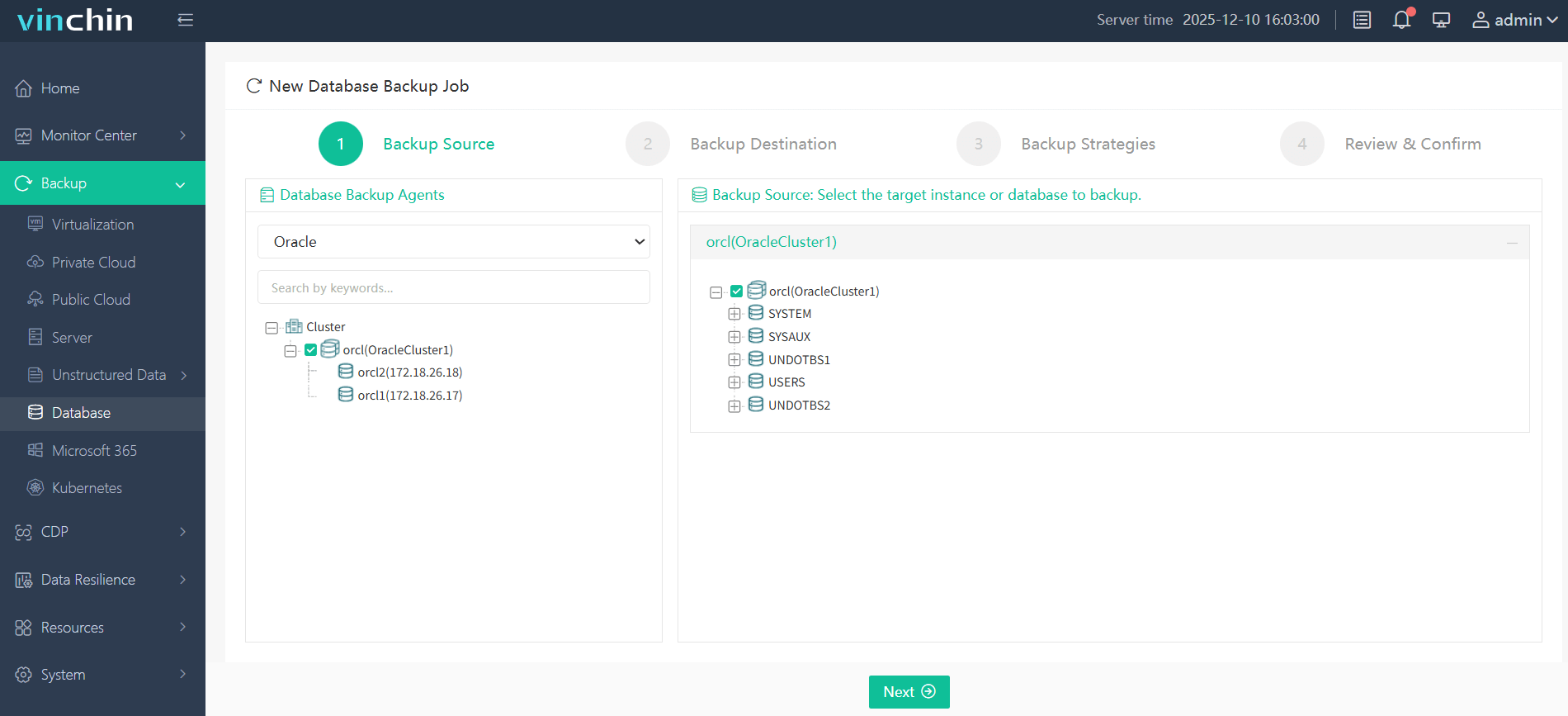
Step 1. Select the Oracle database to back up
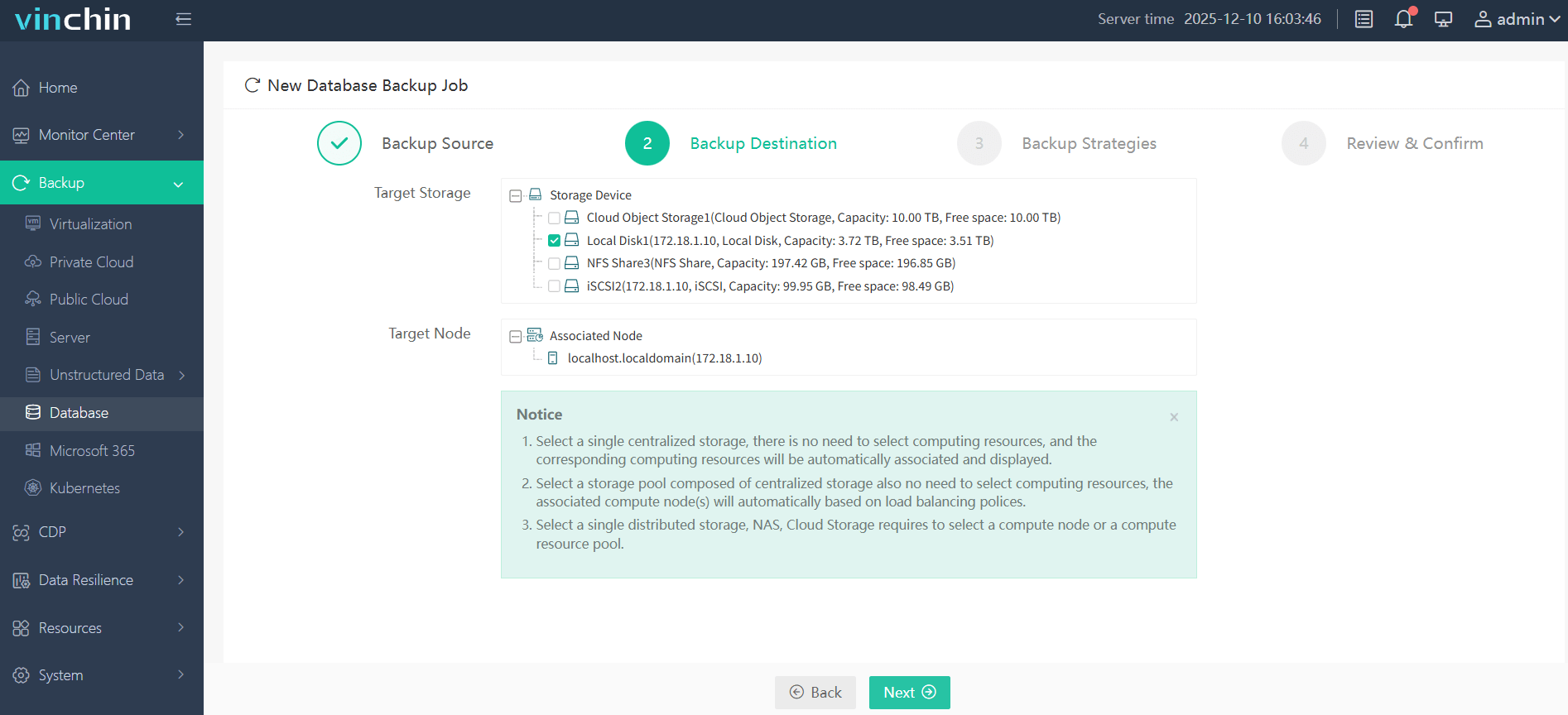
Step 2. Choose the backup storage
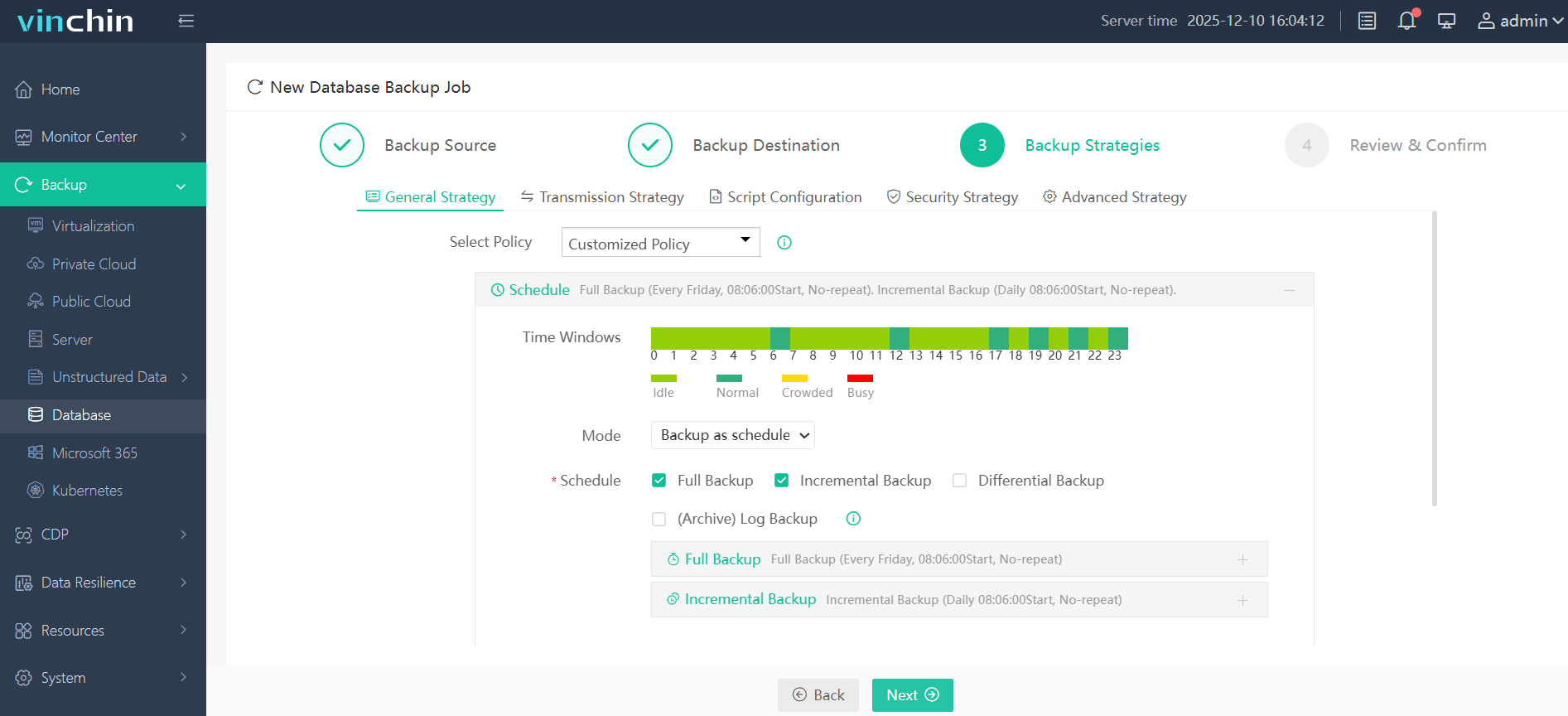
Step 3. Define the backup strategy
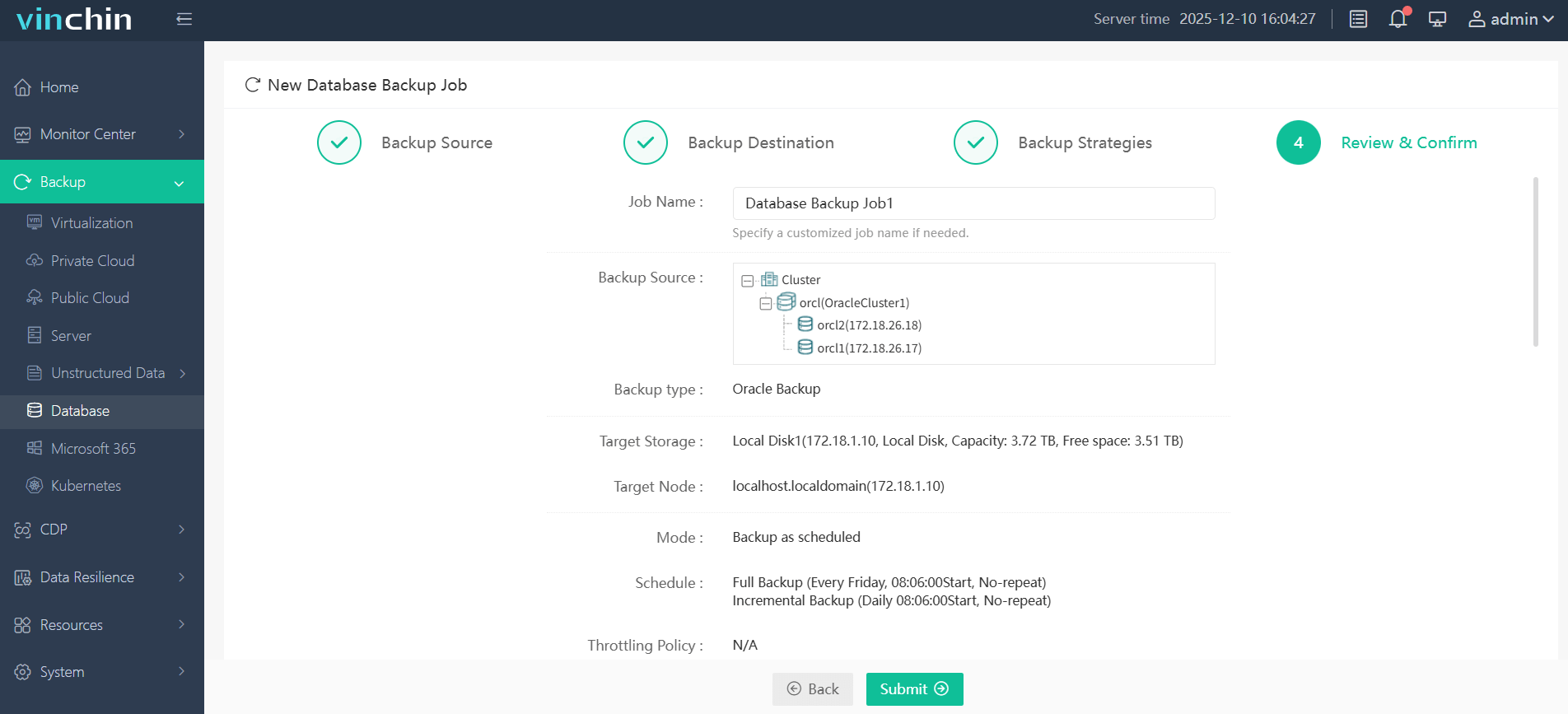
Step 4. Submit the job
Recognized globally among enterprise users—with top ratings and thousands of satisfied customers—Vinchin Backup & Recovery offers a fully featured 60-day free trial so IT teams can experience its power firsthand risk-free! Click below now to start protecting critical databases today!
Oracle RMAN Force Delete Archive Logs FAQs
Q1: What should I do if I accidentally deleted needed archive logs using FORCE?
A1: Restore from your latest valid backup covering the lost period since forced deletions cannot be reversed within RMAN itself.
Q2: Is deleting at OS level safer than using DELETE FORCE?
A2: No—deleting at OS level leaves orphaned entries in control file causing errors later; always use DELETE FORCE after accidental OS removals instead.
Q3: How can I confirm my retention policy isn’t blocking deletions?
A3: Run SHOW RETENTION POLICY inside rman shell—it displays current settings affecting which archives remain protected versus eligible removal candidates now!
Conclusion
Managing archive logs keeps your Oracle environment healthy—and knowing when/how-to use force deletion ensures smooth operations under pressure too! Vinchin makes managing complex backup strategies easier than ever so try our free trial today if seeking peace-of-mind around mission-critical data protection needs!