Protecting your Oracle database backups is critical in today’s world. Data breaches and accidental leaks can strike any organization. Encryption is a proven way to keep backup data safe—even if it falls into unauthorized hands. Oracle Recovery Manager (RMAN) offers built-in encryption features that help you meet security and compliance needs without complex add-ons. But how does Oracle RMAN encryption work? And what are the right steps to set it up? Let’s break down everything you need to know.
What is Oracle RMAN Encryption?
Oracle RMAN encryption lets you encrypt your database backup sets so only authorized users can access them. When you use RMAN to create encrypted backups, the data becomes unreadable without the correct keys or passwords. This means that even if someone gets hold of your backup files, they cannot restore or view sensitive information unless they have proper authorization.
RMAN supports several encryption modes—transparent encryption uses an Oracle-managed wallet for keys, while password-based encryption relies on user-supplied passwords. These options allow you to tailor protection based on your environment’s security requirements.
Encryption not only protects against theft but also helps organizations comply with regulations like GDPR or HIPAA that require strong safeguards for stored data.
Why Use RMAN Encryption?
Encrypting your RMAN backups brings multiple benefits. First, it shields sensitive data from unauthorized access—especially when backups are stored offsite or in cloud environments where physical control may be limited. Second, many industry standards now mandate encrypted backups as part of compliance frameworks. Third, using RMAN’s native tools means you don’t need extra software or complicated setups; everything integrates directly with Oracle’s key management infrastructure.
Implementing encryption reduces risk from lost media or insider threats and ensures that only trusted personnel can restore critical business data. For operations teams tasked with securing large environments, this peace of mind is invaluable.
Method 1: Transparent Encryption in RMAN
Transparent encryption is popular because it works quietly in the background once configured—it uses an Oracle Encryption Wallet to store keys securely outside of regular database storage. With this method, there’s no need to enter a password every time you back up or restore; as long as the wallet is open on your system, operations proceed smoothly.
Before starting, make sure:
Your database runs at least version 10g Release 2 (10.2), though most commands below use syntax introduced in 12c and later versions.
The Oracle Encryption Wallet (or keystore) is properly configured and accessible by both SQL*Plus and RMAN sessions.
Here’s how you enable transparent encryption step by step:
1. Set Up the Oracle Encryption Wallet
Edit your sqlnet.ora file so it points to your wallet location using either ENCRYPTION_WALLET_LOCATION (pre-18c) or WALLET_ROOT (18c+). Then use SQL*Plus:
   ADMINISTER KEY MANAGEMENT CREATE KEYSTORE '/path/to/wallet' IDENTIFIED BY password;
   ADMINISTER KEY MANAGEMENT SET KEY IDENTIFIED BY password WITH BACKUP;
This creates a secure keystore directory and initializes a master key for future encryptions.
Before running any backup operation involving encrypted data:
ADMINISTER KEY MANAGEMENT OPEN KEYSTORE '/path/to/wallet' IDENTIFIED BY password;
2. Configure RMAN to Use Encryption
In an active RMAN session:
CONFIGURE ENCRYPTION FOR DATABASE ON;
To specify an algorithm such as AES128:
CONFIGURE ENCRYPTION ALGORITHM 'AES128';
3. Create Encrypted Backups
Now any backup set created will be encrypted automatically:
BACKUP DATABASE;
For image copies instead of backup sets:
BACKUP AS COPY DATABASE;
No extra steps are needed during restores—as long as the wallet remains open on your system at recovery time.
Transparent encryption fits daily operations well because it requires little user intervention after setup. However, losing access to your wallet makes restoring encrypted backups impossible—so always back up your wallet separately from database files (Oracle Docs).
Verifying Your Encrypted Backups
After enabling encryption, how do you confirm that it worked? It’s important not just to trust—but verify—that backups are protected as intended.
Start by listing recent backups within RMAN:
LIST BACKUP OF DATABASE;
Check the output under the “Encrypted” column; each entry should read “YES” if properly secured.
For deeper assurance, periodically test restoring an encrypted backup onto a non-production server where only authorized staff have access—and ensure that either the wallet (for transparent mode) or correct password (for password-based mode) must be supplied before restoration succeeds.
If you attempt a restore without opening the wallet first—or supply an incorrect decryption credential—you’ll see clear error messages indicating missing keys or authentication failures (Oracle Docs). Regularly testing these scenarios helps avoid surprises during real incidents.
Method 2: Password-Based Encryption in RMAN
Password-based encryption gives flexibility when sharing backups across sites or organizations where wallets aren’t available—for example when sending archives offsite for disaster recovery purposes.
With this method, each backup set receives its own unique password at creation time; anyone restoring must provide exactly that same password later on.
Here’s how you use password-based encryption:
1. Set Encryption with a Password
Before creating a backup set in RMAN:
SET ENCRYPTION ON IDENTIFIED BY 'your_password' ONLY;
This command tells RMAN that all subsequent backup sets will require 'your_password' for decryption until changed again within this session.
2. Create Encrypted Backup
Proceed with standard commands such as:
BACKUP DATABASE;
3. Restore Using Password
When restoring these files elsewhere—even years later—you must supply exactly the same string used above:
     SET DECRYPTION IDENTIFIED BY 'your_password';
     RESTORE DATABASE;
Be aware: If you lose track of this password there is no way—none—to recover those encrypted files! Consider storing credentials securely using enterprise-grade vaults rather than personal notes or spreadsheets.
Password-based mode does not require any local keystore configuration—which makes it ideal for portable archives—but managing many unique passwords across dozens of jobs can become challenging fast (Oracle Docs). Plan carefully before rolling out at scale.
How to Back Up Oracle Databases with Vinchin Backup & Recovery for Enhanced Protection?
Beyond native tools like RMAN, organizations often seek unified solutions for safeguarding diverse databases efficiently and reliably across their IT landscape—including Oracle environments discussed above. Vinchin Backup & Recovery stands out as a professional enterprise-level solution supporting mainstream platforms such as Oracle, MySQL, SQL Server, MariaDB, PostgreSQL, PostgresPro, and TiDB—all through one intuitive interface tailored for modern businesses’ needs.
Key features include batch database backup management across multiple instances; advanced source-side compression and incremental backup capabilities specifically optimized for Oracle workloads; flexible retention policies including GFS retention strategy; robust storage protection against ransomware alteration; and automated integrity checks ensuring recoverability at all times—helping streamline operations while maximizing security and compliance readiness throughout every stage of data lifecycle management.
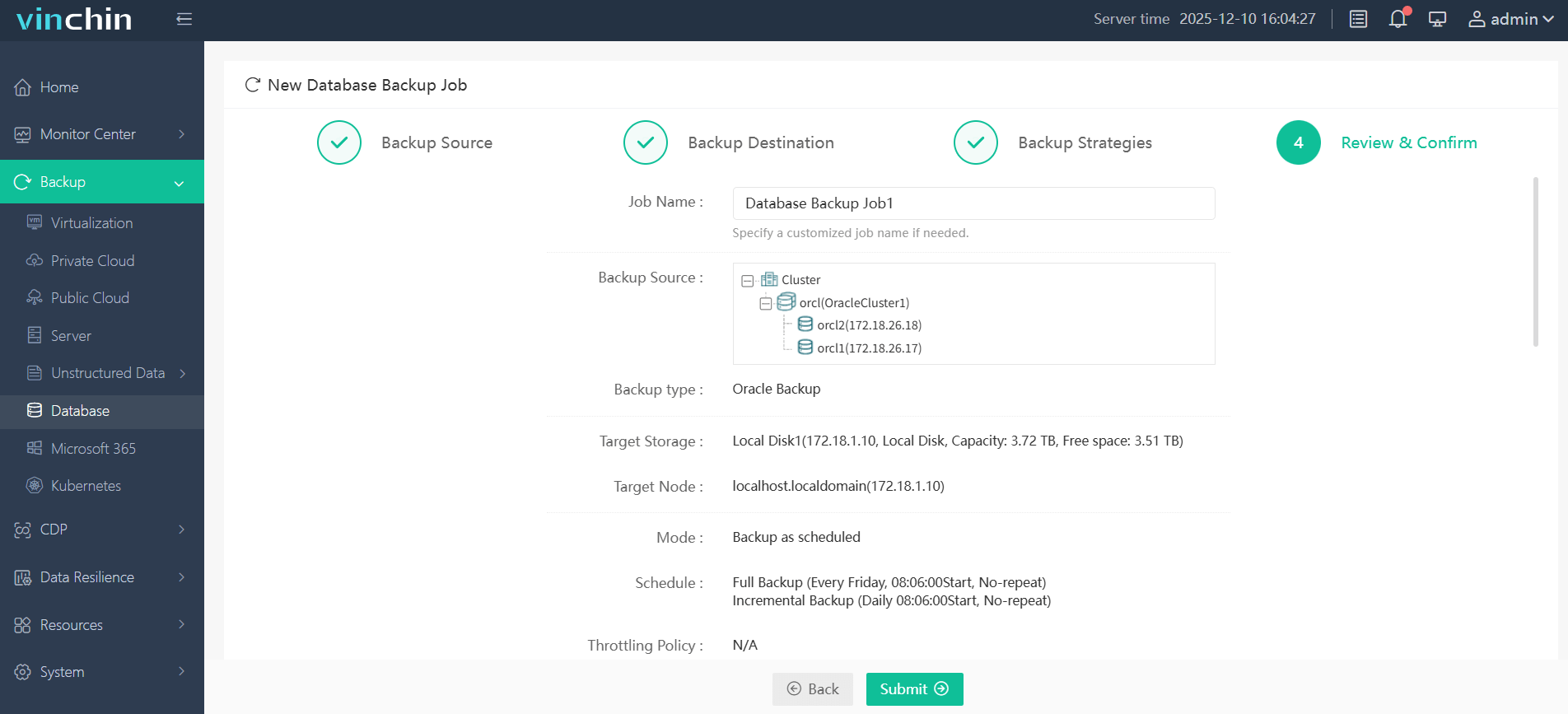
The web console provided by Vinchin Backup & Recovery makes protecting databases remarkably straightforward:
Step 1: Select the Oracle database to back up
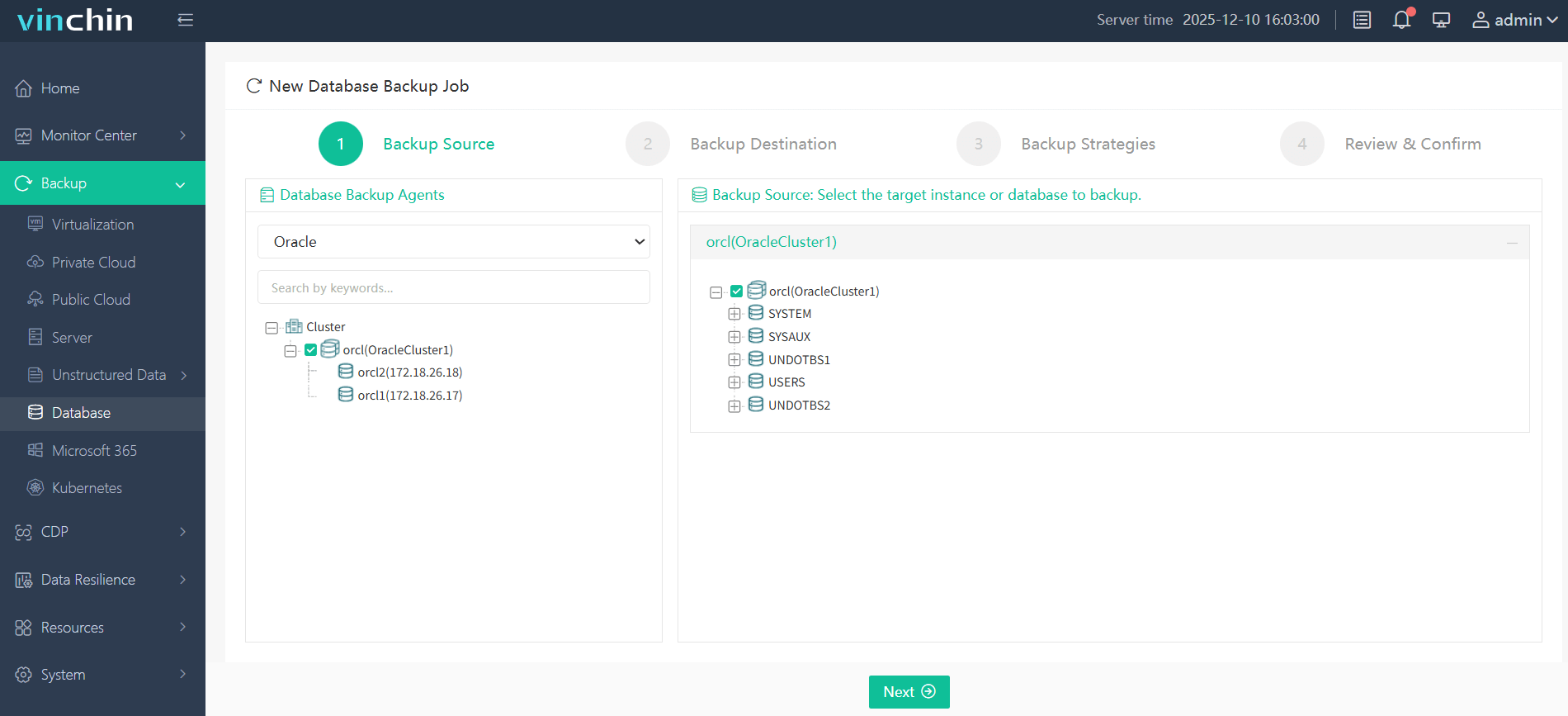
Step 2: Choose the backup storage
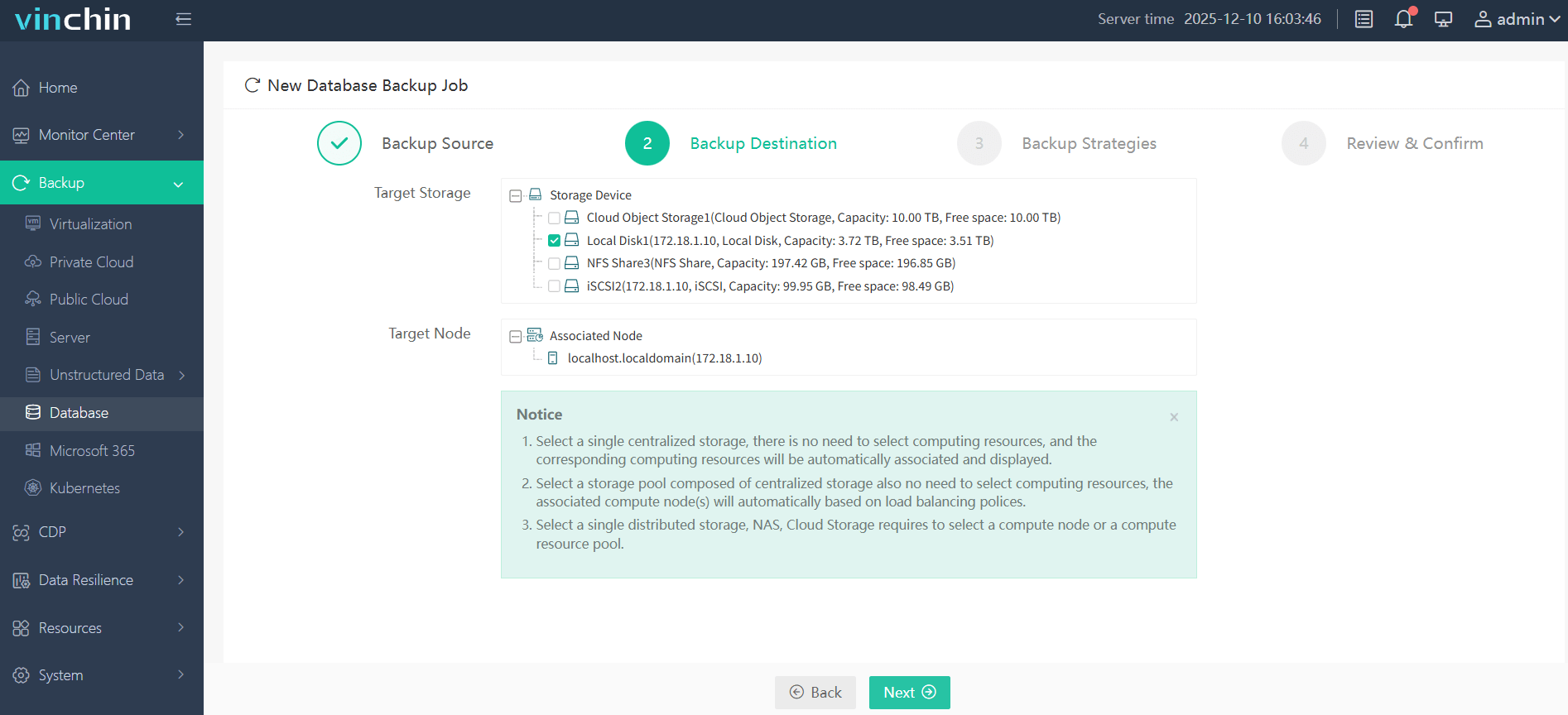
Step 3: Define the backup strategy
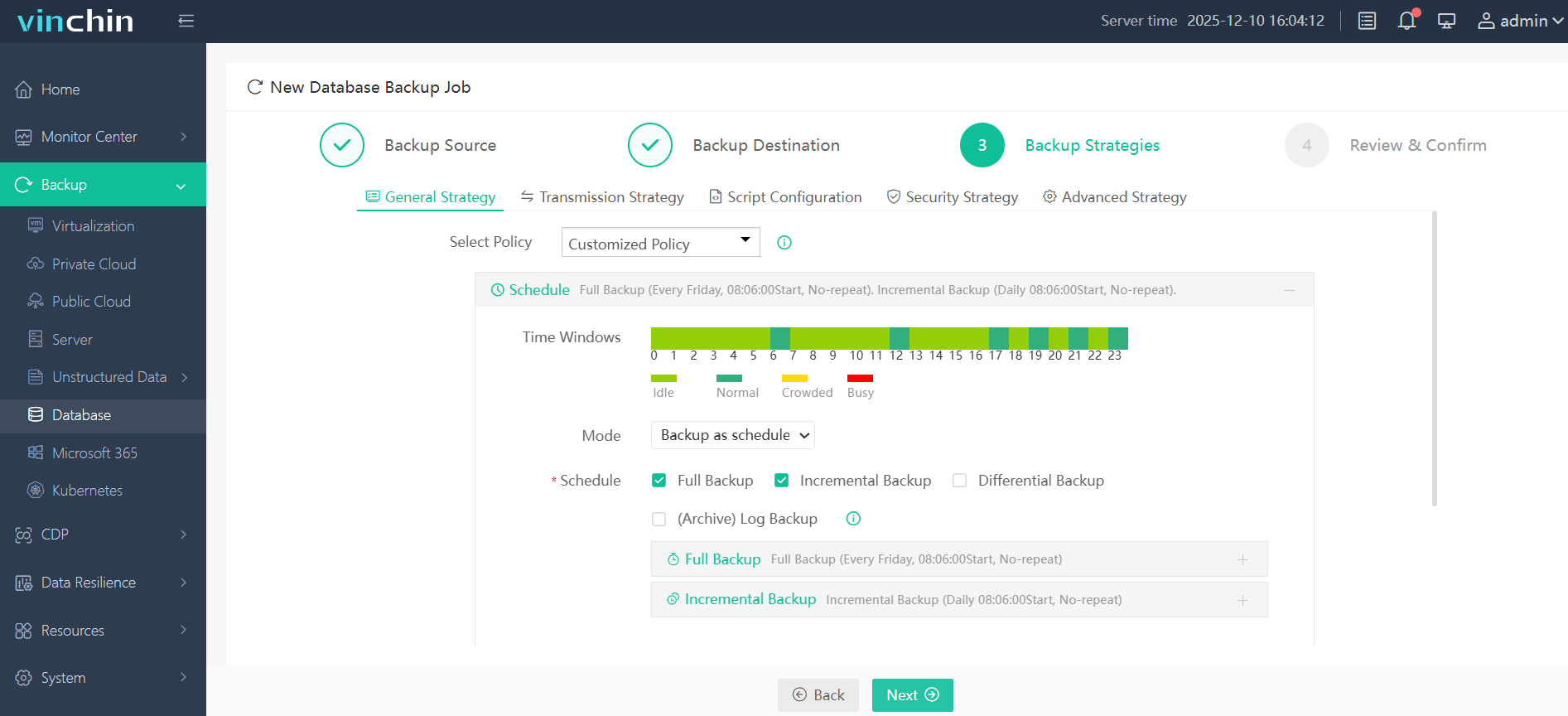
Step 4: Submit the job
Recognized globally by thousands of enterprises—with top ratings for reliability—Vinchin Backup & Recovery offers a full-featured free trial valid for 60 days; click below to experience comprehensive enterprise data protection firsthand!
Oracle RMAN Encryption FAQs
Q1: Can I switch between transparent and password-based modes after creating my first encrypted backup?
A1: No; each mode applies per-backup-set—you choose which method before running each job but cannot change afterward without re-backing up original data.
Q2: What happens if I forget my wallet location path during recovery?
A2: You must update sqlnet.ora with correct path details then reopen keystore using its original administrative password before attempting restores.
Q3: How do I check which algorithm my current configuration uses?
A3: Run SHOW ENCRYPTION ALGORITHM; inside an active RMAN session—the result displays whether AES128/AES192/AES256 (or another supported cipher) protects new sets going forward.
Conclusion
Encrypting Oracle RMAN backups keeps sensitive business information safe from prying eyes—whether stored locally or sent offsite—with minimal impact on daily workflow once configured correctly. Transparent mode suits routine jobs while password-protected sets excel at portability across locations or teams outside direct control structures.Vinchin takes protection further by unifying these capabilities through one easy interface—try their free trial today!