What is Oracle DBID and its role?
The Oracle Database Identifier (DBID) is a unique number assigned automatically when you create a new database instance. It’s stored in every datafile header and control file associated with that database. Why does this matter? The DBID allows RMAN and other tools to distinguish between databases—even if they share the same name—across different environments or servers. This distinction becomes critical when using a recovery catalog or managing multiple test and production systems side by side.
During backup or restore operations, RMAN relies on the correct DBID to locate matching backup sets, control files, or archived logs. If you lose your control file but still have backups available, knowing the right DBID lets you set up RMAN for successful restoration. Without it—or if you use an incorrect value—RMAN cannot proceed with key tasks like restoring autobackup pieces or performing point-in-time recoveries.
Method 1: Get DBID from RMAN backup set
If you have access to your RMAN backup sets or output logs, there are several ways to extract the DBID—even if your database is down.
The most direct approach is checking previous RMAN session outputs. When connecting to a target database using rman target / , look at the session header; it displays something like:
Recovery Manager: Release 19.0.0.0.0 - Production
connected to target database: ORCL (DBID=1411146558)
This method works only if you can connect directly to an open instance—which may not be possible during severe outages.
If direct connection isn’t possible but you have saved job logs from earlier backups or restores (for example in scripts), search those text files for lines containing DBID= followed by numbers. This often reveals what you need quickly.
A faster way—especially when databases are down—is examining filenames of control file autobackups created by enabling CONTROLFILE AUTOBACKUP ON in RMAN settings. These files follow a naming pattern:
c-<DBID>-YYYYMMDD-QQ
For example: c-2282329623-20240601-00 means 2282329623 is your DBID; YYYYMMDD shows date; QQ is a hexadecimal sequence number like 00, 01, etc. Locate these files in your designated backup directory—they’re accessible even if Oracle services aren’t running.
On Unix-like systems with only raw backup pieces (such as .bkp image copies), use command-line tools to extract embedded metadata:
strings /path/to/backup_piece | grep -E '^[0-9]+,\s*MAXVALUE$'
Here’s how it works: The strings command pulls readable text out of binary files; piping through grep -E '^[0-9]+,\s*MAXVALUE$' filters lines starting with numbers followed by “MAXVALUE.” The number before “MAXVALUE” represents your DBID—a trick useful when nothing else remains except raw backups.
Optional: Query the Recovery Catalog (If Used)
If your environment uses an external recovery catalog—a best practice for enterprise setups—you can query it directly for registered databases’ details:
SELECT dbid, name FROM rc_database WHERE name = '<YOUR_DB_NAME>';
Connect as catalog owner via SQL*Plus or another SQL client tool first. This approach helps confirm both active and historical registrations across environments.
Method 2: Get DBID from control file
Having any valid copy of a control file—current or old—makes retrieving the DBID straightforward even without full access to datafiles.
First ensure that either an initialization parameter file (init<SID>.ora) or server parameter file (spfile<SID>.ora) exists so that Oracle can start up in restricted mode:
1. Start Oracle instance in NOMOUNT mode using available parameter file
2. Mount database using existing control file
3. Connect via SQL*Plus as SYSDBA
4. Run:
SELECT dbid FROM v$database;
You’ll see one row showing your unique identifier value.
If mounting fails due to mismatched SCNs but physical structure matches expected layout (for example after copying between servers), try mounting explicitly with:
ALTER DATABASE MOUNT USING BACKUP CONTROLFILE;
This tells Oracle you're working with non-current metadata—a common step during disaster recovery scenarios involving incomplete backups.
Method 3: Get DBID from alert log file
Sometimes neither live instances nor intact control files exist—but alert log records remain accessible on disk storage attached to failed hosts.
Oracle writes key events—including startup messages—to its alert log located at:
$ORACLE_BASE/diag/rdbms/<db_name>/<db_name>/trace/alert_<db_name>.log
Open this log using any text editor—or run:
grep "DBID" alert_<db_name>.log
Look for lines such as:
DB_ID=1411146558
or
DBNAME = ORCL  Db ID=1411146558  ...
For future preparedness—or regular audits—you might want Oracle itself to write out current values periodically into this log:
EXEC dbms_system.ksdwrt(2,'DB ID:'||TO_CHAR((SELECT dbid FROM v$database)));
This PL/SQL block forces immediate logging of current identifiers so they’re always easy to find later—even after months pass between incidents!
Method 4: Extract DBID from Archived Redo Logs
Advanced users sometimes recover lost identifiers by analyzing archived redo logs instead of relying solely on standard metadata sources:
1. Identify any available archived redo log (*.arc)
2. Issue within SQL*Plus:
ALTER SYSTEM DUMP LOGFILE '/path/to/archive_log_1_12345.arc';
3. Check generated trace output under $USER_DUMP_DEST; search for lines mentioning “Db ID”
This technique proves invaluable when all other artifacts fail but some archive media survive long-term retention policies.
Introducing Vinchin Backup & Recovery for Enterprise Database Protection
Beyond manual methods for safeguarding critical information like the Oracle DBID, organizations benefit greatly from robust automated solutions designed specifically for enterprise environments.
Vinchin Backup & Recovery stands out as a professional-grade platform supporting today’s mainstream databases—including Oracle, MySQL, SQL Server, MariaDB, PostgreSQL, PostgresPro, and TiDB—with comprehensive features tailored for modern data protection needs.
Among its most relevant capabilities are batch database backup management across multiple instances; flexible data retention policies including GFS retention policies; cloud backup and tape archiving options; built-in storage protection against ransomware threats; and integrity checks ensuring recoverability.
These features collectively help automate routine tasks while maximizing security and reliability throughout every stage of the backup lifecycle.
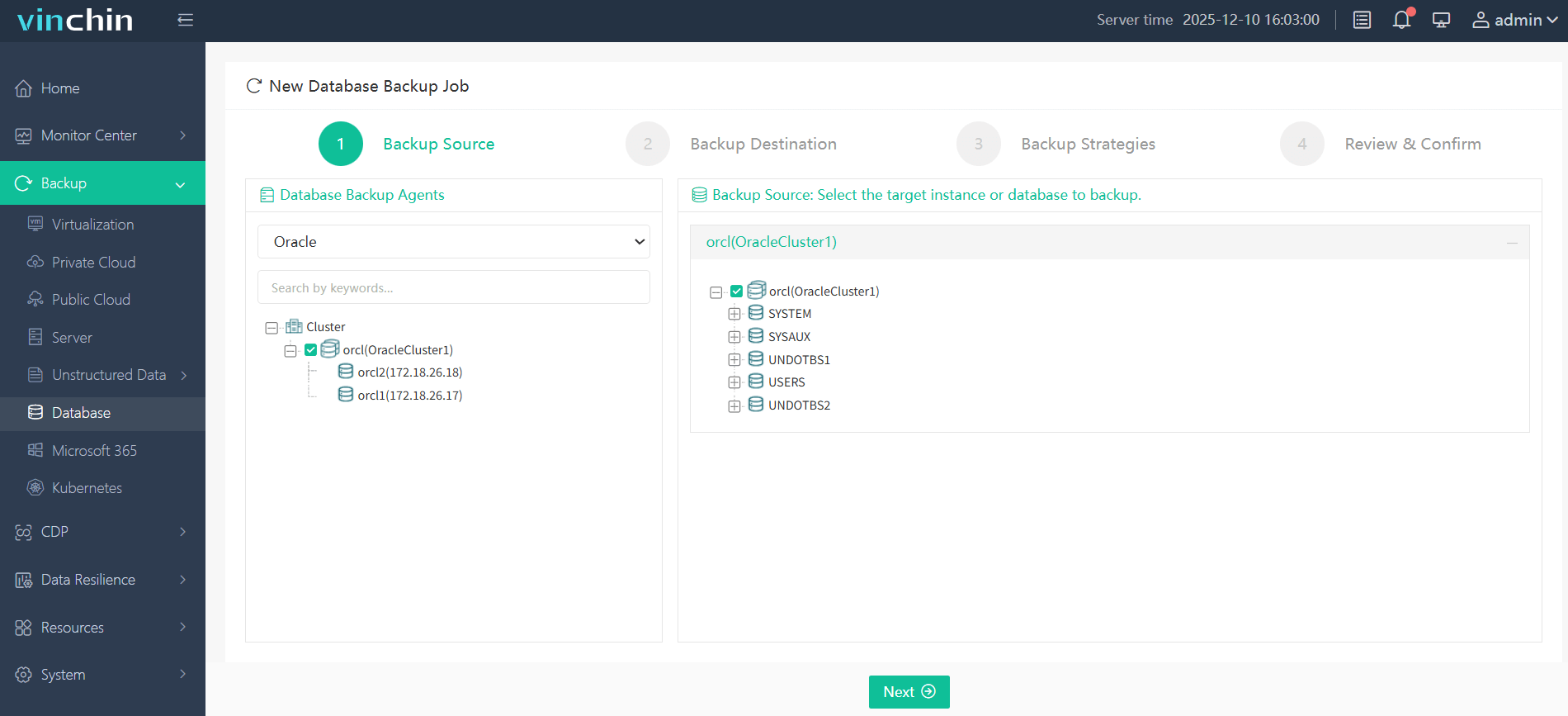
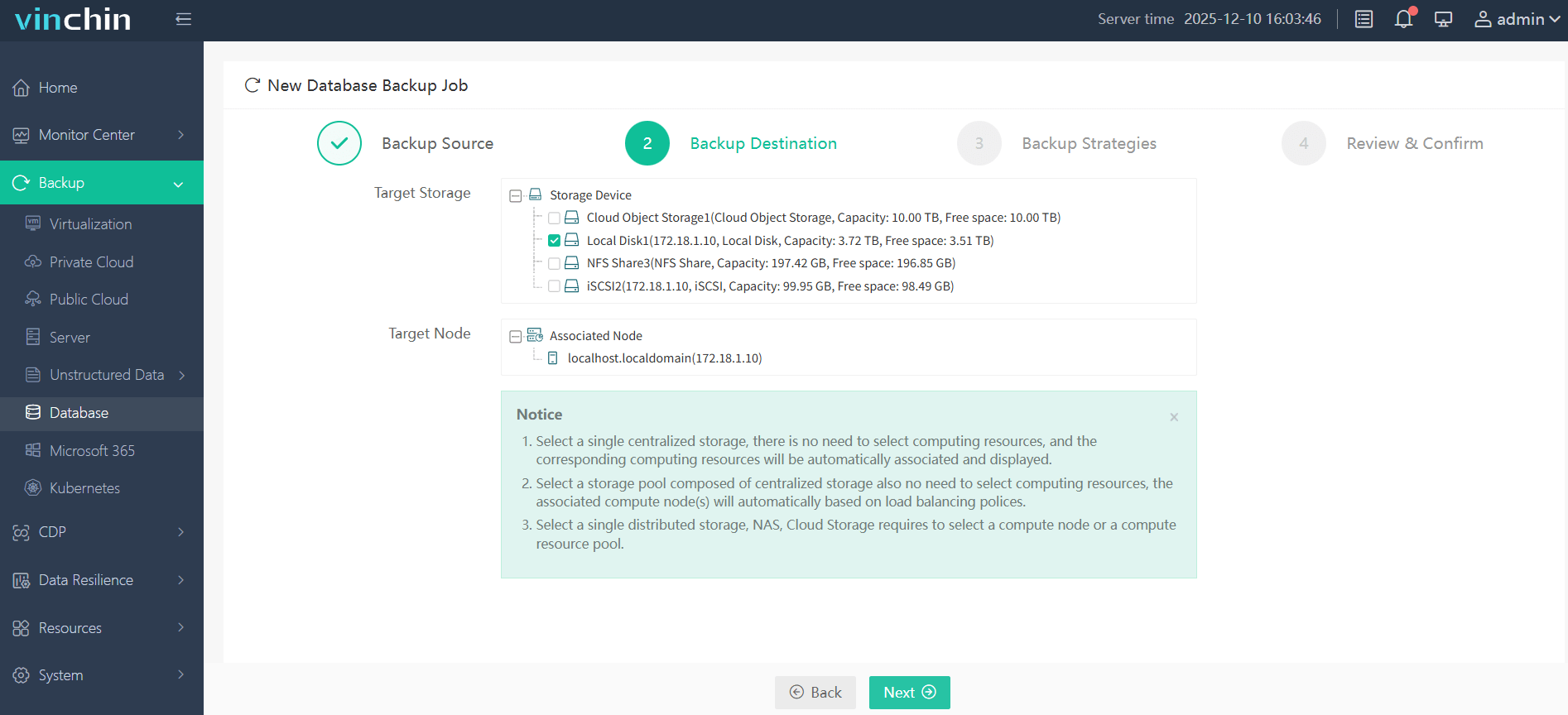
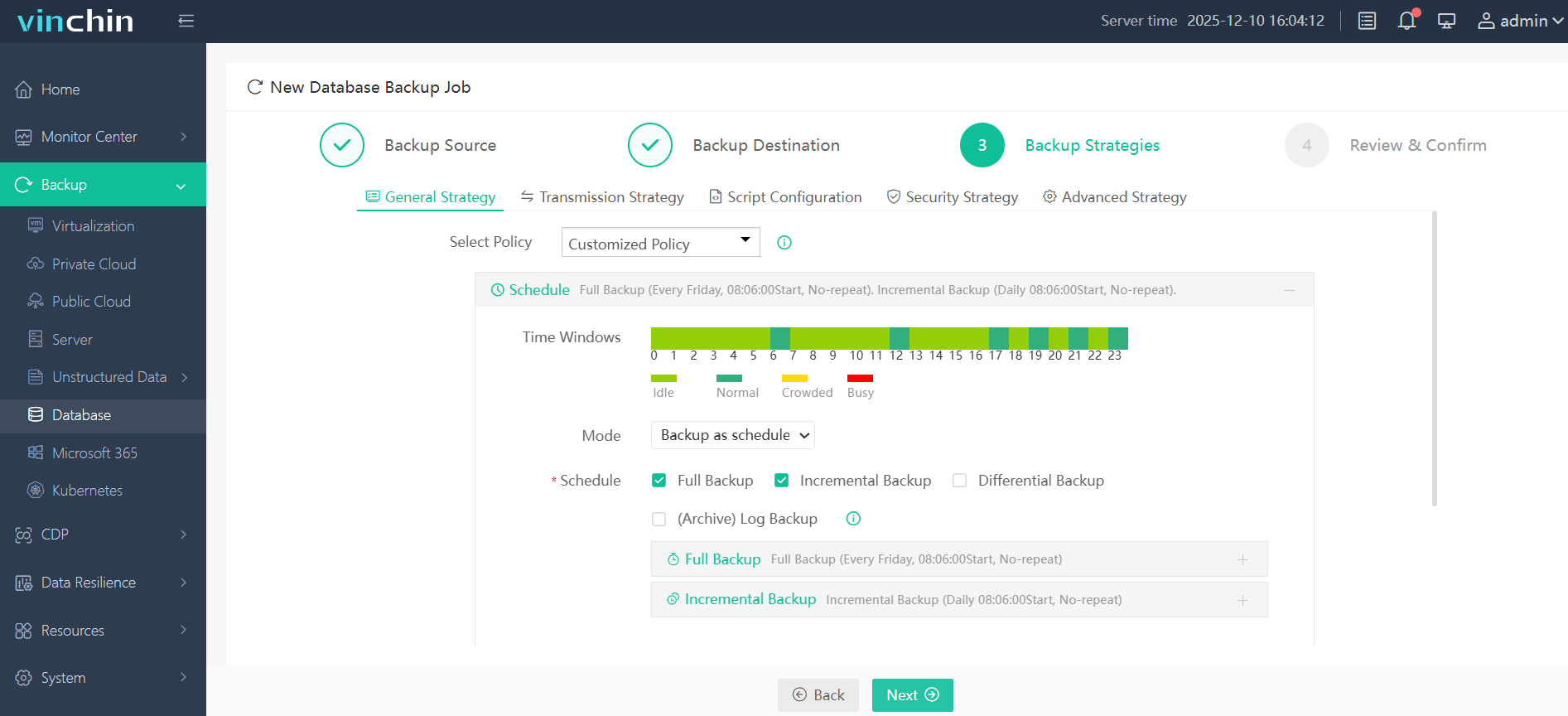
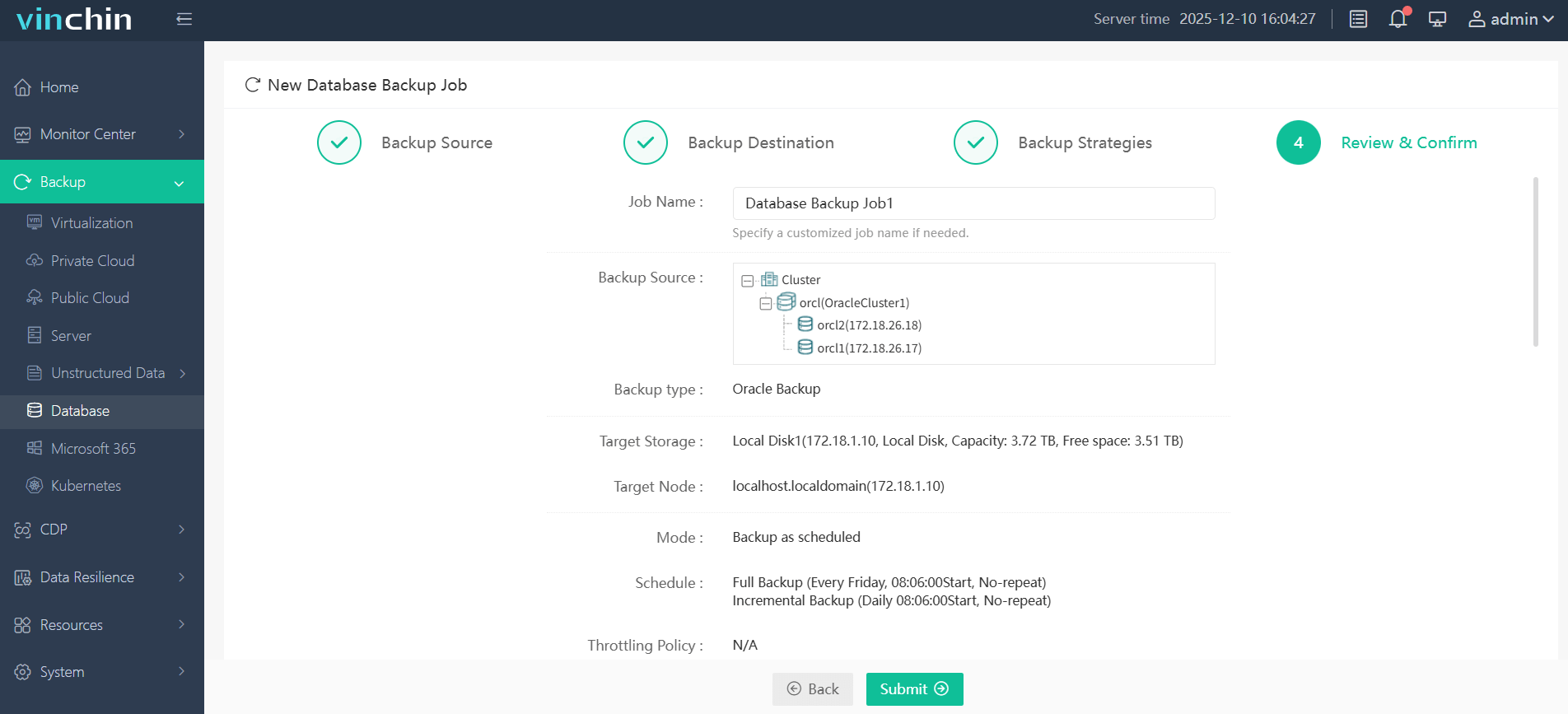
With Vinchin Backup & Recovery’s intuitive web console interface backing up an Oracle database typically takes just four steps:
Step 1. Select the Oracle database to back up
Step 2. Choose the backup storage
Step 3. Define the backup strategy
Step 4. Submit the job
Recognized globally with top ratings among enterprise customers worldwide,
Vinchin Backup & Recovery offers a risk-free 60-day full-featured trial—click download now and experience industry-leading data protection firsthand.
oracle get dbid from rman backup FAQs
Q1: Can I get my Oracle DBID if my server won’t start but I still have only RMAN autobackup files?
A1: Yes; check filenames like c-\<DBID\>-YYYYMMDD-QQ in your autobackup directory—they contain your unique identifier even if everything else fails.
Q2: What should I do if I’ve lost both my control files AND recent job logs?
A2: Use SQL*Plus as SYSDBA > issue ALTER SYSTEM DUMP DATAFILE \<file_id\> BLOCK MIN 1 BLOCK MAX 1 > then search resulting trace output under user dump destination directory for “Db ID”.
Q3: Can I extract my lost identifier directly from archived redo logs?
A3: Yes; dump any surviving archive log using ALTER SYSTEM DUMP LOGFILE '/path/to/log.arc', then scan resulting trace output for “Db ID”.
Q4: What if my extracted value doesn’t work during restore attempts?
A4: Double-check that you're referencing correct source media—not accidentally mixing dev/test/prod datasets—and always issue SET DBID before RESTORE CONTROLFILE commands.
Conclusion
Knowing how to get an Oracle DBID from an RMAN backup gives peace of mind during tough recoveries—it turns potential roadblocks into manageable tasks every time disaster strikes! With these techniques at hand—and Vinchin’s solutions backing up critical assets—you’re ready whenever challenges arise!