Snapshot controlfile misconfiguration is a frequent cause of Oracle RMAN backup failures—especially in clustered environments like Oracle RAC. If you have ever seen an unexpected error during backup or restore jobs, you know how frustrating this can be. For many DBAs and IT admins, understanding how to configure the snapshot controlfile name in Oracle RMAN is essential for smooth operations.
This guide explains what the snapshot controlfile is, why its configuration matters so much (particularly for shared storage setups), and how you can set or change its location step by step. We’ll also cover troubleshooting tips for common errors and best practices that help prevent issues before they start.
What Is RMAN Snapshot Controlfile?
The RMAN snapshot controlfile is a temporary copy of your current Oracle controlfile at a specific point in time. Think of it as a “snapshot” that freezes critical metadata—like datafile locations and archived redo log details—so that RMAN can work with consistent information even while your database changes underneath.
RMAN creates this file automatically when needed during backup or recovery tasks. By default, it stores the snapshot controlfile in a platform-specific directory under your Oracle home path. However, this default may not fit every environment—especially if you run multiple databases or use clustered systems where all nodes must access the same file.
If you do not configure this setting correctly in RAC environments or when using shared storage solutions like ASM disk groups or NFS mounts, backups may fail due to inaccessible files.
Why Configure Snapshot Controlfile Name?
Configuring the snapshot controlfile name ensures reliable backups across different deployment types—from single-instance servers to complex clusters.
In Oracle RAC setups, every node involved in backup operations must read from and write to one shared snapshot controlfile location. If left on local disk (the default), only one node has access; other nodes fail with errors such as ORA-00245 (“control file backup failed; target is likely on local disk”). This disrupts automated backups and increases risk during disaster recovery.
Even outside RAC environments, changing the default location helps organize files better—for example by placing them on dedicated backup volumes—or improves performance by moving them onto faster disks.
You might also need to reconfigure this path after hardware upgrades or storage migrations so that all scripts continue working without manual intervention.
Method 1 Setting Snapshot Controlfile Name in Oracle RMAN
Setting up a custom location for your snapshot controlfile takes just a few steps—but accuracy matters! Before starting:
Ensure your chosen directory exists
Verify it’s owned by oracle
Confirm all relevant servers (in clusters) can access it
Here’s how:
1. Open Terminal as an OS user who owns Oracle software
2. Connect to RMAN using SYSDBA privileges:
rman target /
3. At the prompt check current configuration:
SHOW SNAPSHOT CONTROLFILE NAME;
You’ll see output similar to /u01/app/oracle/product/19c/dbhome_1/dbs/snapcf_PRODDB.f.
4. To set a new location—for example /shared_storage/rman/PRODDB/snapcf_PRODDB.f:
CONFIGURE SNAPSHOT CONTROLFILE NAME TO '/shared_storage/rman/PRODDB/snapcf_PRODDB.f';
Replace PRODDB with your actual database unique name (check via SELECT DB_UNIQUE_NAME FROM V$DATABASE;). For ASM users:
CONFIGURE SNAPSHOT CONTROLFILE NAME TO '+DATA/PRODDB/snapcf_PRODDB.f';
5. Confirm success:
SHOW SNAPSHOT CONTROLFILE NAME;
6. Optionally test by running:
BACKUP CURRENT CONTROLFILE;
This triggers creation of the new file immediately so you can verify everything works as expected.
Once configured properly here, future backups will always use this path unless changed again later!
Method 2 Changing Existing Snapshot Controlfile Name in Oracle RMAN
Sometimes infrastructure changes force you to move existing files—maybe after adding new storage arrays or reorganizing cluster resources.
To safely update an already-configured snapshot controlfile:
1. Note down current setting:
SHOW SNAPSHOT CONTROLFILE NAME;
2. Set new desired path (for example /mnt/nfs_share/rman/PRODDB/snapcf_PRODDB.f):
CONFIGURE SNAPSHOT CONTROLFILE NAME TO '/mnt/nfs_share/rman/PRODDB/snapcf_PRODDB.f';
3. Verify change took effect:
SHOW SNAPSHOT CONTROLFILE NAME;
4. Clean up old copies manually at OS level if no longer needed (rm /old/location/snapcf_PRODDB.f). Always double-check before deleting production files!
5. If errors occur referencing old paths (e.g., “expired copy” warnings), synchronize catalog metadata:
DELETE EXPIRED COPY OF CONTROLFILE;
Reapply new configuration command above
6. Finally rerun BACKUP CURRENT CONTROLFILE; as a quick test—the operation should complete without error now!
How to Back Up Oracle Databases with Vinchin Backup & Recovery
For organizations seeking streamlined protection of their Oracle databases alongside other mainstream platforms such as MySQL, SQL Server, MariaDB, PostgreSQL, PostgresPro, and TiDB, Vinchin Backup & Recovery delivers an enterprise-grade solution tailored for modern data centers and hybrid infrastructures alike. As an advanced tool designed specifically for professional environments, Vinchin Backup & Recovery supports batch database backup operations across large fleets, robust data retention policies including GFS retention options for compliance needs, cloud/tape archiving integration for offsite safety and long-term preservation requirements, restore-to-new-server capabilities ensuring rapid disaster recovery readiness, plus built-in integrity checks that automatically validate recoverability after each job—all helping administrators automate protection while minimizing manual oversight and operational risk.
The intuitive web console simplifies workflow into four clear steps:
Step 1. Select the Oracle database to back up
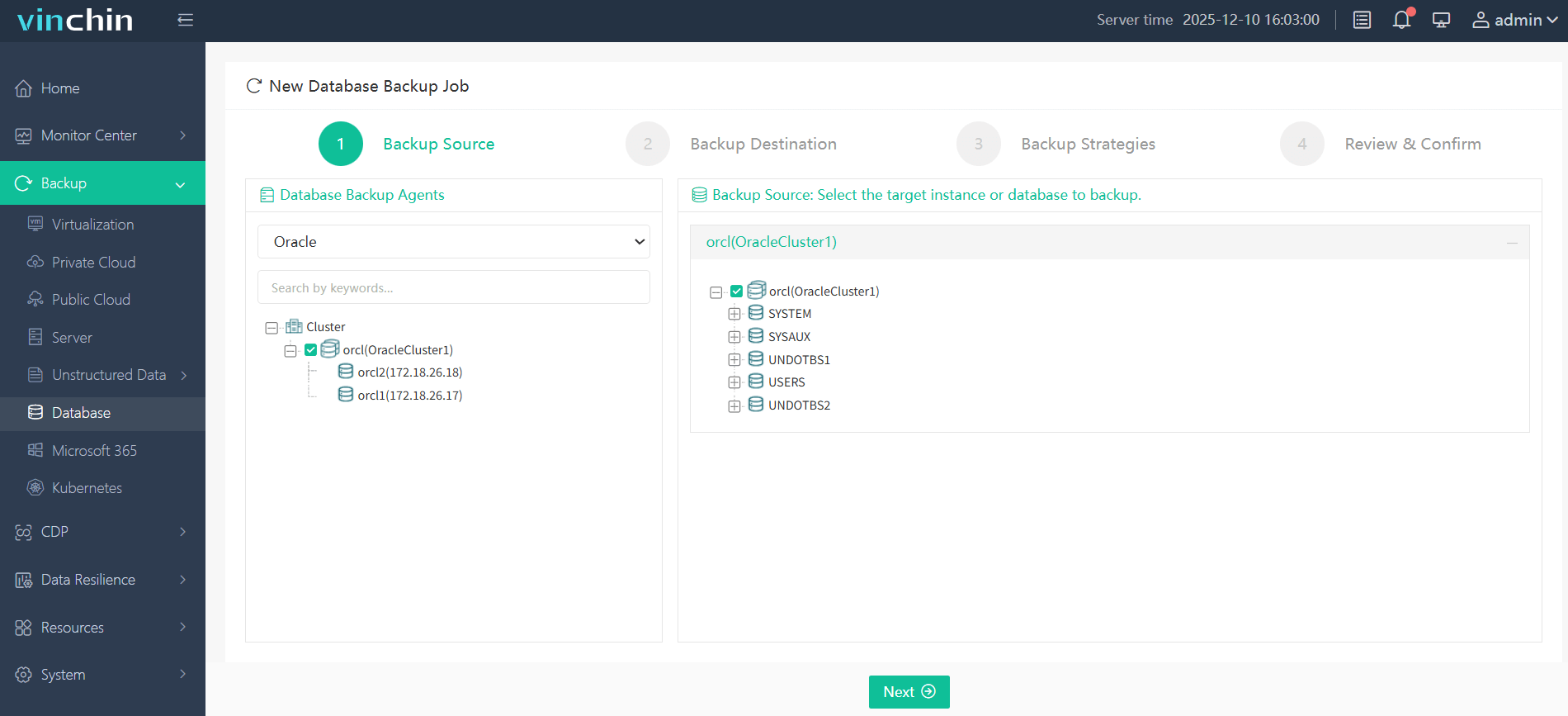
Step 2. Choose the backup storage
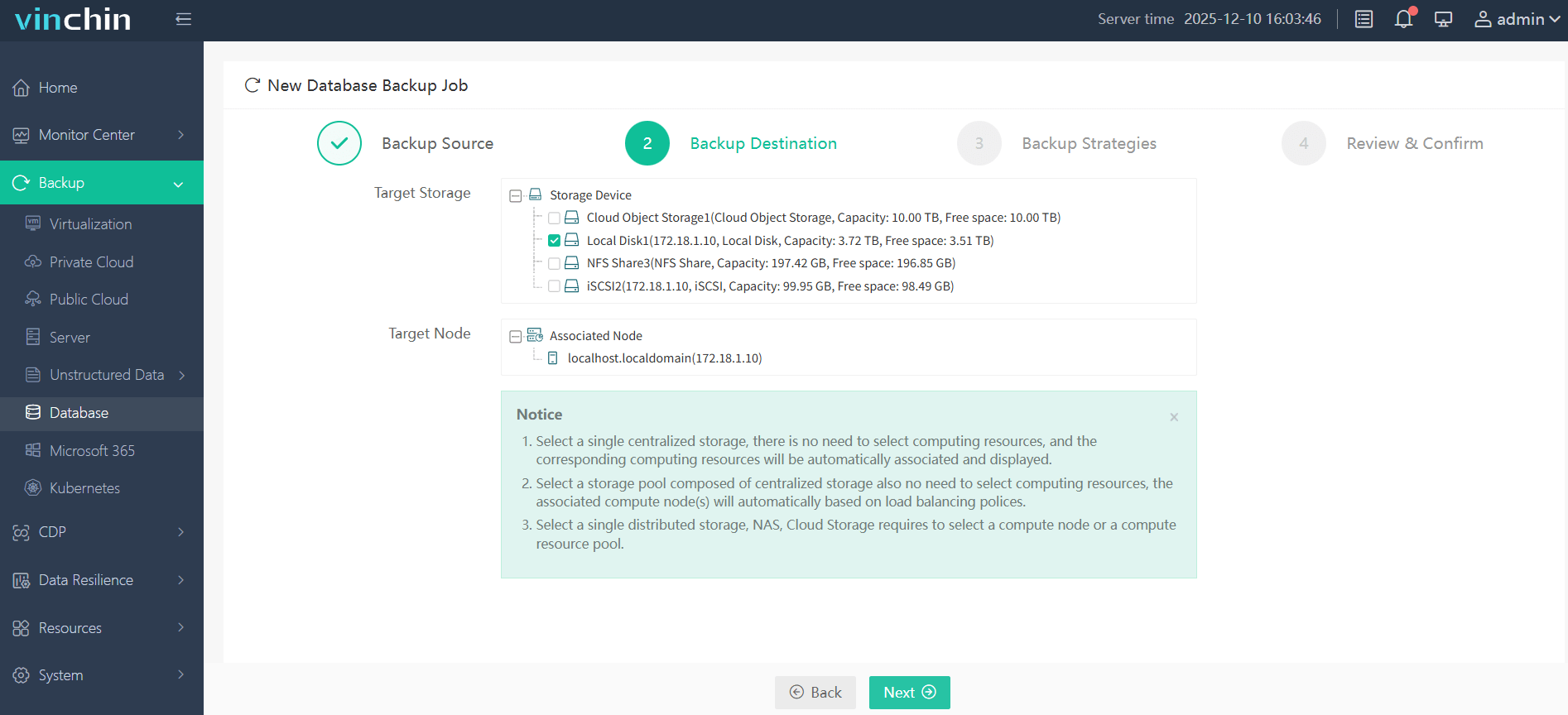
Step 3. Define the backup strategy
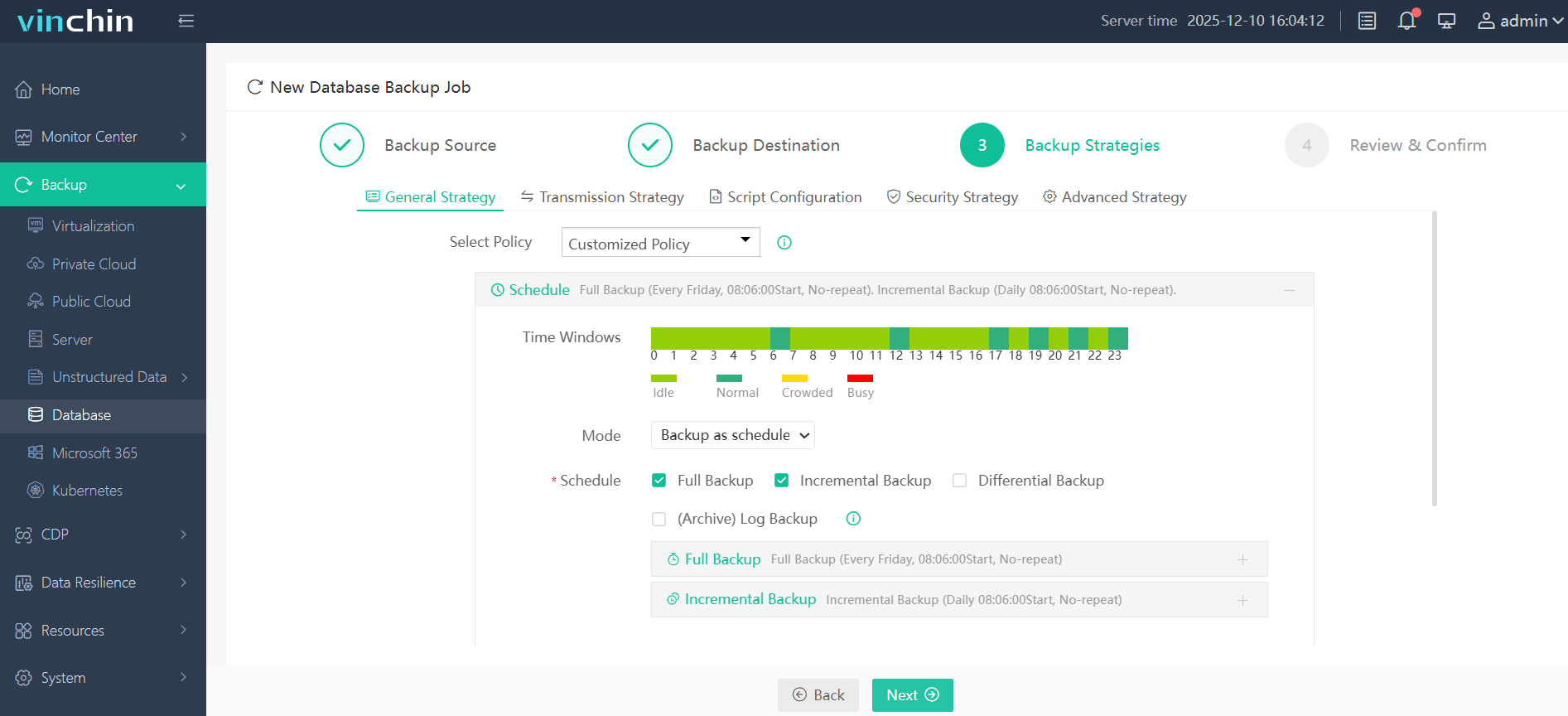
Step 4. Submit the job
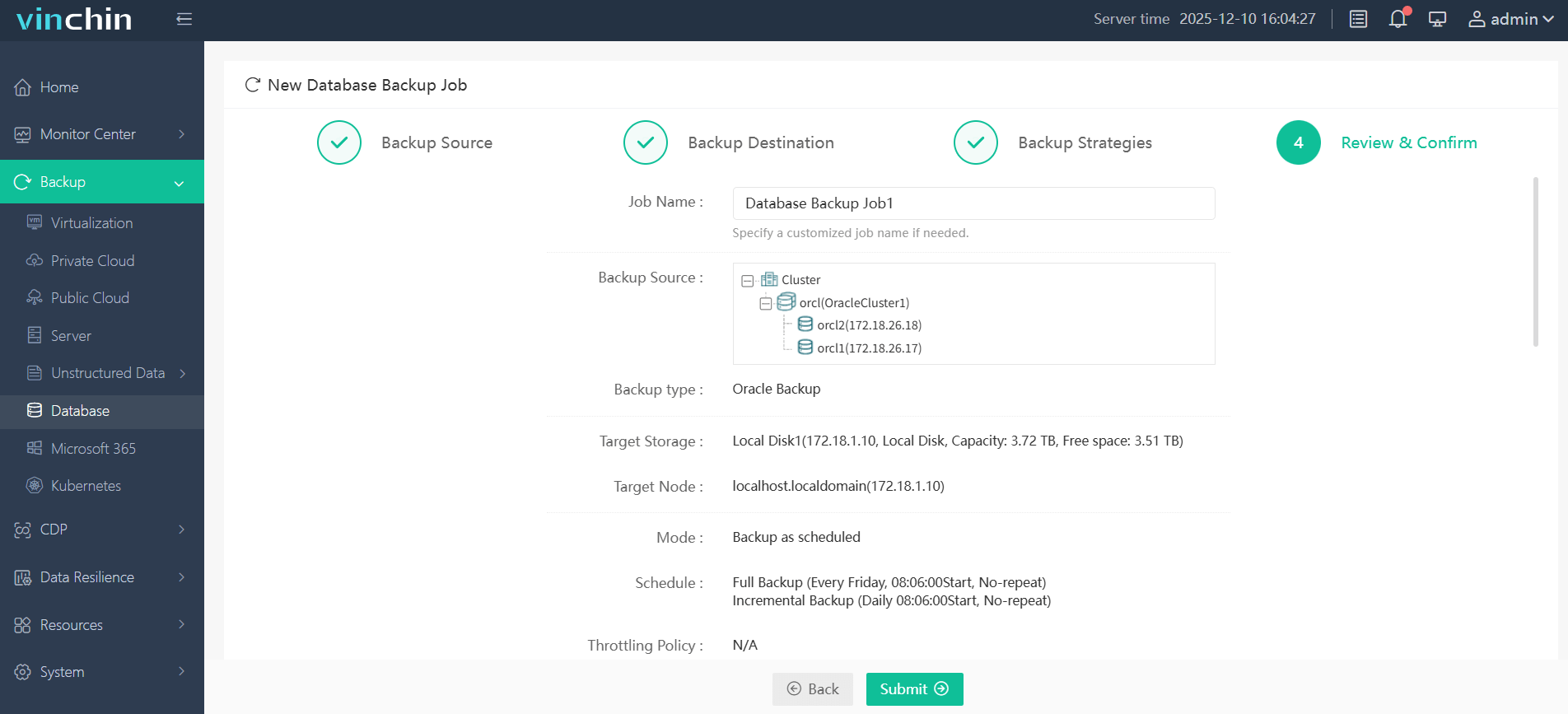
Vinchin Backup & Recovery enjoys global recognition among thousands of enterprise customers thanks to its reliability ratings and ease-of-use focus—experience its full-featured capabilities free for 60 days by clicking the download button above today!
Oracle RMAN Configure Snapshot Controlfile Name FAQs
Q1: What permissions should my snapshot controlfile directory have?
The directory must be owned by oracle (or equivalent DB owner) with read/write access granted; use at least mode 755 so all cluster nodes’ processes can reach it if needed.
Q2: Can I place my snapshot controlfile inside an ASM disk group? What’s correct syntax?
Yes—use syntax like CONFIGURE SNAPSHOT CONTROLFILE NAME TO '+DATA/PRODDB/snapcf_PRODDB.f' replacing PRODDB accordingly per environment specifics.
Q3: How do I quickly verify my configured path works across all RAC nodes?
Log into each node then run ls -l <configured_path> ensuring visibility/read-write status matches expectations everywhere involved in scheduled jobs.
Conclusion
Configuring the snapshot controlfile name in Oracle RMAN prevents avoidable errors during backups—especially across clusters—and keeps recovery fast when seconds count most! Follow these steps plus best practices above for peace of mind knowing critical metadata stays protected reliably every time jobs run smoothly! Vinchin further simplifies enterprise-grade protection so busy admins stay focused on bigger priorities instead!