Need to clone your Oracle database quickly without relying on existing backups? The Oracle RMAN Duplicate Active Database feature lets you create a working copy of your database directly over the network. No backup files required. This guide explains what it is, why it matters, how to prepare for it, how to use it step by step, how to optimize performance, and how to troubleshoot common issues.
What Is Oracle RMAN Duplicate Active Database?
Oracle RMAN Duplicate Active Database is a method that allows you to clone a live Oracle database onto another server or location without using pre-existing backups. Instead of restoring from backup files, this approach copies data files directly from the source (often called the target) database to a new auxiliary instance over the network in real time.
This process is managed by Oracle Recovery Manager (RMAN). It does not require any prior backup sets or image copies; everything happens live between source and auxiliary databases. This method—known as “active duplication”—has been available since Oracle Database 11g Release 2.
Active duplication is ideal when you need an up-to-date copy of your production environment for testing, development, migration tasks, or creating standby databases.
How to Prepare for Oracle RMAN Duplicate Active Database
Preparation is key for successful active duplication with minimal risk of error or data loss.
First, make sure your source database runs in ARCHIVELOG mode; this enables online duplication while transactions continue. Also check if FORCE LOGGING mode is enabled by running:
SELECT force_logging FROM v$database;
If not set to YES, enable it with:
ALTER DATABASE FORCE LOGGING;
This ensures all changes are logged so nothing gets missed during direct-path operations.
Next, confirm both servers can communicate over the network using tnsping from each host:
tnsping source_db
tnsping aux_db
If there’s no response or errors appear, fix connectivity before proceeding.
On the auxiliary server:
Install the same version of Oracle software as used on the source.
Create a password file using orapwd so that SYS authentication works across hosts.
Make sure the SYS password matches between both servers’ password files.
Test connection from auxiliary host with:
sqlplus "sys/password@aux_db as sysdba"
Create an initialization parameter file (PFILE) for your auxiliary instance by exporting from the source’s SPFILE:
CREATE PFILE='/tmp/initauxdb.ora' FROM SPFILE;
Edit this PFILE as needed—change parameters like DB_NAME, DB_FILE_NAME_CONVERT, and LOG_FILE_NAME_CONVERT if directory structures differ between servers.
Set up Oracle Net connectivity:
Add static service entries for your auxiliary instance in its listener.ora file.
Update tnsnames.ora on both hosts so each can resolve both service names.
Start or reload listeners using:
lsnrctl reload
Create all required directories on the auxiliary server—for data files, redo logs, control files, audit logs—and ensure correct permissions are set for the Oracle software owner.
Finally start your auxiliary instance in NOMOUNT mode using your prepared PFILE:
sqlplus / as sysdba
STARTUP NOMOUNT PFILE='/tmp/initauxdb.ora'
Careful preparation here prevents most errors later in the process.
How to Perform Oracle RMAN Duplicate Active Database
Once both environments are ready and connected over the network with matching configurations and credentials verified—it’s time to run active duplication through RMAN.
Begin by connecting RMAN from any machine that can reach both databases:
rman TARGET sys@source_db AUXILIARY sys@aux_db
Replace source_db and aux_db with their actual service names defined earlier.
For basic duplication where directory structures match exactly between hosts—and you’re certain filenames won’t collide—run:
DUPLICATE TARGET DATABASE TO aux_db FROM ACTIVE DATABASE NOFILENAMECHECK;
Use NOFILENAMECHECK only if you’re duplicating onto different physical hosts where file paths cannot overlap; otherwise leave it out for safety reasons.
If directory structures differ (which is common), set conversion parameters either in your auxiliary’s PFILE or directly within DUPLICATE command like this:
DUPLICATE TARGET DATABASE TO clone
FROM ACTIVE DATABASE
DB_FILE_NAME_CONVERT='/u01/app/oracle/oradata/prod','/u01/app/oracle/oradata/clone'
LOG_FILE_NAME_CONVERT='/u01/app/oracle/oradata/prod','/u01/app/oracle/oradata/clone'
NOFILENAMECHECK;
During execution RMAN will:
1. Copy (and convert) server parameter file (SPFILE) unless started with PFILE only.
2. Restore control file(s) onto auxiliary host.
3. Restore then recover all data files.
4. Create then recover online redo logs.
5. Open new database with RESETLOGS option at completion.
Afterwards connect directly to verify everything worked—check that all expected datafiles exist at their new locations and that status shows OPEN when querying V$DATABASE view in SQL*Plus.
For larger environments or those needing faster transfer speeds consider parallelism—which we’ll cover next!
Optimizing Performance with Channels
When duplicating large databases across networks—or when minimizing downtime matters—you should configure multiple channels within RMAN before running DUPLICATE commands.
Channels allow simultaneous streams of data transfer which speeds up copying significantly compared to single-threaded operation alone.
Here’s how you allocate channels explicitly inside an RMAN RUN block before launching DUPLICATE:
RUN {
   ALLOCATE CHANNEL ch1 TYPE DISK;
   ALLOCATE CHANNEL ch2 TYPE DISK;
   DUPLICATE TARGET DATABASE TO aux_db FROM ACTIVE DATABASE SECTION SIZE 500M;
}
The SECTION SIZE clause splits large datafiles into chunks processed concurrently across channels—ideal when dealing with multi-terabyte systems or slow links between sites.
You may adjust number of channels based on CPU/network capacity but avoid exceeding what hardware supports comfortably; too many can cause contention instead of improvement!
Monitor system load during operation via OS tools (top, vmstat, etc.) plus review wait events like "SQL*Net message from client" which may indicate bottlenecks requiring further tuning such as increasing buffer sizes or upgrading bandwidth temporarily during cloning windows.
Why Choose Active Database Duplication in Oracle?
Active database duplication offers several advantages over traditional restore-from-backup methods:
1. It eliminates dependency on pre-existing backup sets—saving storage space while reducing manual steps prone to human error.
2. You get near-instantaneous clones suitable for test/dev refreshes without disrupting production workloads more than necessary.
3. Automation reduces complexity: once configured properly most steps proceed hands-free under full control via scripts or scheduled jobs.
4. Advanced features like compression/encryption/parallelism help even very large environments complete efficiently.
Note:
Active duplication requires good network bandwidth throughout—the entire process depends upon uninterrupted access between source & auxiliary instances! Any outage mid-process means starting again from scratch after cleaning up partial results.
Performance impact should also be considered: schedule duplications outside peak hours whenever possible so user-facing applications aren’t slowed down unexpectedly by heavy read activity generated during cloning.
Also note:
because active duplication reads live blocks off production disks continuously until finished—the source must remain fully available throughout! If maintenance windows are tight plan accordingly.
Common Issues and Troubleshooting
Even experienced administrators sometimes hit snags during active duplication—but most problems have straightforward solutions:
Encounter "ORA-12514: TNS:listener does not currently know of service requested"? Double-check static entry exists under SID_LIST_LISTENER section within listener configuration (listener.ora) then restart listener process using lsnrctl reload. Confirm registration appears correctly via lsnrctl status output.
See "RMAN-05501: abortion of duplicate operation"? This usually means one or more required directories don’t exist yet under destination path(s)—create missing folders manually ensuring correct ownership & permissions before retrying.
Notice slow progress marked by excessive waits such as "db file scattered read" at source side or "SQL*Net message from client" at destination? Investigate underlying disk throughput/network speed limitations; adding more channels may help but only if infrastructure supports higher concurrency safely!
If a network interruption occurs mid-operation—the entire duplicate job fails unrecoverably; clean up partially created files/directories then restart whole process once connectivity restored.
Planning ahead minimizes surprises—but knowing these quick fixes keeps downtime short if something goes wrong anyway!
How Can Vinchin Back Up Oracle Databases?
Beyond native tools like RMAN, organizations often seek comprehensive protection and streamlined management for their critical databases such as Oracle. Vinchin Backup & Recovery stands out as an enterprise-level solution supporting today’s leading databases including Oracle 10g, 11g/11g R2, 12c, 18c, 19c, 21c, Oracle RAC, MySQL, SQL Server, MariaDB, PostgreSQL, PostgresPro, and TiDB.
For users managing complex environments like yours focused on “oracle rman duplicate active database,” Vinchin Backup & Recovery delivers essential features such as advanced source-side compression, incremental backup options tailored for efficiency, batch database backup management across multiple instances simultaneously, robust cloud backup/tape archiving integration for disaster recovery readiness, and integrity checks ensuring reliable restores every time.
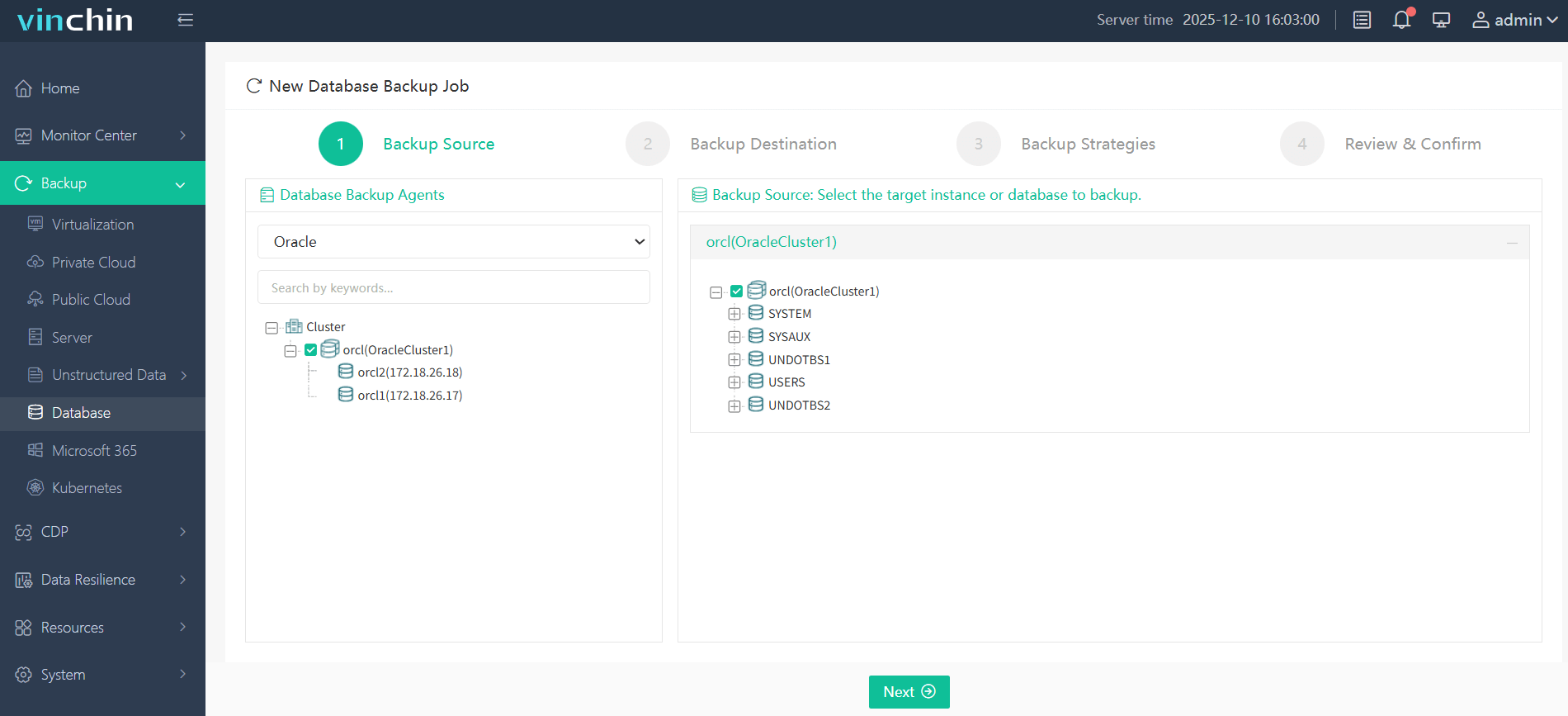
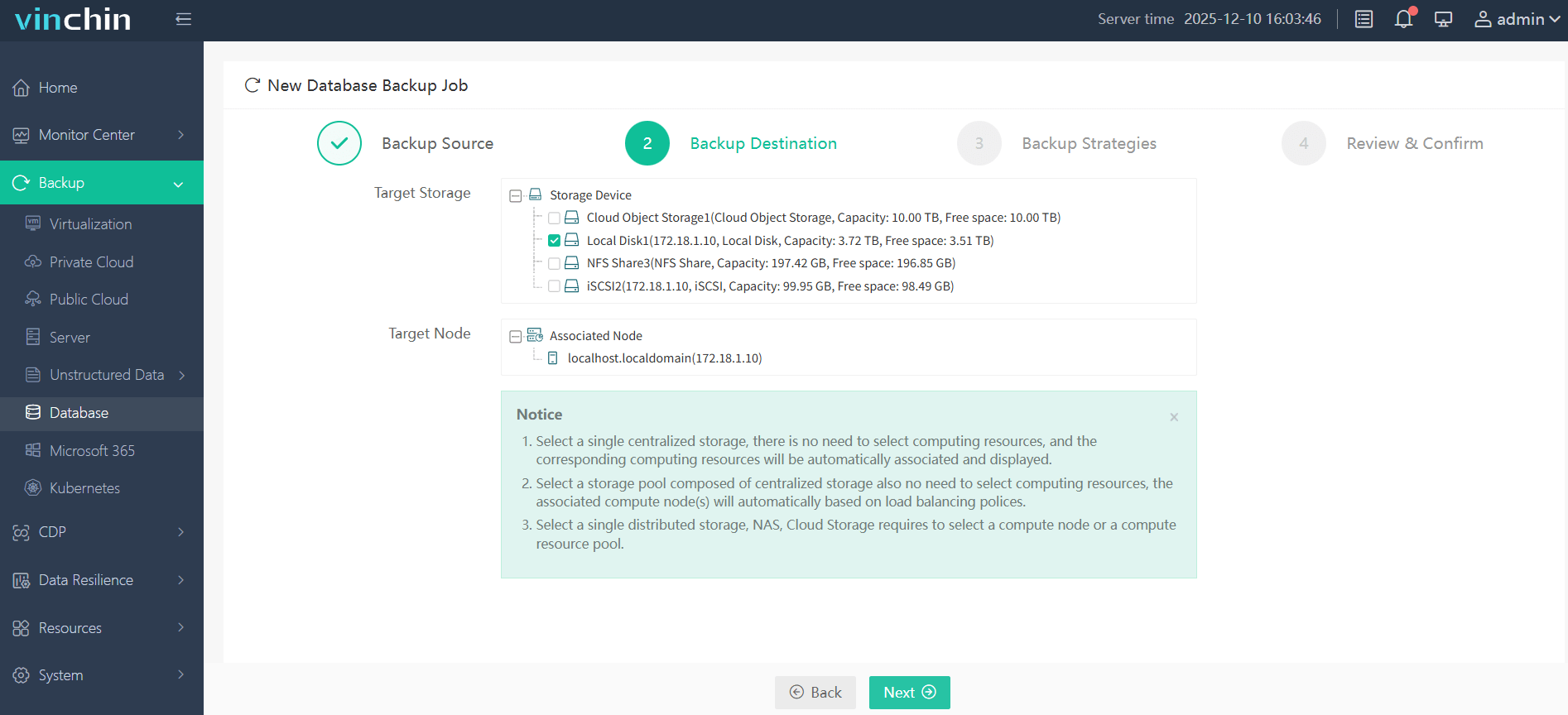
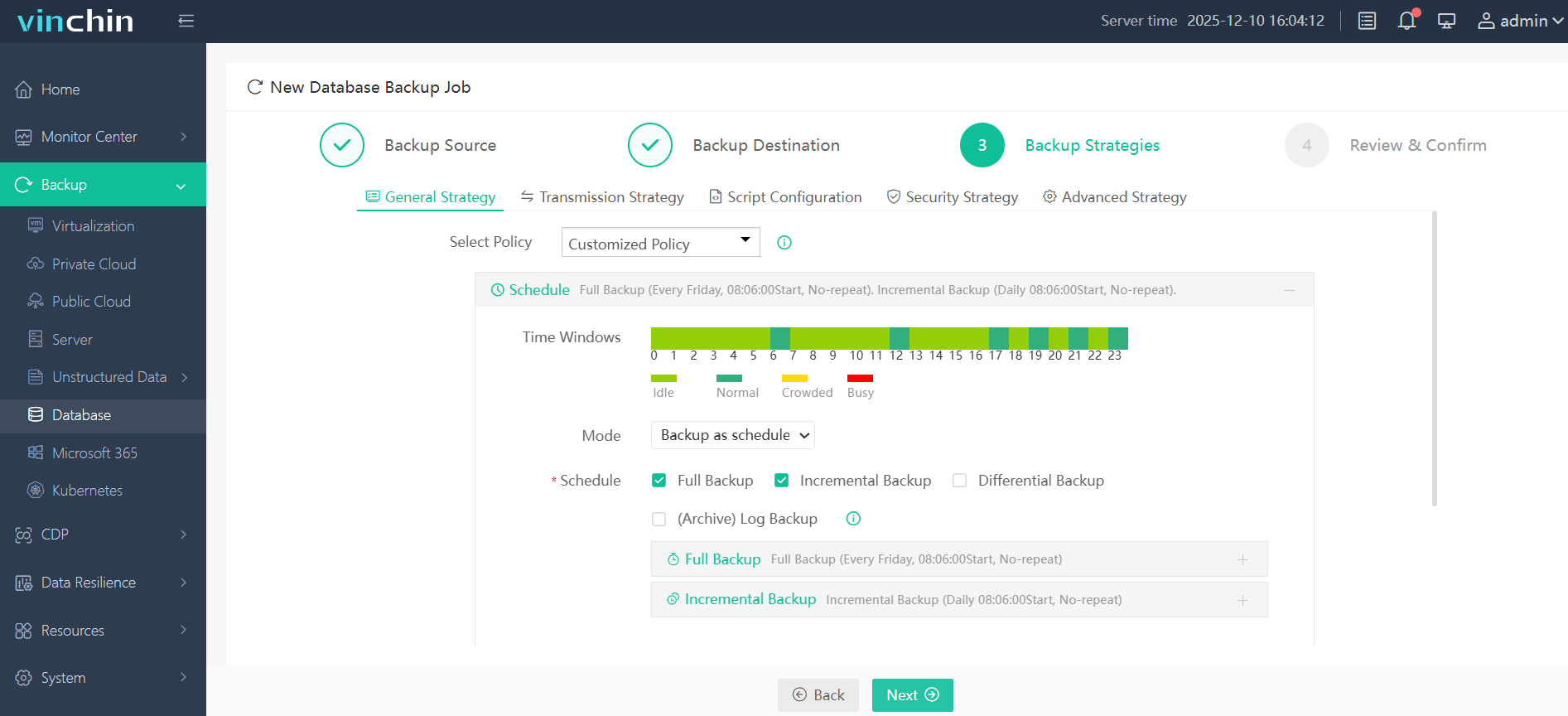
With its intuitive web console interface backing up an Oracle environment takes just four steps:
Step 1. Select the Oracle database to backup
Step 2. Choose backup storage
Step 3. Define backup strategy
Step 4. Submit job
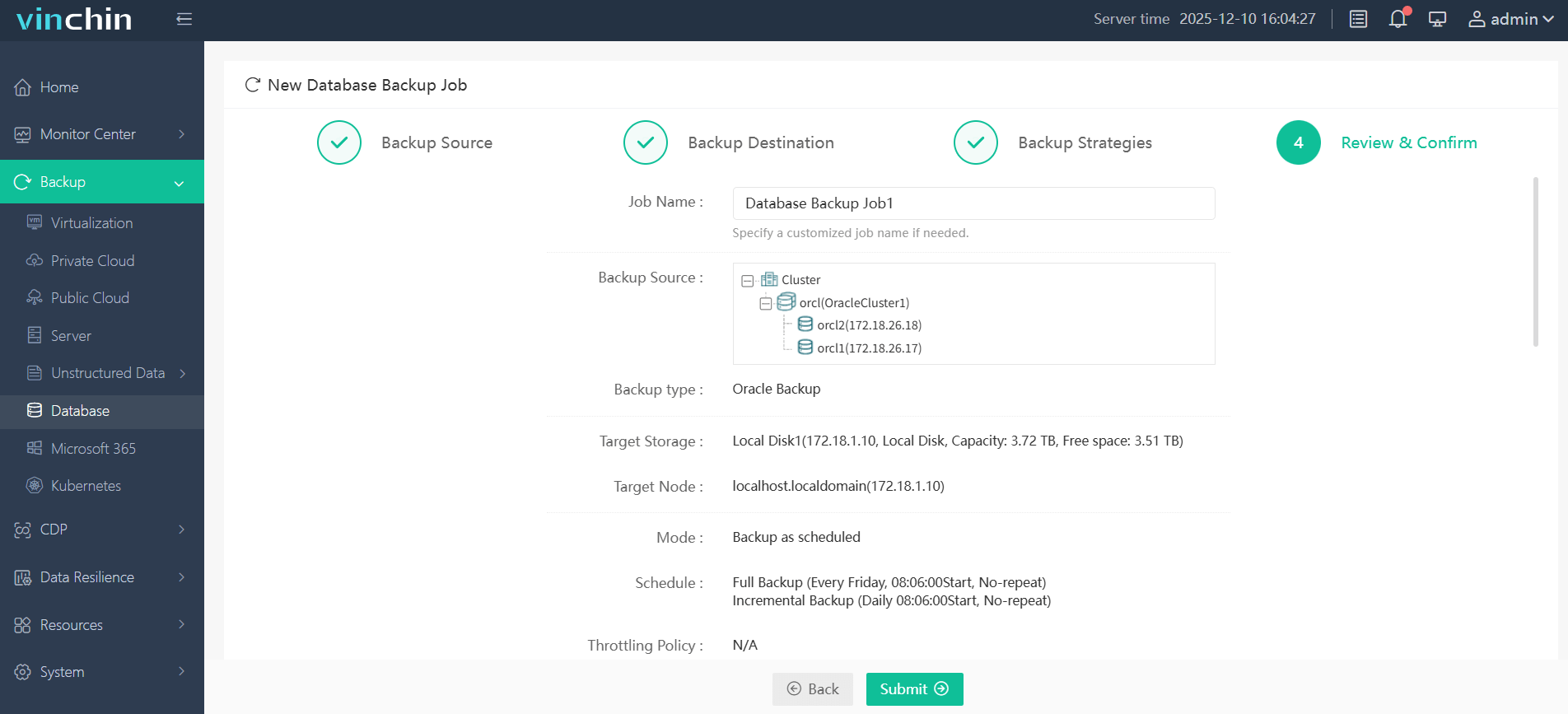
Vinchin Backup & Recovery enjoys global recognition among enterprise customers with top ratings worldwide and offers a full-featured free trial valid for 60 days. Click download now to experience its capabilities firsthand!
Oracle RMAN Duplicate Active Database FAQs
Q1: Can I use RMAN active duplication if my source and auxiliary databases run different versions?
A1: No; both must use identical versions—including patch levels—for successful active duplication.
Q2: What happens if my auxiliary instance isn’t started in NOMOUNT state before running DUPLICATE?
A2: The command fails immediately; always start auxiliary instance in NOMOUNT mode first!
Q3: What should I do if my network connection drops during active duplication?
A3: Clean up any partially created files/directories/shutdown failed instance/restart entire DUPLICATE operation after restoring connectivity.
Conclusion
Oracle RMAN Duplicate Active Database gives IT teams fast reliable cloning without needing backups—perfect for test/dev refreshes/migrations/disaster recovery drills alike! With careful setup/troubleshooting knowledge anyone can master this technique quickly—and when full-featured enterprise protection matters most choose Vinchin’s robust solution trusted worldwide!