Backing up your Oracle database when it is offline can be one of the safest ways to protect your data. Many administrators choose offline (cold) backups because they are simple and ensure consistency. However, this approach comes with a clear trade-off: downtime. If your environment can tolerate scheduled outages—such as during maintenance windows or off-hours—offline backup may be ideal. In this article, we’ll explain what an Oracle RMAN offline backup is, why you might use it, how to perform it step by step, and how it compares with manual file-copy methods. We will also discuss how Vinchin makes Oracle offline backups easier for enterprise environments.
What Is Oracle RMAN Offline Backup?
An Oracle RMAN offline backup—also known as a cold or consistent backup—is created when the database is shut down and not open for user activity. In this state, all changes have been written to disk; no transactions are running; everything is stable. This ensures that every file copied reflects a single point in time.
RMAN (Recovery Manager) is Oracle’s built-in tool designed specifically for managing these types of backups efficiently. Unlike online backups—which require ARCHIVELOG mode—offline backups do not need special logging settings because there are no active changes during the process. After restoring an offline backup, you can usually open your database right away without extra recovery steps.
Offline backups provide definitive consistency by eliminating uncertainty present in some online scenarios where transactions may still be in progress.
Why Choose Offline Backup for Oracle?
Offline backups guarantee data consistency since nothing changes during the process—the database is completely at rest. This means restores are straightforward: you bring back files from backup storage and start up your system without applying redo logs or performing additional recovery steps.
This simplicity makes offline backup attractive for smaller databases or systems that do not run 24/7. It’s also useful during planned maintenance windows when downtime is acceptable or required by policy.
However, keep in mind that taking an offline backup requires shutting down your database entirely—even if only briefly—which interrupts service for users and applications relying on it. For mission-critical systems needing high availability around-the-clock, this method may not fit operational requirements.
Choosing between online and offline approaches depends on balancing risk tolerance against business needs: do you value absolute consistency over continuous access? If so, an RMAN offline backup could be right for you.
Method 1: Performing Offline Backup with RMAN
Using RMAN for offline backups follows best practices recommended by Oracle itself. RMAN automates much of the work: tracking metadata about each backup piece so restores become faster and less error-prone than manual methods.
Before starting:
Make sure you have administrative privileges.
Set necessary environment variables such as ORACLE_SID.
Plan a maintenance window since users cannot access data during this process.
The key requirement here is starting your database in MOUNT mode—not OPEN—after shutdown but before backing up files. Why? Because MOUNT mode reads control files so RMAN knows which data files exist but does not allow user transactions; this guarantees all files remain unchanged throughout the operation.
Step-by-step RMAN Offline Backup:
1. Start RMAN and connect to your database:
At your command prompt enter:
rman target /
2. Shutdown the database if it’s running:
At the RMAN prompt type:
shutdown immediate;
3. Start the database in MOUNT mode:
This loads control files but keeps user access disabled:
startup mount;
4. Run the backup command:
To back up everything use:
backup database;
To specify where files go add FORMAT—for example:
backup database format '/your/backup/path/%U';
%U generates unique filenames automatically.
5. (Optional) Back up control file and SPFILE:
While often included automatically by backup database, you can run these commands separately if needed:
    backup current controlfile;
    backup spfile;
6. Open the database after completion:
Bring users back online:
alter database open;
RMAN stores detailed information about each operation so future restores are reliable even years later.
Verifying Your Backup and Restore Readiness
After completing any critical backup task—including an offline one—it’s essential to verify both its existence and usability before declaring success.
First, within RMAN run:
list backup summary;
This shows all recent backups cataloged by date/time/type/location so you know exactly what was saved.
Next consider running:
crosscheck backup;
This checks whether physical pieces still exist at their recorded locations—a quick way to spot missing or corrupted files early rather than discovering problems during disaster recovery attempts.
Finally—and most importantly—test restoring from your latest cold backup on a non-production system whenever possible using:
restore database;
recover database;
alter database open resetlogs;
Testing validates both procedures and documentation accuracy under real-world conditions—a crucial safeguard against surprises later on.
Method 2: Manual Cold Backup Using OS Commands
Some administrators prefer manually copying files at operating system level instead of using specialized tools like RMAN—often out of habit or legacy practice from earlier versions of Oracle Database software.
While conceptually simple (“shut down then copy everything important”), this approach carries significant risks unless executed carefully every time.
First ensure complete shutdown has occurred—not just partial closure—to avoid capturing inconsistent data states:
Manual Cold Backup Steps:
1. Shut down the entire instance cleanly:
Use SQL*Plus or similar tools:
     sqlplus / as sysdba
     SHUTDOWN IMMEDIATE; -- Wait until fully stopped
2. Identify all necessary files:
You must copy every component listed below (run queries inside SQL*Plus):
Datafiles (SELECT name FROM v$datafile;)
Controlfiles (SELECT name FROM v$controlfile;)
Online redo log members (SELECT member FROM v$logfile;)
Optionally parameter/configuration files (SPFILE/INITORA)
3. Copy each file safely using OS commands:
On Linux use cp; on Windows use copy. Example:
cp /oracle/data/system01.dbf /backup/location/
4. Restart services once finished:
Bring everything back online:
     sqlplus / as sysdba
     STARTUP;
Manual cold backups lack automation—you must track which files were backed up yourself—and offer no built-in integrity checking beyond what basic OS utilities provide.
Simplifying Oracle Offline Backups with Vinchin Backup & Recovery
For organizations seeking streamlined management of Oracle offline backups alongside robust enterprise features, Vinchin Backup & Recovery delivers comprehensive protection across leading databases—including Oracle, MySQL, SQL Server, MariaDB, PostgreSQL, PostgresPro, and TiDB—with full support for advanced operations on Oracle environments specifically highlighted here due to relevance.
Vinchin Backup & Recovery offers batch database backup capabilities, advanced source-side compression tailored for select platforms including Oracle, granular incremental backups for efficient storage usage on supported databases like Oracle itself, multi-level data compression options across workloads, plus strong retention policies such as GFS retention strategy—all designed to optimize performance while minimizing risk exposure and operational overhead in large-scale deployments.
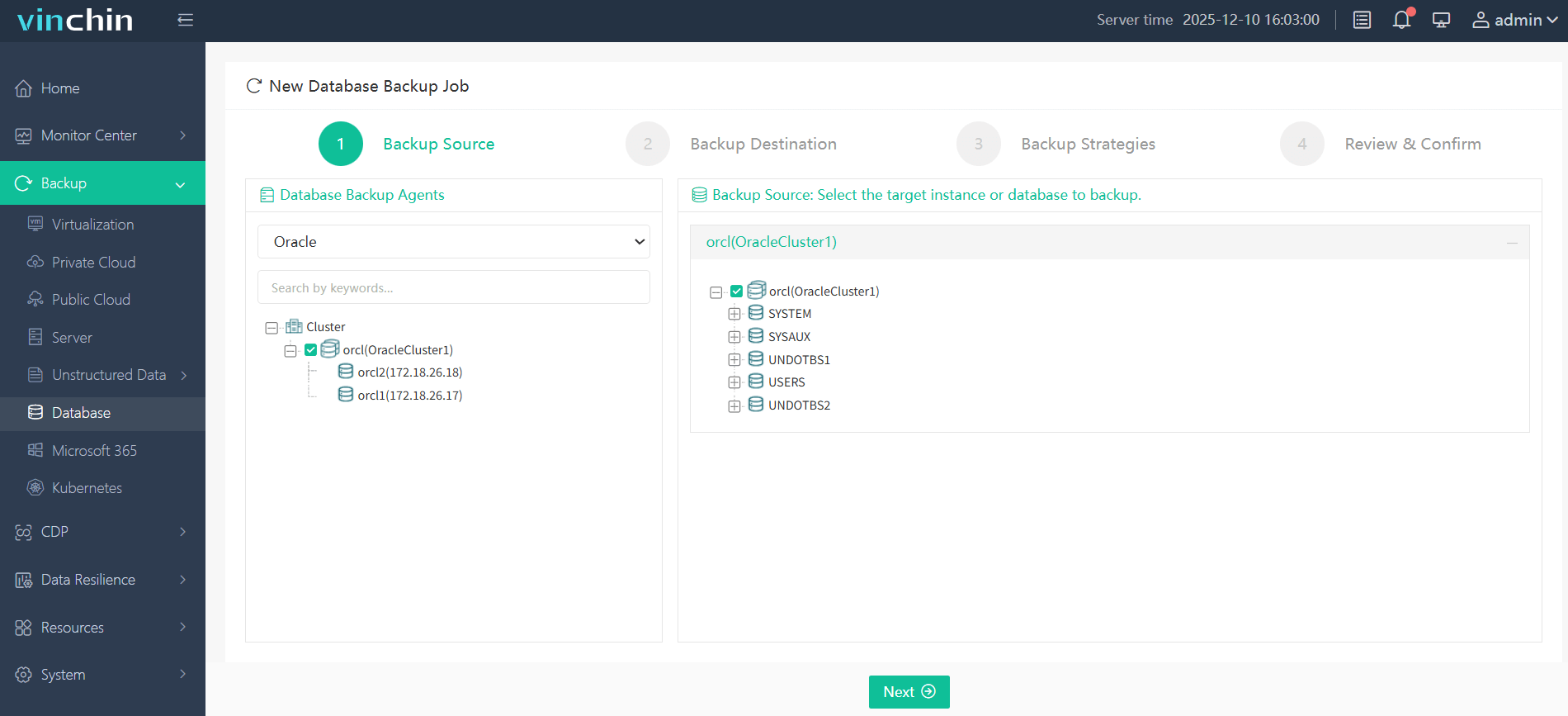
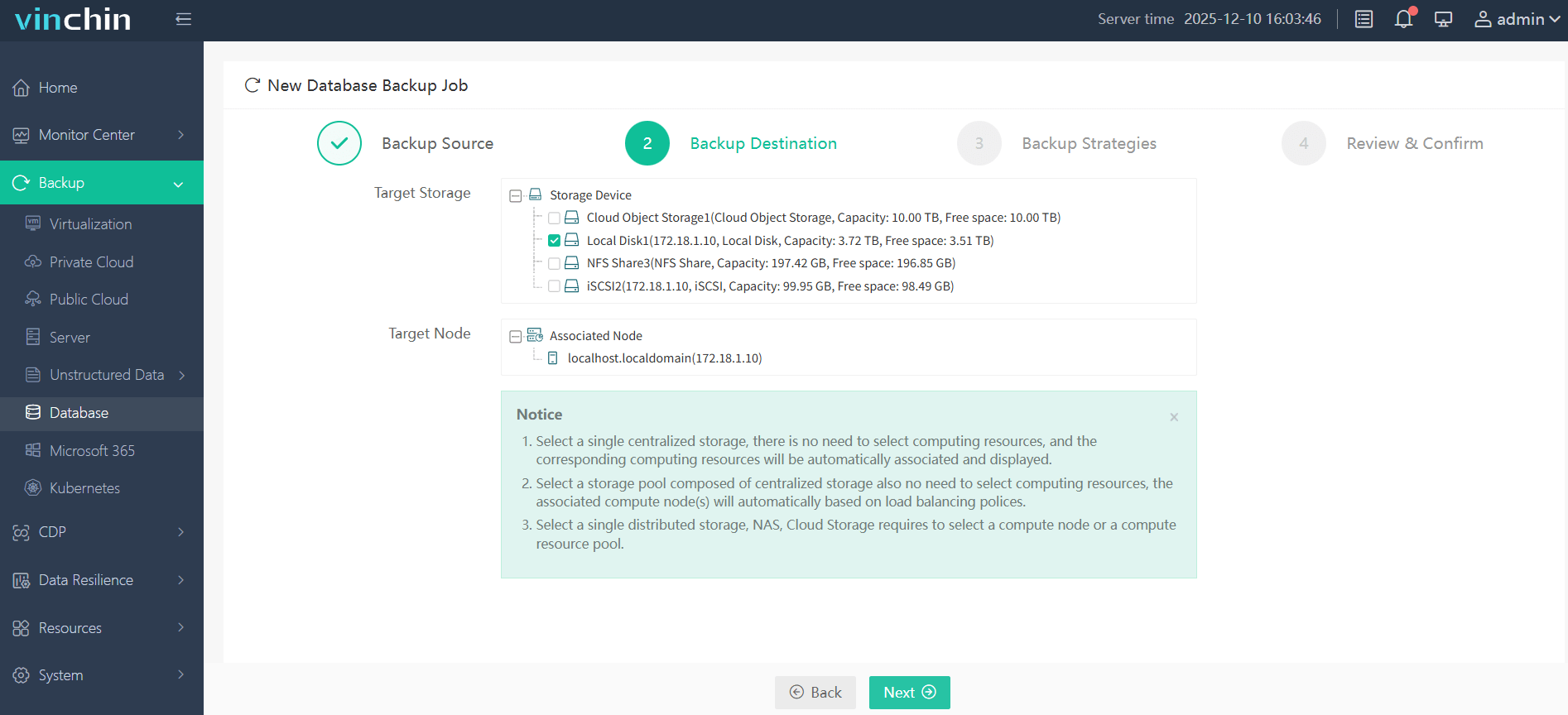
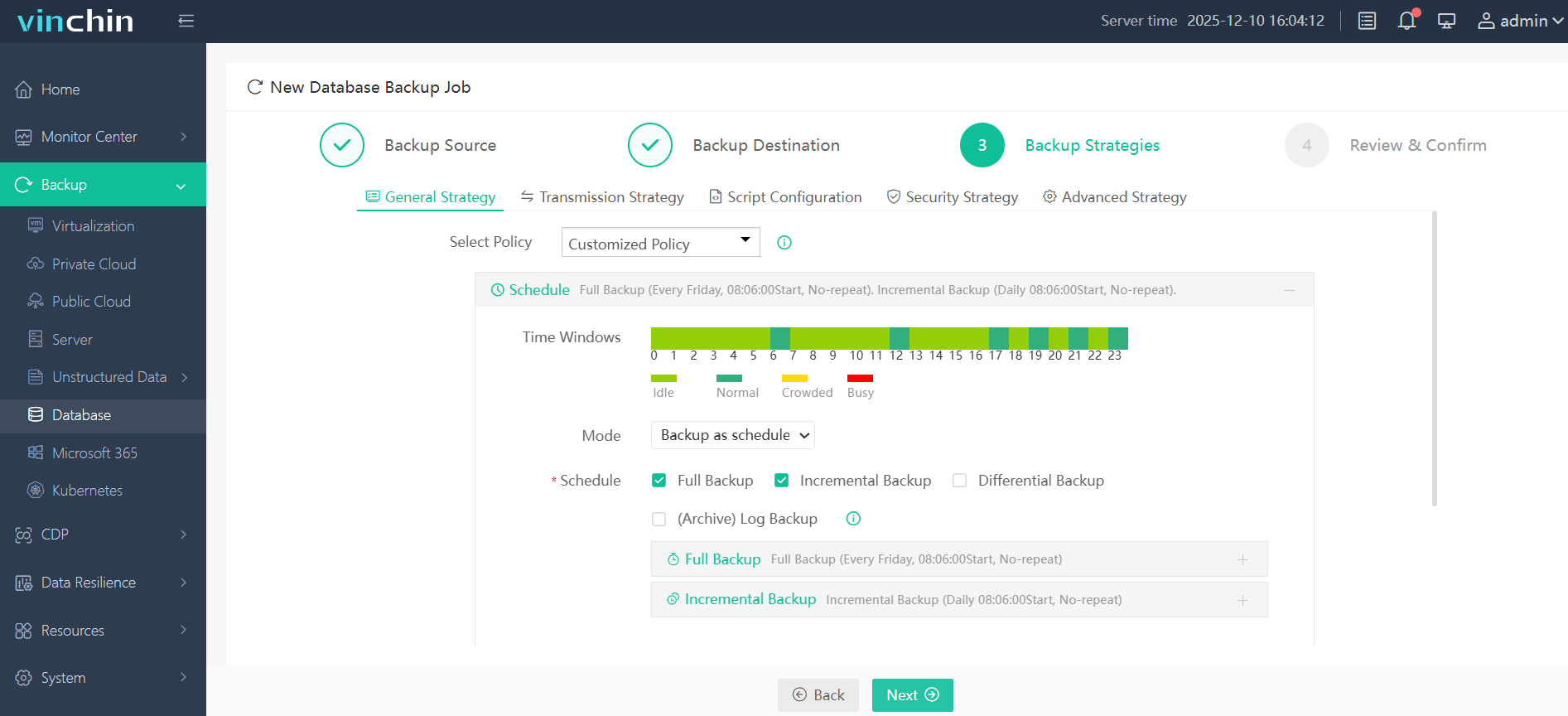
The intuitive web console makes safeguarding your critical data remarkably straightforward—in just four steps you can secure any workload efficiently:
Step 1. Select the Oracle database to back up
Step 2. Choose the backup storage
Step 3. Define the backup strategy
Step 4. Submit the job
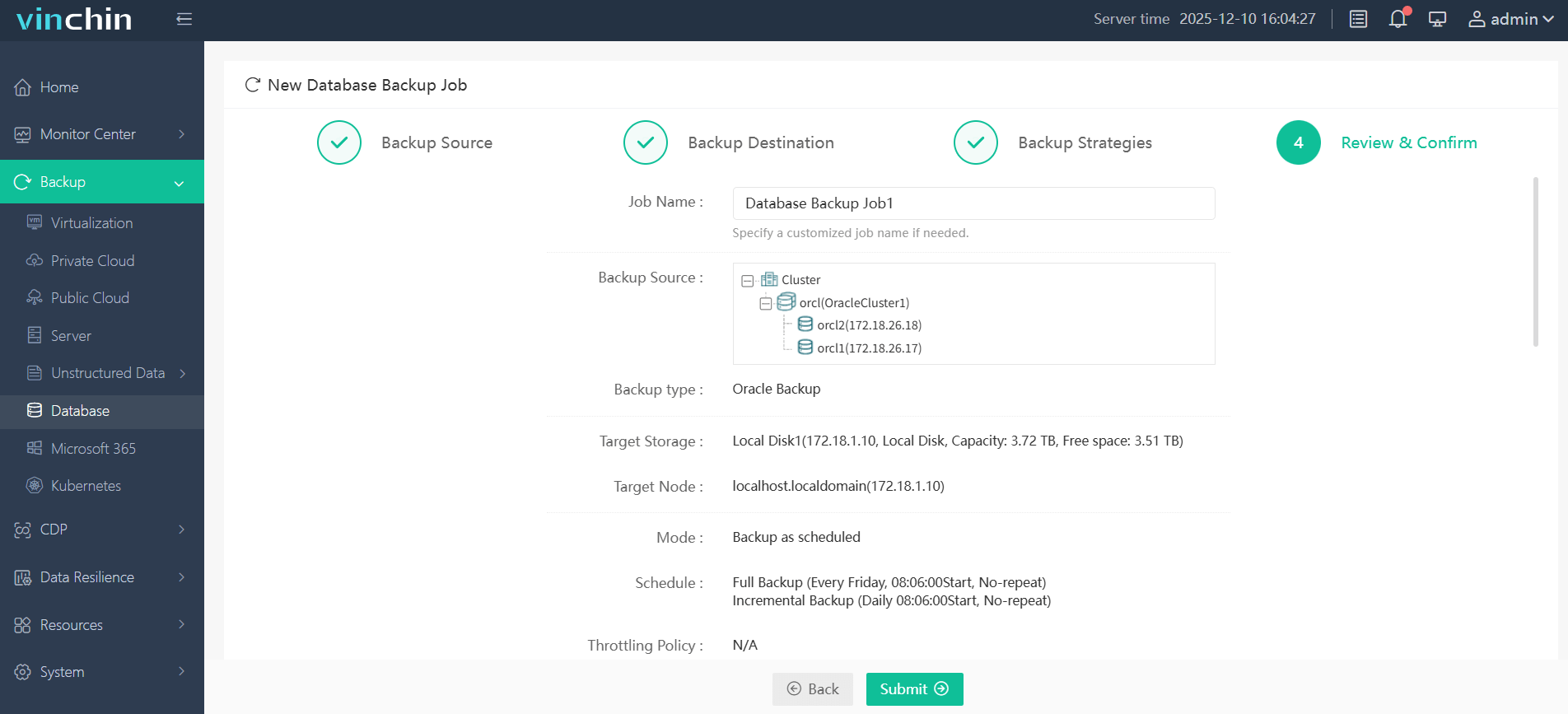
Recognized globally among enterprise IT teams—with top ratings from customers worldwide—Vinchin Backup & Recovery offers a full-featured free trial valid for 60 days; click download now to experience industry-leading protection firsthand!
Oracle RMAN Offline Backup FAQs
Q1: Can I schedule regular automated offline RMAN backups?
Yes; place commands into a shell script or batch file coordinated with external schedulers—but always plan downtime carefully with stakeholders first.
Q2: How do I validate my latest cold/offline RMAN backup?
Use LIST BACKUP SUMMARY then test restore procedures periodically on non-production systems for assurance.
Q3: What happens if I forget one required file during manual cold copy?
Restore attempts will fail; always verify completeness using discovery queries before copying any set.
Conclusion
Oracle RMAN makes consistent offline backups straightforward—but always verify success through testing.Restoring reliability depends on careful planning,whether using scripts,R MAN itself ,or trusted solutions.Vinchin automates complex tasks,saving time while protecting critical business data.Try their free trial today!