Are you wondering how to perform an Oracle RMAN backup without ARCHIVELOG mode? Many database administrators face this challenge when working with systems that do not require point-in-time recovery or have limited storage resources. In this article, we explain what NOARCHIVELOG mode is, why you might use RMAN backups without ARCHIVELOG, and provide step-by-step instructions for both RMAN-based and OS-level cold backups. We also show how Vinchin can simplify Oracle database protection in these scenarios.
What Is Oracle NOARCHIVELOG Mode?
Oracle databases can run in either ARCHIVELOG or NOARCHIVELOG mode. In NOARCHIVELOG mode, Oracle does not save filled redo log files as archive logs; instead, it reuses them as soon as possible. This means you cannot recover transactions that occurred after your last backup because those changes are not preserved anywhere else once overwritten.
NOARCHIVELOG mode is often chosen for test environments or systems where some data loss between backups is acceptable—such as development databases or non-critical applications. However, this choice limits your backup and recovery options: only consistent (cold) backups are possible since online (hot) backups require archived logs to ensure all changes are captured safely. You also lose the ability to recover to a specific point in time after your last backup.
Why Use RMAN Backup Without ARCHIVELOG?
Some administrators select NOARCHIVELOG mode to reduce storage needs and simplify management tasks related to archived logs. Without archived logs piling up on disk, you avoid extra overhead from managing these files—no need for frequent log file cleanups or additional storage just for archives.
This approach can improve performance slightly by reducing disk writes associated with archiving operations. It may also lower costs for non-critical databases where losing recent changes is acceptable during disaster recovery scenarios.
However, there’s an important trade-off: you can only restore the database up to the time of your last full backup taken while the system was offline or mounted—not beyond that point. Any changes made after that backup are lost if a failure occurs before another cold backup is completed. When planning your strategy for oracle rman backup without archivelog enabled, weigh simplicity against potential data loss carefully.
Method 1: Consistent Backups with RMAN
When your Oracle database runs in NOARCHIVELOG mode, online (hot) backups are impossible because unarchived redo information would be missing from any restored copy—making it inconsistent by design. Instead, you must perform a consistent (cold) backup using RMAN while the database is shut down or started in mount mode only.
A consistent RMAN cold backup ensures all data files match at a single transactionally safe point so they can be restored together reliably later on.
To perform a consistent RMAN backup:
First connect as a user with SYSDBA privileges using either SQL*Plus or directly through RMAN itself.
Next shut down the database cleanly so all committed transactions reach disk.
Then start up in mount mode—this allows access to datafiles/controlfile but keeps users out.
Now run your full database backup commands.
Finally open the database again when finished so users can resume work.
Here’s how each step looks:
1. Connect to RMAN:
$ rman target /
2. Shut down the database:
RMAN> SHUTDOWN IMMEDIATE;
3. Start up in mount mode:
RMAN> STARTUP MOUNT;
4. Take a full database backup including control file:
RMAN> BACKUP AS BACKUPSET DATABASE INCLUDE CURRENT CONTROLFILE;
RMAN> BACKUP SPFILE;
5. Open the database for users:
RMAN> ALTER DATABASE OPEN;
Store your resulting backup files securely—ideally off-server—to protect against hardware failure or site disasters.
Repeat this process regularly based on business requirements; remember every change since your last cold backup will be lost if recovery becomes necessary!
Method 2: OS-Level Cold Backup
Another way to back up an Oracle database running in NOARCHIVELOG mode is performing an OS-level cold copy while everything stays offline.
This method involves shutting down Oracle completely then copying all essential files directly from disk using standard operating system commands such as cp/tar/rsync on Linux or robocopy/xcopy on Windows platforms.
It’s simple but demands careful attention—you must capture every required component accurately!
Begin by shutting down cleanly via SQL*Plus:
1. Connect as SYSDBA then shut down:
SQL> SHUTDOWN IMMEDIATE;
2. Identify locations of all critical files:
SQL> SELECT name FROM v$datafile;
Control files
SQL> SHOW PARAMETER control_files;
Server parameter file (SPFILE)
SQL> SHOW PARAMETER spfile;
Password file location (if used)
Check default path such as $ORACLE_HOME/dbs/orapw<SID> on Unix/Linux
3. Copy everything securely—for example using tar preserves permissions/timestamps which helps during restores:
$ tar -czvf /backup/orcl_cold_$(date +%Y%m%d).tar.gz /u01/oradata/ORCL/ /u01/app/oracle/product/19/dbhome_1/dbs/spfileORCL.ora /u01/app/oracle/product/19/dbhome_1/dbs/orapwORCL
4. Restart Oracle when done copying:
SQL> STARTUP;
Never attempt partial copies—missing even one file could make restoration impossible! Also note: backed-up online redo logs should never be applied during restore/recovery since they’re not archived; doing so risks introducing inconsistencies.
How Can You Back Up Oracle Databases Without ARCHIVELOG Using Vinchin?
While traditional methods require careful scripting and validation, enterprise environments benefit greatly from streamlined solutions tailored for complex workloads like Oracle databases—even those running in NOARCHIVELOG mode. Vinchin Backup & Recovery stands out as a professional-grade platform supporting most mainstream databases including Oracle, MySQL, SQL Server, MariaDB, PostgreSQL, PostgresPro, and TiDB—with robust features specifically designed for enterprise needs.
With Vinchin Backup & Recovery, organizations gain access to advanced source-side compression (for Oracle), incremental backups (for Oracle), batch job management across multiple instances, flexible retention policies including GFS retention policy support, and comprehensive integrity checks—all helping ensure efficient storage usage and reliable recoverability even under strict RTO/RPO requirements.
The intuitive web console makes protecting your environment straightforward:
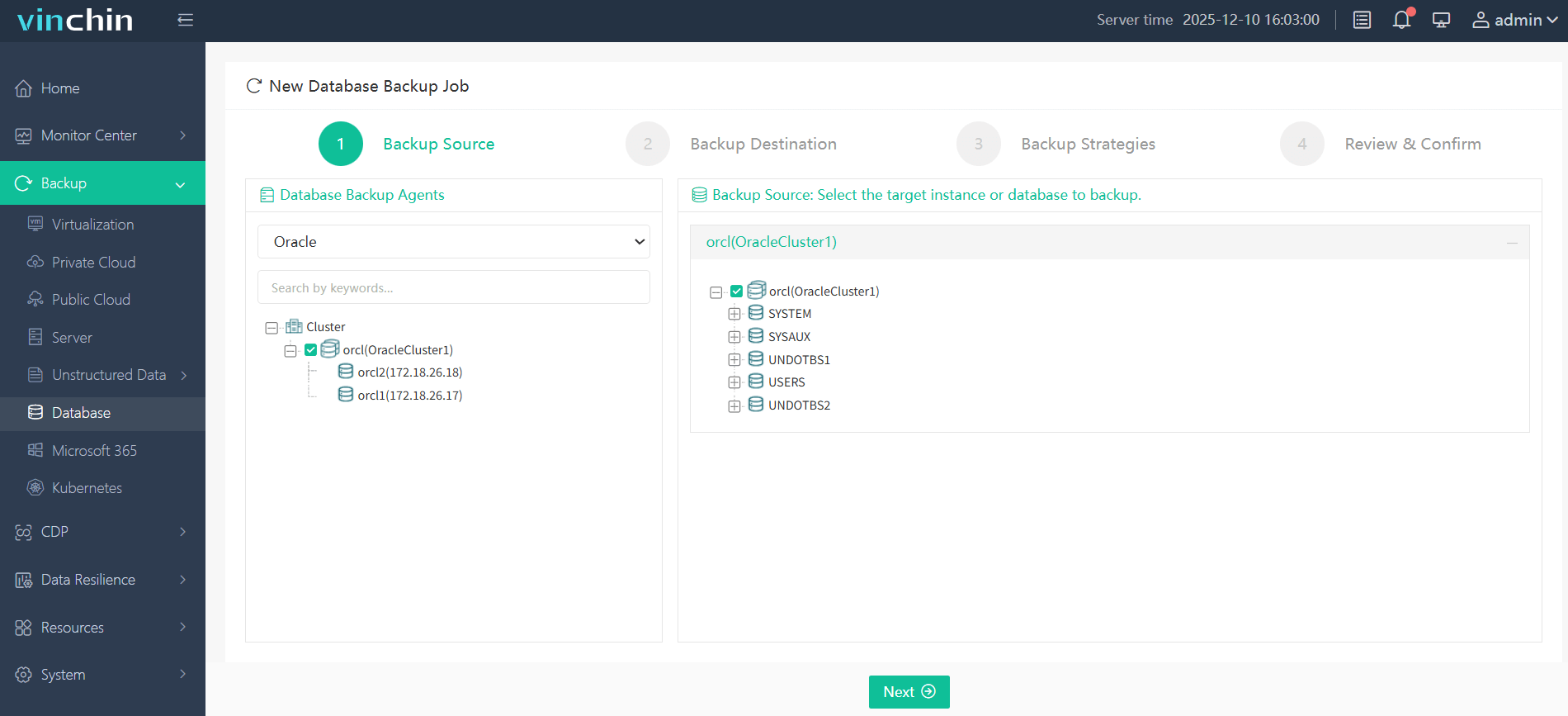
Step 1. Select the Oracle database to back up
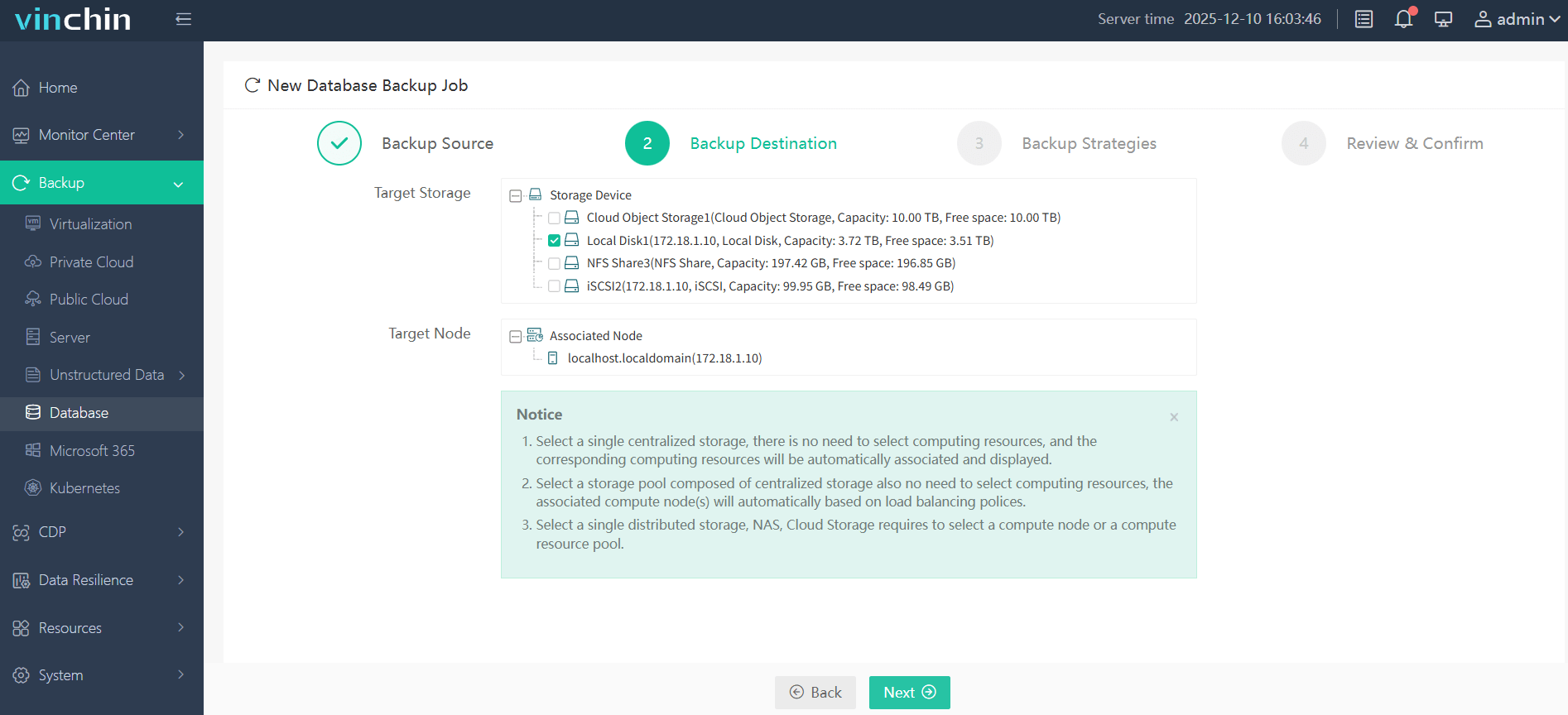
Step 2. Choose the backup storage
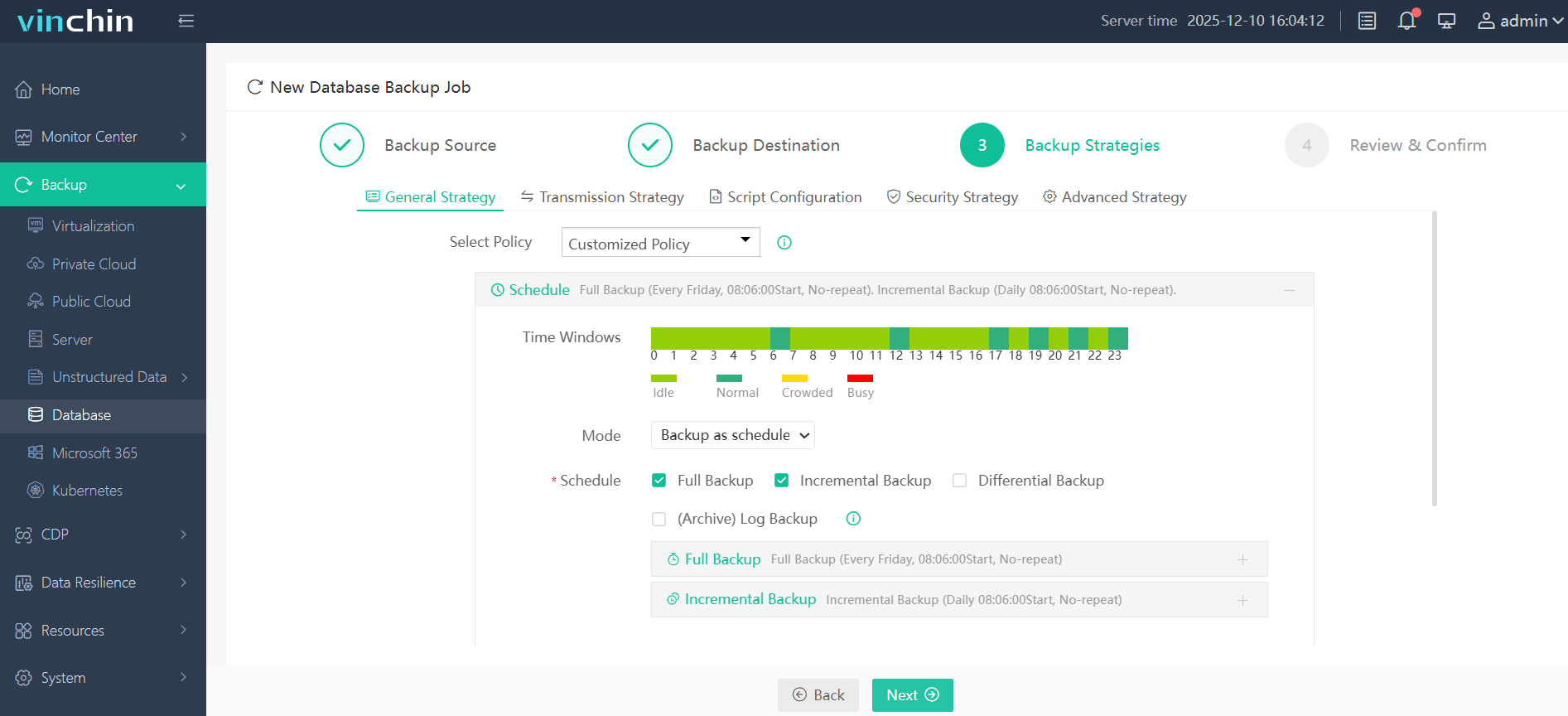
Step 3. Define the backup strategy
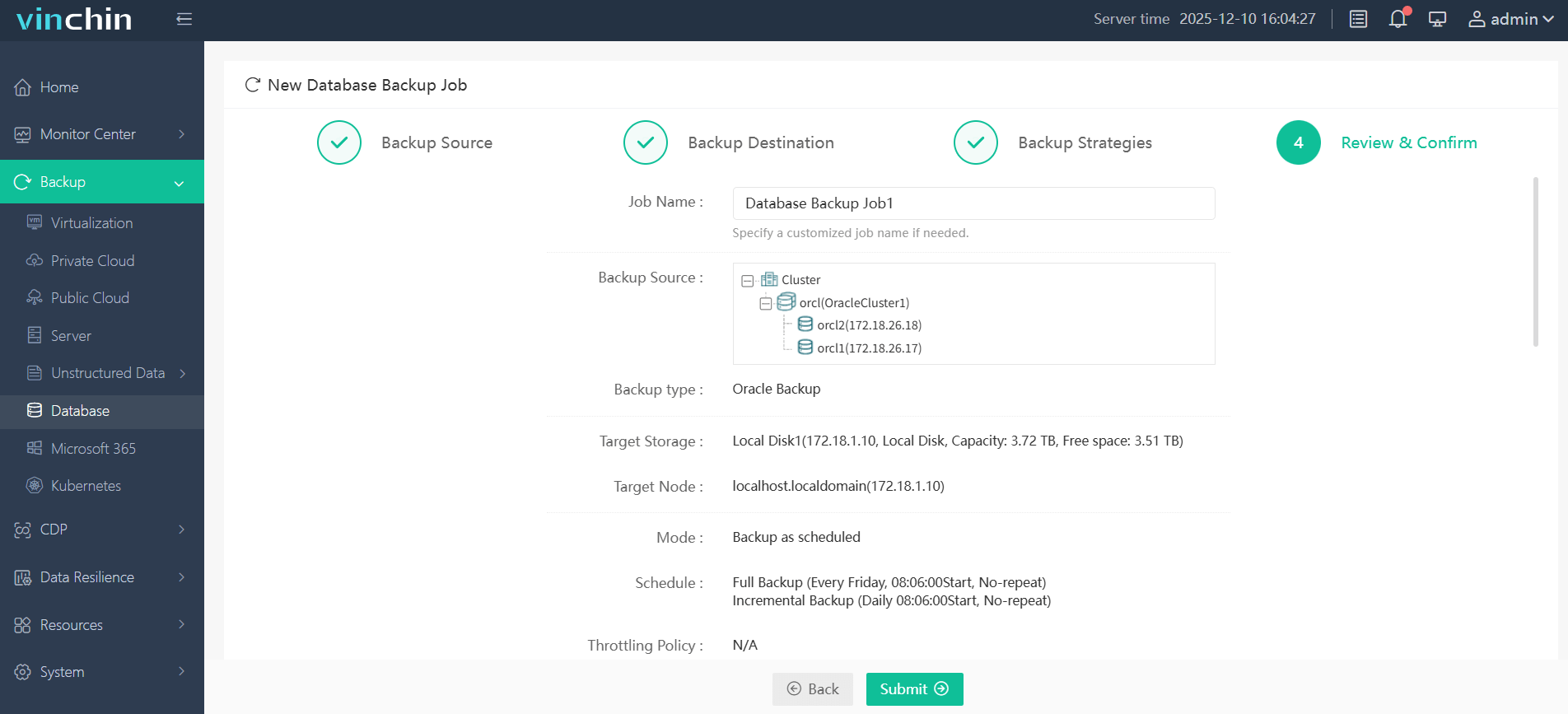
Step 4. Submit the job
Trusted worldwide by thousands of enterprises—and consistently top-rated—Vinchin Backup & Recovery offers a fully featured 60-day free trial so you can experience its power firsthand; click below to get started today!
Oracle RMAN Backup Without ARCHIVELOG FAQs
Q1: Can I switch my database temporarily into ARCHIVELOG mode just for hot backups?
Switching modes requires downtime and creates complex archival states—it’s risky and not recommended unless absolutely necessary due to increased chance of inconsistency during toggling.
Q2: What should I do if my OS-level cold copy misses one datafile?
Restore attempts will fail; always verify completeness before restarting production workloads after any manual copy operation!
Q3: How often should I schedule cold backups if running without ARCHIVELOG?
Schedule them based on business tolerance for data loss—daily at minimum for active systems—or more frequently if possible given maintenance windows.
Conclusion
Backing up Oracle databases without ARCHIVELOG requires careful planning plus regular cold snapshots via either automated tools like RMAN or manual OS-level methods—with thorough validation every time! Automation improves reliability further; solutions like Vinchin help streamline protection across diverse environments while minimizing risk of accidental data loss.