Are you running your Oracle database in NOARCHIVELOG mode and need to protect your data—especially when downtime is acceptable or storage is limited? Many administrators face this challenge every day. In this article, we’ll explain what NOARCHIVELOG mode means for your Oracle environment, why some organizations use it, and how to perform reliable backups using Oracle RMAN along with other supported methods. Whether you’re new to Oracle or a seasoned DBA looking for best practices, let’s walk through each step together.
What Is Noarchivelog Mode?
NOARCHIVELOG mode is an Oracle database setting where filled online redo log files are not archived before being reused by the system. Only the most recent changes are protected by current redo logs; once those logs are overwritten, any changes they contained are lost forever if a failure occurs.
In this mode, you can only perform cold (offline) consistent backups—meaning all users must disconnect while the database is shut down or mounted but not open for activity. This approach keeps things simple but comes with important limitations: you cannot recover transactions made after your last backup if disaster strikes.
Why Choose Noarchivelog Mode?
Some organizations choose NOARCHIVELOG mode because it reduces complexity and improves performance. Since there’s no need to archive redo logs constantly, disk input/output drops and less storage space is required—a benefit for test environments or small applications where losing recent changes may be acceptable.
However, there’s a trade-off: you cannot recover any transactions made after your last backup point if something goes wrong. If your business requires point-in-time recovery or high availability at all times, ARCHIVELOG mode is usually better suited.
Understanding Recovery Implications
It’s crucial to understand what happens during recovery in NOARCHIVELOG mode compared to ARCHIVELOG mode:
In ARCHIVELOG mode: You can restore your database to almost any moment before a failure using archived redo logs.
In NOARCHIVELOG mode: You can only restore the entire database back to the exact state captured at your last offline backup—nothing newer survives.
Picture it like this:
[Last Backup] -----> [Failure]
Everything between these points is unrecoverable if disaster hits.
This limitation shapes how often you should back up—and how much data loss (Recovery Point Objective) you’re willing to accept.
How to Use RMAN for Backup in Noarchivelog Mode?
Backing up an Oracle database with RMAN in NOARCHIVELOG mode follows specific rules because the database must not be open during backup operations.
Before starting any backup process:
First, make sure you have enough space available for your backup files. To estimate total size requirements—including datafiles, tempfiles, online redo logs, and control files—you can run this SQL query:
SELECT
  (SELECT SUM(bytes)/1024/1024/1024 FROM dba_data_files) AS "Datafiles_GB",
  (SELECT NVL(SUM(bytes),0)/1024/1024/1024 FROM dba_temp_files) AS "Tempfiles_GB",
  (SELECT SUM(bytes)/1024/1024/1024 FROM v$log) AS "RedoLogs_GB",
  (SELECT SUM(BLOCK_SIZE*FILE_SIZE_BLKS)/1024/1024/1024 FROM v$controlfile) AS "ControlFiles_GB"
FROM dual;
Each column shows a component of total storage needed so you can plan accordingly.
Now let’s walk through the steps:
1. Shutdown the Database and Start It in MOUNT Mode
Open SQL*Plus as a privileged user:
   SHUTDOWN IMMEDIATE;
   STARTUP MOUNT;
This ensures no users are connected and all changes are written safely before backing up.
2. Connect to RMAN and Start Your Backup
At your shell prompt:
rman target /
Then at the RMAN prompt:
   BACKUP AS COMPRESSED BACKUPSET DATABASE;
   BACKUP CURRENT CONTROLFILE FORMAT '/your/backup/path/CTRL_%U.bkp';
   BACKUP SPFILE FORMAT '/your/backup/path/SPFILE_%U.bkp';
If you want more control over channels or locations:
RUN {
  ALLOCATE CHANNEL t1 DEVICE TYPE DISK FORMAT '/your/backup/path/DB_%U.bkp';
  BACKUP AS COMPRESSED BACKUPSET DATABASE;
  BACKUP CURRENT CONTROLFILE FORMAT '/your/backup/path/CTRL_%U.bkp';
  BACKUP SPFILE FORMAT '/your/backup/path/SPFILE_%U.bkp';
  RELEASE CHANNEL t1;
}
Be sure that each FORMAT clause uses clear extensions like .bkp or .ctl so files are easy to identify later.
3. Open the Database Again
Back in SQL*Plus:
ALTER DATABASE OPEN;
During these steps—the time between shutdown/mount/startup—the database remains unavailable to users but guarantees consistency across all backed-up files.
After creating a backup set with RMAN in NOARCHIVELOG mode, always verify its integrity before considering it safe:
LIST BACKUP SUMMARY;
RESTORE DATABASE VALIDATE;
These checks help catch problems early—before disaster forces a restore attempt under pressure!
How to Perform Cold Backup in Noarchivelog Mode?
A cold—or offline—backup copies essential physical files while ensuring complete consistency since no users are connected during shutdown.
Here’s how experienced admins do it:
1. Shutdown the Database
2. Identify All Critical Files
Datafiles: Find paths via SELECT name FROM v$datafile;
Control files: Use SELECT name FROM v$controlfile;
Online redo log files: Check SELECT member FROM v$logfile;
Server parameter file (spfile): Locate using SHOW PARAMETER spfile; if used
3. Copy Each File Type Using OS Commands
Make sure every listed file above gets copied without omission!
4. Restart Your Database
Why such care? Missing even one file could prevent successful recovery later on—a risk no admin wants!
Cold backups require full downtime but offer simplicity since no special tools beyond standard OS commands are needed.
How to Export Data Using Data Pump in Noarchivelog Mode?
Oracle Data Pump (expdp, impdp) offers another way to safeguard information—but keep this distinction clear: Data Pump creates logical exports rather than physical images of actual datafiles or structures.
Logical exports capture schema objects like tables or views into dump files suitable for migration or selective restores—not full disaster recovery! For best results:
1. Ensure minimal user activity during export so exported data stays consistent
2. Run export command as privileged user:
expdp system/password@db schemas=your_schema directory=DATA_PUMP_DIR dumpfile=backup.dmp logfile=backup.log
3. Move resulting dump file(s) somewhere secure outside production storage
Remember—Data Pump does not provide point-in-time recovery capabilities nor does it replace regular physical backups taken via RMAN or OS-level methods. It shines when migrating specific objects between databases or recovering individual tables—not whole systems.
Vinchin Backup & Recovery: Enterprise Solution for Oracle Backup
For organizations seeking robust protection of their Oracle databases, Vinchin Backup & Recovery delivers enterprise-grade reliability across mainstream platforms including Oracle, MySQL, SQL Server, MariaDB, PostgreSQL, PostgresPro, and TiDB—with particular strength supporting complex Oracle environments like yours. Among its many features tailored for demanding workloads are batch database backup management, multiple level data compression options, flexible retention policies including GFS retention policy support, cloud/tape archiving integration, and seamless restore-to-new-server capability—all designed to streamline administration while maximizing efficiency and resilience against threats such as ransomware attacks.
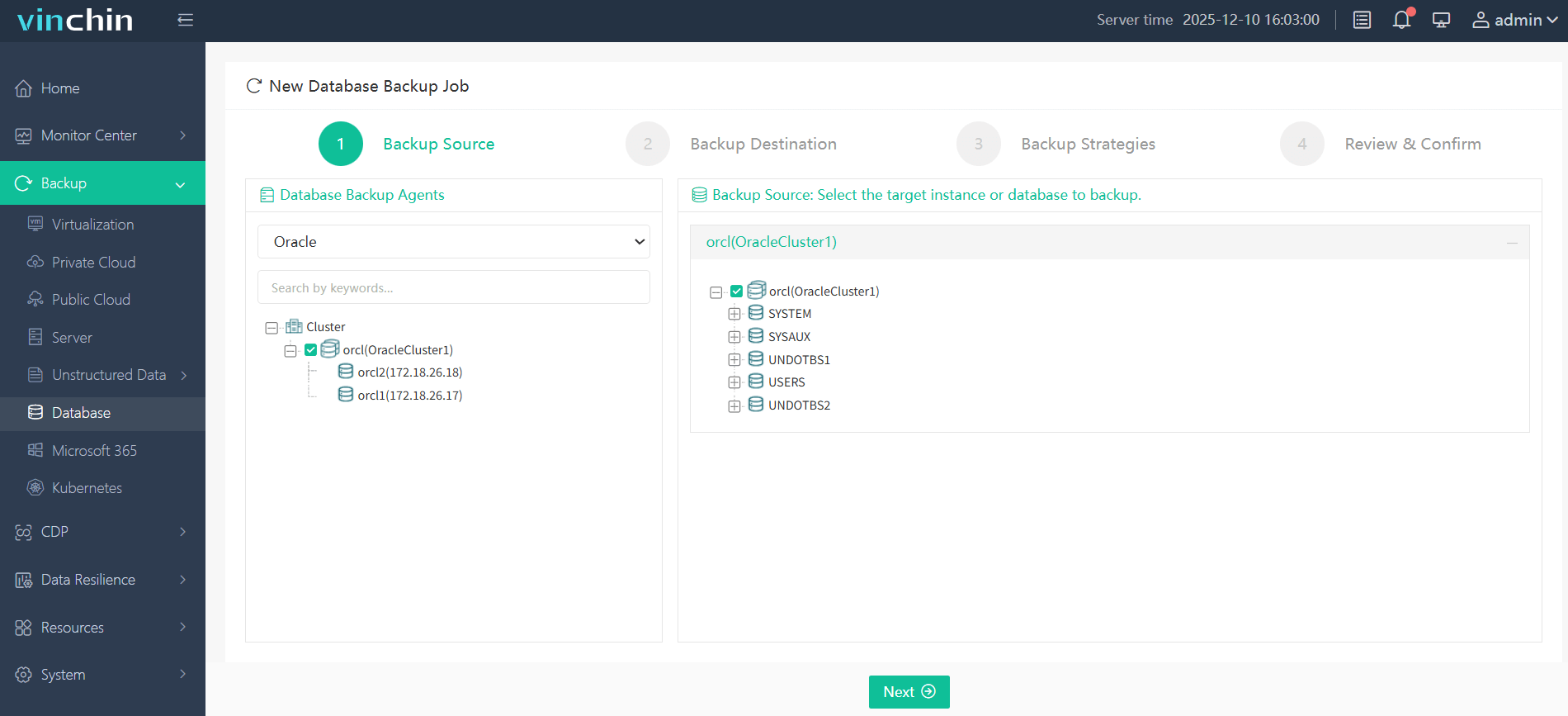
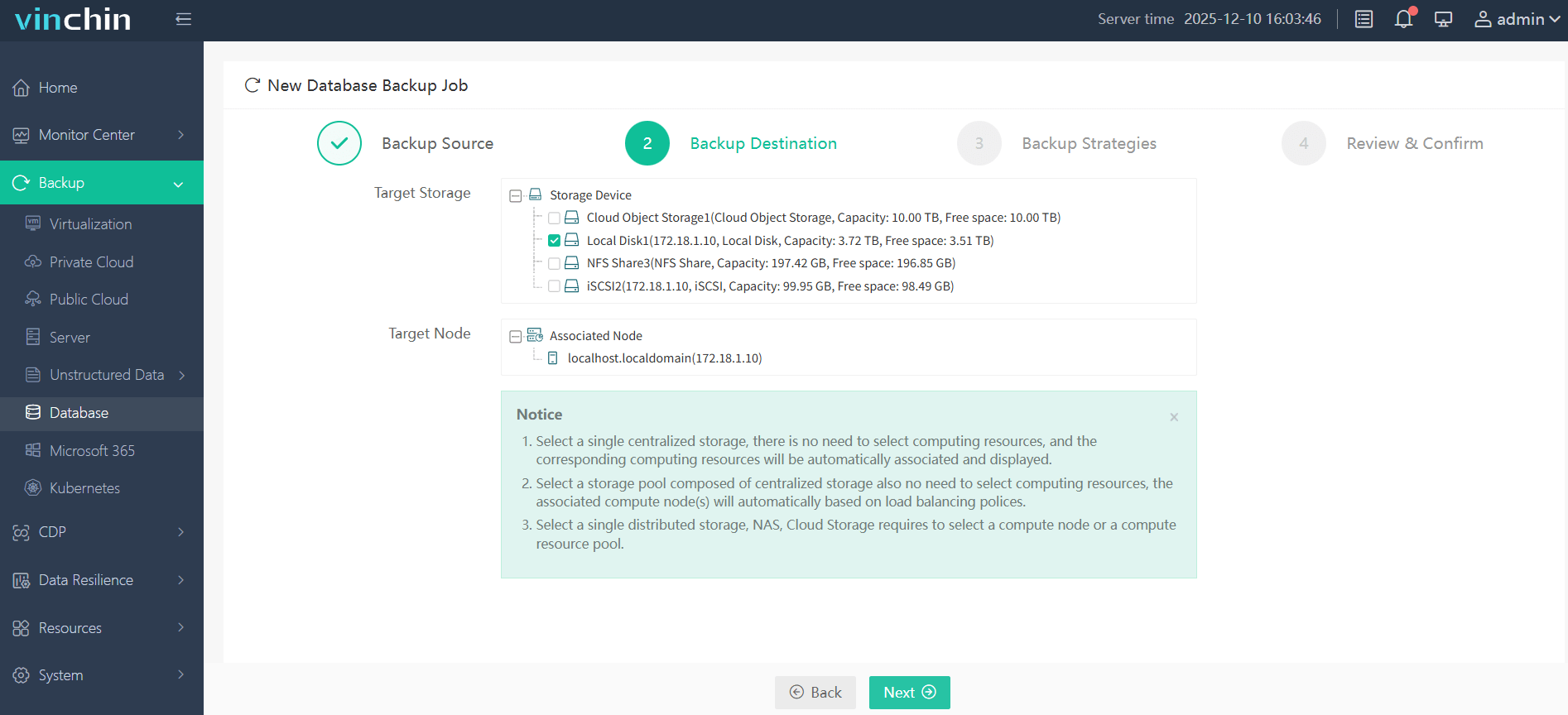
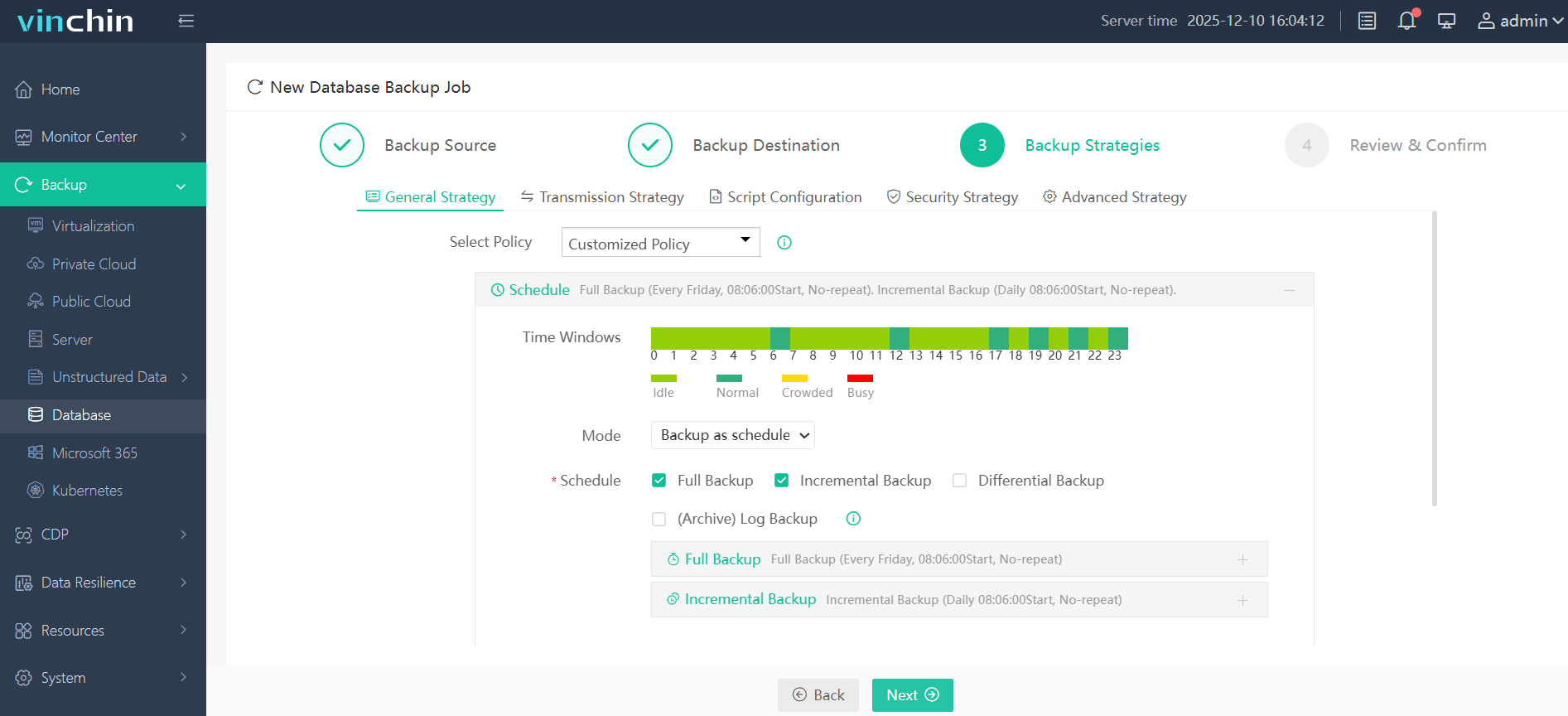
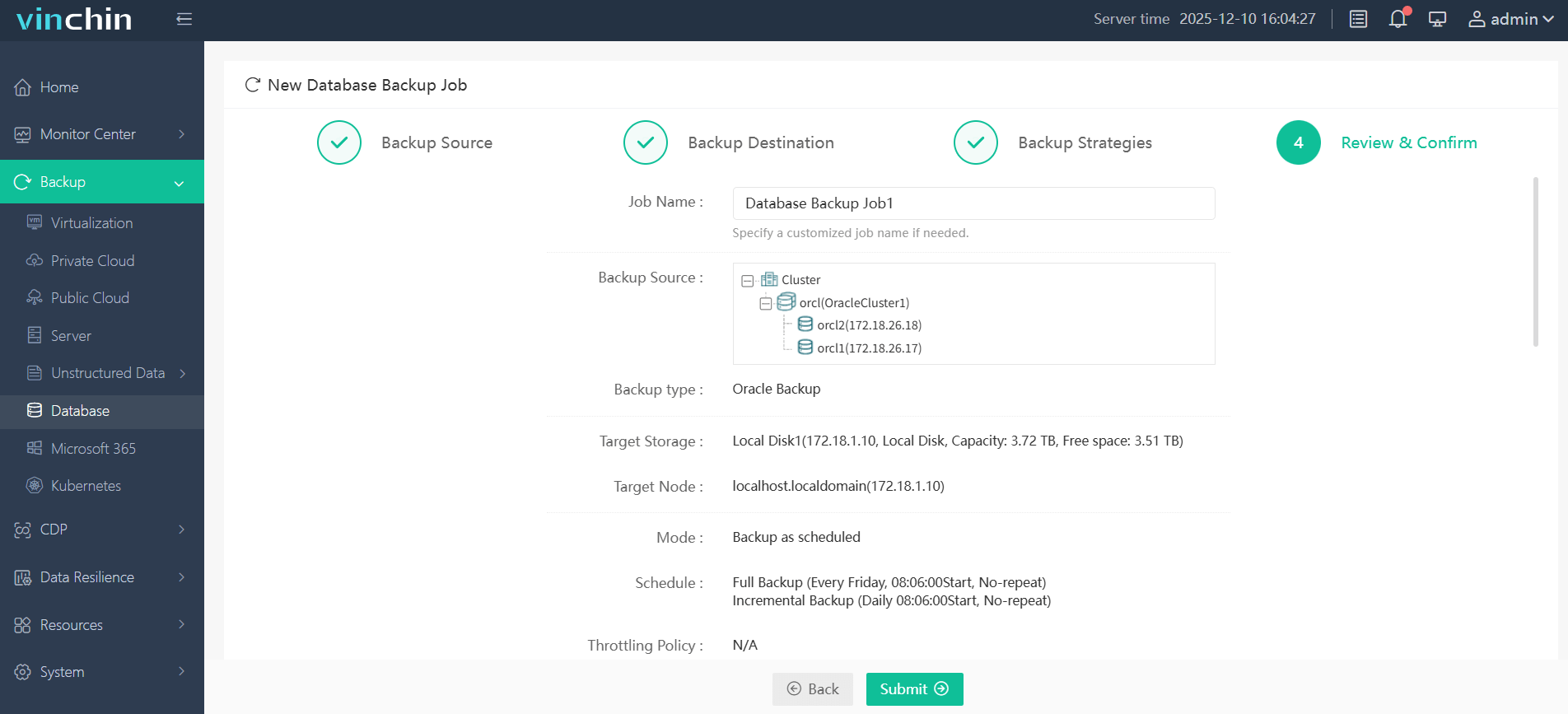
Vinchin Backup & Recovery stands out with its intuitive web console that makes safeguarding an Oracle database straightforward through four quick steps:
Step 1—Select the Oracle database to back up;
Step 2—Choose backup storage;
Step 3—Define your preferred strategy;
Step 4—Submit the job for automated execution.
Recognized globally by enterprises large and small—and rated highly by industry analysts—you can experience every feature free for 60 days by clicking below and discovering why Vinchin Backup & Recovery leads enterprise data protection worldwide.
Oracle Rman Backup Noarchivelog Mode FAQs
Q1: Can I switch my database temporarily into ARCHIVELOG mode just for an online backup?
Switching modes temporarily adds risk; stick with one method per environment unless absolutely necessary due to operational policies.
Q2: What should I do if my cold/RMAN offline backup fails validation?
Investigate error messages immediately then rerun both verification commands after correcting issues until success confirms usable backups exist.
Q3: Is logical export via Data Pump enough protection against hardware failures?
No—it only protects schema-level objects; always combine logical exports with regular physical backups using either cold copy methods or RMAN.
Conclusion
Backing up an Oracle database in NOARCHIVELOG mode requires careful planning around downtime windows but remains straightforward using either RMAN scripts or OS-level copies—with logical exports serving specialized needs only. For automated protection, Vinchin delivers robust features tailored to enterprise environments. Try Vinchin today to see how it simplifies Oracle database protection!