Managing Oracle archive logs is a key part of database administration. Sometimes you may need to delete archive logs without using RMAN (Recovery Manager). This guide explains what archive logs are, why you might want to delete them without RMAN, and how to do it safely using proven methods.
Oracle database running in ARCHIVELOG mode generate archive logs to support data recovery and point-in-time restores. Over time these logs can fill up storage fast. If left unchecked they may impact performance or even halt your database if disk space runs out. While RMAN is the standard tool for managing archive logs, there are situations where you must act outside its framework—perhaps due to urgent storage constraints or limited tool access.
What Are Oracle Archive Logs?
Archive logs are copies of redo log files that Oracle creates when running in ARCHIVELOG mode. These files record every change made within your database. If disaster strikes—a hardware failure or accidental data loss—you can restore your database using backups plus these archive logs. They let you recover right up to a chosen point in time.
But there’s a catch: if not managed well, archive logs pile up quickly. They consume valuable disk space and can cause operational headaches if ignored.
Why Do Archive Logs Accumulate?
Every transaction generates redo entries that get written first into online redo log files. When these fill up or switch over, Oracle copies their contents into new archive log files stored at locations defined by LOG_ARCHIVE_DEST parameters. As activity increases—especially during batch jobs or heavy loads—the number of generated archives grows rapidly.
Risks of Unmanaged Archive Log Growth
If your storage fills up because old archive logs remain undeleted:
1. New transactions may fail since no space exists for fresh archives
2. Database performance drops as I/O contention rises
3. You risk unplanned downtime until space is cleared
That’s why regular cleanup matters—even if you’re not using RMAN.
Why Delete Archive Logs Without RMAN?
You might wonder: why not always use RMAN? In most production settings it’s best practice—but sometimes circumstances force your hand:
1. RMAN Is Unavailable: Maybe it isn’t installed on your server yet—or access is restricted due to policy changes or outages.
2. Urgent Space Constraints: Storage alarms go off; you need immediate relief before investigating root causes.
3. Test/Development Environments: Here full backup integration isn’t always required; speed takes priority over long-term retention policies.
4. Compliance/Audit Needs: Occasionally direct file removal outside cataloged tools aligns better with certain audit procedures.
Deleting archive logs without RMAN offers speed but comes with caveats—it’s easy to make mistakes that affect recovery options later.
Method 1: Deleting Archive Logs Manually
Manual deletion means removing files directly from disk-based storage or ASM (Automatic Storage Management). It sounds simple but requires careful planning at every step.
Prerequisites and Verification Before Deletion
Before deleting any log file:
SELECT SEQUENCE#, NAME, APPLIED FROM V$ARCHIVED_LOG WHERE DELETED = 'NO';
Look for rows where APPLIED equals ‘YES’ (for Data Guard) or confirm they’ve been backed up elsewhere first.
Never delete current online redo log members—or any file still needed for active recovery!
File System Storage: Step-by-Step Manual Deletion
If your archives reside on standard disks:
1. Use ls in your shell window to list available archives at their path
2. Double-check filenames against output from V$ARCHIVED_LOG
3. Run rm -i /path/to/archive/log/file.arc so each deletion prompts confirmation
4. Repeat until all targeted files are gone
Be sure no process—including replication jobs—is reading those archives before removal!
ASM Storage: Using ASMCMD Utility
For databases storing archives inside ASM:
1. Open ASMCMD prompt as an authorized user
2. List archived log paths via ls +diskgroup_name/database/archivelog
3. Remove specific files by typing:
ASMCMD> rm '+dgroup2/testdb/archivelogs/thread_1_seq_363.xxx.yyy'
Replace placeholders with actual values found from querying V$ARCHIVED_LOG.NAME.
ASM deletions cannot be undone—double-check everything!
Method 2: Using SQL*Plus for Log Deletion
SQL*Plus provides another route especially suited for ASM-managed environments where direct OS access may be limited but DBA privileges exist within Oracle itself.
When Should You Use SQL*Plus?
This approach works best when:
Your archived redo resides exclusively inside ASM disk groups
You have SYSDBA/SYSASM-level access but cannot run OS-level utilities directly
You want slightly more control than raw file deletion offers—but still need quick results outside full-blown backup tools
Dropping Files With ALTER DISKGROUP Command
Connect via SQL*Plus as SYSDBA/SYSASM then execute:
ALTER DISKGROUP <diskgroup_name> DROP FILE '+diskgroup_name/database/archivelog/filename.arc';
For example,
ALTER DISKGROUP FLASH DROP FILE '+FLASH/testdb/archivelog/thread_1_seq_363.xxx.yyy';
How do you know which filename/path is correct? Query:
SELECT NAME FROM V$ARCHIVED_LOG WHERE DELETED = 'NO' AND APPLIED = 'YES';
Copy exact values from here into your command line—mistakes can’t be reversed!
As always after dropping files this way remember: update metadata through an RMAN session using CROSSCHECK ARCHIVELOG ALL followed by DELETE EXPIRED ARCHIVELOG ALL so catalog information stays accurate.
Vinchin Backup & Recovery: Enterprise-Level Protection for Oracle Databases
To further reduce risk and simplify management compared with manual approaches, consider leveraging professional solutions designed specifically for enterprise needs such as Vinchin Backup & Recovery—a robust platform supporting today’s mainstream databases including Oracle, MySQL, SQL Server, MariaDB, PostgreSQL, PostgresPro, and TiDB (with particular focus here on Oracle). Vinchin Backup & Recovery delivers advanced features like Incremental backups, batch database backup, multiple level data compression, integrity check, and any-point-in-time recovery—all working together to ensure efficient storage usage while maximizing recoverability and compliance across complex environments.
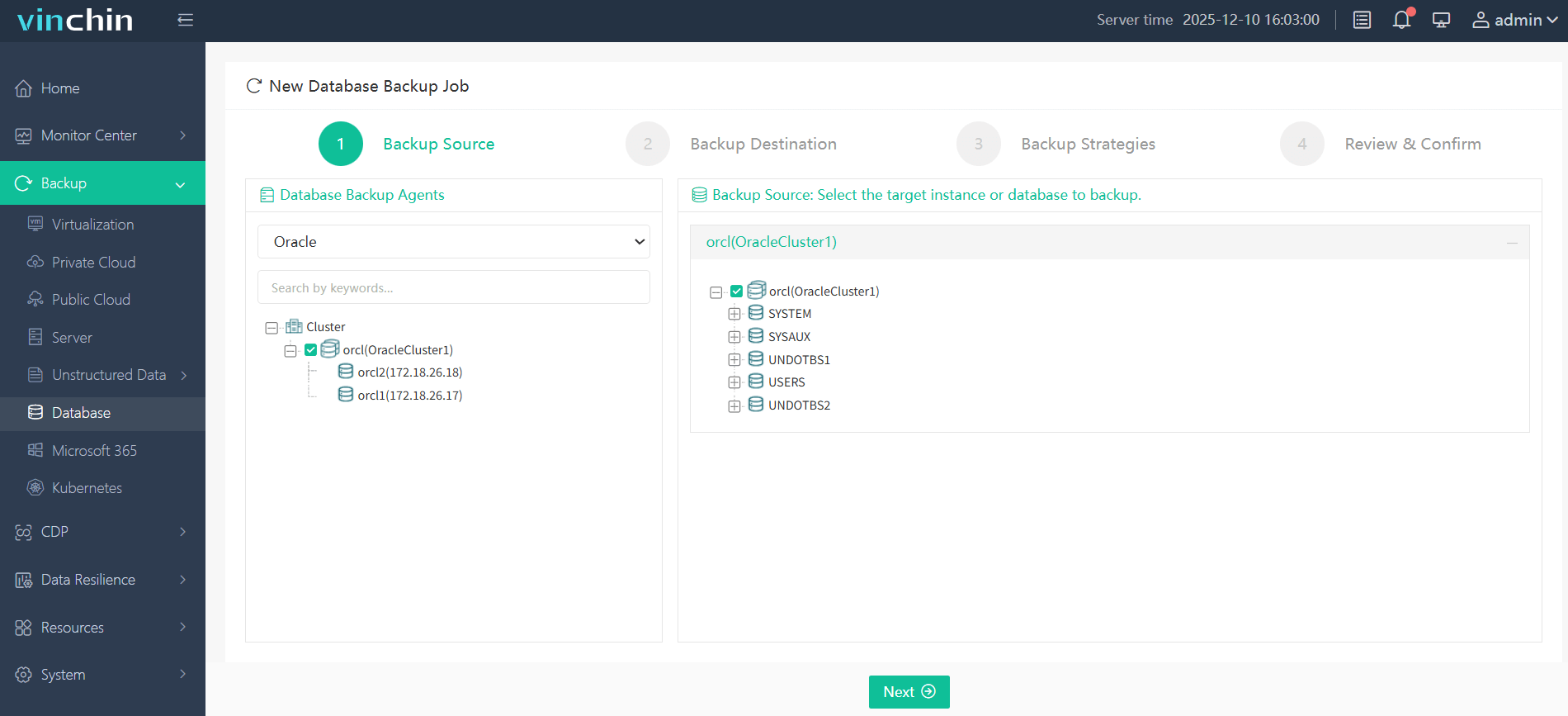
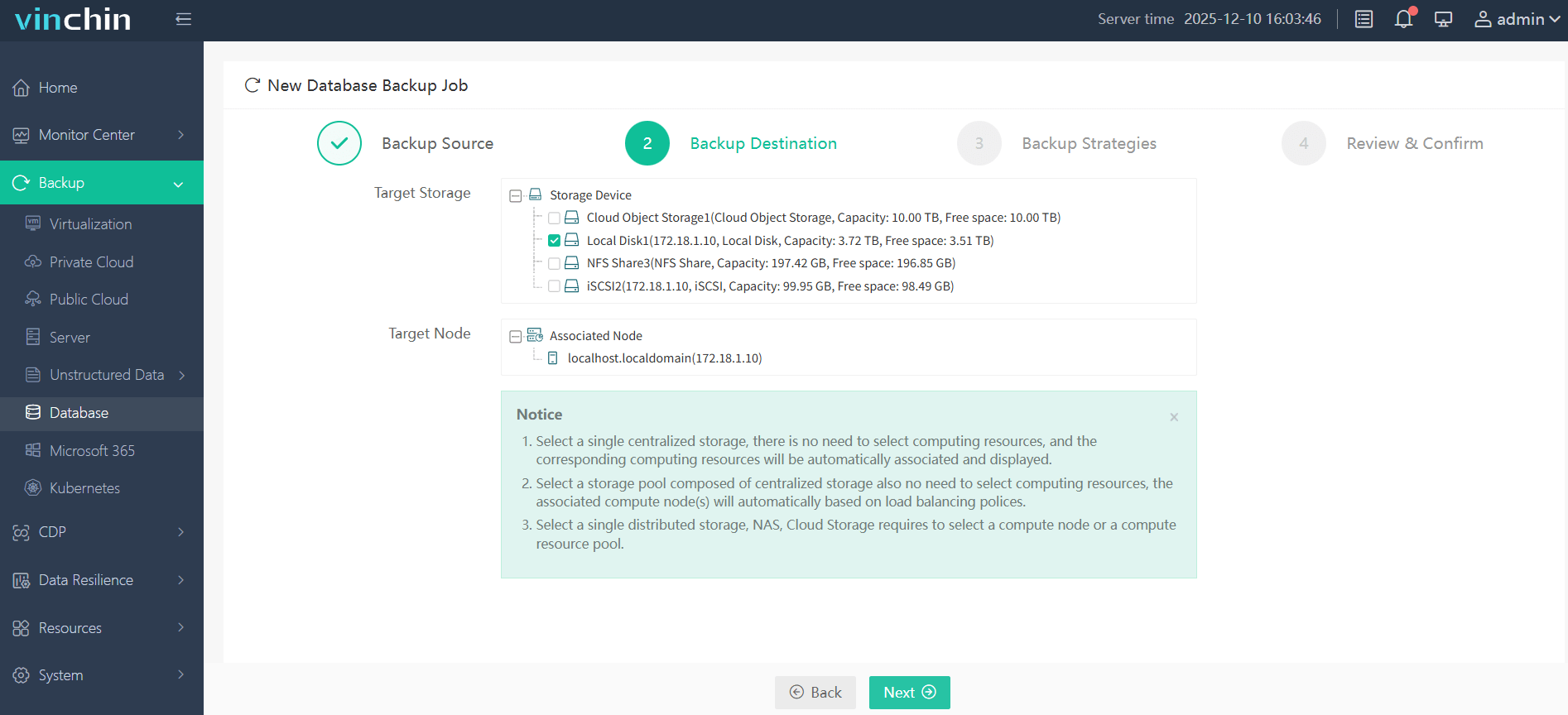
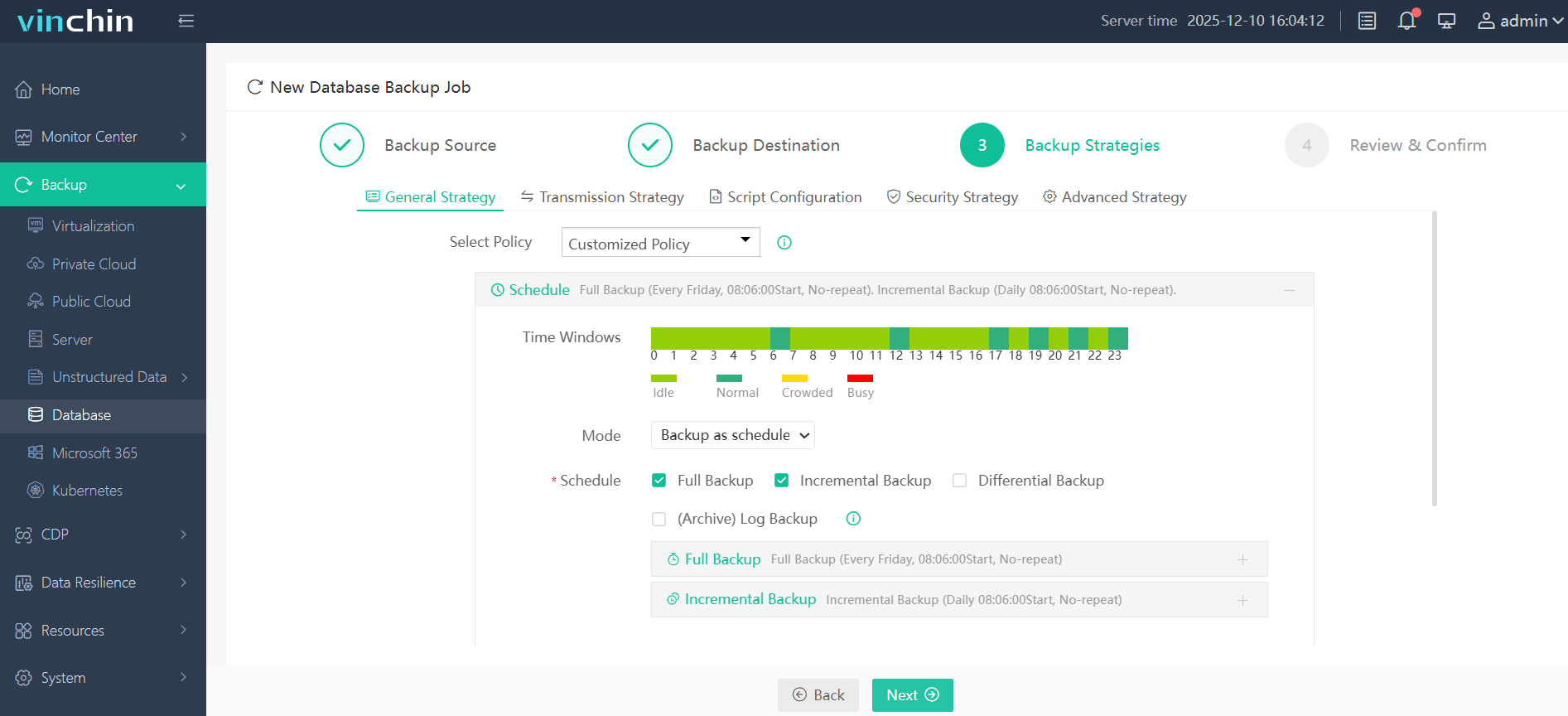
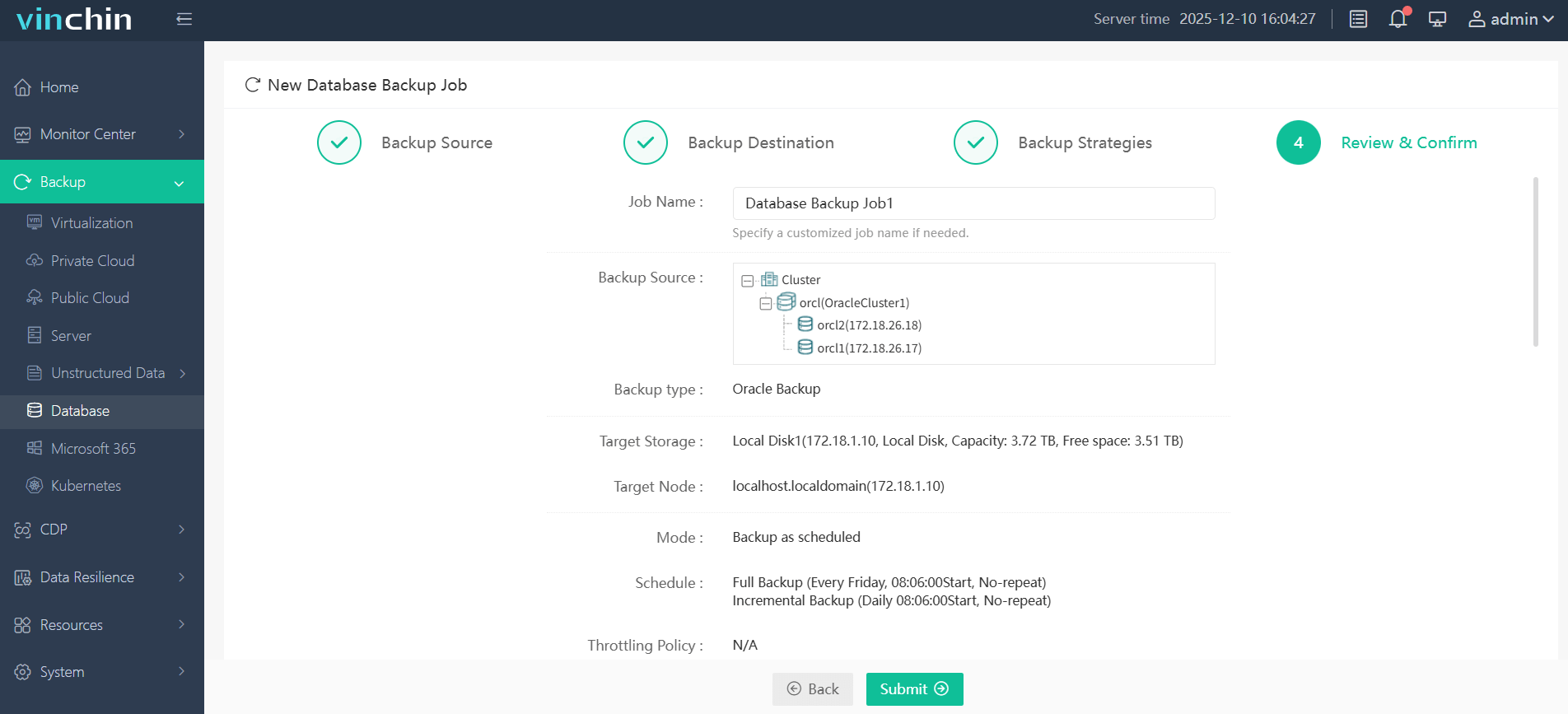
The intuitive web console makes safeguarding your Oracle environment straightforward in just four steps:
Step 1. Select the Oracle database to back up
Step 2. Choose the backup storage
Step 3. Define the backup strategy
Step 4. Submit the job
Recognized globally with top ratings and trusted by thousands of enterprises worldwide, Vinchin Backup & Recovery offers a fully featured 60-day free trial—click below to experience seamless enterprise-grade protection firsthand!
Oracle Delete Archive Logs Without RMAN FAQs
Q1: How do I check which Oracle archive logs are safe to delete?
A1: Run SELECT SEQUENCE#, NAME FROM V$ARCHIVED_LOG WHERE APPLIED='YES' AND DELETED='NO'; in SQL*Plus; only consider deleting those listed after confirming they're backed up elsewhere.
Q2: Can I automate manual archivelog deletions safely?
A2: Yes; script queries against V$ARCHIVED_LOG, perform deletions based on results, then run CROSSCHECK and DELETE EXPIRED commands in batch mode within RMAN afterward.
Q3: What privilege level do I need for dropping archivelogs via SQL*Plus?
A3: Connect as SYSDBA (or SYSASM when working directly with ASM disk groups).
Conclusion
Deleting Oracle archive logs without RMAN is possible but demands caution at every stage—from pre-deletion checks through post-cleanup metadata updates—to avoid breaking recovery chains or disrupting replication flows later on! For seamless automated lifecycle management try Vinchin's enterprise-grade solutions today—they keep both data protection and peace-of-mind front-and-center!