Effectively managing Oracle database backups means keeping diagnostic logs and job histories long enough for troubleshooting but not so long that they waste storage or slow down operations. Many organizations want to retain RMAN (Recovery Manager) output—like backup logs—for exactly seven days. This helps meet compliance standards while making sure you have recent data if something goes wrong. But what’s the right way to set up Oracle RMAN so it keeps output only for a week? Let’s walk through it step by step.
What Is RMAN Output Retention?
RMAN output retention controls how long Oracle stores details about backup jobs in its internal views—such as RC_RMAN_OUTPUT and V$RMAN_OUTPUT. These records include messages about completed jobs, errors, warnings, or other events during backup or restore operations.
By default, newer versions of Oracle keep this information for seven days—but you can adjust this period if needed. Keeping recent logs helps with audits or troubleshooting failed backups without cluttering your system with old data that serves no purpose.
It’s important to note that this setting affects only metadata stored inside the database—not any physical log files you might save on disk when running RMAN scripts.
Why Set Retention to 7 Days?
A seven-day retention policy fits most business needs because it matches weekly maintenance cycles and many regulatory requirements. If you keep logs too long, they pile up fast—making searches slower and wasting disk space. If you delete them too soon, vital clues may be lost before issues are discovered.
Seven days strikes a balance: it gives enough history to investigate problems while keeping resource use under control. For most teams running regular full or incremental backups every week, this window covers all recent activity without overloading your system.
How to Configure Retention Policy in Oracle RMAN to Keep Output for 7 Days?
The main way to control how long Oracle keeps RMAN output is with the CONFIGURE RMAN OUTPUT TO KEEP FOR n DAYS command. This tells Oracle how many days’ worth of job details should remain in its internal views before being purged automatically.
However, be aware: this command is available starting from Oracle Database 12c Release 2 (12.2). If you’re using an older version like 11g or early 12c releases, skip ahead—you’ll need different methods described later in this post.
Here’s how you set up retention in supported versions:
1. Connect to RMAN
Open a terminal window on your server.
rman target /
For remote/network connections (using credentials), enter:
rman target sys/password@net_service_name
2. Set the Output Retention Period
To keep job details for seven days:
CONFIGURE RMAN OUTPUT TO KEEP FOR 7 DAYS;
This ensures any entries older than seven days are deleted from RC_RMAN_OUTPUT and V$RMAN_OUTPUT automatically by Oracle background processes.
3. Verify Your Configuration
Check current settings with:
SHOW ALL;
Look for a line like:
CONFIGURE RMAN OUTPUT TO KEEP FOR 7 DAYS;
This confirms your policy is active.
4. Understand What Happens Next
Once configured, there’s nothing else you need to do—Oracle will remove old records daily behind the scenes.
If you're running an older version of Oracle where this command isn't available—or if you're unsure which version you're using—refer directly to Oracle's documentation or check with your DBA team before proceeding.
How to Manage Oracle RMAN Output Retention Using Scripts?
Sometimes you need more control over physical log files generated by your own scripts—especially if you're storing these outside of database views on disk or network shares.
In these cases, operating system scripts can help clean up old log files automatically based on age—even if you're using an older version of Oracle that doesn't support direct configuration commands inside RMAN itself.
Method 1: Managing Log Files on Linux
When running automated backups via shell scripts or cron jobs:
rman target / log=/path/to/logs/rman_backup_$(date +%F).log
    #!/bin/bash
    find /path/to/logs -name "rman_backup_*.log" -mtime +7 -print -delete >> /path/to/logs/deletion.log 2>&1
This script finds all matching log files older than seven days in /path/to/logs, deletes them safely—and writes actions taken into deletion.log so you can review what was removed later if needed.
    crontab -e
    # Add line below
    0 2 * * * /path/to/cleanup_script.sh
Method 2: Managing Log Files on Windows
For teams running backups on Windows servers:
Get-ChildItem "C:\Path\To\Logs\rman_backup_*.log" | Where-Object { $_.LastWriteTime -lt (Get-Date).AddDays(-7) } | Remove-Item -ForceThis removes .log files older than seven days from C:\Path\To\Logs.
Remember: These scripting approaches manage only file-based logs created by redirecting standard output—not entries stored within database views like V$RMAN_OUTPUT or RC_RMAN_OUTPUT controlled by internal policies.
Monitoring RMAN Output Retention and Common Issues
After configuring retention policies—or setting up cleanup scripts—it’s smart practice to monitor results regularly so nothing slips through unnoticed.
Start by checking what’s currently stored inside your database:
SELECT session_key,
       session_recid,
       command_id,
       output,
       START_TIME,
       SYSDATE - START_TIME AS days_old
FROM V$RMAN_OUTPUT
ORDER BY START_TIME DESC;
This query shows each entry along with its age in days since creation—helpful when confirming whether automatic purging works as expected after changing settings.
Troubleshooting Tips
If old entries aren’t disappearing after seven days:
1. Double-check configuration using SHOW ALL inside an active RMAN session.
2. Make sure you're querying the correct view (V$RMAN_OUTPUT) rather than unrelated tables.
3. Remember that outputs from currently running jobs will always appear until those sessions finish—even if they're technically “older” than seven days.
4. In some environments where control file management differs (for example due to custom catalog setups), consult Oracle Support resources or official documentation tailored for your release.
Version Compatibility Caveats
Not all features work across every release! The CONFIGURE RMAN OUTPUT TO KEEP FOR n DAYS command requires at least Oracle Database 12c Release 2 (12.2). On earlier systems:
Vinchin Backup & Recovery: Enterprise-Level Solution for Oracle Backup & Retention Management
Beyond manual configuration and scripting approaches discussed above, enterprise users often require streamlined solutions for comprehensive backup management across multiple databases—including robust retention controls and advanced protection features tailored specifically for platforms like Oracle.
Vinchin Backup & Recovery is a professional enterprise-grade solution supporting mainstream databases such as 10g, 11g/11g R2, 12c, 18c, 19c, 21c, Oracle RAC, MySQL, SQL Server, MariaDB, PostgreSQL, PostgresPro, and TiDB, with particular strength in handling complex environments like yours focused on oracle configure rman output retention scenarios first-hand.
Key features include batch database backup capabilities; flexible data retention policies; cloud backup and tape archiving; storage protection against ransomware; plus integrity checks, all designed to automate cycles, enforce compliance rules efficiently, and safeguard critical data assets end-to-end without manual intervention.
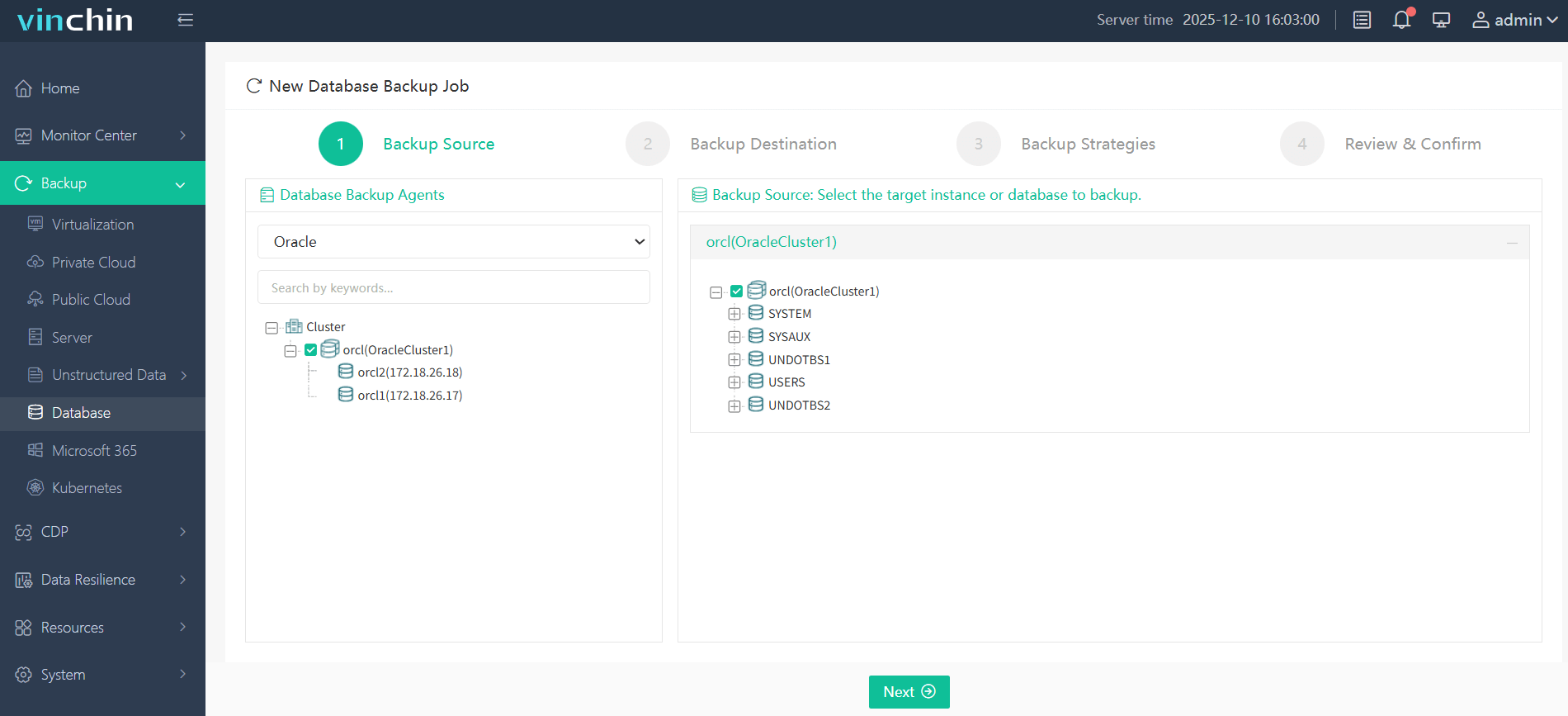
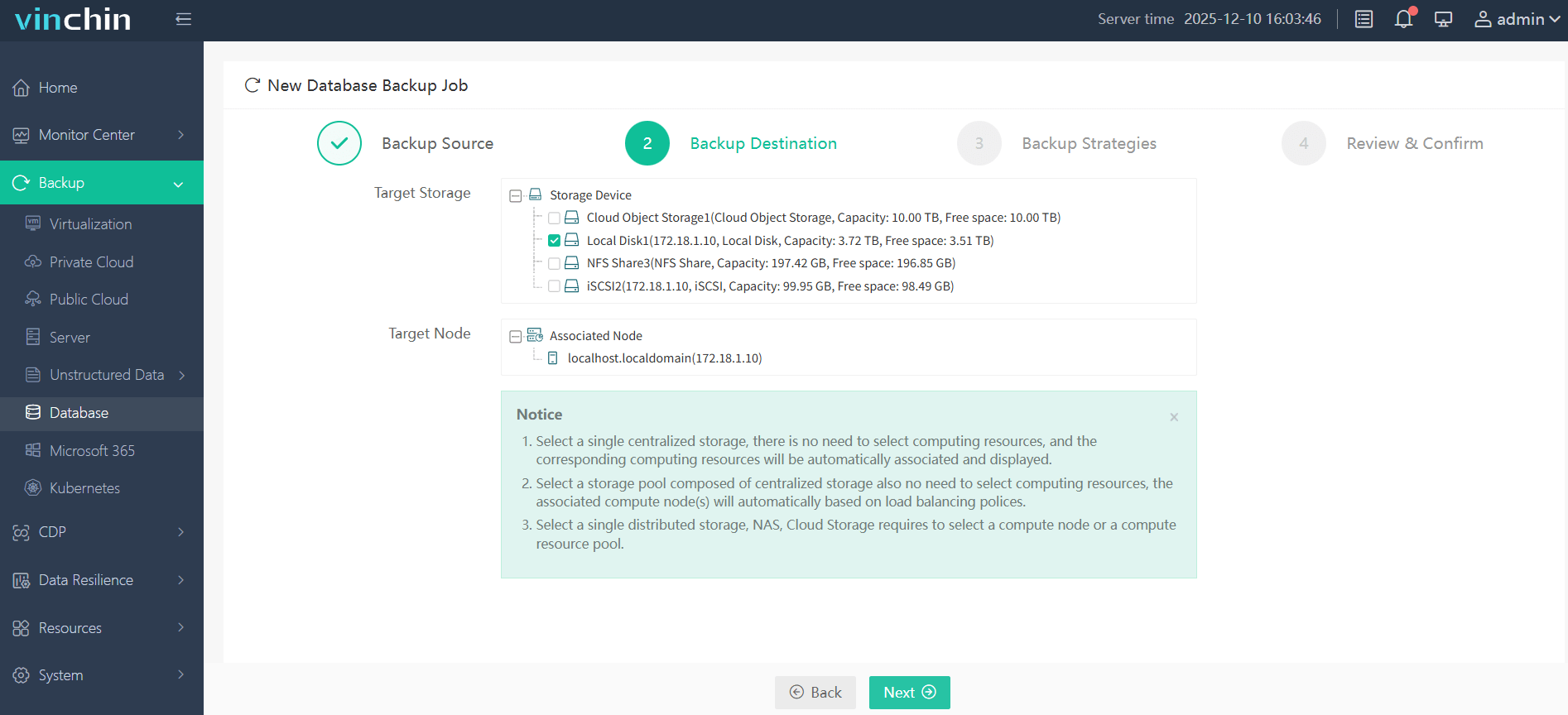
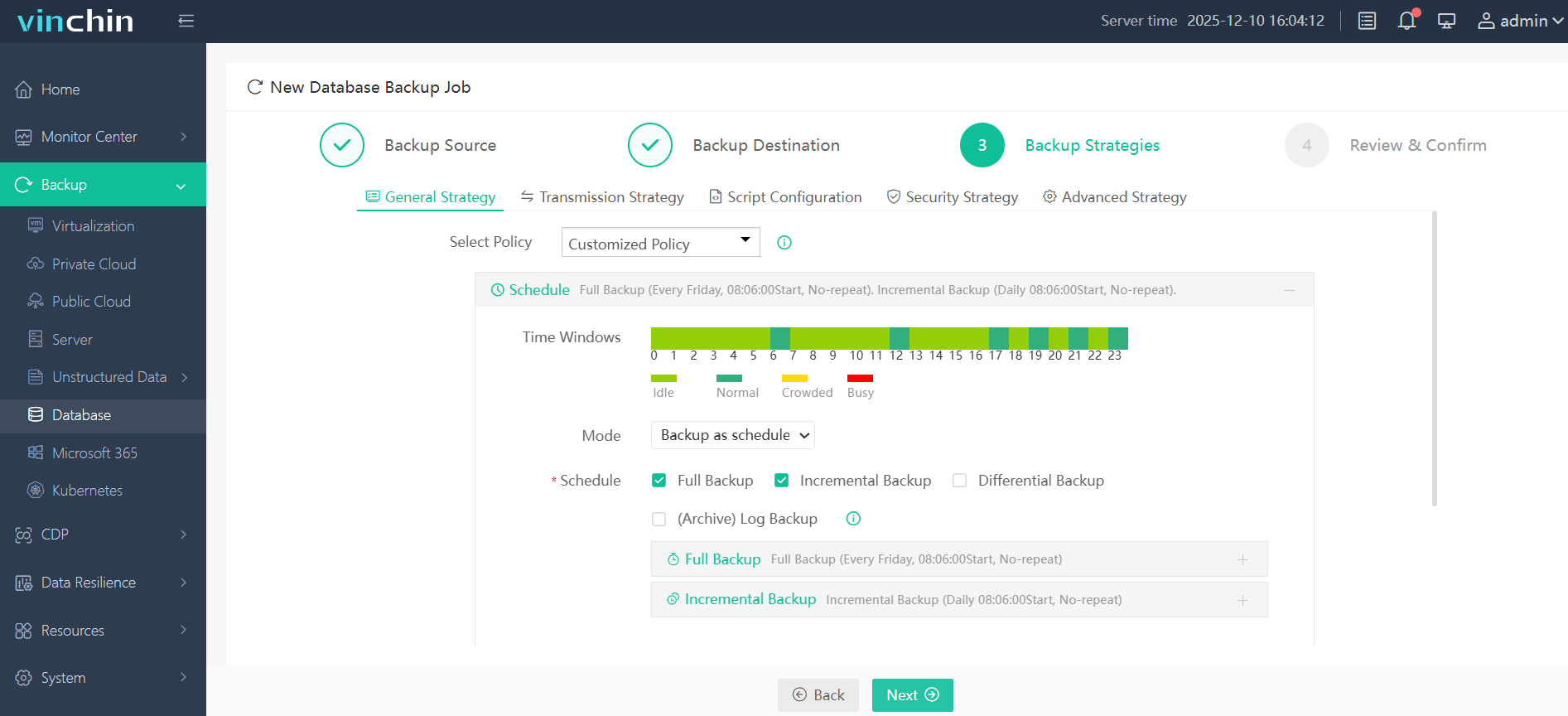
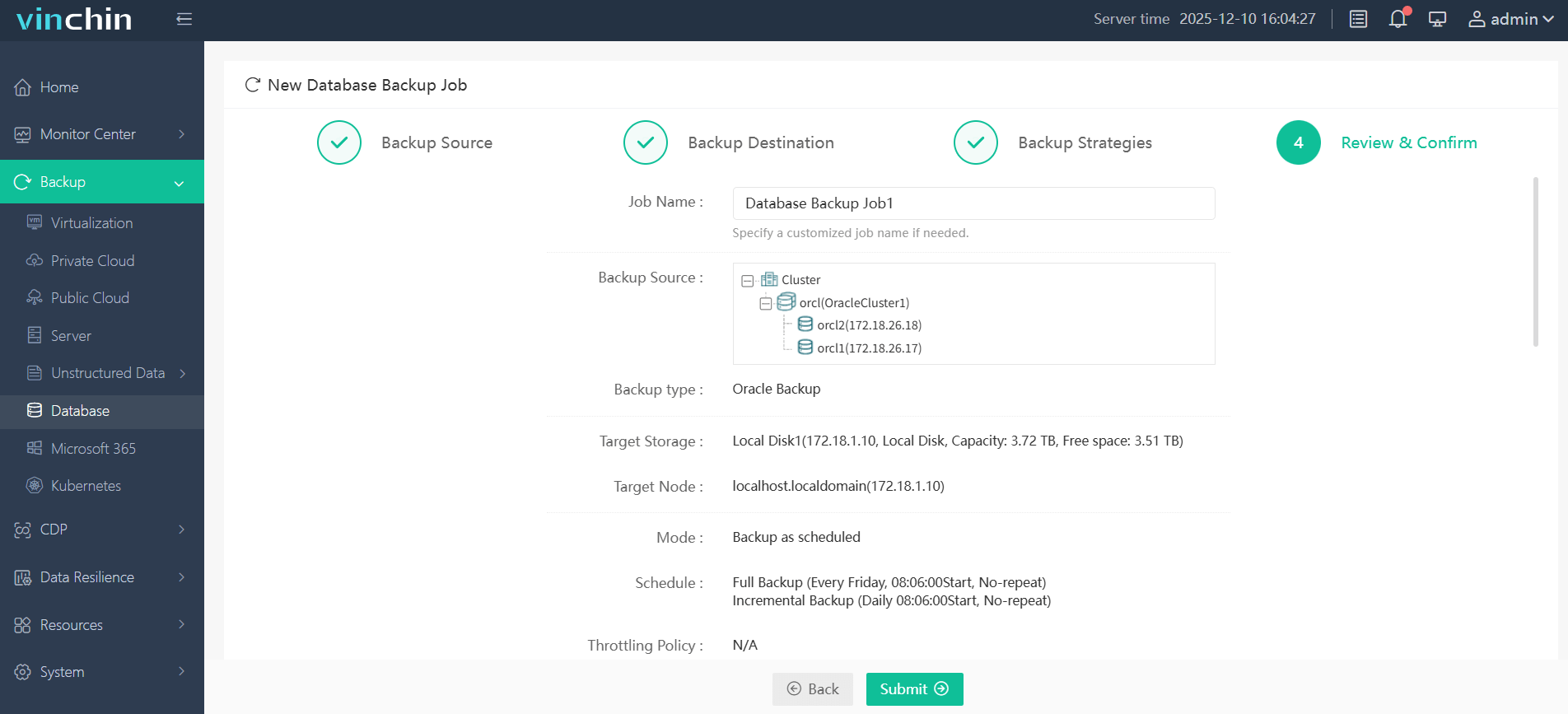
The intuitive Vinchin Backup & Recovery web console makes protecting your Oracle environment simple:
Step 1: Select the Oracle database to backup
Step 2: Choose the backup storage
Step 3: Define the backup strategy
Step 4: Submit the job
Recognized globally with top ratings among enterprise customers worldwide, Vinchin Backup & Recovery offers a risk-free full-featured trial valid for 60 days. Click download now and experience trusted data protection firsthand!
Oracle Configure RMAN Output to Keep for 7 Days FAQs
Q1: Will changing my output retention setting delete my actual backup files?
A1: No; it only affects job logs kept inside internal views—not physical backup sets themselves.
Q2: How do I confirm which job outputs are still present?
A2: Run SELECT FROM V$RMAN_OUTPUT ORDER BY START_TIME DESC in SQLPlus or another client tool connected as DBA user.
Q3: What should I do if my old outputs aren't being purged after updating settings?
A3: Verify configuration with SHOW ALL; check view contents; make sure no jobs are still open; review compatibility with your current database version.
Conclusion
Configuring oracle rman output retention lets admins balance audit needs against resource limits efficiently—whether through built-in commands or external scripts depending on environment age or complexity level required per site policy guidelines! Vinchin makes managing oracle backups even easier thanks its intuitive interface robust automation options—all backed global customer trust base today!