Managing Oracle database backups is one of the most important jobs for any operations administrator. If you ever need to recover your database after an incident or failure, knowing exactly which archivelog sequences are backed up can save you hours—or even days—of troubleshooting. Imagine needing to restore your system to a specific point in time but discovering that some critical logs are missing from your backup set. That’s why tracking archivelog backups is so vital.
In this guide, we’ll explain what archivelog sequences are, why listing their backups matters so much, and how you can list backup archivelog sequences using both RMAN and SQL queries. We’ll also share operational tips for validating your backup health and show how Vinchin can help protect your Oracle archivelogs.
What Is an Archivelog Sequence?
An archivelog sequence is a unique number that Oracle assigns to every archived redo log file it generates. Each time the database switches from one redo log file to another—usually because the current log fills up—Oracle archives the old file and increases its sequence number by one. This process creates an ordered chain of logs that records every change made in your database.
Why does this matter? When you back up archivelogs, you’re really backing up these numbered files. They are essential if you want to perform point-in-time recovery or roll forward after restoring from an earlier backup. Without a complete set of sequentially numbered logs covering your desired recovery window, restoration may fail or leave data inconsistent.
Why List Backup Archivelog Sequences
Listing backup archivelog sequences goes far beyond routine checks—it’s at the heart of reliable disaster recovery planning. By reviewing which sequences have been backed up successfully, you can confirm that all necessary logs required for recovery are safe on external storage or tape.
This practice helps you:
1. Confirm coverage: Make sure all logs needed for recent changes are protected.
2. Spot gaps: Identify missing or skipped sequences that could block restores.
3. Plan cleanup: Safely delete old archive files only after confirming they’ve been backed up.
4. Troubleshoot issues: Pinpoint exactly where problems occurred if backups or restores fail.
Wouldn’t it be frustrating to discover during an emergency that one missing log prevents full recovery? Regularly listing backup archivelog sequences gives you peace of mind—and proof—that your data protection strategy works as intended.
Method 1: List Backup Archivelog Sequence Using RMAN
RMAN (Recovery Manager) is Oracle’s built-in tool designed specifically for managing database backups and restores. It offers several commands that let you list backup archivelog sequences quickly—whether you want a detailed report or just a summary view.
Before running these commands, connect to your target Oracle database using RMAN with appropriate credentials.
To see all archived redo log backups known to RMAN:
RMAN> LIST BACKUP OF ARCHIVELOG ALL;
This command displays every archived log backup—including sequence numbers, backup set keys (BS Key), completion times, pieces (physical files), handles (file names), status flags like EXPIRED or AVAILABLE—and other metadata crucial for auditing purposes.
If you're interested in just one specific sequence:
RMAN> LIST BACKUP OF ARCHIVELOG SEQUENCE 100;
Replace 100 with any sequence number relevant to your investigation.
To check multiple consecutive sequences at once:
RMAN> LIST BACKUP OF ARCHIVELOG SEQUENCE BETWEEN 100 AND 110;
This shows all backups covering those ten sequences—a handy way to verify coverage over busy periods such as batch processing windows.
For quick summaries instead of full details:
RMAN> LIST BACKUP OF ARCHIVELOG SEQUENCE BETWEEN 100 AND 110 SUMMARY;
The SUMMARY keyword produces concise tables showing only key information like start/end times and counts per set—ideal when scanning large environments.
In clustered RAC setups where threads matter:
RMAN> LIST BACKUP OF ARCHIVELOG SEQUENCE 100 THREAD 2;
You can also filter by time range:
RMAN> LIST BACKUP OF ARCHIVELOG FROM TIME "SYSDATE-1";
This lists only those archived logs backed up within the last day—a useful daily health check before deleting older files from disk storage.
Advanced users sometimes combine filters based on SCN (System Change Number) rather than just sequence numbers:
RMAN> LIST BACKUP OF ARCHIVELOG FROM SCN 1234567;
All these commands pull data from either the control file or an external recovery catalog repository maintained by RMAN itself. If you've recently restored an older control file copy or suspect catalog drift due to network issues between primary/standby databases, consider resynchronizing before trusting results completely.
Method 2: List Backup Archivelog Sequence Using SQL Query
Sometimes direct SQL queries offer more flexibility than RMAN alone—especially when building custom reports or integrating monitoring dashboards into broader IT workflows.
The main view used here is V$ARCHIVED_LOG. This dynamic performance view tracks every archived redo log currently known by Oracle's control file—even if not yet backed up externally via RMAN jobs.
A simple query showing which archive logs have already been backed up looks like this:
SELECT SEQUENCE#, APPLIED, BACKED_UP, FIRST_TIME, NEXT_TIME
FROM V$ARCHIVED_LOG
WHERE BACKED_UP > 0
ORDER BY SEQUENCE#;
Here’s what each column means:
SEQUENCE#: The unique identifier assigned at creation time
APPLIED: Whether this log was applied on standby systems (useful in Data Guard)
BACKED_UP: How many times this particular archive has been included in successful RMAN jobs; note this reflects only RMAN activity—not third-party tools!
FIRST_TIME/NEXT_TIME: Start/end timestamps covered by each archive segment
Want to find unprotected logs still sitting on disk?
SELECT SEQUENCE#, FIRST_TIME FROM V$ARCHIVED_LOG WHERE BACKED_UP = 0 ORDER BY SEQUENCE#;
If you're using an external Recovery Catalog—which stores historical metadata across multiple databases—you gain access to additional views like RC_BACKUP_ARCHIVELOG_DETAILS:
SELECT B.BACKUP_SET_ID,
       L.SEQUENCE#,
       L.FIRST_TIME,
       L.NEXT_TIME,
       B.COMPLETION_TIME
FROM RC_BACKUP_ARCHIVELOG_DETAILS L
JOIN RC_BACKUP_SET B ON L.BACKUP_SET_ID = B.BACKUP_SET_ID
WHERE L.SEQUENCE# BETWEEN 100 AND 110
ORDER BY L.SEQUENCE#;
This query reveals not just which archives were captured but also ties them directly back into their parent sets—with completion timestamps helpful for compliance reporting or troubleshooting missed windows during heavy transaction bursts.
Remember: querying these views gives real-time insight into what's present now—but won't show deleted/crosschecked-out sets unless they're still registered somewhere accessible!
For advanced correlation between SCN targets (often used in PITR scenarios):
SELECT SEQUENCE#, FIRST_CHANGE#, NEXT_CHANGE#
FROM V$ARCHIVED_LOG WHERE FIRST_CHANGE# <= :target_scn AND NEXT_CHANGE# > :target_scn ORDER BY SEQUENCE#;
This lets DBAs map exact change boundaries against available archives—crucial when planning complex recoveries involving logical corruption events or accidental drops!
Protecting Oracle Archivelogs with Vinchin Backup & Recovery
After verifying which archivelogs have been safely backed up and identifying any potential gaps, it's crucial to implement a robust solution tailored for enterprise needs. Vinchin Backup & Recovery stands out as a professional-grade platform supporting today's mainstream databases—including Oracle, MySQL, SQL Server, MariaDB, PostgreSQL, PostgresPro, and TiDB—with comprehensive features designed specifically for operational reliability in demanding environments like yours.
For Oracle users focused on safeguarding archivelogs and ensuring seamless recoverability, Vinchin Backup & Recovery delivers incremental backup capabilities alongside batch database backup operations and GFS retention policies—all while enabling multi-level compression strategies and automated verification via SQL scripts. These features collectively streamline storage usage while maximizing automation and confidence in every restore scenario across hybrid infrastructures.
The intuitive web console makes protecting Oracle databases straightforward:
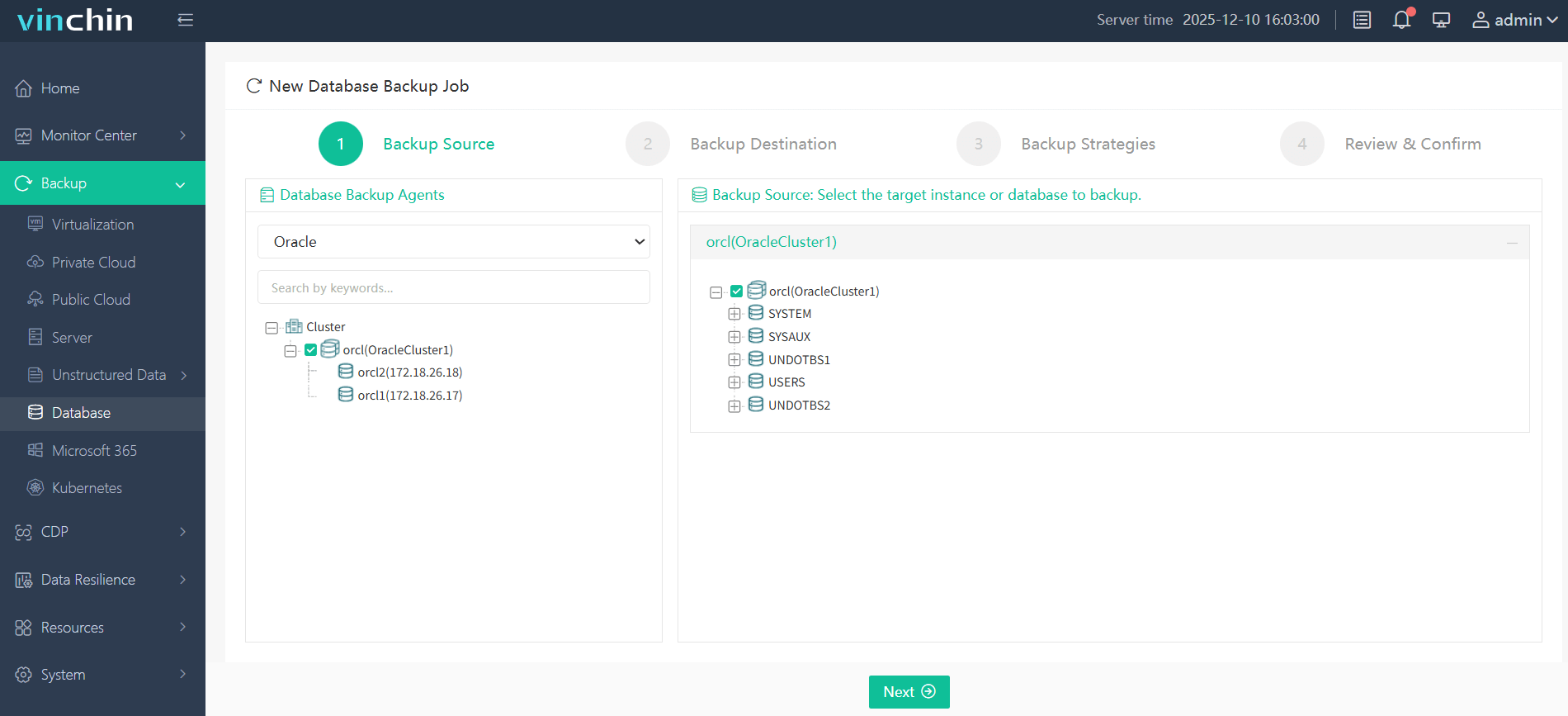
Step 1. Select the Oracle database to back up
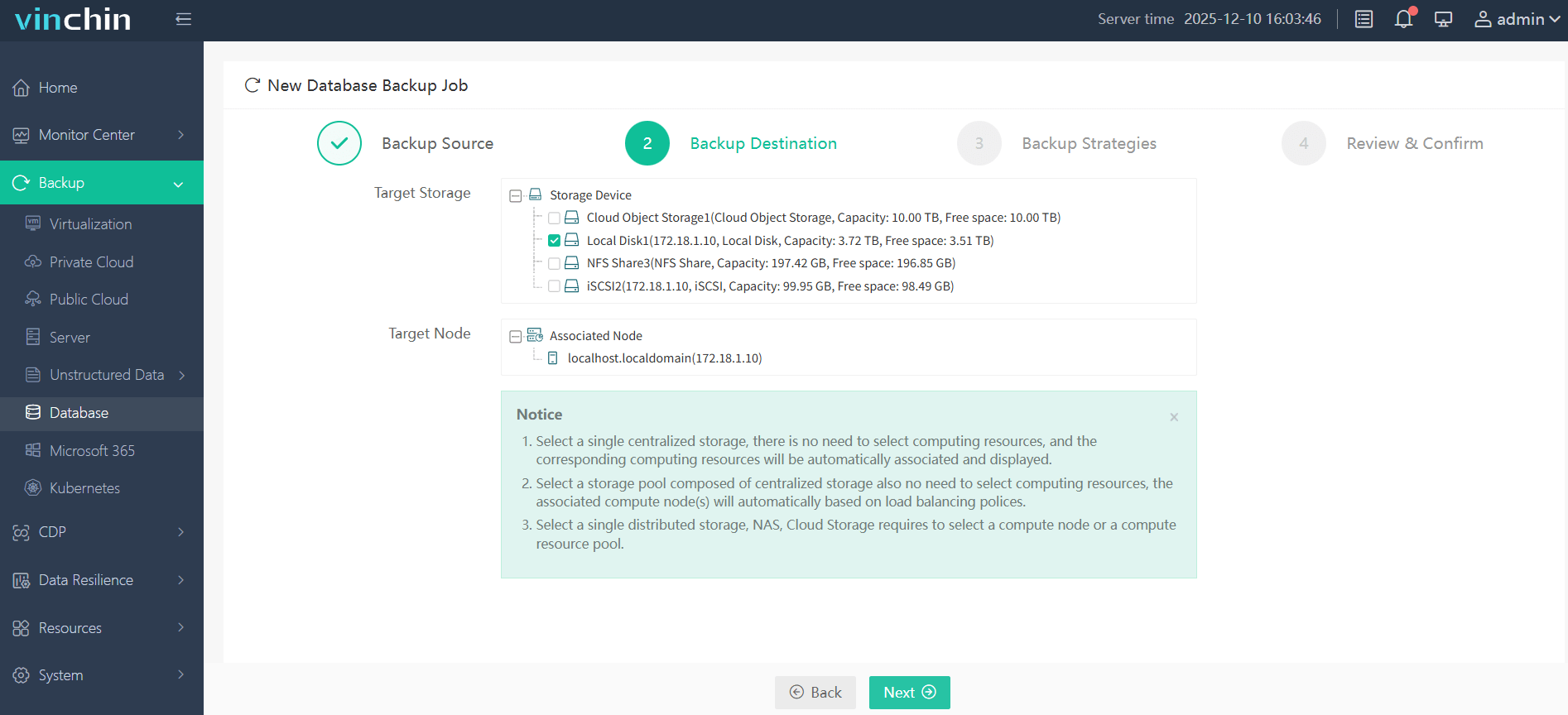
Step 2. Choose backup storage
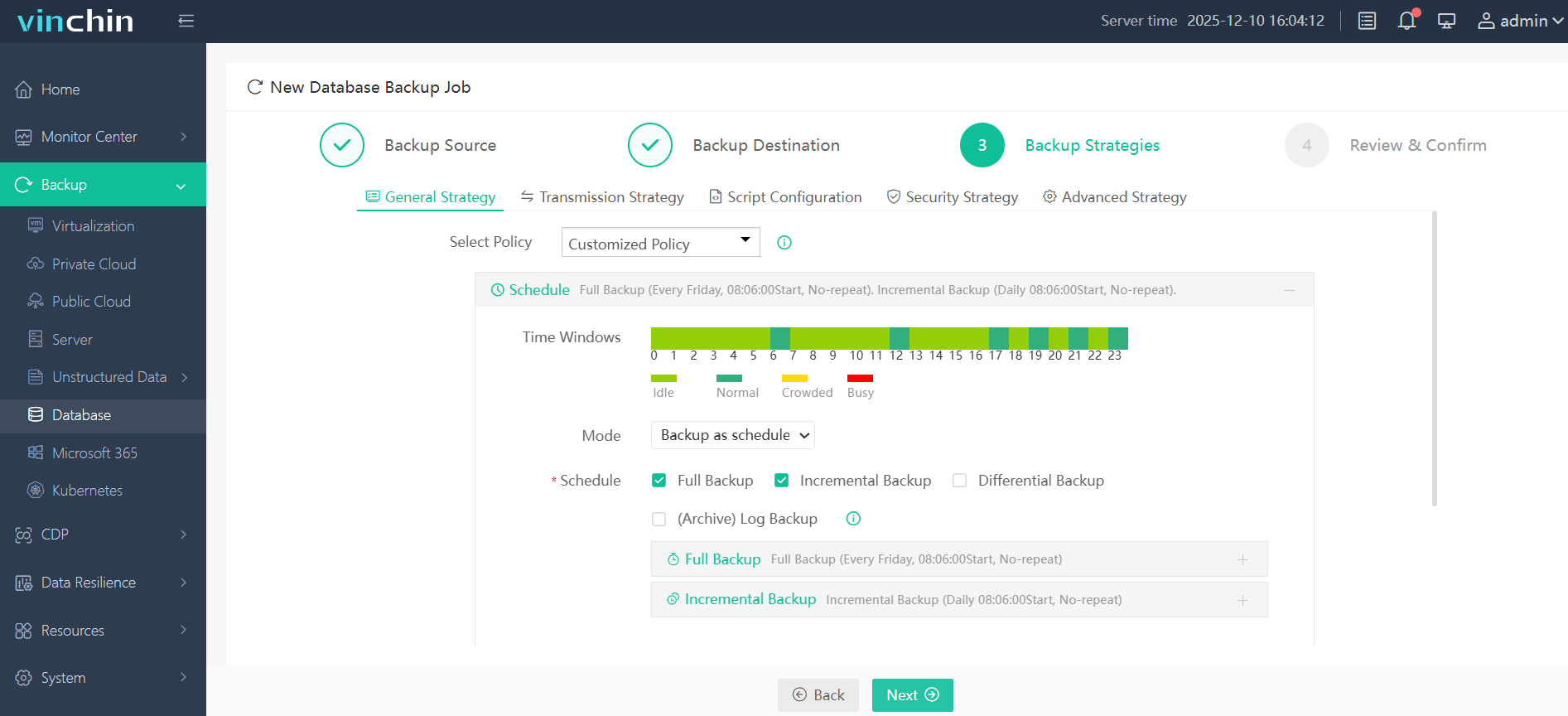
Step 3. Define your backup strategy
Step 4. Submit the job
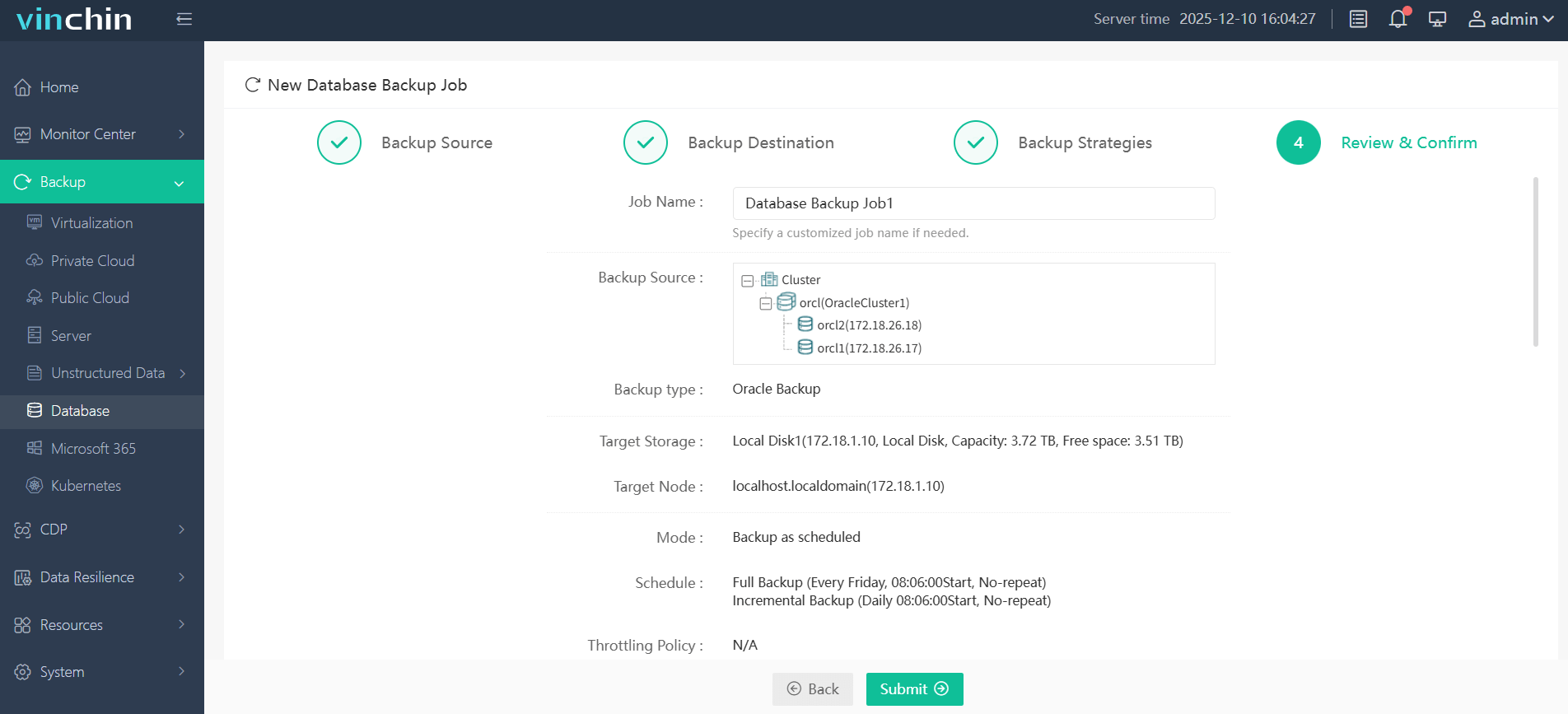
Recognized globally among enterprise customers with top ratings for reliability and support excellence—Vinchin Backup & Recovery offers a fully featured free trial lasting sixty days so you can experience its benefits firsthand; click below to get started today!
List Backup Archivelog Sequence FAQs
Q1: How do I check if last night’s automated job missed backing up any new archive logs?
A1: Query the V$ARCHIVED_LOG view filtering on FIRST_TIME > SYSDATE - 1 and BACKED_UP = 'NO'. For example:
SELECT * FROM V$ARCHIVED_LOGWHERE FIRST_TIME > SYSDATE - 1
  AND BACKED_UP = 'NO';
Investigate any rows returned to determine why they were not backed up.
Q2: What should I do if I find corrupted archive log backups during periodic validation?
A2:
Re-run the backup job for the affected sequence(s).
Verify the health of the storage and hardware involved.
Update documentation once the issue is fully resolved.
Best Practice: Always perform end-to-end checks, maintain logs of failures, and ensure the process is followed consistently for long-term reliability.
Conclusion
Listing backup archivelog sequences is essential for maintaining Oracle database recoverability. Regularly checking for missing files or gaps in backup schedules ensures your environment is always protected—whether your retention spans days, weeks, or months—based on your business requirements.
Vinchin simplifies this process by automating archive log protection, eliminating the risk of overlooked sequences, and giving you confidence that nothing is missed.