Keeping your Oracle database safe is not just about running backups. You need to know if those backups actually work. That’s why checking the RMAN backup status is so important. In this article, you’ll learn what RMAN backup status means, why it matters, and how to check it using both RMAN commands and Oracle views. Ready to make sure your backups are really protecting your data?
What Is RMAN Backup Status?
RMAN backup status tells you the current state of your Oracle database backup jobs. It shows if a backup is running, completed, failed, or finished with warnings. You can also see when each backup started and ended, how long it took, which files were included, and if any errors occurred. This information is stored in Oracle’s control file or an external recovery catalog.
You can view these details using the RMAN command line or by querying special Oracle data dictionary views. Understanding these statuses helps you spot problems early and keep your data safe. In operational terms, a backup with a status other than AVAILABLE or COMPLETED represents a direct risk to your recovery objectives (RPO/RTO). Wouldn’t you want peace of mind knowing every backup counts?
How to Check RMAN Backup Status Using RMAN Commands (Method 1)
The RMAN command line is a direct way to check backup status. Many administrators prefer this method because it's fast and gives clear answers straight from the source.
First, open a terminal window and connect to RMAN as a privileged user by typing:
rman target /
Once connected, several commands help you check different aspects of your backups:
To list all available backups along with their current state—such as AVAILABLE, EXPIRED, or OBSOLETE—type:
LIST BACKUP;
For large environments where output can be overwhelming, filter results by time for better readability; for example:
LIST BACKUP COMPLETED AFTER 'SYSDATE-7';
This shows only backups from the last week.
If you want to focus on failed or outdated backups that might need cleanup according to policy settings:
REPORT OBSOLETE;
This command lists backups that RMAN has marked as OBSOLETE based on your configured retention policy (for example: CONFIGURE RETENTION POLICY TO RECOVERY WINDOW OF 7 DAYS;). These are candidates for deletion using DELETE OBSOLETE.
For a quick summary of recent jobs—including start times, end times, duration—use:
LIST BACKUP SUMMARY;
This overview confirms whether everything ran as expected.
To see details about specific objects backed up during each job:
LIST BACKUP OF DATABASE;
Or narrow down further by checking one datafile at a time:
LIST BACKUP OF DATAFILE <datafile_number>;
Replace <datafile_number> with the actual number assigned to your datafile.
These commands help you quickly see which backups are available now versus those considered outdated or missing. If any entry shows something other than AVAILABLE, such as EXPIRED, investigate right away—this means metadata exists but files cannot be found on disk or tape.
How to Check RMAN Backup Status by Querying Oracle Views (Method 2)
Oracle provides internal views called data dictionary views that track every detail about past backups. These views offer both quick checks for daily health monitoring and deep dives into historical trends.
The most important view is V$RMAN_BACKUP_JOB_DETAILS. To see recent job statuses—including session key (unique ID), input type (DB FULL, ARCHIVELOG, etc.), final status (RUNNING, COMPLETED, FAILED, or COMPLETED WITH WARNINGS)—connect using SQL*Plus or another SQL tool then run:
SELECT SESSION_KEY,
       INPUT_TYPE,
       STATUS,
       TO_CHAR(START_TIME,'mm/dd/yy hh24:mi') AS START_TIME,
       TO_CHAR(END_TIME,'mm/dd/yy hh24:mi') AS END_TIME,
       ELAPSED_SECONDS/3600 AS HOURS
FROM V$RMAN_BACKUP_JOB_DETAILS
ORDER BY SESSION_KEY;
Each row summarizes one job’s lifecycle—from start through finish—with timing details included.
Important: When using an external recovery catalog alongside your control file metadata repository, this view holds complete history indefinitely unless purged manually. If relying only on control file storage (the default), records age out based on the CONTROL_FILE_RECORD_KEEP_TIME parameter (default 7 days). For long-term audit trails or compliance needs beyond this window set up an external recovery catalog.
Want real-time progress? Query V$SESSION_LONGOPS while jobs run:
SELECT SID,
       START_TIME,
       TOTALWORK,
       SOFAR,
       ROUND(SOFAR/TOTALWORK*100,2) AS PCT_DONE
FROM V$SESSION_LONGOPS
WHERE TOTALWORK > SOFAR
  AND OPNAME NOT LIKE '%aggregate%'
  AND OPNAME LIKE 'RMAN%';
This displays percentage complete for each active job—a great way to monitor ongoing tasks without waiting until they finish! Note: Once jobs complete their entries disappear from this dynamic performance view.
For more granular troubleshooting after failures—or if you need detailed logs—use session keys from earlier queries against views like V$RMAN_STATUS or V$RMAN_OUTPUT.
If older records seem missing unexpectedly check retention settings; sometimes valuable history gets purged sooner than planned due either limited space allocation within control files themselves or aggressive cleanup policies!
Method 3: Automating Status Checks and Alerting
Manual checks are helpful but easy to overlook during busy periods—or worse yet forgotten altogether! For production assurance consider integrating automated monitoring into existing workflows so issues never slip through unnoticed again.
Start simple: Write shell scripts that query V$RMAN_BACKUP_JOB_DETAILS looking specifically at jobs ending within last day whose STATUS isn’t ‘COMPLETED’ nor ‘RUNNING’. If count returned exceeds zero trigger alerts via email SMS dashboard pop-up—you choose!
Here’s an example SQL snippet suitable for scripting automation:
SELECT COUNT(*)
FROM V$RMAN_BACKUP_JOB_DETAILS
WHERE END_TIME > SYSDATE - 1
AND STATUS NOT IN ('COMPLETED', 'RUNNING');
A result greater than zero should trigger immediate investigation since it signals failed/incomplete/warning-laden runs needing attention before next cycle begins!
Already use centralized tools like Nagios Zabbix Prometheus? Wrap above logic inside custom plugins feeding results directly into dashboards escalation chains ticketing systems etc.—no manual effort required once set up!
If managing larger fleets leverage built-in features within enterprise management platforms such as Oracle Enterprise Manager Cloud Control where metric thresholds policies notifications can be tailored precisely around organizational SLAs RPOs RTOs ensuring nothing falls through cracks even during off-hours weekends holidays alike!
Automated monitoring transforms reactive firefighting into proactive assurance—a must-have best practice in modern IT operations environments striving toward zero-data-loss goals!
Why Check RMAN Backup Status Matters
The methods described above are not academic exercises—they’re essential habits for keeping databases resilient against disaster scenarios big small alike! Regularly checking RMAN backup status ensures scheduled jobs don’t fail silently leaving critical gaps unprotected until too late recover easily later down road…
By actively monitoring:
You spot problems early fixing them before emergencies arise.
Confirm all required databases files logs receive proper coverage every cycle.
Satisfy compliance requirements demanding proof successful completion over timeframes specified auditors regulators stakeholders expect!
Plan restores confidently knowing exactly which sets valid recent usable under pressure when seconds count most!
Avoid nasty surprises mid-recovery event where incomplete/missing/corrupted sets could otherwise derail timelines jeopardize business continuity outright…
Consistent review also reveals performance trends bottlenecks slowdowns caused storage network contention letting teams optimize proactively rather than reactively after-the-fact once symptoms already visible users impacted negatively downstream processes disrupted unnecessarily…
Wouldn’t you rather catch issues early instead of scrambling during crisis mode?
A Better Way: Back Up Oracle Databases with Vinchin Backup & Recovery
Beyond manual checks and scripts, many organizations seek robust solutions for comprehensive protection of their Oracle databases. Vinchin Backup & Recovery is an enterprise-level database backup solution supporting today’s mainstream platforms including Oracle, MySQL, SQL Server, MariaDB, PostgreSQL, PostgresPro, and TiDB—with full-featured support tailored especially for complex environments like Oracle databases.
Key features include advanced source-side compression and incremental backup for efficient storage usage and faster operations; batch database backup simplifies multi-database management; GFS retention policies ensure compliance-ready retention cycles; integrity check verifies usability of every backup set; plus cloud/tape archiving options extend protection offsite seamlessly—all designed to maximize reliability while minimizing administrative burden.
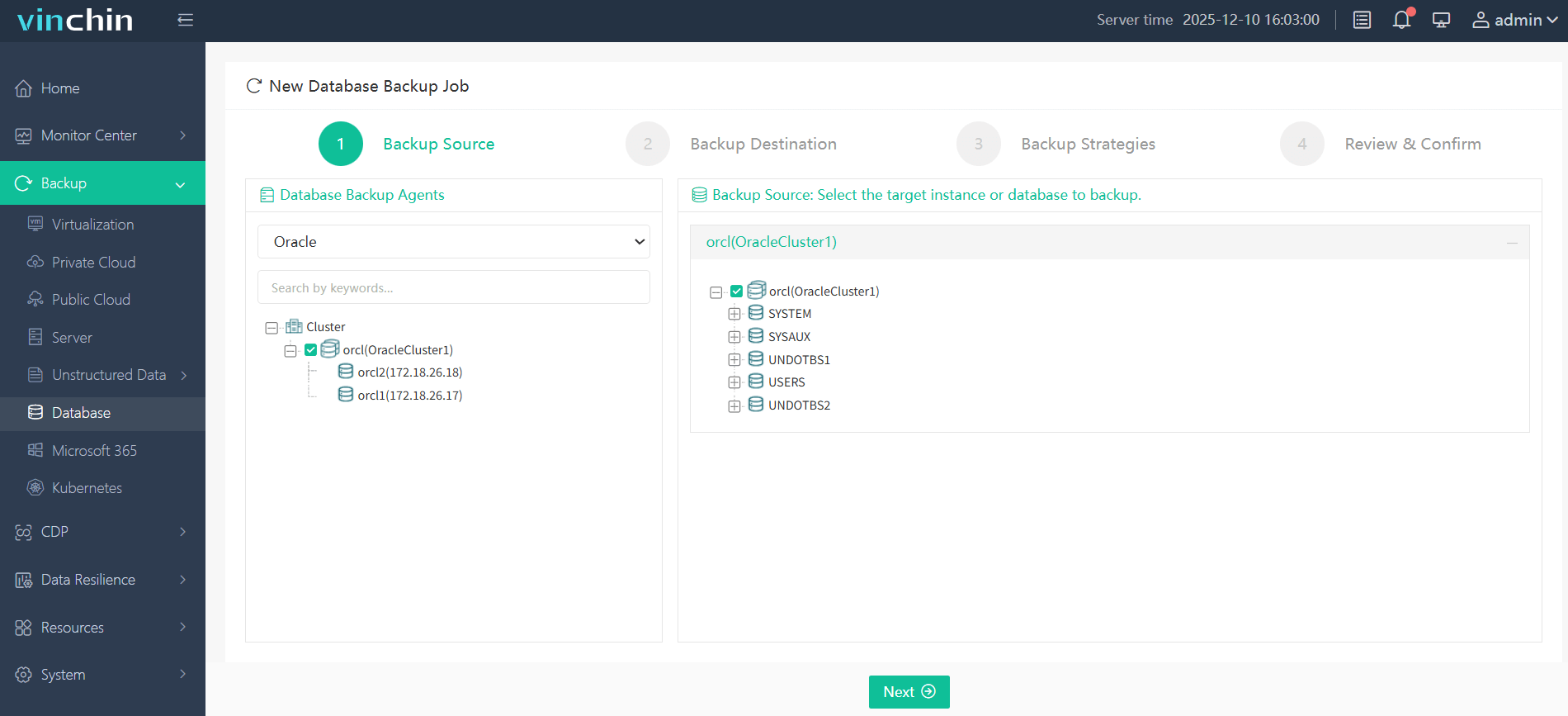
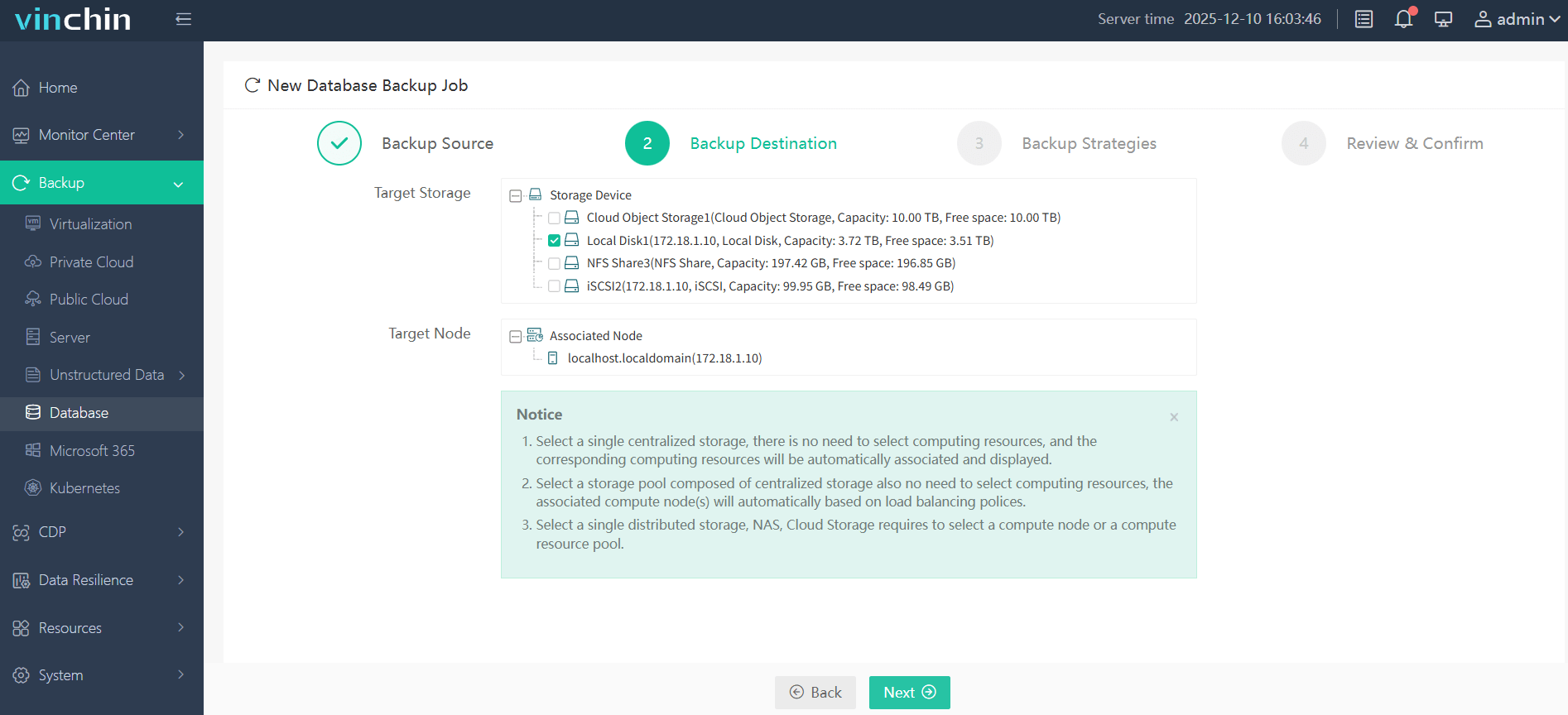
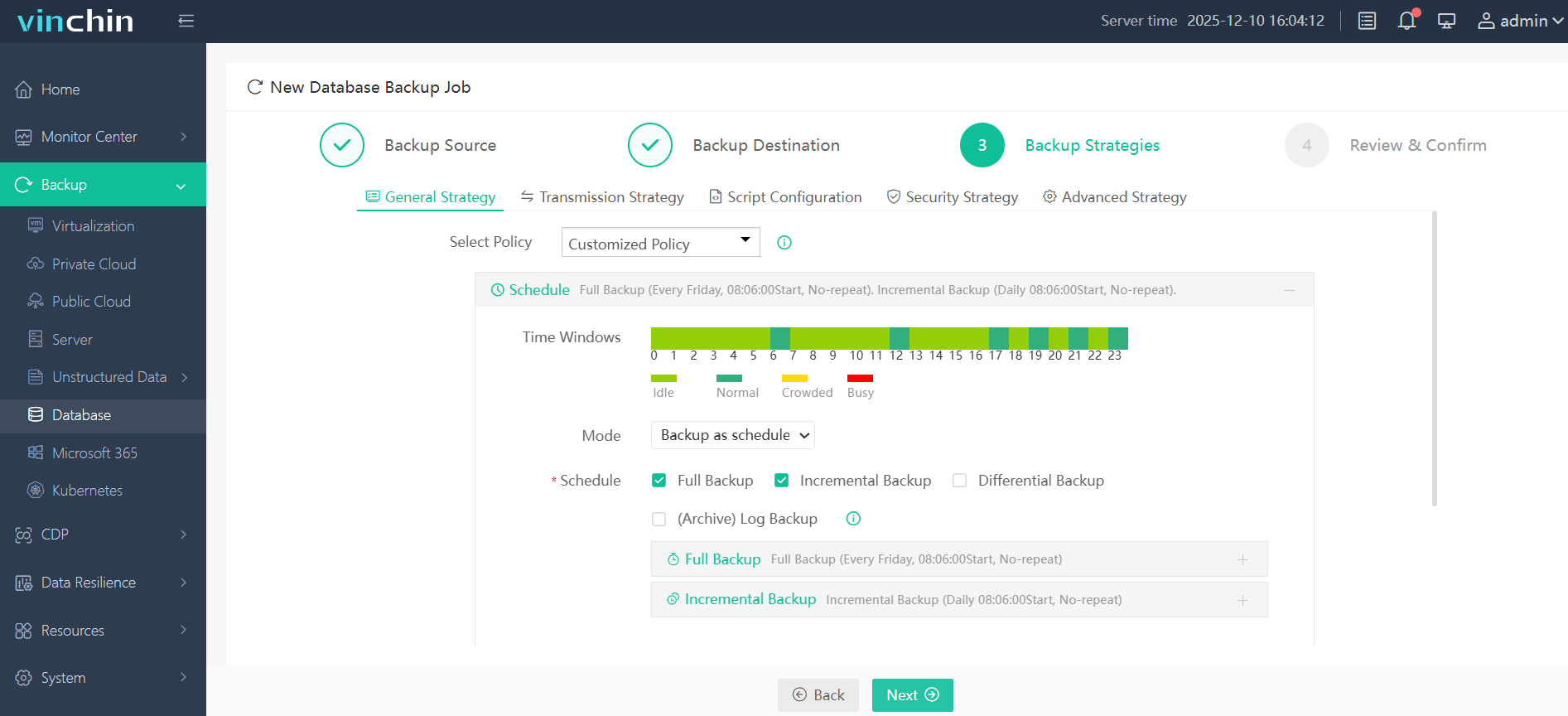
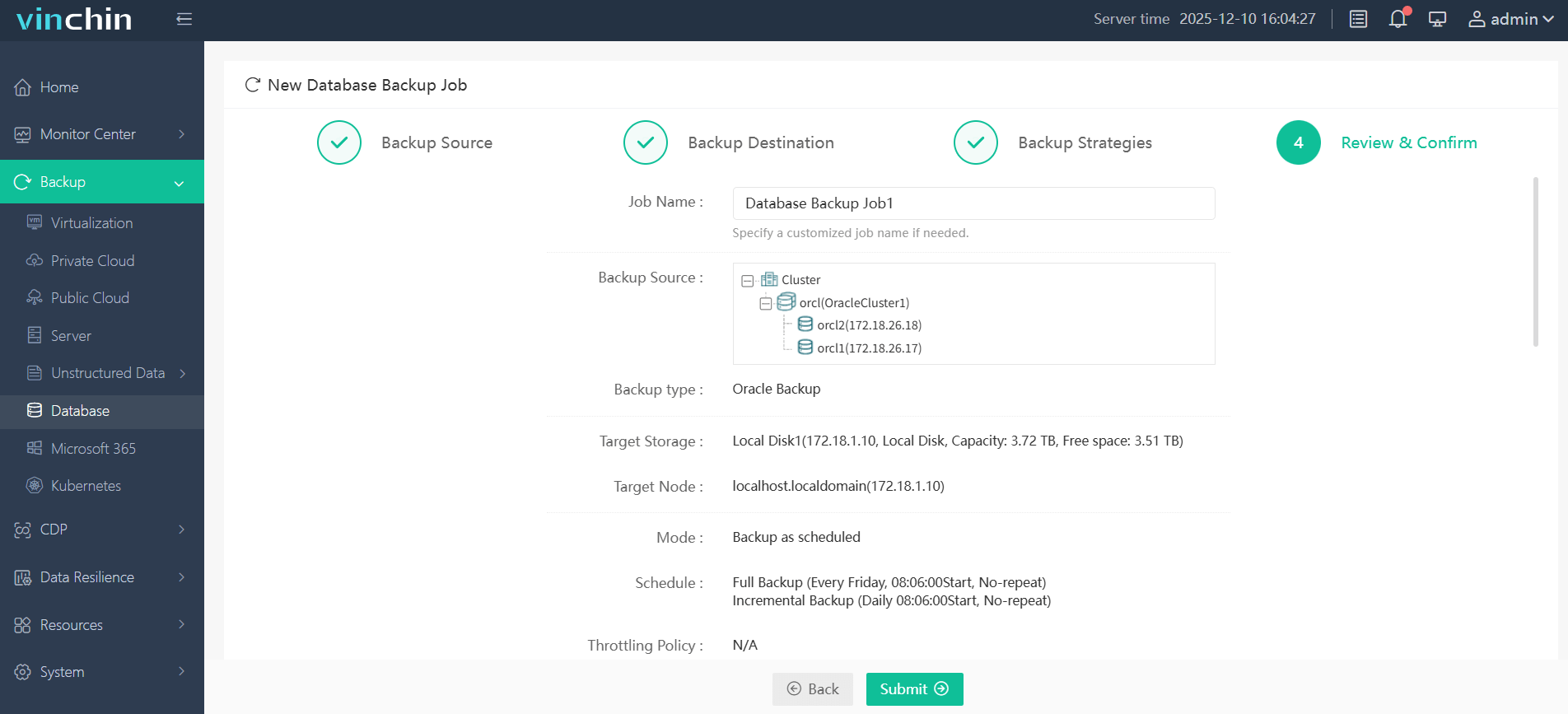
With its intuitive web console interface backing up an Oracle database typically takes just four steps:
Step 1. Select the Oracle database to back up
Step 2. Choose the backup storage
Step 3. Define the backup strategy
Step 4. Submit the job
Recognized globally with top ratings among enterprise users worldwide—and trusted by thousands—Vinchin Backup & Recovery offers a fully featured free trial for 60 days so you can experience its power firsthand; click download below to get started risk-free!
How to Check RMAN Backup Status FAQs
Q1: Can I automate daily checks for failed RMAN jobs?
A1: Yes; schedule scripts querying V$RMAN_BACKUP_JOB_DETAILS then send alerts if failures appear.
Q2: What does EXPIRED mean compared with OBSOLETE?
A2: EXPIRED means physical files are missing; OBSOLETE means old per retention policy but still present unless deleted manually.
Q3: How do I find out why my last full database backup failed?
A3: Query V$RMAN_OUTPUT using session key from V$RMAN_BACKUP_JOB_DETAILS then review error messages shown there.
Conclusion
Knowing your RMAN backup status keeps your Oracle databases safe from unexpected loss or downtime.Use both manual checks automation together for best results.Vinchin makes enterprise-grade protection simple reliable—try it free today!