Backing up your Oracle database is not just about protecting data files. The Server Parameter File (SPFILE) is a small but critical file that stores your database’s configuration settings. If you lose it, you may not be able to start your database—even if all your data files are safe. A missing SPFILE can halt recovery efforts entirely, turning a routine restore into a major crisis. So, how do you back up SPFILE with RMAN? Let’s walk through this process step by step so you can protect your environment at every level.
What Is Oracle SPFILE?
The Oracle SPFILE (Server Parameter File) is a binary file that holds initialization parameters for your database instance. Unlike the older PFILE (a plain text file), the SPFILE allows dynamic changes to parameters without restarting the database.
Oracle recommends using SPFILE because it supports better manageability and automation of configuration tasks. When you change certain parameters using SQL*Plus or Enterprise Manager, those changes are written directly into the SPFILE—no need to edit files manually or restart services.
If you ever need to recover your database after a failure or migration, having a backup of the SPFILE is essential. Without it, recreating all custom settings can be time-consuming and error-prone. While you could try to recreate an SPFILE from an old PFILE backup, any dynamic changes made since then would be lost—potentially causing configuration drift or startup failures.
Why Backup SPFILE with RMAN?
RMAN (Recovery Manager) is Oracle’s built-in tool for backup and recovery operations across databases large and small. It can back up not only data files and control files but also your crucial configuration files like the SPFILE.
Why does this matter? If your SPFILE becomes lost or corrupted due to disk failure or human error, you may find yourself unable to start or restore your database instance—even if all other files are intact.
With an RMAN backup of the SPFILE:
You can quickly restore lost configurations without guessing parameter values.
You avoid downtime caused by missing parameter values during disaster recovery.
You meet compliance requirements for disaster recovery planning by ensuring all critical components are protected.
Oracle documentation stresses that recent backups of both control files and server parameter files are vital for full recovery. Would you risk business continuity on a missing configuration file? Even experienced administrators have faced situations where they had every datafile backed up—but forgot about their live configuration state until it was too late.
Method 1. How to Back Up Oracle SPFILE Automatically Using RMAN?
Automatic backups reduce human error and ensure that your SPFILE is always protected—even during late-night jobs or busy periods when manual steps might get skipped. RMAN supports automatic inclusion of both the control file and SPFILE in every scheduled job via its autobackup feature.
To enable automatic SPFILE backup with RMAN:
1. Connect to your target database using RMAN. Make sure you're connected to the correct instance:
rman target /
Or use username/password authentication:
rman target sys/password@service_name
2. At the RMAN prompt, enable control file autobackup:
CONFIGURE CONTROLFILE AUTOBACKUP ON;
This command tells RMAN two things: always create an autobackup after successful BACKUP commands or structural changes; include both control file and current server parameter file in each autobackup set automatically.
3. To specify where these autobackups go—and how they're named—use:
CONFIGURE CONTROLFILE AUTOBACKUP FORMAT FOR DEVICE TYPE DISK TO '/u04/backups/auto/%F';
The %F variable ensures unique filenames based on timestamp and DBID.
4. Now whenever you run standard backup jobs such as:
BACKUP DATABASE PLUS ARCHIVELOG;
RMAN will automatically include fresh copies of both control file and current server parameter file in each job's output location.
5. To verify how you've configured autobackups—including format paths—run:
SHOW ALL;
This approach ensures your most important configuration—the live binary state—is always backed up alongside regular datafiles with minimal manual intervention required from administrators.
Method 2. How to Manually Back Up Oracle SPFILE Using RMAN?
Manual backups give administrators direct control over when their most important files get protected—ideal before major changes like upgrades or patching windows when timing matters most.
To perform a manual backup of your Oracle Server Parameter File using Recovery Manager:
1. Connect to your target database:
rman target /
2. At the prompt type:
BACKUP SPFILE;
By default this creates a backup piece in either Fast Recovery Area (FRA) if configured—or another default device location set by system policy.
3. To specify exactly where this backup should go—for example before risky maintenance—use:
BACKUP SPFILE FORMAT '/u01/app/oracle/backups/spfile_backup.bkp';
Replace /u01/app/oracle/backups/ with any secure directory appropriate for long-term storage needs.
4. Watch progress messages showing status updates as each piece completes successfully; note down final path displayed by Recovery Manager so it's easy to locate later if needed urgently during incident response!
5. Want confirmation which backups exist? Run:
LIST BACKUP OF SPFILE;
If you're preparing for hardware work—or suspect corruption—you might want even more precision:
Start instance using pfile (STARTUP NOMOUNT PFILE='/path/to/init<SID>.ora') then connect via rman as above; now issue BACKUP SPFILE command safely while running in nomount mode.
Remember: BACKUP CURRENT CONTROL FILE; backs up only control file unless autobackup is enabled—it does not include spfile unless specifically requested!
Advanced Configuration & Best Practices for SPFILE Backups
Once you've mastered basic backups it's time to consider advanced options that help prevent surprises down the road—and make restores faster when seconds count.
First consider where autobackups land: If you've set both CONFIGURE CONTROL FILE AUTOBACKUP FORMAT and have Fast Recovery Area enabled—the explicit format path takes precedence over FRA defaults for these specific pieces. Always double-check paths so nothing gets misplaced during audits!
Next think about retention policy: By default all backups—including spfile sets created via autobackup—are subject to whatever retention window you've defined (CONFIGURE RETENTION POLICY TO RECOVERY WINDOW OF X DAYS). For compliance needs keep periodic copies externally; don't assume everything stays forever inside FRA especially if space fills up fast during heavy workloads!
Verification matters too—not just listing what exists but checking integrity periodically:
These commands confirm whether pieces are readable/restorable without actually overwriting anything—a smart habit before planned failovers or DR drills!
Running Real Application Clusters (RAC)? Remember spfile usually lives on shared storage accessible from all nodes—but only one node should run actual rman command at once! In multitenant container databases backing up root-level spfile covers entire CDB structure; there's no separate spfile per pluggable DB so one operation protects whole stack at once.
Finally document everything! Keep logs showing which method was used last plus exact locations/formats chosen—that way anyone on-call knows what rescue steps look like under pressure rather than scrambling through old scripts hoping nothing got missed along way...
How Can You Backup Oracle Database Configurations Including SPFILE with Vinchin?
For organizations seeking comprehensive protection beyond native tools, Vinchin Backup & Recovery delivers enterprise-grade solutions tailored for today’s leading databases—including robust support for Oracle 10g, 11g/11g R2, 12c, 18c, 19c, 21c, Oracle RAC, MySQL, SQL Server, MariaDB, PostgreSQL, PostgresPro, and TiDB.
With deep integration for Oracle workloads specifically, Vinchin Backup & Recovery offers features such as batch database backup, incremental backup capabilities, flexible retention policies including GFS retention strategies, cloud/tape archiving options, and automated integrity checks—all working together to maximize reliability while minimizing administrative effort across complex infrastructures.
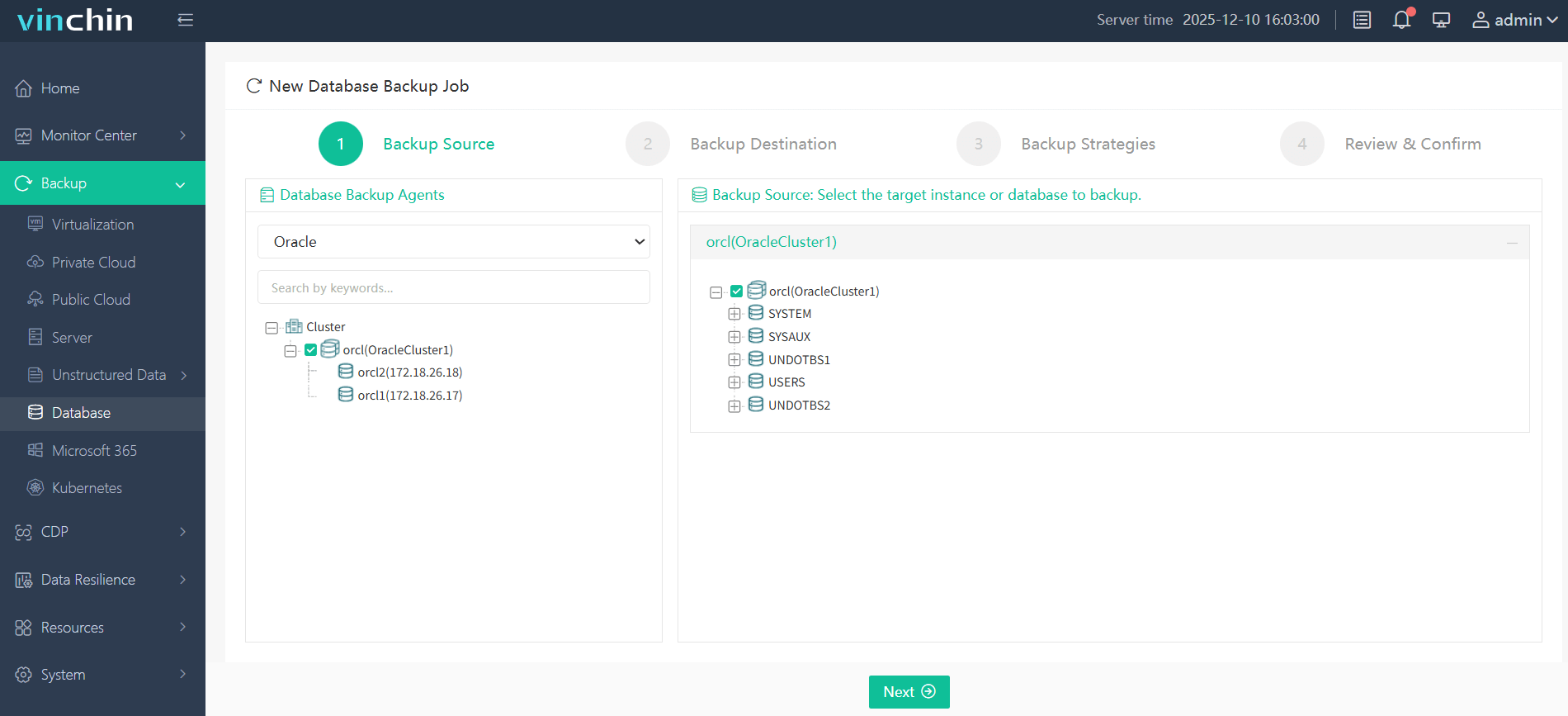
Vinchin Backup & Recovery stands out thanks to its intuitive web console:
Step 1. involves selecting the Oracle database you wish to protect
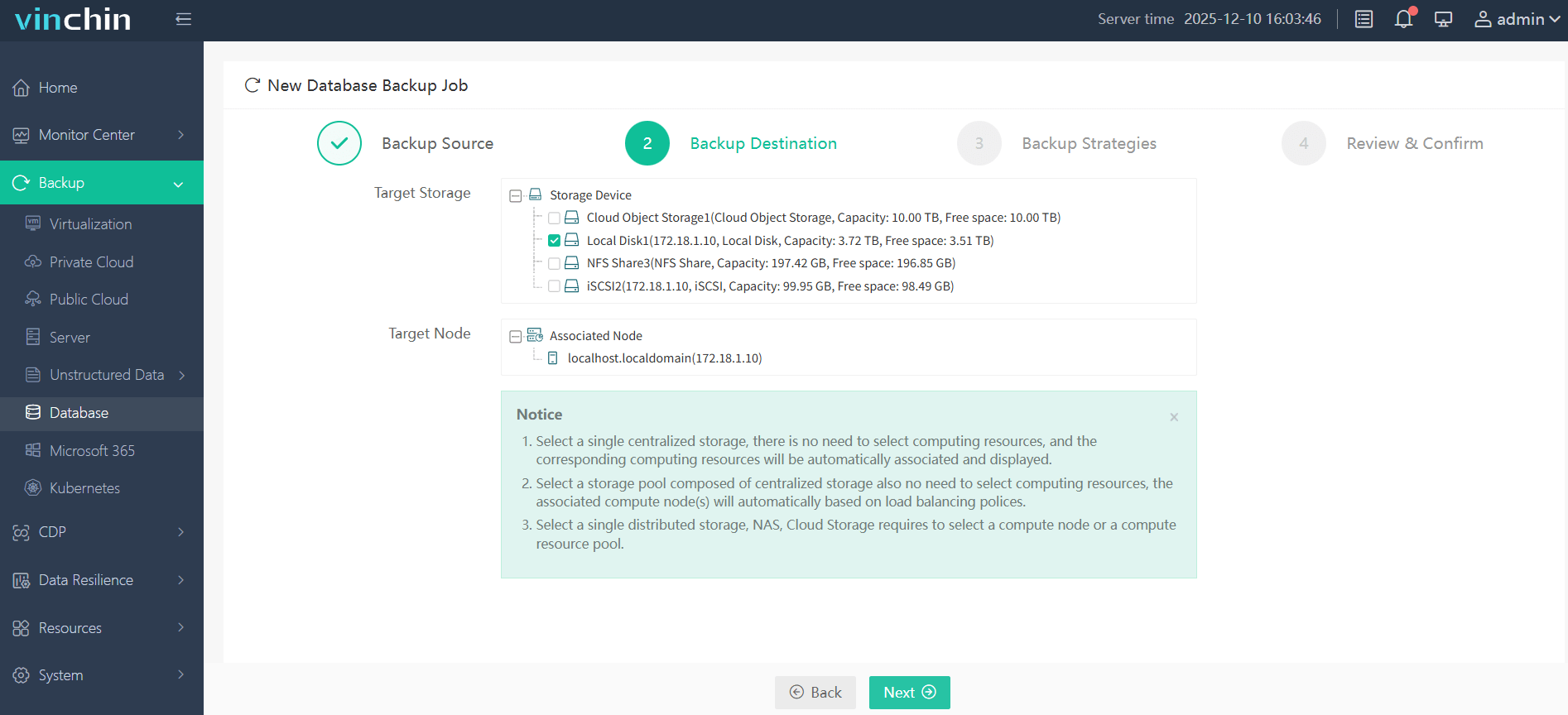
Step 2. lets you choose secure storage targets
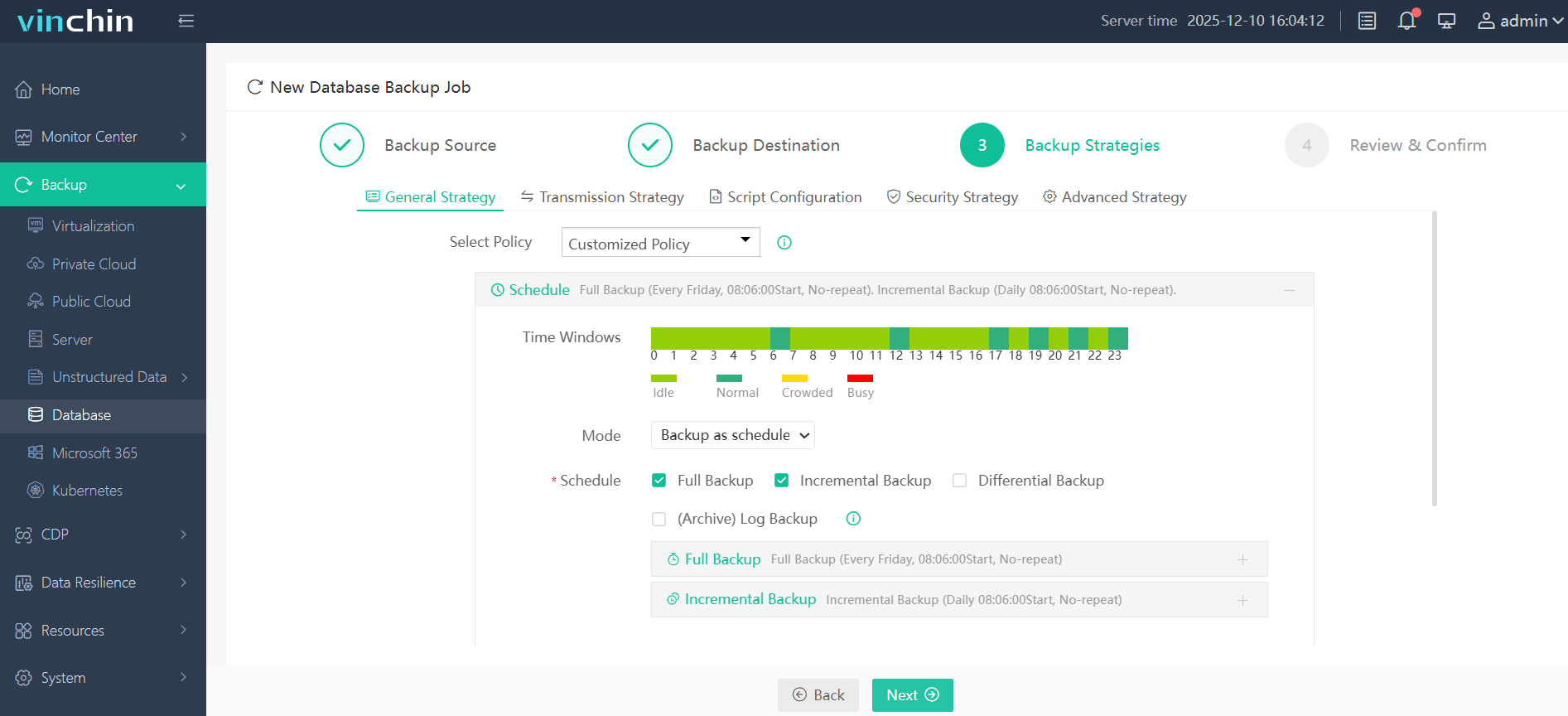
Step 3. defines granular scheduling and strategy details
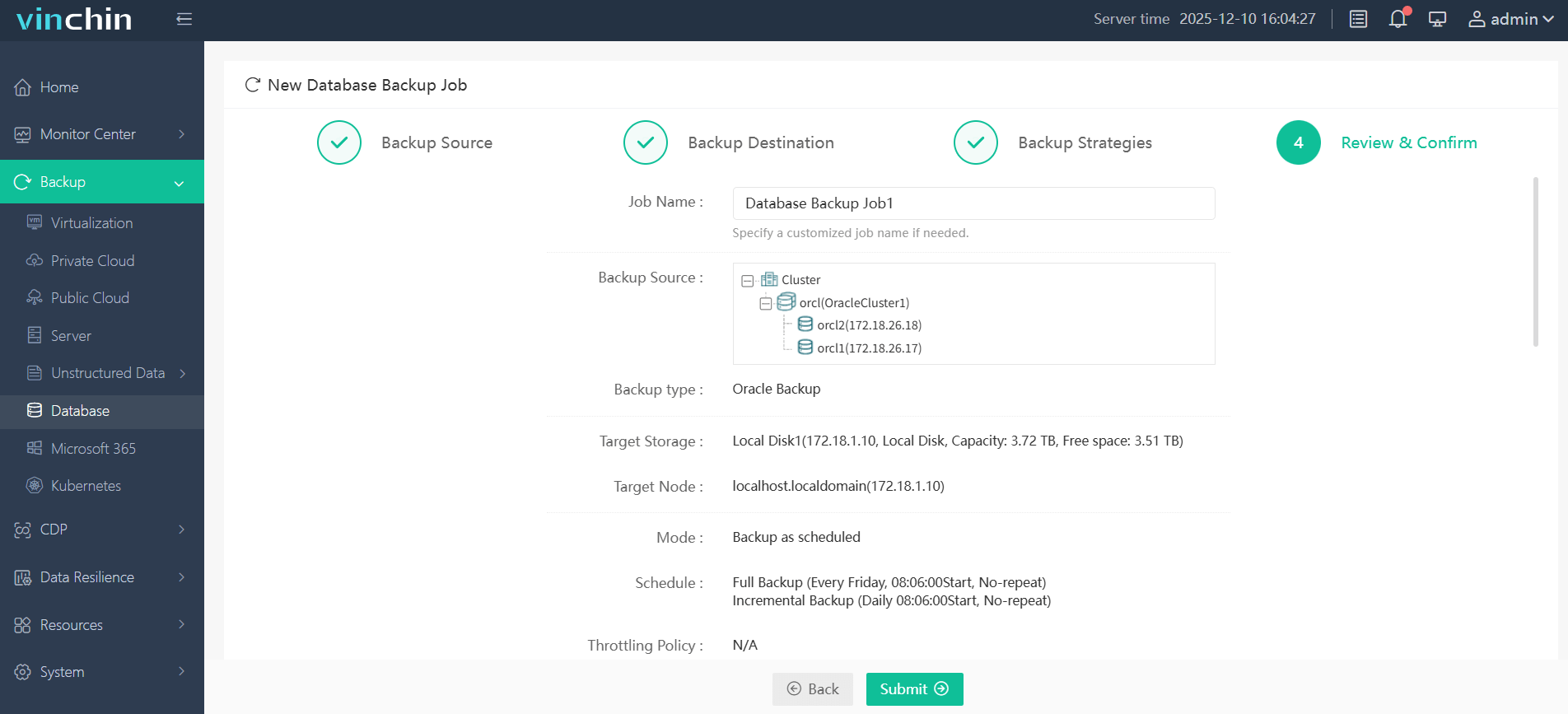
Step 4. submits the job
Recognized globally by enterprises large and small—with top ratings from industry analysts—you can experience every feature free for 60 days by clicking download below.
Oracle RMAN Backup Spfile FAQs
Q1: Can I schedule daily automatic backups of my Oracle Spfile using only built-in tools?
Yes; enable CONTROL FILE AUTOBACKUP ON in Recovery Manager so it includes Spfile after every scheduled job automatically.
Q2: What should I do if my Spfile gets corrupted but I still have access through PFile?
Start instance with PFile then use RESTORE Spfile FROM AUTOBACKUP within an open Recovery Manager session while NOMOUNTED.
Q3: Is it possible to verify whether my last Spfile Recovery Manager backup completed successfully?
Yes; run LIST BACKUP OF Spfile inside Recovery Manager prompt—it shows status location timestamp instantly.
Q4: How do I restore an Spfile from an existing Recovery Manager Autobackup?
Connect using rman target / > issue STARTUP NOMOUNT > run RESTORE Spfile FROM AUTOBACKUP > then restart normally
Conclusion
Backing up your Oracle Server Parameter File with Recovery Manager protects against unexpected outages—from accidental misconfiguration to hardware loss.Manual commands offer precision while automation delivers peace of mind.Vinchin makes safeguarding these vital assets even simpler—try their free trial today!