Have you noticed your Oracle RMAN backup running for hours or even days? You are not alone. Many database administrators struggle with slow RMAN backups that disrupt business operations, extend Recovery Point Objectives (RPO), and sometimes push backup jobs beyond their scheduled windows. These delays can also create contention with production workloads or maintenance tasks. Understanding why this happens—and how to fix it—can help you keep your systems efficient and reliable.
What Is Oracle RMAN Backup?
Oracle Recovery Manager (RMAN) is the built-in tool for backing up, restoring, and recovering Oracle databases. It automates many backup tasks so you don’t have to script everything by hand. RMAN supports both full and incremental backups and works closely with Oracle’s advanced features like block change tracking and data deduplication. Because it is integrated into Oracle Database itself, RMAN is the recommended method for protecting your data in both small businesses and large enterprises.
Why Oracle RMAN Backup Takes Long Time?
Several factors can cause an Oracle RMAN backup to take longer than expected. Disk or network bottlenecks are common culprits when storage devices or network links cannot keep up with the data flow required during backup windows. Suboptimal RMAN configuration settings may limit throughput or overload system resources if not tuned properly. Insufficient memory allocation can force processes to wait on buffer space instead of streaming data efficiently.
Lack of parallelism means only one stream handles all read/write activity—even on powerful hardware capable of much more work in parallel. Sometimes resource contention from other jobs slows things down further; fragmented tables or indexes can also increase scan times during backup operations.
Identifying which factor is responsible in your environment is crucial before making changes.
How to Diagnose the Root Cause of Slow RMAN Backups?
Before tuning anything, it’s important to diagnose what’s slowing down your backups so you target the right solution.
Start by checking recent backup job history using V$RMAN_BACKUP_JOB_DETAILS; look for patterns such as certain days when jobs run slower or specific databases affected more often than others.
Next, monitor active sessions during a running backup using V$SESSION_LONGOPS in SQL*Plus:
SELECT opname, sofar, totalwork, units FROM v$session_longops WHERE opname LIKE 'RMAN%';
This shows progress estimates for each operation so you can spot bottlenecks early.
For deeper insight into disk performance during backups, query V$BACKUP_SYNC_IO and V$BACKUP_ASYNC_IO:
SELECT filename, elapsed_time_display AS time_spent FROM v$backup_sync_io ORDER BY time_spent DESC;
Files spending excessive time here may point to slow disks or overloaded volumes.
Check the operating system level too: use tools like iostat -x, vmstat, or iotop on Linux servers while backups run to see if disk queues are long or await times spike above normal values.
Finally, review your latest RMAN log files for channel messages showing sustained throughput rates (in MB/sec) per file or device type; these logs often reveal whether reading from source disks or writing out backup pieces takes longer.
If you notice that validation runs quickly but actual backups do not—or vice versa—you’ve narrowed down whether reads (source) or writes (destination/network) are at fault.
How to Improve Disk and Network Performance for Oracle RMAN Backup?
Disk and network performance often set the upper limit on how fast an RMAN backup completes. If either component lags behind demand during peak periods, even well-tuned software cannot compensate fully.
Begin by measuring storage throughput using OS tools such as iostat:
iostat -xm 5
Watch for high utilization percentages (>80%) or long average wait times (“await” column). If these numbers spike during backups but remain low otherwise, consider upgrading disks—moving from spinning drives (HDDs) to solid-state drives (SSDs)—or spreading data across more physical devices using RAID arrays for better concurrency.
For network-based backups (such as those writing directly over NFS/CIFS shares), check bandwidth usage with commands like netstat -i:
netstat -i
Look out for dropped packets or high error counts that signal congestion issues; if possible dedicate a separate VLAN just for database traffic so regular user activity does not interfere with critical transfers.
A useful way to isolate read versus write bottlenecks is by running Oracle’s BACKUP VALIDATE DATABASE command:
RMAN> BACKUP VALIDATE DATABASE;
This command reads all blocks from disk but does not actually write any output files—it simply checks block integrity end-to-end within the database storage layer. If validation finishes much faster than a real backup job writing out files over the same period then your write path (disks used as destination targets or outbound network links) likely needs attention first; if both steps are slow then reading from source disks could be limiting overall speed instead.
Always address hardware limitations before moving on to software tuning steps since no amount of parameter adjustment can overcome physical constraints entirely!
How to Tune RMAN Configuration Settings?
Once hardware issues have been ruled out—or improved—the next step is optimizing how RMAN itself operates within your environment through its configuration parameters.
First review current settings using:
RMAN> SHOW ALL;
Pay special attention to these parameters:
CHANNEL DEVICE TYPE DISK PARALLELISM: This controls how many channels (streams) handle concurrent read/write operations during each job.
LARGE_POOL_SIZE: The large pool provides dedicated memory buffers used by parallel execution processes including those launched by RMAN; if set too low then spillover occurs into shared pool memory which increases contention across other database activities.
To check current allocation:
SELECT pool,name,bytes FROM v$sgastat WHERE name LIKE '%backup%';
Increase size as needed:
ALTER SYSTEM SET LARGE_POOL_SIZE = 512M SCOPE=BOTH;
DBWR_IO_SLAVES / BACKUP_TAPE_IO_SLAVES: On platforms lacking native asynchronous I/O support these parameters simulate async behavior via extra slave processes—but most modern Unix/Linux systems already support async natively via libaio libraries so setting them may be unnecessary unless directed by platform documentation.
COMPRESSION ALGORITHM: Compression reduces output size but uses CPU cycles heavily; try switching between algorithms based on available processor headroom:
CONFIGURE COMPRESSION ALGORITHM 'MEDIUM';
Use ‘BASIC’ if CPU load becomes excessive but expect lower compression ratios.
RATE: Any explicit rate limits applied per channel throttle maximum throughput artificially—remove them unless required due to production impact concerns.
Manual overrides inside RUN blocks always take precedence over persistent settings shown above—so double-check scripts used in automation pipelines!
After changing any setting always monitor subsequent job durations closely until confident improvements hold under typical load conditions.
How to Use Parallelism in Oracle RMAN Backup?
Parallelism lets multiple channels process different parts of your database at once—a key feature when dealing with large datasets spread across several disks/LUNs/volumes simultaneously rather than serializing everything through one thread at a time.
To enable parallelism globally:
CONFIGURE DEVICE TYPE DISK PARALLELISM 4;
Or allocate channels manually inside scripts:
RUN {
   ALLOCATE CHANNEL ch1 DEVICE TYPE DISK;
   ALLOCATE CHANNEL ch2 DEVICE TYPE DISK;
   ALLOCATE CHANNEL ch3 DEVICE TYPE DISK;
   ALLOCATE CHANNEL ch4 DEVICE TYPE DISK;
   BACKUP DATABASE;
   RELEASE CHANNEL ch1;
   RELEASE CHANNEL ch2;
   RELEASE CHANNEL ch3;
   RELEASE CHANNEL ch4;
}
Make sure underlying hardware supports this level of concurrency without saturating CPUs/disks/networks! Too many channels may lead only to context switching overhead rather than true speed gains.
Vinchin: Enterprise-Level Solution for Fast & Reliable Oracle Database Backups
When traditional methods like manual tuning aren’t enough, enterprise-grade solutions offer greater efficiency and control. Vinchin Backup & Recovery stands out as a professional database backup platform supporting today’s mainstream environments—including robust protection specifically designed for Oracle databases alongside MySQL, SQL Server, MariaDB, PostgreSQL, PostgresPro, and TiDB. For organizations seeking streamlined operations and reduced risk of downtime, Vinchin Backup & Recovery delivers essential features such as advanced source-side compression tailored for Oracle workloads, incremental backup capabilities that minimize storage use and speed up daily protection cycles, batch database management functions ideal for complex environments, flexible retention policies including GFS strategies ensuring compliance needs are met effortlessly—all while enabling seamless restore-to-new-server options when disaster strikes. Together these features help optimize resource consumption while guaranteeing rapid recovery points across diverse infrastructures.
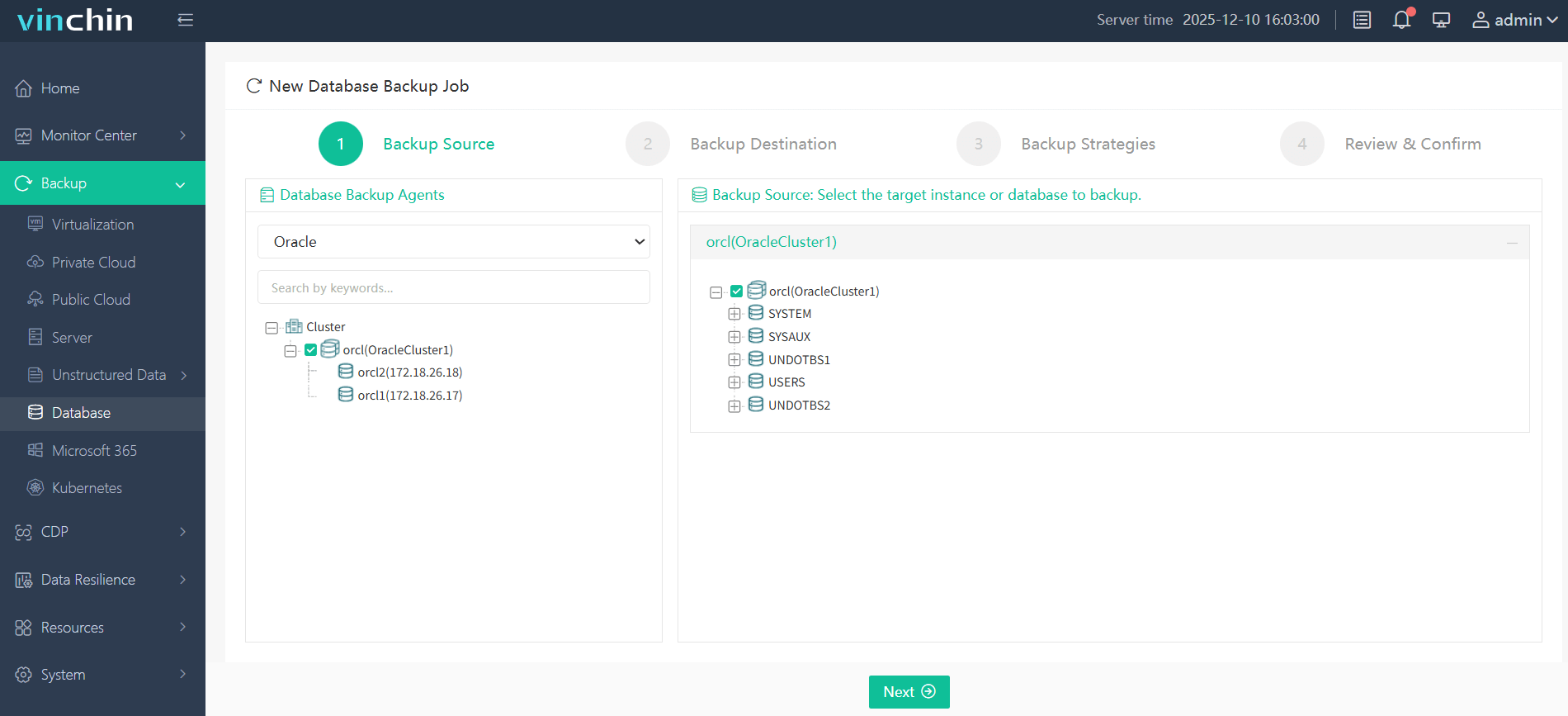
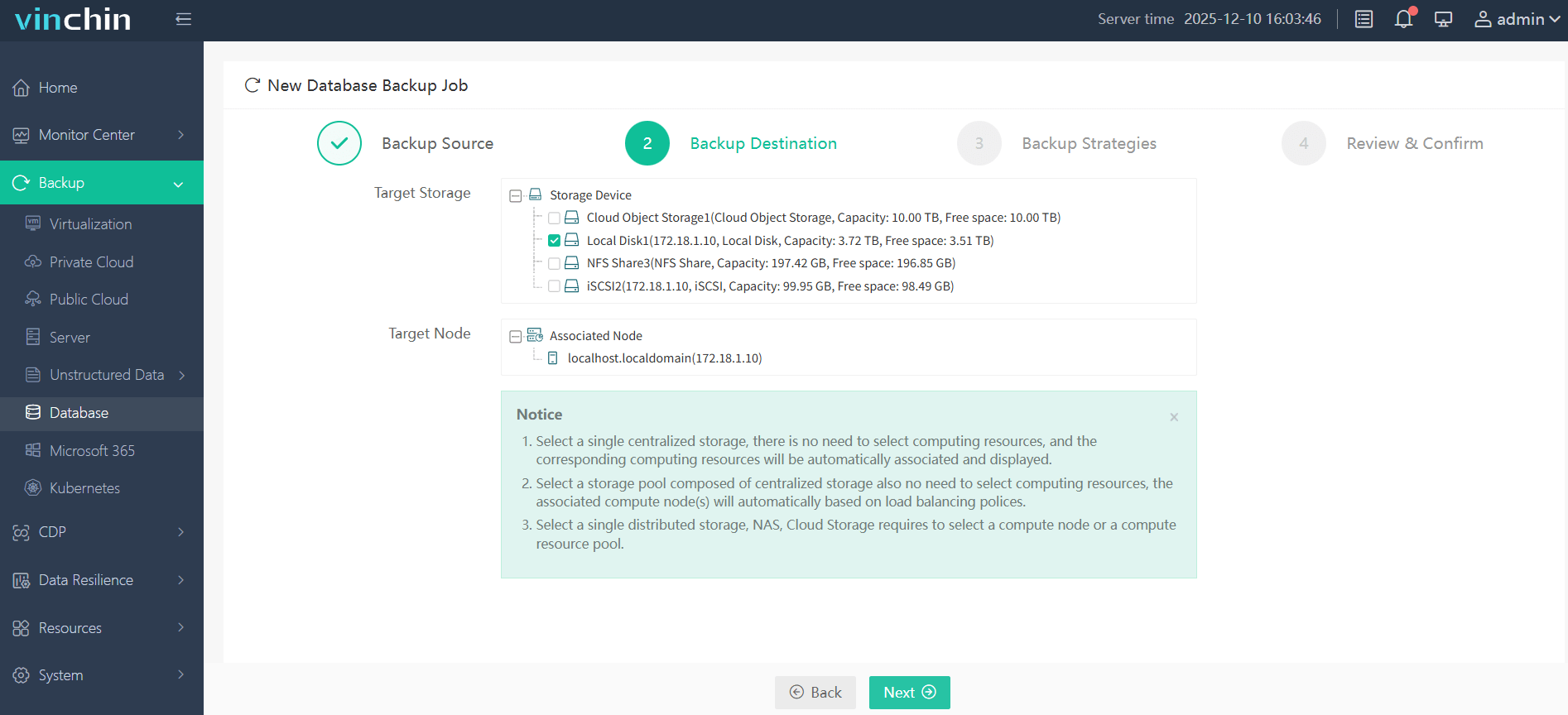
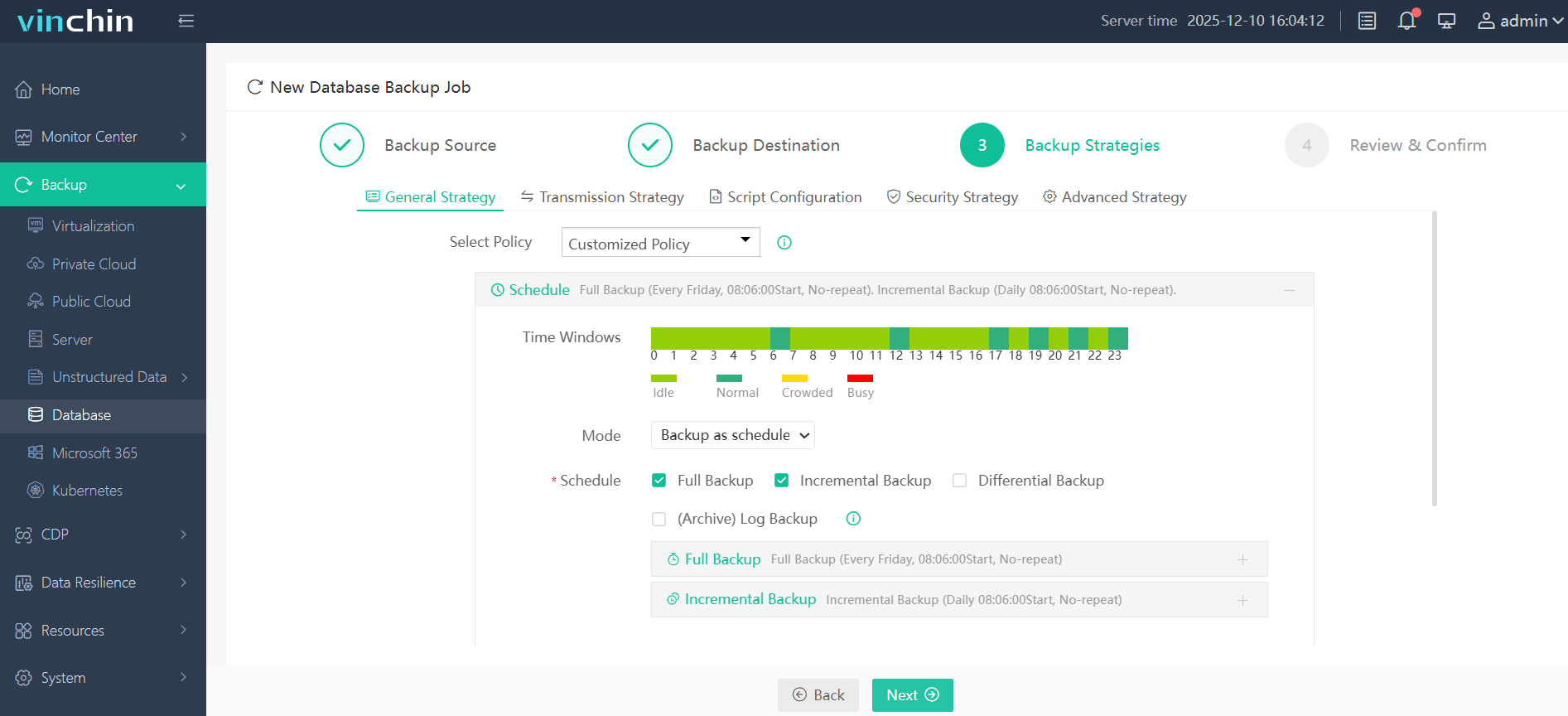
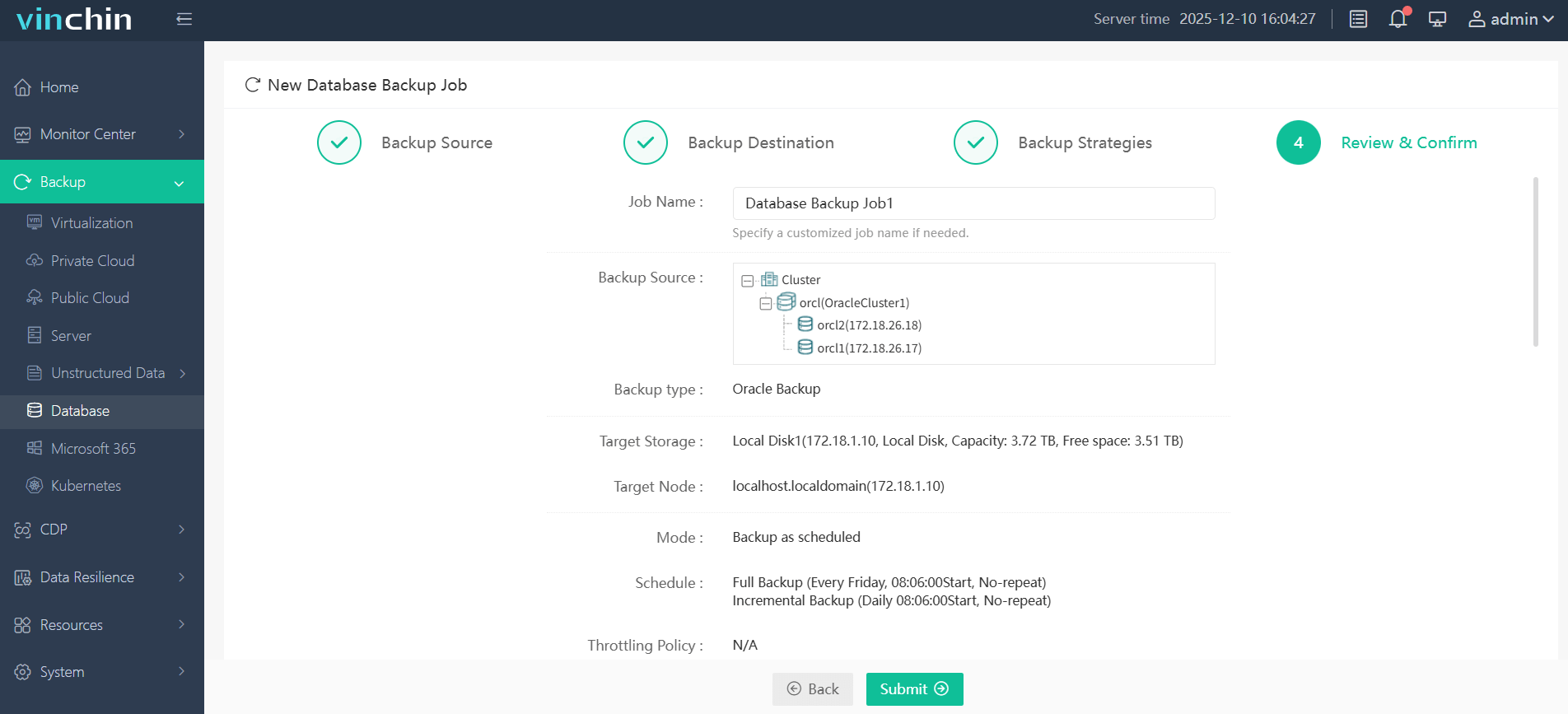
The intuitive web console makes safeguarding your Oracle environment straightforward:
Step 1. Select the Oracle database to back up
Step 2. Choose the backup storage
Step 3. Define the backup strategy
Step 4. Submit the job
Recognized worldwide with top ratings from thousands of satisfied customers,Vinchin Backup & Recovery offers a comprehensive free trial—experience full functionality risk-free for sixty days by clicking download now!
Oracle RMAN Backup FAQs
Q1: What should I do first when my oracle rman backup taking long time to complete?
A1: Check recent job logs in V$RMAN_BACKUP_JOB_DETAILS then examine V$SESSION_LONGOPS during active jobs for bottleneck clues before adjusting any settings.
Q2: Does enabling block change tracking improve full rman backup speed?
A2: No; block change tracking only speeds up incremental backups—not full ones—so focus on parallelism/I/O paths instead when tuning full backups.
Q3: How do I safely test different compression algorithms without risking production?
A3: Run test jobs using CONFIGURE COMPRESSION ALGORITHM followed by BACKUP VALIDATE DATABASE outside business hours then compare CPU usage/duration metrics before applying changes live.
Conclusion
Slow Oracle RMAN backups frustrate many admins but targeted diagnosis plus careful tuning yields big improvements fast.If you want modern enterprise-grade protection,Vinchin delivers robust performance alongside easy management.Try Vinchin free today—and see how simple secure data protection can be!