Maintaining up-to-date backup metadata is essential for reliable Oracle database recovery. The RMAN recovery catalog stores this metadata, but over time or after changes, it can fall out of sync with your databases. In this article, we explain what RMAN catalog resynchronization means, why it matters, and how to perform both automatic and manual resyncs step by step. Are you ready to ensure your Oracle backups are always recoverable?
What is RMAN Catalog Resync?
RMAN catalog resynchronization updates the recovery catalog with the latest metadata from your Oracle database’s control file. This process ensures that backup, restore, and recovery operations use accurate information about your data protection state.
There are two types of resynchronization: partial and full. A partial resync updates only records that have changed since the last synchronization—such as new backup sets or archived logs. A full resync repopulates all relevant metadata from the control file into the recovery catalog; this occurs after structural changes like adding or dropping tablespaces. Both types use the RESYNC CATALOG command to compare current states.
Why Resync RMAN Catalog in Oracle?
Regularly syncing your RMAN catalog is critical for several reasons. First, it keeps all backup and recovery metadata current—a must for disaster recovery planning. Second, if you change your database structure (for example by adding a tablespace), these updates must be reflected so future backups include them.
Third, environments using Data Guard require synchronization to track both primary and standby systems accurately. Without regular synchronization, you risk incomplete backup records or failed restores when they matter most.
How to Perform Automatic RMAN Catalog Resynchronization?
Automatic resynchronization happens as a side effect when you run many common RMAN commands—such as BACKUP, DELETE, or RESTORE—while connected to both your target database and recovery catalog.
When you execute a command like BACKUP DATABASE, RMAN checks if any relevant metadata has changed since its last update. If so, it performs either a partial or full resync depending on what has changed in your environment. For example: after running a backup job that creates new backup sets or archived logs—or after changing schema objects—RMAN triggers an appropriate sync automatically.
You do not need special steps for automatic resynchronization; just ensure both target database and recovery catalog are accessible during jobs. If the recovery catalog is unavailable during an operation (for example due to network issues), only the control file gets updated at that time; later you should run a manual sync to catch up missing records.
How to Perform Manual RMAN Catalog Resynchronization?
Manual synchronization gives you direct control over when—and how—the recovery catalog gets updated. This method is especially useful after major changes such as upgrades or if your catalog was offline during maintenance windows.
Before starting manual syncs:
1. Make sure your target database is either mounted or open so its control file can be read.
2. Optionally check status using:
SELECT open_mode FROM v$database;
To perform a manual sync:
1. Connect RMAN to both target database (using OS authentication) and recovery catalog (using TNS alias):
rman TARGET / CATALOG rman_user/password@catdb
2. Mount or open target database if needed:
STARTUP MOUNT;
3. At the RMAN prompt run:
RESYNC CATALOG;
4. Exit once complete:
EXIT;
In Data Guard environments where multiple databases register under different unique names:
RESYNC CATALOG FROM DB_UNIQUE_NAME standby_db;
To sync all databases registered in Data Guard (as SYS user with password file authentication):
RESYNC CATALOG FROM DB_UNIQUE_NAME ALL;
After running RESYNC CATALOG, review output messages such as “full resync complete.” Investigate any errors before proceeding with further tasks.
Enterprise Database Protection with Vinchin Backup & Recovery
While traditional methods like RMAN remain vital for Oracle environments, organizations increasingly seek comprehensive solutions for enterprise-level data protection across multiple platforms—including MySQL, SQL Server, MariaDB, PostgreSQL, PostgresPro, TiDB, and especially Oracle itself. Vinchin Backup & Recovery stands out as a professional solution supporting these mainstream databases with robust features such as incremental backup for Oracle environments, batch database backup management, flexible data retention policies including GFS retention strategies, cloud/tape archiving options for offsite safety, and any-point-in-time recovery capabilities—all designed to streamline administration while maximizing reliability and compliance across diverse infrastructures.
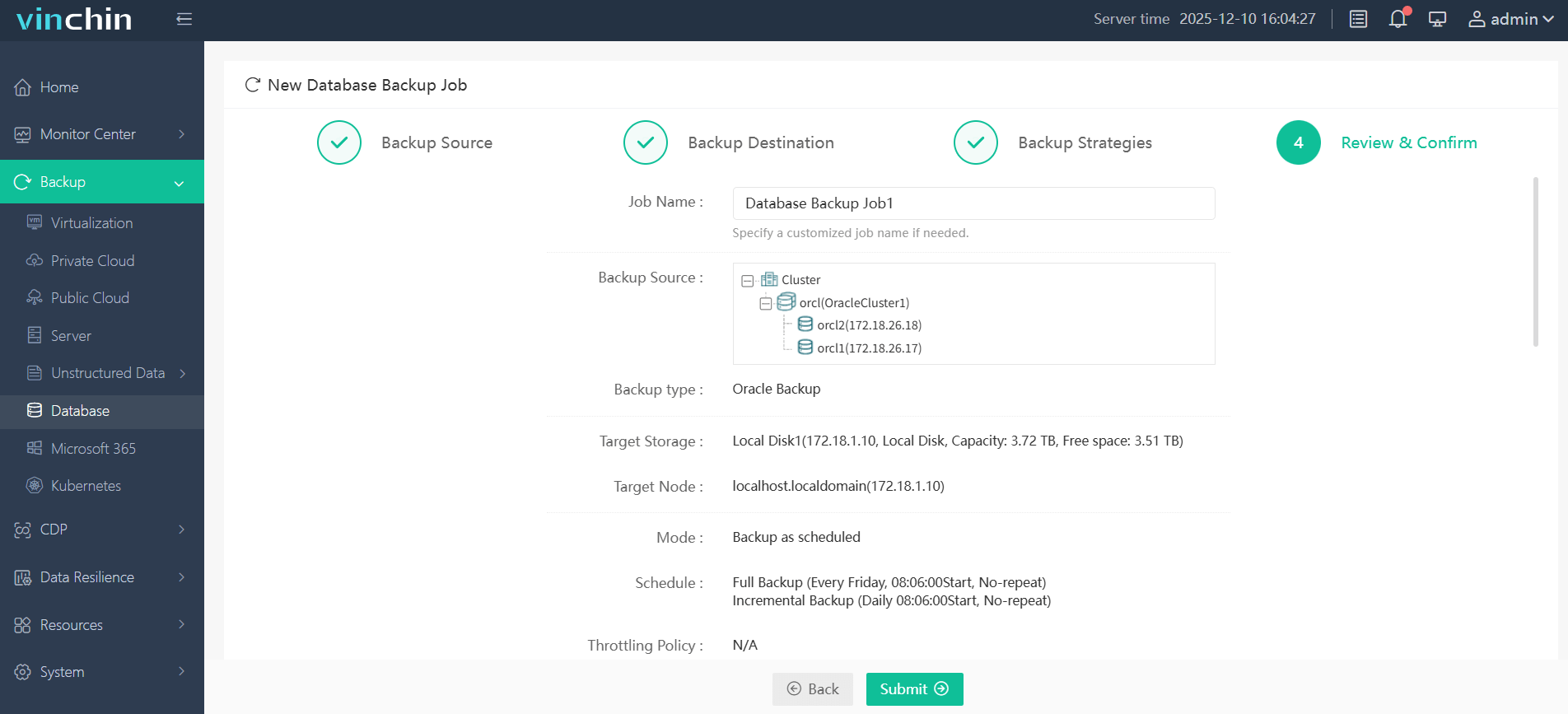
The intuitive web console makes protecting an Oracle database straightforward:
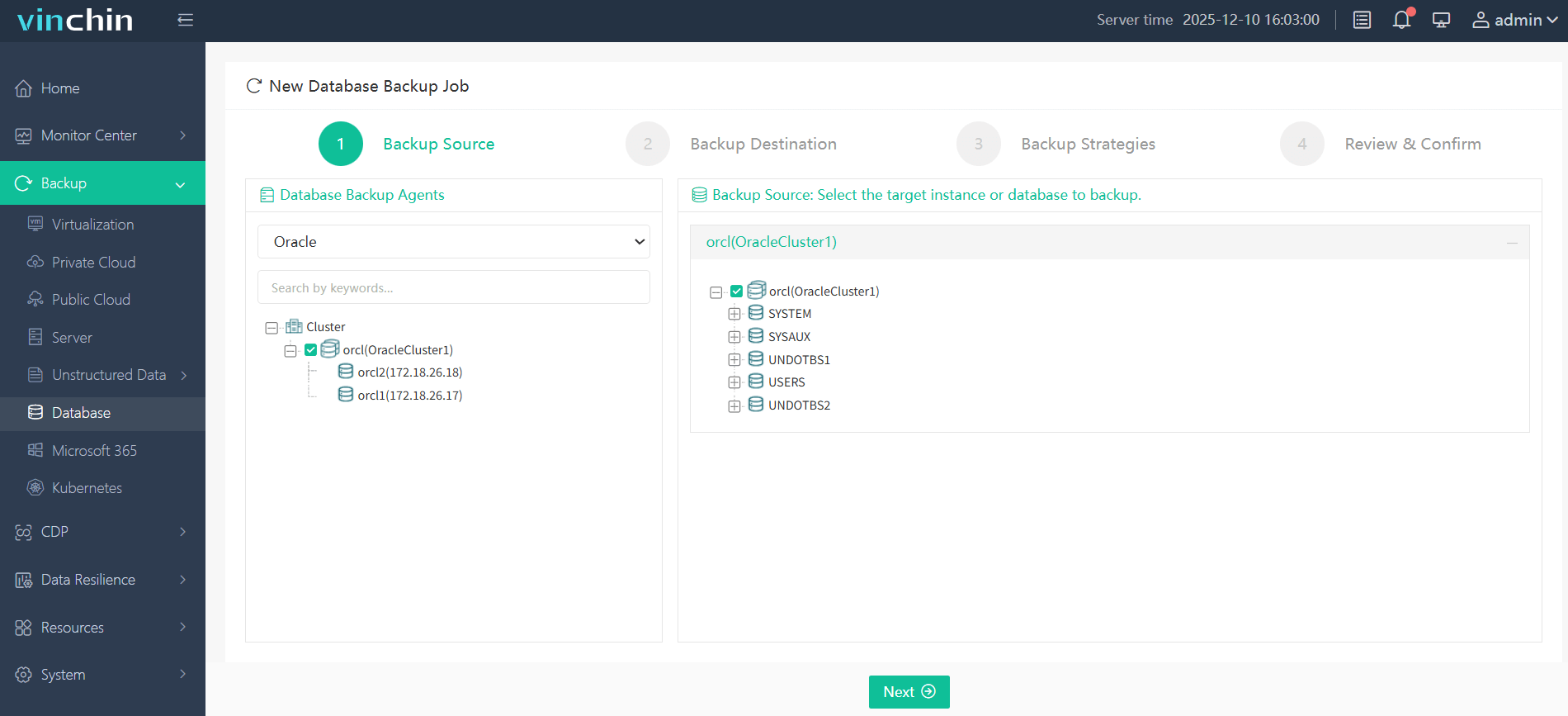
Step 1. Select the Oracle database to back up
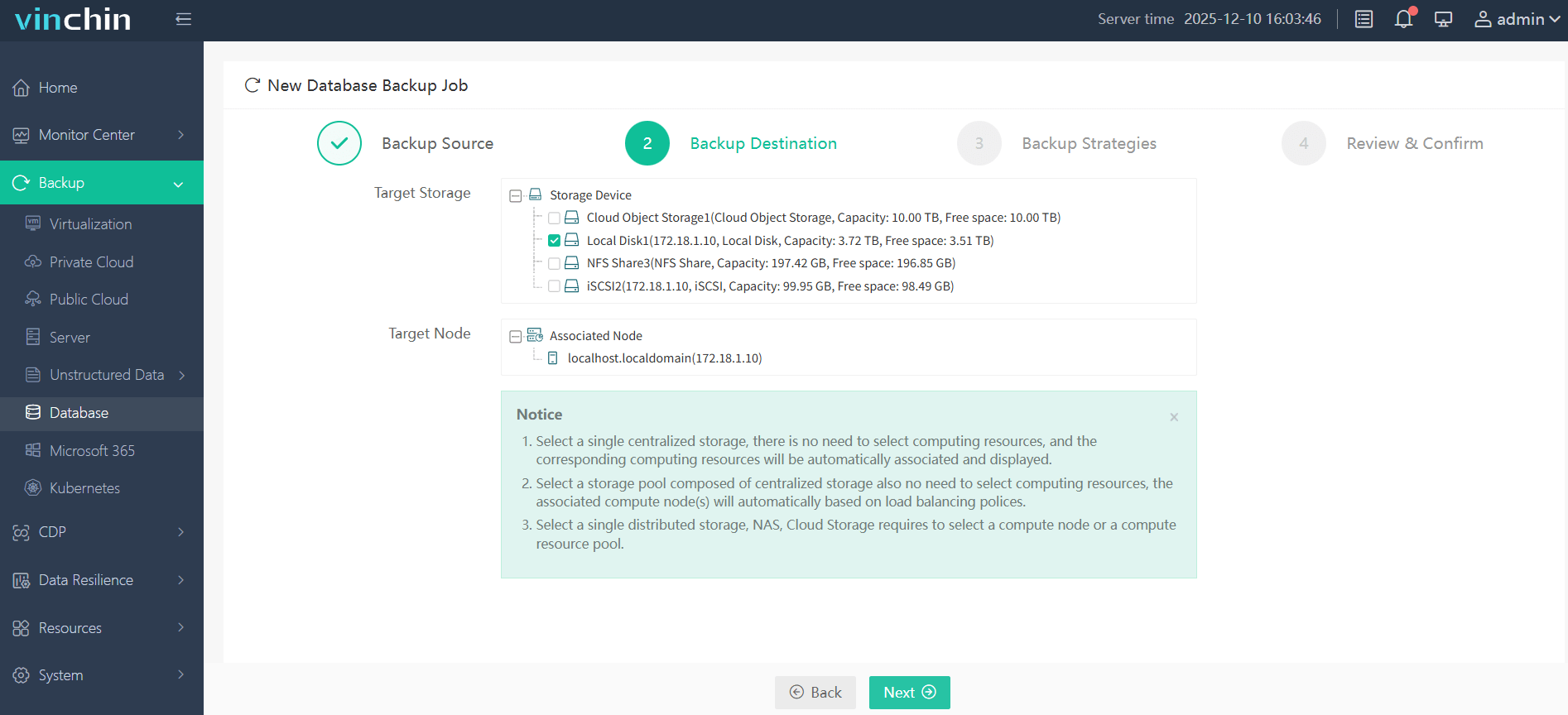
Step 2. Choose the backup storage
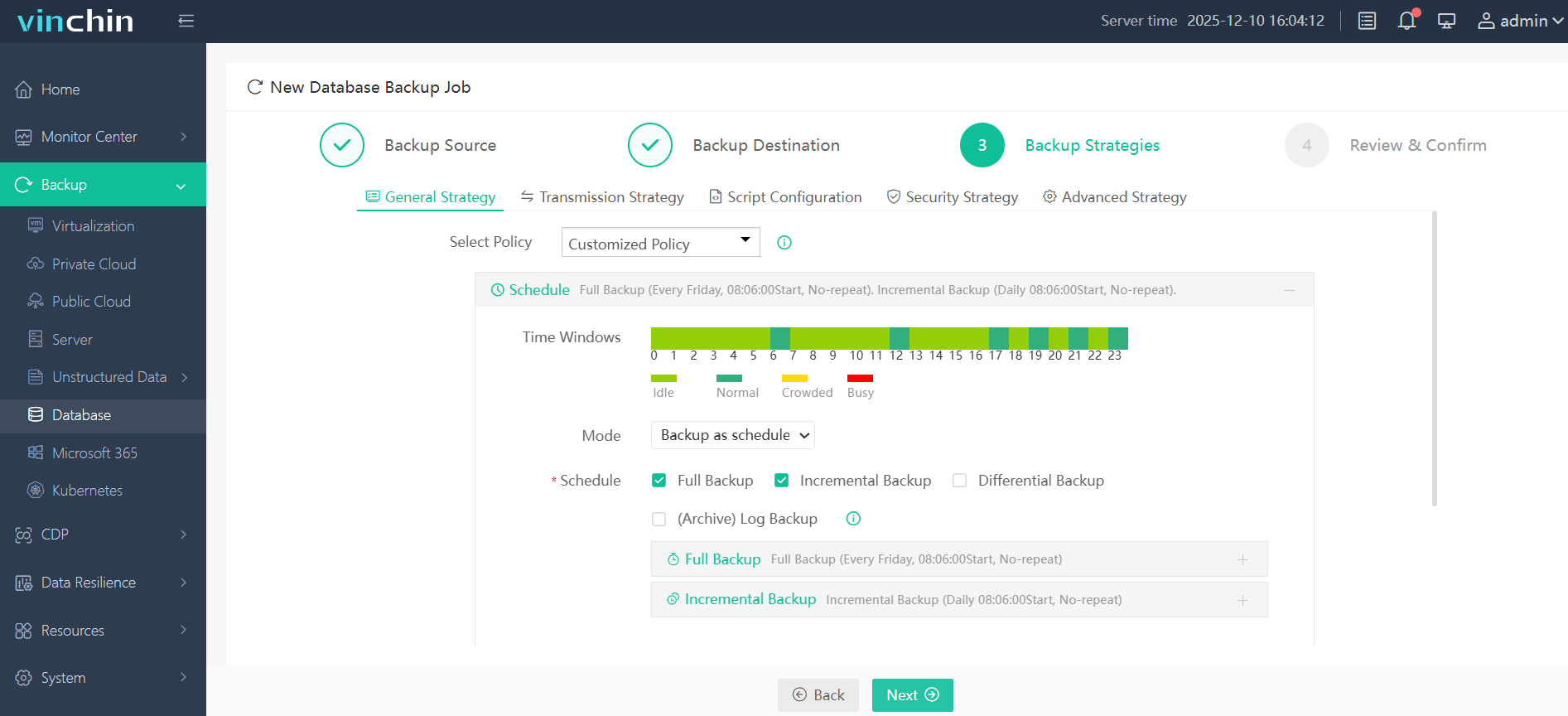
Step 3. Define the backup strategy
Step 4. Submit the job
Recognized globally by enterprises for its reliability and ease of use—with top ratings among enterprise data-protection software—Vinchin Backup & Recovery offers a fully featured free trial valid for 60 days! Click below now to experience industry-leading protection firsthand.
How to Resync RMAN Catalog in Oracle FAQs
Q1: How often should I manually trigger an RMAN catalog synchronization?
A1: Run manual syncs after major schema changes or if backups occurred while disconnected from the central repository.
Q2: What risks exist if I delay syncing past my CONTROL_FILE_RECORD_KEEP_TIME setting?
A2: You could lose vital metadata needed for future restores because old records might be overwritten before reaching central storage.
Q3: Can I automate regular RESYNC CATALOG runs?
A3: Yes—use cron jobs on Linux/Unix systems or Windows Task Scheduler scripts calling an RMAN script containing RESYNC CATALOG; consider using DBMS_SCHEDULER within Oracle too.
Conclusion
Keeping your RMAN recovery catalog synchronized ensures reliable backups and fast restores across any size deployment—from single-instance servers through complex multi-site clusters alike! Both automatic triggers plus hands-on controls make ongoing management straightforward regardless experience level involved...and Vinchin makes protecting every aspect even easier thanks its powerful yet simple platform designed specifically around modern enterprise needs!