Losing a datafile in your Oracle database can be stressful. But if you have a solid backup plan, you can restore a datafile from a backup piece and get your database running again fast. This guide explains what datafiles and backup pieces are, why restoring is sometimes needed, and how to do it step by step using both RMAN and Oracle Enterprise Manager. We’ll also look at common pitfalls that admins face during restores. Finally, you’ll see how Vinchin makes this process even easier.
What is a Datafile and Backup Piece?
Understanding these terms is key before starting any restore operation. A datafile is the physical file on disk that holds your Oracle database’s actual data—tablespaces consist of one or more of these files. If you lose or corrupt a datafile due to hardware failure or accidental deletion, part of your database becomes unavailable.
A backup piece is created by Oracle Recovery Manager (RMAN) during backups. It contains copies of one or more datafiles, control files, or archived redo logs. Think of it as an archive box holding important documents; when disaster strikes, you open the box to retrieve what’s missing.
Backup pieces are parts of larger units called backup sets—a single set may span several pieces depending on size or storage limits. Each piece can be restored independently if needed.
Why Restore Datafile from Backup Piece?
Restoring from a backup piece becomes necessary when you lose access to part of your database because of file loss or corruption. Physical loss happens if someone deletes the file at the operating system level or there’s disk failure; logical corruption might show up as errors like ORA-01578 when trying to read tablespace contents.
Without restoring the affected datafile(s), users cannot access related tablespaces—and business operations may grind to a halt. By restoring from an available backup piece, you bring lost information back online quickly while keeping other parts of your database unaffected.
This process often supports point-in-time recovery scenarios too—where only specific files need restoration without rolling back the entire system.
Restore Datafile from Backup Piece Using RMAN
RMAN is Oracle’s main tool for managing backups and restores—it automates many steps while ensuring consistency across complex environments.
Before starting any restore task in RMAN:
First identify which datafile needs attention. Query V$DATAFILE or DBA_DATA_FILES views for status details:
SELECT file#, name, status FROM v$datafile WHERE status NOT IN ('ONLINE','SYSTEM');You can also check v$recover_file for files needing recovery.
Next take the affected file offline so no further changes occur:
ALTER DATABASE DATAFILE '/path/to/file.dbf' OFFLINE;
Using full path names reduces mistakes compared to using only file numbers.
Before restoring anything double-check that required backups exist:
LIST BACKUP OF DATAFILE <file_number>;
CROSSCHECK BACKUP;
This ensures RMAN knows where valid backup pieces are stored—if not found verify storage paths or re-catalog missing files as needed.
Now connect to RMAN prompt (as sysdba) and run:
RESTORE DATAFILE <file_number>;
Or specify full path:
RESTORE DATAFILE '/path/to/file.dbf';
If you want to place the restored file somewhere else use:
SET NEWNAME FOR DATAFILE <file_number> TO '/new/path/filename.dbf';
RESTORE DATAFILE <file_number>;
SWITCH DATAFILE <file_number> TO COPY;
The SET NEWNAME command tells RMAN where to put the recovered file; SWITCH DATAFILE updates control files accordingly.
After restoring apply any changes made since last backup by running:
RECOVER DATAFILE <file_number>;
Note: Your database must be in ARCHIVELOG mode for this step—otherwise only full restores are possible since redo logs won’t be available for roll-forward recovery.
Once complete bring the restored file back online:
ALTER DATABASE DATAFILE <file_number> ONLINE;
Want to preview which backup pieces will be used? Run:
RESTORE DATAFILE <file_number> PREVIEW;
This shows exactly which files RMAN will pull from storage during restore operations—a useful check before making changes in production environments.
For large databases speed matters! You can use parallelism so multiple channels work together on big restores:
RUN {
  ALLOCATE CHANNEL ch1 DEVICE TYPE DISK;
  ALLOCATE CHANNEL ch2 DEVICE TYPE DISK;
  RESTORE DATAFILE 5;
}
This approach avoids changing global settings but still boosts performance when time counts most.
Pro Tip: Always confirm that all required archived redo logs are accessible before starting RECOVER commands—or else recovery may fail midway!
Restore Datafile from Backup Piece Using Oracle Enterprise Manager
Oracle Enterprise Manager (OEM) offers an easy-to-use graphical interface for handling backups and restores—even if you’re not comfortable with command-line tools like RMAN directly.
Start by logging into OEM then navigate to your target database instance dashboard. Under Availability, choose Backup & Recovery, then select Perform Recovery followed by Datafile Recovery options presented onscreen.
OEM prompts you through selecting which datafiles need restoration—pick those flagged as missing/corrupted based on earlier diagnostics reports within OEM itself or via SQL queries outside OEM if preferred.
Next select which available backup piece should be used; OEM displays choices based on its catalog records linked either through direct connection with control files or via an external Recovery Catalog repository (make sure these sources are up-to-date).
Follow onscreen prompts confirming source/destination locations plus any additional options such as point-in-time targets if supported by current configuration/version—note that interfaces differ slightly between major releases but core workflow remains similar across versions 12c/13c/19c Cloud Control etc.
Once confirmed click through final screens; OEM runs underlying RMAN commands automatically behind-the-scenes then brings restored files online once finished—status updates appear within job history panels so admins know exactly what happened at each stage without manual log checks required elsewhere!
Remember: For successful GUI-based restores ensure all relevant backups remain registered/cataloged correctly within OEM otherwise some choices may not appear even though they exist physically elsewhere on disk/tape/cloud storage systems connected externally!
Simplifying Oracle Data Protection with Vinchin Backup & Recovery
Beyond native tools, modern solutions streamline complex tasks for enterprise environments. Vinchin Backup & Recovery stands out as a professional-grade platform supporting today’s leading databases—including Oracle, MySQL, SQL Server, MariaDB, PostgreSQL, PostgresPro, and TiDB—with special emphasis on robust Oracle protection features relevant here.
Among its many capabilities for Oracle users are batch database backup management, incremental backups for efficiency, advanced source-side compression for optimized storage usage, flexible cloud/tape archiving options, and integrity checks ensuring recoverability—all designed to maximize reliability while reducing administrative overhead.
The intuitive web console makes every operation straightforward:
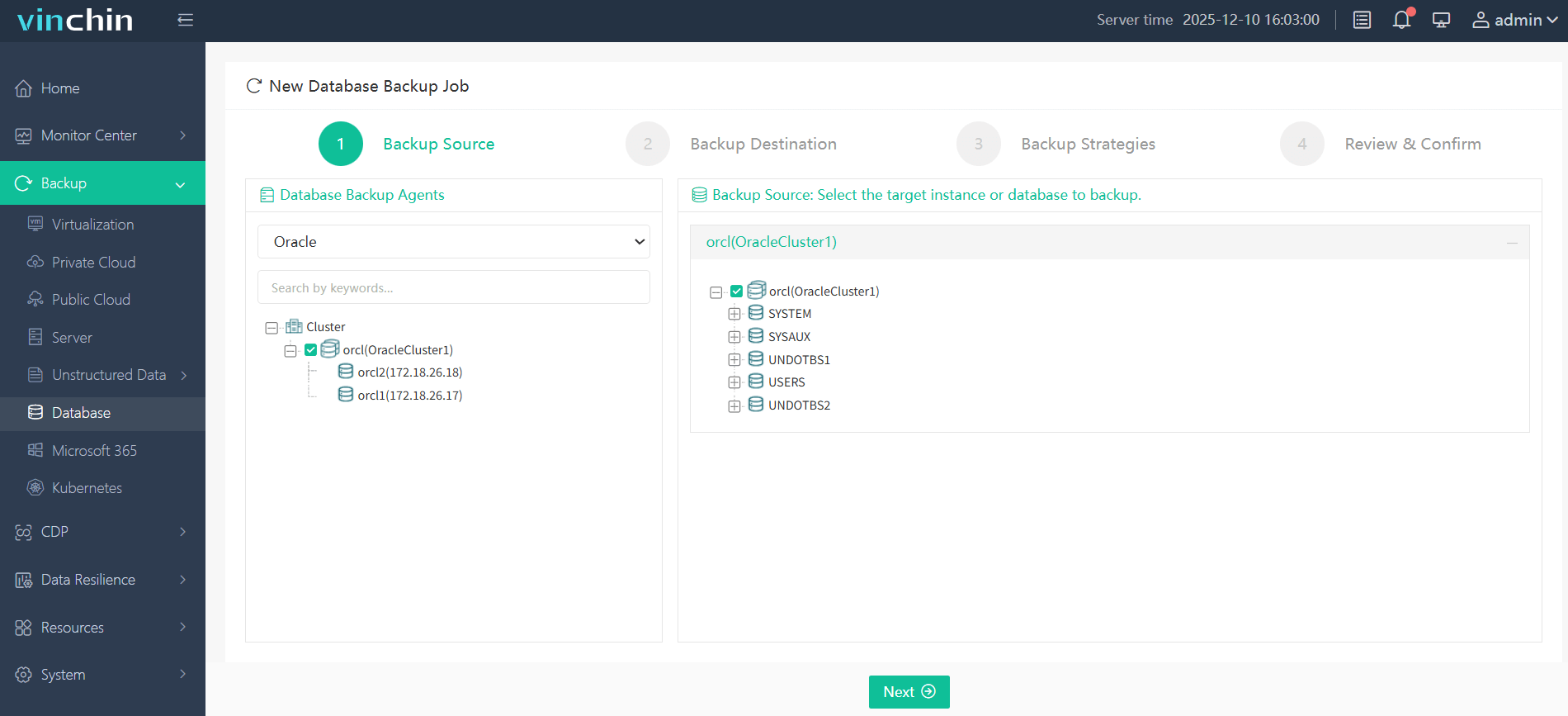
Step 1. Select the Oracle database to back up
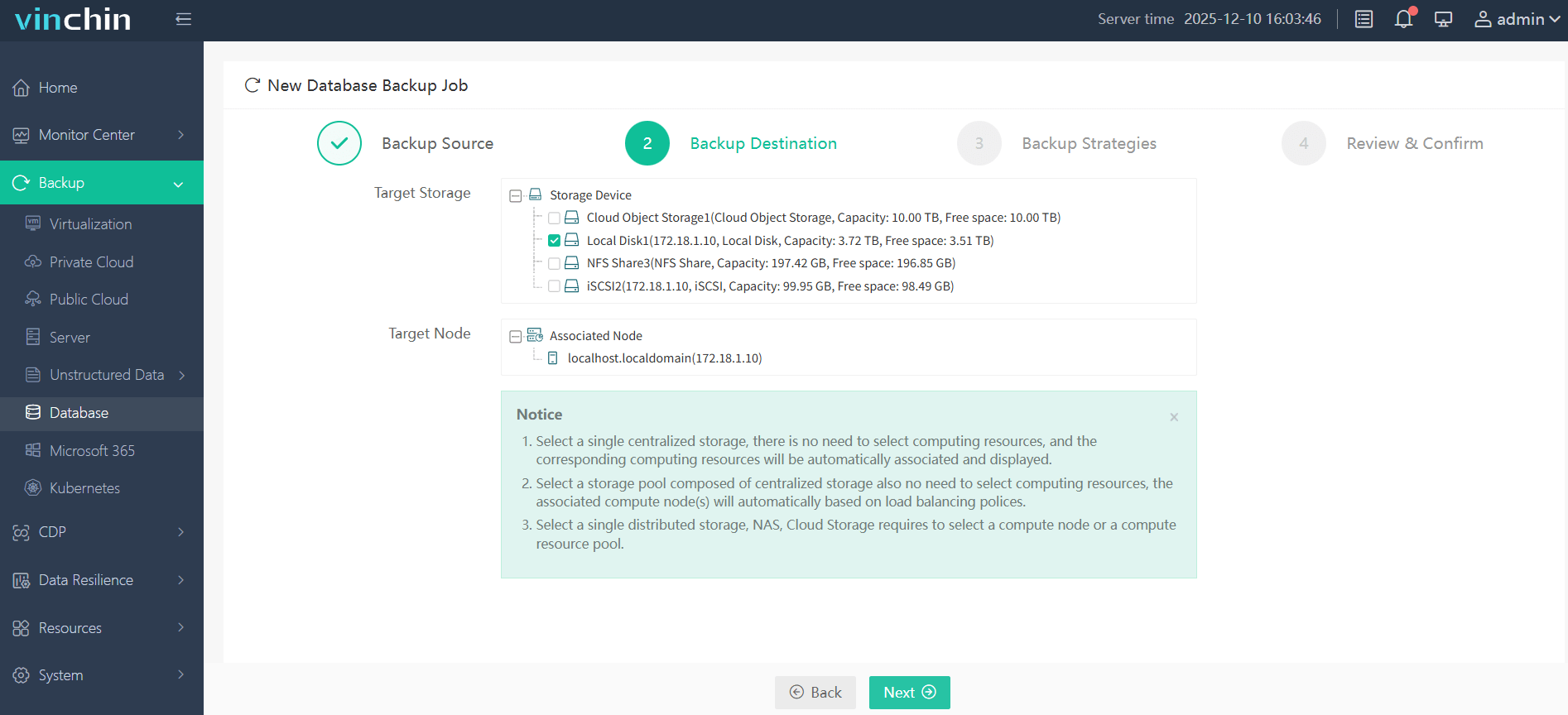
Step 2. Choose your preferred backup storage
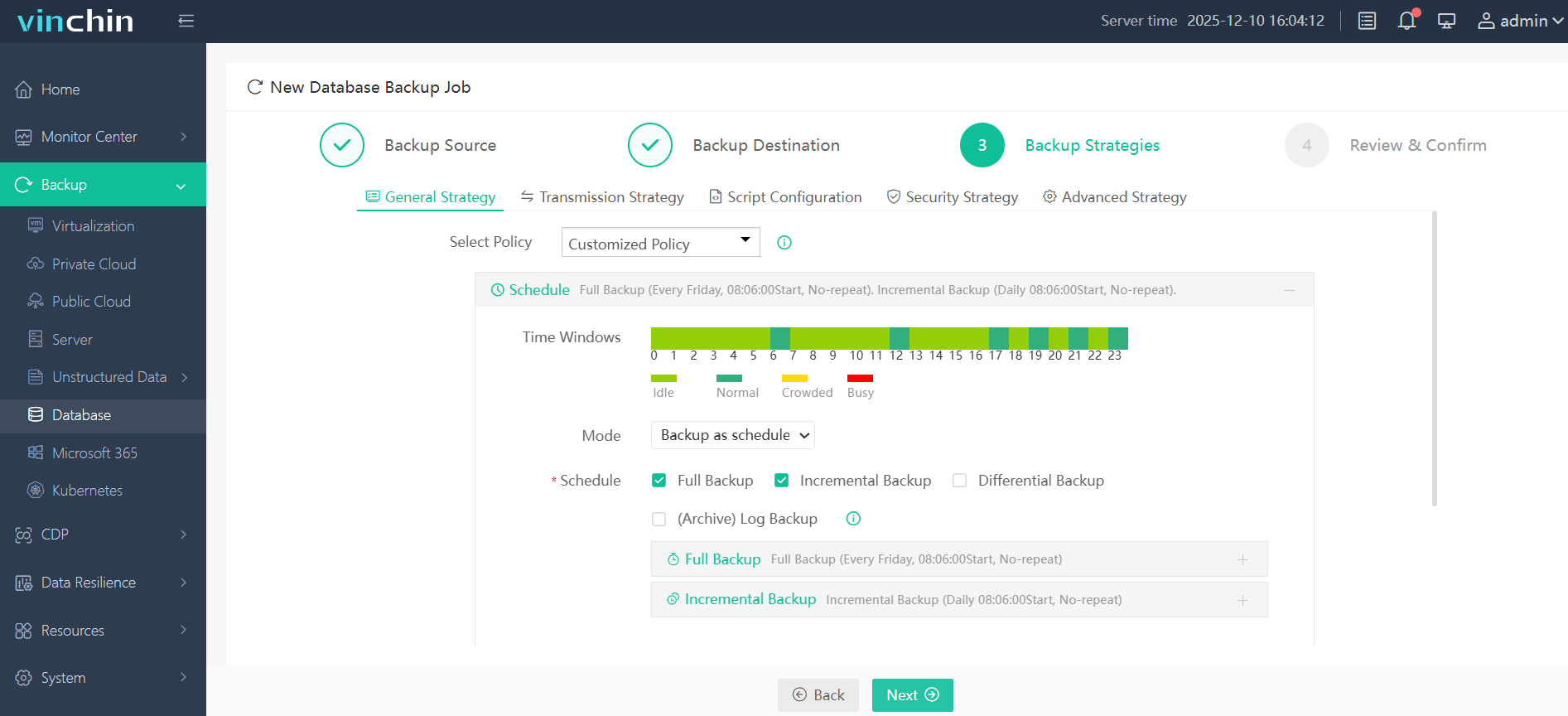
Step 3. Define your desired strategy
Step 4. Submit the job
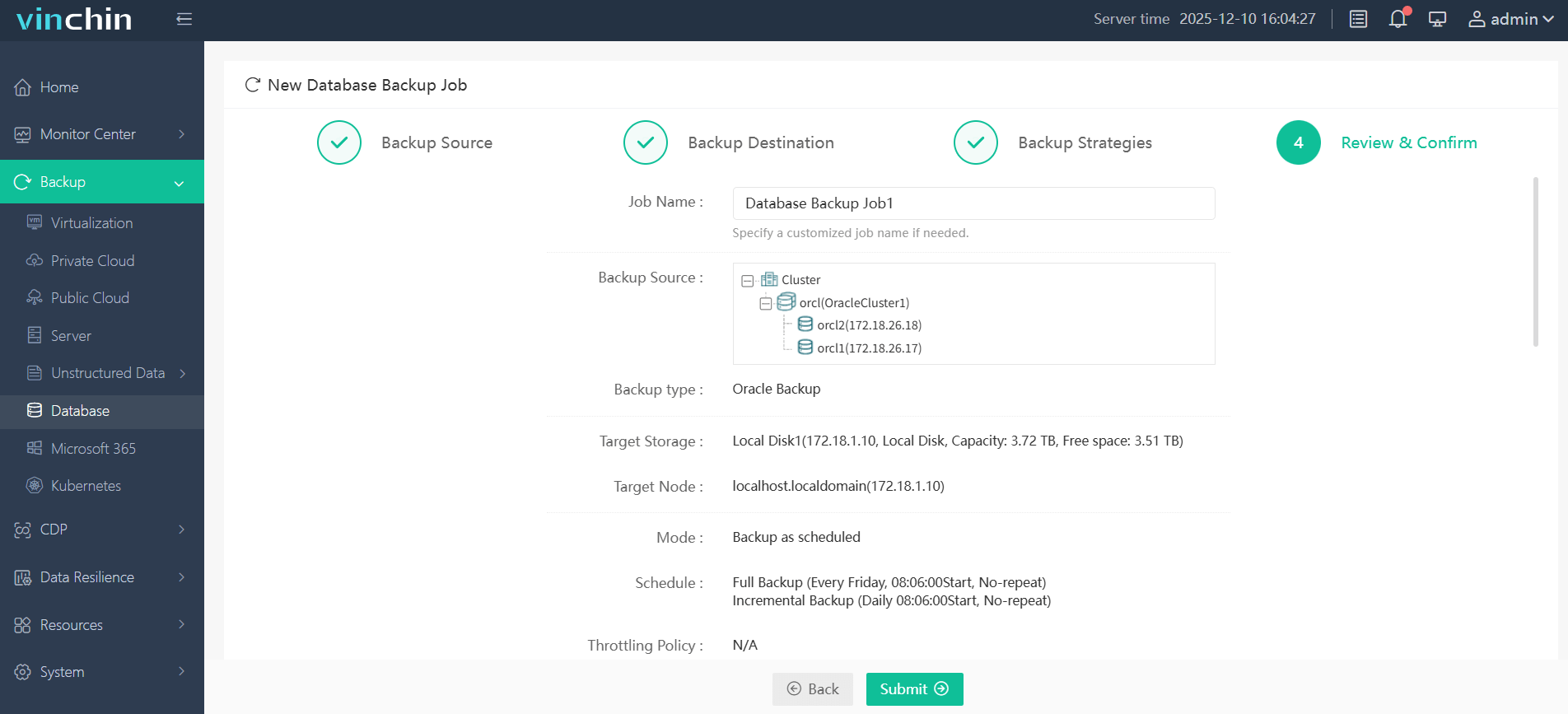
With Vinchin Backup & Recovery guiding each step visually—and no need for scripting—you minimize risk while accelerating both routine protection and urgent recoveries.
Recognized globally with top ratings and trusted by thousands of enterprises across industries,Vinchin Backup & Recovery offers a fully featured free trial for 60 days—click download below to experience seamless enterprise-grade protection firsthand.
Restore Datafile from Backup Piece FAQs
Q1: Can I recover just one table instead of an entire tablespace?
No—you must recover at least one whole datafile containing that table; individual table-level restores require different approaches outside standard RMAN workflows.
Q2: What should I do if my archived redo logs are missing during RECOVER?
Try restoring them first using available backups then rerun RECOVER; without these logs point-in-time recovery isn’t possible.
Q3: Is it safe to perform restores while users remain connected?
It depends—but best practice recommends taking affected tablespaces offline first so no transactions occur until after full validation post-recovery.
Conclusion
Restoring an Oracle datafile from a backup piece protects vital business information against loss due to accidents or failures—and knowing how prevents downtime headaches later on! Whether using native tools or modern solutions like Vinchin's platform makes every admin's life easier with less risk every time!