Protecting Oracle databases is one of the most important jobs for IT administrators today. As data grows and threats multiply, reliable backup and recovery are essential. Many organizations use Oracle RMAN (Recovery Manager) for native protection. However, integrating RMAN with enterprise backup solutions like PowerProtect can add automation, policy control, and centralized management. Are you curious how the PowerProtect Oracle RMAN Agent works? Do you want to know how it compares to native RMAN or what alternatives exist? This guide will answer your questions step by step.
What Is PowerProtect Oracle RMAN Agent?
The PowerProtect Oracle RMAN Agent is specialized software that connects Oracle databases to Dell PowerProtect Data Manager. Its main job is to enable direct, policy-driven backup and recovery of Oracle databases using RMAN while storing backup data on a Data Domain system. The agent acts as a bridge between your database servers and central management.
With this agent installed, PowerProtect can discover your Oracle databases automatically. It manages backup schedules from one console and enforces retention policies across all protected assets. This integration streamlines protection tasks for database administrators (DBAs) by reducing manual scripting needs.
Why Use PowerProtect With Oracle RMAN
Why do organizations pair PowerProtect with Oracle RMAN instead of relying on just native tools? The answer comes down to control, efficiency, and risk reduction.
PowerProtect adds centralized management so you can handle multiple servers from one interface. It automates scheduling—no more missed backups due to human error or forgotten scripts—and applies policy-based retention across all jobs so nothing slips through the cracks. Deduplication reduces storage costs by eliminating duplicate data blocks before writing them to disk or cloud targets.
Replication features improve disaster recovery readiness by copying backups offsite automatically. With these capabilities combined, you gain better compliance tracking because every job is logged centrally—making audits easier than ever before.
Common errors like missed schedules or incorrect retention settings become less likely thanks to automation built into PowerProtect workflows. You also avoid mistakes in catalog maintenance since everything runs through tested routines managed by the platform itself.
How PowerProtect Oracle RMAN Agent Works
Understanding how the PowerProtect Oracle RMAN Agent operates helps you plan deployments and troubleshoot issues effectively. The process involves several key steps—from installation through ongoing monitoring.
Before installing anything, check prerequisites:
1. Confirm network connectivity between each target database server and your Data Manager instance; required ports must be open.
2. Make sure your oracle user has sufficient permissions both locally (to run scripts) and within each database instance.
3. Verify compatibility among your operating system version, installed Oracle release, Data Domain firmware (if used), and agent package version.
Once ready:
1. Download the agent package from Settings > Agent downloads in the Data Manager UI; select “Oracle” for your platform.
2. Transfer this file securely onto each target server needing protection.
3. Log in as oracle user; extract files if needed (for Linux: untar package).
4. Run installer script (install.sh) appropriate for your OS; follow prompts carefully—errors here often relate back to missing dependencies or permission issues.
5. For AIX systems follow similar extraction/install steps but consult documentation for any platform-specific flags or requirements.
After installation:
1. Register each server with Data Manager: In UI go to Infrastructure > Application Agents, approve new asset(s).
2. Under Asset Source, verify that all intended servers appear as available resources.
3. Select an asset then click Discover—this triggers automatic detection of all local databases registered under that host profile.
Now create a backup policy:
1. Go to Protection > Protection Policies, click Add.
2. Name policy clearly; set type as “Oracle.”
3. Choose “Centralized Protection” if you want automated management rather than manual job creation per host/database combo.
4. Enter credentials (usually those belonging to oracle user); select which discovered databases need coverage now versus later additions.
5. Define schedule frequency—daily/weekly/monthly—as well as retention period per compliance needs.
You may configure both full backups (entire DB image) plus log-only jobs (archived redo logs). Set separate retention periods if desired—for example keep full images 30 days but logs only 7 days—to optimize storage usage without sacrificing recoverability options later on.
Advanced users can fine-tune options such as number of parallel channels per job or automatic deletion of archived logs older than X days after successful copy out completes—a useful way to free up space proactively without risking loss during restore scenarios later on!
Monitoring/reporting tools built into UI let admins track status at-a-glance: failed/successful jobs flagged clearly alongside storage consumption graphs over time so trends become obvious before they cause problems downstream during audits/recoveries/etc.
Understanding Backup And Recovery Workflows
It helps to understand what happens behind-the-scenes when using PowerProtect’s integration with Oracle RMAN compared with running commands manually yourself.
When you trigger a backup via central console (“on-demand” or scheduled), here’s what occurs:
1. The agent receives instructions from Data Manager about which database(s), type of job requested (full/log/incremental), destination device(s), etc.
2. It generates standard BACKUP DATABASE plus BACKUP ARCHIVELOG commands tailored for current environment/settings—including channel allocation based on available CPU/memory/network bandwidth at runtime!
3. These commands execute natively inside local shell context owned by oracle user—so no special privileges beyond normal DBA role needed unless custom scripts invoked pre/post-job completion events are specified in advanced settings panel within UI itself!
During restores/recoveries initiated centrally:
1.The admin selects desired restore point/date/time/object via graphical wizard interface;
2.Agent translates request into corresponding RESTORE DATABASE, RECOVER DATABASE, possibly even tablespace-level operations depending upon scope chosen originally;
3.All necessary files pulled from protected storage location(s)—Data Domain/cloud/archive tier—and staged locally prior actual apply phase begins;
4.In rare cases where manual intervention required (e.g., incomplete archive log chain detected mid-recovery), system prompts operator directly via alert dialog box AND provides suggested corrective action steps inline right there!
This workflow means less guesswork during emergencies since most complexity handled automatically—but expert users retain ability override defaults whenever deeper customization needed.
How To Back Up Oracle Databases Using Native RMAN?
Some administrators prefer using only native tools like Oracle’s own Recovery Manager without third-party integrations involved at all—for maximum flexibility/control albeit at cost increased manual effort/risk potential human error creeping unnoticed until too late sometimes…
Here’s basic process:
First connect terminal session logged-in as oracle account then launch rman utility targeting local instance:
rman target /
Allocate channel pointing toward desired output device/directory:
ALLOCATE CHANNEL c1 DEVICE TYPE DISK;
Validate configuration before writing any real data:
BACKUP VALIDATE DATABASE;
If validation passes proceed actual full+log backup operation:
BACKUP DATABASE PLUS ARCHIVELOG;
Set up internal retention policies so old copies pruned regularly:
CONFIGURE RETENTION POLICY TO RECOVERY WINDOW OF 14 DAYS;
Remove obsolete files safely once newer ones confirmed valid:
DELETE OBSOLETE;
For regular unattended execution wrap above commands inside script file (backup_db.rman) then call it from shell wrapper scheduled via cron service e.g.:
Write rman command file → create shell script invoking it → add line like
0 2 * /home/oracle/backup_db.sh
to crontab entry list so runs nightly at 2am automatically thereafter…
This approach gives total control but requires careful monitoring/error handling since no central dashboard exists out-of-box.
Performing A Complete Recovery With Native RMAN
A solid backup plan means little without proven restore procedures! Here’s simple example restoring entire DB after failure event using only command-line tools:
Connect as oracle user again then launch rman utility targeting correct SID/environment variables set beforehand—
Mount database prior starting actual restore phase:
STARTUP MOUNT;
RESTORE DATABASE;
RECOVER DATABASE;
ALTER DATABASE OPEN;
This sequence brings DB back online using latest available full+archive log backups present according configured retention window above… For partial/tablespace-level restores adjust object names accordingly within RESTORE/RECOVER statements themselves!
Enterprise Database Backup Made Simple: Vinchin Backup & Recovery
For those seeking a modern alternative that simplifies enterprise-grade protection for critical databases such as Oracle, consider Vinchin Backup & Recovery—a professional solution supporting today’s mainstream platforms including MySQL, SQL Server, MariaDB, PostgreSQL, PostgresPro, TiDB, and especially robust support for Oracle environments highlighted in this article’s focus area.
Vinchin Backup & Recovery delivers powerful features such as incremental backup strategies tailored for high-frequency changes in production workloads; batch database backup capabilities ideal for managing large-scale deployments efficiently; flexible data compression levels optimizing storage utilization; comprehensive GFS/data retention policies ensuring regulatory compliance; and secure WORM protection safeguarding against unauthorized modifications or ransomware attacks—all designed to enhance reliability while minimizing administrative overhead.
The intuitive web console makes protecting an Oracle database straightforward:
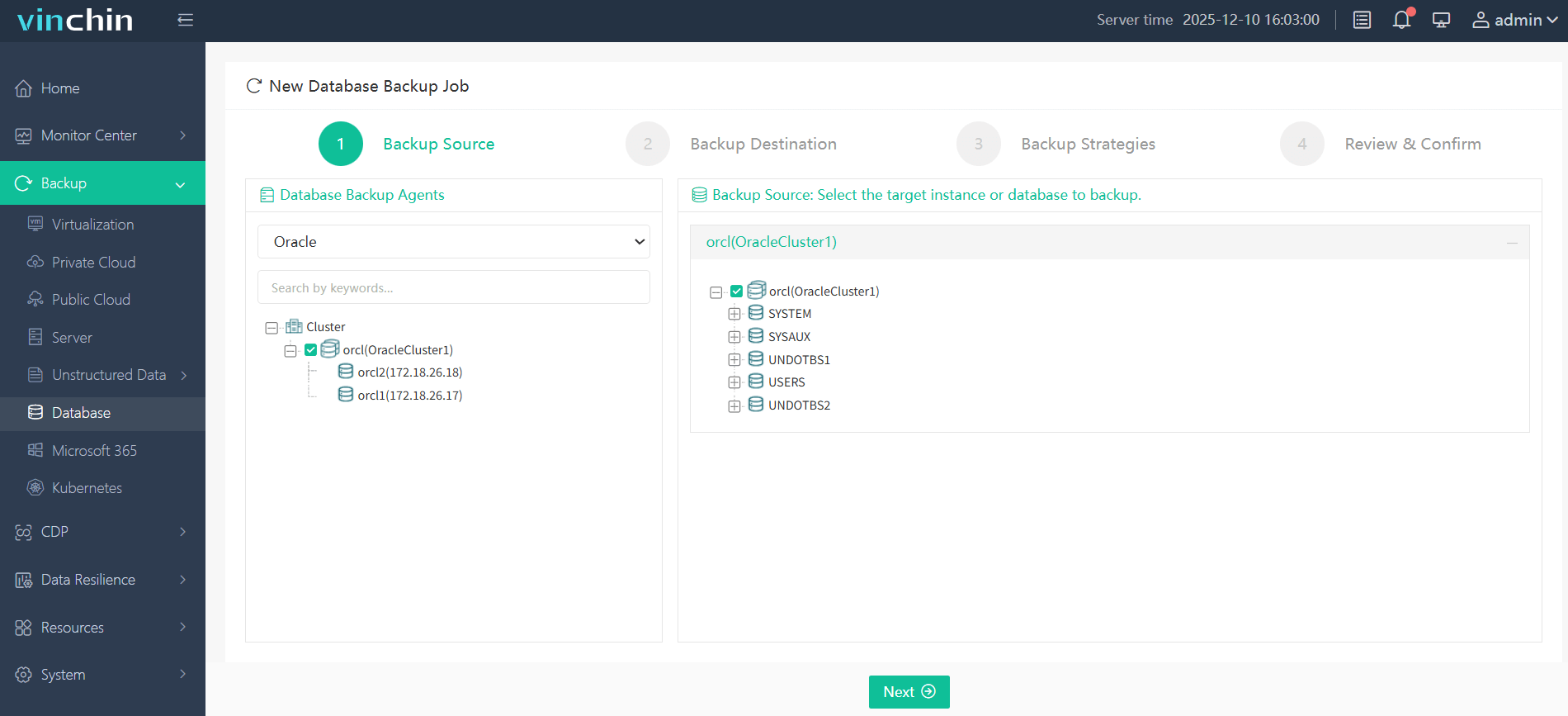
Step 1: Select the Oracle database to back up;
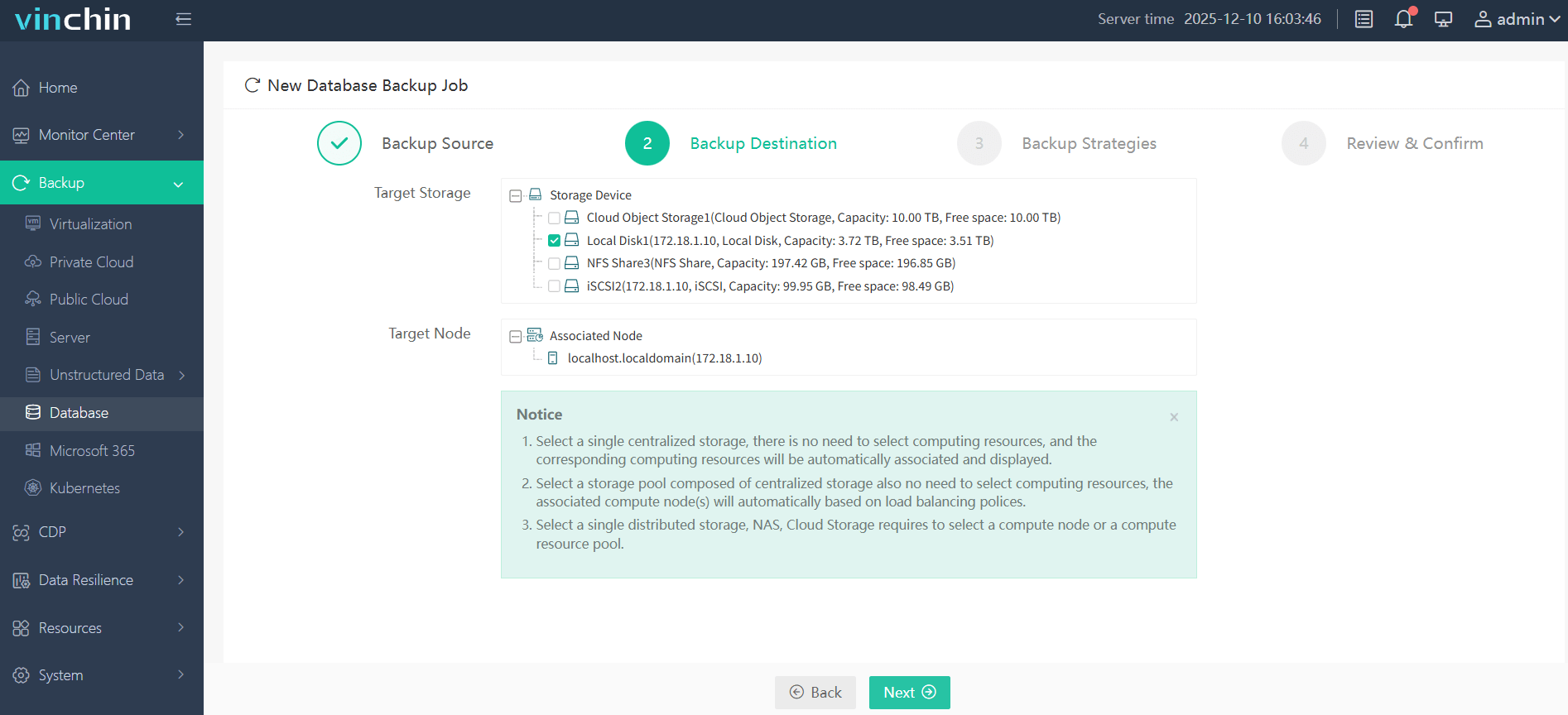
Step 2: Choose the preferred backup storage location;
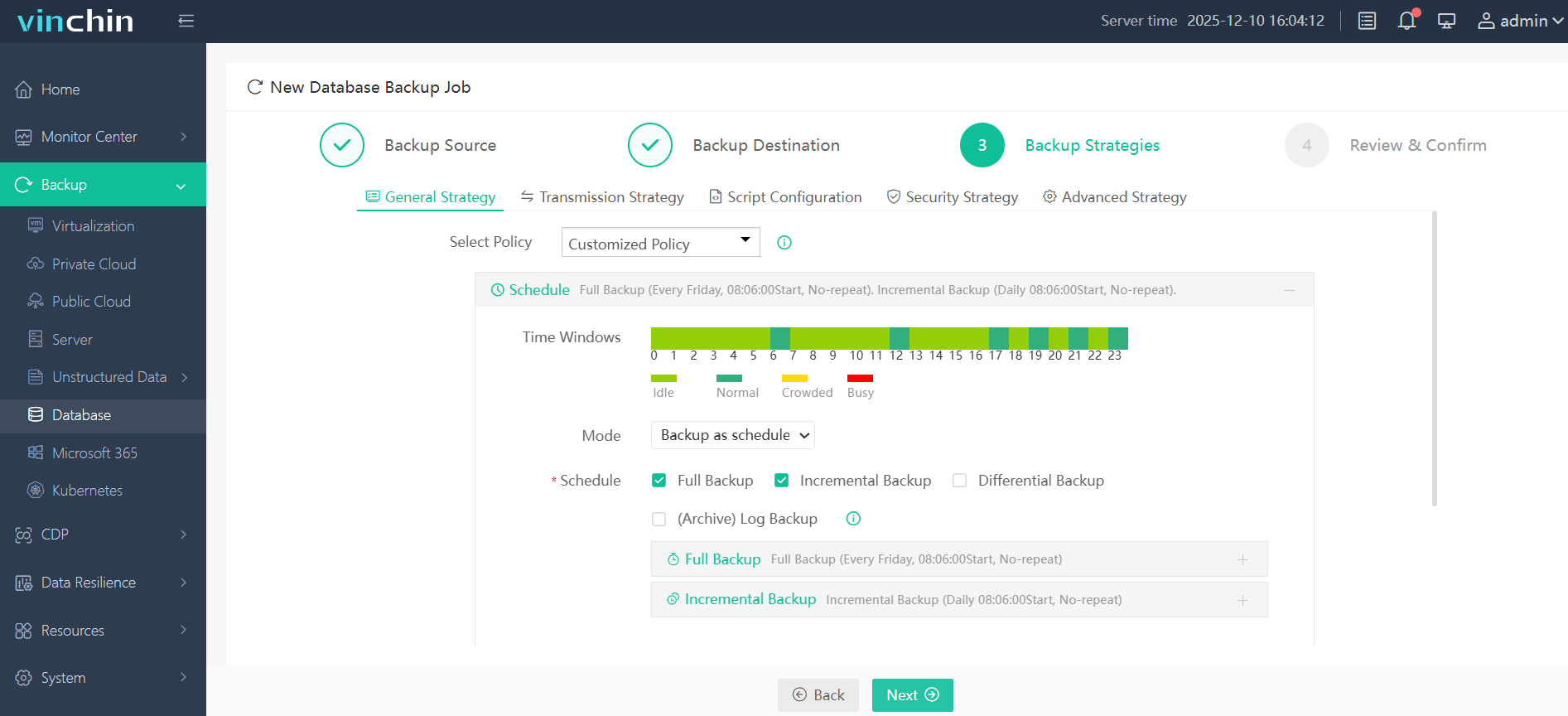
Step 3: Define a suitable strategy including schedule and retention settings;
Step 4: Submit the job—all completed within minutes through clear guided workflows.
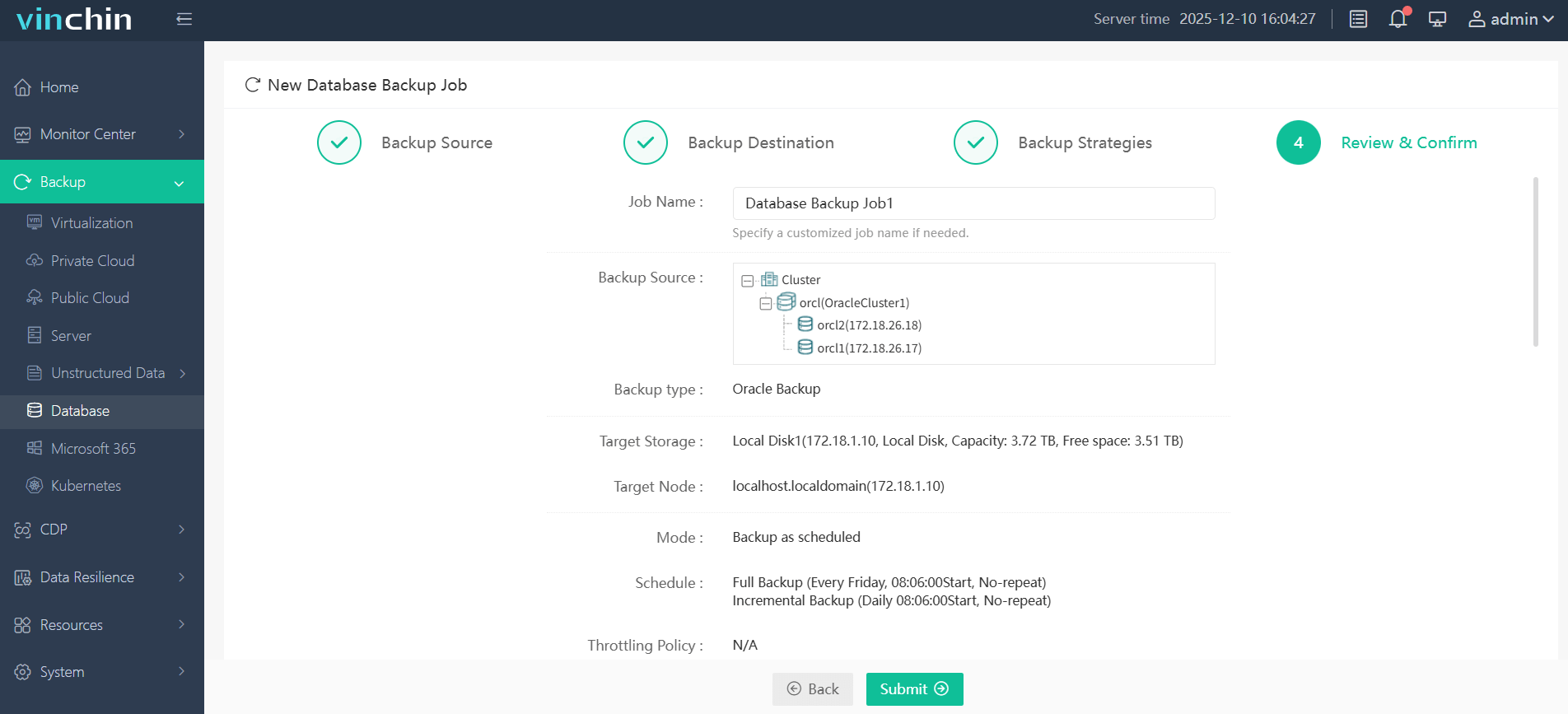
Trusted globally by thousands of enterprises—with top ratings across industry review sites—Vinchin Backup & Recovery offers a fully featured 60-day free trial so you can experience its benefits firsthand; click below to get started today!
PowerProtect Oracle RMAN Agent FAQs
Q1: Can I use PowerProtect Oracle RMAN Agent in an environment where some nodes run different OS versions?
Yes; just ensure each node uses its compatible agent build matching its OS version before registering them together under same cluster profile.
Q2: What should I do if my scheduled backups fail due to "ORA-19554: error allocating device"?
Check that required channels/devices are configured correctly in both agent settings & underlying OS permissions; also verify enough free disk space exists at destination path specified within policy/job definition itself!
Q3: Can I continue using my existing custom pre/post-backup scripts alongside automated policies?
Yes; integrate them via advanced settings panel inside Protection Policy editor—or run externally outside managed framework if preferred—but test thoroughly first!
Conclusion
Choosing an effective method for backing up critical business data depends on balancing automation against hands-on control needs unique every organization today! While centralized solutions like PowerProtect offer robust scheduling/policy enforcement features out-of-box natively integrated environments still appeal certain power users seeking ultimate flexibility instead… Vinchin delivers modern simplicity plus broad compatibility trusted worldwide—try their free trial now see difference firsthand!