Backing up Oracle databases is a critical task for any IT administrator. Many enterprises use Oracle Recovery Manager (RMAN) with IBM Tivoli Storage Manager (TSM), now known as IBM Spectrum Protect, to protect their data. But how do you configure Oracle RMAN to work with TSM? This guide will walk you through the process step by step, using clear language and practical examples.
What is Oracle RMAN TSM Configuration?
Oracle RMAN TSM configuration is the process of connecting Oracle’s built-in backup tool, RMAN, to IBM’s TSM backup system. In essence, this setup allows RMAN's SBT_TAPE channel to use TSM's API through the libobk library for all backup input/output operations. RMAN manages Oracle database backups while TSM stores those backups on disk or tape media managed by your organization.
By linking these two systems together, you can automate and centralize your Oracle backup and recovery operations—sending backup data directly from RMAN to storage managed by TSM or Spectrum Protect. This integration streamlines management across large environments where reliability matters most.
Note: IBM Tivoli Storage Manager (TSM) is now marketed as IBM Spectrum Protect; however, client software names and procedures remain largely consistent in documentation and practice.
Why Use TSM with Oracle RMAN?
Pairing TSM with RMAN brings several advantages that appeal to both small teams and enterprise-scale organizations. First, it allows you to store Oracle backups off the database server itself—reducing risk if that server fails or suffers corruption. With centralized storage in place, disaster recovery becomes much more reliable.
TSM also manages retention policies automatically: it can migrate older backups to tape or cloud storage based on rules you set up in advance. This means less manual file management for administrators who already have enough on their plates! You gain flexibility in scaling storage capacity as your business grows.
Automated scheduling ensures regular protection without human intervention—helpful when compliance demands strict backup routines or long-term archiving of sensitive data. Isn’t it better to have a single reliable system handling all enterprise backups instead of juggling multiple tools?
How to Configure Oracle RMAN TSM Manually?
Manual configuration gives you full control over every detail of the integration between Oracle RMAN and TSM/Spectrum Protect. Before starting this process, make sure certain prerequisites are met:
The TSM Backup Archive Client must be installed on your Oracle server.
The client should be able to communicate independently with the TSM server; test this using the dsmc command.
Ensure that your operating system user running Oracle has read/execute permissions on all relevant libraries.
File paths may vary depending on OS version or installation choices; check documentation if unsure.
Begin by setting up key configuration files used by the TSM client software: dsm.opt and dsm.sys define how your server connects securely to remote storage resources managed by Spectrum Protect/TSM.
1. Edit dsm.opt:
Open dsm.opt, usually found in directories like /usr/tivoli/tsm/client/ba/bin or /opt/tivoli/tsm/client/api/bin64. Set at least one server name:
SErvername tdpo
If automated jobs are planned later (such as scheduled nightly backups), consider replacing PASSWORDACCESS prompt with PASSWORDACCESS generate in later steps for smoother operation.
2. Edit dsm.sys:
In dsm.sys, define connection stanzas such as node name (unique per host), communication method (usually TCP/IP), port number (default 1500–1600), password access mode, and address:
   SErvername      tdpo
   NODENAME        dbsrv_oracle
   PASSWORDACCESS  prompt
   COMMMethod      TCPip
   TCPPort         1600
   TCPServeraddress xx.xx.xx.xx
Adjust these values according to your environment’s network settings.
3. Link the libobk Library:
For Linux systems: create a symbolic link from the installed TSM library (libobk.so) into your $ORACLE_HOME/lib directory so that RMAN can find it at runtime:
ln -s /usr/tivoli/tsm/client/api/bin64/libobk.so $ORACLE_HOME/lib/libobk.so
On AIX systems:
ln -s /usr/tivoli/tsm/client/api/bin64/libobk64.a $ORACLE_HOME/lib/libobk.a
Always verify that this link points correctly—the wrong file type or path leads to errors during backup jobs!
4. Configure Channels in RMAN:
Within an active RMAN session connected as SYSDBA:
CONFIGURE CHANNEL DEVICE TYPE sbt PARMS='SBT_LIBRARY=/usr/tivoli/tsm/client/api/bin64/libobk.so';
Or use a run block for testing before making changes permanent:
    RUN {
      ALLOCATE CHANNEL c1 DEVICE TYPE sbt PARMS='SBT_LIBRARY=/usr/tivoli/tsm/client/api/bin64/libobk.so';
      BACKUP DATABASE;
      RELEASE CHANNEL c1;
    }
5. Test Your Setup:
Run a simple backup job within an open RMAN session:
BACKUP DATABASE;
If successful—with no errors reported—your configuration works! Always review both the output from this command and logs generated by both RMAN (alert.log) and TSM (dsmerror.log, dsmsched.log) for confirmation or troubleshooting clues if something goes wrong.
6. Make Configuration Persistent:
Once verified working interactively via RUN { ... }, apply permanent settings using CONFIGURE CHANNEL ... commands so future jobs inherit correct parameters automatically—even after rebooting servers.
How to Configure Oracle RMAN TSM Using IBM Data Protection for Oracle?
IBM Data Protection for Oracle (often called TDPO) provides an official plugin designed specifically for integrating Oracle databases with Spectrum Protect/TSM environments efficiently—and adds features like parallel channels plus detailed logging options not available through manual SBT setups alone.
Start by installing TDPO software onto your target database host following vendor instructions closely; then proceed:
1. Set Up TDPO Configuration:
Edit tdpo.opt, typically located at /usr/tivoli/tsm/client/oracle/bin64/. Specify node name plus password path:
     TDPO_NODE     dbsrv_oracle
     TDPO_PSWDPATH /usr/tivoli/tsm/client/oracle/bin64/
2. Configure dsm.opt:
Make sure dsm.opt points at correct server stanza matching what was set above:
SErvername tdpo
3. Register Node on Server Side:
On your Spectrum Protect (TSM) administration console—not locally—register each unique node representing an individual database instance:
REG NODE dbsrv_oracle oracleprod maxnummp=2 passexp=0
4. Set TDPO Password Locally:
On each database host run:
tdpoconf password
Enter credentials when prompted; this secures communication between client/server components going forward.
5. Configure Channels in RMAN Using Plugin Parameters:
Within an open session issue either temporary allocation commands—for initial tests—or persistent configurations once stable:
Temporary test example:
       RUN {
         ALLOCATE CHANNEL c1 DEVICE TYPE sbt PARMS='ENV=(TDPO_OPTFILE=/usr/tivoli/tsm/client/oracle/bin64/tdpo.opt)';
         BACKUP DATABASE;
         RELEASE CHANNEL c1;
       }
Permanent setup example:
       CONFIGURE CHANNEL DEVICE TYPE sbt PARMS='ENV=(TDPO_OPTFILE=/usr/tivoli/tsm/client/oracle/bin64/tdpo.opt)';
       CONFIGURE DEVICE TYPE sbt PARALLELISM 2;
6. Run Test Backup Job:
Execute within active session just like before—
BACKUP DATABASE;
7. Verify Environment & Logs:
Confirm everything is wired up properly using diagnostic utility provided by plugin itself—
tdpoconf showenvironment
Review output here along with standard log files (tdpoerror.log, dsmerror.log) if issues arise.
Verification & Diagnostics
After completing either manual or plugin-based setup methods above:
Check that completed jobs appear both within local logs (alert.log, tdpoerror.log) and remotely under corresponding node/account inside Spectrum Protect admin interface.
Look specifically for lines referencing “channel c1” plus “piece handle=” followed by unique identifiers assigned by backend storage pool.
Enable tracing temporarily via command line utilities such as tdpoconf trace=on if deeper investigation needed—then repeat small test job before reviewing trace output.
Vinchin Backup & Recovery: Enterprise-Level Database Protection
For organizations seeking a streamlined alternative beyond traditional methods, Vinchin Backup & Recovery delivers professional-grade protection tailored for enterprise needs—including robust support for mainstream databases such as Oracle, MySQL, SQL Server, MariaDB, PostgreSQL, PostgresPro, and TiDB—with special emphasis on seamless integration with complex platforms like Oracle environments discussed here. Key features include incremental backup capabilities, advanced source-side compression technology, batch database backup operations, granular any-point-in-time recovery options, and comprehensive storage protection against ransomware threats—all designed to maximize efficiency while minimizing risk across diverse infrastructures.
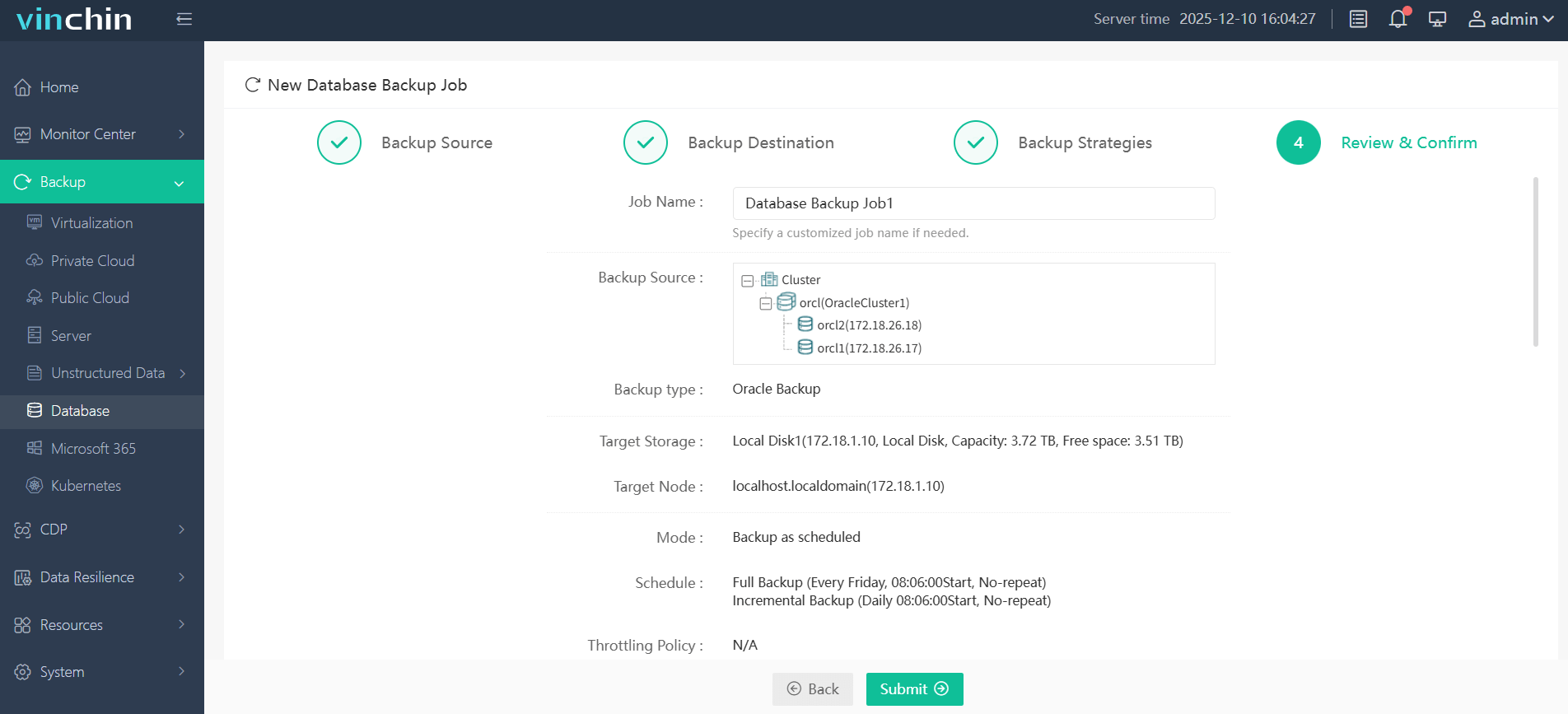
The intuitive Vinchin Backup & Recovery web console makes safeguarding your critical data remarkably straightforward:
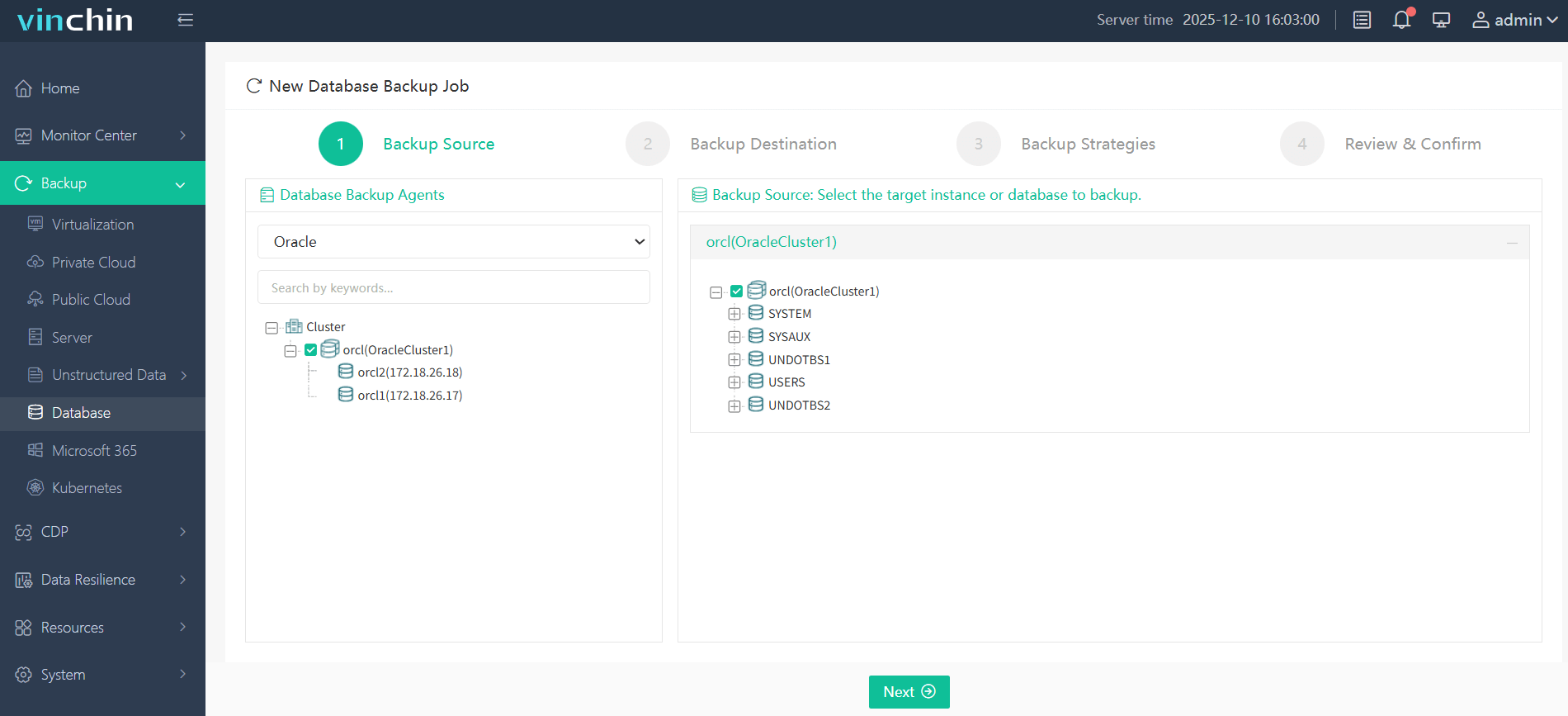
Step 1 — Select the Oracle database you wish to back up;
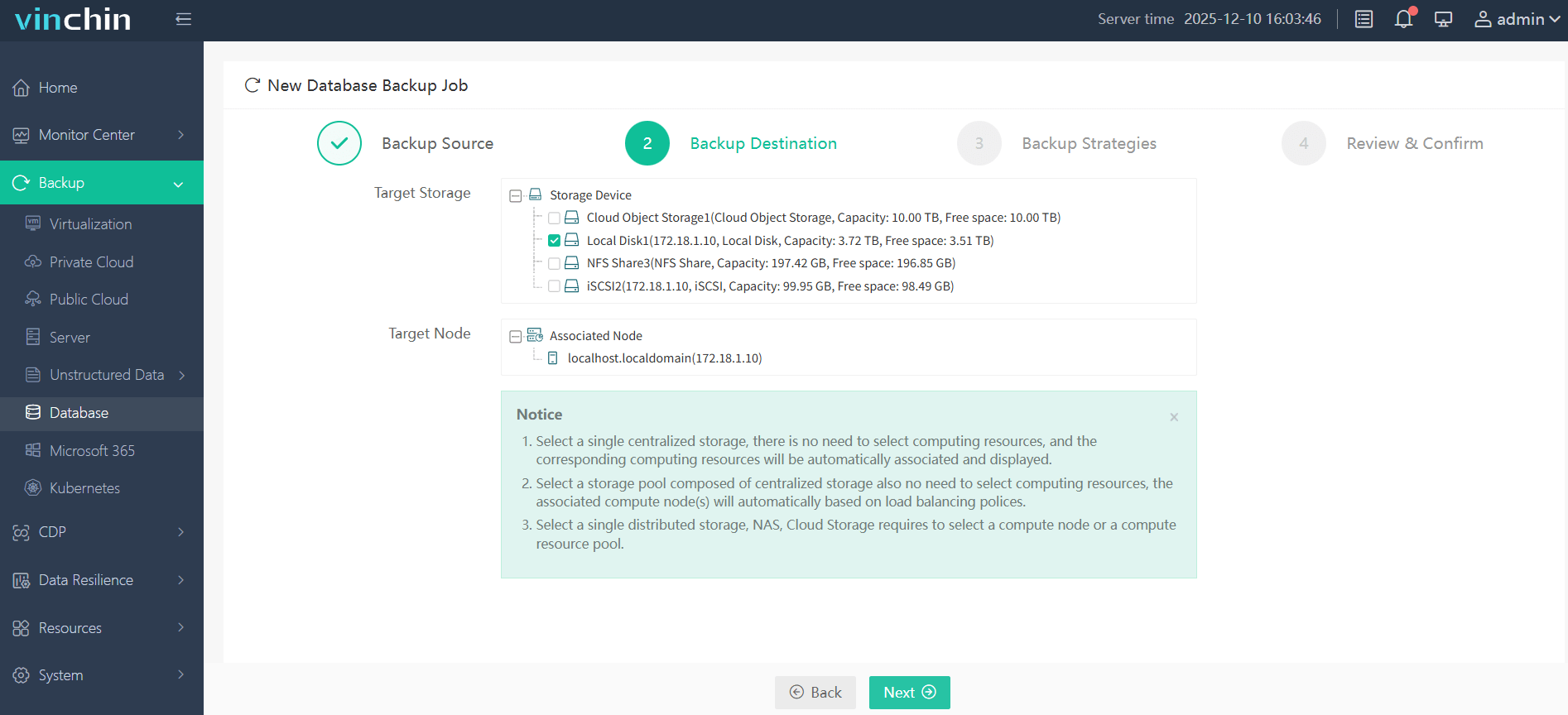
Step 2 — Choose appropriate backup storage;
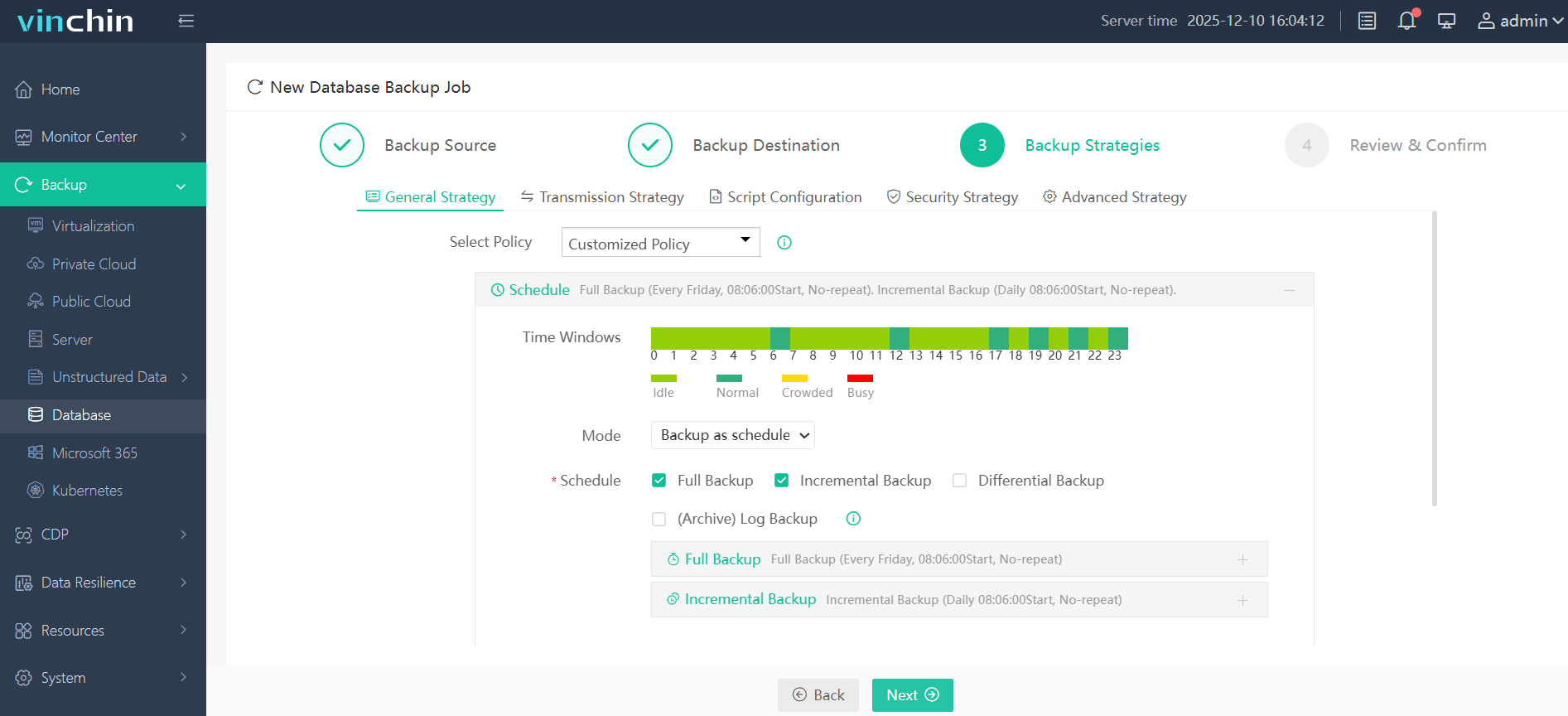
Step 3 — Define a custom backup strategy aligned with business requirements;
Step 4 — Submit the job—all within minutes even at scale.
Recognized globally among leading enterprises—with top ratings from industry experts—Vinchin Backup & Recovery offers a fully featured 60-day free trial so you can experience its power firsthand; click below to get started today!
Oracle RMAN TSM Configuration FAQs
Q1: Can I configure multiple parallel channels when backing up with TDPO?
A1: Yes; set parallelism using CONFIGURE DEVICE TYPE SBT PARALLELISM n in an active RMAN session.
Q2: What should I do if my symbolic link does not work?
A2: Verify file paths match architecture requirements; ensure permissions allow read+execute access; recreate link if needed using correct library filename extension (.so/.a).
Q3: Is there a way to monitor ongoing backups sent from my database host?
A3: Yes; review progress via local alert/log files plus remote monitoring tools available within Spectrum Protect administrative interface.
Conclusion
Configuring oracle rman tsm configuration delivers robust enterprise-grade protection across diverse environments—whether done manually or through official plugins like TDPO—with centralized control over scheduling/recovery tasks vital today more than ever before! For those seeking simplicity alongside advanced features consider trying Vinchin’s unified platform free today—you might never look back!