When you manage Oracle RMAN backups, do you have a reliable way to track every detail of what happened? Imagine it’s late at night and you need to restore data fast—or an auditor asks for proof that your backups ran last quarter. Can you quickly show a clear record of every backup operation? Capturing Oracle RMAN output is not just about keeping logs; it’s about making your backup process transparent, auditable, and easy to troubleshoot. In this article, we’ll explore what the Oracle RMAN spool log is, why it matters for operations teams at every level, and how to use it step by step. We’ll also look at alternative ways to capture logs and share best practices for managing them. Finally, we’ll introduce a modern approach with Vinchin for Oracle database protection.
What Is Oracle RMAN Spool Log?
The Oracle RMAN spool log is a feature that lets you save all output from your Recovery Manager (RMAN) commands into a text file. This includes messages about job progress, errors encountered during execution, warnings about configuration issues, or confirmation of successful completion. By keeping these logs organized and accessible, you can review exactly what happened in any backup or restore session—whether days or months later.
Why does this matter? For database administrators (DBAs) and IT operations teams responsible for uptime and compliance, having detailed logs means you can answer questions from auditors or management with confidence. If something goes wrong during a backup or restore job—such as an ORA error or hardware failure—the spool log provides evidence of when it occurred and what actions were taken before or after.
Method 1. How to Use SPOOL Command in RMAN?
The SPOOL command inside RMAN offers the most direct way to capture output into a log file. When enabled at the RMAN prompt—not within a RUN block—it writes everything displayed on screen into your chosen file until spooling is turned off.
Before starting spooling:
First connect to your target database using rman target / or another valid connection string. At the RMAN prompt:
1. Enter SPOOL LOG TO '/path/to/your_log_file.log'
This starts writing all subsequent output—including status updates and error messages—to your specified file path.
2. Run your desired RMAN commands such as BACKUP DATABASE
To make sure both commands and their results appear in your log (not just results), consider entering SET ECHO ON; before running backup statements.
3. When finished with all tasks you want logged, enter SPOOL LOG OFF
This stops logging further output.
If you want new information added to an existing log instead of overwriting it each time—for example if running multiple jobs throughout one day—use APPEND:
SPOOL LOG TO '/path/to/your_log_file.log' APPEND
Here’s an example session:
RMAN> SPOOL LOG TO '/home/oracle/rman_backup.log';
RMAN> SET ECHO ON;
RMAN> BACKUP DATABASE;
RMAN> SPOOL LOG OFF;
This creates (or overwrites) /home/oracle/rman_backup.log with everything between those two SPOOL commands—including both typed commands (with SET ECHO ON) and their results.
Important Notes:
The SPOOL command itself must be run outside any RUN block; however, once enabled outside RUN blocks it will capture all activity within them too.
If there’s any problem opening your chosen file—such as missing directory permissions—spooling turns off automatically but other commands continue running.
Always check that the user running RMAN has write access to the destination directory; otherwise no log will be created.
Method 2. How to Capture Oracle RMAN Spool Log via Shell Redirection?
Sometimes capturing everything shown in an interactive session—including both typed commands and program responses—is easier from outside of RMAN itself using shell features built into Unix/Linux operating systems (or PowerShell equivalents on Windows).
When launching rman from your terminal prompt:
1. To overwrite previous content each time:
Type rman target / > /path/to/your_log_file.log
2. To append new runs onto an existing file instead:
Type rman target / >> /path/to/your_log_file.log
This captures everything printed during that session—including prompts—as plain text in your chosen location.
If you want live feedback while also saving output permanently:
Use Unix/Linux’s tee utility like this:
rman target / | tee /path/to/your_log_file.log
Now every line appears both onscreen and in /path/to/your_log_file.log simultaneously—a big help when monitoring long-running jobs interactively but still needing full records later!
On Windows platforms:
PowerShell users can achieve similar behavior using Tee-Object, e.g.,
rman target / | Tee-Object -FilePath C:\backup\rman_output.txt
For even more complete auditing—including capturing exactly what was typed along with system responses—you might use Linux's script tool:
script -c "rman target /" /path/to/session_full.log
This records everything shown during that shell session until exited.
Why Save Oracle RMAN Spool Log Files
Saving detailed spool logs isn’t just best practice—it’s often required by company policy or external regulations governing data protection! These files provide granular evidence of every action taken during critical backup windows—which could mean avoiding costly downtime later if something goes wrong unexpectedly.
Enterprise Database Backup Made Easy With Vinchin Backup & Recovery
For organizations seeking streamlined management beyond manual logging methods described above, Vinchin Backup & Recovery delivers enterprise-level protection tailored specifically for today’s leading databases—including robust support for Oracle workloads alongside MySQL, SQL Server, MariaDB, PostgreSQL, PostgresPro, and TiDB environments. With features such as batch database backup scheduling, integrity checks ensuring recoverability, cloud/tape archiving options for flexible storage strategies, WORM protection against ransomware threats, and instant recovery verification via SQL script testing—all managed under unified policies—Vinchin Backup & Recovery simplifies compliance while maximizing operational resilience across mixed infrastructures.
The intuitive web console makes safeguarding Oracle databases straightforward:
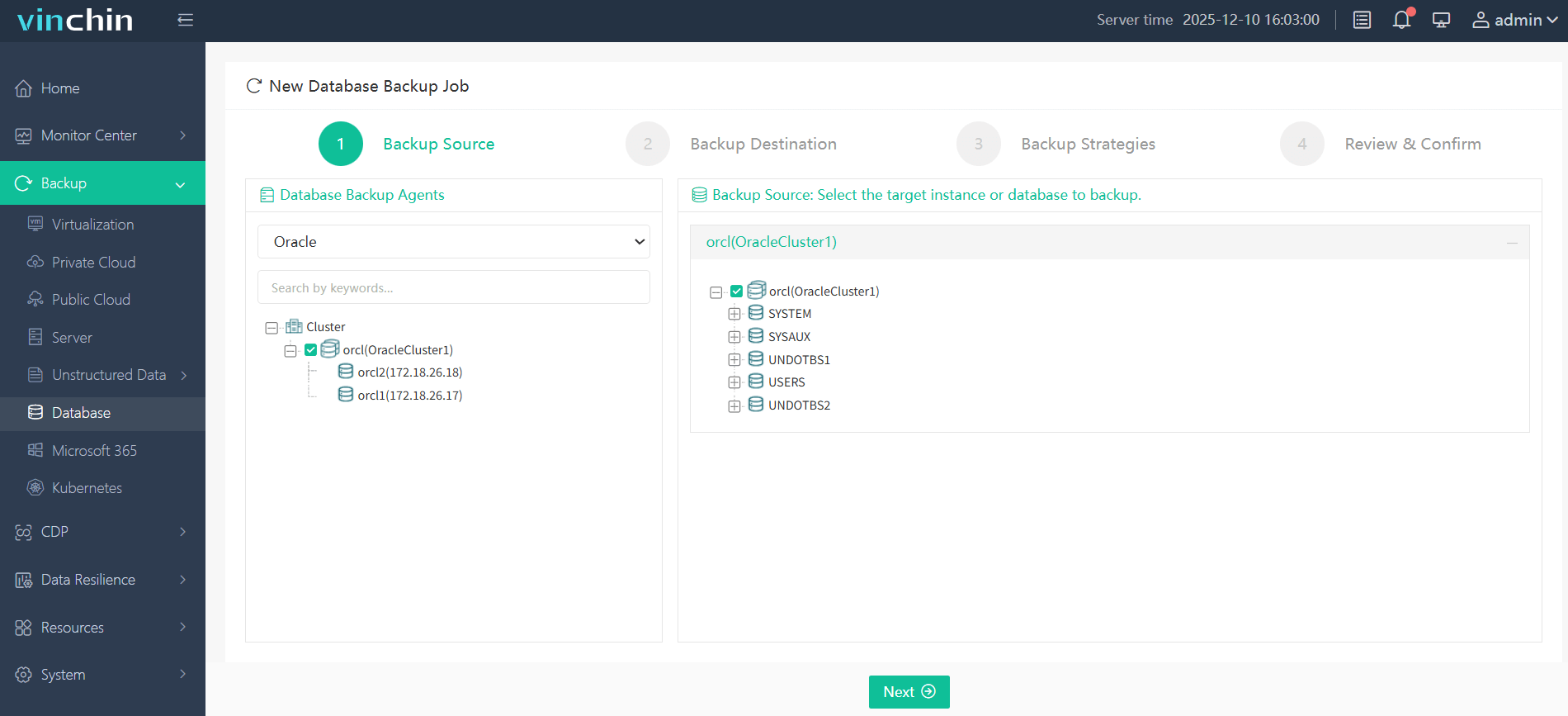
Step 1. Select the Oracle database to back up;
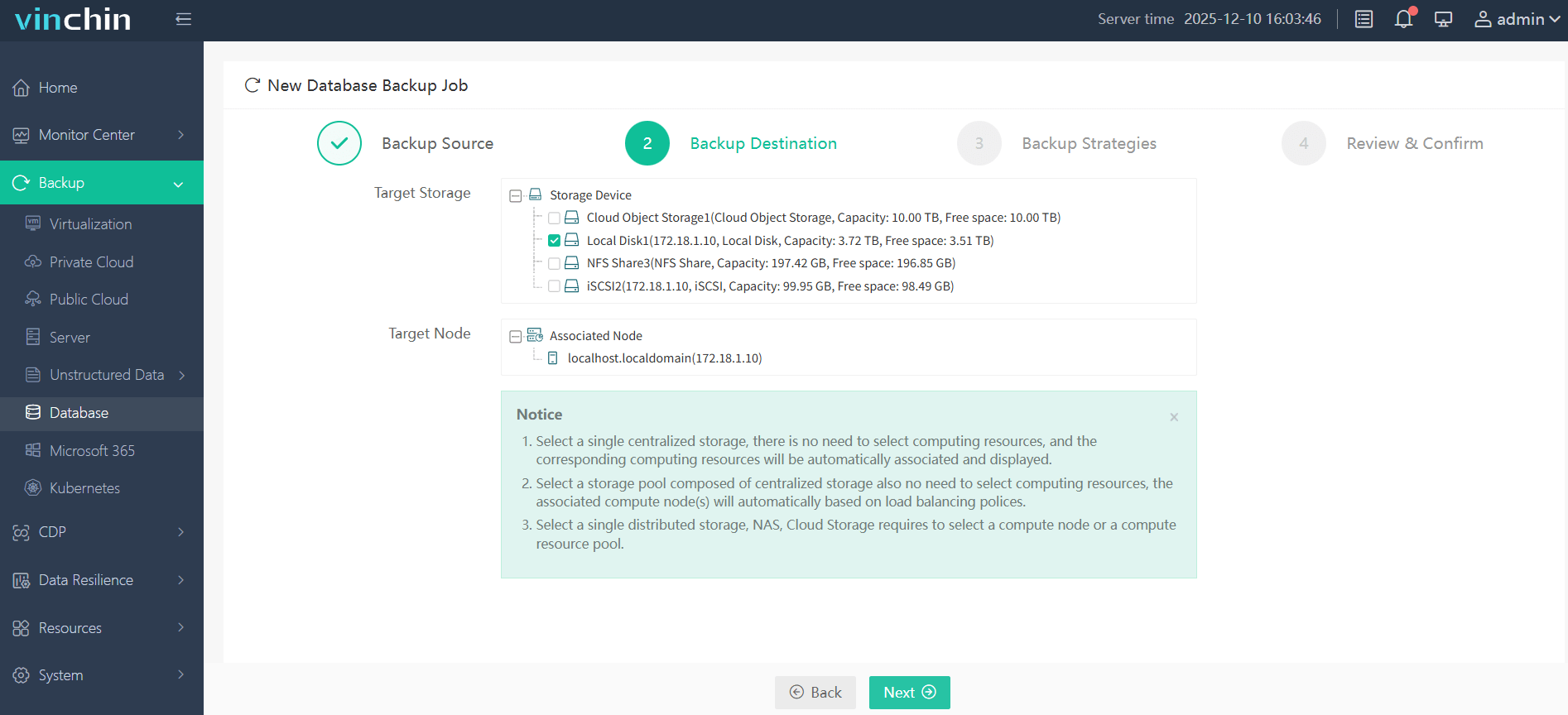
Step 2. Choose the appropriate backup storage;
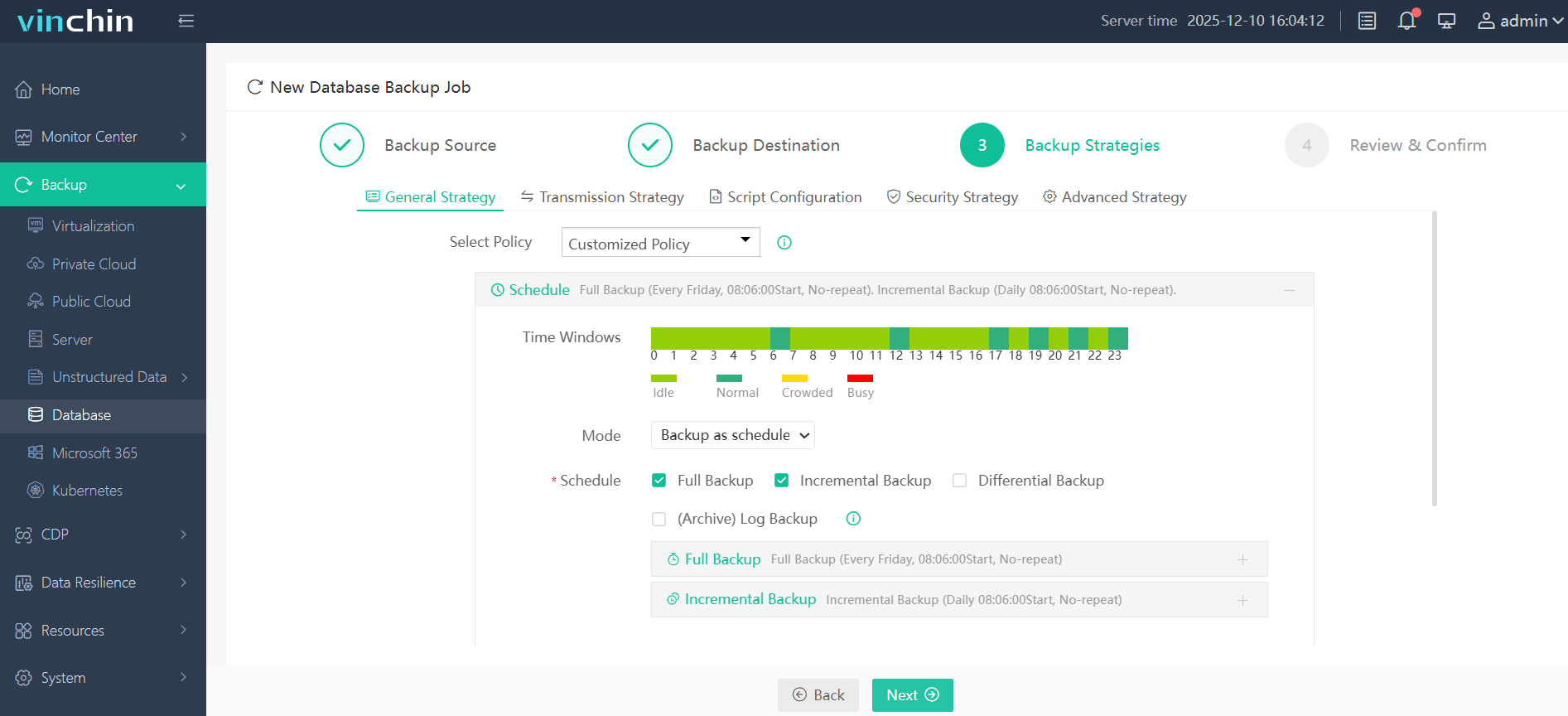
Step 3. Define tailored backup strategies;
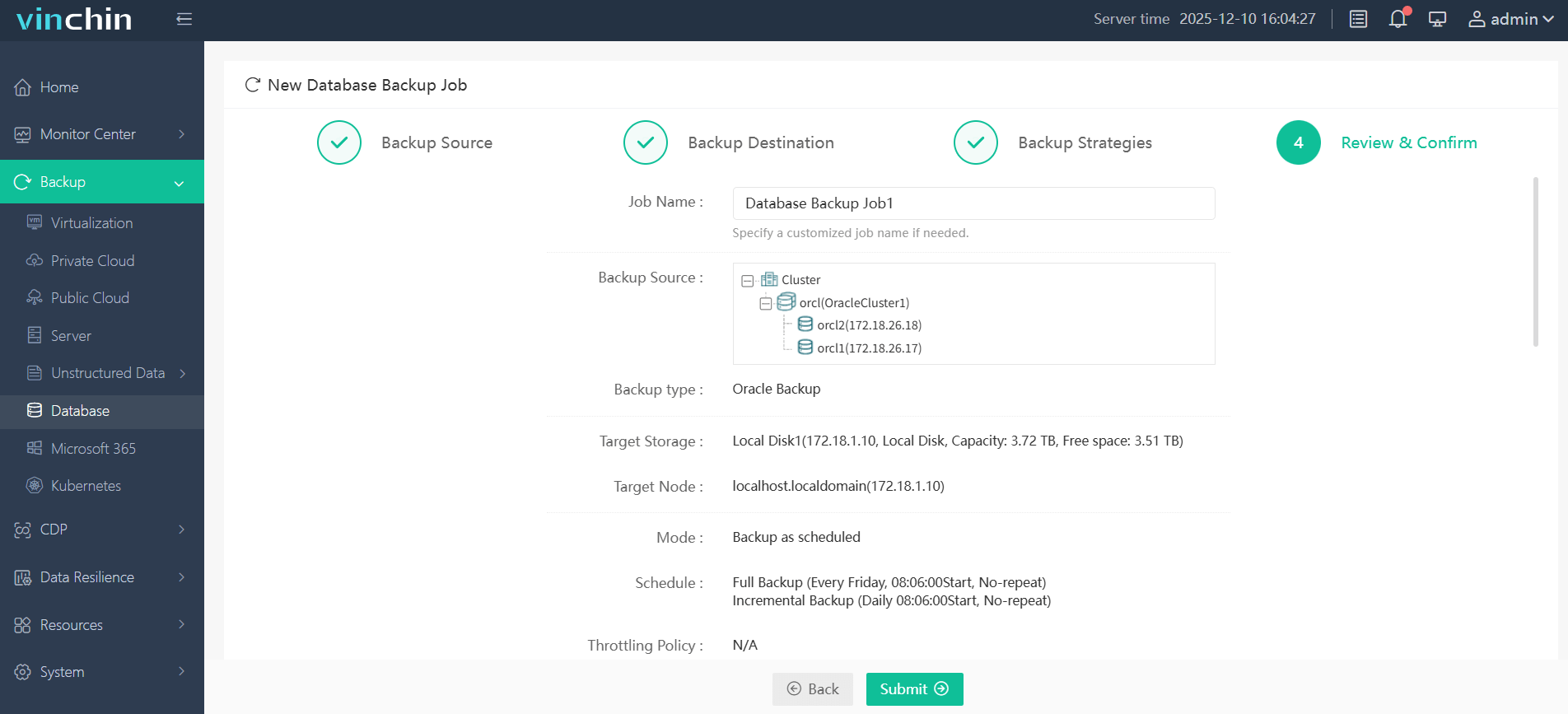
Step 4. Submit the job—all within minutes.
Recognized globally among enterprise IT leaders—with top ratings and thousands of satisfied customers—Vinchin Backup & Recovery offers a risk-free 60-day full-featured trial experience; click download now to see why it's trusted worldwide.
Oracle RMAN Spool Log FAQs
Q1: How do I change where my Oracle RMAN spool log gets saved?
A1: Set any valid writable path in SPOOL LOG TO 'filepath' inside RMAN or redirect shell output accordingly before starting commands.
Q2: My spool log stays empty after running my script—what should I check?
A2: Confirm spooling started before issuing main commands; ensure correct permissions exist on destination folder/file; avoid placing SPOOL inside RUN blocks.
Q3: Can I view live progress while saving my spool log at once?
A3: Use shell redirection with tee (rman target / | tee logfile) on Unix/Linux systems; PowerShell users should use Tee-Object instead.
Conclusion
Consistent logging transforms backups from guesswork into transparent processes ready for audit or recovery anytime disaster strikes—all thanks to careful use of tools like oracle rman spool log methods described above! For streamlined enterprise-grade automation across mixed environments, try Vinchin's trusted solution free today!