Have you ever tried to restore an Oracle database backup only to see errors like RMAN-20207: UNTIL TIME or RECOVERY WINDOW is before RESETLOGS time? If so, you are not alone. These errors often point to issues with database incarnations—a concept that can confuse even experienced administrators. Understanding how Oracle RMAN manages incarnations is essential for reliable backup and recovery. In this article, we explain what a database incarnation is, why you might need to use the SET INCARNATION command (formally known as RESET DATABASE TO INCARNATION), and how to use it step by step. We also cover advanced scenarios involving multiple incarnations and offer tips for identifying the right one during recovery. Finally, we show how Vinchin can help protect your Oracle databases.
What Is Database Incarnation in RMAN?
A database incarnation represents a unique timeline or version in your Oracle database’s history. Each time you open your database with the RESETLOGS option—often after point-in-time recovery or restoring from a backup control file—Oracle creates a new incarnation. This new branch receives its own unique number (the Incarnation Key) and marks where redo logs start over from sequence 1.
Incarnations allow Oracle to track which backups and archived logs belong to which version of your data. This matters because after every RESETLOGS, redo log sequences restart at 1, creating separate timelines. You can view all incarnations using LIST INCARNATION OF DATABASE; in RMAN or by querying V$DATABASE_INCARNATION in SQL.
There are four types of incarnations:
The Current incarnation is active now.
The Parent is where the current branch started after RESETLOGS.
An Ancestor refers to any parent further up the chain.
A Sibling shares an ancestor but isn’t directly related.
Understanding these categories helps you navigate complex recovery situations.
How RMAN Internally Tracks Incarnations
Behind the scenes, Oracle uses both control files and (optionally) a recovery catalog to manage incarnations. Each time you perform operations like point-in-time recovery followed by opening with RESETLOGS, Oracle records key metadata: the resetlogs SCN (System Change Number), resetlogs timestamp, and an incremented INCARNATION# value.
When you run backup or restore commands in RMAN, it consults this metadata to decide which backups apply to which timeline. The command RESET DATABASE TO INCARNATION <key> tells RMAN exactly which timeline map it should use when resolving SCNs into specific archived redo logs or datafile backups. Without setting this context correctly during cross-incarnation restores or recoveries, RMAN may fail with errors or pick incorrect files.
If you use a recovery catalog alongside your control file, it keeps track of all incarnations—even those lost if your control file was replaced after disaster recovery events. This makes managing complex histories much easier.
Why Use Oracle RMAN SET INCARNATION?
Why would you ever need to set an incarnation? The answer lies in advanced recovery scenarios. If you want to restore or recover your database back into an earlier timeline—perhaps undoing changes made since an upgrade gone wrong—you must tell RMAN which incarnation’s backups should be used. Otherwise, it may not find valid files or could throw errors such as RMAN-06026: some targets not found - aborting restore.
Common cases requiring SET INCARNATION include:
Restoring from backups taken before the last RESETLOGS event
Performing point-in-time recoveries targeting times before today’s current branch
Accessing archived logs from older timelines
Without setting the correct context using this command first, RMAN only searches within your current timeline—and may miss critical files needed for successful restoration.
Method 1. How to Use the SET INCARNATION Command in Oracle RMAN?
Before starting any operation involving incarnations:
Make sure you have access rights for both target database and any connected recovery catalog.
Here’s how most administrators handle standard cross-incarnation restores:
1. Connect via RMAN:
Open an RMAN session connected as TARGET (and CATALOG if used).
2. List all available incarnations:
At the prompt type
LIST INCARNATION OF DATABASE;
Review each entry carefully—not just its key number but also its RESETLOGS SCN/time—to confirm which branch matches your intended target date or event.
3. Identify & verify target incarnation:
Double-check that both key number (Inc Key) and associated timestamp match what you expect based on business requirements or incident timing.
4. Set desired incarnation context:
Run
RESET DATABASE TO INCARNATION <Incarnation Key>;
Replace <Incarnation Key> with your chosen value—for example 2.
5. Mount required state before restoring:
Make sure your instance is either in MOUNT mode (STARTUP MOUNT) or NOMOUNT if restoring controlfiles; never OPEN at this stage!
6. Proceed with RESTORE/RECOVER commands as usual:
For example,
   RESTORE DATABASE;
   RECOVER DATABASE;
This process ensures that all subsequent actions reference only those backups belonging on that specific timeline—avoiding confusion between branches created by previous RESETLOGS events.
Example:
Suppose output shows Inc Key 2 matches pre-upgrade state:
RMAN> LIST INCARNATION OF DATABASE;
-- Output shows Inc Key 2 for desired branch
RMAN> RESET DATABASE TO INCARNATION 2;
-- Confirm instance mounted
RMAN> RESTORE DATABASE;
RMAN> RECOVER DATABASE;
Following these steps helps avoid common pitfalls when working across multiple timelines.
Method 2: Restoring When Your Control File Is Unaware of Previous Incarnations
Sometimes things get tricky—especially if disaster strikes! Imagine needing access to old backups but realizing that today’s control file doesn’t know about prior branches because it was recreated after failure or migration.
In such cases:
1. List known incarnations using current control file:
LIST INCARNATION OF DATABASE;
Be aware—this list may be incomplete if recent resets occurred!
2. Restore appropriate historical control file:
Use
RESTORE CONTROLFILE FROM '<backup piece>';
Or,
RESTORE CONTROLFILE FROM AUTOBACKUP;
3. Mount restored control file:
Start instance using
STARTUP MOUNT;
4. Check available incarnations again:
Now repeat
LIST INCARNATION OF DATABASE;
5. Set correct context using
RESET DATABASE TO INCARNATION <Incarnation Key>;
6. Continue normal restore/recover workflow as above
Critical warning: After restoring an older control file without connecting to a full-featured Recovery Catalog, LIST will only display those branches known at that snapshot in time! Always keep records—or better yet use Recovery Catalogs—to ensure no important history gets lost during emergencies.
Example scenario: Suppose recovering pre-migration data requires resetting back two branches:
Restore relevant historical CONTROLFILE > Mount > List > Reset > Restore/Recover
Identifying the Correct Incarnation for Recovery
Choosing which incarnation fits your needs isn’t always obvious—especially if several resets happened over months of maintenance work!
Here’s how admins typically identify their target:
First,
Decide what business event/time/SCN marks “the good old days” worth returning toward (e.g., just before accidental table drop).
Then,
Query V$DATABASE_INCARNATION directly inside SQL*Plus:
SELECT DBID,
       NAME,
       STATUS,
       RESETLOGS_CHANGE# AS "Resetlogs SCN",
       RESETLOGS_TIME AS "Resetlogs Time",
       PRIOR_INCARNATION# AS "Parent"
FROM V$DATABASE_INCARNATION
ORDER BY RESETLOGS_TIME DESC;
Look for rows whose status matches ‘CURRENT’ at desired moment—or whose timestamps bracket when trouble began.
If using Recovery Catalogs,
You can filter available backups per branch via:
LIST BACKUP OF DATABASE BY LEVEL SUMMARY;
Or add OF ARCHIVELOG ALL COMPLETED BETWEEN ... AND ... clauses referencing specific times/incarn keys.
Decision flow usually looks like this:
1) Pinpoint incident date/SCN needing rollback
2) Find matching resetlogs/incarnation record covering that period
3) Confirm valid full/incremental/datafile/archive log backups exist under that key/timeline
By following these steps closely—and double-checking against both system views plus external documentation—you minimize risk of picking wrong branches during high-pressure recoveries.
Enterprise-Level Backup Solution for Oracle Databases – Vinchin Backup & Recovery
To streamline protection against data loss across complex environments like Oracle databases, consider Vinchin Backup & Recovery—a professional enterprise-grade solution supporting mainstream platforms including Oracle, MySQL, SQL Server, MariaDB, PostgreSQL/PostgresPro/TiDB among others. With features such as batch database backup scheduling, incremental backup support tailored for Oracle workloads, robust data retention policies including GFS retention strategy, cloud backup integration plus tape archiving options—all managed through comprehensive integrity checks—Vinchin Backup & Recovery delivers reliable coverage while simplifying administration overall.
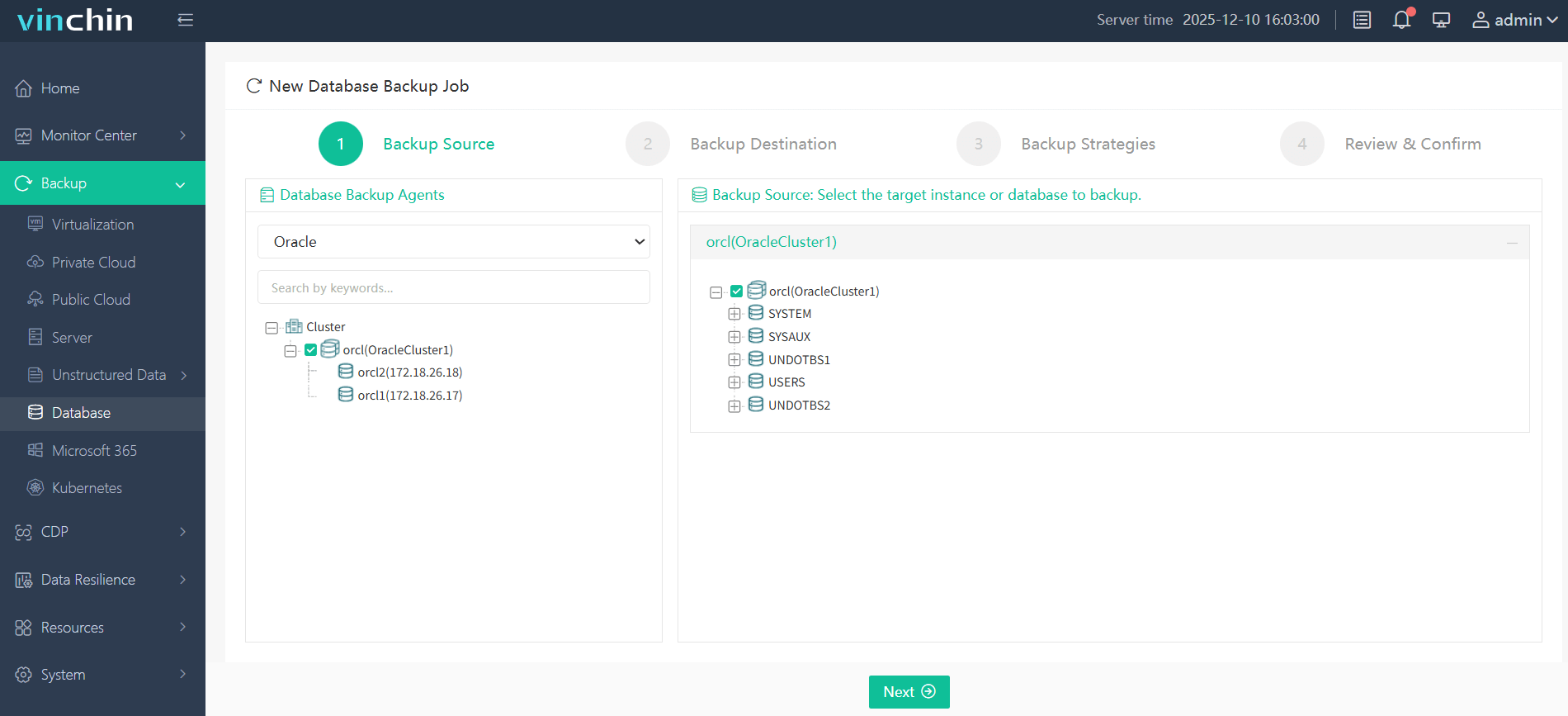
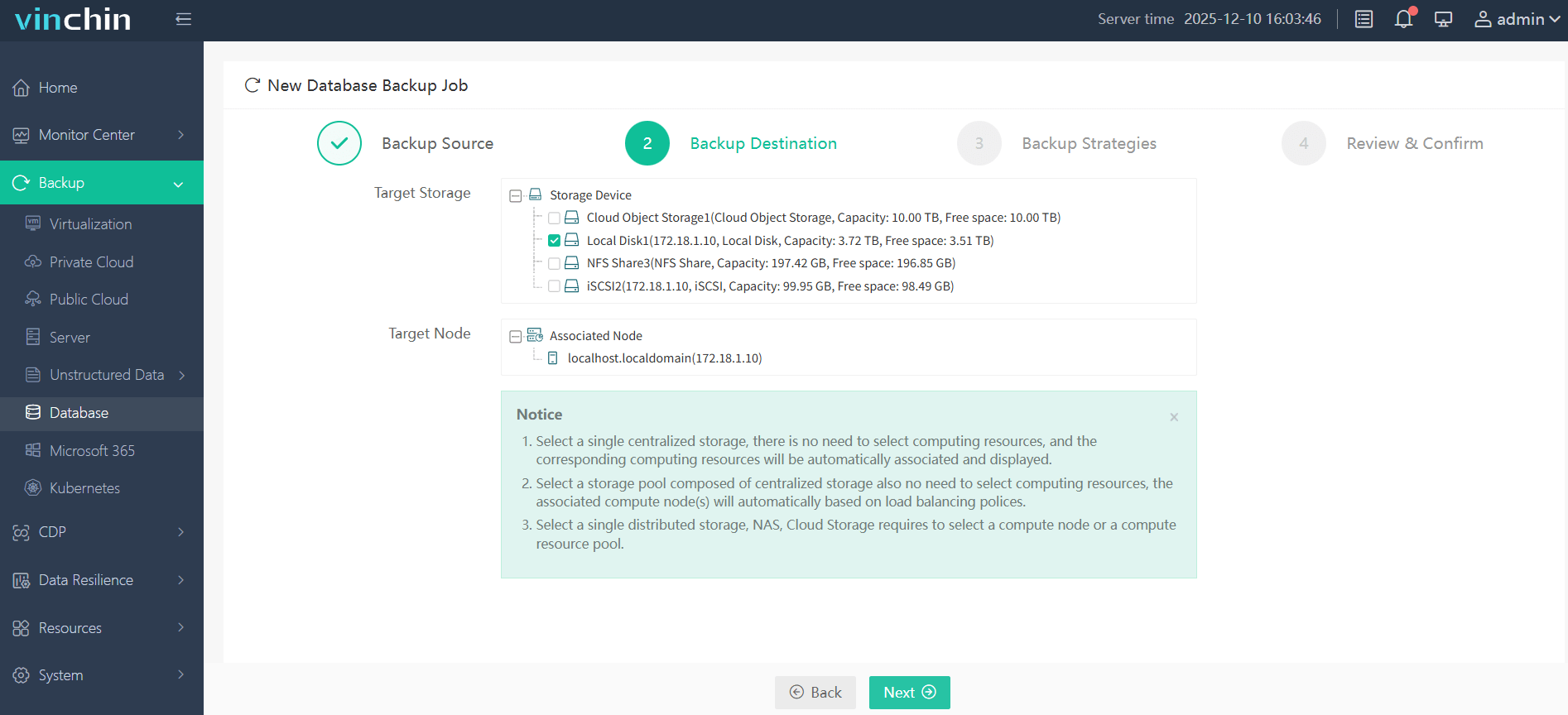
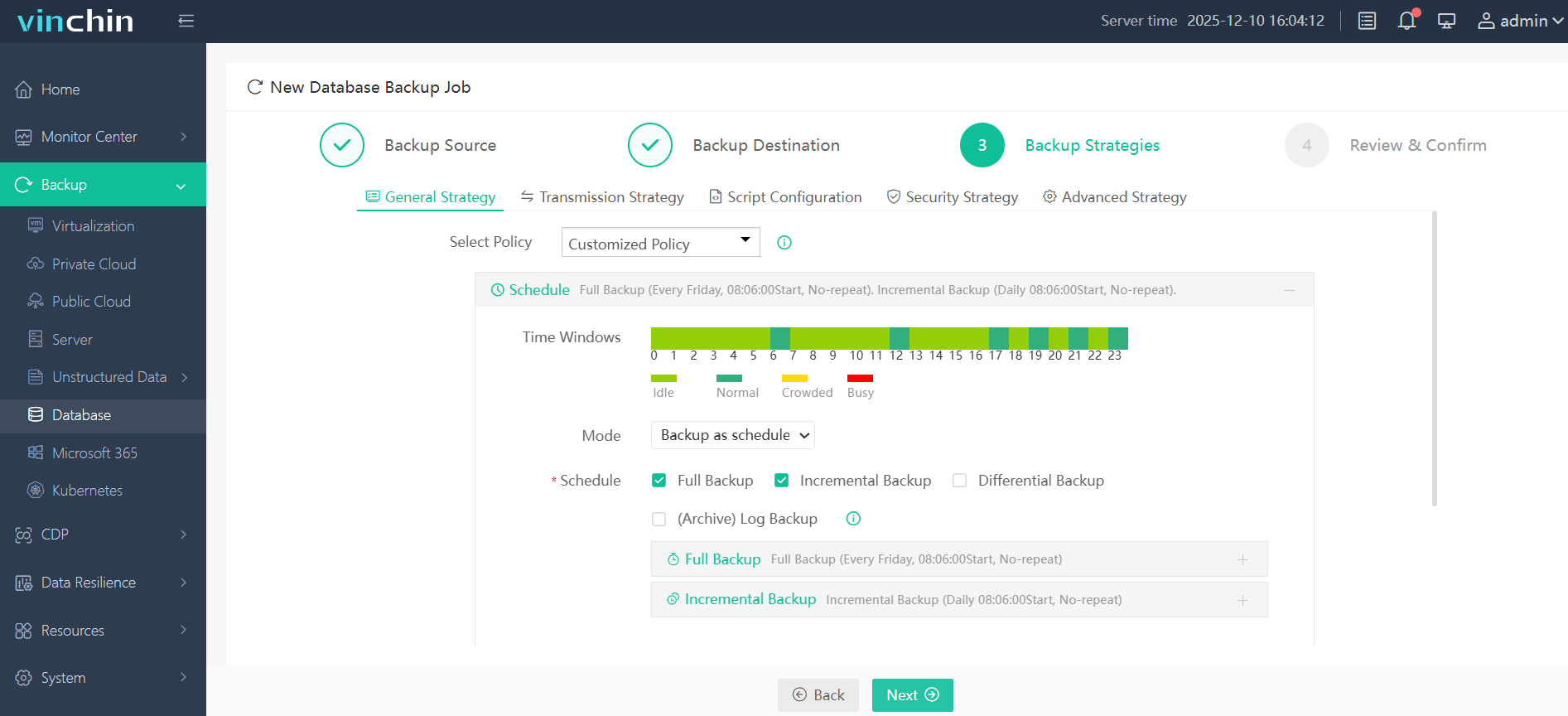
The intuitive web console makes safeguarding critical databases straightforward through four easy steps:
Step 1 – Select the Oracle database to back up;
Step 2 – Choose backup storage;
Step 3 – Define backup strategy;
Step 4 – Submit job for execution.
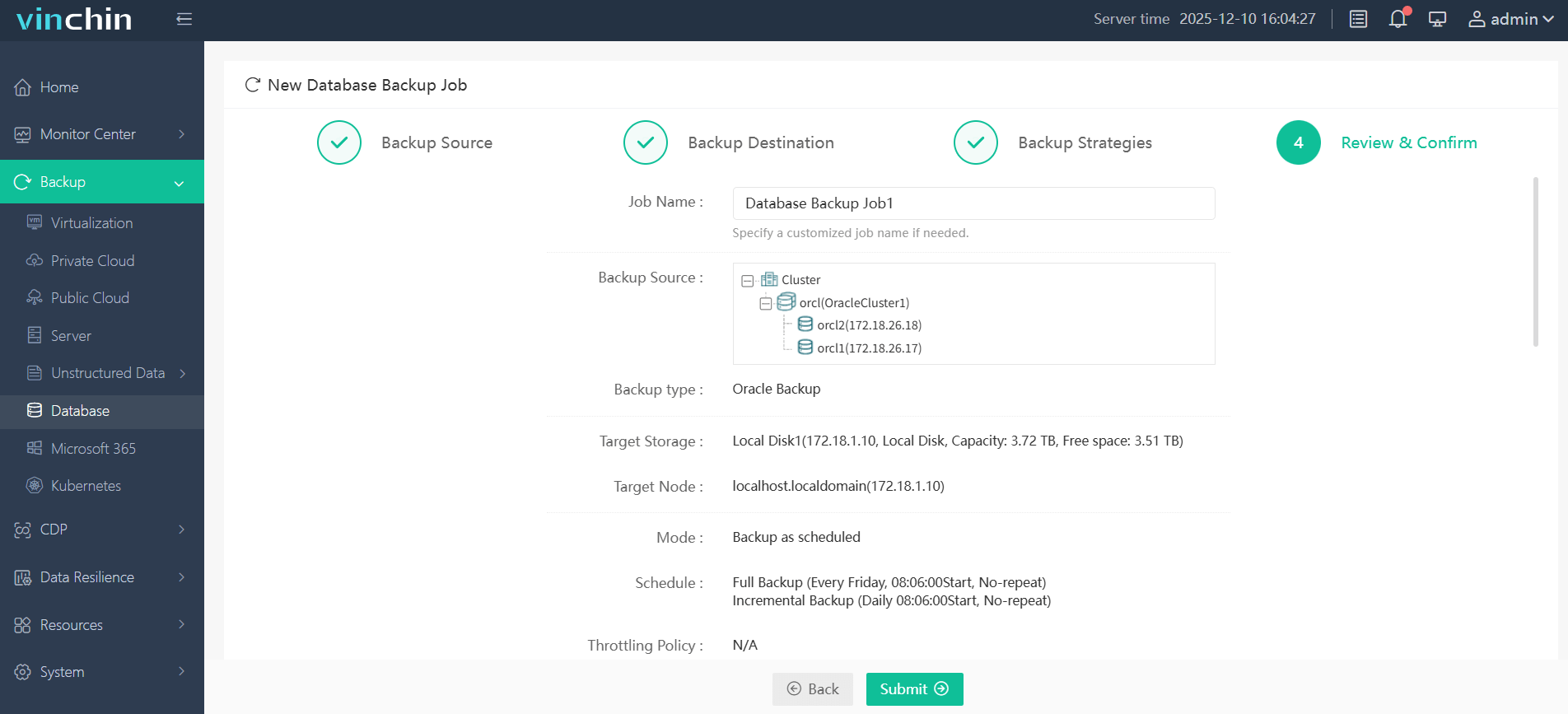
Recognized globally by thousands of enterprises and rated highly by industry experts, Vinchin Backup & Recovery offers a fully featured free trial lasting 60 days—click below to experience seamless enterprise data protection firsthand!
Oracle RMAN Set Incarnation FAQs
Q1: Can I switch between different database incarnations without losing existing data?
A1: Yes; switching changes only metadata perspective—not actual stored data—as long as proper backups exist under each timeline.
Q2: Does running RESET DATABASE TO INCARNATION physically move my data?
A2: No; it updates internal references so future RESTORE/RECOVER commands act within chosen timeline—the actual movement happens later.
Q3: How does having a Recovery Catalog help manage complex histories?
A3: A Recovery Catalog maintains complete records across all resets/backups—even those unknown locally—which simplifies tracking multiple timelines especially after disasters.
Conclusion
Mastering database incarnations unlocks powerful options for advanced backup strategies in Oracle environments—the SET INCARNATION command ensures safe navigation across timelines during critical restores/recoveries while avoiding common pitfalls seen by many DBAs worldwide! Vinchin makes protecting these assets even simpler through automation plus robust reporting tools—all accessible through one easy-to-use platform!