Protecting your Oracle database is not just a best practice—it is essential for business continuity. Data loss can strike at any time due to hardware failure, human error, or cyber threats. A solid backup plan is your best defense against these risks. Oracle’s Recovery Manager (RMAN) is the built-in tool designed for this job. But how do you set up an effective oracle rman incremental backup script? And how do you automate it so you never miss a backup window? In this guide, we will walk through what incremental backups are, how to write scripts for them step by step—from basic to advanced—and how to schedule these jobs for reliable protection.
Understanding Oracle RMAN Incremental Backups
An Oracle RMAN incremental backup saves only data blocks that have changed since a previous backup rather than copying every block each time. This approach reduces both backup time and storage needs compared to full backups.
There are two main levels:
Level 1 has two types:
Incremental backups are especially useful for large databases or environments with limited maintenance windows because they minimize resource usage during regular operations while still providing fast recovery options when needed. They also speed up recovery because after restoring a Level 0 backup, only recent changes need applying.
Differential vs. Cumulative Backup Strategy
Before writing your oracle rman incremental backup script, it helps to understand which strategy fits your needs best.
A differential incremental backup captures all changes since your last Level 0 or most recent Level 1—whichever came later. This means daily differentials are usually small but require more files during restore if several days pass between fulls.
A cumulative incremental backup records all changes since your last Level 0 only—regardless of any intervening Level 1s—so each cumulative grows larger over time until another full runs. Restoring from cumulative incrementals is simpler because you need just one set after your latest full.
If you want faster backups but don’t mind longer restores (and tracking multiple files), choose differential incrementals as part of your oracle rman incremental backup script routine. If you prefer easier restores—even if backups take longer—cumulative may be better.
Method 1: Basic Oracle RMAN Incremental Backup Script
Let’s start with manual scripting basics before moving into automation.
First things first: make sure your database runs in ARCHIVELOG mode; otherwise online (hot) incremental backups won’t work! To check this status in SQL*Plus run:
ARCHIVE LOG LIST
If not enabled yet, consult official documentation on switching modes safely—you cannot skip this step!
Creating a Level 0 (Baseline) Backup
Your initial baseline sets everything else in motion—a must-have before running incrementals later on:
BACKUP INCREMENTAL LEVEL 0 DATABASE PLUS ARCHIVELOG;
This command backs up every data block plus archived redo logs so nothing gets missed mid-operation.
To execute interactively:
rman target /
RMAN> BACKUP INCREMENTAL LEVEL 0 DATABASE PLUS ARCHIVELOG;
Or save it as a file like backup_level0.rman, then run:
rman target / cmdfile=backup_level0.rman log=backup_level0.log
Creating a Level 1 (Incremental) Backup
Once you have a good baseline (Level 0), schedule regular incrementals:
BACKUP INCREMENTAL LEVEL 1 DATABASE PLUS ARCHIVELOG;
Save this as backup_level1.rman for reuse with RMAN as above.
Cumulative Incremental Backup
For cumulative style—which simplifies restores but uses more space—use:
BACKUP INCREMENTAL LEVEL 1 CUMULATIVE DATABASE;
This grabs all changes since your last full (Level 0).
Advanced Example: Using Channels and Compression
As databases grow larger or performance matters more, consider allocating channels for parallelism and enabling compression within your oracle rman incremental backup script:
RUN {
    ALLOCATE CHANNEL ch1 DEVICE TYPE DISK;
    ALLOCATE CHANNEL ch2 DEVICE TYPE DISK;
    BACKUP AS COMPRESSED BACKUPSET INCREMENTAL LEVEL 1 DATABASE PLUS ARCHIVELOG DELETE INPUT;
    BACKUP CURRENT CONTROLFILE;
    BACKUP SPFILE;
    RELEASE CHANNEL ch1;
    RELEASE CHANNEL ch2;
}
Here’s what happens:
Multiple channels let RMAN back up files in parallel—speeding things up.
AS COMPRESSED BACKUPSET shrinks storage use.
DELETE INPUT removes archived redo logs after successful copy; use carefully so logs aren’t deleted before being backed up elsewhere!
Backing up control files (BACKUP CURRENT CONTROLFILE) and server parameter files (BACKUP SPFILE) ensures complete recoverability if disaster strikes.
Save this advanced script as needed—for example as backup_level1_advanced.rman—and execute via RMAN prompt or shell wrapper.
Method 2: How to Automate Oracle RMAN Incremental Backup Script Execution?
Manual execution works fine for testing—but production systems demand automation so no one forgets critical jobs!
On Linux/Unix servers cron remains standard; Windows users can rely on Task Scheduler instead (see FAQ below).
Step 1: Create a Shell Script Wrapper
Write a shell wrapper like backup_rman.sh that sets environment variables then calls RMAN directly:
#!/bin/bash
export ORACLE_SID=your_sid
export ORACLE_HOME=/path/to/oracle/home
export PATH=$ORACLE_HOME/bin:$PATH

rman target / cmdfile=/path/to/backup_level1.rman log=/path/to/logs/backup_level1_$(date +%Y%m%d).log
if [ $? -ne 0 ]; then echo "Backup failed!" >> /path/to/logs/error.log; fi
Replace your_sid with your actual SID value; adjust paths accordingly based on where scripts reside on disk.
Make sure whoever runs this script has proper OS-level privileges—the oracle user typically does—or specify credentials securely if needed instead of relying solely on OS authentication methods like target /. Always protect scripts containing passwords using strict file permissions!
Don’t forget to make scripts executable:
chmod +x /path/to/backup_rman.sh
Step 2: Schedule with Cron
To automate scheduling:
Edit crontab (crontab -e) under the right user account then add lines such as—
For weekly fulls every Sunday at 2 AM:
0 2 * * 0 /path/to/backup_rman_level0.sh
For daily incrementals Monday–Saturday at 2 AM:
0 2 * * 1-6 /path/to/backup_rman_level1.sh
This keeps one fresh baseline plus six days’ worth of change-tracking incrementals at all times—a common enterprise pattern!
Step 3: Monitor Logs & Manage Retention Policy
Always review log output regularly—not just when something breaks! Consider sending alerts if errors appear in logs generated by each run above (“Backup failed!” etc.).
To manage disk space efficiently configure an explicit retention policy first—for example,
CONFIGURE RETENTION POLICY TO RECOVERY WINDOW OF 7 DAYS;
Then periodically clean out old copies automatically within scripts by adding:
DELETE NOPROMPT OBSOLETE;
This command deletes outdated backups per policy rules—not randomly! Without setting retention first it may not behave as expected.
Enterprise-Level Oracle Database Protection with Vinchin Backup & Recovery
For organizations seeking streamlined management and robust protection beyond manual scripting, Vinchin Backup & Recovery offers an enterprise-grade solution tailored for today’s leading databases—including Oracle, MySQL, SQL Server, MariaDB, PostgreSQL, PostgresPro, and TiDB—with special emphasis on comprehensive support for Oracle environments. Key features include advanced source-side compression, incremental backup capabilities, batch database processing, flexible retention policies including GFS strategies, and multi-level data compression—all designed to optimize storage efficiency and ensure regulatory compliance while minimizing operational overhead.
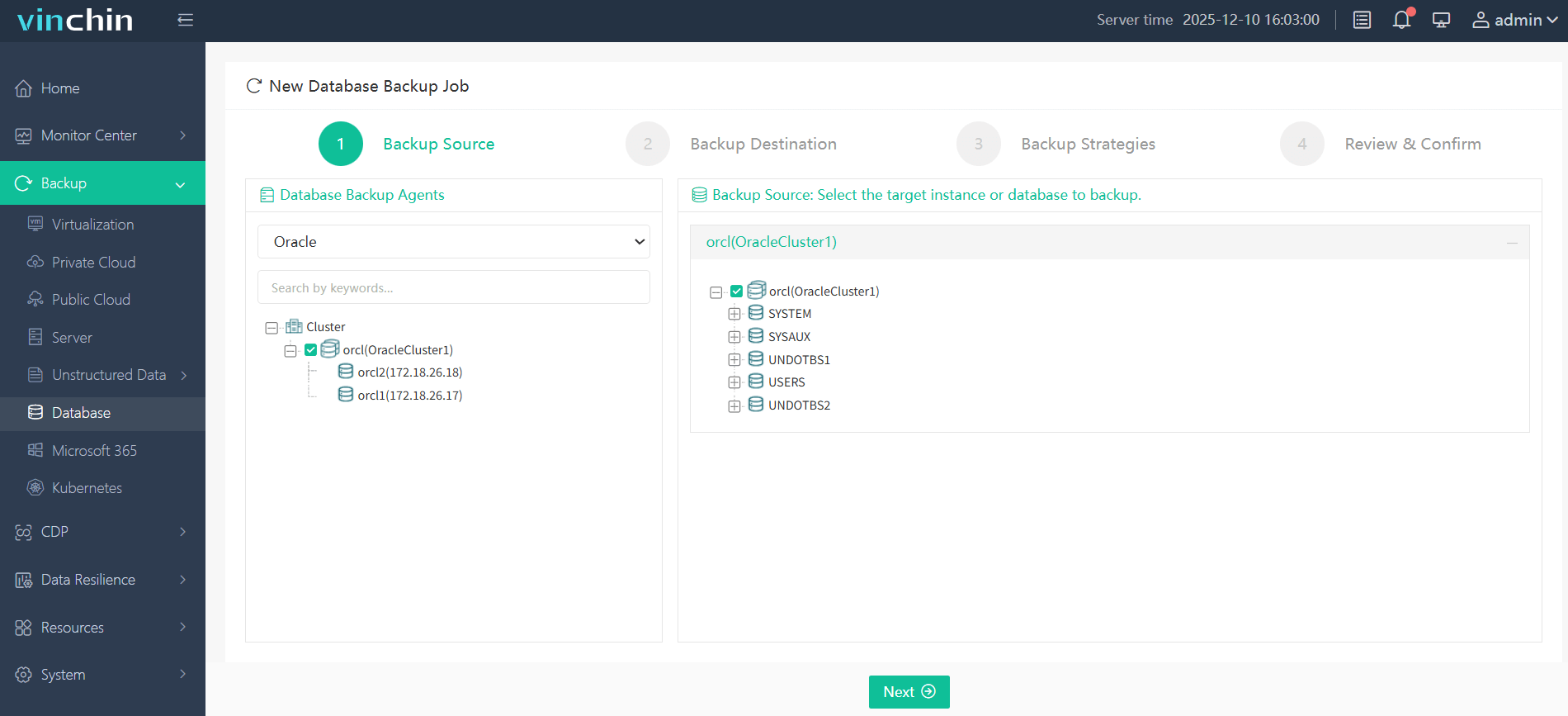
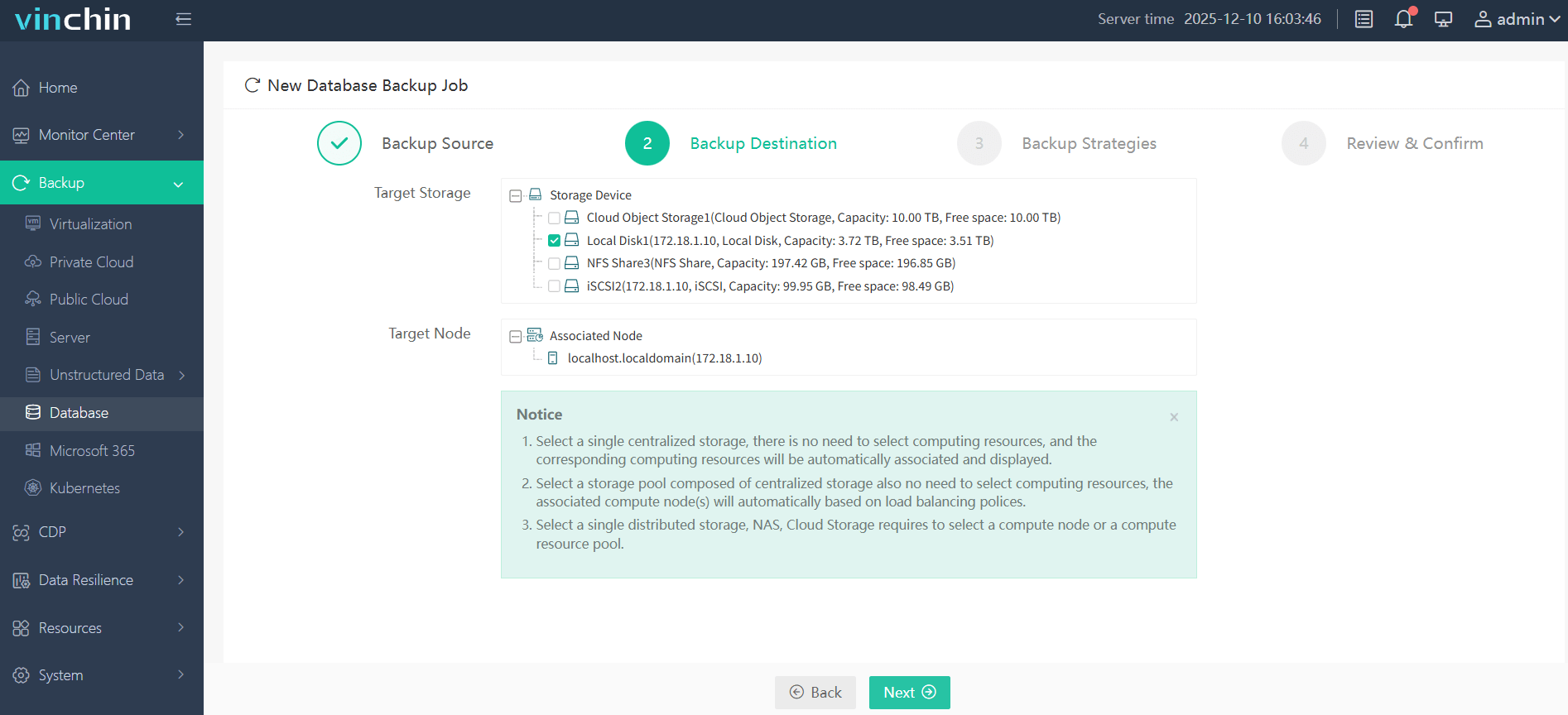
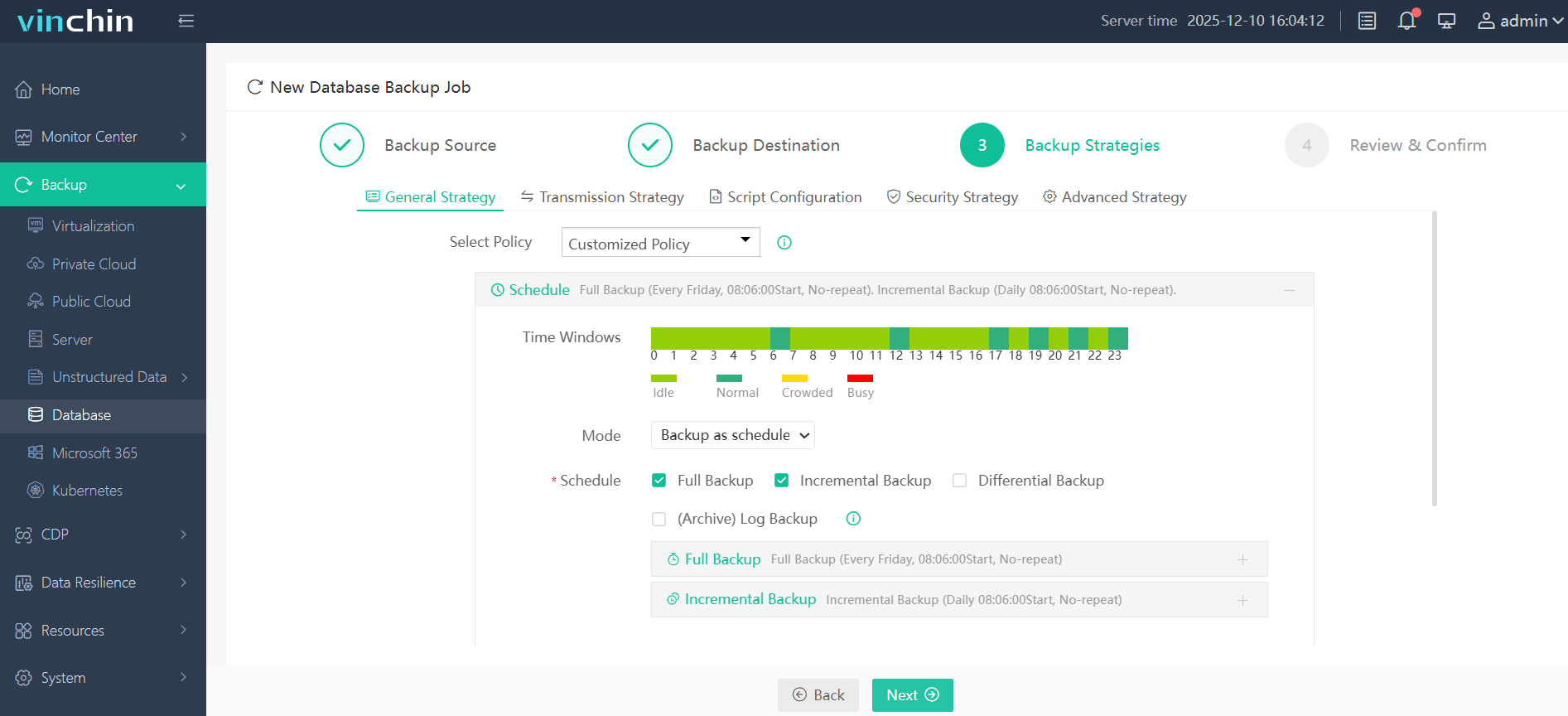
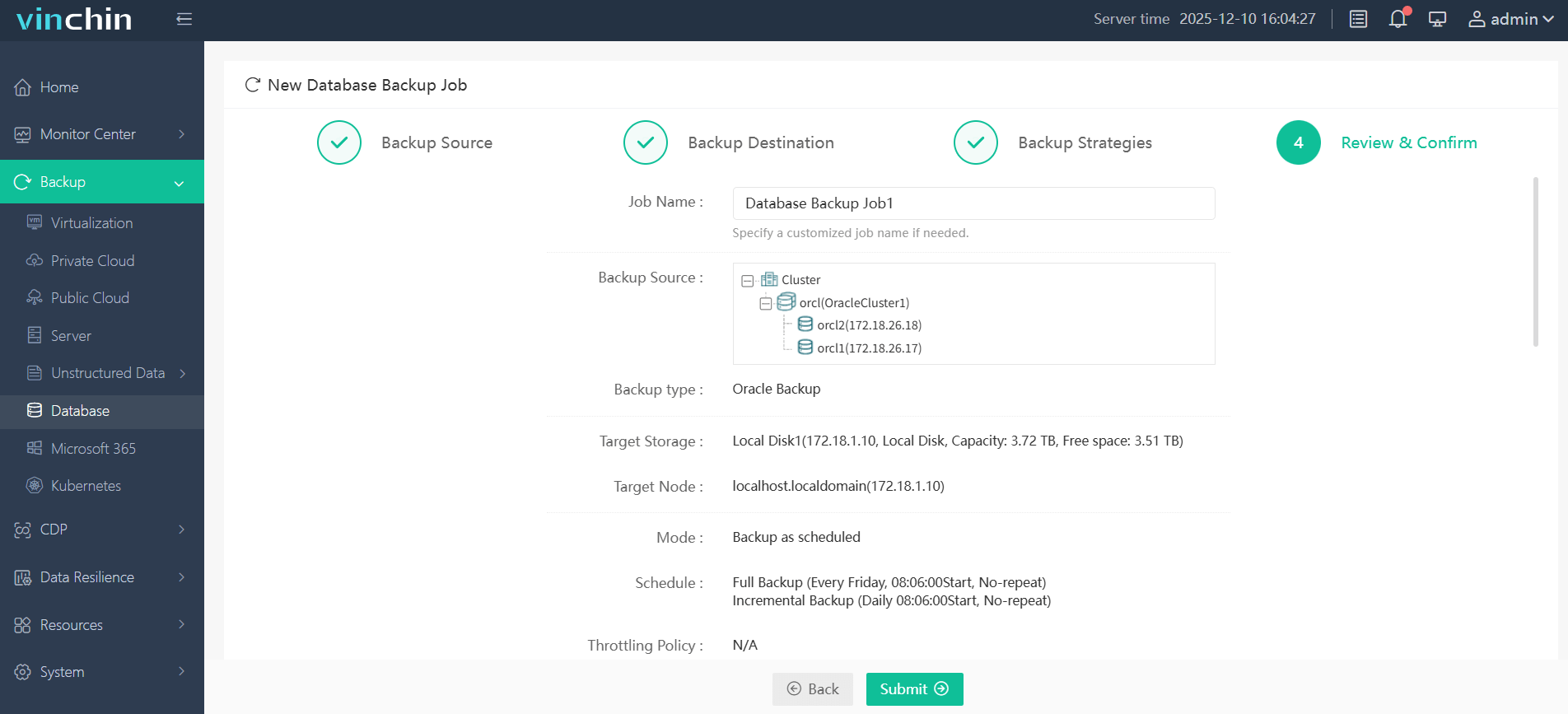
The intuitive web console makes safeguarding your Oracle database straightforward:
Step 1. Select the Oracle database to back up
Step 2. Choose the backup storage
Step 3. Define the backup strategy
Step 4. Submit the job
Vinchin Backup & Recovery is trusted globally by enterprises of all sizes and consistently earns top ratings for reliability and ease of use. Experience its power risk-free with a fully featured sixty-day trial—click download now to get started.
Oracle RMAN Incremental Backup Script FAQs
Q1: How do I check if my last incremental backup was successful?
A1: Use LIST BACKUP OF DATABASE SUMMARY in RMAN to view status details quickly.
Q2: Can I run incremental backups if my database isn’t in ARCHIVELOG mode?
A2: No; online incremental backups require ARCHIVELOG mode enabled beforehand.
Q3: My incremental backup size seems too large—is something wrong?
A3: Check that recent LEVEL 0 baselines exist; missing or expired fulls force larger-than-normal incrementals.
Conclusion
A well-designed oracle rman incremental backup script protects against unexpected data loss while saving resources over time. Automate tasks whenever possible—and always validate results. For streamlined enterprise-grade protection, Vinchin offers an easy-to-use solution trusted worldwide. Try their free trial today!