Protecting your Oracle database means planning for instance failure, storage corruption, or even site disaster. If your primary database fails, a standby database can save the day. But to set up or recover a standby, you need a special backup of the control file. This article explains what a backup controlfile for standby is, why it matters, and how to create it using both RMAN and SQL*Plus. We’ll also show you how Vinchin can make Oracle database protection even easier.
What Is Backup Controlfile for Standby?
A backup controlfile for standby is a copy of your Oracle database’s control file created specifically for use on a standby database. The control file is small but critical—it tracks the structure and state of your database. Think of it as the brain of your system. When you create a standby database, you need a control file marked for standby use so that the instance knows its role and can apply redo logs from the primary.
Oracle stores key metadata in this file: datafile locations, log history, checkpoint information, and more. For Data Guard setups or manual disaster recovery plans, having an up-to-date standby control file ensures smooth transitions between primary and standby roles.
Why Backup Controlfile for Standby Matters?
Backing up the controlfile for standby is not just best practice—it’s required by Oracle Data Guard and disaster recovery procedures. Without this special backup, you cannot create or recover a functioning standby database. If you lose your primary server due to hardware failure or corruption, having this backup lets you bring up your standby quickly—minimizing downtime.
Oracle documentation highlights that only a valid standby control file allows proper synchronization between primary and standby databases. It helps ensure failover or switchover operations go smoothly by maintaining consistent metadata across environments.
Method 1: Using RMAN to Backup Controlfile
RMAN (Recovery Manager) is Oracle’s recommended tool for backup and recovery tasks. Creating a backup controlfile for standby with RMAN is straightforward yet powerful—ideal if you want automation or integration into existing scripts.
Start by connecting to your primary database as an administrator with SYSDBA privileges:
rman TARGET /
To create the backup controlfile for use on your future standby server:
BACKUP CURRENT CONTROLFILE FOR STANDBY FORMAT '/path/to/standby_controlfile.bkp';
Replace /path/to/standby_controlfile.bkp with an absolute path accessible by the oracle user on your system. Make sure there’s enough space at that location.
If you want to include this step within regular full backups:
BACKUP DATABASE INCLUDE CURRENT CONTROLFILE FOR STANDBY;
After creating this .bkp file—which is an RMAN-specific binary format—you must transfer it securely to your intended standby server using tools like scp or rsync.
When restoring on the target machine:
1. Start up the instance in NOMOUNT mode:
   sqlplus / as sysdba
   STARTUP NOMOUNT
2. Connect RMAN locally:
rman TARGET /
3. Restore using:
RESTORE STANDBY CONTROLFILE FROM '/path/to/standby_controlfile.bkp';
Once restored successfully:
4. Mount the database:
ALTER DATABASE MOUNT;
This process ensures that your new (or recovered) standby has all necessary metadata marked correctly so it can start applying redo logs from its primary counterpart.
Remember: The .bkp format requires RMAN both to restore and manage integrity checks; do not attempt direct usage outside RMAN workflows.
Method 2: Using SQL*Plus to Backup Controlfile
SQL*Plus offers another way to generate a suitable control file—often favored when administrators need quick manual intervention rather than scripted automation.
First connect as SYSDBA on your primary:
sqlplus / as sysdba
Then run:
ALTER DATABASE CREATE STANDBY CONTROLFILE AS '/path/to/standby_controlfile.ctl';
Here /path/to/standby_controlfile.ctl should be writable by oracle user; choose local disk paths carefully based on available space and security policies.
Copy this .ctl flat binary directly over secure channels (such as scp) to every node designated as potential standbys.
On each target machine:
1. Update CONTROL_FILES parameter in initSID.ora or spfileSID.ora so it points exactly at where you've placed standby_controlfile.ctl.
2. Start instance in NOMOUNT mode:
STARTUP NOMOUNT
3. Mount using:
ALTER DATABASE MOUNT STANDBY DATABASE;
Unlike RMAN's .bkp, these .ctl files are ready-to-use binaries—no further conversion needed unless structural changes occur later on primaries (like adding datafiles).
This approach works well in smaller environments or when scripting overhead isn’t justified—but always remember manual steps require careful tracking!
How Vinchin Backup & Recovery Simplifies Oracle Database Backups?
For organizations seeking streamlined protection of their Oracle databases, Vinchin Backup & Recovery delivers comprehensive enterprise-level solutions supporting today’s mainstream platforms such as Oracle, MySQL, SQL Server, MariaDB, PostgreSQL, PostgresPro, and TiDB (with particular focus here on Oracle). Key features include advanced source-side compression, incremental backup capabilities tailored for Oracle workloads, batch database backups across multiple instances, robust data retention policies including GFS options, and storage protection against ransomware threats—all designed to maximize efficiency while ensuring business continuity through reliable data safeguarding strategies.
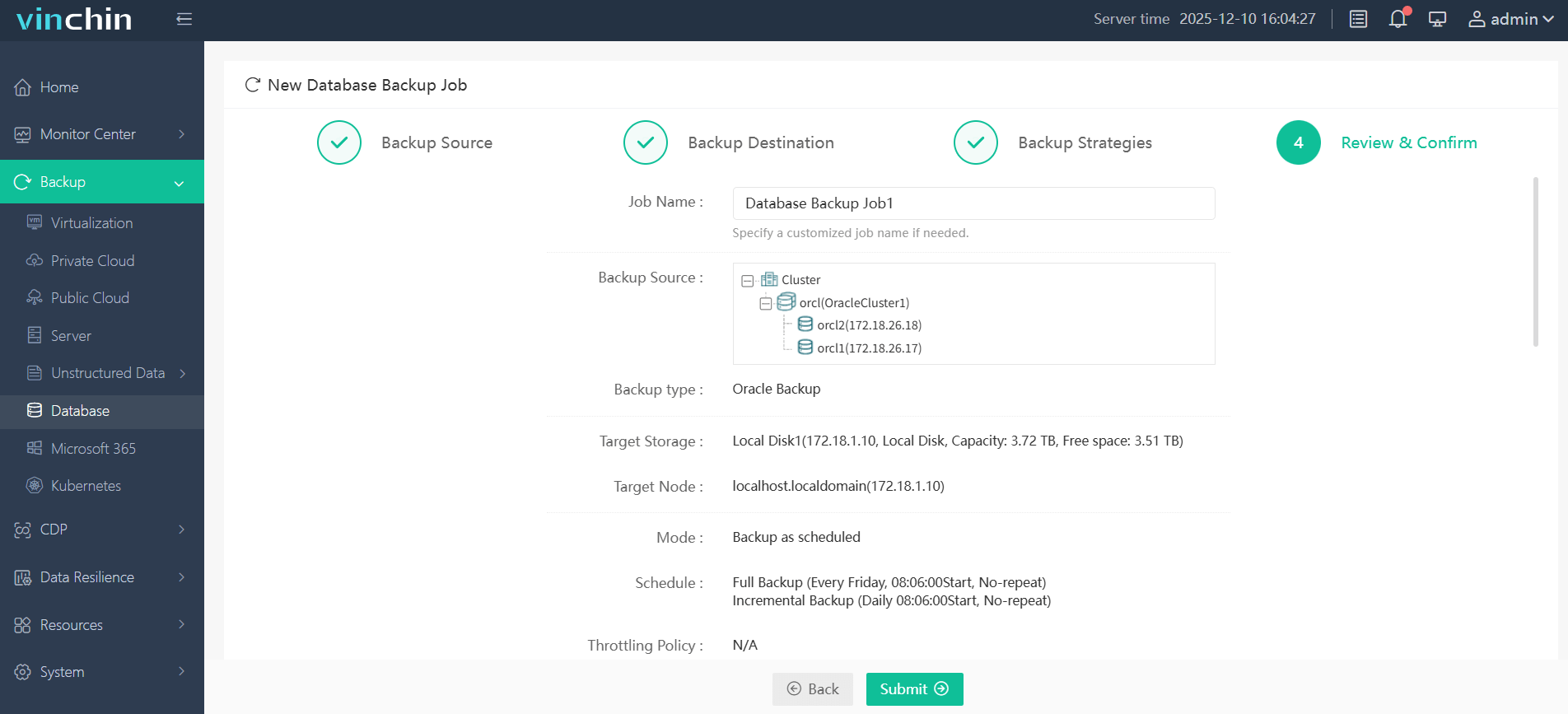
The intuitive web console makes managing backups simple:
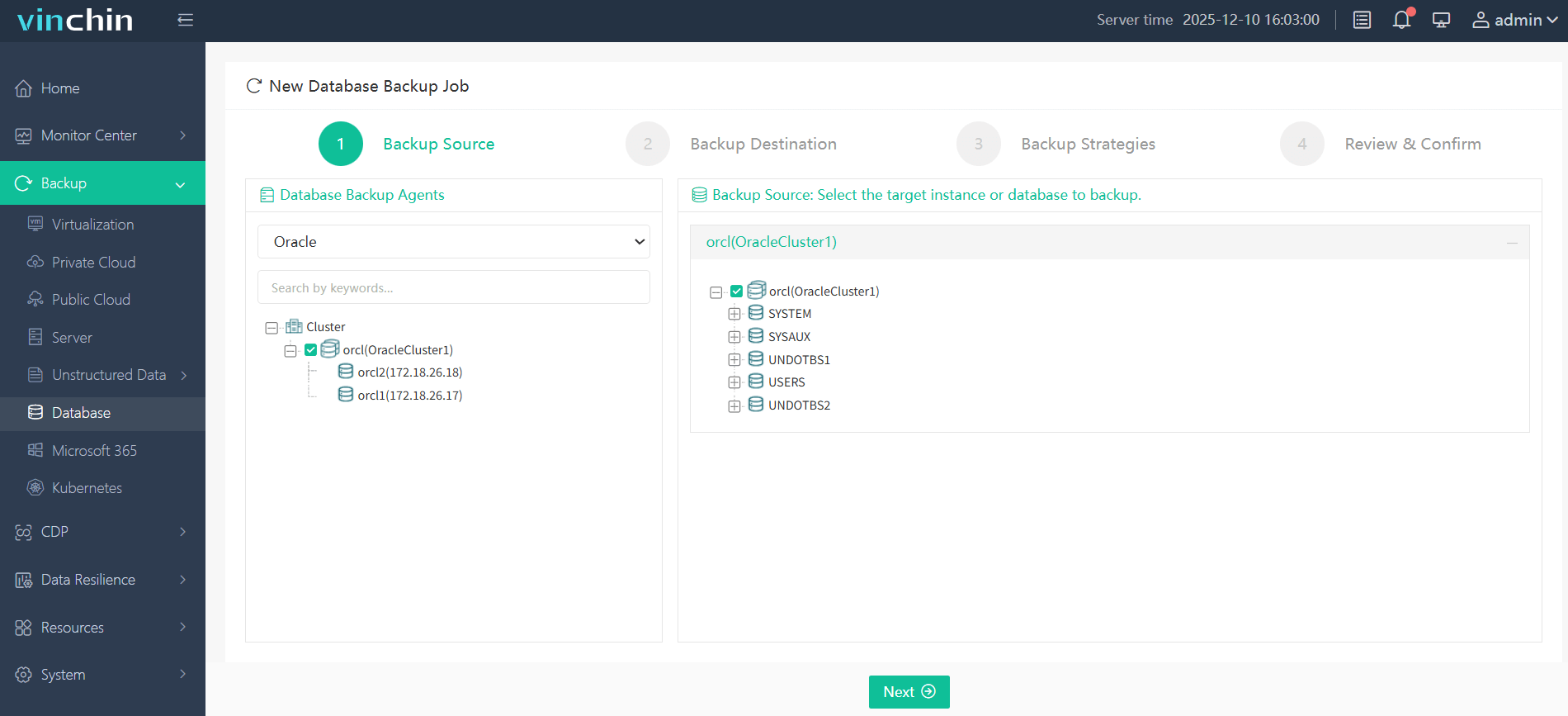
Step 1: Select the Oracle database to back up
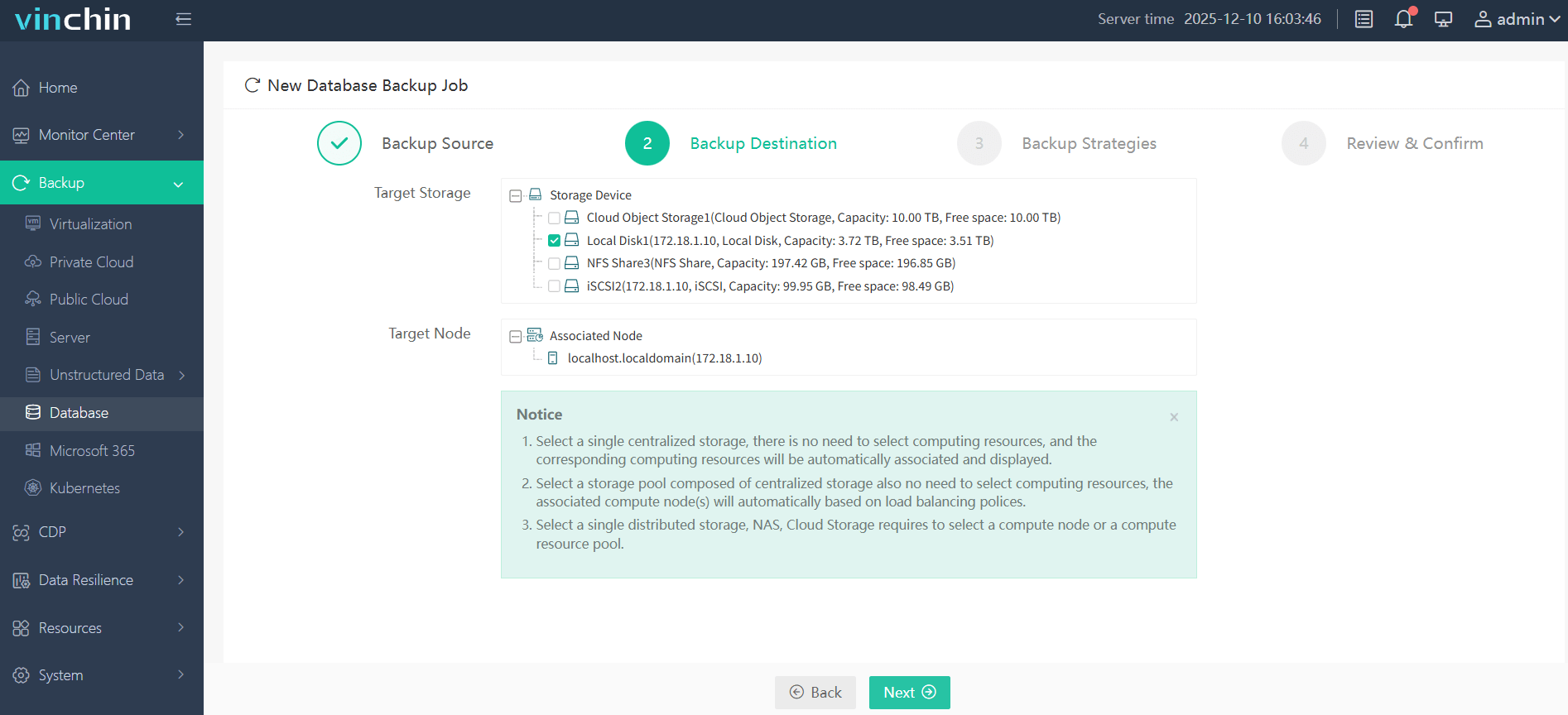
Step 2: Choose the backup storage
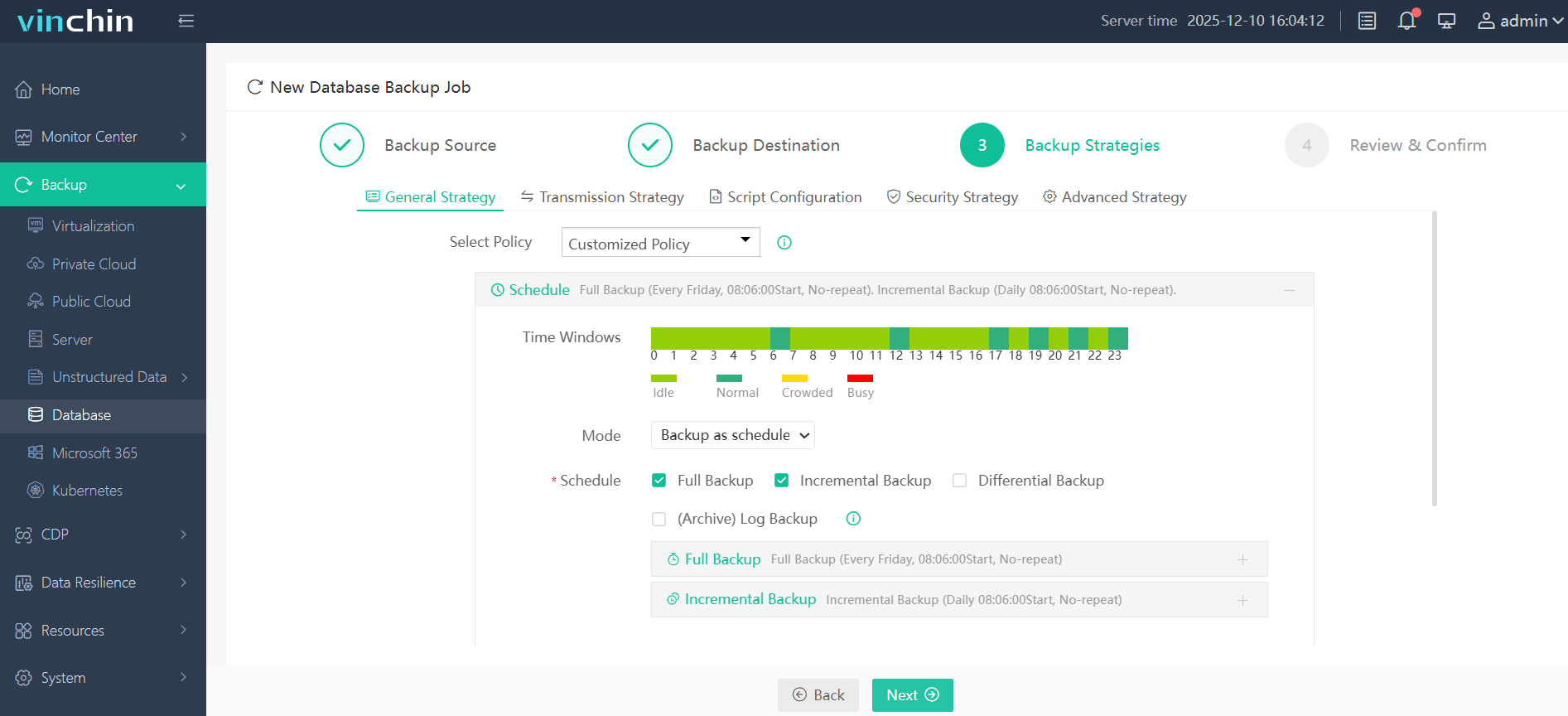
Step 3: Define the backup strategy
Step 4: Submit the job
Recognized globally with top ratings from thousands of enterprises worldwide,Vinchin Backup & Recovery offers a fully featured free trial lasting 60 days—click below to experience industry-leading enterprise data protection firsthand!
Backup Controlfile for Standby FAQs
Q1: Can I automate backing up my Oracle controlfiles after every structural change?
A1: Yes; schedule scripts using cron jobs that run either RMAN BACKUP CURRENT CONTROLFILE FOR STANDBY commands or SQL*Plus equivalents after schema modifications.
Q2: What happens if I accidentally restore an old version of my standby control file?
A2: Replace it immediately with an updated one from primary; then restart managed recovery so log sequence gaps don’t cause inconsistencies.
Q3: Do I need separate backups if running multiple standbys off one primary?
A3: No; one valid current “backup controlfile for standby” suffices per physical structure—as long as all targets share identical architecture/version settings.
Conclusion
Backing up the controlfile for standby keeps disaster recovery options open in any serious IT environment—use either RMAN or SQL*Plus methods regularly! With automation tools like Vinchin offering extra simplicity plus robust security controls through their web console interface—you’re always prepared when things go wrong!