Backing up your Oracle standby database using RMAN is not just smart—it’s essential for modern IT operations. By shifting backup workloads from your busy primary system to the standby, you reduce performance impact on production while still protecting critical data. This approach helps maintain business continuity even during heavy transactional periods or unexpected outages. In this guide, we’ll break down what an rman backup standby database really means, why it matters for disaster recovery planning, and how you can perform these backups confidently at any skill level.
What Is RMAN Backup?
RMAN stands for Recovery Manager. It’s Oracle’s built-in tool designed specifically for automating database backup and recovery tasks. With RMAN, you can create full or incremental backups of datafiles, control files, archived redo logs, and even server parameter files. Because it integrates tightly with Oracle Database itself, RMAN supports advanced features like block-level recovery and thorough validation of your backups. For most Oracle environments—whether small businesses or large enterprises—RMAN is considered best practice due to its reliability and flexibility.
What Is Standby Database in Oracle?
A standby database serves as a synchronized copy of your primary Oracle database. It stays up-to-date by receiving redo log changes from the primary system through Data Guard mechanisms. Most often this is set up as a physical standby—a byte-for-byte replica that can take over instantly if something happens to your main environment. Depending on configuration needs, you can run the standby in managed recovery mode or open it read-only for reporting purposes without affecting synchronization.
Oracle Data Guard manages all communication between primary and standby databases so that changes are quickly applied downstream. If disaster strikes—hardware failure or site outage—the standby can become the new production system almost immediately.
Why Backup Standby Database?
It’s natural to ask: if my standby is already a copy of production data, why should I back it up? The answer comes down to resilience against multiple failures—and efficiency in daily operations.
First offloading backups from your primary reduces CPU load and disk I/O overhead on systems serving live users or applications. This keeps performance high where it matters most while still ensuring regular protection of business-critical information.
Second—and perhaps more importantly—backups taken from either side (primary or standby) are fully interchangeable as long as redo transport remains healthy. That means you can restore either system using any valid backup set regardless of where it was created—a powerful option when planning robust disaster recovery strategies.
Finally backing up both databases protects against rare but serious events like logical corruption or accidental deletion that might propagate across both sites before detection.
Prerequisites Before Backup Oracle Standby Database
Before running any rman backup standby database operation there are some important checks every administrator should perform. These steps help prevent failed jobs or incomplete recoveries later on.
Start by confirming that your target instance truly functions as a physical standby—not just another test environment:
1. Connect to SQL*Plus on the intended host
2. Run SELECT DATABASE_ROLE, OPEN_MODE FROM V$DATABASE;
3. Ensure results show PHYSICAL STANDBY under DATABASE_ROLE
4. Confirm OPEN_MODE reads either MOUNTED (for managed recovery) or READ ONLY WITH APPLY (if open read-only)
Next check apply lag between primary and standby systems:
1. Query SELECT APPLIED_SEQ#, LATEST_SEQ# FROM V$ARCHIVE_DEST_STATUS WHERE DEST_ID=2;
2. Compare numbers; significant differences mean some redo logs haven’t been applied yet
3. If lag exists wait until synchronization completes before starting backup
Also verify that your control file was created specifically “FOR STANDBY.” This ensures compatibility when restoring later:
1. From SQL*Plus run SHOW PARAMETER CONTROL_FILES to locate current control file path
2. Use BACKUP CURRENT CONTROLFILE FOR STANDBY; only if sure this file type matches requirements
Taking time for these simple checks saves hours troubleshooting failed restores down the line!
How to Use RMAN for Standby Database Backup?
Once prerequisites are met you’re ready to start backing up with confidence using RMAN commands tailored for standbys.
1. Connect to the Standby Database
Always connect using explicit credentials rather than relying on operating system authentication alone! If you use OS authentication (rman target /), RMAN cannot trigger log switches on the primary—which means recent transactions may not be included in your archive log backups.
Instead launch an authenticated session:
rman target sys/<password>
Replace <password> with your actual SYS user password here—not just blank slashes! This method allows RMAN full access across both nodes so all necessary logs get switched properly during backup runs.
2. Start the Backup
To capture everything—including all available archived logs plus current datafiles—run this command inside RMAN:
BACKUP DATABASE PLUS ARCHIVELOG;
This single line instructs Recovery Manager to back up every datafile along with all archived redo logs present at that moment on disk—even those generated during execution thanks to automatic log switching enabled by password-based connections.
3. Back Up the Standby Control File
For maximum recoverability always include an explicit control file snapshot suitable for future restores:
BACKUP CURRENT CONTROLFILE FOR STANDBY;
This creates a special version compatible with subsequent reinstatement procedures should disaster strike either site unexpectedly.
4. Monitor for Errors
After launching any major backup job don’t assume success without checking output carefully! Watch out especially for warnings like:
RMAN-06820: warning: failed to archive current log at primary database
This message signals that log switching didn’t complete successfully—often because OS authentication was used instead of passwords during connection setup earlier in Step 1 above.
Beyond obvious errors also review job logs within both RMAN itself (SHOW ALL) plus associated alert logs via SQL*Plus queries such as:
SELECT * FROM V$DIAG_ALERT_EXT WHERE ORIGINATING_TIMESTAMP > SYSDATE - 1;
Consider running diagnostic commands after completion too:
LIST FAILURE;
ADVISE FAILURE;
These help catch latent issues like corrupt blocks detected mid-backup which could otherwise go unnoticed until restore time arrives!
5. Back Up Archive Logs Again
If uptime windows stretch longer than expected—or if point-in-time recoverability is crucial—you may want extra assurance by capturing additional archive logs generated since initial snapshot began:
BACKUP ARCHIVELOG ALL NOT BACKED UP 1 TIMES;
Running this command right after main job finishes ensures no recent activity slips through cracks due simply to timing gaps between steps above!
6. Validate the Backup
Never skip validation! Even successful-looking jobs sometimes produce unusable files due hardware glitches or silent corruption events behind scenes:
Run inside RMAN prompt:
RESTORE DATABASE VALIDATE;
This process simulates restoration without actually overwriting anything live—giving peace of mind knowing every piece needed exists intact within repository now stored safely offsite (or wherever policy dictates).
7. Restore from Standby Backup
Should crisis ever demand restoring production from these offloaded sets follow standard cross-server procedures:
1) Copy relevant files securely onto intended host via NFS mount points SCP transfers etc.
2) Launch catalog registration so local instance recognizes them:
CATALOG START WITH '<path_to_backup_pieces_on_primary>';
3) Proceed through normal RESTORE / RECOVER workflows per usual documentation
Remember: As long as redo transport remained uninterrupted throughout previous cycles these sets remain fully valid regardless origin location!
Protecting Oracle Databases with Vinchin Backup & Recovery
For organizations seeking streamlined automation beyond manual scripting, enterprise-grade solutions offer significant advantages when safeguarding critical databases such as Oracle environments discussed above.
Vinchin Backup & Recovery is a professional enterprise-level platform supporting today’s mainstream databases—including Oracle, MySQL, SQL Server, MariaDB, PostgreSQL, PostgresPro, and TiDB—with comprehensive features tailored for robust protection.
Key capabilities include incremental backup support, batch database backup management across multiple instances simultaneously, flexible GFS retention policies ensuring compliance-ready archiving cycles, data compression/deduplication technologies optimizing storage usage, and integrity check mechanisms verifying recoverability before disaster strikes. Together these features deliver efficient resource utilization, centralized oversight, and reliable rapid recovery options—all vital for mission-critical workloads.
The intuitive web console makes safeguarding an Oracle database straightforward:
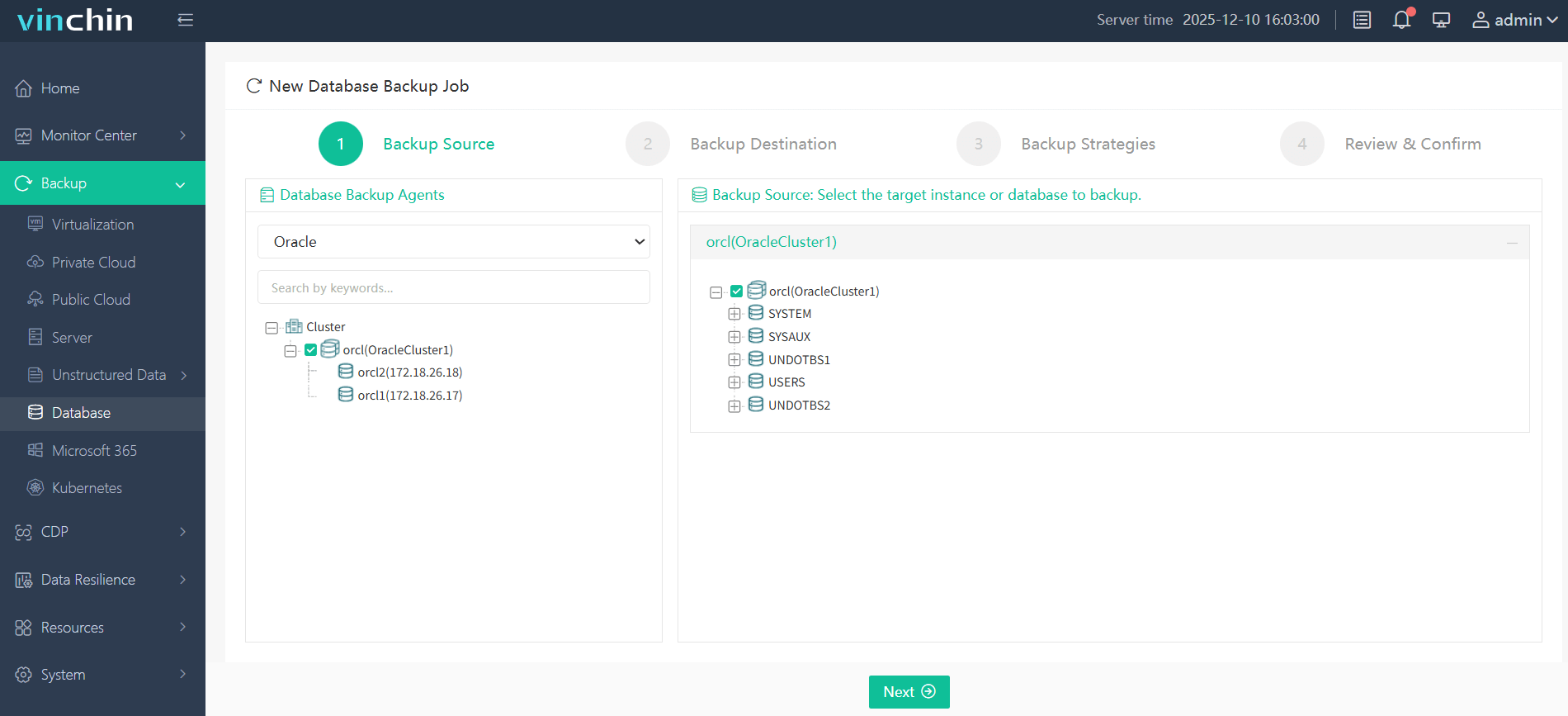
Step 1. Select the Oracle database to back up;
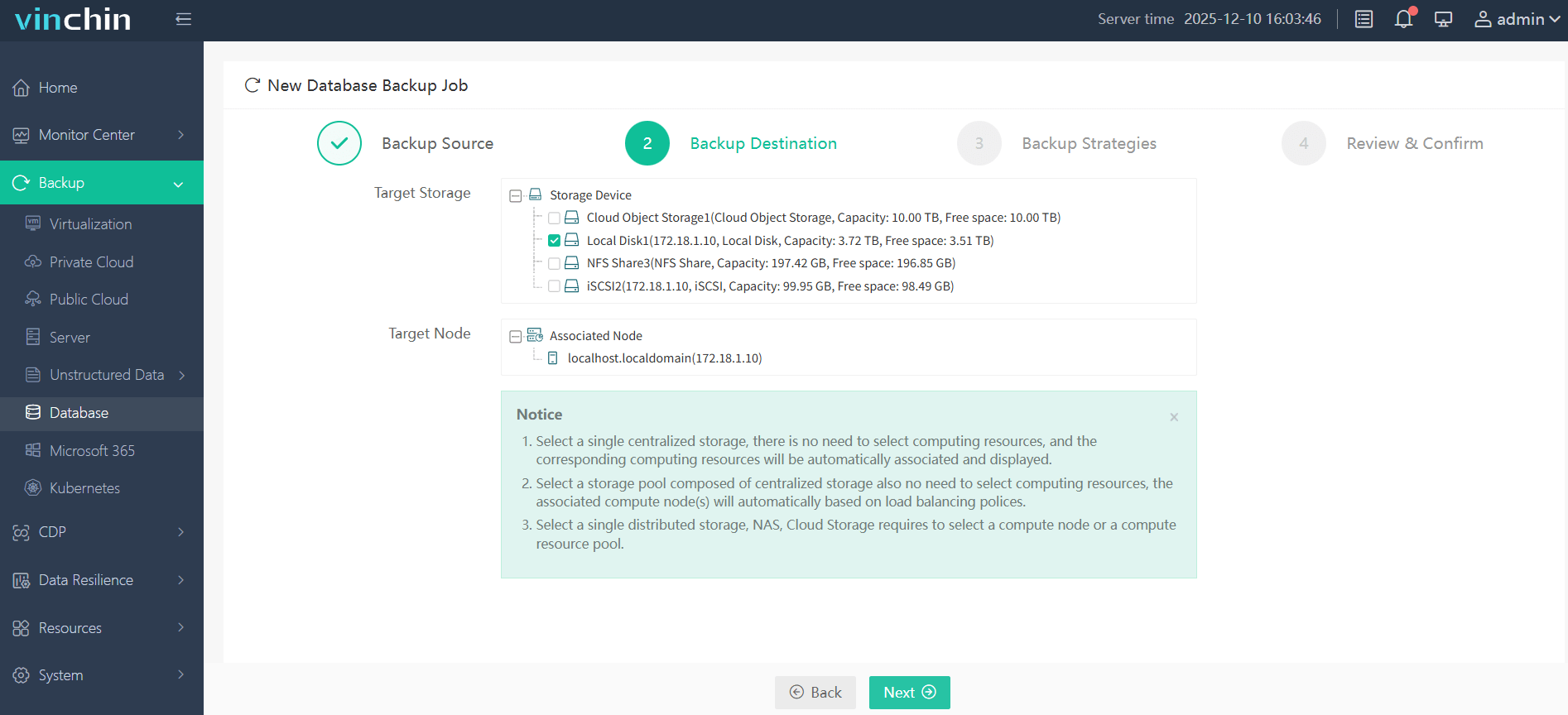
Step 2. Choose desired backup storage;
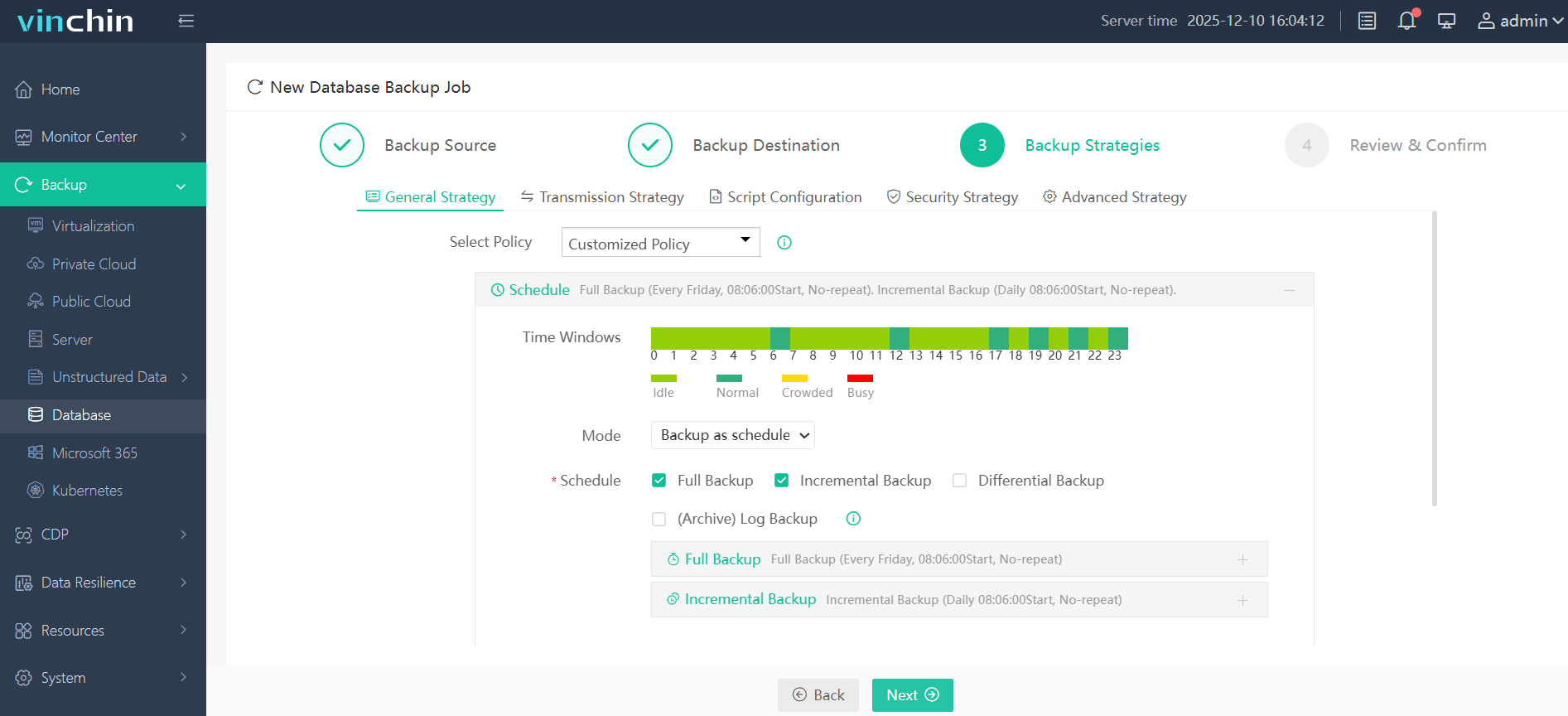
Step 3. Define scheduling, retention, and other strategy parameters;
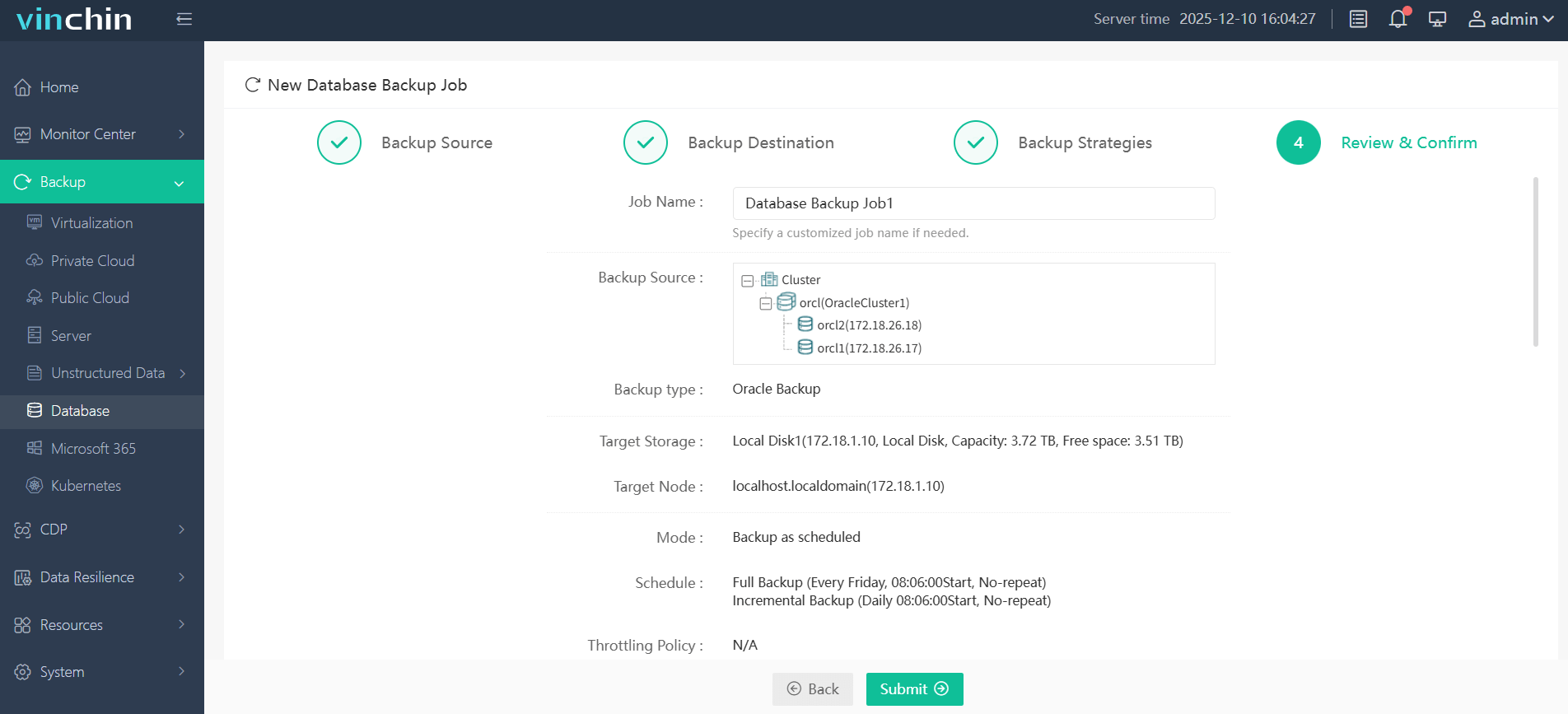
Step 4. Submit the job—all within minutes via a clean browser interface.
Trusted globally by thousands of enterprises—with top ratings from industry analysts—Vinchin Backup & Recovery offers a risk-free, 60-day full-featured trial download below so you can experience leading-edge protection firsthand.
RMAN Backup Standby Database FAQs
Q1: Can I use a standby database RMAN backup to restore my production environment?
Yes—as long as redo transport has kept both sides synchronized these sets work interchangeably between roles without issue.
Q2: What happens if I back up my standby using OS authentication instead of entering credentials?
RMAN won’t switch current logs automatically so latest transactions might not appear in resulting archives; always supply username/password explicitly when connecting!
Q3: How often should I schedule full versus incremental backups from my standbys?
Match frequency against business RPO targets—for example weekly fulls plus daily incrementals alongside frequent archive log captures maximize protection while minimizing resource usage overall.
Conclusion
Backing up an Oracle standby database with RMAN boosts resilience while reducing load on critical systems—just remember pre-checks authentication details catalog management best practices along way! Vinchin further simplifies protection through automation designed specifically around enterprise needs—try their free trial today if streamlined safety sounds appealing.